What Will the Los Angeles Lakers Offense Look Like in the Post-Kobe Bryant Era?
Of all the unbelievable stats to emerge since last month’s All-Star break (a 13-game span), the Los Angeles Lakers’ brief ownership of a top-10 offense has to be the most bizarre.
Heading into the middle of February, Los Angeles ranked 29th in offensive rating. It isolated more than any other team in the league, didn’t share the ball and fetishized the pull-up jumper—one of the sport's least efficient options.
The Lakers' plan of attack was antiquated, stale and impotent. They didn’t utilize the athleticism and youth on the roster and instead played to the strengths of veterans like Kobe Bryant and Lou Williams. It was a regressive, debilitating horror show.
TOP NEWS

Michael Jordan expected to leave media role

Draymond Questions Klay-Heat Fit

Sneaky Trade Candidates to Watch 👀
Some of this is due to Bryant’s declining influence.
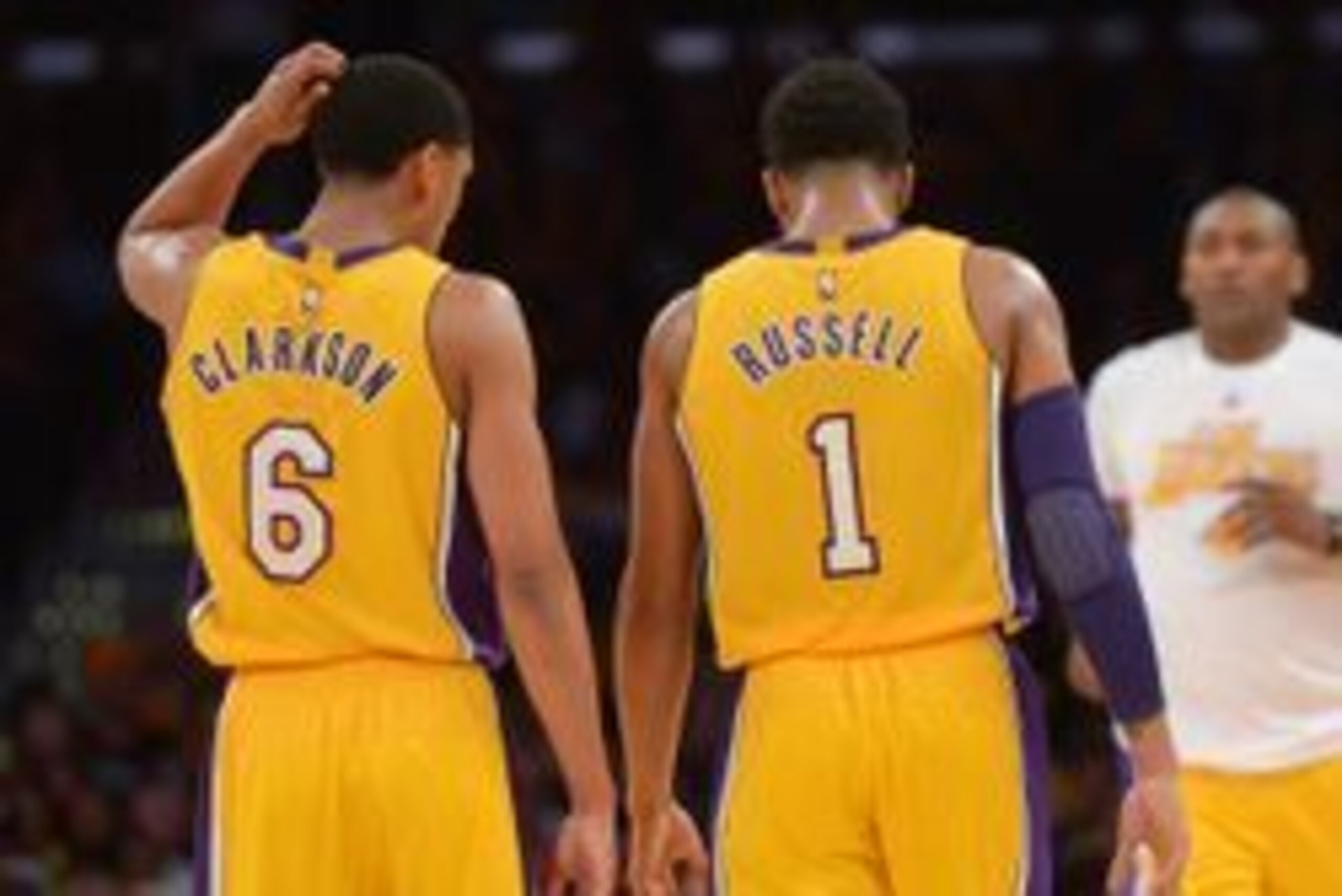
The 37-year-old has sat out five games since the All-Star break. The Lakers are 2-3 when he doesn’t play and 1-7 when he does. His minutes are gradually decreasing, too. That—coupled with the hamstring injury that sidelined Williams five games earlier this month—helped increase opportunities for more dynamic options like D’Angelo Russell and Jordan Clarkson, the team’s high-scoring duo.
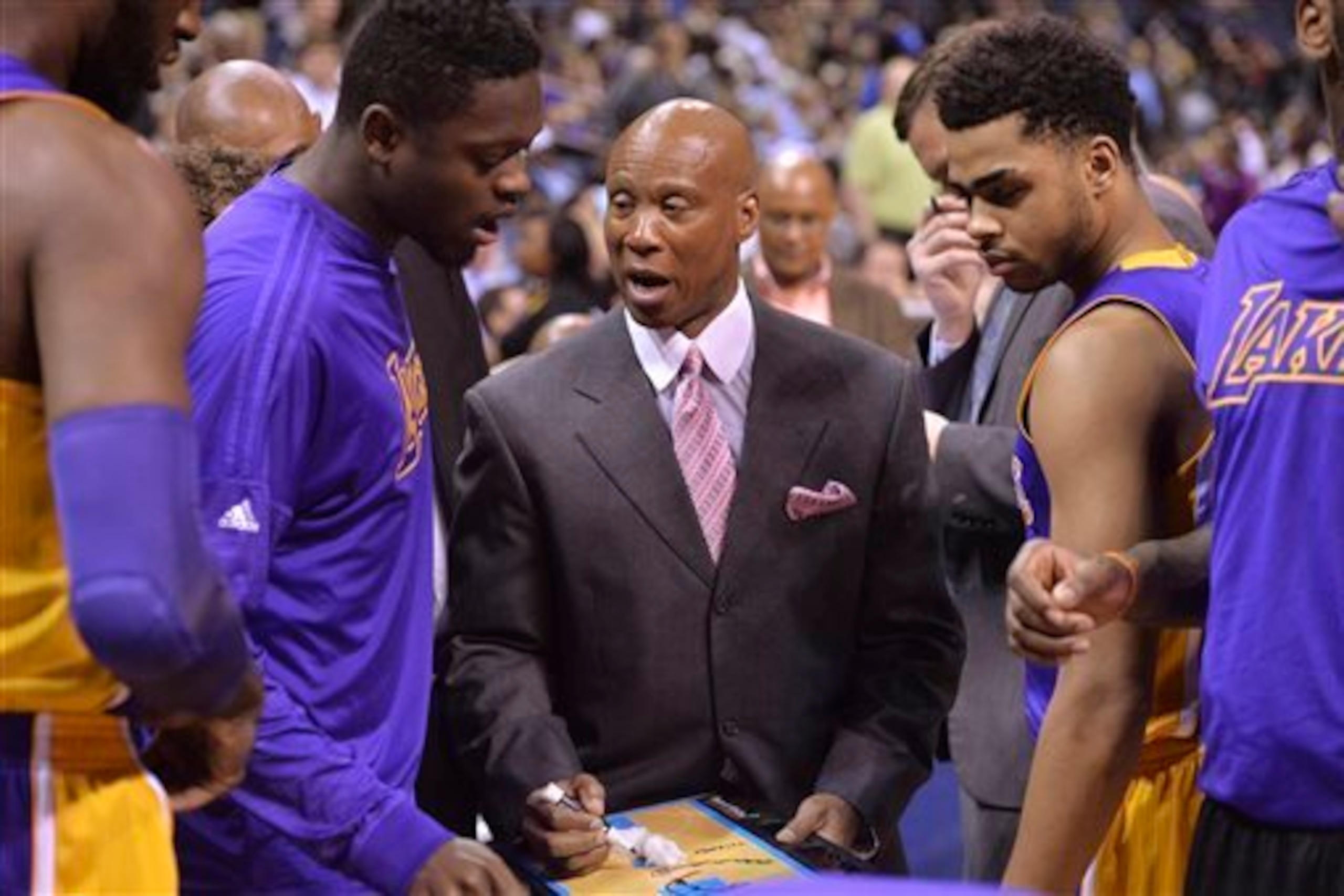
After a wobbly loss to the Sacramento Kings on Tuesday night, Los Angeles dropped to 11th in offensive rating since the All-Star break. In that span, they're still more efficient than the Boston Celtics and Los Angeles Clippers.
With only 14 games left this year, is there anything the Lakers can build offensively heading into next season, as they venture into a post-Bryant era?
Since All-Star Weekend, L.A.’s offense is averaging 109.2 points per 100 possessions with Bryant on the bench and 107.1 with him on the floor. There are many factors that go into making these numbers look the way they do (lineup combinations, opposing matchups, how good the defense is, etc.), but it’s beyond clear that Bryant is no longer a positive factor.
Beyond their longstanding icon's iso-heavy tendencies, some of the Lakers’ recent improvement has to do with head coach Byron Scott’s infusion of a selfless strategic wrinkle, one that prioritizes constant ball and player movement. Stagnation is the enemy.
“I was really kind of torn on even putting it in now, or just waiting until the summer anyway to go over it again. But the coaching staff was like, ‘You might as well give them a taste of it now.’ Let’s get them familiar with it the next 20-plus games, and then going into the summer they’ll have a much better feel for it,” Scott said at L.A.’s practice facility last month.
“In the first game, we knew it would be rocky. Guys are thinking. The next couple days of practice it looked better and better. So it’s just a matter of guys sticking to it and doing it on a day-to-day basis; at the end of the day, it’ll be something that’s much better for us. Offensively, we’re obviously a totally different team than we were in November. So, you know, it’s been a roller coaster. We’ve had our ups and downs.”
A necessary disclaimer: Most of the Lakers’ improved efficiency comes from a small sample size featuring a home-friendly schedule against multiple non-playoff opponents. Also, numbers from their victory over the Golden State Warriors are included, and nothing from that Sunday afternoon upset makes any sense.
The Lakers are still decaying in the league's basement in meaningful stats like assist ratio, but they’re definitely moving the ball a little more over the past few weeks. They averaged 277.5 passes per game before the All-Star break, but that number has since jumped to 293.0, per SportVU.
Russell is one Laker who's started to notice the improved ball movement, and he says it's something most of the team can stand to keep working on heading into next year.
"[We're] realizing that you can playmake anytime and [get] a ball screen anytime," he said. "So whenever you’ve got the opportunity to playmake for yourself or for other players, you’ve got to take advantage of it."
Despite a few promising metrics, Scott’s change has been anything but smooth. The Lakers’ tempo has slowed to a crawl, and a big reason they rank so high in offensive rating is their unsustainably low turnover rate.
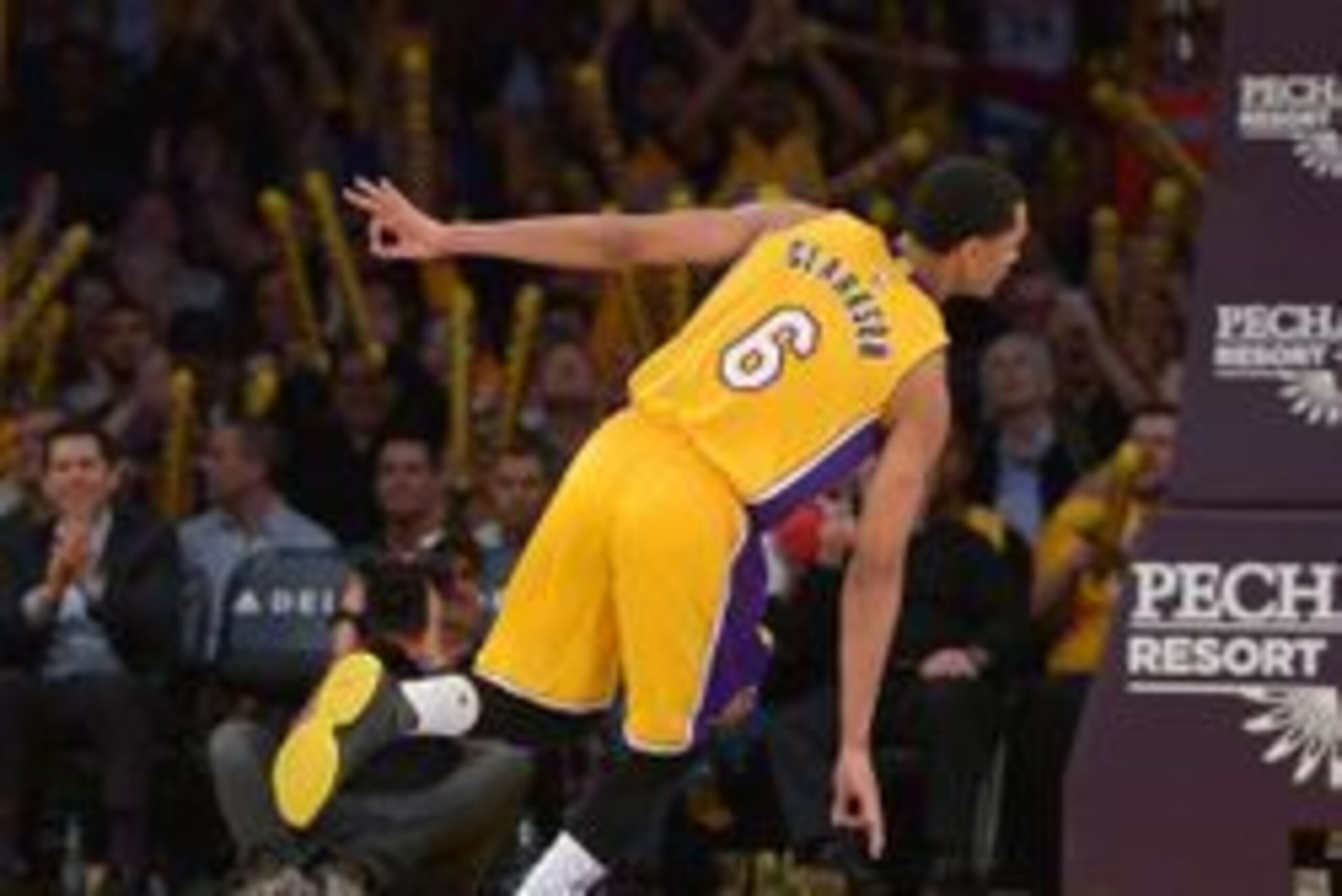
“[We’re] just trying to find our spots and really figure out how it works and stuff,” Clarkson said. “It’s coming along well, getting us to move the ball and play with each other. … We know we’re learning and trying to grow with each other. We’re trying to win some games and finish the season out strong.”
Since February 19—and before Tuesday night’s debacle against the Kings—the Lakers have averaged 105.6 points per 100 possessions with Julius Randle, Russell and Clarkson on the court. The best example of their success came on March 8 against the Orlando Magic when all three pillars scored at least 20 points and shot over 50 percent from the field.
If ever there was a reason to be optimistic, that night was it. In the nine-point win, L.A. executed its offense and showcased a game plan that was unselfish and surgical.
Here's one example where the ball starts in Russell's hands before it's eventually swung to Clarkson on the other side of the court. The 23-year-old goes right into a pick-and-roll with Roy Hibbert and takes advantage of the space he's afforded to knock down a three. This may look like nothing, but simple side-to-side ball movement was absent from the Lakers offense earlier this season:

Next up is a designed play where Russell sets a screen and curls up and around Randle's pick before getting the ball back on a slick bounce pass from Clarkson. Again, it looks basic enough. But the timing and execution are a positive sign:

And here's a smart, simple pass from Randle to Russell, catching Orlando's rotating defense off balance.

The Lakers have a lot of work to do. (A lot of work.) Their defense is an abject failure in all areas—from rim protection to transition—and for their offense to ever reach a respectable level, the other side of the ball needs to do its part.
A stable half-court offense can help, but it can't provide all the answers.
“Most of the time teams are getting transition baskets,” Clarkson said. “So at the end of the day, that’s what we hope to do. Score more, put the ball in the hole. Be able to set our defense.”
It's unclear what the Lakers roster will look like next season, or who will coach them and what system will be in place. All that's known is Bryant will no longer be around, and—in all likelihood—the trio of Russell, Clarkson and Randle will have even more opportunities to share the ball and score in opportune ways.
As this nightmare campaign comes to a close, microscopically positive developments are slowly starting to take shape.
All quotes in this article were obtained firsthand unless otherwise noted.
Statistics courtesy of NBA.com unless stated otherwise.
.jpg?w=2560 "Report: NFL to End Pro Bowl 🚨")

.jpg?w=2560 "NFL's New Disciplinary Rules")
.jpg?w=2560 "Consensus Mock Draft 📋")
.jpg?w=2560 "NFL Clarifies CFB Return Rules")