Carl Frampton vs. Scott Quigg: Lessons Learned from Manchester Fight
It didn’t quite live up to the pre-fight hype, but Carl Frampton doesn't really care. In beating Scott Quigg on points, The Jackal unified the IBF and WBA titles in the super bantamweight division.
Saturday’s bout between the British rivals at the Manchester Arena in Manchester, England, was cagey (at least that’s one word for it) for the most part.
There were still moments of excitement in a slow-burning contest, most notably in Round 11 when Quigg looked to give himself renewed hope of victory.

.jpg?w=2560 "Election 2024 Julie Pace Column")
However, Frampton—who must have felt he was back home in Belfast, considering the support he received inside the venue—earned a split-decision victory from the judges. FightNews.com tweeted the scores:
Here, Bleacher Report breaks down some of the key talking points from the action.
The Late Starter
What if Quigg hadn’t been so cautious in the opening half of the fight? Such a question can haunt a professional sportsman—losing is one thing, but losing with doubts over your performance can burn indelible marks in your mind.
It would be wrong to say that the Englishman should have been just been as aggressive at the start of the contest as he was at the end, because that could easily have got him into trouble.
Frampton is a tremendous counterpuncher, and a reckless approach might have seen Quigg walk right onto a big punch before he had barely warmed up.
He was also hampered by a broken jaw, an injury he suffered when caught by an uppercut in Round 4. Promoter Eddie Hearn tweeted a picture on Sunday to reveal the extent of the damage:
But, while a cautious approach was understandable early on, Quigg—the taller of the two at 5’8”, with Frampton standing 5’5”—could have at least tried to establish his jab.
Instead, his tactics of holding a high guard and focusing on his defences allowed his rival to open up an early lead on the cards that proved crucial in the final reckoning. Frampton was not at his fluent best, yet he didn't need to be. He won rounds simply by being the clear aggressor.
Per Isaac Robinson of Sky Sports, Quigg said in the immediate aftermath: "I thought it was going to plan. I thought it was even after four. I felt comfortable in there."
Others in the boxing industry did not see it the same way, judging by the reaction on Twitter:
Quigg showed how he could cause his opponent problems in the closing quarter, particularly in Round 11 (more on that to come).
Able to dominate physically, he sapped Frampton at times with excellent body punching. When he watches the fight back, he may wonder why he didn’t try throwing a few earlier. And the jab, that most basic of weapon that he seemingly left back at his home in nearby Bury, would have really helped his cause.
Those thoughts will linger longer than the pain from the broken jaw. He can only hope to get a shot at redemption against Frampton somewhere down the line.
Boring, Boring Frampton
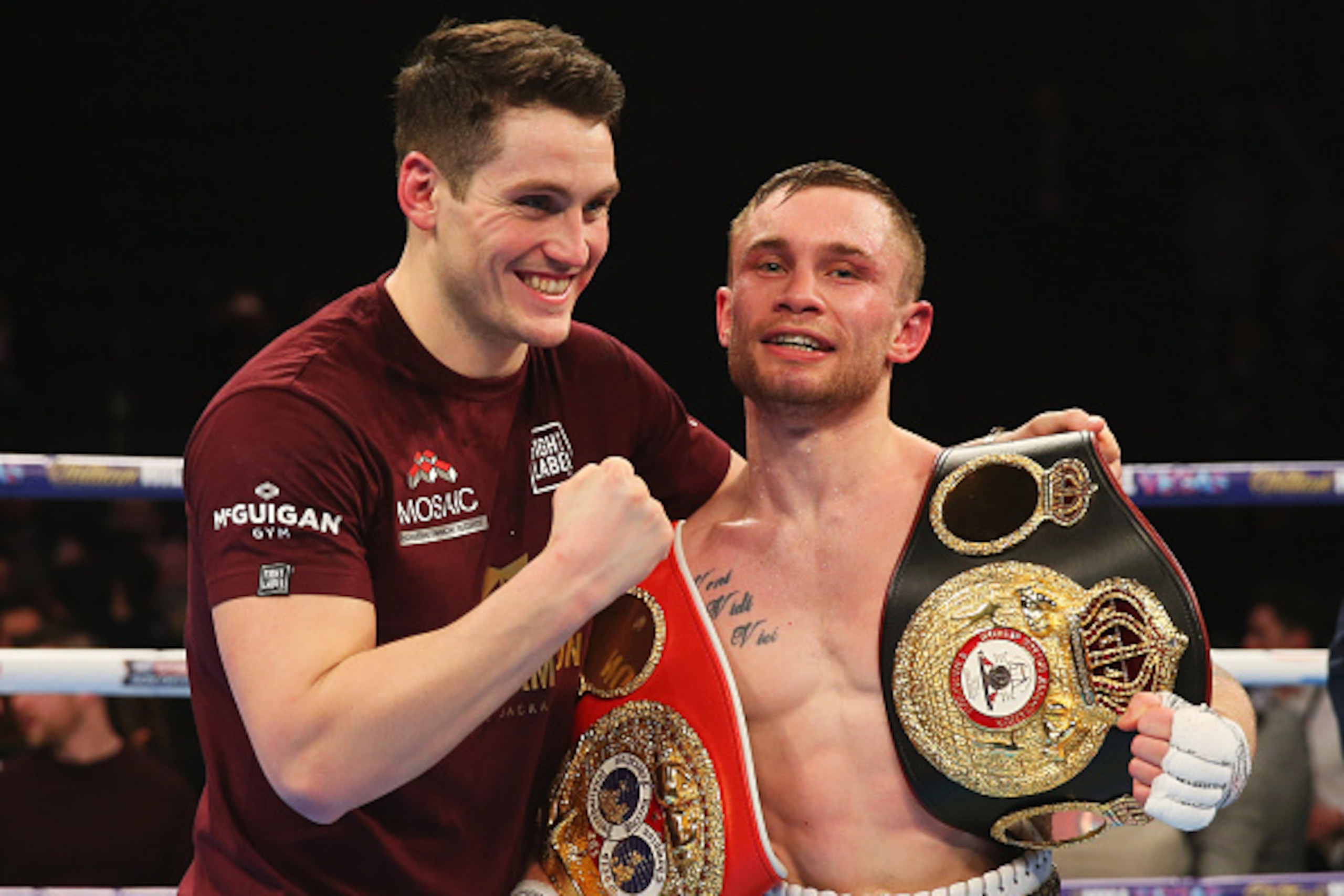
"I knew it was going to be a boring fight. I knew I had the brain today to do that and make it boring." According to Isaac Robinson of Sky Sports, Frampton never expected a thriller. Perhaps he might have warned all those who forked out to watch the fight beforehand.
The 29-year-old had not gone through a 17-week training camp—which included spending long periods of time away from his young family—to throw caution to the wind.
He was not about to risk what he had worked so hard to achieve just to entertain the masses.
Quigg was caught out by Frampton's controlled opening, believing his foe would rather start fast and look to dominate, per Boxing Monthly:
Instead, Frampton played the waiting game. Carrying his left hand purposely low, he beckoned Quigg in with the lure of landing on an exposed chin.
When the Englishman showed no intention of taking the bait, ruling out the chance of throwing any sort of countermeasure, Frampton chose to pick his moments to go on the offensive. He used feints and an extended left arm to test the water and then reacted accordingly.
This wasn’t the same fighter who systematically destroyed Chris Avalos less than one year ago, but then this wasn’t an opponent who could be picked off with ease.
The softly-softly approach allowed Frampton to build a lead on the cards. While Quigg closed the gap in the later stages, it was not enough to convince two of the three judges at ringside.
Judge for Yourself
Speaking of judges, the Frampton team had pushed for the use of overseas officials to avoid any potential controversy over the scoring.
There was one British referee in the end—Dave Parris scored the bout 116-112 for Frampton.
However, Levi Martinez—one of two Americans on duty—ended up calculating Quigg as the winner by two points. Bleacher Report's Kevin McRae was not impressed:
Not everyone sees a fight the same, of course. And, in defence of Martinez, the opening few rounds were particularly tough to score.
But, Martinez's card ended up being like one of those magic-eye pictures—stare at the scores for a while and you might just start to make sense of it. Of course, you may also never work it out, no matter how long you gaze at it.
Round 11
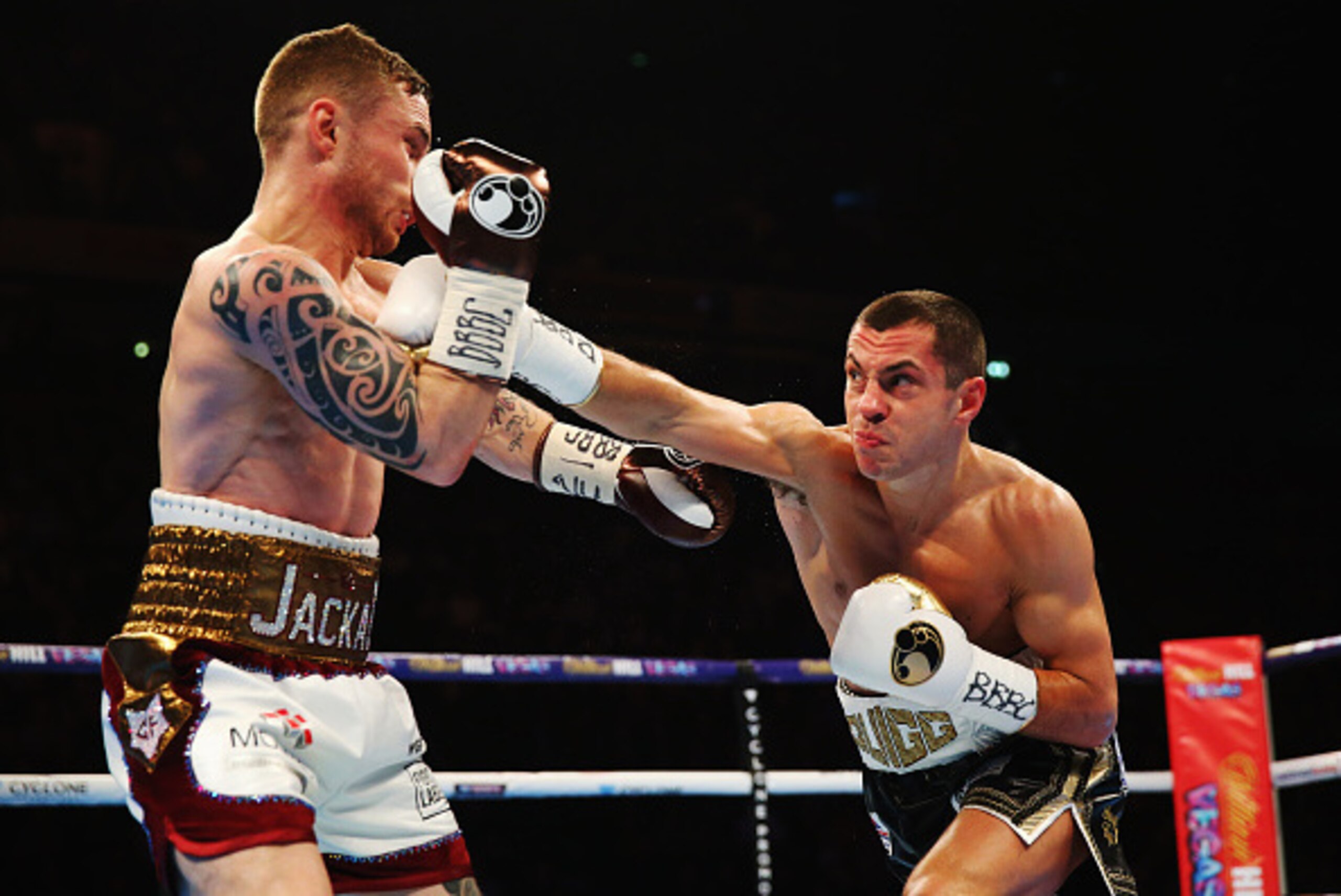
For three minutes in Round 11, the audience got the fight they longed to see.
Quigg set the tone by landing two jabs and a left-right combination inside the opening 15 seconds. He then found success by ducking low and taking aim at Frampton's body.
A pair of right hooks just under the ribs saw Frampton flash a look to his corner, but it was a right hand to the chin with 27 seconds to go that caused the IBF champion's one moment of real distress.
He grabbed and held his rival’s left hand as he was spun around, yet he still took a right uppercut.
But, just as the two were split apart and ready to fight on, referee Ernie Sharif needlessly stepped in and told Quigg off for pushing down (the official overlooked the two hooks to the back of Frampton's head while they were tangled together, though). The break gave Frampton some vital breathing space.
As the round came to an end, promoter Hearn was seen on the television coverage standing up from his seat and, with his arms outstretched, imploring Quigg to go on the offensive.
Yet it was too late. The bell sounded before Quigg could land another meaningful punch. The window of opportunity that suddenly opened up had now quickly closed again.
Frampton made sure he wasn't caught in Round 12, boxing cleverly on the retreat to safely reach the final bell.
However, for three minutes, perhaps only really 27 seconds, the tactical battle slipped into a brawl. It was brilliant to watch, too.
What Next?
Considering the Manchester Arena was sold out (and in a hurry, according to the Belfast Telegraph), and taking into account the revenue from pay-per-view television, a rematch would make sound financial sense.
Quigg would certainly like another opportunity at Frampton—and would be willing to travel to his rival’s home city of Belfast to get it. Ring TV's Douglass Fischer tweeted:
Frampton didn't rule out the possibility of a second fight with Quigg, although he also hinted at exploring other options. Per Ben Dirs of BBC Sport, he said: "If I have to have a rematch and the public demands it, no problem. But I'd rather move on to bigger and better things. The world's our oyster."
He has a plethora of different options open to him.
A fight between Frampton and Guillermo Rigondeaux may appeal to some boxing fans, but the classy Cuban is not a major draw for television (HBO and Top Rank turned their back on him, according to Bleacher Report's Kelsey McCarson) and therefore offers little reward for such a huge risk.
And, if you thought Frampton-Quigg was a slow burner, Frampton-Rigondeaux could well be the equivalent of trying to light a damp firework—plenty of promise but lacking any real spark.
Frampton has previously stated the possibility of making a move up to featherweight.
He hinted at the switch after his below-par win over Alejandro Gonzalez Jr. in 2015, telling ITV Sport (h/t the Guardian): "I have to seriously consider whether to stay at this weight or go to featherweight. I had a lot of weight to take off during the last few days before the fight."
The Jackal made sure he had no issues on the scales for the Quigg bout thanks to a long, gruelling training camp. But, at some stage in his career, climbing into the 126-pound division would benefit his body.
Leo Santa Cruz would be a popular choice for his next opponent.
The Mexican—a former super bantamweight world champion who is now campaigning at feather—retained his WBA title with a KO victory over Kiko Martinez (that's former Frampton foe Kiko Martinez) on Saturday in California.
Best of the Rest
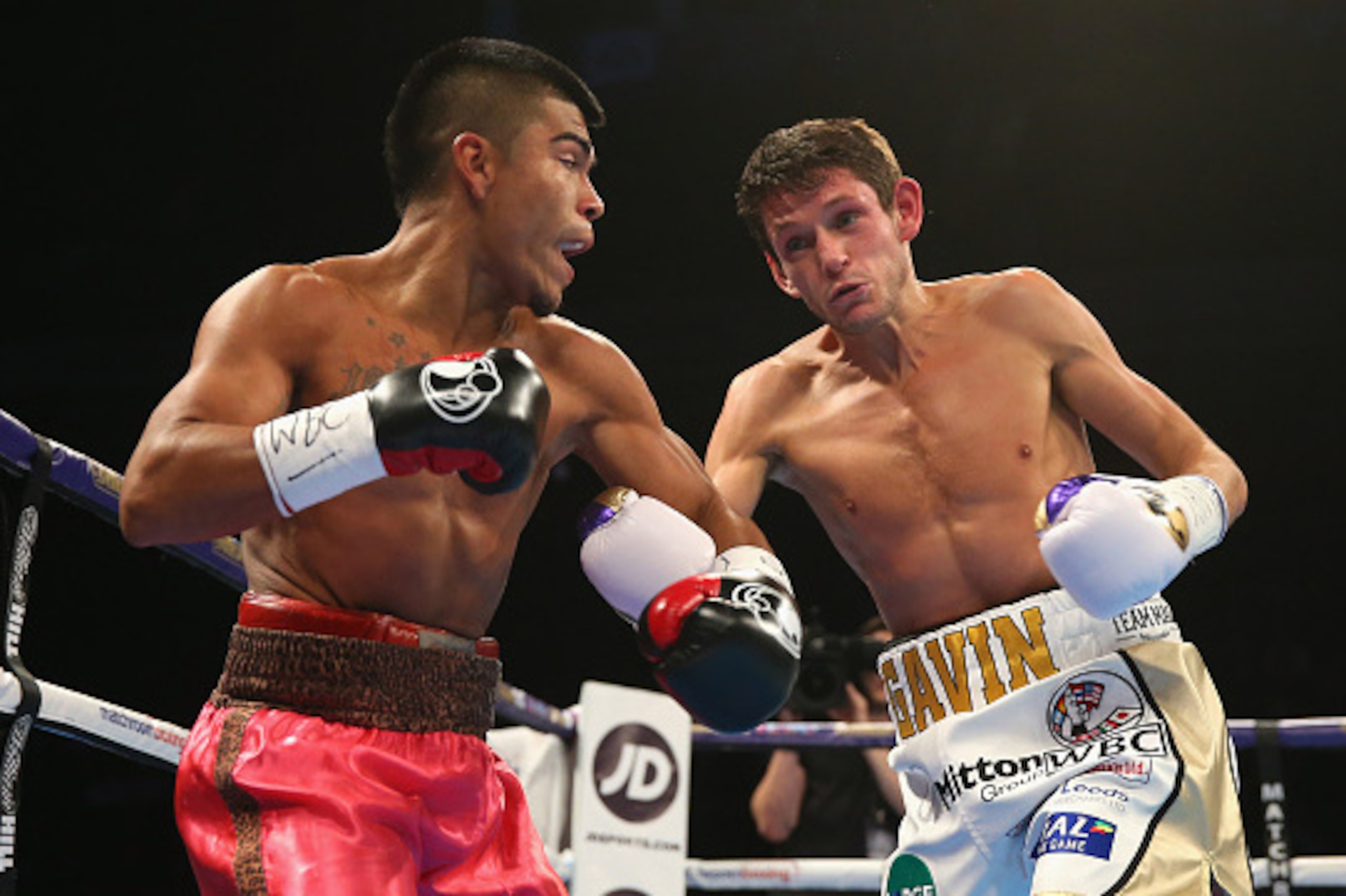
Much like the main event, the undercard at the Manchester Arena was a little underwhelming.
Gavin McDonnell was the chief support, and the super bantamweight kept his hopes of following in the footsteps of twin brother Jamie, a two-time world champion at bantamweight, by recording a unanimous-decision win over Jorge Sanchez from Panama.
There were early finishes for two of Tyson Fury’s relatives too, as his cousins—Hosea Burton and Isaac Lowe—triumphed inside the distance.
Burton claimed the vacant British light heavyweight title by stopping Miles Shinkwin in Round 6. Lowe, meanwhile, is now the Commonwealth champion at featherweight after recording a TKO win over Marco McCullough.
Fury was at ringside to watch the pair but didn’t stick around for the main event:
Frampton-Quigg wasn't quite the all-action showdown that Fury, and many others, wanted to see, but it was still another example of why British boxing is enjoying such a boom period. Long may the good times continue.

.jpg?w=2560)
.jpg?w=2560 "Steelers To Keep Allar, Howard")


.jpg?w=2560 "Chiefs 69-Yard Preseason FG")
.png?w=2560 "Vrabel Calls Out Pats Defense 🤷♂️")
.jpg?w=2560 "Eagles RB Leaves in Ambulance")