

Early Predictions for the 2016 Formula 1 Season
It already feels like an eternity since we last saw the Formula One teams and drivers in action, and we still have a long wait ahead of us before we'll see them again.
The 2016 F1 season kicks off with first practice for the Australian Grand Prix on March 18. Even pre-season testing won't be along until the end of February.
Those two, four-day tests at the Circuit de Catalunya will give us our first solid ideas of who will be competitive in the season ahead, but some clues are already available. Evidence from 2015 suggests Mercedes will once again be at the head of the field, though maybe not in a class of their own.
Ferrari made huge strides last winter, and another good off-season will give the Scuderia a real chance of taking the fight to the Silver Arrows. Red Bull will need a little more luck to be able to do the same—and may find themselves in an embarrassing situation in the early rounds of the year.
Mercedes-powered Manor will be aiming for their best season to date, Renault will want to return with a bang and McLaren, after a dreadful 2015, cannot possibly spend another year at the back of the field.
Or can they?
Predictions are a tricky business at the best of times, and doubly so when they are made without seeing the cars on the track. But we did some at this stage last year and—one glaring anomaly aside—they turned out to be fairly accurate.
So here are five very early predictions for how the 2016 season will go.
We'll See a Proper Fight Between Mercedes and Ferrari
1 of 5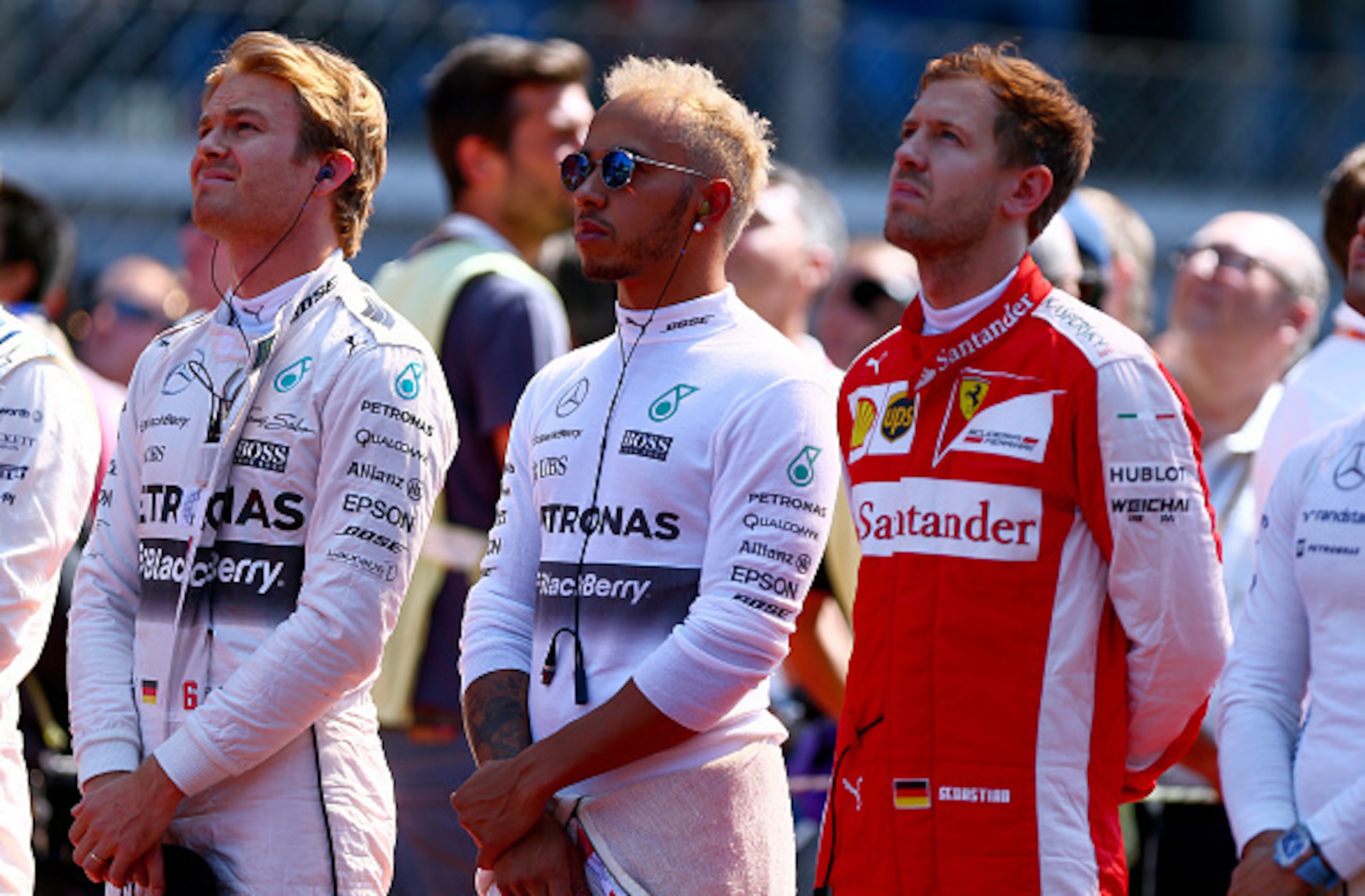
Mercedes have dominated F1 since the start of 2014. Since the Australian Grand Prix of that year, they've won 84.2 percent of the races, taken 94.7 percent of the pole positions and scored 1404 out of a possible 1684 points.
Bernie Ecclestone thinks they have made the sport boring, and many fans would agree with him, but there's little reason to suspect Mercedes will be anything other than the team to beat in 2016 as well.
Only this time, there's a good chance Ferrari will be a lot closer.
The Scuderia made huge strides in terms of power-unit performance over the winter of 2014/2015. As the season entered its second half, their deficit to Mercedes in pure power terms was relatively small—just 10 horsepower or so, according to Andrew Benson of BBC Sport.
This indicates a substantial chunk of the lap-time difference between them and Mercedes was in the performance of the SF15-T chassis relative to the W06.
This is a good thing for Ferrari heading into the new season, because the regulations are remaining stable—and the closer a team is to the optimum achievable performance under a given set of regulations, the harder it is to find improvements.
Ferrari, with their huge budget and wealth of technical talent, should therefore find it easier to make gains over the winter than Mercedes.
Qualifying may remain the domain of the Silver Arrows, but race-pace—where Ferrari tended to be stronger last year—will be a different story. And with Sebastian Vettel the clear No. 1 at Maranello, he'll always be maximising his points and running the best possible strategies.
Lewis Hamilton and Nico Rosberg, equal No. 1s and far more closely matched than Vettel and Kimi Raikkonen, will not have the same luxury.
The constructors' championship will undoubtedly head back to Brackley for the third year in a row, but—unless Mercedes change their ways and throw all their efforts behind their best driver—the race for the drivers' title could be a somewhat closer affair.
Renault Will Experience a Short-Term Slump
2 of 5
Renault's decision to buy struggling Lotus secured hundreds of jobs at the team's Enstone base. These existing staff will be joined by a flood of new recruits as Renault builds a squad worthy of its status as a full works outfit.
But the French manufacturer will have to wait until 2017 before any kind of renaissance occurs.
The paperwork was only completed in December, so new faces will have little chance to influence the overall direction of the 2016 car. And that car won't have the powerful, chassis-flattering Mercedes power unit it had in 2015—it'll have a Renault.
The engine that caused so much trouble for Red Bull last year will undoubtedly take a step forward over the winter, but it won't be enough to put it on a par with the Mercedes or Ferrari.
And making the team's task harder still, the Renault will be driven by one of the weakest driver lineups ever seen at a works team—Pastor Maldonado and Jolyon Palmer.
The 2016 season will be one of rebuilding and setting the foundations for future success. With sweeping regulation changes set to arrive 12 months from now, don't be surprised if Renault give up on their car before the summer break and switch all their focus to 2017.
Manor-Mercedes Will Score Occasional Points
3 of 5
Manor have been in F1 since the start of 2010 in three distinct guises. They started out as Virgin Racing, switched to Marussia in 2012 and became Manor in 2015 after the Russian carmaker went bust.
In this time, they have collected just two points—both scored by Jules Bianchi. His exceptional drive to ninth at the 2014 Monaco Grand Prix secured ninth in that year's constructors' standings and, according to former team principal John Booth, ensured the team had a future.
Manor used a modified version of their 2014 car in 2015, coupled with an uncompetitive, year-old Ferrari engine. Will Stevens and Roberto Merhi tended to be around three seconds off the pace and didn't even come close to scoring points—but the team should take a massive leap forward over the winter.
They'll have a proper 2016 chassis, and it'll be powered by a 2016-spec Mercedes engine.
Manor don't have the budget to instantly be on a par with fellow Mercedes customers Williams and Force India, but Sauber proved last year that modest success is possible on a low budget. The season-long development race will be tough, but the Manors should still be able to regularly race somewhere around the rear of the midfield.
From that position, their two drivers—providing they have at least a bit of talent to go with the bags of money they will undoubtedly bring—should have ample opportunity to snatch the occasional point or two.

.jpg?w=2560 "Eagles Lions Football")
McLaren Won't Win Any Races, but They Will Get a Podium
4 of 5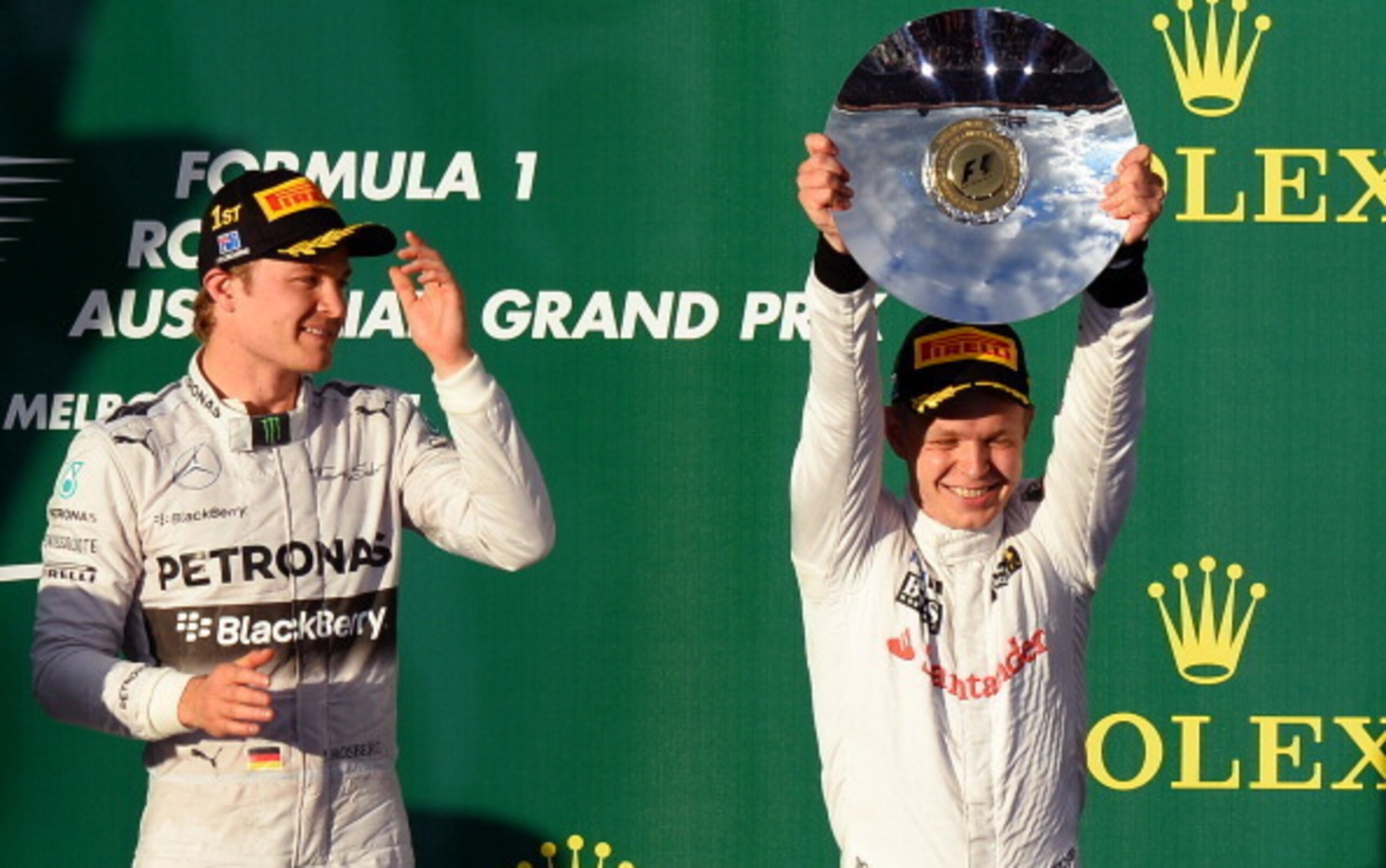
McLaren will be seeking a significant improvement in 2016 after enduring what could reasonably be considered the worst season in their long, proud history. Despite possessing one of the best driver lineups on the grid, they scored just 27 points in 2015 and finished ninth in the constructors' championship.
Their misery was largely down to the disappointing power unit built by returning partner Honda, and whether or not they remain rooted at the back in 2016 rests almost solely upon the Japanese company's shoulders.
McLaren will surely build a reasonable car—their 2015 effort, though not the best on the grid, was definitely in the top five—and Fernando Alonso and Jenson Button will extract every tenth of performance out of anything they're given to drive.
But the quality of the drivers and chassis will again pale to insignificance if they're using an underpowered, unreliable engine.
Honda are well aware of where they went wrong last season, and a problem identified is a problem on its way to being solved. We can't expect them to turn everything around in a single winter, but a company with their resources will surely make at least some steps forward—and further leaps will come as the season progresses.
Mercedes and Ferrari will remain out of reach, but by the end of the season, McLaren will be making regular Q3 appearances and—with a bit of luck—they should manage a podium or two.
Red Bull Will Have a Toro Rosso-Shaped Problem in the Early Races
5 of 5
For the first time since 2013, the two Red Bull teams will take different paths regarding their engine supply. The main team will continue with a Renault—though it will be rebadged as a Tag Heuer—while Toro Rosso will rekindle their relationship with Ferrari.
The junior squad will be using a year-old version of the Scuderia's power unit. No upgrades will be permitted throughout the season; the spec used by Ferrari at the 2015 Abu Dhabi Grand Prix will be in the back of the STR11 all year long.
But the 2015 Ferrari was a pretty good engine—per BBC Sport's Andrew Benson, it was around 45-50 horsepower ahead of the 2015 Renault.
And as in-season development is still allowed in 2016, Renault won't have spent all their tokens by the time the season kicks off in Australia. It could even be mid-season before any significant gains are made.
So it's entirely possible Toro Rosso will have a better, more reliable engine than Red Bull in the opening races.
The STR10 was a very good chassis; if the team can do a similarly good job with their 2016 car, there's every chance Max Verstappen and Carlos Sainz Jr. will be quicker than Daniel Ricciardo and Daniil Kvyat in the early stages of the year.
.jpg?w=2560 "Packers Vikings Football")
.png?w=2560 "Pic of LBJ-Maxey-JB Workout 🔥")
.jpg?w=2560 "Report: Texans WR Higgins Tears ACL")


