How Pro Boxing Has Fallen Behind UFC in the Promotion of Female Fighters
On Nov. 15, Holly Holm made headlines by ending not only Ronda Rousey’s reign as UFC bantamweight champion but also her unbeaten record.
It was a high kick that put Rousey down (a kick heard around the world), yet it was the plethora of punches thrown over the course of the fight that made the real difference.
The previous champion, with a judo background that included picking up a bronze medal at the 2008 Olympics in Beijing, struggled to cope with the superior boxing skills of her challenger.
TOP NEWS
.jpg?w=2560 "Titans Giants Football")
OBJ Calls Out Giants After Release

🚨 Week 5 AP Top 25 Poll

Pic of LeBron's Helicopter Commute 🚁
Holm became headline news with her stunning triumph at UFC 193 in Melbourne, Australia. However, this was no overnight success story.
The 34-year-old from Albuquerque, New Mexico, was a multiple world champion in the boxing ring and was named The Ring Magazine’s fighter of the year in 2005 and 2006. All this happened long before her exploits in the octagon.
Holm is a hero in her home state, where she fought the vast majority of her 38 boxing bouts.
UFC, though, pushed her onto a global scale. In just her 10th outing, Holm was topping the bill. Per Los Angeles Times journalist Lance Pugmire on Twitter, the event in Australia was a huge financial success:
So, could the same thing happen in boxing?
Right now, it seems a long shot. A really, really long shot. Almost as long as that nasty kick Holm produced.
Female boxers have had moments in the spotlight, but nothing to quite match the worldwide fame of Rousey, who became a global brand. There were television appearances, so many television appearances, and also parts in movies. A war of words with Floyd Mayweather Jr. helped Rousey's profile, too.
Such exposure does wonders for your reputation. People take an interest in you, even if they don't care much for your field of expertise.
Per Max Laughton of Fox Sports, 63.5 per cent of the people who purchased Rousey’s fight against Bethe Correia at UFC 190 earlier in 2015 hadn’t previously paid for a UFC event during the year.
Professional women's boxing has appeared on big shows in the past.
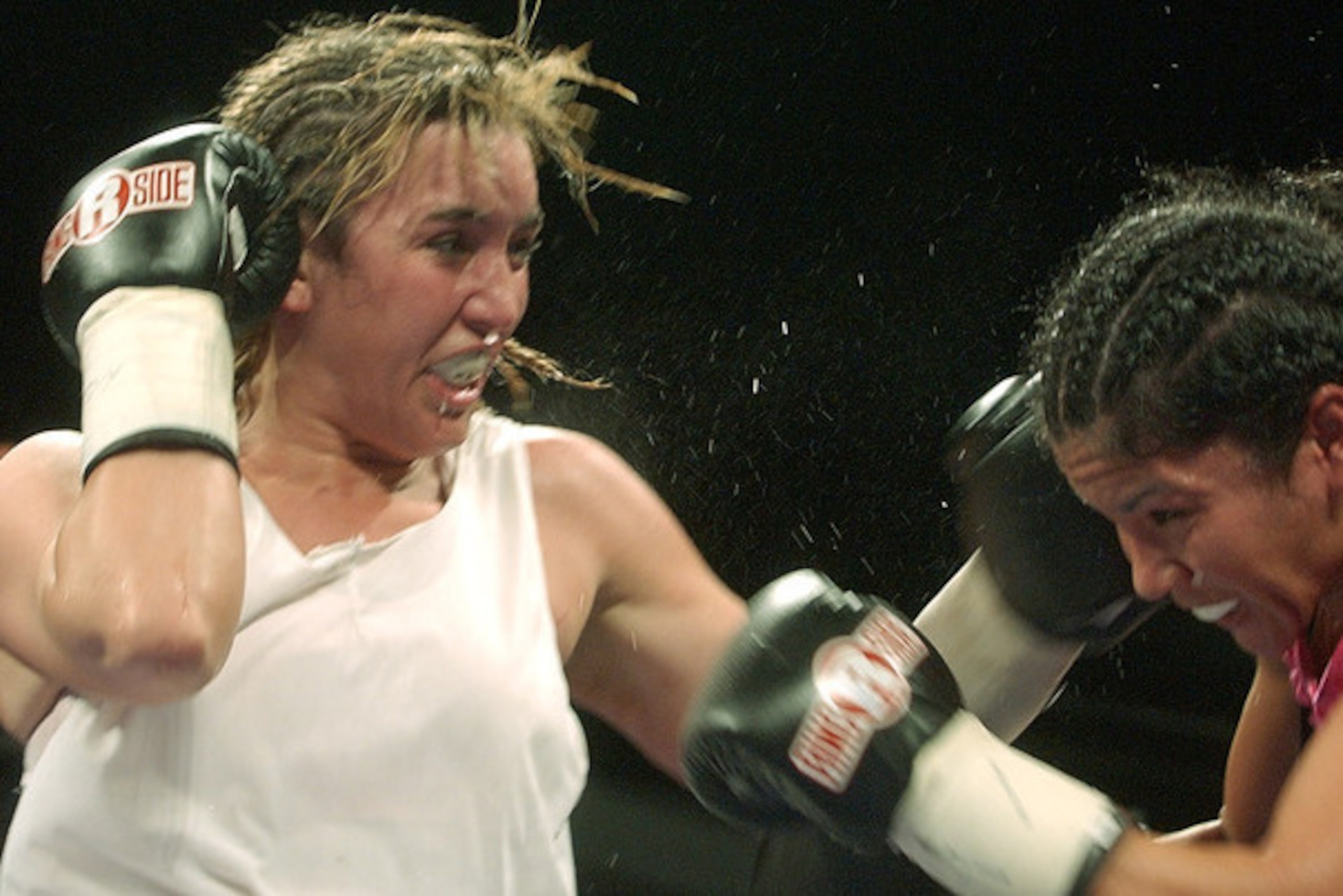
American Christy Martin signed a contract with promoter Don King during the 1990s and was seen on undercards to main events involving heavyweight Mike Tyson.
Laila Ali also became big news. The daughter of the legendary Muhammad Ali was in action on the same bill as the world heavyweight title clash between Lennox Lewis and Vitali Klitschko in June 2003.
Jane Couch was also in action that night at the Staples Center in Los Angeles.
The Englishwoman lost to Lucia Rijker on points, but that wasn't her toughest fight. Couch had to take legal action against the British Boxing Board of Control just to gain a licence to box, eventually winning the battle. She now admits it was not easy to chance perceptions of a fighting woman.
"You were painted as a villain or a freak. People made assumptions just because you wanted to box," Couch admits.
"I was none of those things, just a normal working girl. I love boxing and I always will.
"Now, when you look at how accepted it is, I do think, 'Wow, I wish it could have been that easy for me.'"
Couch created history when she took part in the first professional women's bout in Britain, as she defeated Simona Lukic at Caesars Nightclub in Streatham Hill, London.
Even still, not everyone was supportive. According to BBC journalist Neil Bennett, promoter Frank Maloney branded the event a "freakshow."
Couch—a world champion who finished her career with a 28-11 record—was a trailblazer, yet not many have followed in her path.
At a professional level, women's boxing has never really gathered much momentum. Boxing journalist Steve Bunce recalled in the Independent in 2014:
"There were men in the boxing business back then (in the 1990s) who urged women to go it alone, set up their own commission and stay away from them; the women boxing in America on big professional bills at the time were often rubbish and some type of quality control was part of the ancient thinking.
On Las Vegas shows there were famous daughters, famous strippers and a couple of genuinely good fighters, but it was still operating just above a freak show.
"
However, the amateur game has been able to thrive.
Women were allowed to compete at the Olympics for the first time in 2012 (although there had been a demonstration bout way back in 1904), and the London Games created new icons.
Nicola Adams struck gold for Great Britain, resulting in her getting a post box painted the same colour as the medal she won in her home city of Leeds, England. She gained a lot more than that, though.

Adams became the first woman to be given an award by the Boxing Writers' Club of Great Britain, while in 2013 she was appointed Member of the Order of the British Empire, in honour of her services to the sport.
There have been other perks—Adams is also a brand ambassador for Hyundai.
While the male British boxers who enjoyed success in London have turned pro—Luke Campbell and Anthony Joshua being the most high-profile cases—Adams is now focused on fighting at Rio 2016.
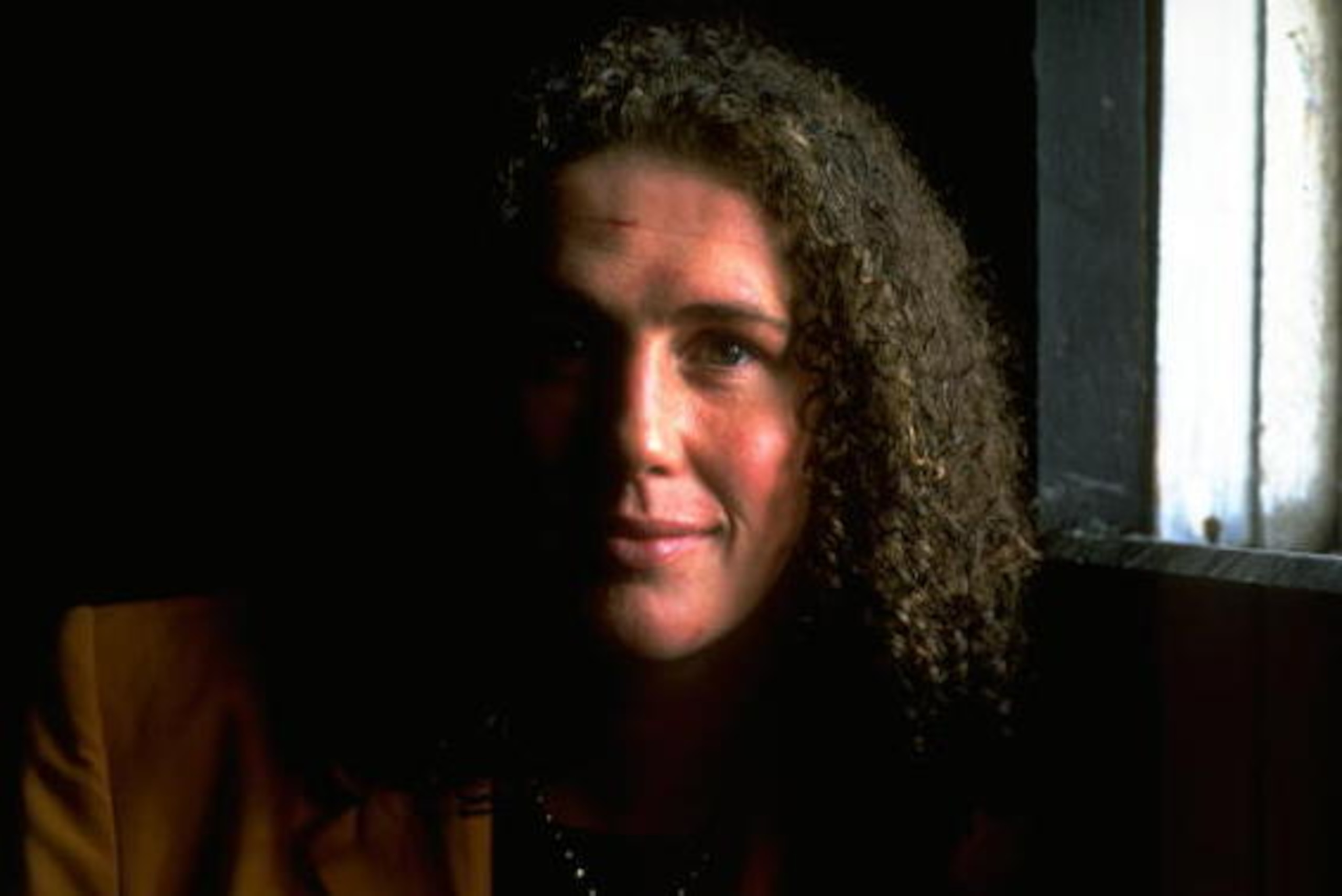
Perhaps, after the next Olympics in Brazil, things could change. Maybe Adams might leave the comforts of the amateur ranks and try her luck in the paid ranks.
Couch, though, remains doubtful professional female fights will ever be a regular occurrence on major cards in Britain.
"I can’t see it [happening] in this country," she admitted.
"If you had a girl who did well in the Olympics, there may be scope for her to turn professional with a big promoter. But she would need that big promoter to back her.
"They would need to be managed and built up, just as UFC did with Ronda Rousey. Maybe then it would be good for both sides.
"You cannot do it on your own. You can be the best fighter in the world, but you need someone there to promote you."
Adams could be the one to break the mould.
In an interview with John Dennen of Boxing News, the 33-year-old talked about the potential to "do a Rousey" and bring women's boxing into the mainstream conscience:
"I feel what she [Rousey] has done for the UFC and it’s absolutely amazing. It would be nice to be able to that for the boxing as well. Why not? Why can’t we have someone coming through.
She used to be a judo Olympic medallist and moved into MMA. So I think all it takes is someone with a high profile to really lift the sport. Maybe Nicola Adams is the one to do it!
"
Perhaps, though, Holm is the one setting the trend in moving the other way.
Couch, who actually lost a boxing bout to the American in 2006, admits that was never a move she could have contemplated in her career ("If I bang my shin on something, I’m crying for a week!").
She did move into promoting herself after hanging up the gloves, but she now runs a construction company in Bristol. Having seemingly paved the way for others in the ring, Couch is now dealing with foundations of an altogether different kind.
In the meantime, British boxing still waits for another professional female fighter to come along and make an impact.
Simply blaming the promoters for a lack of opportunities is not the answer. They need the product there to promote in the first place, as Couch added: "It would be a waste of time if a woman couldn’t sell tickets."
It seems women's boxing is in a chicken and egg situation.
So, which one will come first: the promoter willing to take a gamble, or the female fighter good enough to garner the attention of the masses? Don't hang around waiting for the answer to that question.
Rob Lancaster is a featured columnist for Bleacher Report. All quotes in the article were obtained firsthand, unless otherwise stated.

.jpg?w=2560 "Rap: Lions, LaPorta End Contract Talks")