

As Barcelona Thrash Real Madrid, Flaws of Florentino Perez's Reign Shine Bright
The goals came with both staggering ease and regularity, and as each one went in, Rafa Benitez turned to his notepad to furiously scribble away amid the carnage.
On those small pages in his hand, notes on systematic deficiencies and tactical imbalances would have undoubtedly been made, but you'd imagine there might have been some more emotionally charged lines jotted down too.
Lines like: "Don't pick Danilo again."
TOP NEWS
Sullivan, Hall Lead USMNT to Big Win 💥
Int'l Break Goals and Highlights 🔥
Massive Shakeup in CFB Top 25 List 🔢
"What's wrong with Raphael today?"
"I don't know what to do with Toni."
"Karim's not fit. Karim's not fit. Karim's not fit."
"Luis' job looks pretty good."
Perhaps most of all, though, Benitez's notes might have included a repetitive line about the man who hired him, the man who's made his task—and the task of so many who've gone before him—border on impossible. Something to the tune of: "I hate the president. I hate the president. I hate the president."
And you know what? If he did, he wouldn't be alone.
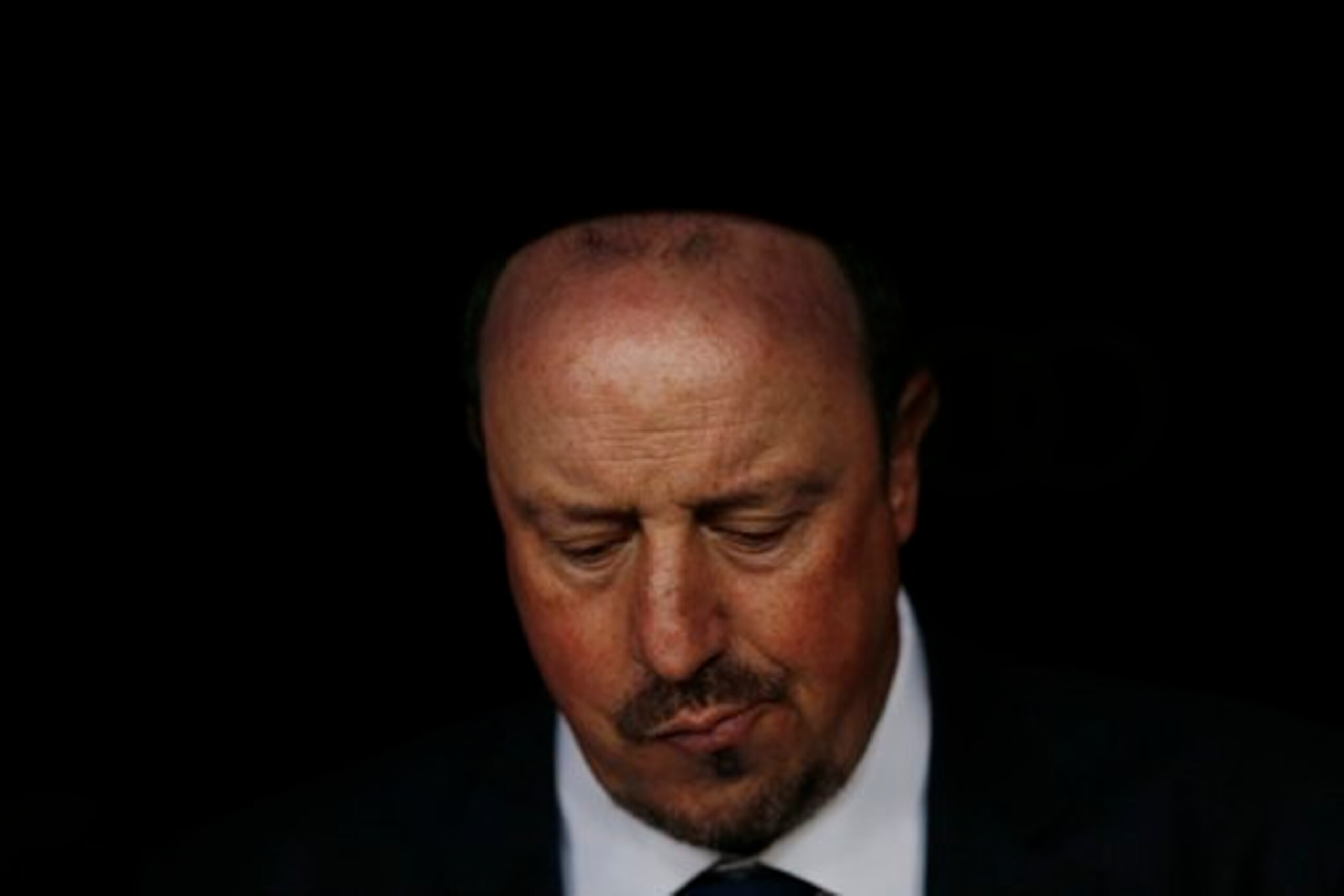
On Saturday, as Barcelona handed out an annihilation of frightening proportions to Real Madrid in the season's first Clasico, the Bernabeu traversed the spectrum from frustration to utter rage. The hosts humiliated 4-0, the whistles grew deafening. The white handkerchiefs waved. But most telling was the chanting. "Florentino resign" rang around the stands.
They have a point too.
Six seasons have passed since Florentino Perez returned to power in Chamartin in 2009, when he won back the presidency uncontested. But since, despite all the promises, despite all the exercises of grandeur, there's been precious little to boast about for Perez. Or, more precisely, precious little of the right things to boast about.
Under his watch, Real Madrid have become a footballing business like no other, the club's financial might surpassing any other sporting institution on the planet. In 2013-14, the club's revenue went past €600 million for the first time; last season, it hit €660 million. "Forbes magazine has laid down before us," Perez has even said.
The problem for Perez is that rivals aren't doing the same.
In six seasons under the current president's watch, Madrid have lifted one league title. That figure doesn't change if you add the final three seasons of his first term, either, taking his tally to one in nine. And based on the evidence of Saturday's Clasico, his Madrid are outsiders to add a second this season, so that record could become one in 10.
Not since the 1940s have Real Madrid endured a leaner stretch, but still the president's finger points elsewhere.
Under his reign, managers are discarded with a haste unmatched in world football, his club forced to experience the difficulties of institutional upheaval all too regularly. Added to that, key players are tossed aside if they don't sell shirts. Others arrive to replace them; whether they fit the team or help the manager doesn't matter—that's somebody else's problem. He'll just fire them and find someone else if they're either unwilling or incapable of dealing with it.
Thus, the world's biggest club has become a toy for its president, a "plaything" as AS put it. Worse, Perez has taken the club's identity away from the pitch, its team run for the needs of the business rather than the business run for the needs of the team—the exact opposite of Barcelona's existence.
This has all been said before, of course, but Saturday's mauling brought it all back into sharp focus. A single evening encapsulated it better than ever before.
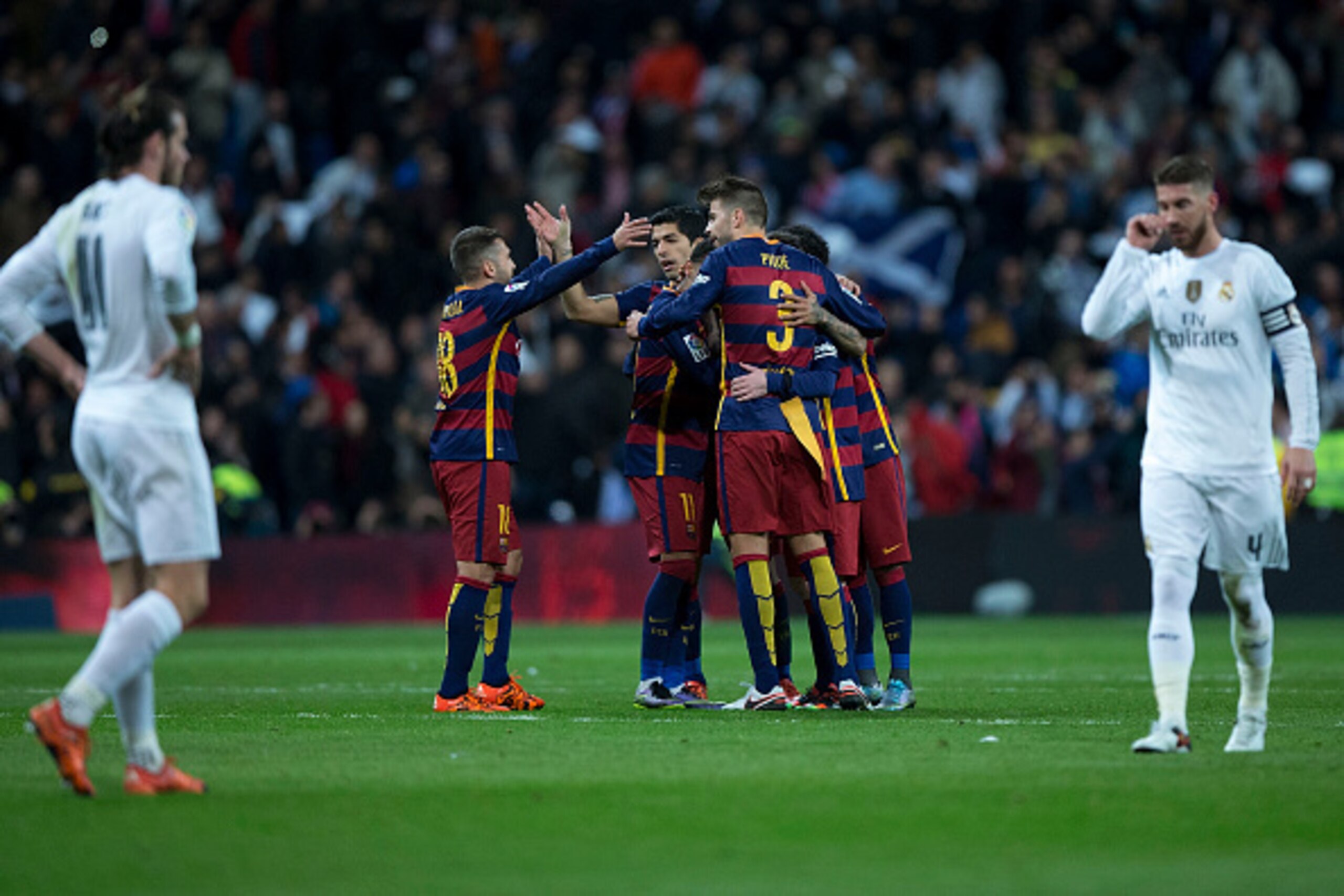
Leading up to Barcelona's visit to the capital, Benitez was in a position no one will have envied.
On the back of some ponderous displays and with the collapse against Sevilla fresh in the memory, doubts had raged over the style of Benitez's team, a perceived defensive emphasis pleasing few. Though injuries hadn't helped, portions of the criticism had been justified; the team was missing something. A verve maybe. Personality. Though the results suggested Madrid were good, the eye told you something else.
But what it meant was Madrid weren't ready to attack a Clasico and attack Barcelona. Still a work in progress, their requirement was to avoid damage, to emerge unscathed. Yet Benitez didn't have a choice; he had to attack. Doing otherwise would have been political suicide.
Thus, what Saturday witnessed was Benitez abandoning his own principles, putting aside his own ideas to appease the fans. To appease critics.
To appease the president.
In picking the defensively flawed Danilo over Dani Carvajal, in picking a half-fit Karim Benzema over Casemiro, Benitez essentially used the Florentino Perez XI because of the consequences if he didn't, the Madrileno, like so many before him, deprived of the authority to shape the team the way he wanted. The results were catastrophic.
After Nolito, Maxwell and Yevhen Konoplyanka, Neymar became the fourth man in five games to make Danilo's legs look like a twisted sweet; a forward line that's barely played together functioned like a forward line that's barely played together; the midfield was a ghost town; the back four got the sort of protection offered by a newspaper to napalm.
The counter-argument is Carlo Ancelotti made such a lineup work regularly, but Benitez isn't Ancelotti. Benitez is attempting to reshape the team in his image, to redefine its identity. The problem is that, even though that's what he was theoretically hired to do, he hasn't been given the authority or belief to do it. Perez demands something else.
Hence, Benitez's team has a confused identity, caught between what the manager wants them to be and what the president has ensured they are. And in Saturday's Clasico, Barcelona exploited that confusion with devastating brutality. The sort seen in the 5-0 in 2010. In the 6-2 in 2009.
The sad part is those ruins are the result of flawed foundations. Foundations put in place by the president.
.jpg?w=2560 "Commanders Eagles Football")
_0.png?w=2560 "Week 5 Winners & Losers 📊")

.jpg?w=2560 "Seahawks Have No Plans to Move")
.jpg?w=2560 "Most Tradeable Players on Every Team")