Formula 1's Latest Rumours and Talk: Pirelli, Sebastian Vettel's Finger, More
Bernie Ecclestone revealed during the Russian Grand Prix weekend that Pirelli would continue as Formula One's sole tyre supplier—but the company's motorsport boss demanded assurances regarding testing before committing to the deal.
Paul Hembery says real-world testing for the new, wider 2017 tyres is essential if the company is to get them right. With the tyre company satisfied it will get the chance to do this, the supply deal will go before the World Motor Sport Council for final approval.
But while Pirelli seems happy with Ecclestone, not everyone has such a positive view. World Endurance Championship chief executive Gerard Neveu has accused the commercial rights chief of mounting a "clear attack" on the 24 Hours of Le Mans.
The latest edition of the provisional 2016 F1 calendar has the European Grand Prix in Azerbaijan scheduled to clash with the Le Mans weekend. Its presence blocks any F1 stars from taking part and could potentially pull attention and media focus away from the WEC's showpiece event.
Elsewhere, Jenson Button and Fernando Alonso are keen for Red Bull to stay in F1, Force India's Bob Fernley is prepared to deal with the consequences of his team's complaint to the European Union and Sebastian Vettel's old boss has given his theory on the origins of the German's infamous "finger" celebration.
Read on for a full roundup of the top stories from the last few days.
Pirelli Demanded Testing Assurances to Remain as Tyre Supplier
1 of 5
Pirelli has demanded assurances that it would be able to conduct meaningful testing before committing to a new F1 tyre deal.
During the Russian Grand Prix weekend, Bernie Ecclestone revealed the Italian company had secured an extension to their current contract—subject to the formality of a World Motor Sport Council approval—and will supply tyres for the whole grid until the end of 2019.
But Pirelli only signed on the dotted line after being told it will be permitted to carry out real, on-track testing for the new wider tyres set to be introduced from 2017 onward.
Pirelli motorsport director Paul Hembery told Motorsport:
"It is a monumental financial commitment.
It is not something that any company can take lightly, and you have to understand every fact that was involved.
There were some areas where we needed some assurances like testing—that we would be put in a condition where we could do our job.
We have been given those assurances, even though we don't have the final solution as the rules are not set for 2017.
So we don't know if we can test the new wider tyres on a modified actual car, or if it needs a hybrid car. So there are a lot of question marks still to cover there.
But the concept of testing has passed and the need to have race drivers doing the testing and giving us clear input is also something that has been well understood.
"
Pirelli's fast-wearing tyres haven't proved popular with all sections of the fanbase, but in supplying this sort of rubber, it is only doing its job. Ecclestone wants tyres that lead to multiple pit stops and—in his eyes—improve the show, so that's what he gets.
But the draconian testing restrictions imposed upon the teams leaves Pirelli with very few opportunities to put its tyres through their paces in a real-world environment.
The company has to rely on simulations and educated guesswork, so it's little wonder that sometimes the tyres don't behave entirely as expected.
Exactly what Pirelli will be permitted to do, what sort of cars it will be using and how this will impact on the teams' own testing allowance is, as Hembery says, unclear.
In an ideal world, the company would be given a spare car from one of the teams—paid for, perhaps, by Ecclestone and friends—and it would be allowed to use it as much as it liked.
Sadly, F1 isn't an ideal world—but any increase in testing will be better than nothing.
World Endurance Series Chief Criticises Bernie Ecclestone over 2016 Calendar
2 of 5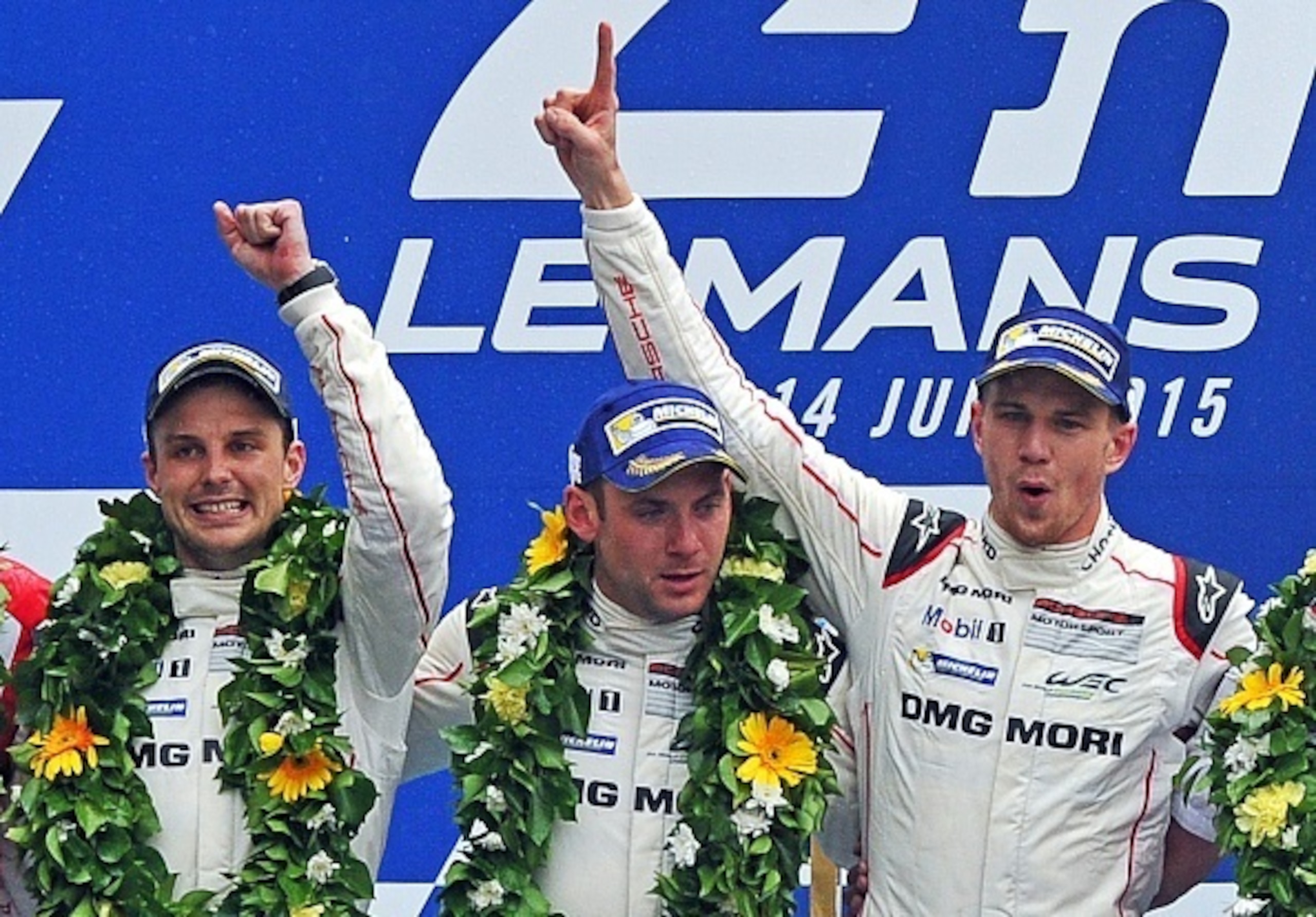
World Endurance Championship boss Gerard Neveu has criticised Bernie Ecclestone after the latest draft of the 2016 F1 calendar revealed a grand prix will clash with the 24 Hours of Le Mans.
The European Grand Prix in Baku, capital of Azerbaijan, is set to take place on June 19. Le Mans—the jewel in the crown of the WEC—will finish on the same day.
Speaking to Italian publication Autosprint (h/t Daniel Johnson of the Telegraph), Neveu made it clear he was displeased—and blamed F1 commercial rights chief Ecclestone.
Neveu said:
"It's a clear attack on us and on this race. Ecclestone never does anything nonchalantly.
It is a shame because by doing this you take away the possibility of having F1 stars entering what still is the most important race in the world. We could have had [Nico] Hulkenberg and also other F1 drivers—motorsport fans are losing out.
"
The clash is a huge blow for Hulkenberg, who won Le Mans in 2015 alongside Porsche co-drivers Nick Tandy and Earl Bamber. Unless he asks to take a race off, and Force India let him, he will be unable to defend his crown.
But the Le Mans clash isn't the only reason the date of the Baku race raised eyebrows when it was revealed. It has been scheduled just one week after the Canadian Grand Prix in Montreal—around 9,000 kilometres away.
The teams will have just a couple of days to pack up and transport all their equipment across the Atlantic Ocean, over Europe and to the edge of Asia, then get set up at an unfamiliar city-centre venue with no prior experience of hosting a grand prix.
The WEC has rapidly grown in popularity since its launch in 2012, attracting top sports car names and interest from a number of F1 drivers.
Mark Webber left Red Bull for the series at the end of 2013, while Fernando Alonso and Daniel Ricciardo are among current drivers to have indicated they would be keen to tackle the showpiece Le Mans race.
F1 drivers tend to have a larger media presence than sports-car racers, so if Ecclestone feels threatened by its rise, ensuring none of his big-name stars could take part would be a reasonable method of "attack."
The attention given by the F1 and motoring media to Hulkenberg's triumph was in effect a massive free marketing boost for the race and the WEC—there'll be no chance of a repeat in 2016.
But would Ecclestone really create a logistical nightmare for F1 just to stick it to a series that isn't really a direct competitor? It's just as likely, probably more so, that the clash is down to little more than the challenges of fitting a record 21 races into a relatively short period of time.
Unfortunate as it may be, F1 has to put F1 first. The concerns of the WEC, Hulkenberg and fans who'd like to watch all come a distant second.
Force India's Bob Fernley Ready to Take Whatever Consequences Come His Way
3 of 5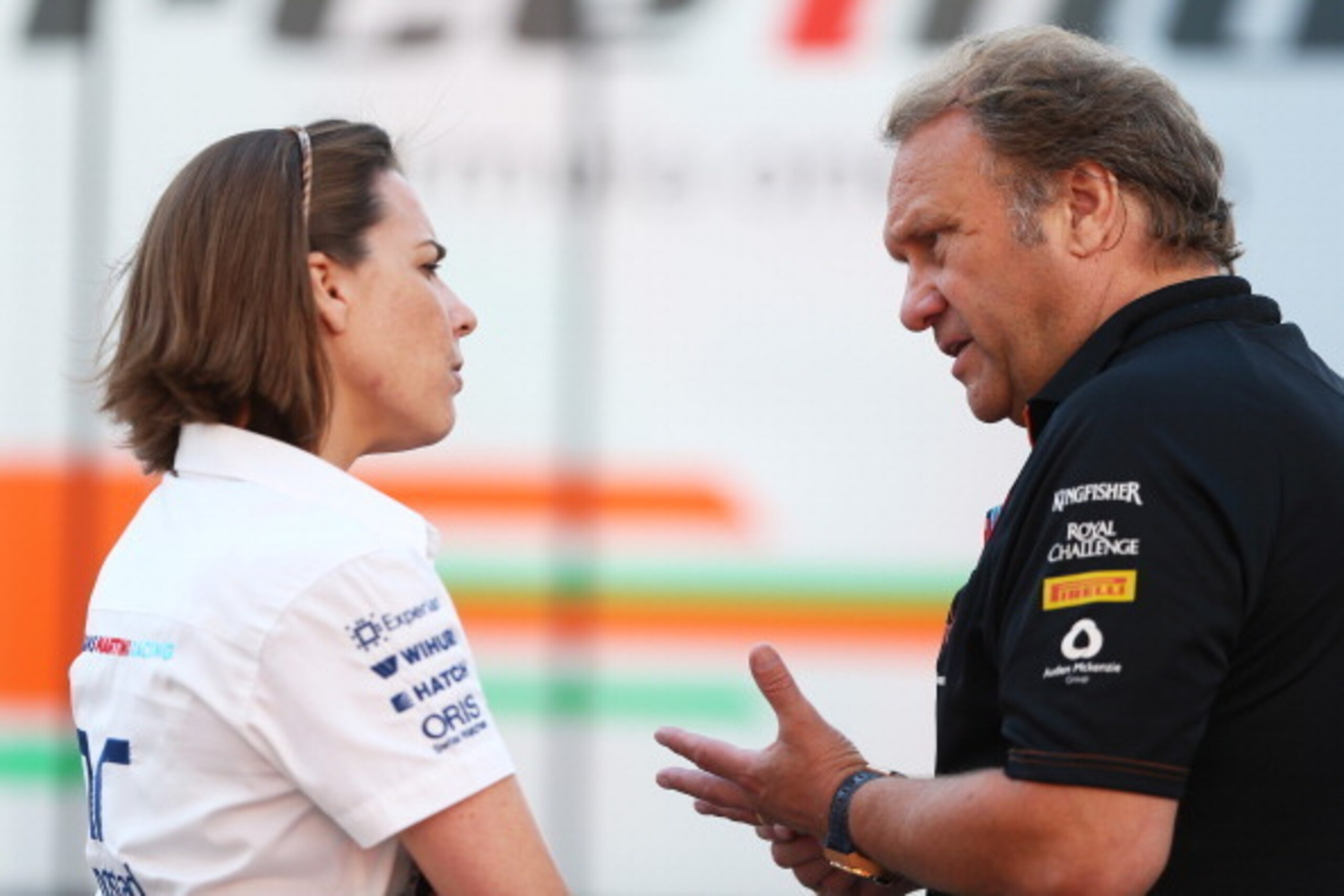
Force India deputy team principal Bob Fernley accepts there will "probably" be repercussions for himself, his team and Sauber after their complaint to the European Union.
The two midfield teams have taken a stand against the current revenue-sharing and rule-making system in F1.
A Sauber statement published by Sky Sports in September confirmed the two "have submitted a formal complaint to the European Commission for violation of European Competition Law challenging the rule making powers and privileges, which are harming the sport."
Fernley has not been afraid to put his head above the parapet in the past when discussing the issue, and on this occasion, he expects a backlash of some kind.
Speaking to Autosport, Fernley said:
"We're big boys, we know what the risks are.
Will there be repercussions? Probably, in due course.
But if you feel strongly about something and you're not prepared to take care of your own convictions then you shouldn't be doing it.
I've enjoyed a very privileged career in Formula One, or motor racing as a whole, doing I something I love for over 30 years.
I would dearly like to think if I leave Formula One then somebody else could have 30 years as well.
If that means there has to be a penalty for me personally in the short term then it is not the end of the world. It is one of those things. You have to accept it.
But you have to have the strength of your convictions.
"
He went on to add that the teams only made the complaint after giving those in charge ample time to make voluntary changes, saying:
"It was a very, very hard decision to have to take.
But I feel it was a decision on which we gave every opportunity for mediation over a significant period of time, certainly at least 12 months, to try and get a conciliatory agreement in place.
Clearly there is no interest in that whatsoever, so we have had to look at bringing in a body that is independent and has the power to bring us all to account, and the only one that can do that is the EU.
"
One of the issues being raised by the complaint regards the rule-making process. The "big teams" each have a permanent seat on the powerful Strategy Group. The smaller squads have to make do with a single seat between them, occupied by whoever finished the highest in the previous year's constructors' championship.
But the most pressing and important issue is the manner in which the sport's revenues are divided. Under the current system, the "big teams"—Ferrari, Red Bull, Mercedes, McLaren and Williams—receive additional payments on top of their "fair share" of the pie.
Figures published by Autosport's Dieter Rencken revealed the staggering extent of these payments, and showed that in 2014, the highest-paid team—Ferrari, fourth in the standings—received $164 million (£106.2 million). The lowest-paid, 10th-placed Sauber, got just $44 million (£28.5 million)—less than 27 percent of the Scuderia's wedge.
For the sake of comparison, official figures for the English Premier League's TV rights revenue reveal a far more balanced and sensible picture. For the 2014/15 season, the lowest-paid club (Queens Park Rangers, who finished bottom) received 65.5 percent of the amount given to the top club (champions Chelsea).
Force India and Sauber should be applauded for their willingness to take a stand against this unfair state of affairs, but it wasn't bravery that sent them to the EU.
It was necessity.
The general rule in F1 is that money equals competitiveness, but it also equals survival. Caterham have already been forced out and, but for a last-minute reprieve, Manor-Marussia would have followed them.
Force India, Sauber and Lotus are also close to the edge. They know they cannot go on forever as breadline-scraping midfielders, forcibly kept in their current position—at least in part—by a revenue system that favours names over results and history over the here and now.
.jpg?w=2560 "Green Bay Steelers Football")
.jpg?w=2560 "Rams Donald Return")
Trevor Carlin Reveals Theory for Sebastian Vettel's Finger Celebration.
4 of 5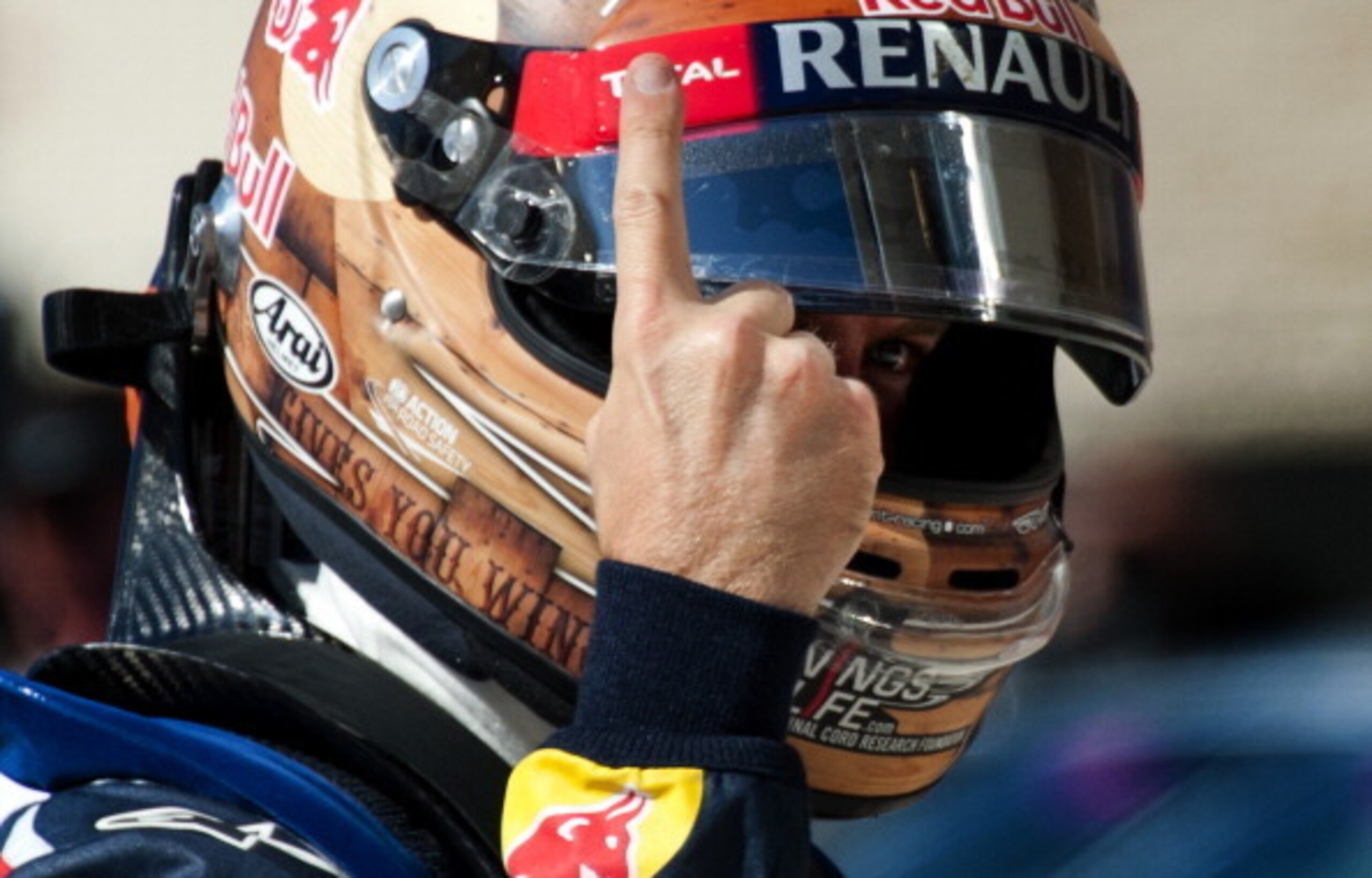
The origin—or at least, a theory on the origin—of Sebastian Vettel's "finger" celebration has been revealed by his former boss Trevor Carlin.
Vettel drove for Carlin's eponymous team in Formula Renault 3.5 in 2006. He won his first two races in the category at the Misano circuit in northern Italy, and the next round was at Spa.
Speaking on Sky Sports F1's Midweek Report, Carlin revealed:
"He was massively fast and in his first season for us he decided to take Eau Rouge flat in a wet race. He had a massive accident and while he was trying to catch the accident his front wheel came off, flew over the car and caught the top of his finger—and took the top of his finger off.
The next day he turned up at the circuit with a big bandage on his finger—and still smiling despite not being able to race. But the top of his finger had broken off and they had to stitch it back on.
"
The crash in question can be seen on YouTube—Vettel's is the Red Bull-liveried car which loses control at around the 18-second mark. The wheel that caused his finger injuries went on to hit eventual series champion Alx Danielsson, who had a very lucky escape. Pastor Maldonado won the race.
The injury—to the same right forefinger he raises in celebration every time he wins a race—didn't keep Vettel out of action for long. Just 20 days later, he won both races at a Formula Three Euroseries round at the Nurburgring.
Whether it really is the reason behind the celebration or just a theory, it's certainly an interesting story.
Jenson Button and Fernando Alonso Hope Red Bull Remain in Formula 1
5 of 5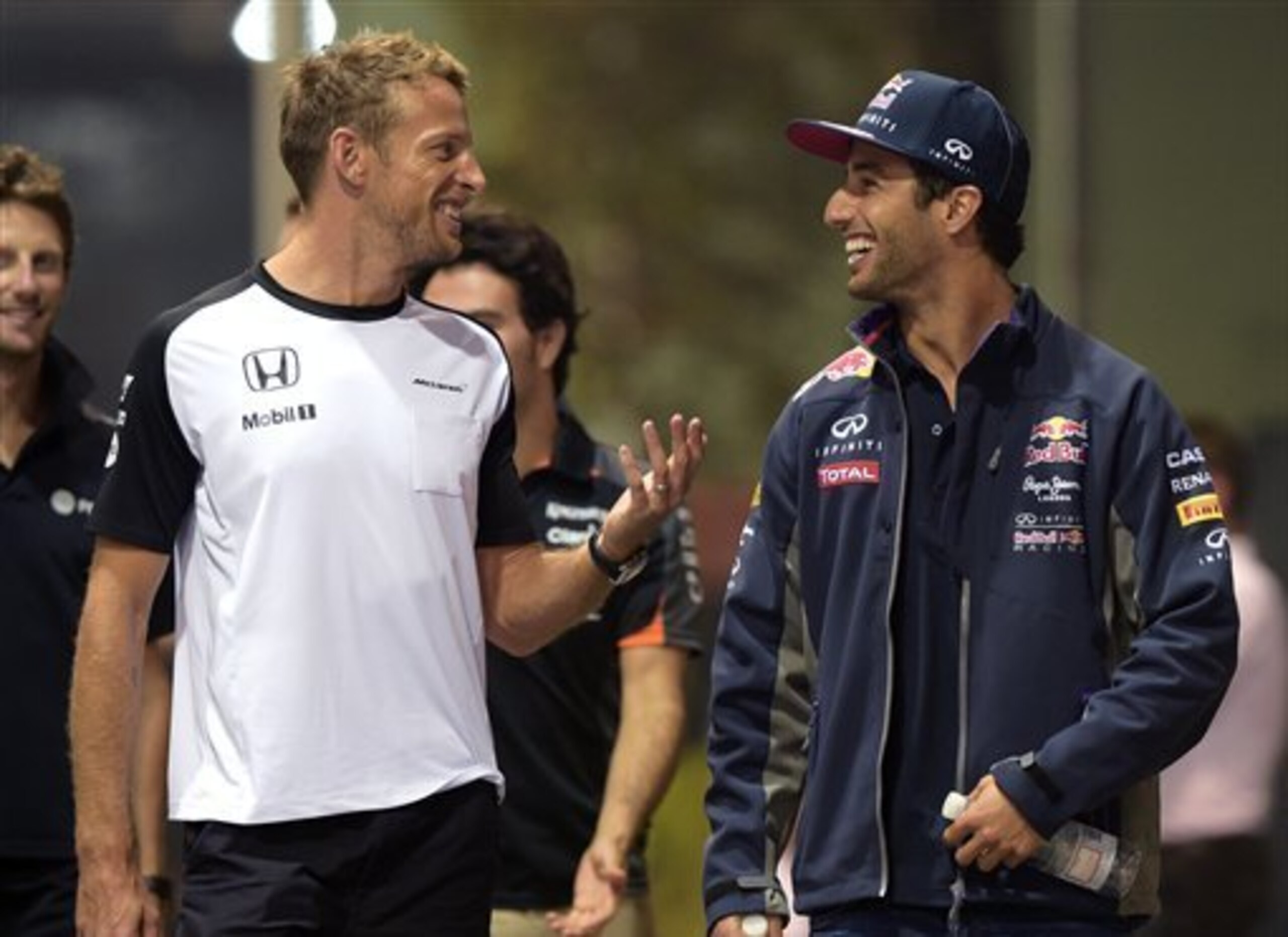
Fernando Alonso and Jenson Button hope Red Bull and Toro Rosso stay in F1 beyond the end of the current season.
The loss of the two teams would perhaps enhance Button and Alonso's McLaren team's chances of scoring points, but neither appeared to be in a selfish mood when asked for their feelings.
Button was quoted by Crash as saying:
"If they [Red Bull and Toro Rosso] left F1 it would definitely change and it would be a very sad loss for the sport because they are a very big part of it. They have two teams at the moment and a lot of very talented people who have achieved so such in their short period in the sport. It would be very sad to see them go. Hopefully it is only rumours and speculations.
"
Alonso, who was tenuously linked by the Mirror and BBC Sport's articles to a move to Red Bull toward the end of last season, agreed, saying:
"Yeah, that's sad. Hopefully they will find a solution, but from outside it is difficult to understand because a top team like Red Bull combined with an engine manufacturer could win, but of course it clashes with their own interests.
It is a bit of a strange situation with everything combined, but I think for the good of the sport they will find a solution.
"
Red Bull's future—and seemingly that of their junior team, Toro Rosso—hinges on whether or not they are able to secure a suitable engine deal for 2016. Mercedes will not entertain the thought of arming the Austrian outfit with their dominant V6 turbo, while Red Bull's discussions with Ferrari appear to have also failed.
Sky Sports F1's Martin Brundle said over the Russian Grand Prix weekend, "Red Bull don't have an engine—I think it's absolutely clear that Ferrari won't and can't supply them with 2016 engines."
Switching to Honda power would be like swapping a misfiring Clio for a burnt-out Civic, so Red Bull appear to have just two options left. In Brundle's words, "walk away or rebuild bridges with Renault."
The team have become adept at blaming others for their problems in recent years, but the position they now find themselves in is entirely of their own making.
Rather than work with Renault to find a solution, Red Bull opted to wage a very damaging public war with their supposed partner—then walked away before they'd found an alternative.
Unsurprisingly, 75 percent of fans polled by James Allen said they had no sympathy for the team. Just 17 percent felt sorry for them with eight percent undecided.
But even Red Bull's biggest critic would not want to see four cars—along with four very talented young drivers and hundreds of brilliant minds back at the factories—disappear from the sport.
Let's hope Renault can forgive, forget and improve.
.jpg?w=2560 "Titans 49ers Football")
.jpg?w=2560 "Vrabel's Brady Quote 😅")