

Recalibrating Real Madrid Needn't Be Worried by Cristiano Ronaldo's 'Slump'
A slump. It's almost comical, isn't it?
Even by the most stretched definition of the word, using it here sounds as rational as describing FIFA as an appropriate body for distributing aid after a tsunami.
For a more accurate reflection of the term, see Wayne Rooney. With one goal in his last 13 Premier League starts, he's in a slump. Harry Kane is in a slump. Diego Costa is in a slump. Alvaro Negredo is in a slump. Jackson Martinez is in a slump. Radamel Falcao is in a, well, actually, I don't know what that is.


.jpg?w=2560)
But Cristiano Ronaldo? A slump? After 10 goals in nine games for Real Madrid this season?
Just typing those words has me tempted to quit this caper, punch myself in the groin and ask my doctor for the strongest antipsychotics he can prescribe. Frankly, it can't be ruled out that it's necessary. Because, really, we've lost it when we're calling that a slump, haven't we?
Yet, if just for a second we entertain the idea, the concept of relativity gives the argument the tiniest bit of merit. This is Ronaldo, after all. The mind-warping, record-destroying, net-busting goal robot whose scoring record since swapping the north-west of England for the Spanish capital has forced calculator manufacturers to start making "1,000,000" buttons as if they were accommodating Zimbabwean inflation.
A four-game scoreless stretch in the league, then, kind of becomes a big deal. Ronaldo hasn't done that for five years. In all, it's six scoreless games in seven in the league this season for the Portuguese—his five-goal barrage against Espanyol somewhat distorting the correlation between his form and the numbers.
Time to worry?
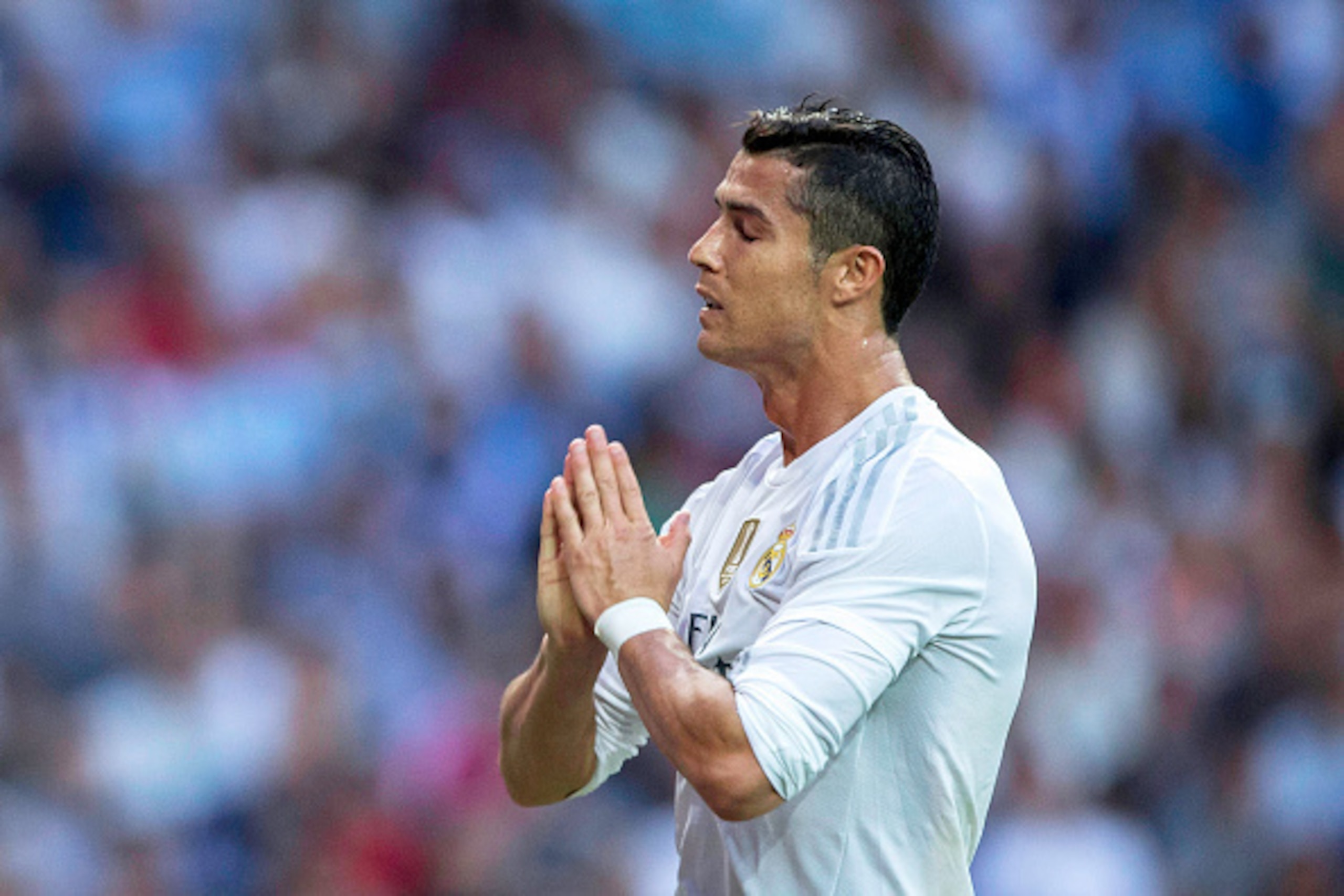
At the most basic level, lean runs from star forwards always lead to some degree of concern for the club involved. It's the unknown that scares a club, the possibility that a blip becomes something more terminal for the man who helps his team put the ball in the net more often than the other mob—the thing Ronaldo has been doing for years now.
For Ronaldo, there's also another factor at play. Now 30, and soon to be 31, there's a lingering sense that this astonishing footballing stormtrooper is slowly descending, inch by inch, from a peak that's already been scaled. What he's done, the level he's reached: It's not infinite. Though this "slump" is overblown, there are also some inescapable truths in it.
Slowly, steadily, Ronaldo is becoming more dependent on those around him at Real Madrid. No longer is he the left-sided bazooka blowing through teams like they're cardboard huts, forcing those who sit behind the goal to contemplate wearing baseball-like face masks in the event the ball busts through the netting.
No, instead, the Ballon d'Or winner is now the finisher of attacking moves rather than being the attacking moves. For perhaps 18 months, we've been watching Ronaldo evolve into a deadly No. 9, and that evolution will only continue; his game will become increasingly more focused and specific, his actions more carefully chosen, his intelligence and subtle movements his key assets.
In short, Ronaldo's goal tally is now linked more than ever to the effectiveness of his team. And therein lies the point: his scoring rate has slowed because his team is currently recalibrating.
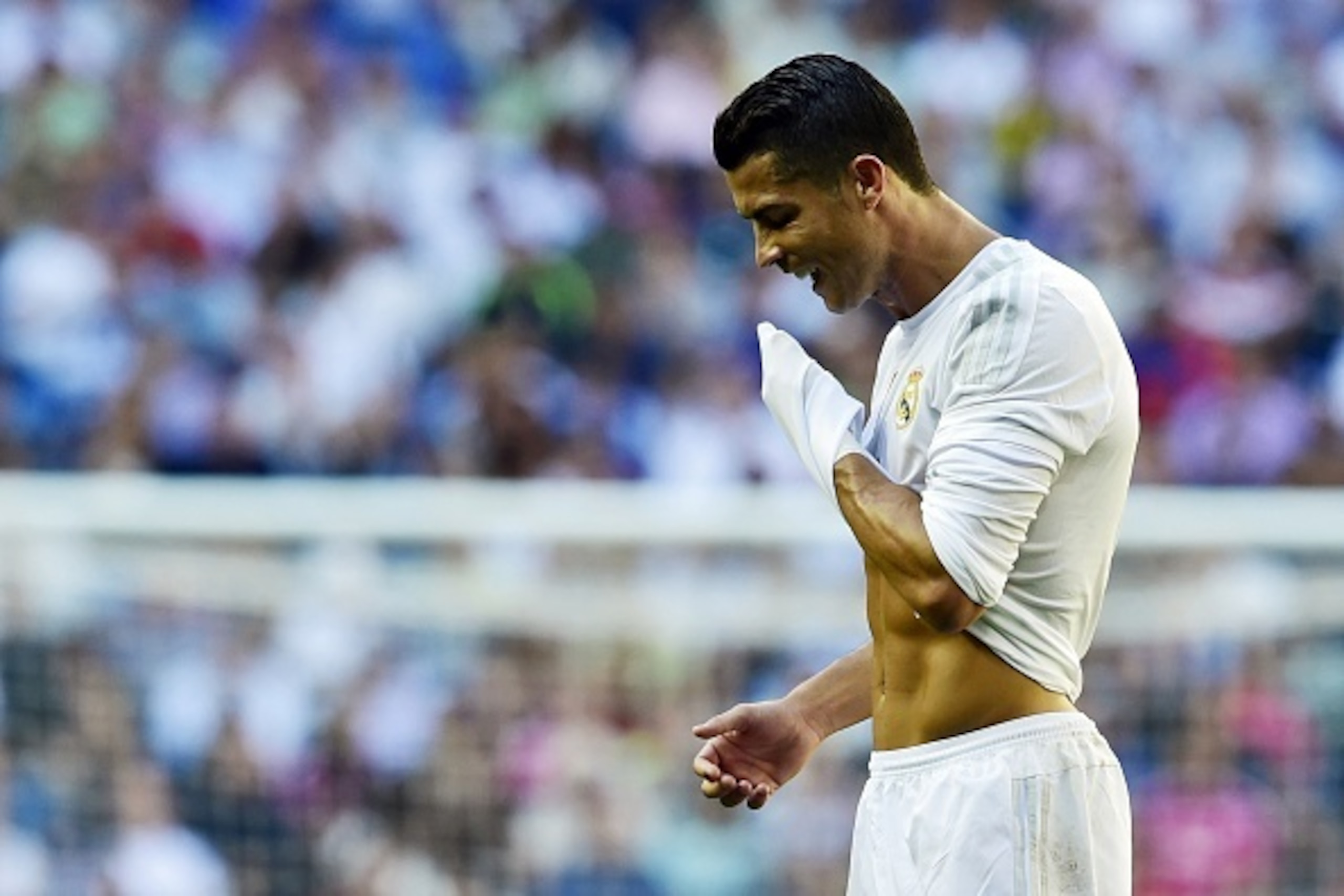
Under Rafa Benitez in 2015-16, this is a Real Madrid outfit undergoing significant upheaval in how games are approached.
Previously, under Carlo Ancelotti, Los Blancos were not only incredibly free-spirited, they also steadily traversed the style spectrum. After the additions of James Rodriguez and Toni Kroos, Madrid edged closer and closer to a Barcelona-like method in possession to accommodate an attacking cast that became increasingly defined by technique rather than power.
Now, however, Benitez is changing that. During the summer, the new manager spoke of wanting to improve the team's "physicality," his goal to oversee a shift in the team's primary trait. With the explosive Gareth Bale used through the centre, with the rugged Casemiro featuring in midfield, with a system that features a greater defensive emphasis, the dynamic has been substantially altered even if it hasn't been flipped on its head.
To date, the results have been mixed, but that's understandable. Benitez's team is still finding its way, its patterns of movement now different, its tactical approach not yet ingrained.
For Ronaldo, the manner of the service to him has subsequently fluctuated, disrupting the rhythm he struck in an evolving role in 2014-15.
At times, Real have flooded forward; at others, they've sat deep. At times, their movement has been swift and direct; at others, it's been patient and intricate. At times, the team has been Ronaldo-centric; at others, it hasn't.
Evidently, this is a team still working out who it is and exactly how it wants to play. In any team, at any club, transitional periods present obstacles, and this is no different. Even at Real Madrid, football still works to the same principles.
This slump, then, in which Ronaldo has been flirting with the goal but not quite finding it, feels more like the result of a collective misfiring than an individual one. Rather than standing as mutually exclusive, his form is heavily intertwined with those around him in this transitional period.
Yet, that's the thing about transitional periods: they end. Just like this slump will.
I'm off to the doctor.



.jpg?w=2560 "2 NFL Officials Suspended")


.jpg?w=2560 "Viral Rams Coach Vid 🖕")