Why Blind and Smalling Is Manchester United's Best Centre-Back Partnership
Manchester United's back four has been unsettled by Luke Shaw's horrible injury. With that in mind, the question of the centre-back pairing becomes even more important.
The current first-choice option is the surprising and experimental pairing of Chris Smalling and Daley Blind.
Smalling is one of the unequivocal success stories of Louis van Gaal's time in charge. Since his dismissal against Manchester City at the Etihad last season, he has earned himself first-name-on-the-teamsheet status in United's back four.
TOP NEWS
Sullivan, Hall Lead USMNT to Big Win 💥
Int'l Break Goals and Highlights 🔥
Aaron Boone Calls Out Yankees Catcher 🗣️
In an interview with Sky Sports, Smalling said:
"Yeah I think he [Van Gaal] has [improved me], all the coaches I've worked with, especially Louis van Gaal, have helped me.
We work hard and tirelessly on the training ground with our tactics, we do 11 versus 11s a lot so we know our positions and our roles down to a tee.
The repetition has really improved my game and a lot of the other players as well.
"
Van Gaal's decision to partner Smalling with Daley Blind is an intriguing one. There were also hints in pre-season that his first choice may have been to leave Smalling out of the side altogether, and partner Blind with Phil Jones.
After all, that was the starting partnership in every game of United's pre-season tour. At first it seemed that it was just a way of creating two full XIs that Van Gaal could switch between as he built up his squad's fitness.
However, after the game against Paris Saint-Germain, Van Gaal said, per the Mirror, “I think I shall play [Luke] Shaw with [Matteo] Darmian, and with Daley Blind. The right central position I have to consider.”
Thus, Blind was a guaranteed starter alongside either Jones, who had played the role up to then, or Smalling, who looked much better equipped to do so. In the end, an illness forced Jones out of contention, and Smalling was allowed to prove himself as United's one outstanding centre-half.
The "Blind Experiment" has endured mixed fortunes so far. In the opening game of the season, Harry Kane stuck close to the Dutchman, so close that at times it looked as if the striker were marking the defender. However, he was unable to exploit the perceived weakness.
There was much talk about the potential clash between Rudy Gestede and Blind when United faced Villa. Blind managed the encounter well. Ditto Christian Benteke, who seemed to err towards Smalling's side of the box. Blind also did well against Club Brugge—providing an assist in the home leg of that clash.
He struggled against Swansea City. For their first goal, he was unable to get anywhere near Gylfi Sigurdsson to prevent the cross. Again, for the second he was caught out of position—in no man's land outside the box, yet unable to stop the ball from going into the box.
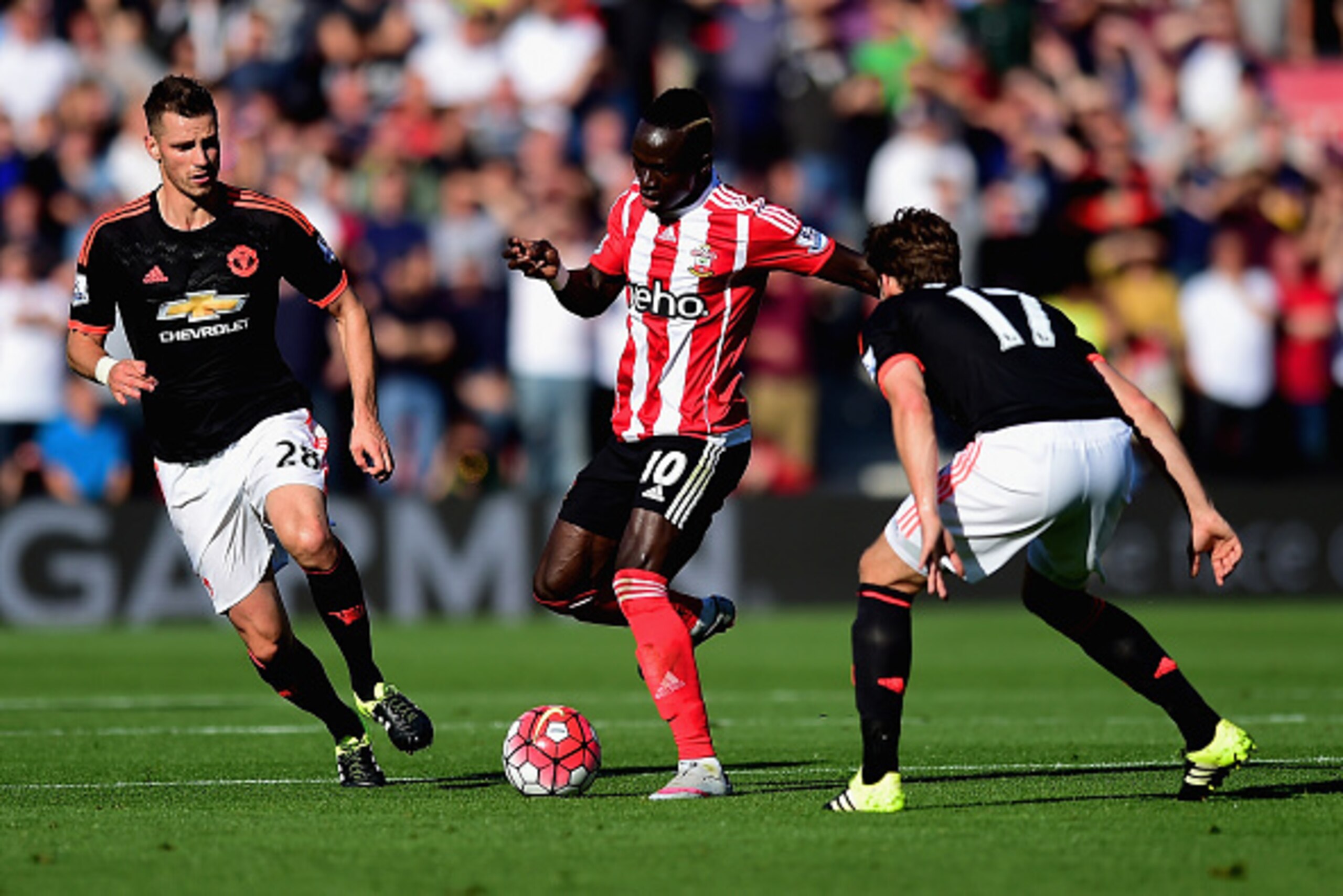
Against Southampton he struggled again. For the Saints' first, he had pushed up and challenged Sadio Mane for the ball, but he got nowhere near it as Mane was able to push the ball wide. That began a footrace between Blind and Mane—an encounter which could have only one winner.
Neither Blind nor Smalling had the presence of mind to look for the onrushing Graziano Pelle—although in the heat of the moment it would have been asking a lot for them to do better once David De Gea had made the initial save.
Pelle again got the better of Blind when he hit the post, spinning him with relative ease in order to create the space he needed for the shot. For Southampton's second goal, Blind—by then at left-back—was unable to stop the cross coming in.
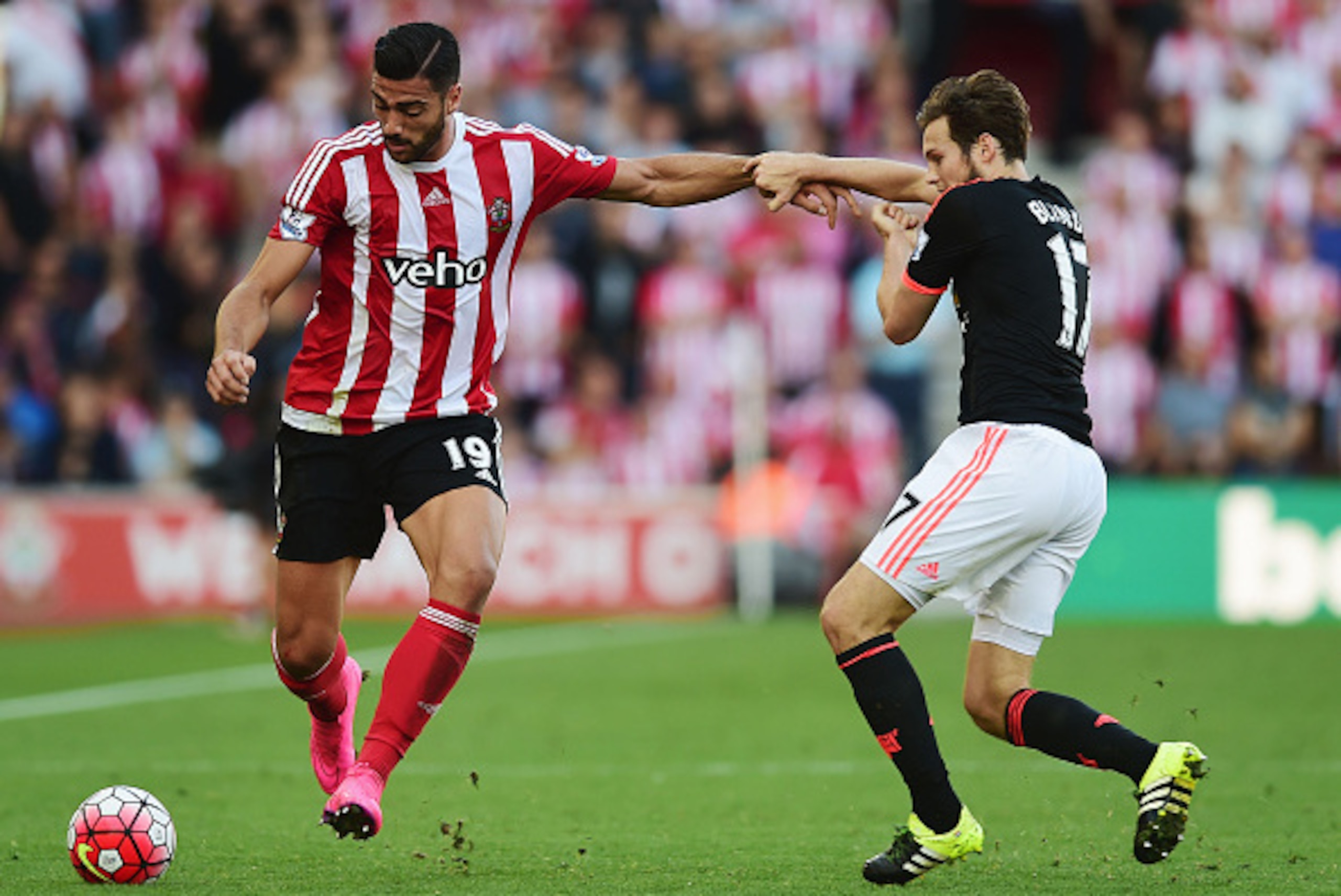
Mane and Pelle are a challenge for the best of defenders, but they were certainly able to exploit Blind's weaknesses at centre-half.
That he has some vulnerabilities should not, of course, mean he is automatically removed from consideration. He has had some very good games, too—Liverpool being a particular highlight. In that game he contributed a vital goal, and his attacking contribution from centre-half will be a significant matter to Van Gaal.
It is an oft-quoted part of the manager's approach to consider centre-halves to be playmakers. In Henny Kormelink and Tjeu Seeverens' 1997 book The Coaching Philosophies of Louis van Gaal and the Ajax Coaches (h/t the Guardian) Van Gaal says:
"In modern football the two centre-backs have really become the playmakers. The No10, behind the strikers, can’t be called a playmaker any more because the space in which he operates is too restricted.
Today’s playmakers are to be found in the middle of the back four.
"
Here, Blind is doing the job admirably. In the league, he averages more passes than anyone else in the side, and his pass-completion percentage is 91, per WhoScored.com. He has contributed a league goal and a Champions League assist. He looks assured and confident on the ball and can happily join the midfield when United are dominant in possession.
Those qualities somewhat offset his defensive frailties. The other key factor, of course, is that there is no-one hammering down Van Gaal's door demanding to be Smalling's partner.
Marcos Rojo is Shaw's stand-in at left-back. There is an argument to be made that Rojo should move inside with Blind moving to left-back. Blind's attacking contribution would still be felt and indeed he played there for United's best spell last season.
Then there is Jones, of course. A player with so much promise, whose rate of development has been outstripped by Smalling. Jones' pre-season performances were evidence of that—he looked shaky and uncertain where Smalling looks assured.
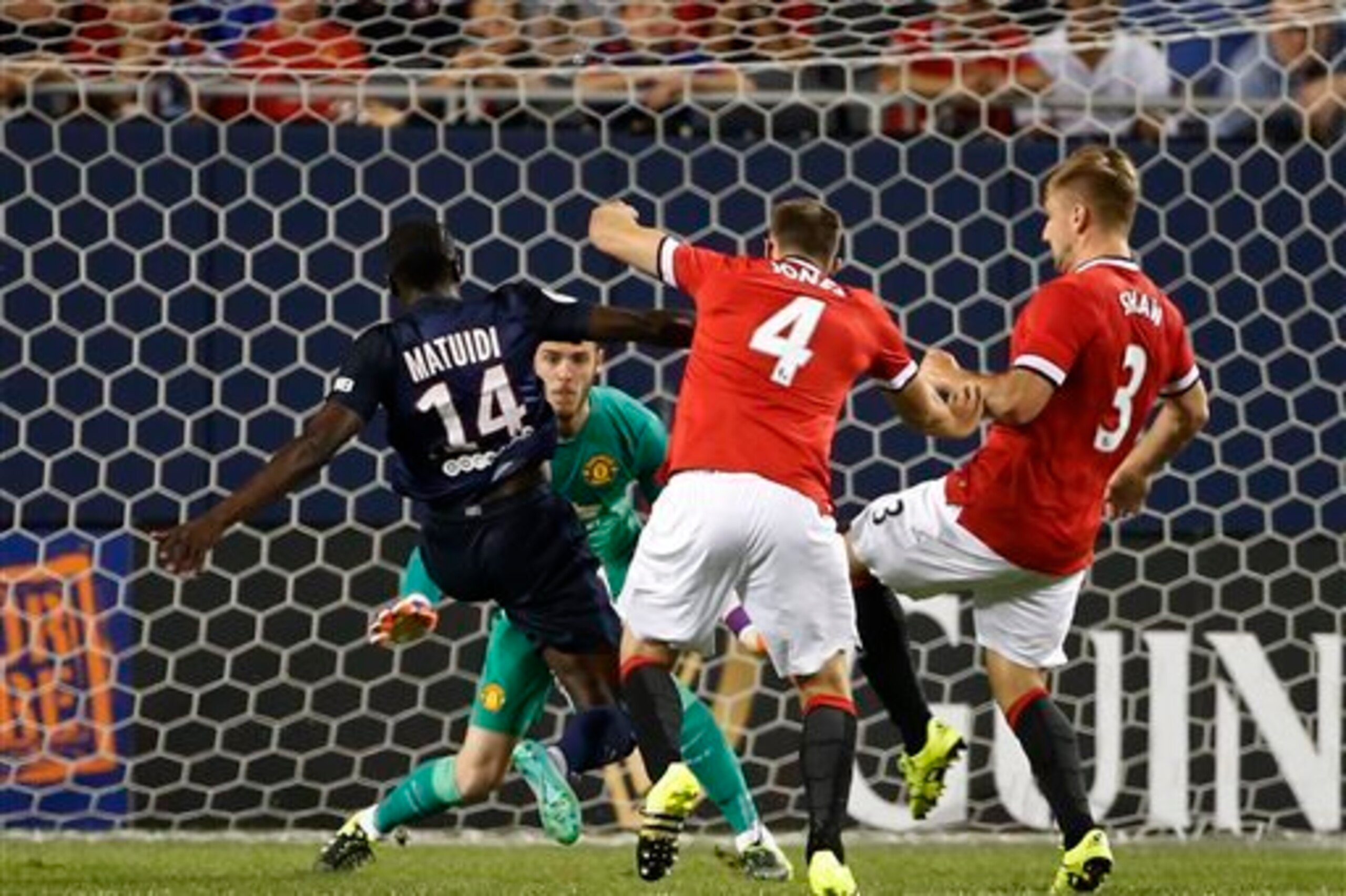
Perhaps given time, Jones would grow into the role, and he is clearly more experienced at centre-half than Blind.
Jones and Smalling do not meet Van Gaal's idiosyncratic left-footer, right-footer requirements for a partnership, but they played together for club and country at the end of last season and seemed to be developing a good understanding. Give any manager other than Van Gaal United's squad, and they would presumably be first choice.
For now, though, it seems as if Van Gaal is prepared to put up with Blind's defensive limitations in order to give himself a playmaker in the heart of his defence.
It is a decision that is pure Van Gaal—iconoclastic in relation to Premier League norms, counter-intuitive and difficult to accept. It benefits United tremendously in what the manager would call their "building up"—the phase of play where they move the ball around the pitch, probing for space, though it comes at a cost.

When Shaw was alongside Blind at left-back, he had a good amount of defensive cover. Rojo is a fine defender, but he is not as quick as Shaw when it comes to getting back to fill in exposed positions when the full-backs have joined the attacks. That might force Van Gaal to reconsider.
However, whichever partnership he picks, it is vital that the heart of United's defence is allowed to be more settled than it was last season. It seemed as though every possible combination of defenders was played, as injuries tore through the defensive part of the squad.
Blind and Smalling have been working well together, with the aforementioned caveats. The whole back four will need to adapt to the absence of Shaw, but for now, maintaining the centre-back axis seems sensible.
They should be United's default partnership for the time being. In the longer term, though, this still looks like an area of the pitch United need to strengthen.
.jpg?w=2560 "Saints Lions Football")
.jpg?w=2560 "Titans Giants Football")

.jpg?w=2560 "Report: Baker May Miss Up to 6 Weeks")
.jpg?w=2560 "EVERY Fantasy Football Update")