
Ireland Should Win the Race to Host 2023 Rugby World Cup
The contenders to stage the 2023 Rugby World Cup have been announced, with four countries set to be in the running to follow 2019 hosts Japan.
France, Ireland, Italy and South Africa are the nations in the hat, after the USA decided not to bid for the tournament.
Three of the four on the list certainly have a strong track record of hosting major tournaments.
TOP NEWS

39-Year-Old Takes Down McClung
.jpg?w=2560 "49ers York Arrested")
York Responded to Ad on Prostitution Site Before Arrest

Kinley Rasmus Sets LLWS Record
South Africa memorably marked their re-introduction to the global sporting arena when they staged and won the 1995 Rugby World Cup, and have since been home to the 2010 FIFA World Cup and two Lions tours since the sport went professional.
France put on the 2007 Rugby World Cup nine years after staging the round-ball version, and in 2016 they will have their second turn as hosts of the European Football Championships.
Italy welcomed the footballing world in 1990, having staged Euro 1968 as well.
Only Ireland cannot boast a CV with these major events. A nation of less than five million people and only four professional rugby "franchises" has never opened its doors to a competition on this scale.
But it can, and should, be given the opportunity.
But where will the games be staged?
Ireland has more venues than you might think. Those who run out of ideas once they get past the four main stadia used by the provinces are forgetting the welter of Gaelic football stadiums across the country.

The no-brainers are easy: The Aviva Stadium already plays home to the national side as well as a handful of provincial and Champions Cup fixtures each season. Across town in Dublin, the historic Croke Park is bigger and welcomed rugby for the first time while the Aviva was under construction. It’s also the only stadium currently big enough to stage the semi-finals and final, for which World Rugby insist on a minimum capacity of 60,000, per the42.ie.
Leinster’s home ground, the RDS, could also provide a third venue in the city.
Beyond the capital, Munster’s Thomond Park and Ulster’s Ravenhill are proven successful rugby venues and will play a key part in the bid.
Backing those venues up are the Gaelic sport stadiums, included on a list of 12 venues the Irish Independent sees as providing the tournament with its necessary stadia.
Aren’t some of the grounds too small?

No. Look at Kingsholm, Gloucester’s ground, which will stage some pool matches this year. Or some of the sites used in New Zealand in 2011. Rugby Park in Invercargill held just 17,000 spectators, per worldstadiums.com.
Indeed, as the Irish Independent’s list illustrates, Ravenhill and the RDS are dwarfed in capacity by some of the GAA grounds likely to be used.
What’s wrong with going back to South Africa?
Nothing, but doesn’t rugby want to spread its gospel rather than sticking to its heartlands? South Africa’s stadiums and rugby heritage make it a strong candidate, of course, but the sport needs to continue to grow its footprint.
OK, then why not France?
It’s too soon to go back to France when other countries want to make their inaugural appearance as hosts. In addition, the French coughed up matches to Wales and Scotland, diluting the "Frenchness" of the competition.
A one-nation host makes for a better tournament and less hassle for fans. After shelling out to get to France in the first place, All Blacks fans then had to get to Cardiff for their 2007 quarter-final, ironically against France, who lost their own home advantage by finishing second in their pool.
Out of the two "new" potential hosts, what makes Ireland a better bet than Italy?
An Italian World Cup would be just as welcome in terms of taking the tournament to a new territory. The use of their many impressive football stadiums would comfortably meet capacity requirements and bring the game to a new, football-crazed audience. But would there be an appetite to take the tournament to two non-Anglophone countries in a row, having seen Japan host 2019?
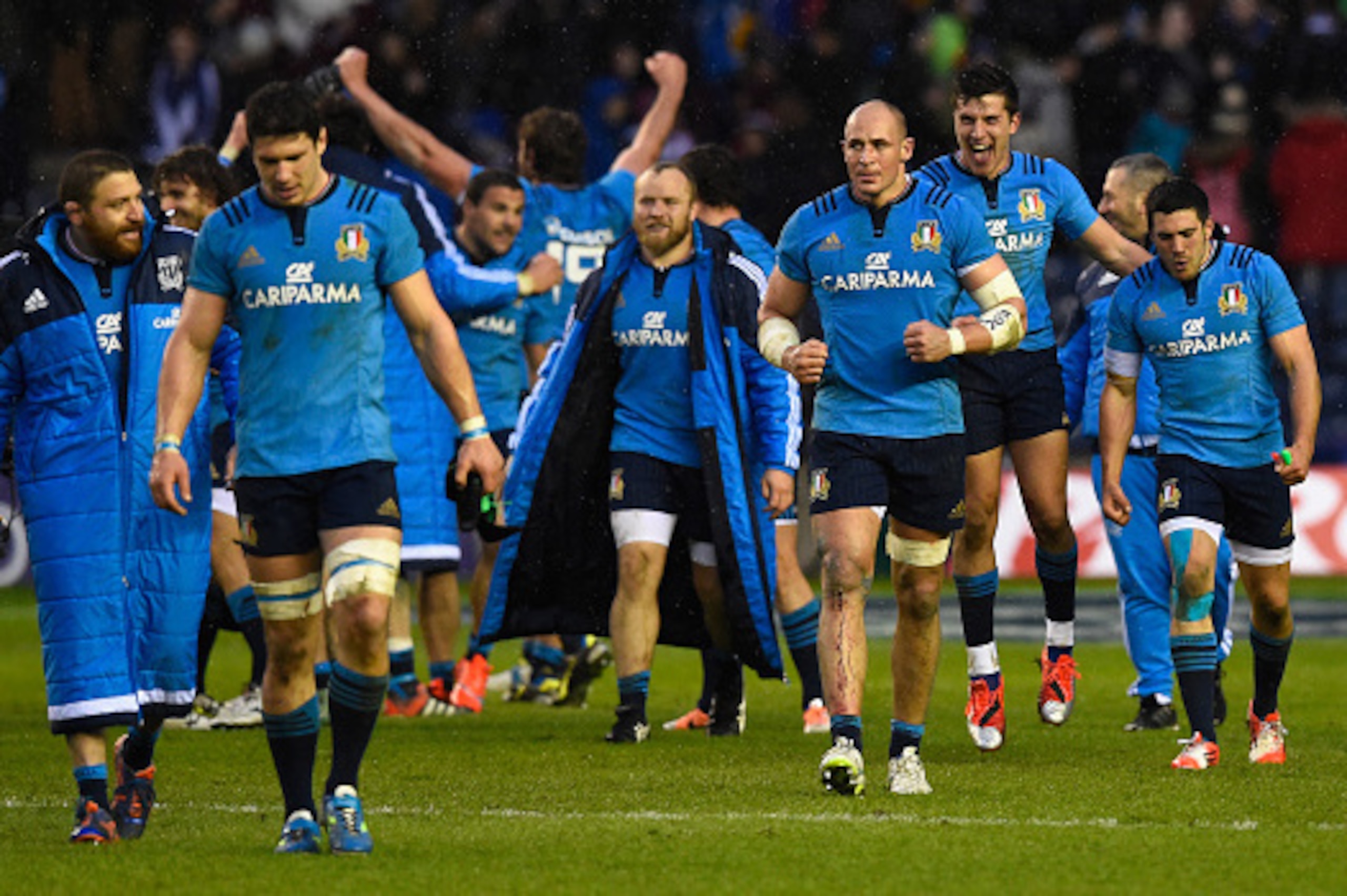
Strong hosts make for a better tournament
Italy’s progress as a rugby-playing nation has not been meteoric since they were let into the Six Nations. Their results have been peppered with shock wins rather than following a consistent upward trajectory of performance, and a tournament seems to lack something when the host nation leaves its own party early.
We are talking eight years’ time, so who knows? The Azzurri could be serious contenders in the Six Nations by then, and troubling the big Southern Hemisphere countries when they meet.
One or both are unlikely.
Ireland have been the model of gradual improvement and appear to be managing the transition between one golden generation and the next well. Triple Crowns in in 2006 and 2007 were gilded with the Grand Slam in 2009 and Six Nations titles in the last two seasons.
In addition, after their 2007 "bete noir" in France, they toppled the Wallabies in the next World Cup and lost a tight affair to Wales in the last eight. This coming campaign sees the draw put them in with their best chance yet of progressing to the semi-finals.
Japan are unlikely in 2019 to exit any later than the group stage barring a sporting miracle, which could really turn an expectant public off the tournament. Repeating that in Italy four years later might not be the best move for rugby’s profile in target territories.
Sport and politics
Ireland’s troubled past is well-documented, and so is the fact that rugby union has always been a unifying force in a country deeply divided. Unlike football and athletics, Ireland play rugby as one nation. Irish Sports Minister Leo Varadkar told the Telegraph in 2013:
"Even during the very difficult times of the Troubles, rugby in Ireland was a unifying sport. For us in Ireland, it would just be a symbol of how far we’ve come from the bad times to the better times now.
"
We saw how powerful a tool Nelson Mandela turned the tournament into with his adoption of the Springbok jersey in 1995 and, while the social and political background of Ireland is vastly different, the fact that this is a sport that transcends the political and religious schisms that have scarred such a small country should not be overlooked.


.jpg?w=2560 "Players with Shocking Career Earnings 😳")

.jpg?w=2560 "NFL Panic Meter for Every Fanbase's Anxiety Levels")