

Sergio Ramos-David De Gea Saga Has Become Power Struggle for Real Madrid, United
Marca's weekend headline was both succinct and celebratory: "Thanks a €239 million," the Madrid-based daily gleefully said, pointing toward a trail that has become "one of the most expensive in European football."
The trail is the one between northwest England and the Spanish capital, Old Trafford and the Santiago Bernabeu. At each end are one of the game's powerhouses, giants of the continent, but the path linking them hasn't reflected a parallel standing; it's been littered with one-way signs.
David Beckham, Ruud van Nistelrooy, Gabriel Heinze and Cristiano Ronaldo: Real Madrid have extravagantly shopped at Manchester United and want to continue doing so with the purchase of David De Gea—a player whose arrival in Madrid is no longer an if, but a "when" for Marca.
De Gea's potential journey down the well-worn trail would add another hefty figure to the €239 million spent between these clubs, with only Angel Di Maria bucking the trend to swim upstream in his move to Old Trafford last summer. So while Marca calls the clubs' relationship a "transfer romance," United would disagree; romances are two-way affairs.

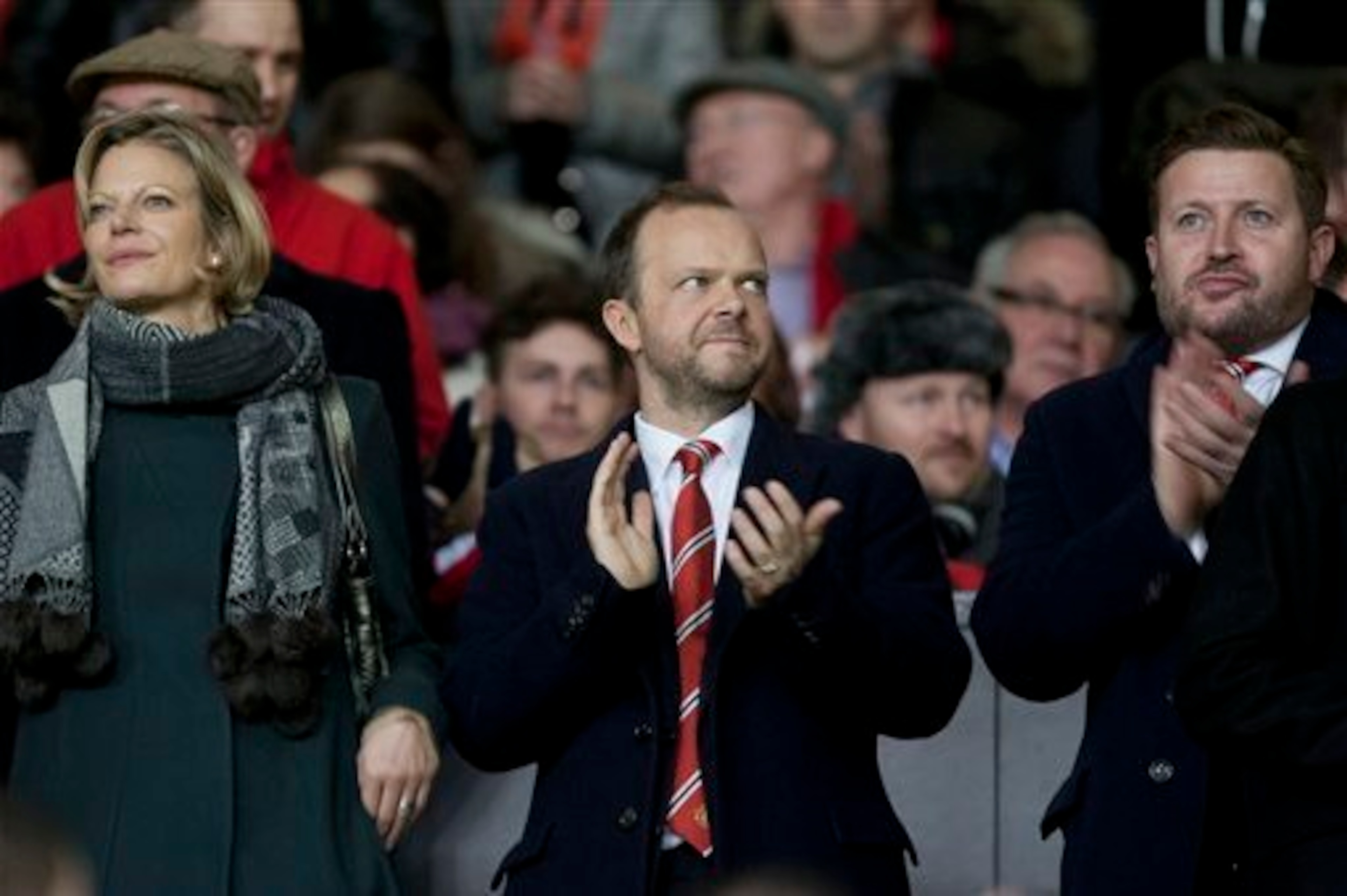
Yet, United, led by executive vice-chairman Ed Woodward, are intent on changing the dynamic, and the complexion of the current summer between Real Madrid and the English outfit is in stark contrast to last.
Twelve months ago, United were handicapped on all fronts. After its worst season in more than two decades, the club found itself out of the Champions League, alarmingly separated from the Premier League top four and short of elite talent in a squad that needed rebuilding. But—and this is the crucial part—United were still cash-rich at the end of 2013-14 even if they weren't trophy-rich, with the club's mammoth deals with Adidas and Chevrolet making United a seller's dream: a desperate and loaded buyer.
As such, Woodward, Louis van Gaal and Co. had little leverage or bargaining power. They needed stars in a hurry and everyone knew it, stripping away their ability to negotiate on their own terms and forcing them to part with colossal fees, such as the £59.7 million (approximately €80 million) handed over for Di Maria. Financially, Real Madrid won the deal by a distance—a deal that made the signing of James Rodriguez just a £3.3 million net spend.
But that was then; this is now. In 2015, United have begun their ascent back toward the English summit, reclaimed their place in Europe's elite competition, possess an authoritative—if not universally liked—manager and have already made a splash in the market with the capture of Memphis Depay. The club's financial might is still there, but the desperation isn't. Manchester United are sitting at the table with a much stronger hand—just as Real Madrid are finding out.

In the Spanish capital, Marca insists terms have been agreed between De Gea and Real Madrid, but at Old Trafford they're standing firm. United want the goalkeeper to depart on their terms, at their price. Or at least at a significant knock-on cost to Real. AS have stated that United have tabled a €60 million counter-offer for Sergio Ramos, wanting something—or more precisely, someone—valuable in exchange. BBC Sport reports the figure at £28.6 million.
It's become a transfer saga that's incredibly difficult to predict, a tangled political and financial mess. De Gea might eventually depart and Ramos stay. It's possible that a swap deal could be struck between the clubs. Or De Gea might simply follow the path forged by Beckham, Van Nistelrooy, Heinze and Ronaldo next summer when his contract expires—remember, United don't truly need the money and could view losing the goalkeeper for free in 2016 as a necessary cost to push for trophies next season.
Thus, this is no longer just a transfer saga; it's a power struggle. United are in the midst of recapturing their former prestige, and last month Brand Finance declared the Old Trafford club as football's first billion-dollar brand, the organisation's CEO David Haigh remarking that "Manchester United's success has been masterminded by Ed Woodward, the Ronaldo of football's commercial sphere."
In a position of strength, United are wanting to wrestle back some of the power that Florentino Perez's Real Madrid have seized and don't want to cede to them—a Real Madrid to whom "Forbes magazine has laid down before," as Perez proudly described it in 2013.
So here we are: Two heavy hitters locked in an arm wrestle, a territorial battle—one wanting to maintain its recent dominance in the relationship; the other wanting to reverse it or at least achieve parity. The former, Real Madrid, probably weren't expecting it; the arrival of De Gea was considered a formality in Chamartin. But United are making it anything but, and even if the club's chances of emerging from this saga possessing one of the two stars in question remain slim, it's no longer just about that.
It's about flexing one's muscle. Making a display of power, strength. Sending a message.
Manchester United don't want to back down to Real Madrid, in just the same way Real Madrid don't want to back down to Manchester United.
_0.png?w=3840 "Summer League Takeaways ✍️")
.jpg?w=3840 "Watch: Jerry Rice Chases After Heckler")
.png?w=3840 "Offseason Moves Sure To Backfire 💥")

.png?w=3840 "Every City's 2000s Mt. Rushmore 🤩")