British Grand Prix 2015 Preview: Start Time, TV Times, Weather, Schedule, Odds
The 2015 British Grand Prix will be the ninth round of the Formula One season and the fifth European race of the year.
It will also mark a very special occasion—the 65th anniversary of the sport's birth.
Way back in 1950, the circuit hosted the first ever race of the world championship era. The intervening years have seen the circuit and F1 itself change a lot, but there has always been a British Grand Prix, and Silverstone has never gone more than two years without being the host.
Since 1987 it has held the race every single year; the 2015 event will be the 49th at Silverstone.
The list of past winners reads like a who's who of F1 legends. Jim Clark (from just nine attempts) and Alain Prost are the most successful drivers with five wins apiece. Of the current crop, only Lewis Hamilton and Fernando Alonso have won here more than once.
Nico Rosberg, Sebastian Vettel and Kimi Raikkonen have also stood on the top step of the podium.
It seems almost certain one of the five will add to his tally this time around, but we're due another shock result—maybe this most historic of venues will provide us with one.
Read on for a full preview of the weekend ahead including a circuit map and detailed guide, TV times, session times, tyre and DRS information, current standings, weather and odds.
Current Drivers' and Constructors' Standings
1 of 6
Nico Rosberg's victory in Austria means the gap to team-mate Lewis Hamilton at the top of the standings is now just 10 points. But the German has six fewer points than he had at this stage last season; Hamilton has 33 more.
The fight to be top Finn is even closer, with Valtteri Bottas now just five points down on Kimi Raikkonen. Felipe Massa is also coming up strong on the outside.
The current top 10 are:
| 1 | Lewis Hamilton | 169 |
| 2 | Nico Rosberg | 159 |
| 3 | Sebastian Vettel | 120 |
| 4 | Kimi Raikkonen | 72 |
| 5 | Valtteri Bottas | 67 |
| 6 | Felipe Massa | 62 |
| 7 | Daniel Ricciardo | 36 |
| 8 | Daniil Kvyat | 19 |
| 9 | Nico Hulkenberg | 18 |
| 10 | Romain Grosjean | 17 |
In the constructors' championship, Mercedes smashed through the 300-point barrier in Austria. They now have more points than historic "big three" Ferrari, Williams and McLaren added together.
The nine teams with at least one point are:
| 1 | Mercedes | 328 |
| 2 | Ferrari | 192 |
| 3 | Williams | 129 |
| 4 | Red Bull | 55 |
| 5 | Force India | 31 |
| 6 | Lotus | 29 |
| 7 | Sauber | 21 |
| 8 | Toro Rosso | 19 |
| 9 | McLaren | 4 |
Data sourced from the official F1 website.
Silverstone Circuit
2 of 6
Silverstone is one of the few circuits in the world to have retained its original character and charm despite a whole host of modifications being made.
Certain modified or removed corners are of course missed—the cars always looked great streaming through Bridge, for example—but the current layout is recognisable as the same circuit that held that first 1950 race.
And most of the changes haven't been bad. The Maggots-Becketts-Chapel complex didn't appear in its current form until 1991, while the new infield section built for the 2010 race adds a touch of variety and a couple of challenging corners.
It's still fast, it's still flowing and it's still one of the finest race tracks on the planet.
Turns 1 and 2
A lap begins on the pit straight with a fairly short run down to the fast right-hander of Turn 1 (Abbey). On a hot lap the drivers will give the throttle only a slight lift and perhaps give the brakes a slight tap before turning in and flying through the corner at around 270 kilometres an hour.
Turn 1 leads into the entry of Turn 2 (Farm), an even quicker left taken at full throttle. In the dry it's more a curved straight than a corner, but in the wet it requires a little more respect.
Turns 3, 4 and 5
At the exit the drivers angle their cars toward the left-hand side of the track and brake for the slow, tight right-hander of Turn 3 (Village).
A brief throttle-squirt later, and having speared quickly across to the other side of the track, it's Turn 4 (The Loop)—an even slower, tighter left-hander. At the exit the drivers have to wait to get on the throttle, picking it up gradually as they get all four wheels pointing in the same direction.
Turn 5 (Aintree) comes up next, a flat-out left-hand kink that sends the cars out onto the Wellington Straight. In a depressing world where many circuits don't even have one named corner, Silverstone even names its straights.
Turns 6, 7 and 8
After reaching speeds of around 320 kilometres an hour at the end of the straight, the drivers hit the brakes hard as they approach the tricky, low-to-medium speed left of Turn 6 (Brooklands).
With a long, long turn-in phase and a very late apex, this is one of the best overtaking spots on the circuit—or it can be used to set up a move several corners down the line.
Now back on the pre-2010 circuit, the cars turn slowly into the long, slow right-hander of Turn 7 (Luffield). After what seems like an eternity spent carefully feathering the throttle (around six seconds), the drivers exit and get the power down as they head out toward the old pit straight.
But first they have to negotiate Turn 8 (Woodcote). Once a fearsome challenge, this corner is now just a right-hand kink taken at full throttle.
Turn 9
Speeds of over 300 kilometres an hour are again reached before the drivers tackle one of Silverstone's most famous corners—Copse. Once the first corner of a lap, now Turn 9, Copse is taken by modern cars at around 260 kilometres an hour.
Overtaking moves into this corner are usually completed before the turn-in point. The ones made in the corner itself tend to be extremely special.
Once the turn is safely negotiated, with care taken to not run too wide at the exit, the drivers head out onto a short straight.
Turns 10, 11, 12, 13 and 14
Lovers of fast corners are in dreamland—first Copse, now this.
The Maggots-Becketts-Chapel complex is among the finest corner sequences ever laid down by mortal man, five high-speed turns that challenge both driver and car to the limit.
A flat-out left taken at 300 kilometres an hour (Turn 10) comes first, before the drivers scrub off a little speed for the right-hander (Turn 11) that follows. A brief throttle-squirt later, it's another tap of the brakes for a quick left (Turn 12).
Turn 13 is a longer right-hander, the slowest of the series but still fast. The exit here is especially important as it leads out into the final, flat-out left (Turn 14) and out onto the long Hangar Straight.
Turn 15
The Hanger Straight is one of the best places to overtake around Silverstone, and is also the fastest part of the track. The cars are travelling at around 330 kilometres an hour as they brake for the medium-speed right-hander of Turn 15 (Stowe).
It's the first significant braking zone since Turn 6.
This long turn has a sting in its tail; the track cutting in at the exit across what would be the normal line before kinking to the left.
A slight dip downhill follows—one of the few noticeable elevation changes Silverstone has—as the drivers head onto another short straight.
Turns 16, 17 and 18
Approaching the end of the lap, the drivers brake hard for the slow, fiddly left-right chicane of Turns 16 and 17 (Vale). The exit of the right-hander opens out after the apex and leads into the right-hand kink of Turn 18.
The timing beam and finish line is almost immediately after the exit. As you'll see on TV, the start line is a little further down the pit straight.
Pit Lane
The pit lane entry is on the right between Turns 16 and 17, and the pit exit is on the outside of Turn 2.
Tyres and DRS
3 of 6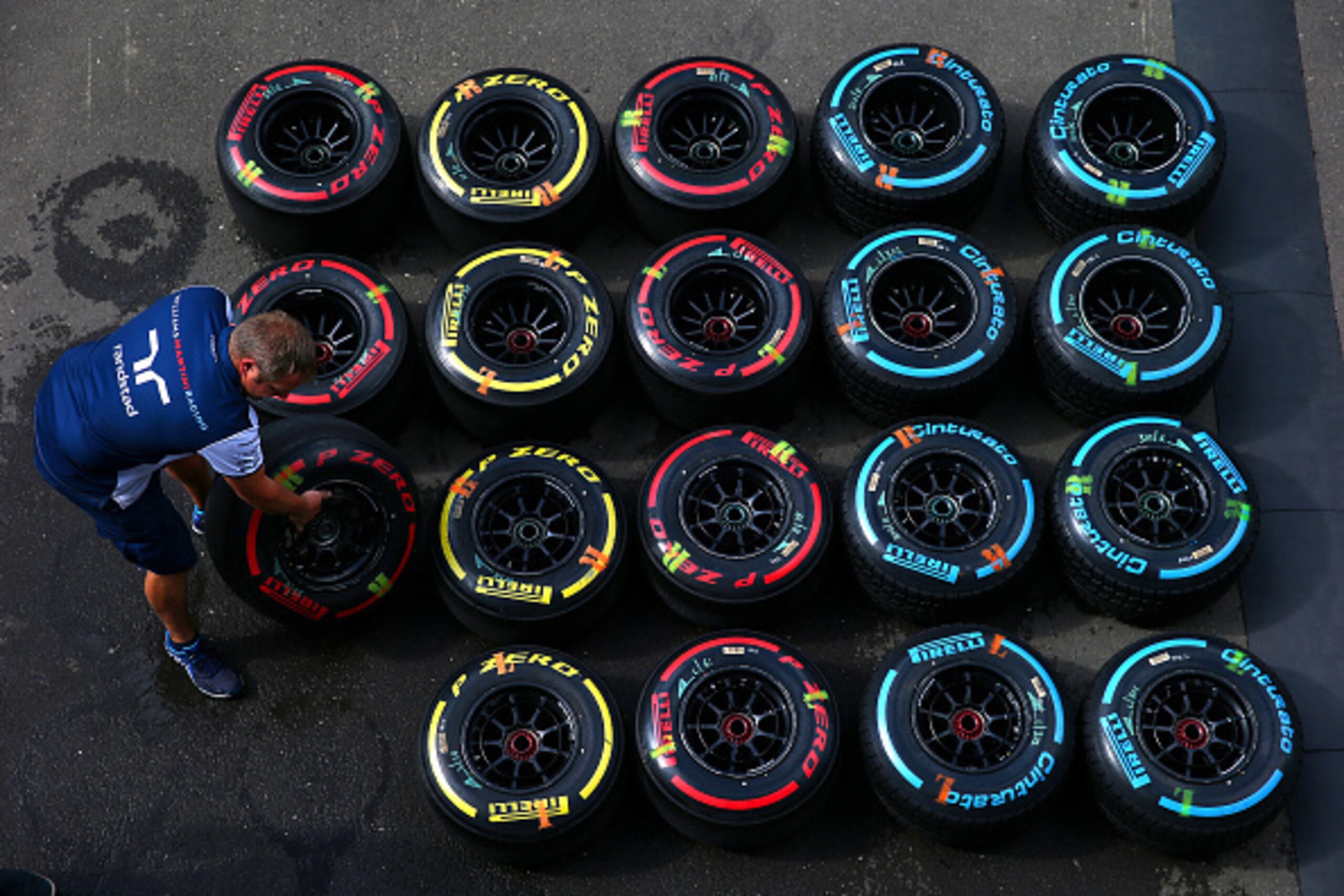
Silverstone has plenty of long, high-speed corners, such as Copse, the Maggots-Becketts-Chapel complex and Abbey.
These kind of turns, coupled with a grippy surface, put massive amounts of energy through the tyres; indeed, Pirelli's pre-race press release says Silverstone features the highest lateral loads of the year.
To cope with these demands, Pirelli is providing the teams with the white-marked medium and orange-marked hard compound tyres. The lap time difference between the two in qualifying is expected to be around or just above one second per lap.
Pirelli expects a mixture of one and two-stop strategies. Silverstone's layout makes it broadly front-limited—wear to the front tyres (especially the left) is most severe and loss of performance here will play a large part in determining the life of each tyre set.
DRS Zones
There will be two DRS zones at the British Grand Prix.
The first will have its detection point just before Turn 3. The activation point is almost immediately after the exit of Turn 5 and the zone runs the length of the Wellington Straight, ending with braking for Turn 6.
The second zone's detection point lies between Turns 10 and 11 in the Maggots-Becketts-Chapel complex, and the activation point is after Turn 14. The zone runs the length of the Hangar Straight and ends under braking for Turn 15.


Weather
4 of 6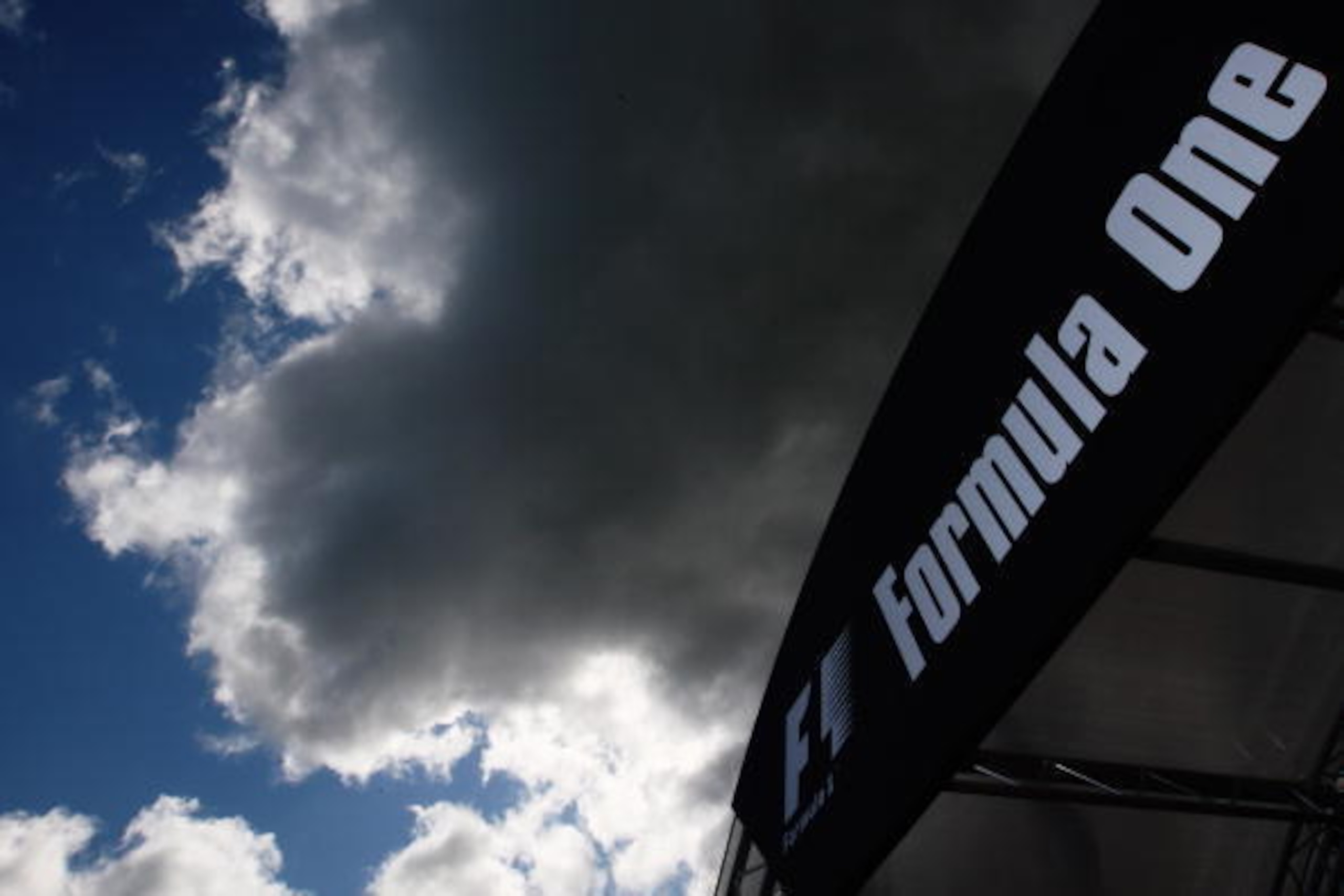
The United Kingdom has a temperate oceanic climate with warm summers and cold-to-mild winters.
The moderating influence of the Atlantic Ocean means temperature rarely deviates significantly from the long-term average, but there are occasional spells of very warm or very cold weather, and it's rare to have two consecutive days with the same conditions.
July is the warmest month and sees average highs of around 21 degrees Celsius, while rainfall occurs on average one day in every three. In summer this usually takes the form of sporadic and difficult-to-predict showers; these can be heavy.
The forecast for the weekend ahead is for warm conditions on Friday and Saturday, with a big swing in wind direction from one day to the next. Sunday looks set to be a little cooler than average, significantly colder than Friday, and with a lot more cloud cover—meaning lower track temperatures.
If this turns out to be the case, the tyres will behave very differently in free practice and the race.
But British weather is famously chaotic and very hard to accurately predict more than two or three days in advance. So keep checking as the race approaches—BBC Weather will have the latest, care of the circuit's very own weather station.
Odds
5 of 6
Lewis Hamilton is the bookies' favourite to take the chequered flag at his home grand prix, but Nico Rosberg's odds are a touch shorter than usual following his dominant Austrian win.
A challenge from elsewhere doesn't seem likely. The top 10 favourites are:
| Lewis Hamilton | 1-2 |
| Nico Rosberg | 15-8 |
| Sebastian Vettel | 12-1 |
| Kimi Raikkonen | 25-1 |
| Valtteri Bottas | 66-1 |
| Felipe Massa | 80-1 |
| Romain Grosjean | 300-1 |
| Pastor Maldonado | 300-1 |
| Nico Hulkenberg | 500-1 |
| Daniel Ricciardo | 500-1 |
Selected Others
Last year's race saw an early safety car after the race was stopped due to Kimi Raikkonen's huge accident, but the circuit has ample run-off and isn't really an accident magnet. It's 4-5 to appear, 10-11 to stay in the pits.
McLaren are aiming for their second points finish of the year, but they're already on the back foot. Sky Sports F1 reports at least one may receive a grid penalty for taking new power unit components; Fernando Alonso and Jenson Button are both 5-2 for a top 10 finish.
And while it's almost certain the likes of Mercedes, Ferrari and Williams will secure double points finishes (both cars in the points), it's less clear-cut for the rest. Lotus have only managed it once in the eight races so far and are 7-5 to do it in Britain. Red Bull (four times) are 15-8, Force India 9-4, Toro Rosso 5-1 and Sauber 20-1.
Despite having one of the strongest driver lineups on the grid, McLaren are 25-1. Oh dear...
All odds sourced from Oddschecker.com and correct at the time of publication.
TV Times and Session Times
6 of 6
As always, the British Grand Prix weekend will consist of three free practice sessions, qualifying and the race.
The session times are as follows:
| Practice 1 | Friday | 10 a.m. |
| Practice 2 | Friday | 2 p.m. |
| Practice 3 | Saturday | 10 a.m. |
| Qualifying | Saturday | 1 p.m. |
| Race | Sunday | 1 p.m. |
All times given are Silverstone local time (BST, UTC+1). The official Formula One website has a useful tool on its homepage to convert them to your own time zone.
TV Times
In the United Kingdom, live coverage of all sessions will be provided by Sky Sports F1 and the BBC across channels One and Two and the Red Button (RB). The programming times are as follows (all times BST):
| Practice 1 | Friday | 10 a.m. | 9:45 a.m. | 9:55 a.m. (RB) |
| Practice 2 | Friday | 2 p.m. | 1:45 p.m. | 13:55 p.m. (RB) |
| Practice 3 | Saturday | 10 a.m. | 9:45 a.m. | 9:55 p.m. (Two) |
| Qualifying | Saturday | 1 p.m. | 12 p.m. | 12:10 p.m. (Two) |
| Race | Sunday | 1 p.m. | 11:30 a.m. | 12:15 p.m. (One) |
In the United States, live coverage is provided by the NBC network across CNBC, NBCSN and NBC Sports Live Extra (SLE). The times are as follows (all times EDT):
| Practice 1 | Friday | 5 a.m. | 5 a.m. (SLE) |
| Practice 2 | Friday | 9 a.m. | 9 a.m. (NBCSN) |
| Practice 3 | Saturday | 5 a.m. | 5 a.m. (SLE) |
| Qualifying | Saturday | 8 a.m. | 8 a.m. (CNBC) |
| Race | Sunday | 8 a.m. | 7:30 am (CNBC) |
Enjoy the weekend!
Follow me on Twitter for occasional updates on new stories and thoughts about the F1 world, or if you have any questions or comments.



.jpg?w=2560 "Likeliest Trade Candidates Before Cuts")
.jpg?w=2560 "Report: Bucs to Give Vea $30M Deal")