

New York Knicks Under Immense Pressure to Prove Kristaps Porzingis Is Right Pick
With the fourth pick in the 2015 NBA draft, the New York Knicks selected Kristaps Porzingis out of Latvia, ending a weeks-long debate that cycled through rumors, prospects and skepticism like toothpicks.
Now, as the Knicks prepare to push forward with a high-risk, high-reward prospect they so desperately need to pan out, the real work begins.
And the real pressure mounts.
TOP NEWS
Silver Wants Team in Portland 📍
NBA Vegas expansion bids nearing $10B

Mock draft for Vegas, Seattle expansion teams
It happened quickly, though not quietly. The Minnesota Timberwolves took Karl-Anthony Towns with the No. 1 pick, as was expected. But then the Los Angeles Lakers rolled with D'Angelo Russell at No. 2, throwing the draft board its first curveball.
Might Jahlil Okafor, once the consensus No. 1 pick, fall past the frontcourt-furnished Philadelphia 76ers and into New York's waiting arms?
Nope. The Sixers scooped him up at No. 3, leaving the Knicks to choose between a vast pool of remaining prospects.
They could have gone with Emmanuel Mudiay or Willie Cauley-Stein, Justise Winslow or Mario Hezonja. They could have traded down. They could have traded the pick entirely.
Instead, before New York's clock officially expired, Yahoo Sports' Adrian Wojnarowski brought word that Porzingis would be outfitted in orange and blue:
Those thinking—perhaps hoping—that team president Phil Jackson was planning on moving Porzingis were promptly thrown for a loop by ESPN New York's Ian Begley:
This is the part where anxiety sets in and the gravity of the situation really starts to become clear: The Knicks need so badly for Porzingis to be the right pick, the gargantuan gamble worth taking.
In all actuality, this has little to do with Porzingis himself. Overseas prospects are considered inherently riskier than stateside talents, but there's a reason why this 19-year-old big man skyrocketed up draft boards everywhere—including that of Bleacher Report's Jonathan Wasserman, who had the Latvian falling no lower than fifth.
More than anything, this is about the Knicks, about how much their draft position meant and about the stakes at hand following this year's prospect pageant.
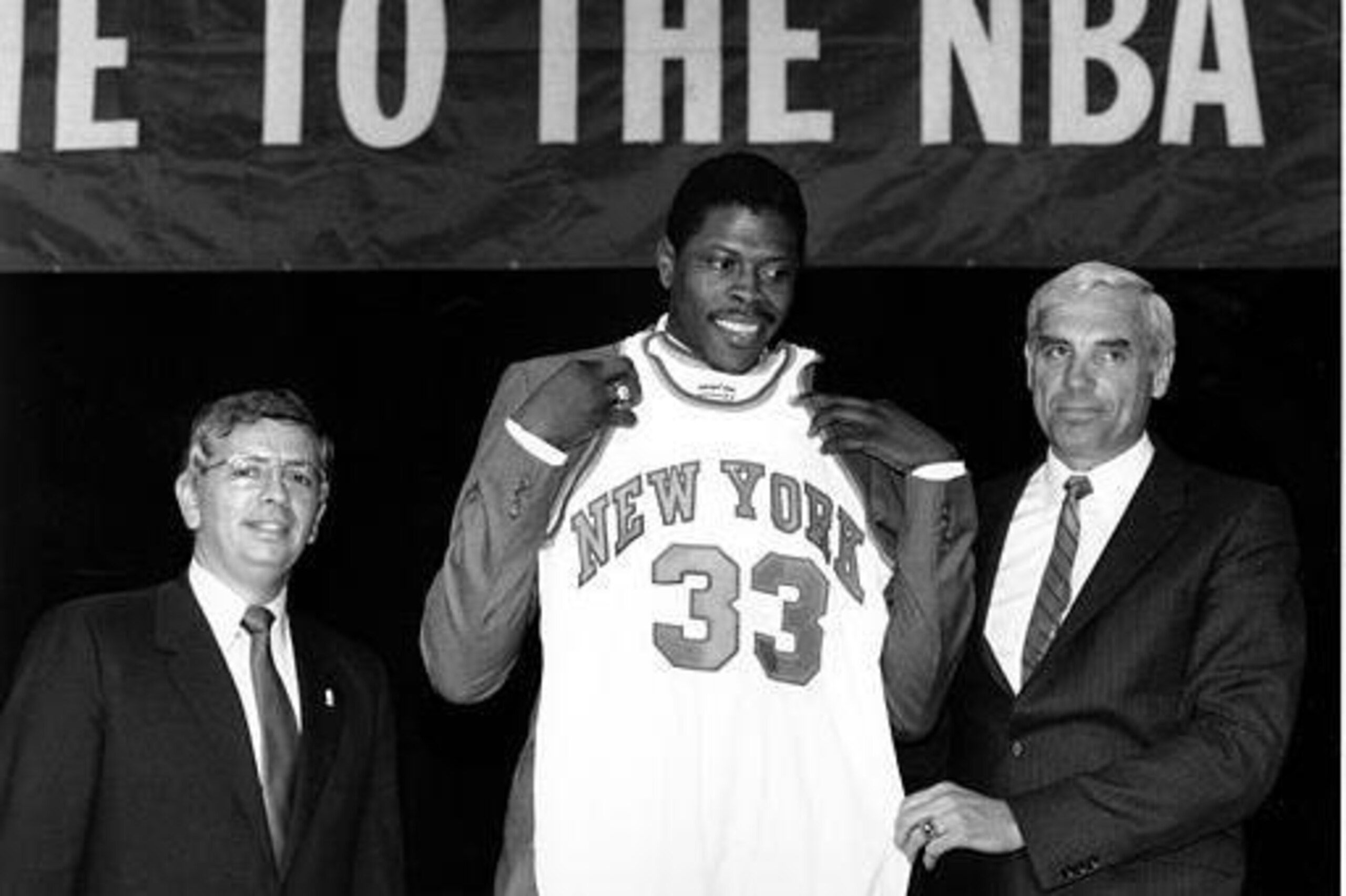
Porzingis is now the Knicks' highest draft selection since 1985, when they nabbed Patrick Ewing with the first overall pick. Ewing would go on to be a perennial All-Star and first-ballot Hall of Famer, and he remains a symbol for better, more meaningful times.
Not since then, 30 years ago, have the Knicks had so much invested in a rookie. For what feels like eternity, they have treated draft picks like trade assets, failed to adequately develop the players they've kept or just plain swung and missed on their selections entirely.
Player development specifically is a sore spot. Porzingis, for all his pomp and promise, will need time, just like any rookie.
He could need even more of a grace period than usual, not merely because he hails from a different country, but because he's a 7'1" floor-spacing twig, per Begley, and he will be pitted against more seasoned, stockier frontcourt opponents.
If he's to actually develop into a more athletic, explosive, shot-blocking version of Dirk Nowitzki, it's going to take time. The Knicks, all the way up to owner James Dolan, aren't exactly merchants of time, as KnickerBlogger.Net's Kevin McElroy points out:
Listing the names of players whom New York has groomed, and then retained, is an exercise in futility. Not even the most polished ones stick around long.
Danilo Gallinari (No. 6 in 2008) didn't last three full seasons. Neither Wilson Chandler (No. 23 in 2007) nor Iman Shumpert (No. 17 in 2011) lasted four.
Heck, the Knicks gave up on Tim Hardaway Jr. (No. 24 in 2013) after two years, trading him to the Atlanta Hawks for Jerian Grant soon after they selected Porzingis, as first reported by Wojnarowski:
David Lee (No. 30 in 2005) is the closest thing to a developed prospect to which the Knicks can lay claim. And yet, while he earned one All-Star appearance with the team, he never helped clinch a playoff berth and was still traded after his fifth season as a result of the Knicks signing Amar'e Stoudemire.
Porzingis must be different. He cannot be another cautionary tale. New York's rebuild is prominently predicated on cap space and signing proven players with that spending power, but the franchise is now equally, if not more, dependent on the type of player Porzingis becomes.
There are actual expectations for him, a ceiling the Knicks have to help him reach. Think about what Jackson told reporters, per the Wall Street Journal's Chris Herring and the New York Times' Scott Cacciola:
Consider, too, the assumptions being made about his potential from those outside the Knicks organization—those from Basketball Insiders' Alex Kennedy and Wojnarowski:
Dare-to-be-great pick.
Star.
These characterizations are not to be taken lightly. The Knicks need to make the most of Carmelo Anthony's fast-approaching twilight, and they don't have first-round picks to speak of in 2016. They could have gone with a safer, more known commodity rather than try for a home run.
Swinging for the fences isn't necessarily the wrong move, to be sure. The fact that New York is taking on a project and looking at future ceilings as opposed to immediate impact is admirable, as Basketball Insiders' Tommy Beer put it:
Still, there's no use pretending the tension isn't there, or that the Knicks aren't already feeling the wrath and pressure of an exhausted fanbase. Porzingis himself heard the sighs and boos emanating from the New York faithful Thursday night, per Cacciola:
No matter what the Knicks did, their rebuild was always going to officially begin at the draft. Last season was an intermission, a 17-win disaster viewed as collateral damage for the rewarding offseason that would ensue.
Selecting Porzingis sets the tone for this offseason. He is the draft pick against which Jackson's tenure will be most judged.
Free agency matters too, sure. But Jackson and the Knicks cannot be held wholly accountable for players they may never actually employ.
They already have Porzingis. He is, as of now, the only other real building block they have outside of Anthony.
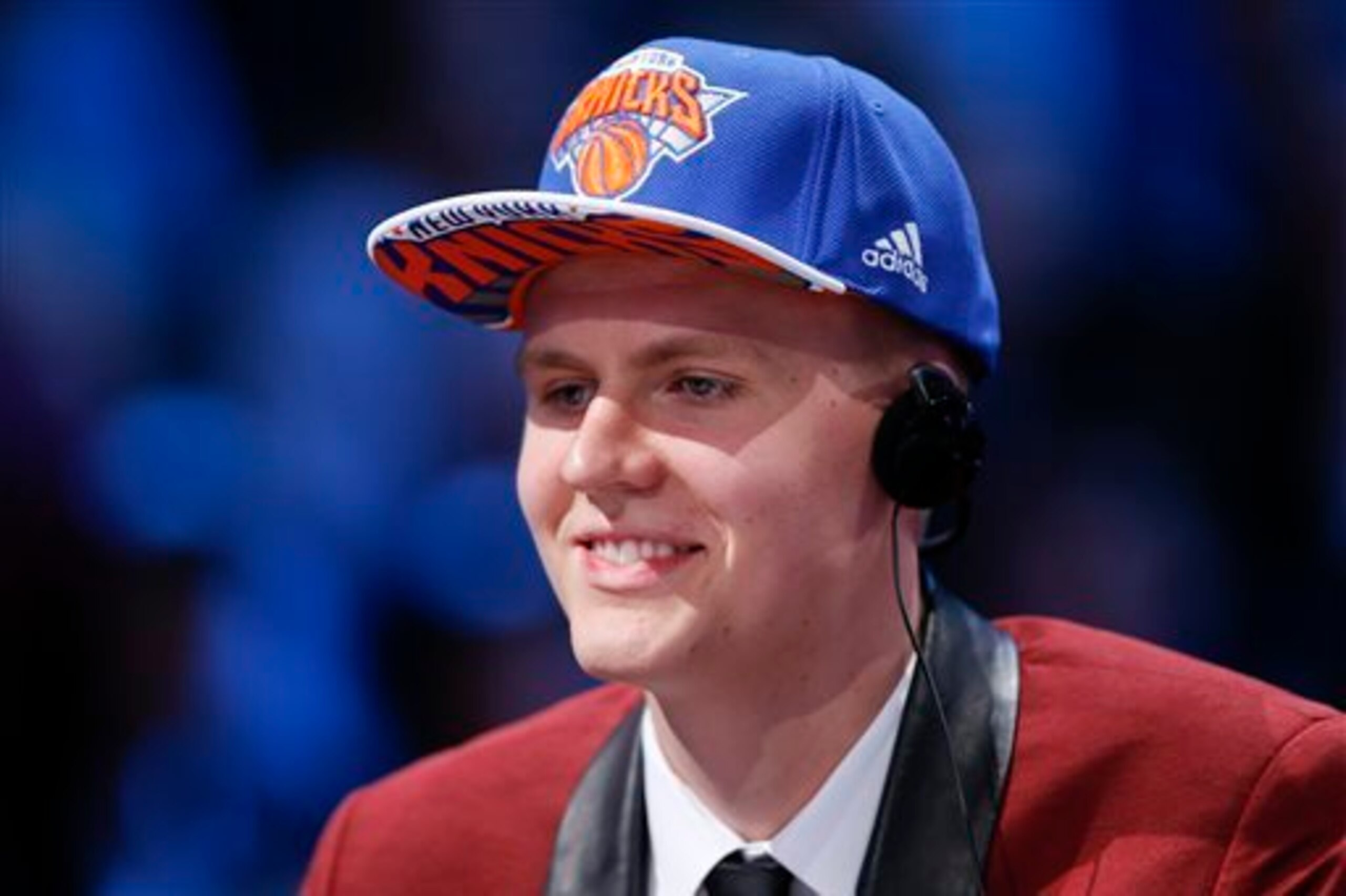
If he becomes a bust, New York's most important draft pick in three decades will go down as another franchise folly—one that sets their return to prominence, already years in the making, back even more.
If he grows into the cornerstone the Knicks need, his arrival will be remembered fondly as the initial turning point for an organization that, after years of getting almost everything wrong, needs to get this right.
Dan Favale covers the NBA for Bleacher Report. Follow him on Twitter: @danfavale.


.jpg?w=2560 "Report: Darnold Could Miss 3-6 Weeks")
.jpg?w=2560 "Week 2 Start 'Em, Sit 'Em Decisions")
.jpg?w=2560 "Best NFL Free Agent Fits 📝")