

What Washington Redskins Running Game Will Look Like Under Bill Callahan
Bill Callahan wasn't just hired to improve the Washington Redskins offensive line. He was also brought to D.C. to revive a running game that slipped to 19th in the NFL rankings last season.
Head coach Jay Gruden has revealed how his new line coach will design and call the running game in 2015, per Michael Phillips of the Richmond Times-Dispatch: "I might ask for, ‘Hey, what’s your best run here,’ and Coach Callahan will be the guy that will devise the running game, game plan-wise. It wouldn’t surprise me at all if he’s calling the majority of the runs on game day."

.jpg?w=2560 "Commanders Eagles Football")

Callahan's influence setting the direction for the ground attack is great news for the Redskins. He's one of the league's best at providing a platform for runners to thrive, as NFL.com's Conor Orr recently detailed:
"While we're always ready to concede coincidence, Callahan has had a hand in coaching NFL offensive lines for the past six years. In that time, three of those teams finished in the top five in rushing (2009 Jets, 2010 Jets and 2014 Cowboys). The 2008 Jets finished ninth.
"
Those are the numbers, but what does a Callahan running game actually look like? As owners of the second-ranked ground game and the top rusher in football in 2014, Washington's hated rivals the Dallas Cowboys are a good frame of reference.
Casting an eye over the Cowboys' success on the ground last season reveals four key things about Callahan's approach.
Power Principles are Obvious
Power is a big part of Callahan's philosophy. The principles of power are obvious in the plays he designs, from the formations to the techniques and execution.
In terms of formations, Callahan loves to use multiple-tight end sets. On this 10-yard run during a Week 6 road win over the Seattle Seahawks, Dallas fielded a balanced, seven-man line. Tight ends Jason Witten and James Hanna bookended the front:

Their blocks proved crucial in stretching out Seattle's notoriously stingy defensive front and giving Murray a lane through the middle:
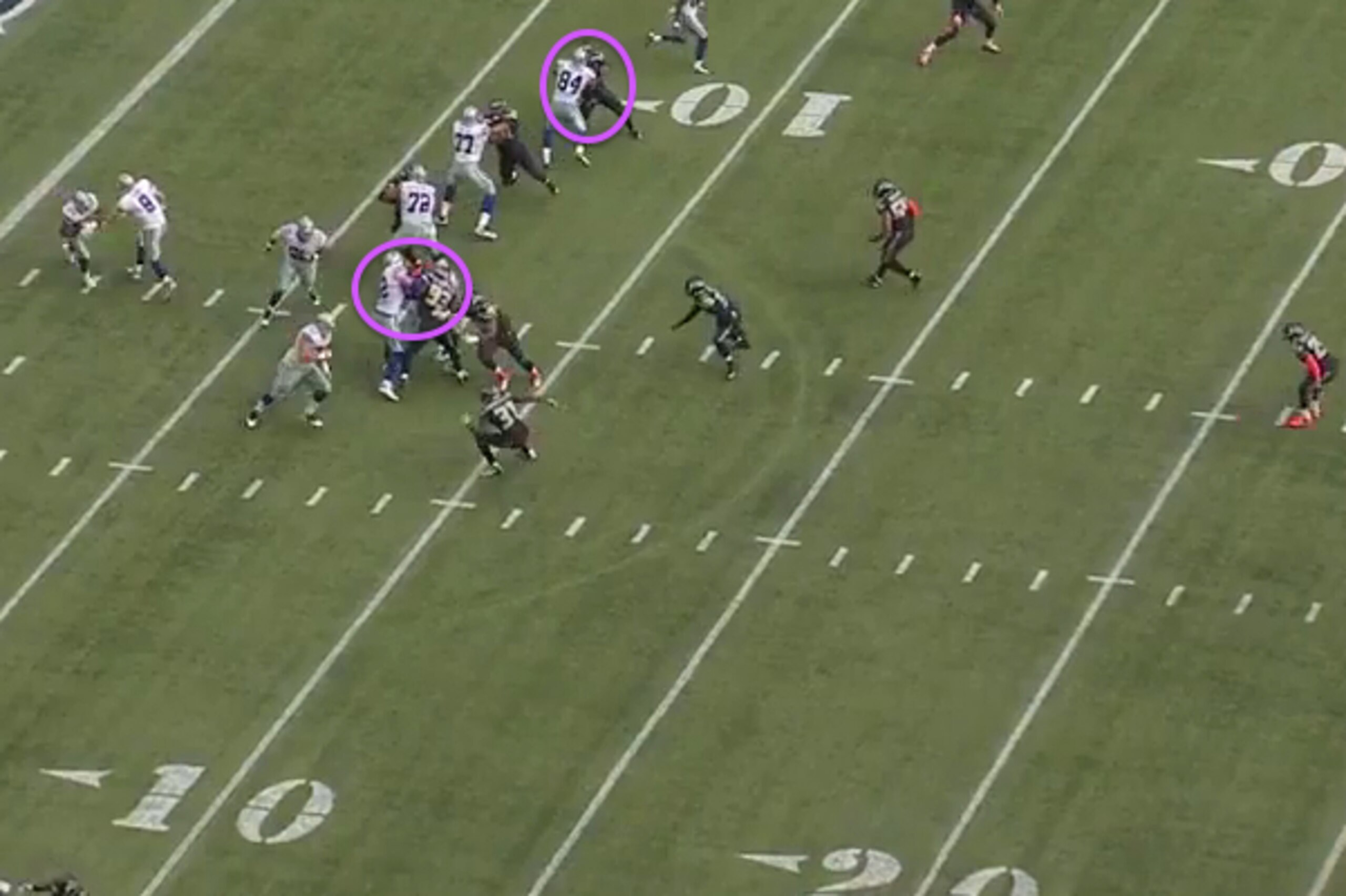
Notice how guards Zack Martin and Ronald Leary were pulling around the corner. Overloaded lines and pulling linemen are classic staples of power football.
The Cowboys used a similar play to free Murray for an even bigger gain against Washington in Week 17.
Once again, Callahan added two tight ends to his offensive line. But this time Witten and Hanna were stacked on the same side. On the other side, Callahan added an extra offensive tackle, 6'5", 304-pound Tony Hills:
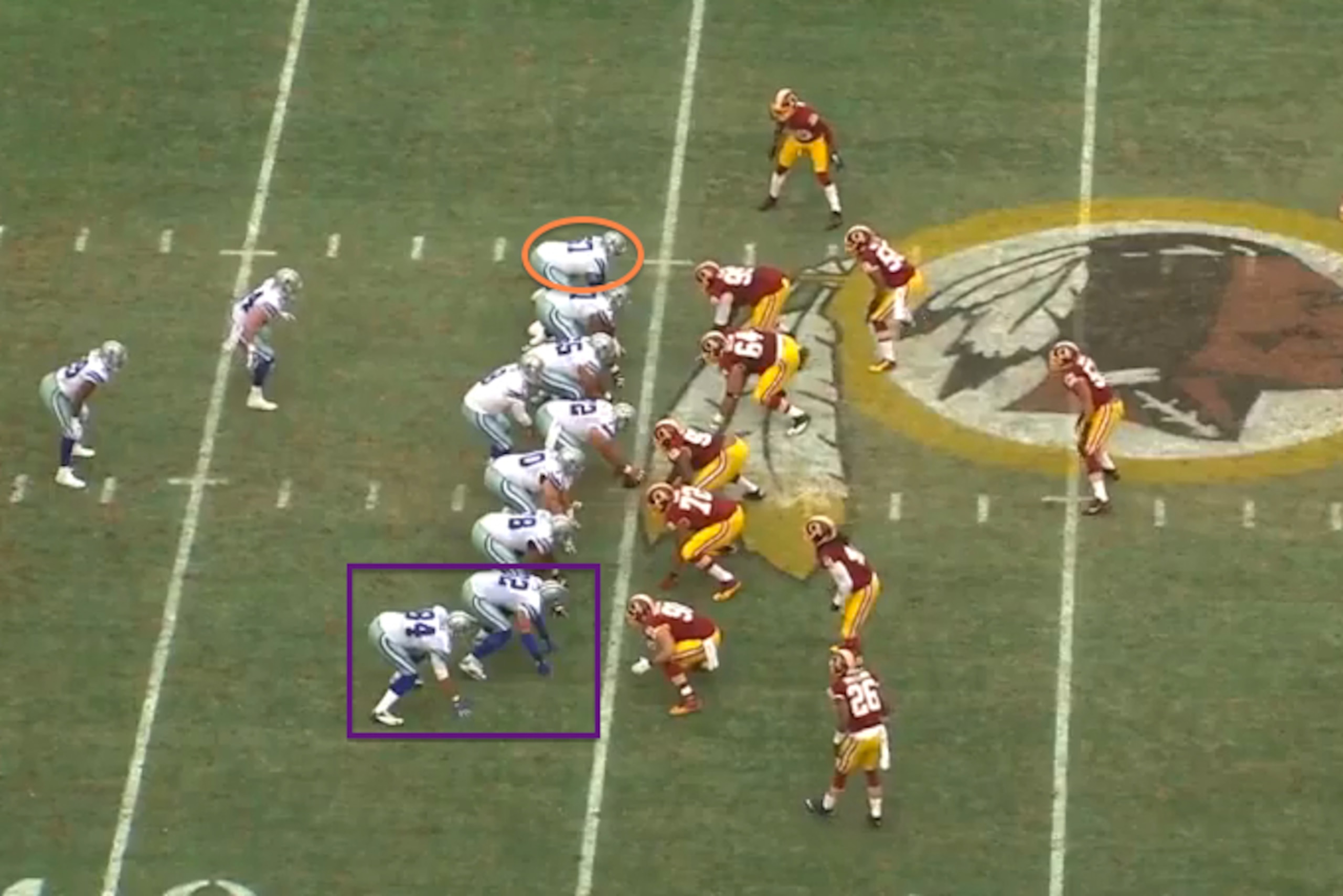
The Cowboys now had an eight-man line. Behind it, Murray was joined by fullback Tyler Clutts in an offset I-formation look.
Two tight ends, six offensive linemen and a fullback. If that doesn't scream power football, what does?
Once the ball was snapped, the additional blockers all made key contributions. Clutts and Hanna sealed the edges, while Hills (67) and Witten absorbed defenders at the second level:
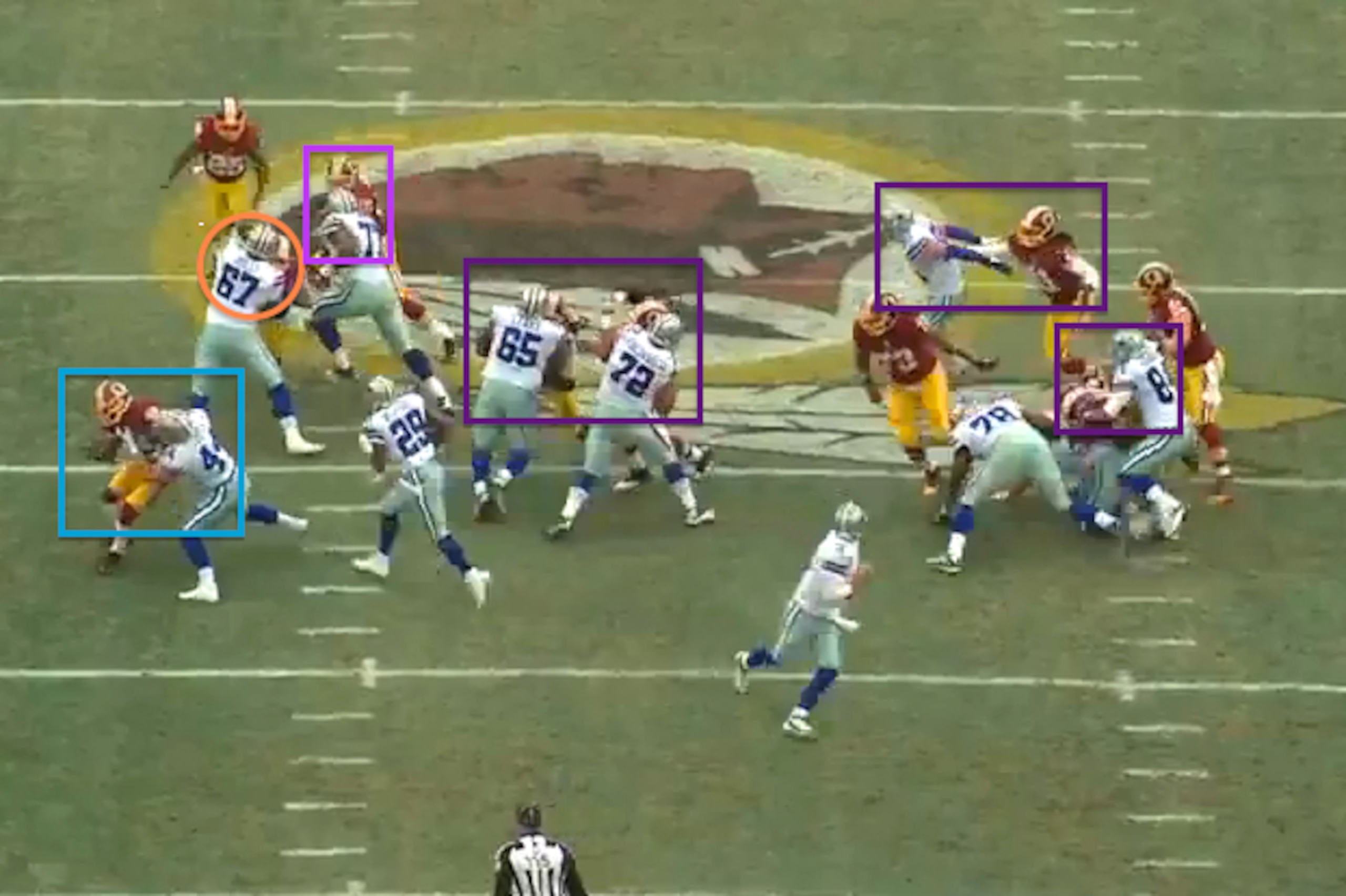
Notice how Leary and center Travis Frederick (72) used hat-on-hat blocking. Establishing one-on-one dominance is a hallmark of power blocking in the running game.
The extra blockers up front, allowed left tackle Tyron Smith to quickly release to the second level and neutralize a linebacker. With Smith and Witten extending the line of scrimmage, Murray now had a huge lane to exploit. He promptly powered his way to 32 yards:
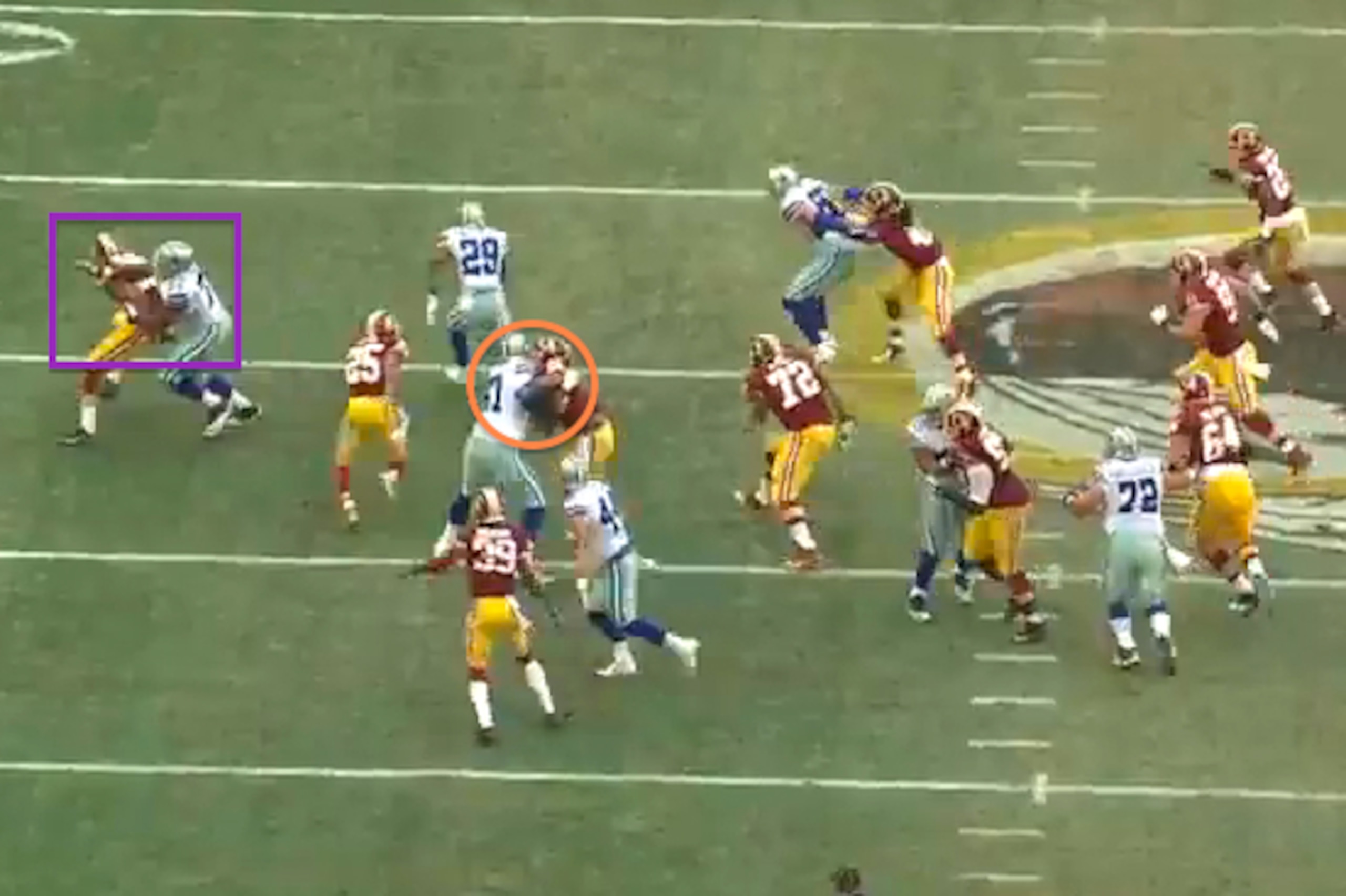
Power looks and concepts aren't what define Callahan's ground schemes, but they are a feature of them. They're also the preference of Gruden and general manager Scot McCloughan.
You can expect to see plenty of power looks from Washington's offense in the new season.
But don't expect Callahan to overhaul the old scheme altogether. In fact, he'll preserve a good portion of it.
More of What You're Used To
Before last season, the Redskins rushing offense was defined by zone blocking and outside, stretch-style runs. It was a scheme deeply rooted to former head coach Mike Shanahan, one that turned Alfred Morris from unheralded, late-round draft pick into a Pro Bowler.
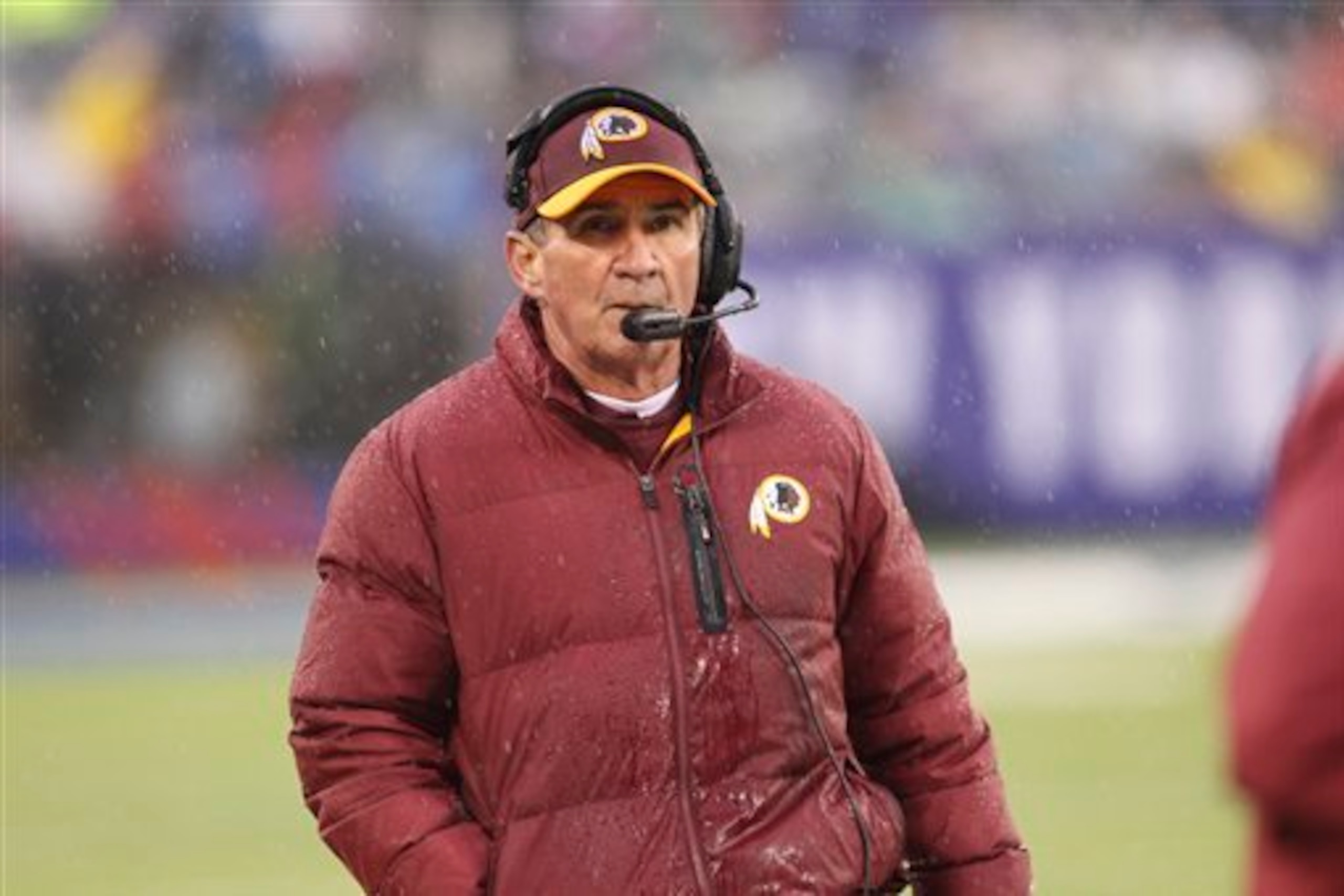
But ever since Gruden took over, moving away from the zone scheme has become a common narrative. Shanahan's successor has even admitted his fondness for a different style of blocking and running, per CSN Washington's Rich Tandler: "I like the power plays. I like the gap-blocking plays.”
McCloughan and Callahan arriving at Redskins Park is supposed to hasten the death of the outside zone in Washington. But in reality, Callahan's scheme is very close to what the Burgundy and Gold already operate.
He is never shy about using zone blocking and called outside, stretch runs several times last season. He often packaged these plays in different looks.
One look involved calling a stretch run with "11" personnel on the field, one running back and one tight end, against the Seahawks:
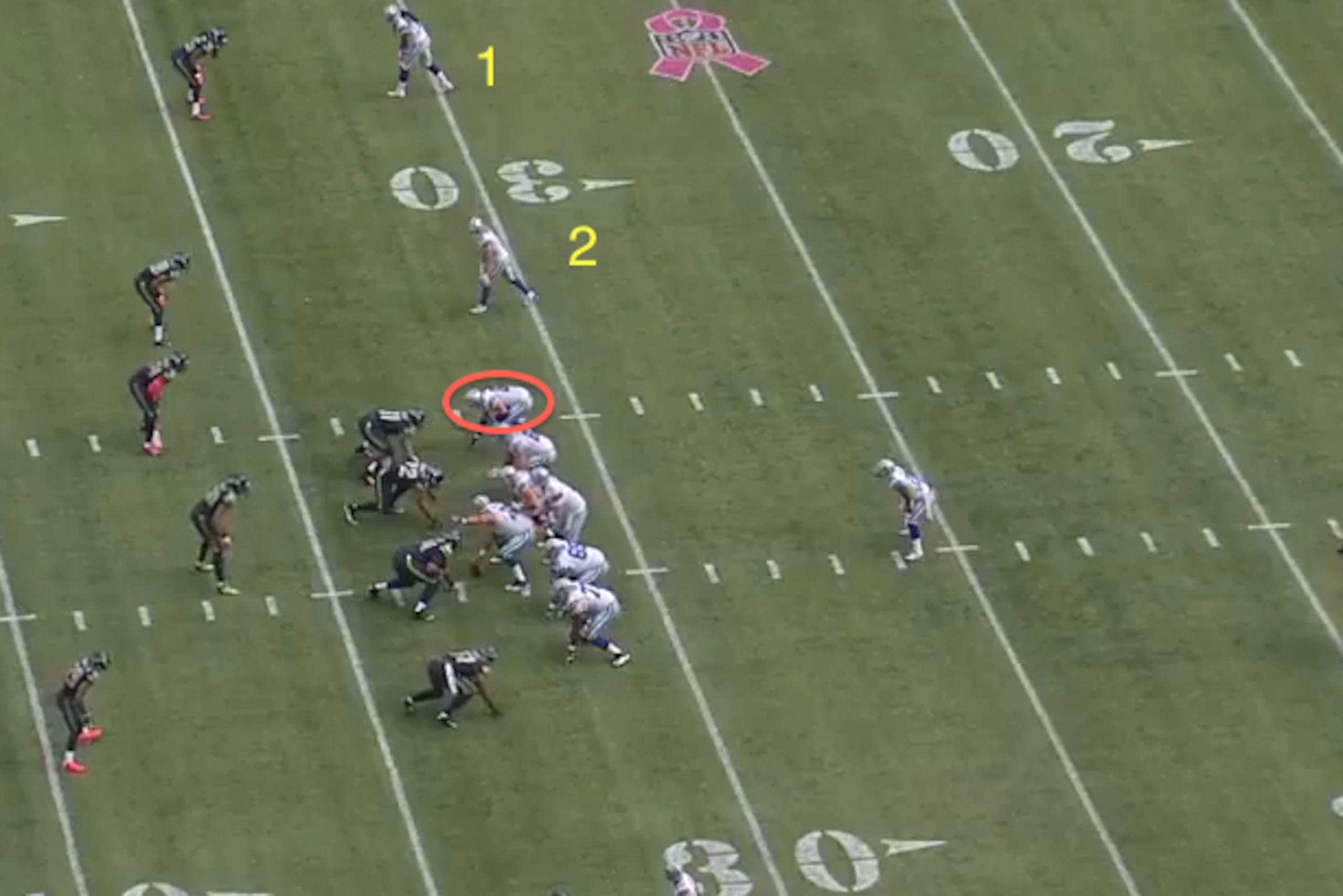
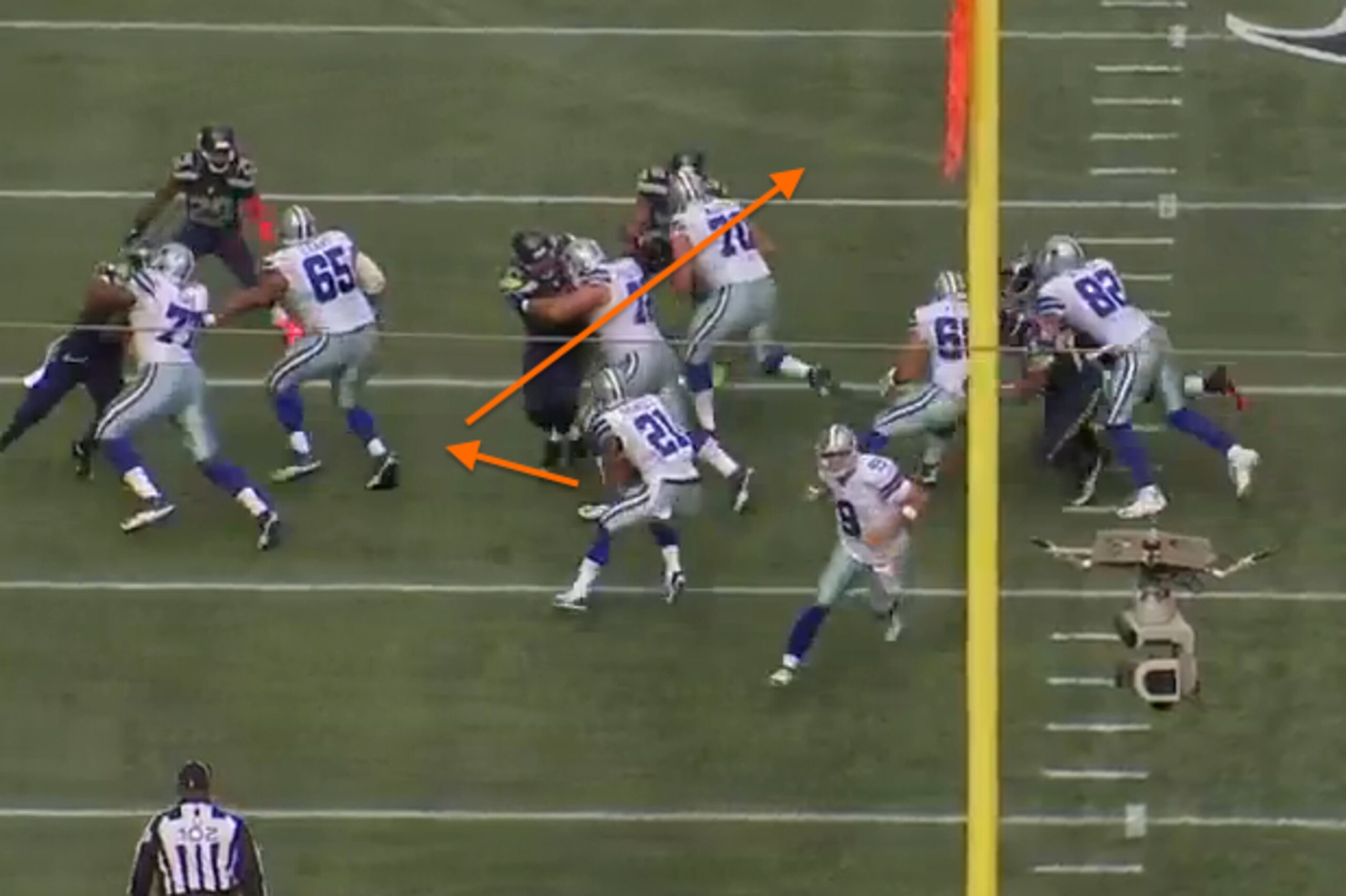
At the snap, the Dallas line executed the lateral movement that should be familiar to all Washington fans. Stretching to the left, the Cowboys also prepared to release blockers, in this case guards Leary (65) and Martin (70), to the linebacker level:

With the blocking set, Joseph Randle planted his foot and prepared to cut back and attack an inside crease:
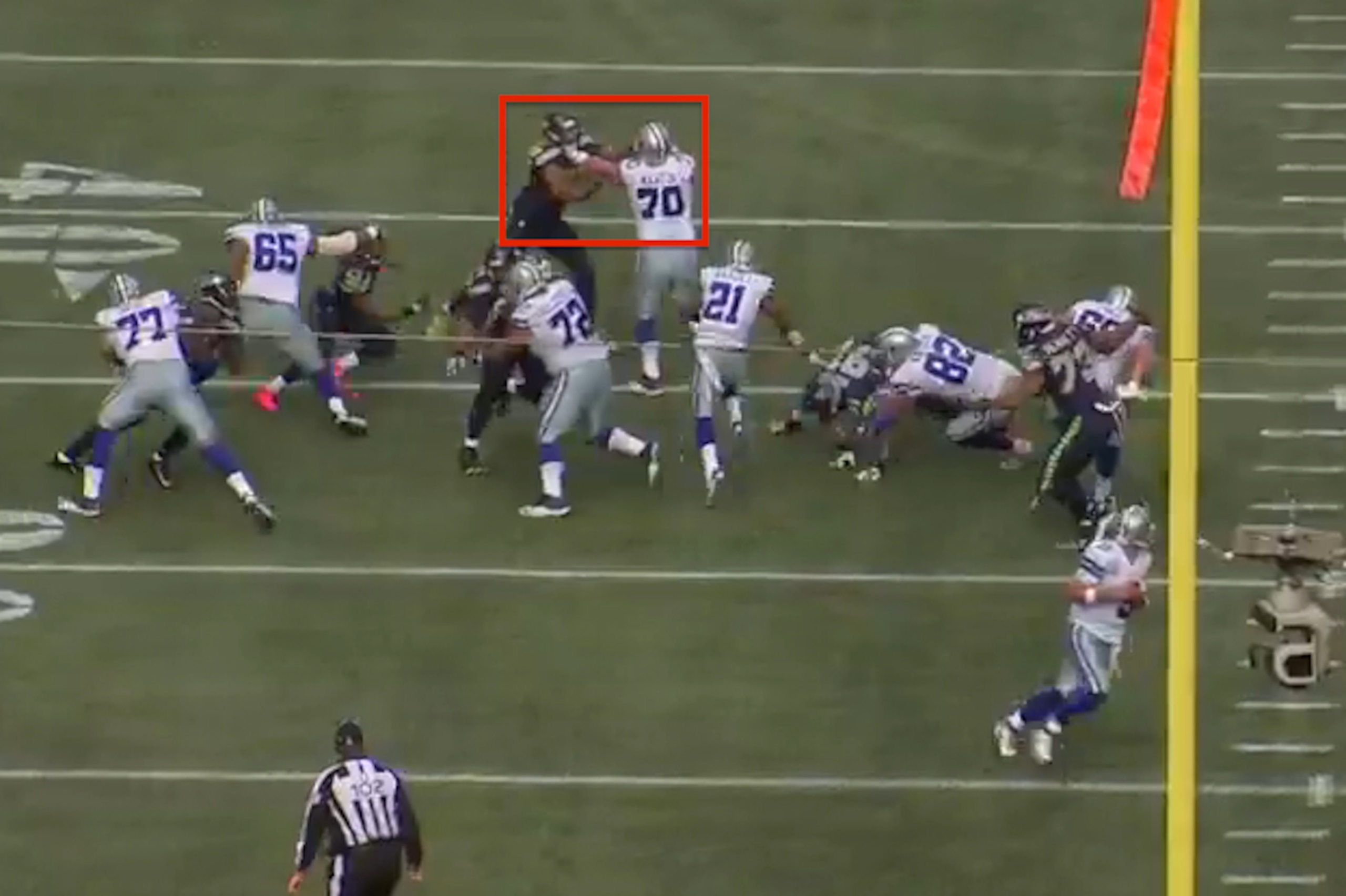
As Randle made his move, the Cowboys secured their blocks at the second level. Notice how wide receiver Dez Bryant even got in on the act. Wideouts blocking on the edge is a necessity on any successful outside zone run:

Second-level blocking cleared the lane out for Randle to explode through on his way to 38 yards against the toughest run defense in football:
If you're thinking this play looks familiar, it certainly should. It's the same stretch run to the left the Redskins having been using since 2010.
But Callahan didn't just call this staple play from one-back or multiple-tight end sets. He also utilized it from some traditional I-formation looks.
The formula worked to produce a nine-yard gain on the road against the Philadelphia Eagles in Week 15.
Callahan went with a pro-style, "21" personnel package, two backs and one tight end, from an I-formation look. But he did provide a riff on the classic formula.
The Cowboys stacked both receivers, Bryant and Terrance Williams, together on the same side. This forced the Eagles to respond by moving a safety out of the box and into coverage:
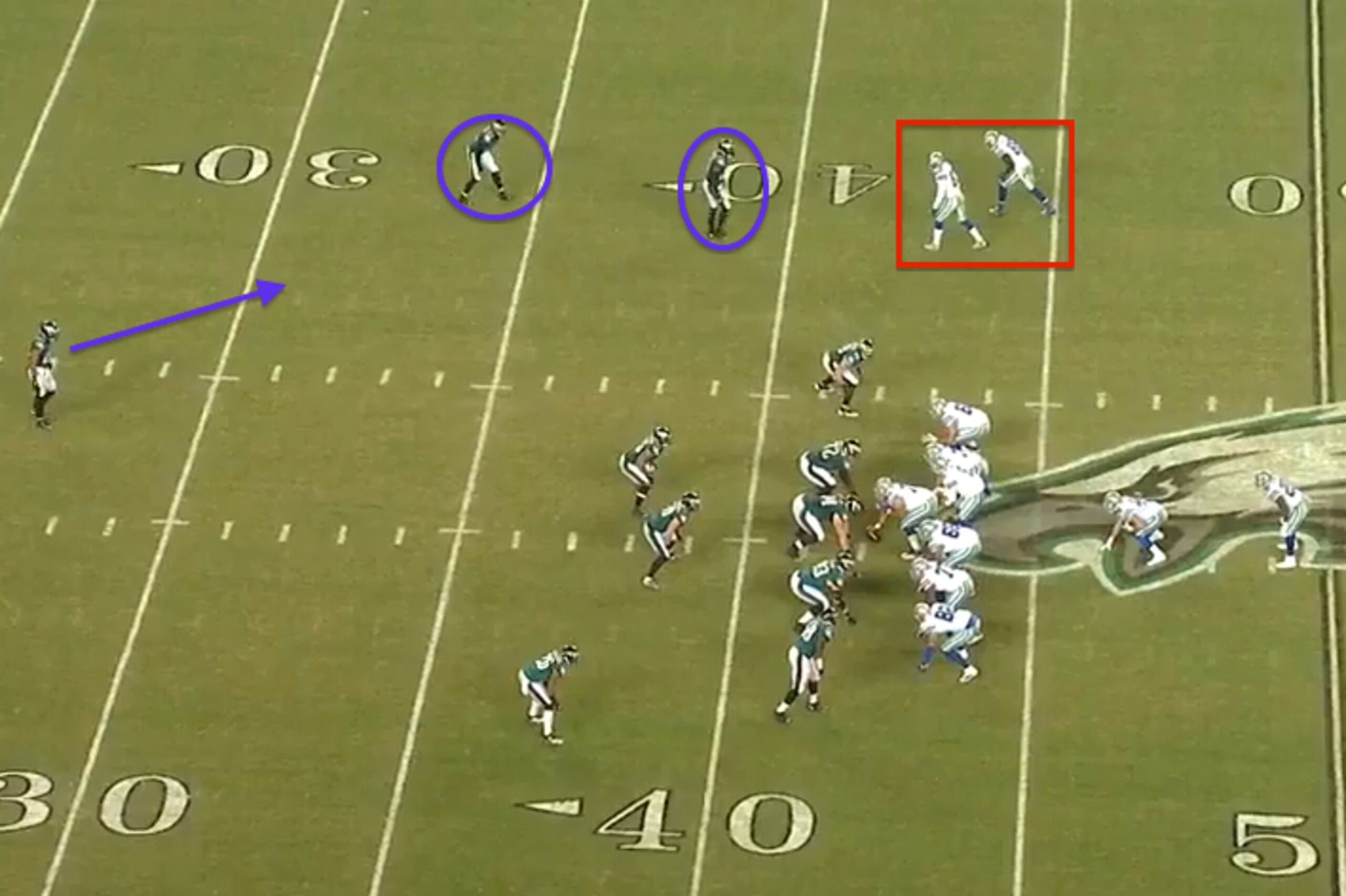
Philly's single-high, deep safety was also focused on Bryant and Williams. Even from a run-heavy look, Callahan had managed to force the defense into a seven-man front. That's a matchup advantage for any rushing attack.
The Cowboys soon exploited their advantage. Stretch blocking was again employed toward the left side of the line:
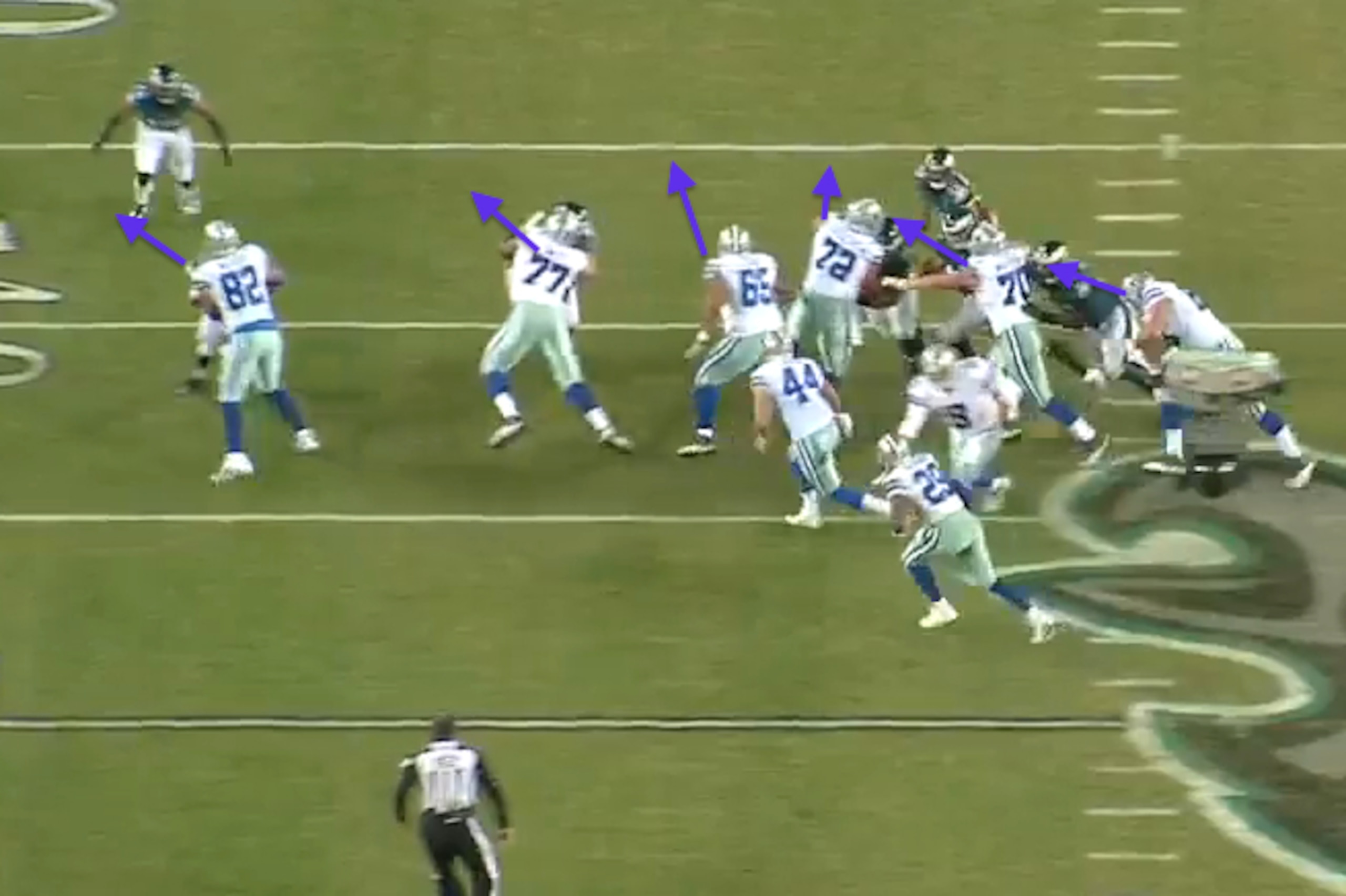
With the blocking set and Leary at the linebacker level, Murray planted his foot and prepared to make the trademark one-cut-and-go move the zone-stretch scheme is built on:

Leary's block cleared out the hole and allowed Murray to complete a solid gain:

Gruden has already indicated how this season's rushing scheme will still incorporate plenty of what's worked well in the past, according to Rich Tandler of Real Redskins: "We’re going to do both. We’re not going to abandon the outside zone. Alfred Morris is a great outside zone runner. He’s a great zone runner. I think the ability to do a little bit of both is very, very important to keep defenses off-balance."
That's good news for Morris. So is the variety Callahan is promising, per another report from Tandler: “I think when you have balance in you running game, whether it’s the gap scheme, the zone scheme, using your draws, using wide zones, or tight zones, or whatever that may be I think it just keeps the defense off balance and it plays to your players’ strengths.”
But it's not just the blocking techniques and specific run calls that will keep defenses guessing in the new season.
Different Looks
One of the great things about Callahan's scheme is how it creates solid gains from apparent pass sets. A seven-yard scamper from Murray against the Eagles is an excellent example.
Dallas showed "11" personnel with three wide receivers also on the field. This single-back, receiver-heavy set usually screams pass:
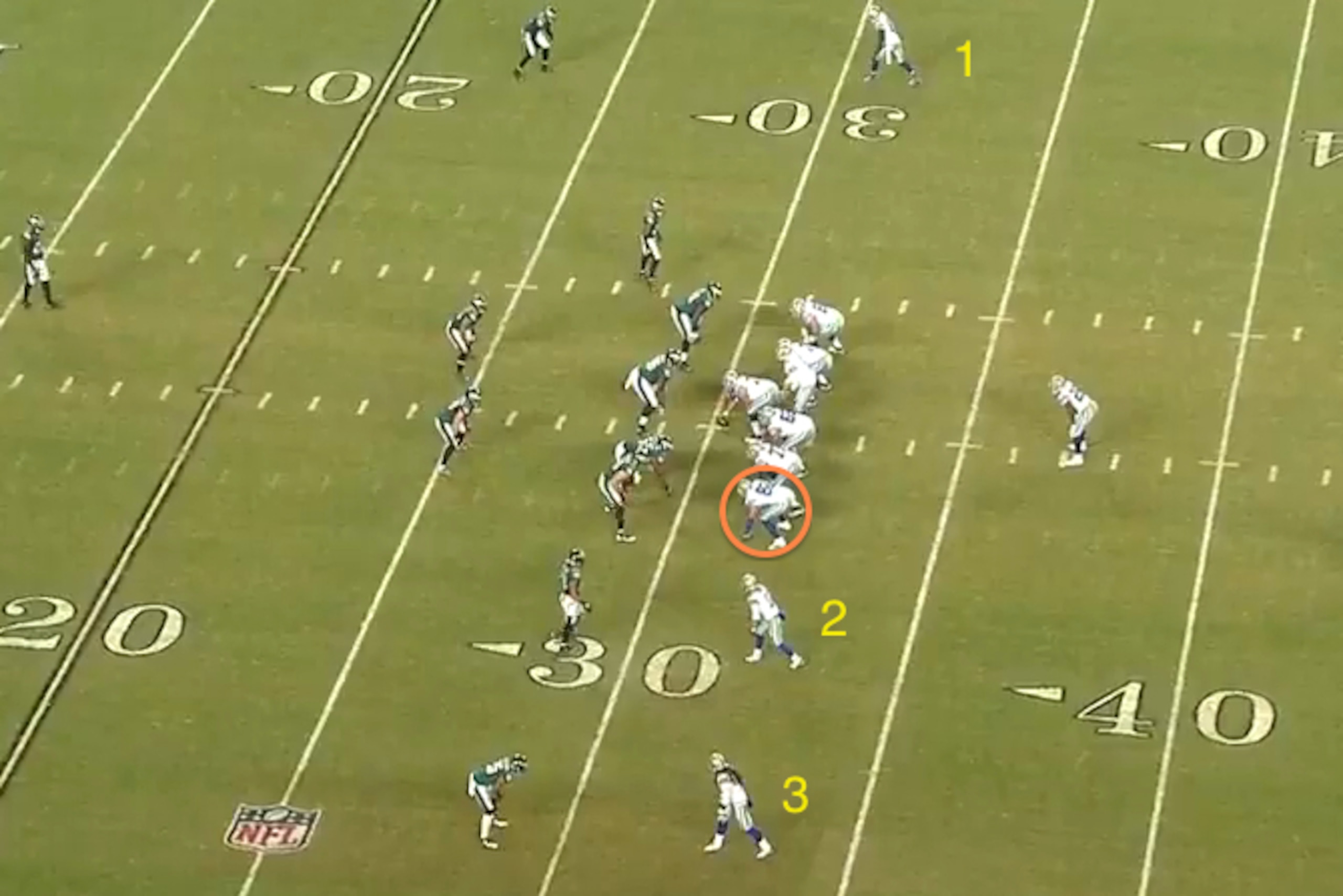
But instead, the play was another stretch-style, zone run. Dallas cleared out the box by having wide receivers Bryant and Dwayne Harris run their outside coverage deep:
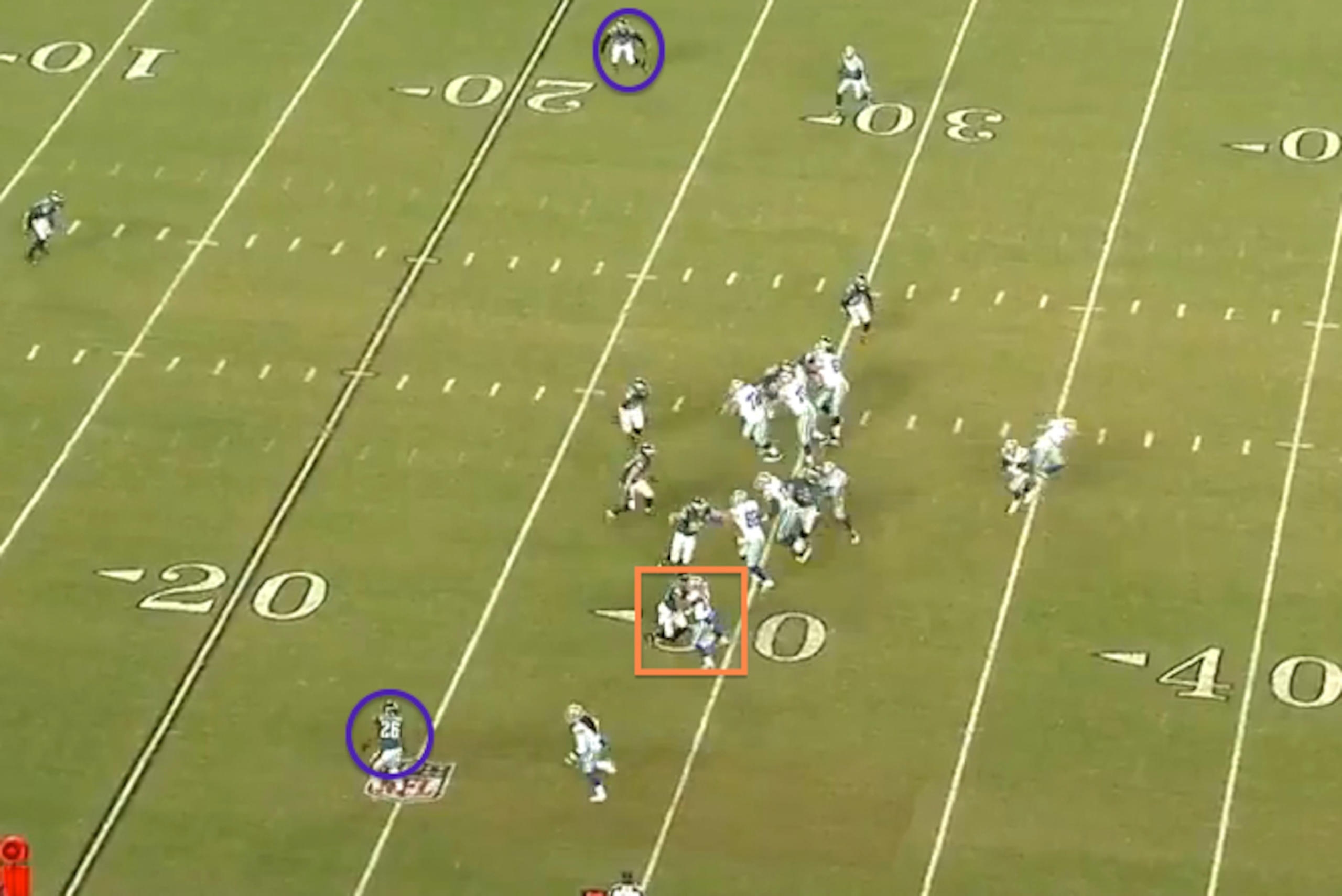
On the inside, slot receiver Cole Beasley made a particularly important block to seal the edge:

As he did, Murray planted his foot and made his move into the interior cutback lane. It helped that the Cowboys again quickly got blockers to the second level. Witten, Smith and Frederick all made key blocks.
Callahan has been an expert at crafting big gains on the ground from a variety of looks. Even in a pass-first formation, defenses can't ignore the threat on the ground.
That level of unpredictability is one reason why Callahan's rush offenses produce so many big plays.
Long Runs are Common
Long runs aren't just possible in a Callahan-called rushing game, they're actually very common. The combination of clever scheming and versatile blocking wears down defenses both on a mental and physical level.
Fatigued units become easy prey for huge plays on the ground. Washington found this out the hard way during 2014.
When the Redskins beat the Cowboys in Dallas in Week 8, they won despite Murray stomping his way to 141 yards, averaging seven yards on 19 carries. He gained 51 of those yards on one play.
It began with the Cowboys showing Washington an I-formation set with two receivers stacked on one side. That forced outside linebacker Ryan Kerrigan off the line of scrimmage:

Dallas intended to pull both its guards around the corner in an old-fashioned power sweep. Martin would neutralize safety Brandon Meriweather (31), while Leary occupied rush end Trent Murphy (93) on the edge:
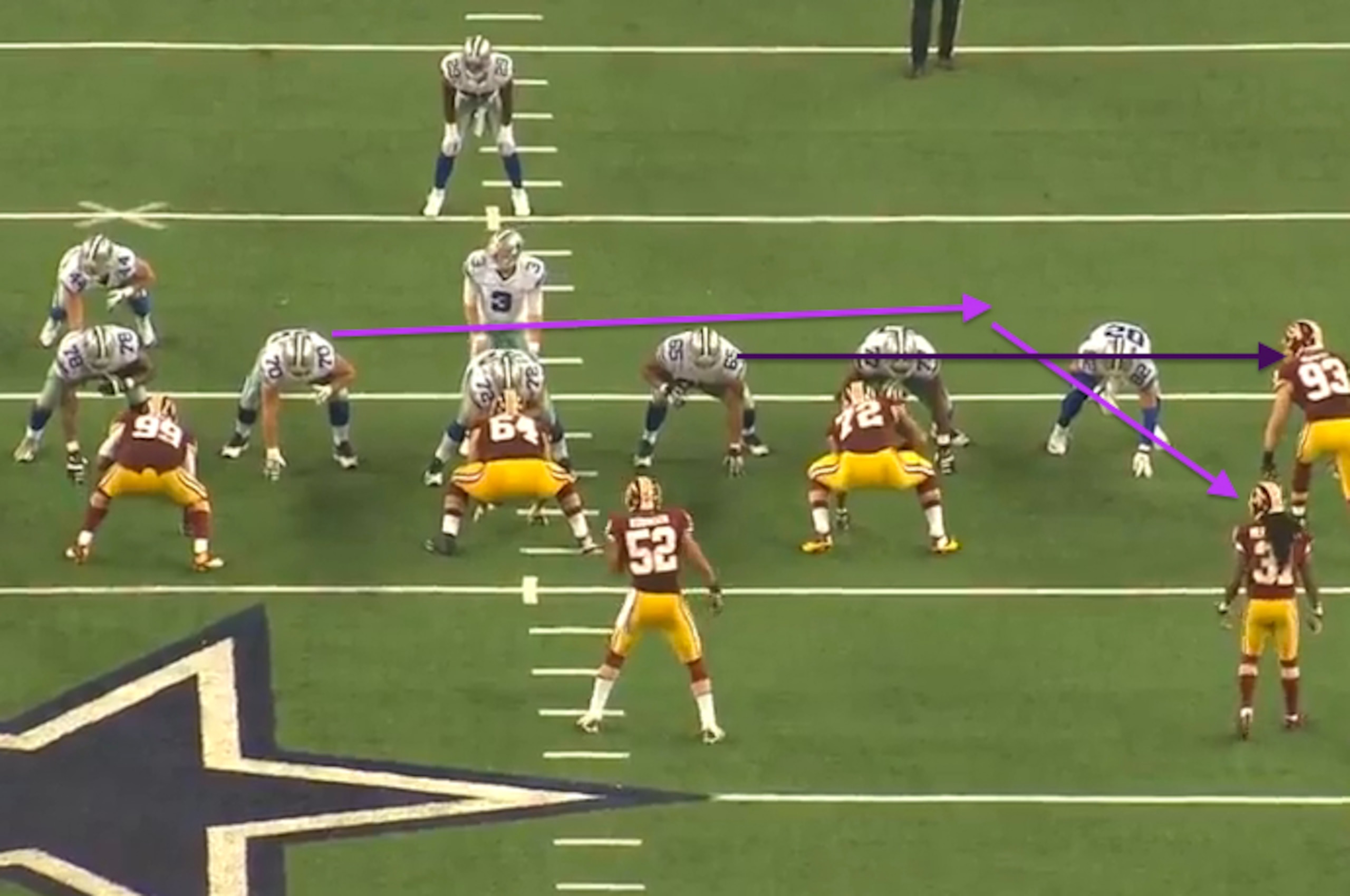
Martin and Leary led the way, while Clutts took out Kerrigan on the backside. The Cowboys had not only run away from Kerrigan, Washington's best defender, they'd also prevented him from chasing the play down:

As the guards reached their respective blocks, Witten released to take middle linebacker Keenan Robinson out of the play:

Washington surrendered an even bigger run against the Cowboys during Week 17's heavy home defeat. Dallas aligned in "22" personnel, two running backs, two tight ends and one wide receiver:
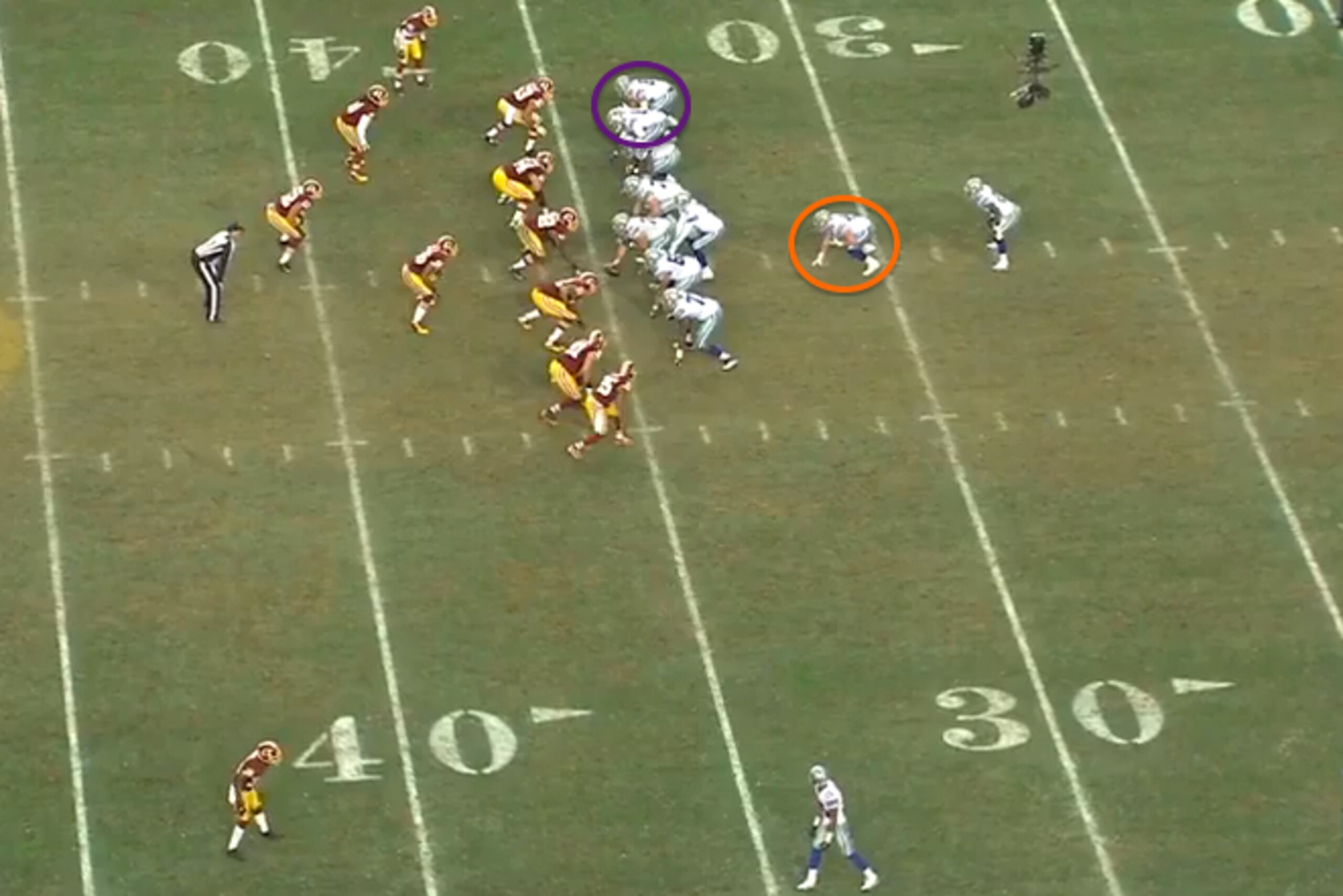
With Hanna and Witten locking up one side, along with Clutts' block, the Cowboys had a numbers advantage at the point of attack:
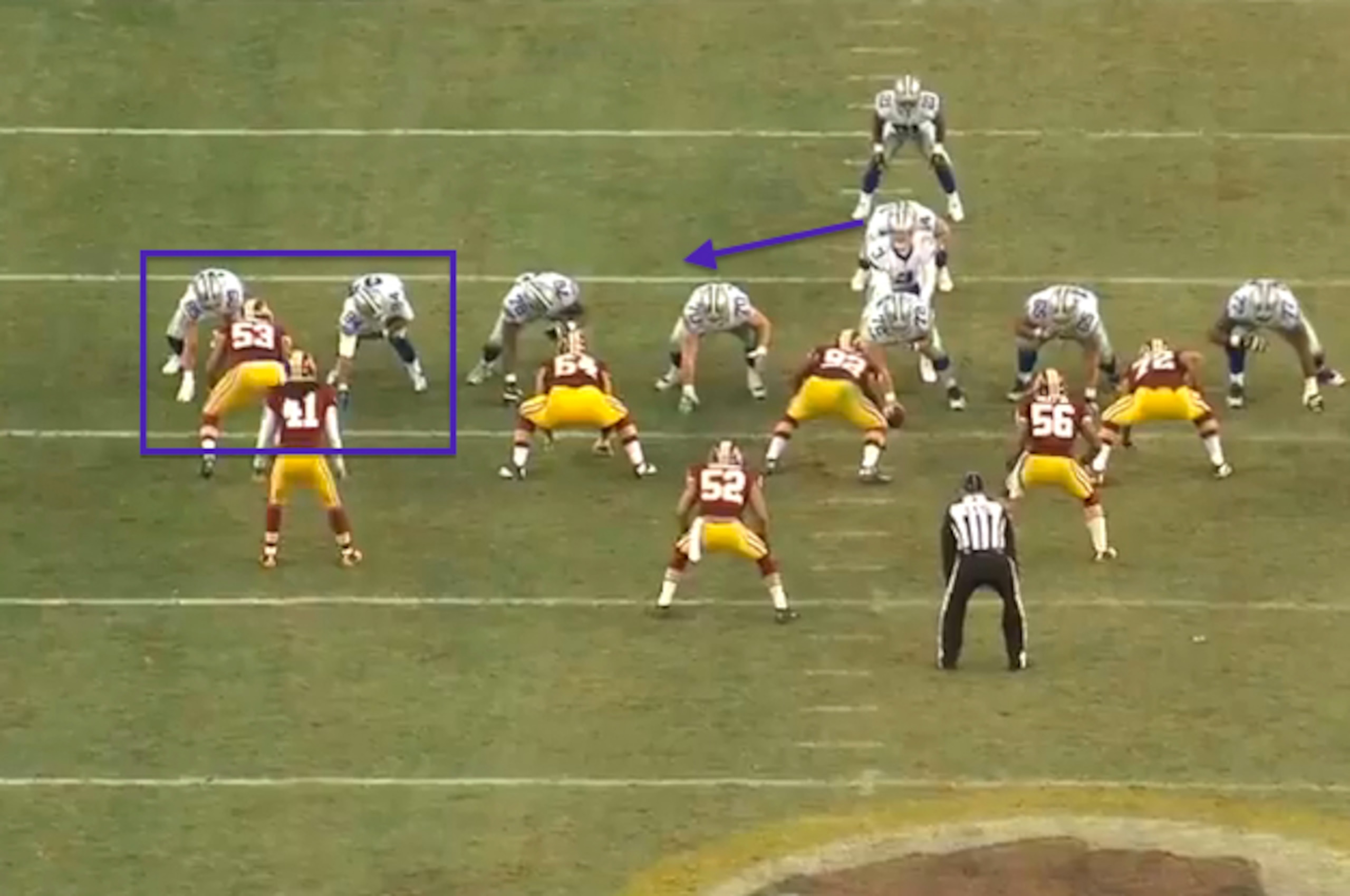
At the snap, Dallas occupied every member of Washington's defensive front with hat-on-hat blocking:

With gaps filled and defenders driven off the ball, Randle has a huge rushing lane through the middle. He sped through it to complete a 65-yard score:
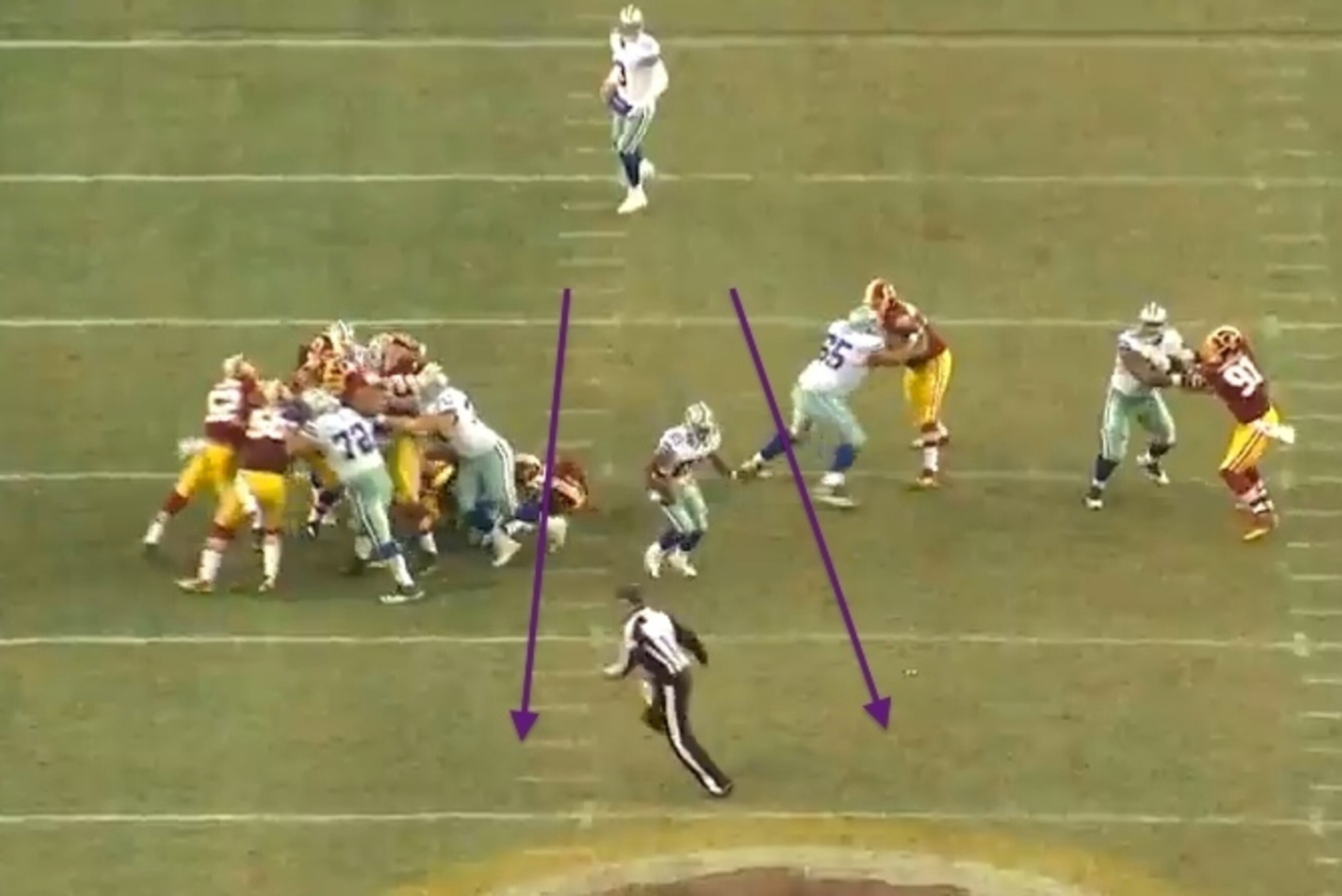
Of the seven plays detailed here, four showcase gains of more than 30 yards. That's just a snapshot of the big-play potential Callahan's scheme creates.
Working with New Tools
With Morris and rookie Matt Jones on board, Callahan has the runners he needs to bring his playbook to life in Washington. But he might have to cover up some gaps elsewhere.
His system demands dominance up front, so he'll have to get his primary job right. Callahan will certainly be grateful to McCloughan for drafting beefy tackle Brandon Scherff.
If the former Iowa mainstay can be a bookend to Pro Bowler Trent Williams, Washington will have the kind of front Callahan needs to make his system work.
But his power game will put increased pressure on the interior trio, guards Shawn Lauvao and Spencer Long, along with center Kory Lichtensteiger, to be more physically dominant. There's certainly no Martin or Frederick in this group.

Having a capable blocker at the tight end position would also be a major bonus. Callahan may not find the same success from his multiple-tight end sets when "move" players like Jordan Reed and Niles Paul are tasked with setting the edge and nullifying second-level tacklers.
At least he will be able to count on a formidable fullback in Darrel Young. This running game should finally give the underused playmaker the workload his talent merits.
Callahan's typical combination of versatile scheming and flexible play-calling will ensure Washington's ground game is restored to the league's elite.
He'll use both power principles and pass-first sets to manipulate run fronts. Bewildered defenses won't know whether to expect zone or drive and gap blocking. That uncertainty will lead to a host of big plays.
After wasting their rushing attack in 2014, the Redskins have the right man to make it a force again. Now Gruden just has to let Callahan work.
Tandler described how things should look for an effective Washington offense in the new season: "If the Redskins are running the ball 30 times per game, that will be a sign that things are going well."
If the ground game Callahan calls is good enough to justify that number of carries, Washington will be a contender in the NFC East in 2015.
All screen shots via ESPN, Fox Sports, NBC Sports and NFL.com Game Pass.
All statistics and player information via NFL.com.
.jpg?w=2560 "Chiefs Dolphins Football")
.jpg?w=2560 "Texans-Mixon Released Football")


.jpg?w=2560 "Love's Body Already 'Tired'")