
San Francisco 49ers' Offseason State of the Union
What do we make of the San Francisco 49ers?
They fired a top-notch coaching staff and lost key starters this offseason. And they play in the toughest division in the NFL—the NFC West. The Niners might finish dead last.
Or, they might have a bounce-back season and go the playoffs. Aldon Smith and NaVorro Bowman are healthy. At their best, they’re All-Pros.
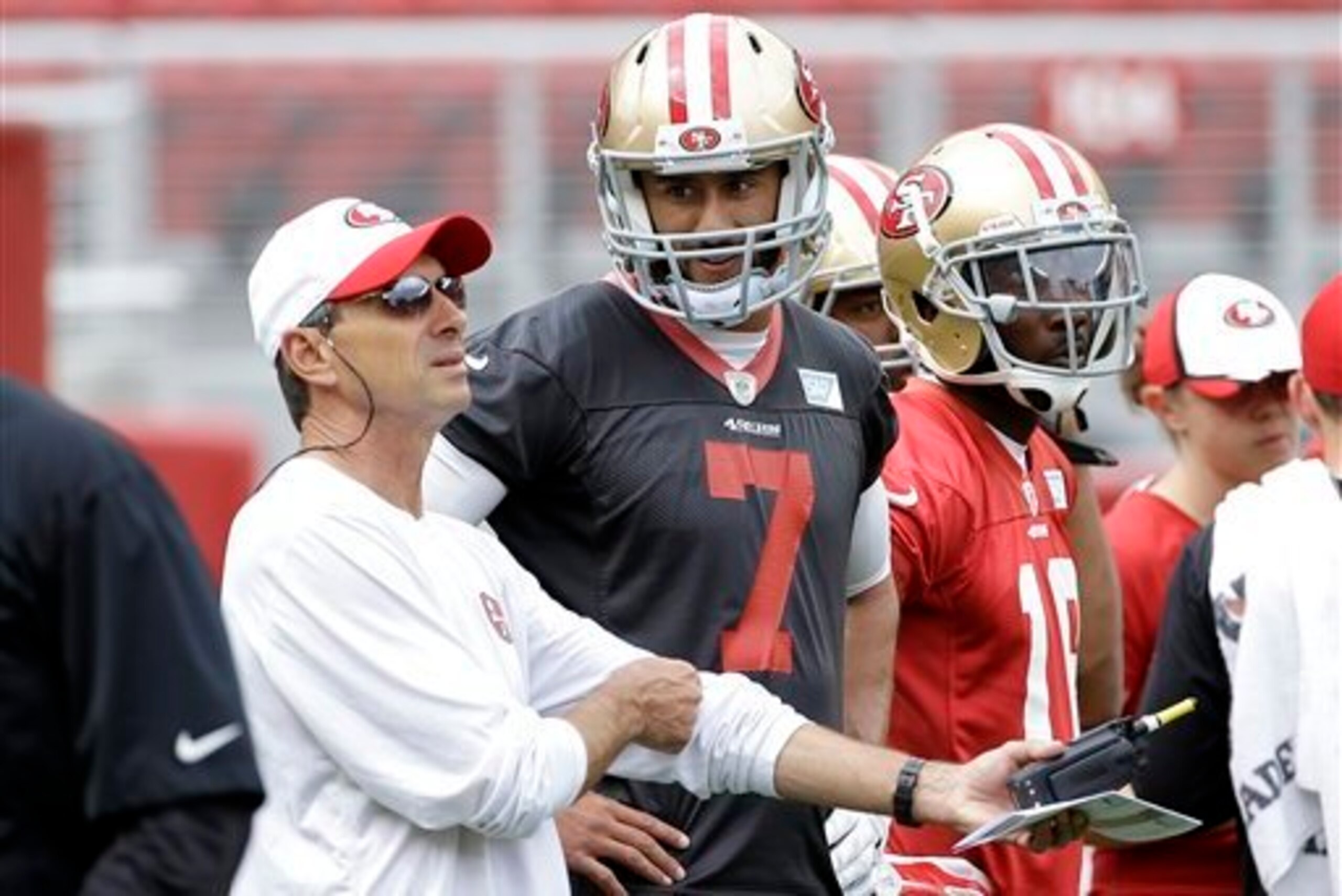
And the quarterback, Colin Kaepernick, is improving. Or he should be. He’s 27 and working hard to improve his craft. He should see results eventually.
Let’s break down the 49ers and figure out where they stand. Here is the state of their union.
Passing Offense
1 of 7
2014 Rank (Yards Per Attempt): 25th (6.3 ypa)
Let's start with the wide receivers.
This group is the best the Niners have had since Terrell Owens was on the team. Anquan Boldin is a future Hall of Famer, and Torrey Smith and Jerome Simpson are big upgrades over Michael Crabtree and Stevie Johnson. The Niners may have the best group of receivers in the NFC West.
Let's move to the offensive line.
The Niners lost two starters this offseason—left guard Mike Iupati and right tackle Anthony Davis. Those losses hurt the offense but not necessarily the passing offense. Iupati and Davis always struggled in pass protection.
Their replacements—Alex Boone at left guard and Erik Pears at right tackle—are upgrades in terms of pass protection. Neither player has given up more than four sacks in a season. Iupati gave up seven last season, and Davis gave up three in seven games, according to Pro Football Focus.
Finally, let's assess the quarterback and the system.
Colin Kaepernick spent the offseason refining his craft at EXOS training facility in Phoenix. And the 49ers spent the offseason refining the offense to fit Kaepernick’s skill set—more play action, more rollouts and more read-options.
Kaepernick should have his best season as a pro in 2015.
PASSING OFFENSE: IMPROVED
Rushing Offense
2 of 7
2014 Rank (Yards Per Carry): T3 (4.6 ypc)
The 49ers improved their backfield this offseason.
Last season, the Niners had basically a slow two-man backfield—Frank Gore and Carlos Hyde. Now that Gore is gone, the Niners have Hyde and two fast backups—Kendall Hunter and Reggie Bush. So the backfield is deeper and more balanced than last season.
And the scheme fits the personnel. The 49ers used a gap-blocking scheme when Gore was the starting running back because he had a good feel for gap-blocking runs.
But Hyde has a better feel for zone-blocking runs—that’s his background. That’s what Ohio State ran when Hyde went there. So that’s what the Niners will be using next season.
But the scheme and talent in the backfield won’t matter if the Niners can’t create holes. They have question marks on the offensive line, specifically the right side—guard Marcus Martin and tackle Erik Pears.
In 2014, Pro Football Focus gave Martin a minus-7.7 run-blocking grade in just eight games, although he was only 20 years old.
The same service gave Pears a minus-11.5 run-blocking grade in 16 games, although he improved as the season progressed, earning a plus-3.5 run-blocking grade during the final four games of 2014.
The Niners need Pears and Martin to dominate in the running game. If those two can’t, if they give up penetration when San Francisco runs to the right, it won’t matter how good the running backs are or which blocking scheme the Niners use—their running game won’t work.
RUSHING OFFENSE: WEAKENED
Passing Defense
3 of 7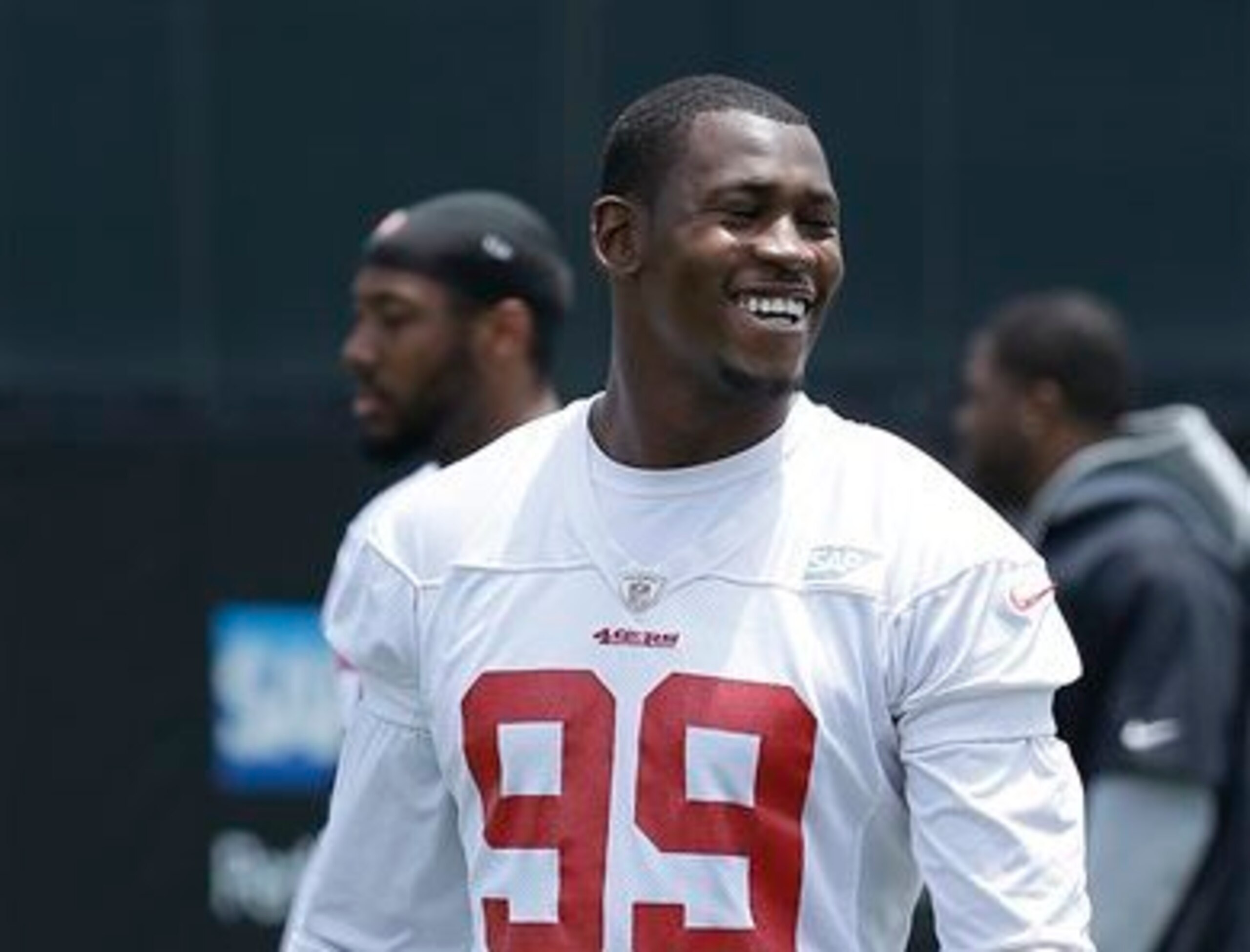
2014 rank (Opponent’s Yards Per Attempt): T8 (6.4 ypa)
The 49ers’ starting outside linebackers in Week 1 last season were Ahmad Brooks and Corey Lemonier. Remember that?
Aldon Smith was serving a nine-game suspension, and rookie Aaron Lynch had not yet distinguished himself. Brooks and Lemonier were the best edge-rushers the Niners had. And they weren’t good.
Now, they might be the Niners’ fourth- and fifth-best edge-rushers. Aldon Smith is back. Aaron Lynch is one of the best young pass-rushers in the NFL. And Eli Harold, San Francisco's third-round draft pick this year, is explosive—maybe the most explosive edge-rusher on the team. He looked like it during OTAs and minicamp.
The Niners certainly improved their edge rush this offseason. But did they improve their overall pass rush?
They lost Justin Smith, who wasn’t a dominant one-on-one pass-rusher, but he made others better. He was the key player when the 49ers ran their stunts. He would tie up two offensive linemen and allow an outside linebacker, usually Aldon Smith, to loop around the inside untouched and sack the quarterback.
How will Aldon do without Justin?
The Niners pass rush still is a question mark.
So is the pass coverage. The Niners used to have two solid starting cornerbacks—Chris Culliver and Perrish Cox—each of whom started 14 games in 2014.
But those two signed with other teams this offseason, and now it seems the two best cornerbacks left on the team are Tramaine Brock, a six-season vet who has started exactly nine games during his career, and Keith Reaser, a second-year player who has started zero games.
PASSING DEFENSE: WEAKENED
.jpg?w=2560 "NFL Owners Football")
.jpg?w=2560 "Steelers Football")
.jpg?w=2560 "Raiders Texans Football")
Rushing Defense
4 of 7
2014 rank (Opponent’s Yards Per Carry): T8 (4.0 ypa)
This offseason the 49ers lost their three best run defenders from 2014—linebacker Chris Borland and defensive linemen Justin Smith and Ray McDonald.
That doesn’t mean their rushing defense will fall off next season.
Remember, they didn’t have veteran defensive lineman Glenn Dorsey in 2014 because he tore his biceps during training camp. And stud nose tackle Ian Williams broke his leg and played only nine games. Both he and Dorsey are healthy this year.
Plus, third-year defensive lineman Quinton Dial seems like an ascending player, especially as a run-stuffer. The Niners will have an outstanding trio of run defenders on their defensive line next season.
At inside linebacker, Patrick Willis retired, but he played only six games in 2014. He wasn’t really a factor. The linebacker the 49ers really have to replace is Chris Borland.
Last season, Borland made 108 tackles in 14 games as a rookie. He had superb instincts when it came to stopping runs between the tackles, but he retired this offseason.
Who will replace him? NaVorro Bowman, the three-time All-Pro whose instincts are even better than Borland's.
Bowman should be an upgrade over Borland even though he still is recovering from a torn ACL and MCL he suffered in the 2014 NFC Championship Game. He wears a knee brace, which affects his ability to cut and change directions in coverage, but it doesn't seem to affect him against the run.
RUSHING DEFENSE: IMPROVED
Special Teams
5 of 7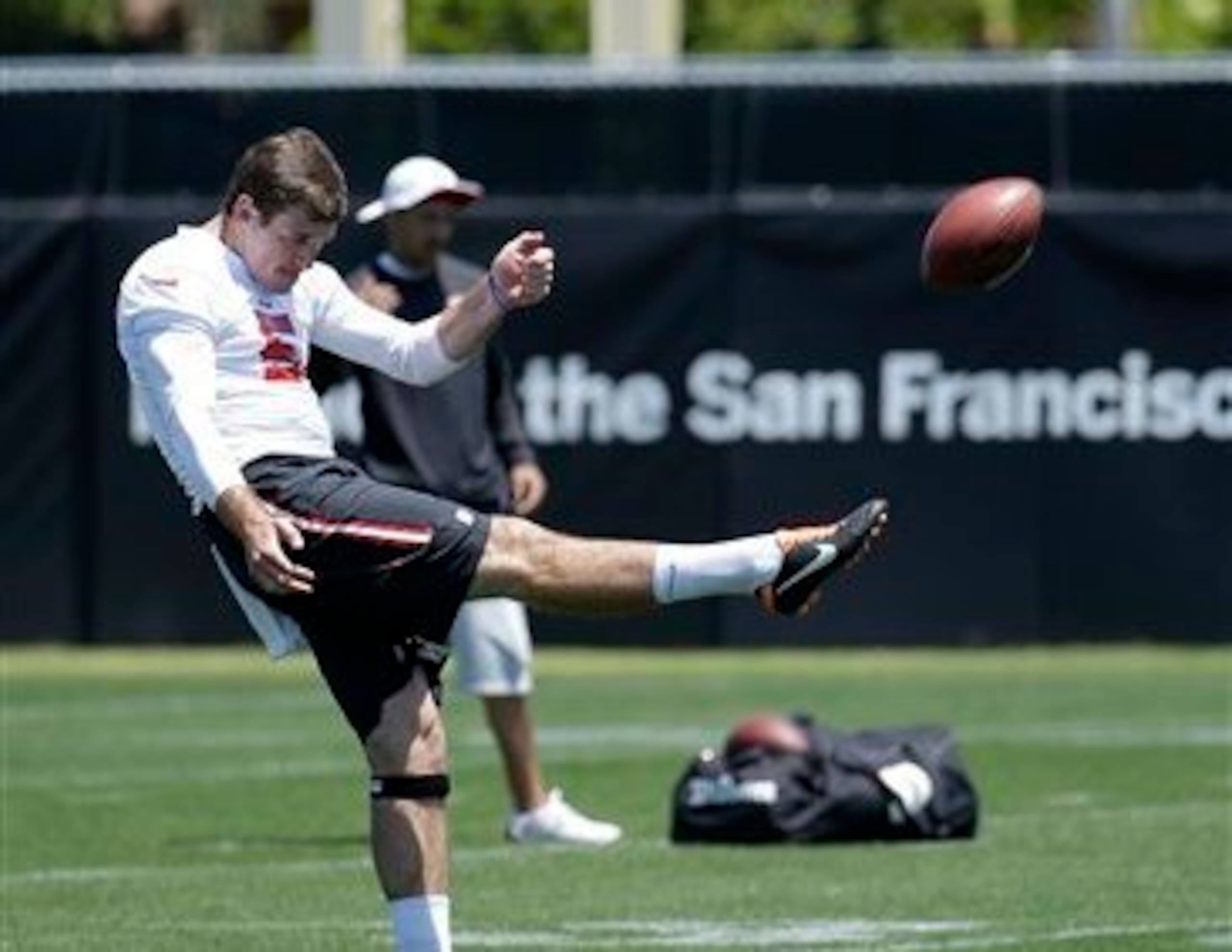
Each of the 49ers’ rookies should be a key member of special teams next season.
Defensive lineman Arik Armstead (6’8”) will probably play with the field-goal-blocking team. Safety Jaquiski Tartt and outside linebacker Eli Harold probably will play on the punt and kickoff coverage teams. And fifth-round pick Bradley Pinion—the first specialist drafted this year—will handle punts and kickoffs.
That’s a lot top young talent on special teams.
Not to mention the not-so-young place-kicker, 40-year old Phil Dawson, is still one of the best kickers in the NFL inside of 50 yards.
There's also the not-so-young former Rugby League star, 27-year old Jarryd Hayne, competing to make the final roster as a return specialist. Last season, the Niners had just one return specialist—Bruce Ellington. Now, they might have two.
SPECIAL TEAMS: IMPROVED
Rookies
6 of 7
Here’s a progress report for each of the 49ers’ 2015 draft picks.
Round 1: DL Arik Armstead. He was not allowed to participate during OTAs and minicamp—forced to sit out until his class graduated from the University of Oregon the day after minicamp ended. He will participate in training camp and compete for playing time at defensive end in the base defense.
Round 2: S Jaquiski Tartt. He played free safety for the second-team defense during OTAs and minicamp and seems to be insurance for Eric Reid in case he suffers a fourth concussion and chooses to retire.
Round 3: OLB Eli Harold. This year’s Aaron Lynch, Harold, probably won’t get much playing time on defense to start the season, but he may force his way into the lineup as the year progresses. Watching Harold practice for five minutes, you can tell he’s a natural pass-rusher like Lynch and Aldon Smith.
Round 4: TE Blake Bell. He was the Niners’ second-best receiving tight end (Vernon Davis was the best) during team drills this offseason—surprisingly, considering Bell is a rookie who has played tight end for just one year. He was a quarterback at the University of Oklahoma until he switched positions as a senior. Bell has to prove he can block. If he does, he will be the No. 2 tight end and receive more playing time than any other 49ers rookie next season.
Round 4: RB Mike Davis. He's an experienced blocker and a natural at catching swing passes out of the backfield. At times during practice Davis seemed like the Niners’ best receiving running back—even better than Reggie Bush. But Davis probably won’t play much as a rookie. He’s fourth on the running back depth chart.
Round 4: WR DeAndre Smelter. He is the future starting flanker for the Niners, though Smelter's rehabbing a torn ACL he suffered last season at Georgia Tech. He's eligible to join the team later this season and a candidate to replace Anquan Boldin in the starting lineup next season.
Round 5: P Bradley Pinion. Former 49ers punter Andy Lee could punt the ball very far, sometimes too far. Sometimes he outkicked his coverage and gave the returner space to run. Pinion specializes in punting the ball high up in the air—so high that when the returner catches the ball, he’s surrounded and has nowhere to go.
Round 6: G Ian Silberman. He's a developmental prospect not likely to play next year, considering the Niners have two former third-round picks at guard (Marcus Martin and Brandon Thomas) and one former fourth-round pick (Joe Looney).
Round 7: OT Trent Brown. He's competing with Erik Pears to be the starting right tackle and probably will lose that competition. Brown has a better chance to win it in 2016 after a year of development and strength training.
Round 7: TE Busta Anderson. He is one of eight tight ends currently on the roster. Anderson did not jump out during OTAs or minicamp and seems like a candidate for the practice squad.
Undrafted Standout: WR DeAndrew White. he has been the star of the offseason so far. White worked his way from the bottom of the depth chart to the first-team offense by the end of minicamp.
Coaches
7 of 7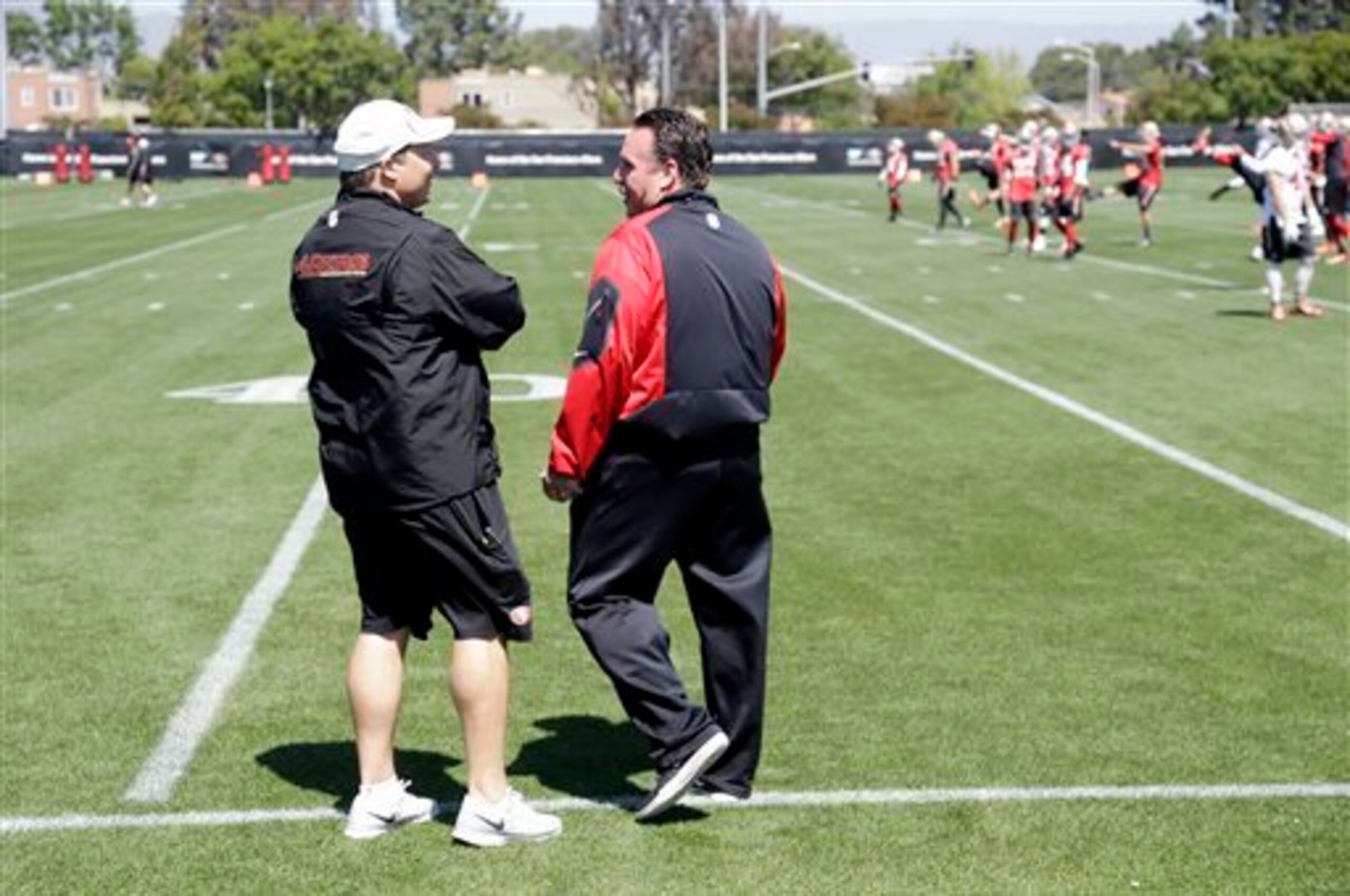
The 49ers’ new coaching staff has made three commonsense adjustments already:
1. It's shortened the names of the plays and the process of calling them, giving Colin Kaepernick and the offense much more time to assess the defense at the line of scrimmage.
2. It's moving the pocket more often, allowing Kaepernick to do what he does best—run and throw on the run.
3. It's making No. 1 cornerback Tramaine Brock follow the offense’s best player wherever he lines up, not allowing the other team to pick on one of the Niners’ weaker corners.
Time will tell if these adjustments work and if this coaching staff succeeds. So far, these coaches have practically zero track record. Head coach Jim Tomsula hasn’t even been a coordinator in the NFL, let alone a head coach. Defensive coordinator Eric Mangini hasn’t been a coordinator since 2005, and offensive coordinator Geep Chryst hasn’t been a coordinator since 2000.
Their grade is incomplete.
All practice observations obtained firsthand unless otherwise noted.
.jpg?w=2560 "Panthers Saints Football")