Real Madrid's Dream Summer Transfer Window Would Be One of Stability
A season gone, a feeling of emptiness widespread and only a currently divisive national side to watch, Madrid on Sunday turned its attention to 2015-16. "Gareth Bale, Benitez's big signing," ran one of Marca's headlines in the capital, continuing its theme from a day earlier centring on Real Madrid's focus turning inward.
"The new coach will hope to inspire a turnaround in Bale akin to what happened with Paco Gento," Marca continued, comparing the Welshman to one of Real's greatest of all.
Some task. Gento joined Madrid from Racing Santander in 1953 (the same year Alfredo Di Stefano arrived in Chamartin) and underwhelmed in his first two seasons, before becoming one of Spain's iconic players from his third season onward as he stormed to 12 Liga titles and six European Cups in a famous 18-year stint in the Spanish capital.
TOP NEWS
Wild Neymar Meltdown After Game
.jpg?w=2560 "WCup FIFA Investors Soccer")
Infantino Gets Internal Support to Keep FIFA Presidency (AP)

EPL Transfer Window Grades 📝
For Bale, such a record is unattainable, but Real Madrid are expecting more. And there's a feeling Real Madrid will get more, the Welshman now free of the always-treacherous second season and set to feature in a reworked system and shape under a new boss. The goal: Revitalise him. Unleash him. Harness his gifts.
It's why Bale, a fearsome but not yet fulfilled talent, can be "Benitez's big signing." He's emblematic of how Real Madrid can improve: from within.
The last time Los Blancos lifted the league trophy was 2011-12—the club's only Primera Division title in the last seven years. In the summer of 2010, Angel Di Maria, Sami Khedira and Mesut Ozil had arrived, taking a squad that was already good to very good. Progress wasn't immediate. Nor were results. But Real stayed the course.
The following summer, Jose Mourinho's second, saw the squad kept intact. The club's stars remained. Just fringe players were let go of. Only problem areas and squad depth were addressed in the transfer window with the purchases of Fabio Coentrao, Raphael Varane, Nuri Sahin and Jose Callejon.
It's a summer that stands as the most stable among the last seven for Madrid, one featuring the lowest player turnover of any year in Florentino Perez's two-part, 12-year reign as president.
The result: Sustained progress. A colossus toppled. Records. A title.
There are lessons there.
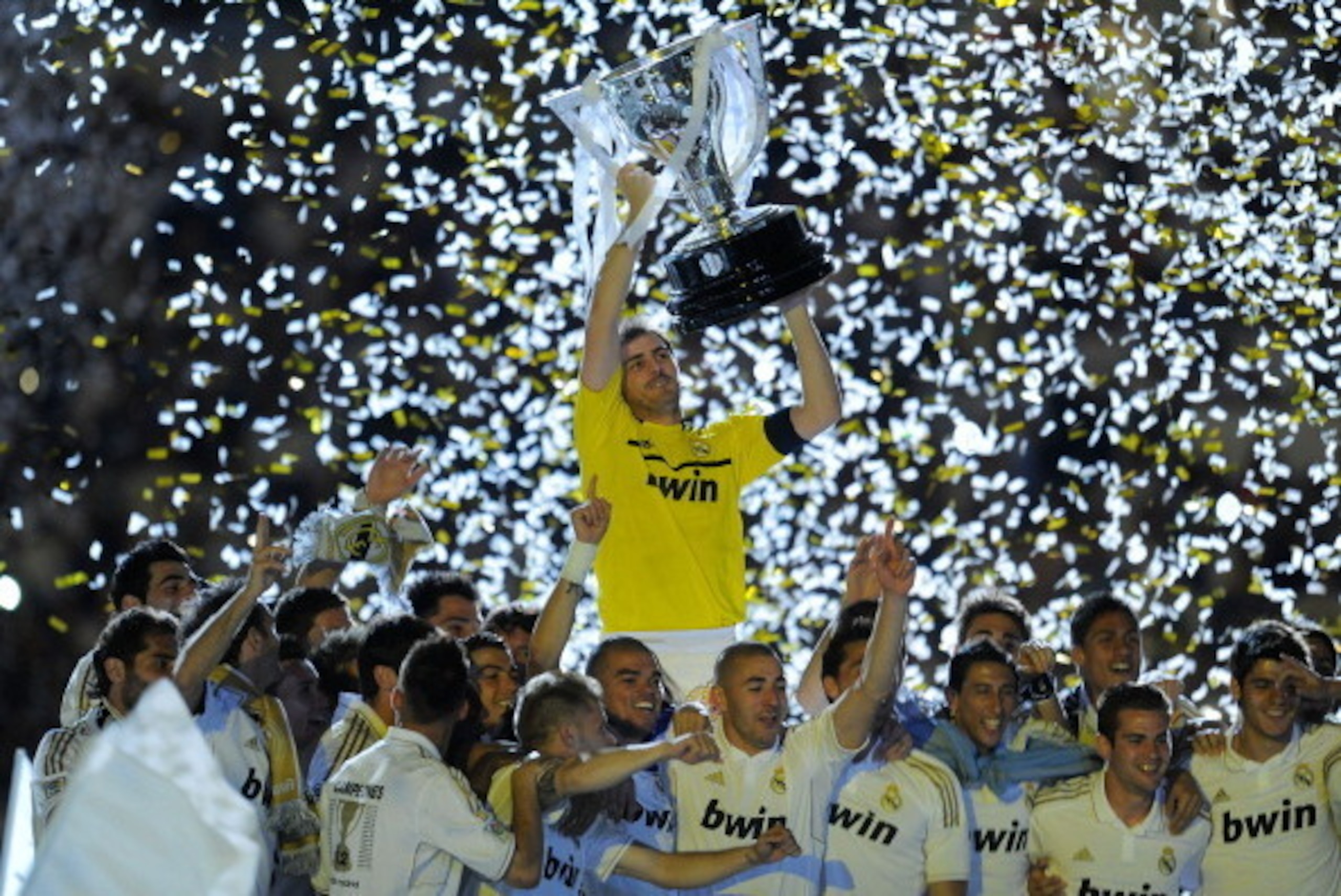
Run your eyes over the current squad. Slowly. Take a second to really appreciate it. Cristiano Ronaldo, Karim Benzema, Bale, Toni Kroos, James Rodriguez, Isco, Luka Modric, Marcelo, Daniel Carvajal, Sergio Ramos, Varane—it's loaded. Stacked. There are leagues in Europe that have less talent. But the underachievement has continued.
Under Perez, Real Madrid have typically sought external solutions to internally created problems—Mourinho's tenure the exception as the president handed unprecedented authority to a manager at the Bernabeu.
This summer, after a season of greater underachievement than ever, targets on the lips of fans include Sergio Aguero, Paul Pogba, David De Gea, Arturo Vidal, Thibaut Courtois, Geoffrey Kondogbia and Lucas Biglia. There are probably others. There are always others. But what's actually necessary?
Marca says Rafa Benitez has inherited "a great team, one at its prime." It's hard to argue. The squad is powerful and deep, and the average age is just 25. An elite goalkeeper would certainly help, but little else is needed.
What has separated Real Madrid from Barcelona and lasting success has been fine margins and little details. In La Liga's historic power shift across the last seven seasons, Real Madrid have scored 733 goals to Barca's 737. In the last two, Real Madrid (222) have outscored every team on the continent in league play. Thus, these aren't teams separated by discrepancies in force, power or capacity; they're separated by continuity.
The Catalans have maintained an identifiable project, seasons strung together with structured thinking rather than each campaign standing isolated from those around it. At the Camp Nou, a methodology, a system, has consistently been reinforced with familiarity. A trusted core has been protected and maintained. With that has come balanced football—football that's been spectacular, yes, but football founded upon fundamentals and sound principles.
In Barcelona's seven years of dominance, despite the club's goal tally being almost identical with Madrid's, the Blaugrana have won five more games and lost on 14 fewer occasions. The telling factor: fewer goals conceded. Sixty-seven fewer to be precise. In a league often decided by a handful of points, it's decisive.
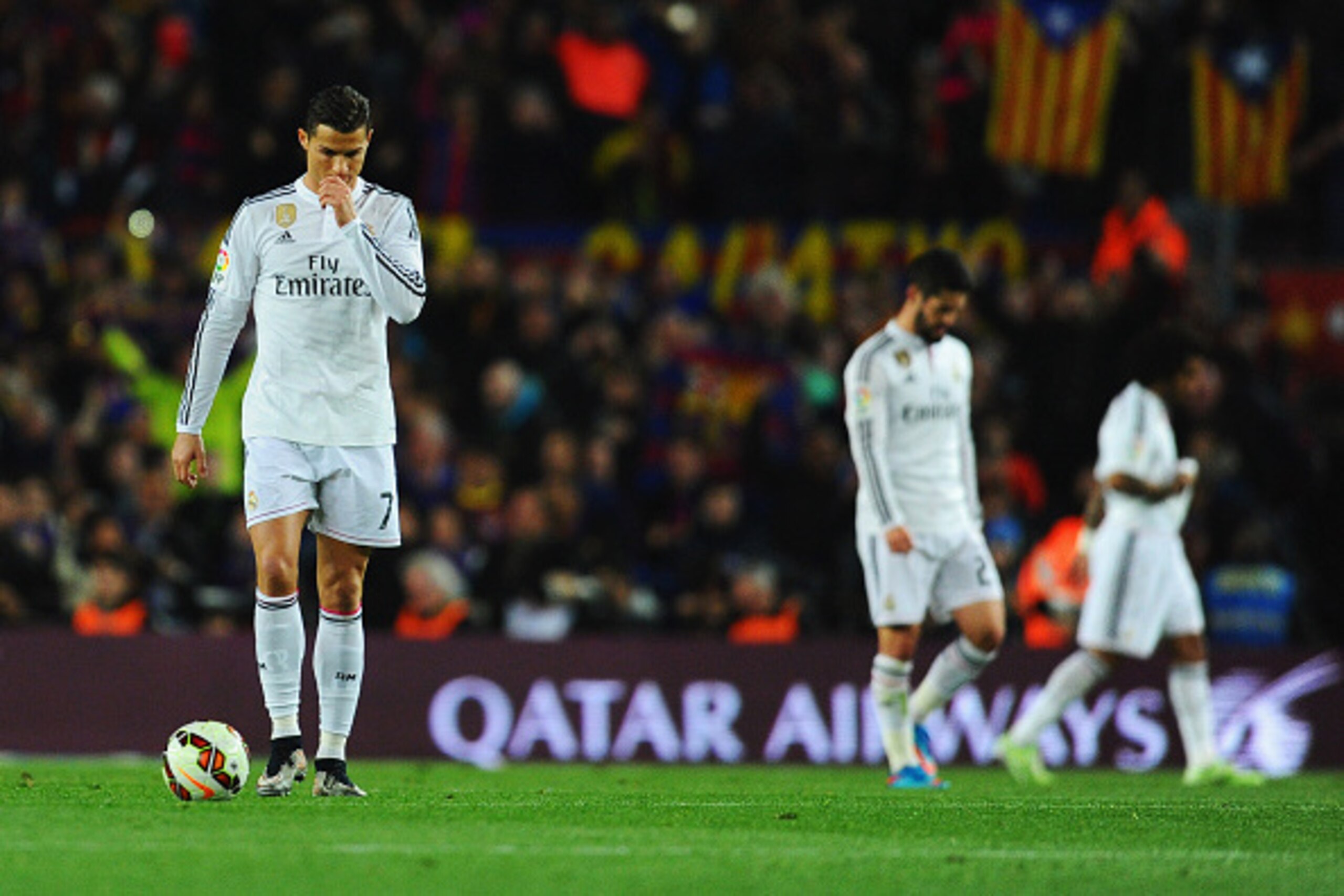
For Real Madrid, consistent upheaval and instability have eroded their fundamentals, new faces and new systems leading to new mistakes and new issues but the same old results. Victims of their own haste, Real's football has lacked the principles of Barca's, the contrasting degrees of stability surrounding these clubs defining their rivalry's currently lopsided nature.
The answer for Los Blancos: a new attitude, not new personnel.
At Benitez's disposal is a talented defensive unit, a deep midfield group and a gold-plated, diamond-studded attack. The squad has 17 internationals, a Ballon d'Or winner, the world's most expensive player, three World Cup champions, a World Cup Golden Boot winner, the LFP's reigning midfielder of the year and some of the continent's finest young talent. Improving on the mix is hard; saturation points exist.
But in the intensity of the summer transfer window, somehow holes in the squad are still found by misguided eyes. Some say defensive midfielders are needed, overlooking the fact the club already has three (four if you count Kroos).
Others say more physicality is needed in the middle, overlooking that Barcelona just won a treble with a midfield of Sergio Busquets, Ivan Rakitic and Andres Iniesta. Though a solution to the goalkeeping saga is necessary, Real Madrid's improvement can largely come from within, with cohesion, familiarity, trust and continuity standing as the factors that can drive it.
Amid the exasperation stemming from a wasted season, it's easy to forget that in 2014-15 Real Madrid were beaten to a league title by two points. In the Champions League, one Alvaro Morata goal separated them from the final. We're talking tiny margins here. Details that can't necessarily be bought.
With their immense talent, Real Madrid were able to get 98 percent of the way, only the final two percent eluding them.
But the extra two percent won't come from adding more bullets to the gun. Real's recent history is evidence of that. Their failure to win the league title in the recently completed season could be attributed to the consecutive losses in the second and third weeks of the season, when Carlo Ancelotti's men were struggling to integrate another round of high-profile arrivals.
That's six points right there. A season. A title.
Now, though, a season is over and a summer window is here. Such a period can be glamorous, but Real Madrid need to look inward for solutions. Already residing at the Bernabeu are power, strength, skill and depth. So much of what Real Madrid are looking for, they already have. The mix is largely in place.
What's missing is a quality the club continually denies itself, a quality not found in the marketplace. Real Madrid's improvement lies within.
.jpg?w=2560 "Donald Works Out For Rams 🫨")