

Why Fernando Torres Can Come Good for Atletico Madrid in 2015-16
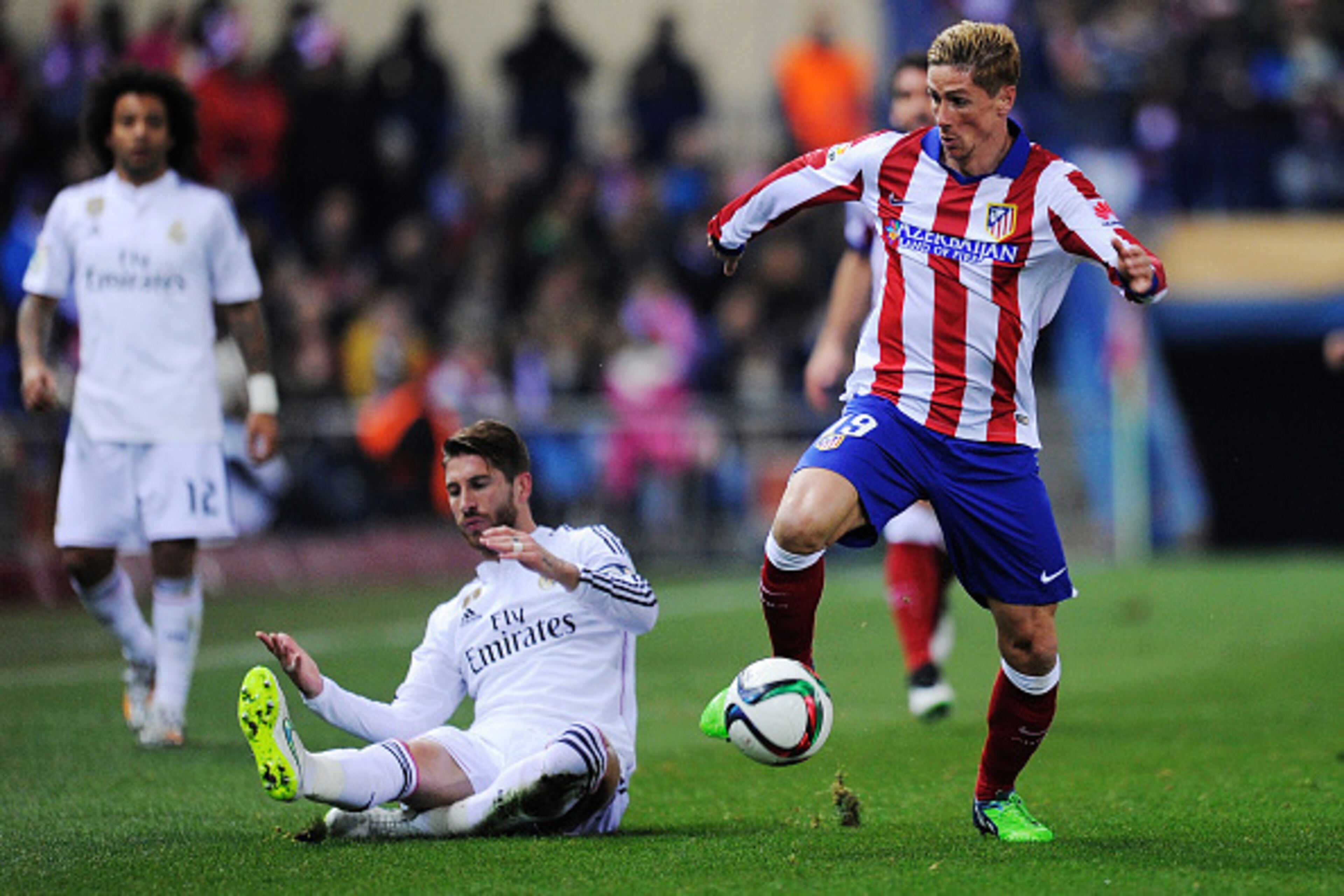
Fernando Torres had the ball in the net, Keylor Navas' feet rooted to the turf as it looped past him into the right corner. But it didn't count—an instant earlier Sergio Ramos had pulled Raul Garcia to ground inside the box, the referee blowing his whistle and pointing to the spot.
It was Torres' Atletico Madrid "debut," his first game back at his old club and at the adoring Vicente Calderon. Three days earlier, 45,000 had descended upon the same venue with no football scheduled. They'd come to welcome back their prodigal son, celebrating the unveiling of a loanee with almost unprecedented fervour.

Garcia dispatched his penalty kick with ease, giving Atletico a 1-0 lead over Real Madrid in the first leg of their Copa del Rey tie. Moments later, Torres, substituted, left the pitch to the same frenzied applause of three days earlier. Not long later, Jose Gimenez doubled Atleti's lead.
Atletico had won. Torres had won. It was significant: it was the first time Torres had ever beaten Real Madrid in a red-and-white shirt.
When he'd landed at Barajas airport to seal his move back to the Spanish capital, he'd been asked if the clash with Los Blancos would be the perfect debut. "God willing that's when I'll get my debut," Torres said, per Goal. But his record in El Derbi madrileno had been disastrous: Ten games, zero wins and one goal. Surely there were more preferable opponents for the occasion.
Turns out there weren't. Atletico won the all-important first leg. Eight days later, Torres scored twice at the Bernabeu, tripling his goal tally in the capital's derby as Atletico dumped their bitter rivals out of the cup. By the end of the month, he'd scored against Barcelona too, falling to his knees and kissing the Calderon's turf after he'd done so.
The return, the comeback: it was becoming a fairytale. Diego Simeone said Torres had returned "a man." After his brace in Chamartin, Torres remarked: "It's been a beautiful day. A day to enjoy." A poll of 50 million people on social media by UEFA saw Torres voted as the best January signing by any club in Europe. A reunion that had initially felt overblown was blossoming. Where could it go? How high?
But the possibilities had blurred the realities. An early burst amid the euphoria of his return had masked the fact that Atleti had welcomed back a declining 30-year-old striker lacking familiarity with team-mates and the fitness levels Simeone demands. After the Barcelona clash, Torres' next 19 appearances brought three goals. In Atleti's four crunch Champions League outings with Bayer Leverkusen and Real Madrid, the once-barnstorming forward played a total of 40 minutes. By May, Simeone was saying "Torres plays better when the opposition are tired." The grand return had petered out.
So what now?
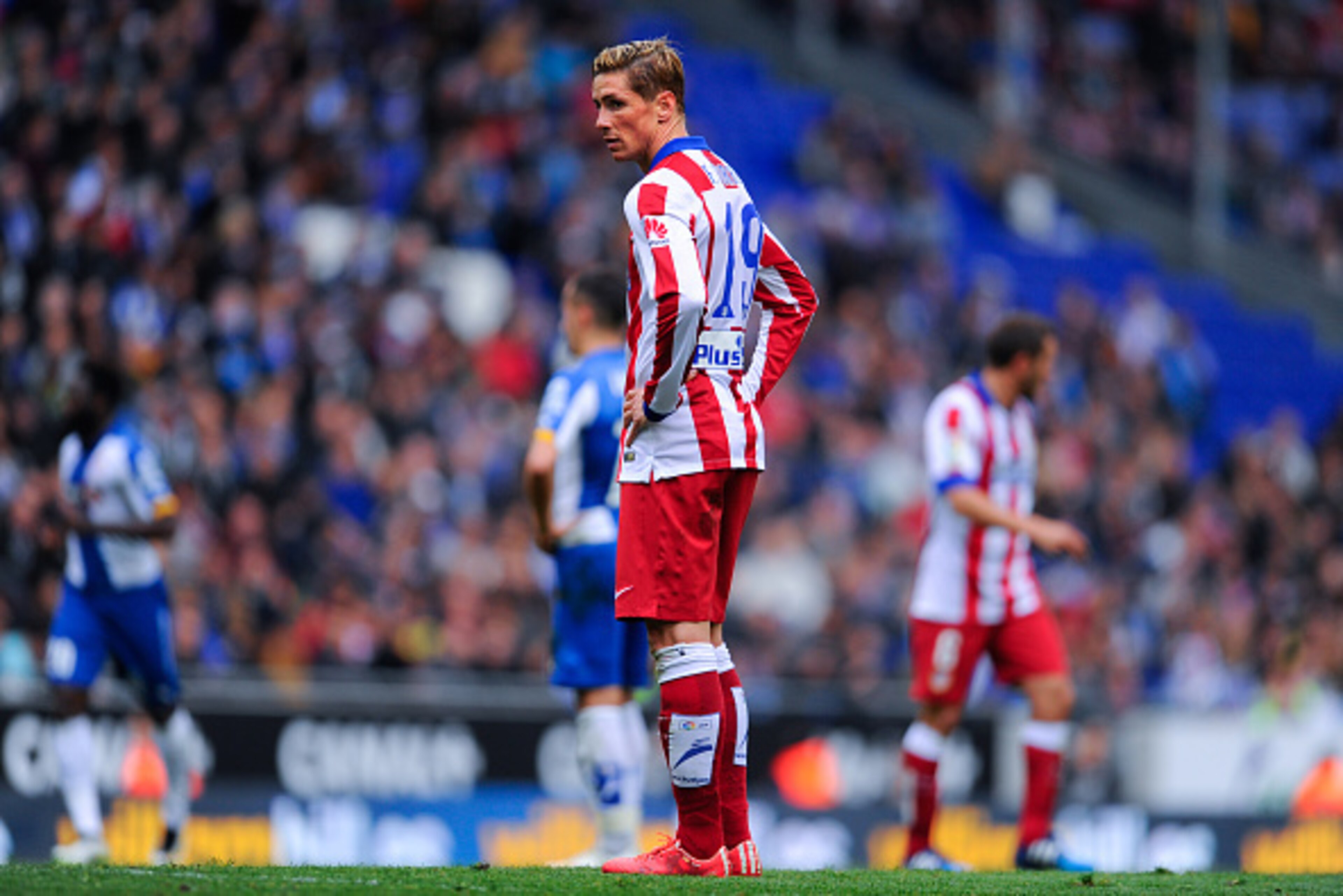
Logic dictates turning it around will be difficult for the club icon. Now 31, he'll be 32 in the closing stages of next season, Torres rapidly approaching a striker's best-before date. Atleti are also expected to bolster their forward stocks, with Villarreal's exciting Luciano Vietto expected to arrive at the Calderon, per Marca, and Juventus' Carlos Tevez being pursued.
But hope isn't lost; there is reason to believe 2015-16 can be a success for Torres. This second marriage can work.
When Simeone sought his former team-mate in late 2014, he was clear on what he wanted: a player to fill the David Villa role. The Spaniard had scored 15 goals as an experienced, hard-running second striker in 2013-14, and his departure—though not as damaging as Diego Costa's—was a blow to Simeone's attack. Torres was brought in to be that guy.
However, it's important to note here how Villa's 2013-14 unfolded. Thirteen of his 15 strikes had come by the first week of February, as the former Barcelona star excelled in Atletico's counter-attacking setup. But just two goals came thereafter, and Villa went scoreless in his last 15 appearances for Los Colchoneros.
As Atleti's 2013-14 season wore on, Simeone's team slowed. In the opening half of the campaign, they'd averaged almost three goals per game; after January, their output became half of that. With each week that passed, their arduous, attritional method caught up with them. The physical commitment needed to maintain their system sapped the life out of legs and the fuel out of tanks. By the end of it, Atleti were running on fumes, limping to the finish line as La Liga's big three all stumbled in the closing weeks.
Thus, Villa's goals dried up because his team's goals dried up. Atleti's creativity and spark went south from January, and even Costa was a victim. In 2014-15, Torres was the same.
Up to the first week of February in the recently concluded season—a period culminating in the 4-0 thrashing of Real Madrid—Atletico averaged 2.14 goals per game in league play. Thereafter, they averaged 1.25. Like they had the previous year, Atleti grew tired and flat as the campaign approached its end. The pattern was the same. Torres, like Villa, became a secondary option in a team that ran out of juice to score. The halting of his goal tally was almost unavoidable.
But change is coming to Atletico.

"The team needs a change, a new stimulus," Simeone told AS in early June, per Football Espana. "We've spent a lot of time together. They know my strengths, my weaknesses, and I know theirs. I'm convinced we need a change, an internal movement where the team takes a step forward."
New faces, a new system and a new mentality is going to lead an evolution in Atleti's playing style next season—"we're a team more ready to play in space," to "move quickly from defence to attack," said Simeone.
A younger midfield, led by Koke and Saul Niguez, is going to push Atletico to a faster pace and greater freedom, alleviating some of the taxing physicality of the club's punishing style. To give themselves more margin for error, Atleti want to score more heavily, attack more viciously. Antoine Griezmann should benefit. Vietto, if he arrives, will as well. And so too can Torres.
In 2014-15, the romanticism of his return was the catalyst for an exhilarating honeymoon period. But his momentum disappeared with that of his team. In 2015-16, that can change. Torres can be a success like Villa in an evolving, vibrant outfit. The possibilities might actually become realities.
_0.png?w=3840 "Summer League Takeaways ✍️")
.jpg?w=3840 "Watch: Jerry Rice Chases After Heckler")
.png?w=3840 "Offseason Moves Sure To Backfire 💥")

.png?w=3840 "Every City's 2000s Mt. Rushmore 🤩")