

NBA Draft 100 Series: Ranking the Top Power Forwards of the 2015 Class
NBA teams looking to fill holes at power forward should be able to do so with 2015 draft pick, as the pool of 4s is deep this year. There should even be a few quality power forward prospects waiting to be taken in the second round.
The position is led by arguably the top international prospect in the class, Latvia's Kristaps Porzingis. Behind Porzingis, there are three power forwards with lottery hopes and a handful more looking to secure spots in the late first round.
The NBA Draft 100 metric measures each prospect based on a number of factors that account for everything from athleticism to room for growth. Each position has different criteria related to the traditional responsibilities tied to it. We measured power forwards in five separate categories:
- Size for Position/Athleticism
- Scoring/Shooting
- Rebounding
- Defensive Activity/Potential
- Upside
Though some prospects played multiple positions, we assigned each prospect to the position we project him to play most at the next level.
On the next slide, we address how we chose which categories to evaluate for each position as well as how we came up with each individual score.
Scoring Guide
1 of 21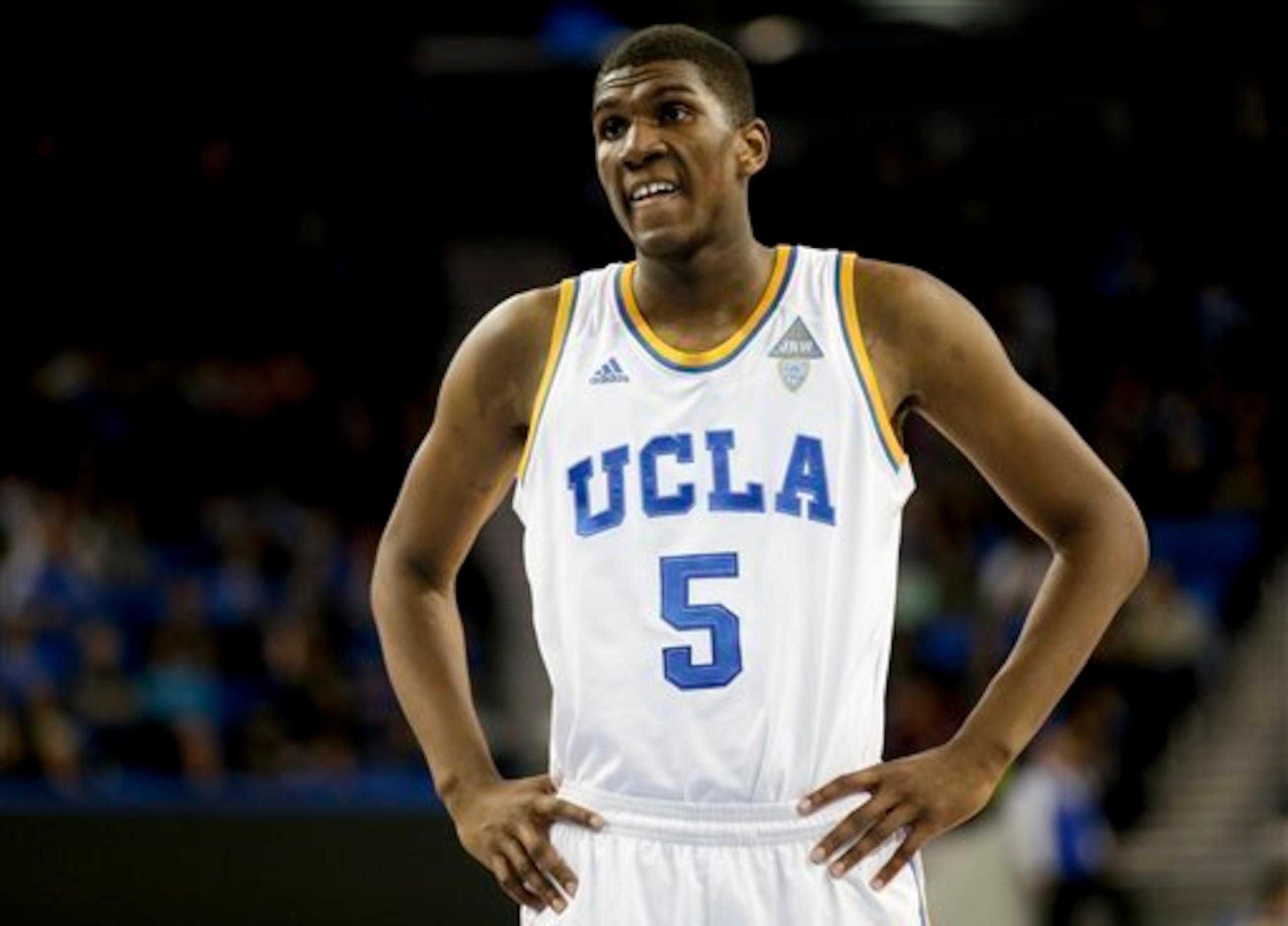
Five categories were used to evaluate the power forwards. Each category is also assigned a different weight based on significance.
We created a formula to reflect each prospect's performance in a particular category. For scoring/shooting, rebounding and defensive activity/potential, the weights are listed below in percentage points.
Size for Position/Athleticism (25 points)
NBA power forwards have become more versatile due to their growing size and athleticism. They're big enough to bang down low, quick enough to face up from behind the arc and explosive enough to rise above the rim. Even the most skilled college power forwards will struggle in today's NBA without the adequate size and athleticism.
Height (5)
Most NBA power forwards are in the 6'9" to 6'11" range:
5 = 6'10"-plus
4 = 6'9"
3 = 6'8"
2 = 6'7"
1 = 6'6"
Weight (5)
Alarms won't sound if a power forward doesn't reach the 230-pound mark, but they will if he's significantly lighter than that. Strength is important for power forwards, given how much time they spend fighting for position around the basket:
5 = 230-plus pounds
4 = 220 to 229 pounds
3 = 210 to 219 pounds
2 = 200 to 209 pounds
1 = sub-200 pounds
Athleticism (15)
We weighted athleticism slightly more than size, as there is a bigger difference between an above-average athlete and an average athlete than there is between an inch-or-two difference in height.
Athleticism allows power forwards to separate from defenders for jumpers and layups off drives. It can also play a big role in their ability to finish, rebound and defend. Physically, athleticism is more important than meeting the traditional height requirements.
Above-average athletes were subjectively scored in the 11-15 range. Average athletes were subjectively scored in the 6-10 range. Below-average athletes were subjectively scored in the 1-5 range:
11-15 = above-average athlete
6-10 = average athlete
1-5 = below-average athlete
Scoring/Shooting (40 Points)
For power forwards, scoring and shooting were combined, given how few big men in college are given the green light to shoot from outside. Many power forwards with shooting potential didn't have the freedom to take threes or jumpers. Still, we rewarded big men who can knock down threes by taking into account three-pointers made per 40 minutes (10 percent of the scoring/shooting score).
We also used two-point-jumper percentages (20 percent) to account for mid-range shooting. But for the most part, we valued big men who converted field goals inside the arc with consistency and efficiency:
50 percent: points per 40 minutes
20 percent: two-point jumpers (per Hoop-Math.com)
20 percent: field-goal percentage
10 percent: three-pointers made per 40 minutes
Rebounding (15 Points)
Power forwards who aren't strong rebounders lose NBA value points. Rebounding is one of the primary responsibilities of every power forward. In college, it's tough to pick out the poor rebounders, but the great ones are capable of standing out. The NBA Draft 100 metric rewards them:
100 percent: rebound percentage
Defense Activity/Potential (10 points)
Power forwards spend a decent amount of time defending near the basket. Below-average defenders at this position can be targeted and exposed by opposing offenses. To get half of each power forward's defensive score, we used steal and block averages per 40 minutes. For the other half, we subjectively graded his potential.
Defensive Activity (5)
College power forwards should be able to make plays on the ball defensively. Steals highlight quickness and anticipation, two qualities NBA power forwards need. Blocks highlight foot speed, length and instincts in rim protection:
50 percent: steals per 40 minutes
50 percent: blocks per 40 minutes
Defensive Potential (5)
Defensive stats don't tell the whole story. A player doesn't need to block a huge number of shots or pick up a bevy of steals to be a plus defender. When assessing defensive potential, we took into account size, length, athleticism, foot speed, instincts and college impact:
5 = elite defender
4 = above-average defender
3 = average defender
2 = below-average defender
1 = liability
Upside (10 Points)
The upside score projects a player's ceiling or best-case possible outlook. The projections were set based on Jonathan Wasserman's scouting and collective opinions from scouts and other draft analysts:
10 = MVP
9 = superstar
8 = perennial All-Star
7 = All-Star potential
6 = high-end starter
5 = low-end starter
4 = high-end reserve
3 = low-end reserve
2 = high-end benchwarmer
1 = low-end benchwarmer
Please note that slight adjustments were made for international and mid-major prospects.
If two players received the same total score, we used "Upside" as the tiebreaker. If there was still a tie, we chose the player higher on Jonathan Wasserman's big board.
20. Darion Atkins, Virginia, 6'8", Senior
2 of 21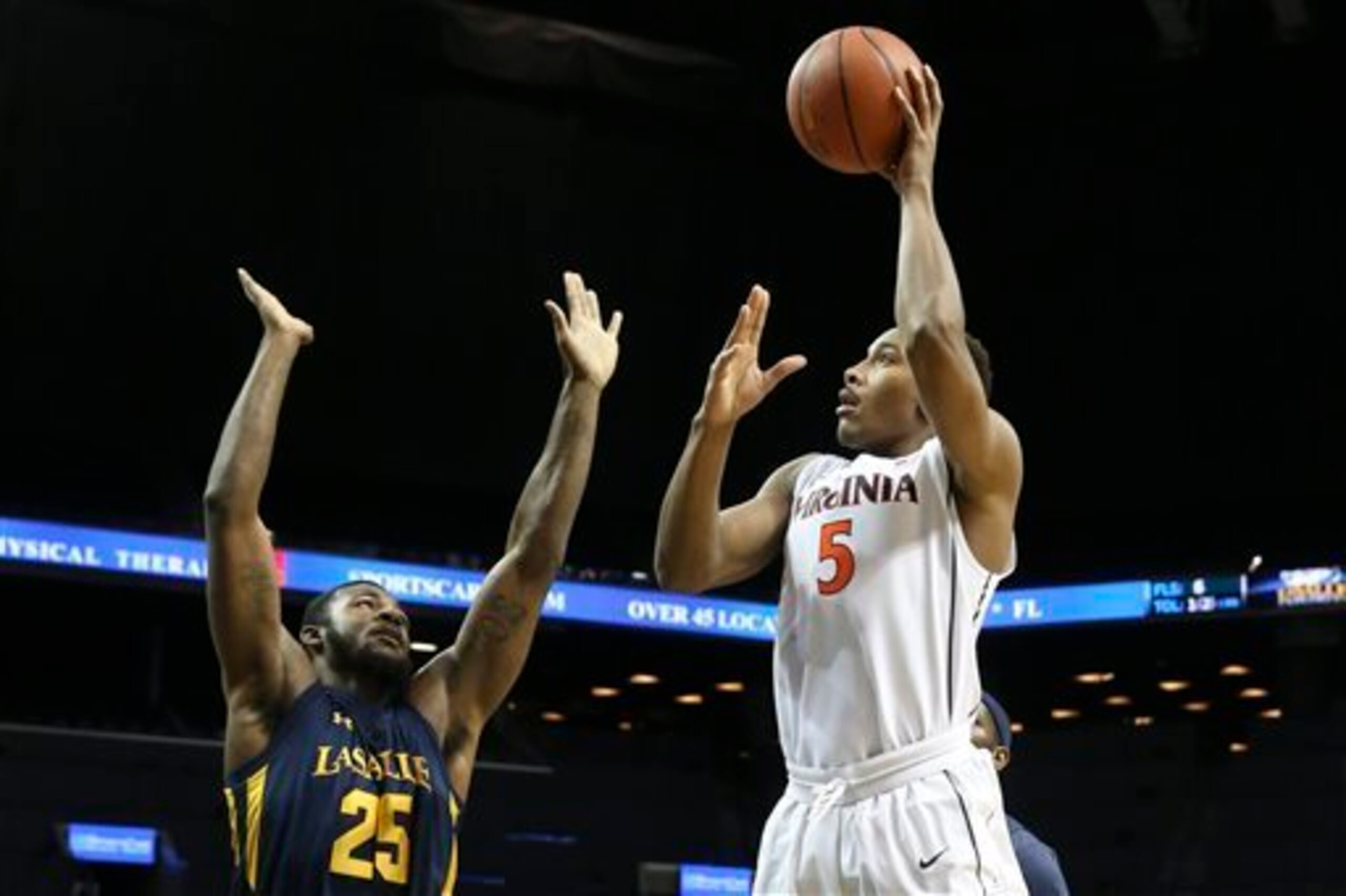
Size for Position/Athleticism
Darion Atkins is slightly undersized, having measured at 6'7" in socks, though his 7'2" wingspan and diesel 240-pound frame are both big pluses.
Scoring/Shooting
Atkins was more of a finisher than a scorer at Virginia, averaging only 12.8 points per 40 minutes as a senior. His opportunities came mostly off drive-and-dumps, offensive rebounds and the occasional low-post entry pass. He struggled from the free-throw line, knocking down just 52 percent of his attempts, though he did make 40 percent of his two-point jumpers, per Hoop-Math.com, even if most were fairly short range. For what it's worth, Atkins was a standout at the Portsmouth Invitational, where he averaged 20 points in three games.
Rebounding
Atkins was an average rebounder through four years in college. As a senior, he grabbed 10.0 boards per 40 minutes, an underwhelming average.
Defensive Activity/Potential
Atkins averaged 1.4 steals and 1.8 blocks per 40 minutes. He's earned the reputation of being a hard-working defender.
Upside
Atkins is gaining steam following Portsmouth. The only problem is that he doesn't do anything to differentiate himself. Developing his jumper and earning a reputation as a defender could earn him an invite to summer league or training camp.
Overall
Unfortunately, Atkins doesn't offer enough to attract much NBA interest. He'll either play in the D-League or hope to receive offers from overseas.
19. Luka Mitrovic, Serbia, 6'8", 1993
3 of 21Size for Position/Athleticism
At 6'8", Luka Mitrovic is slightly undersized and plays mostly below the rim, but he moves well and demonstrates sound footwork. Still, his physical tools and athleticism won't win over any NBA general managers.
Scoring/Shooting
In 74 games between Euroleague and the Adriatic League, Mitrovic has averaged 15.9 points per 40 minutes. He works as the roll man off ball screens, a cutter around the basket and a spot-up shooter around the perimeter. Mitrovic has made 51 threes this year, but he's shot only 28.5 percent from downtown. He has made 79.8 percent of his free throws and shows promising mechanics on his jumper, however. Mitrovic isn't a dazzling one-on-one player, but he passes and finishes plays within his team's offense.
Rebounding
Mitrovic is averaging 9.4 rebounds per 40 minutes. The question is whether his size and average athleticism will allow him to hold his own in the NBA paint.
Defensive Activity/Potential
He's collected 1.7 steals per 40 minutes, although his 1.57 block percentage, per RealGM, suggests he's a non-factor defensively around the basket.
Upside
Mitrovic is already 22 years old and doesn't offer much upside, though if he can improve his long-range shooting consistency, his versatility could hold some value.
Overall
If Mitrovic is drafted, it will be somewhere in the late second round by a team not impressed with whoever is left on the board.
18. TaShawn Thomas, Oklahoma, 6'8", Senior
4 of 21
Size for Position/Athleticism
TaShawn Thomas has a wide 240-pound frame and long 7'2" wingspan, but at 6'8", he lacks size for a big man who plays mostly below the rim. He shows good footwork and sneaky mobility, but Thomas' 30 ½-inch vertical was the fourth lowest at the NBA Draft Combine.
Scoring/Shooting
Thomas saw his role shrink after transferring from Houston to Oklahoma, averaging just 15.6 points per 40 minutes in 2014-15. Thomas is a skilled post player who can separate with a number of back-to-the-basket moves, but he's never developed a reliable jumper or shooting range. Thomas made just 33.8 percent of his two-point jumpers, per Hoop-Math.com, and 69.1 percent of his free throws. He also hit only two threes in four years, suggesting he won't be capable of filling a stretch 4 role in the NBA.
Rebounding
This past year, Thomas wasn't as active on the boards as he had been in the past. His career-worst 8.8 rebounds per 40 minutes were on the low side for a power forward looking to get drafted.
Defensive Activity/Potential
Thomas uses his length to contest and block shots (2.0 per 40 minutes), but calling him a plus defender would be a stretch.
Upside
Limited burst, a lack of height and a questionable jumper don't bode well for Thomas' NBA potential. Teams looking for a physical big man who can score in the post might be willing to give him a second-round look. Even in the best-case scenario, however, we're talking about an end-of-the-bench power forward.
Overall
A below-average athlete, rebounder, defender and shooter, Thomas' odds of getting drafted are slim. He'll play overseas or in the D-League.
17. Aaron White, Iowa, 6'9", Senior
5 of 21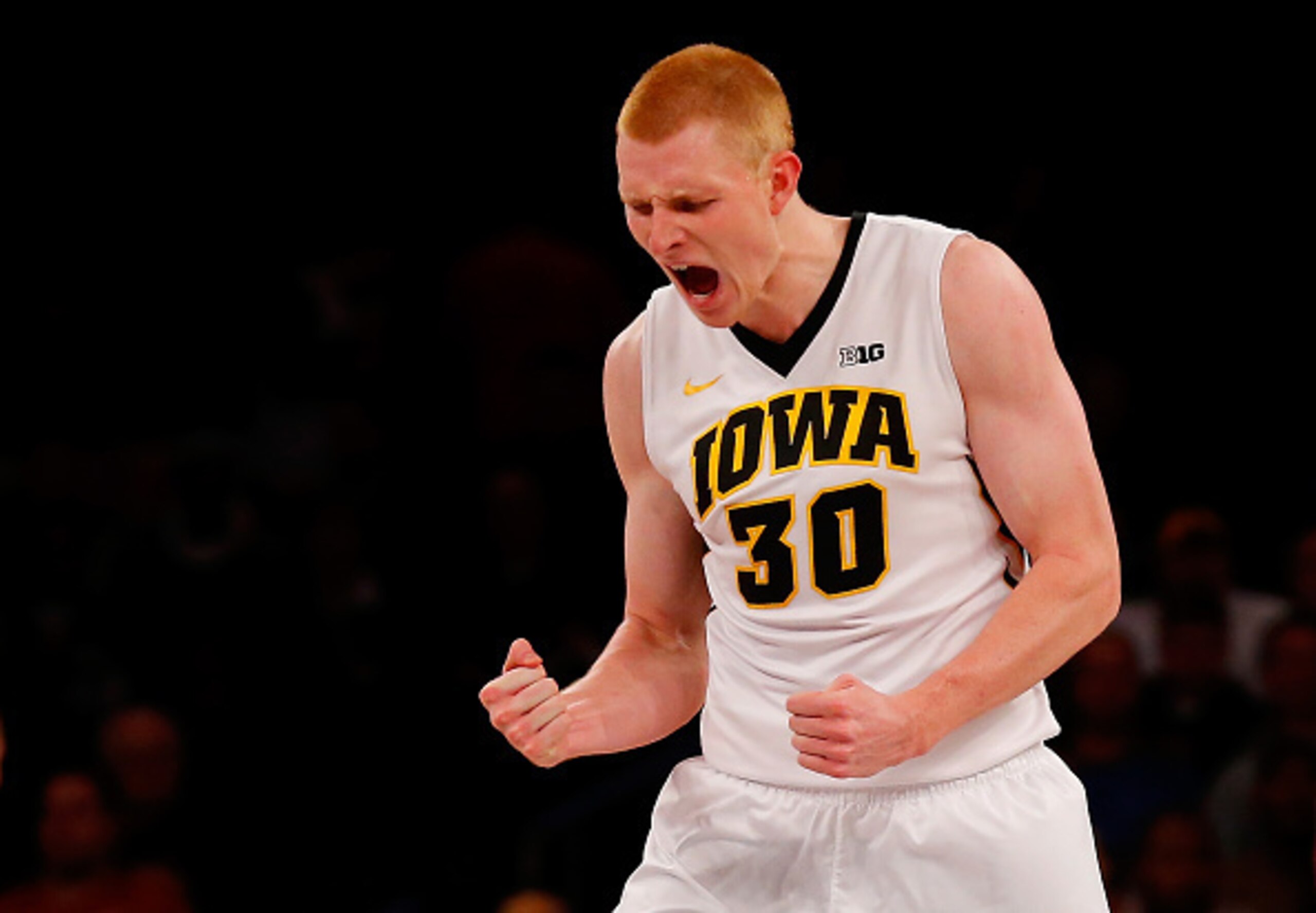
Size for Position/Athleticism
Aaron White isn't very strong (220 pounds) or explosive, but at 6'9", he's quick and mobile.
Scoring/Shooting
White showed he can make shots from just about every spot on the floor, averaging 20.9 points per 40 minutes on 52.1 percent shooting as a senior. However, he wasn't very accurate in the mid-range, having shot just 30.6 percent on two-point jumpers, per Hoop-Math.com. He did shoot an average 35.6 percent on 59 three-point attempts. White is ultimately at his best facing up, getting out on the break and finishing on the move.
Rebounding
A lack of strength limits White's presence under the boards. He pulled down only 7.3 rebounds in 31.5 minutes per game.
Defensive Activity/Potential
White was more effective defending away from the basket than he was as a rim protector, finishing with 45 steals compared to just 16 blocks. He moves well laterally but doesn't have the body to man the paint defensively.
Upside
White doesn't offer much upside without a convincing jumper, a post game or rebounding instincts. He can pick up buckets in line drives and open-floor chances, but that may not be enough to crack an NBA roster.
Overall
Versatility will make White a second-round option, but he's no sure thing to get drafted. Summer league will be his best opportunity to make a team.
16. Larry Nance Jr., Wyoming, 6'9", Senior
6 of 21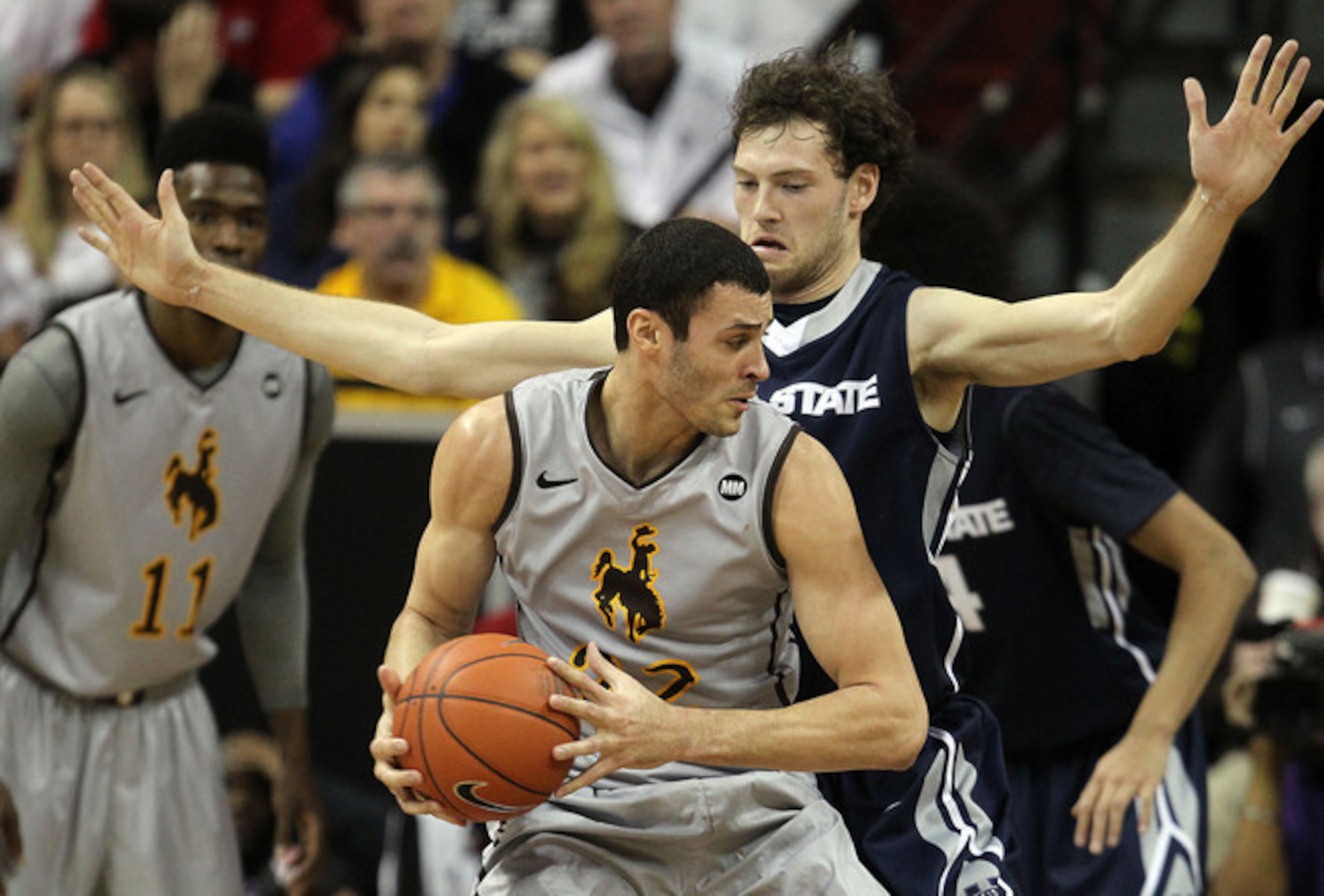
Size for Position/Athleticism
Larry Nance Jr. is one of the more athletic power forwards in the class. He got up for a 37 ½-inch vertical at the combine and generated tons of highlights over the years. He measured in just under 6'9", which isn't great. But with a 7'1 ½" wingspan, his size isn't too troubling. Still, he'll need to add strength to his 227-pound frame. He also tore his ACL in February 2014.
Scoring/Shooting
Nance averaged 18.4 points per 40 minutes as a senior, showing the ability to score in the post and off cuts, dump passes and offensive rebounds. He doesn't have much shooting range, but he's capable out to 15 feet. Nance shot 36.5 percent on two-point jumpers, per Hoop-Math.com, and an excellent 78.6 percent from the line. Still, most of his offensive production was a result of athleticism and energy in a league that lacks noteworthy rim protectors.
Rebounding
Though his numbers have never been great, he does a nice job of tracking down loose balls and cleaning the defensive glass. Still, his 8.3 rebounds per 40 minutes from this past season are poor relative to those of the other power forward prospects..
Defensive Activity/Potential
Nance blocked 1.4 shots and grabbed 1.4 steals per 40 minutes. He's tough enough to defend the post. However, he could have trouble with quicker forwards in face-up situations.
Upside
In the best-case scenario, Nance projects as an energizer who can make things happen around the basket. His ball skills just aren't sharp enough at this point in time.
Overall
Nance will be a late-second-round option for a team that values his athleticism, motor and basketball genes.
15. Branden Dawson, Michigan State, 6'7", Senior
7 of 21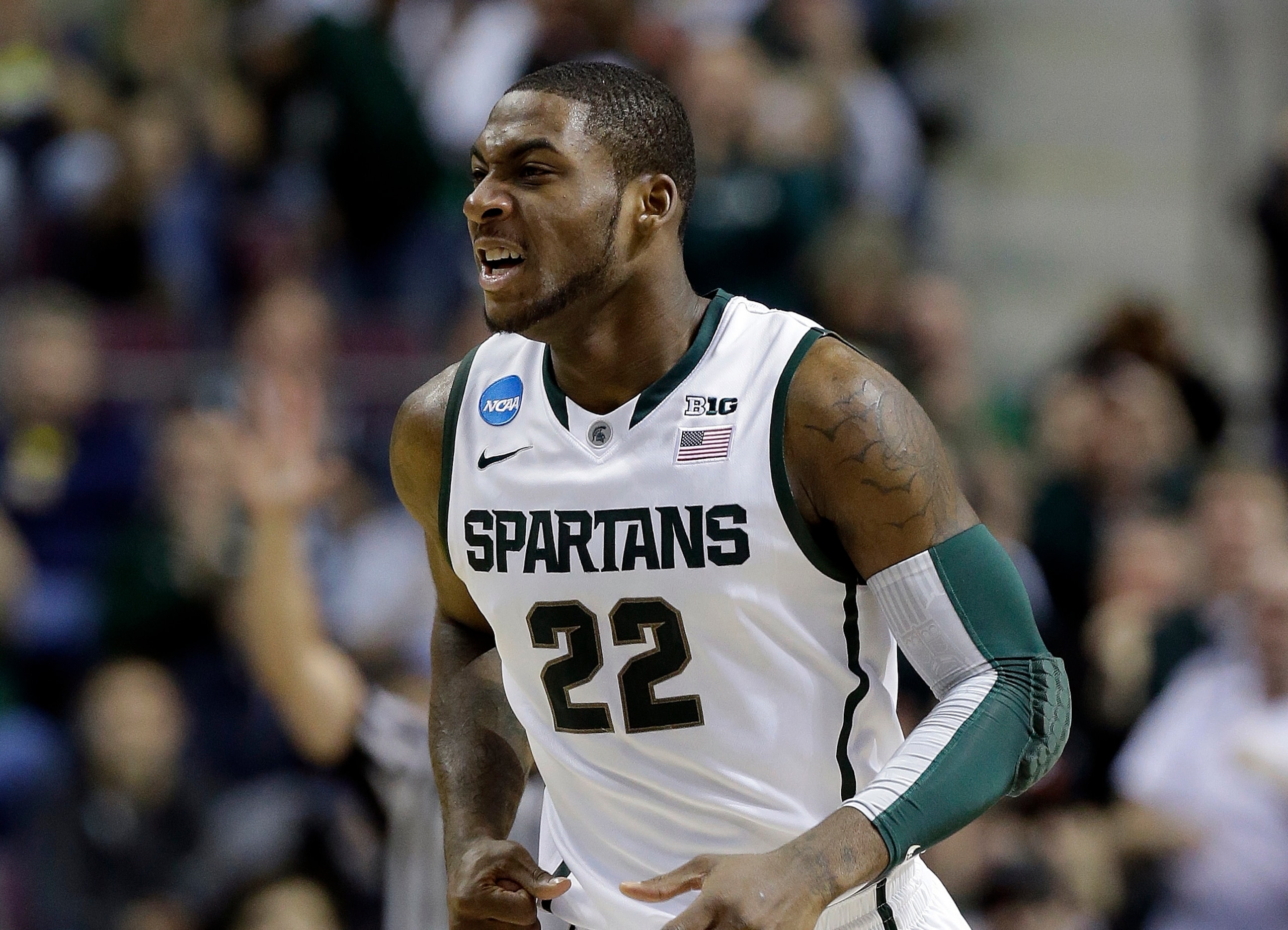
Size for Position/Athleticism
At 6'7", 230 pounds, Branden Dawson is more of a power wing than a true 3 or 4. He's strong, athletic and plays with a big-time motor. It's worth noting that he tore his ACL in 2012.
Scoring/Shooting
Dawson was never much of a scorer, as creating shots is not his forte. This past year, he averaged 15.7 points per 40 minutes, doing most of his damage as a finisher, cutter and weapon in transition. The big knock on Dawson is his suspect jumper and range. He didn't make one three-pointer in 3,456 career minutes during his four years at Michigan State. In addition, he shot only 49 percent from the free-throw line this past season.
Rebounding
Dawson is an active presence on the glass. He grabbed 12.1 boards per 40 minutes, racked up 41 putbacks, per Hoop-Math.com, and registered a terrific 17.9 total rebound percentage.
Defensive Activity/Potential
Dawson is undersized compared to most NBA 4s, but his motor and athleticism translated to 1.6 steals and 2.2 blocks per 40 minutes.
Upside
Without a jumper or post game, Dawson's shot at making an NBA living will be as an energizer. He can rebound, defend and finish. In the best-case scenario, he develops into a Ronnie Brewer-type role player.
Overall
He'll draw second-round looks, but Dawson will likely spend the next year in the D-League or overseas. Teams may ultimately rather draft and stash an international player with more long-term upside.
14. Chris Walker, Florida, 6'9", PF, Sophomore
8 of 21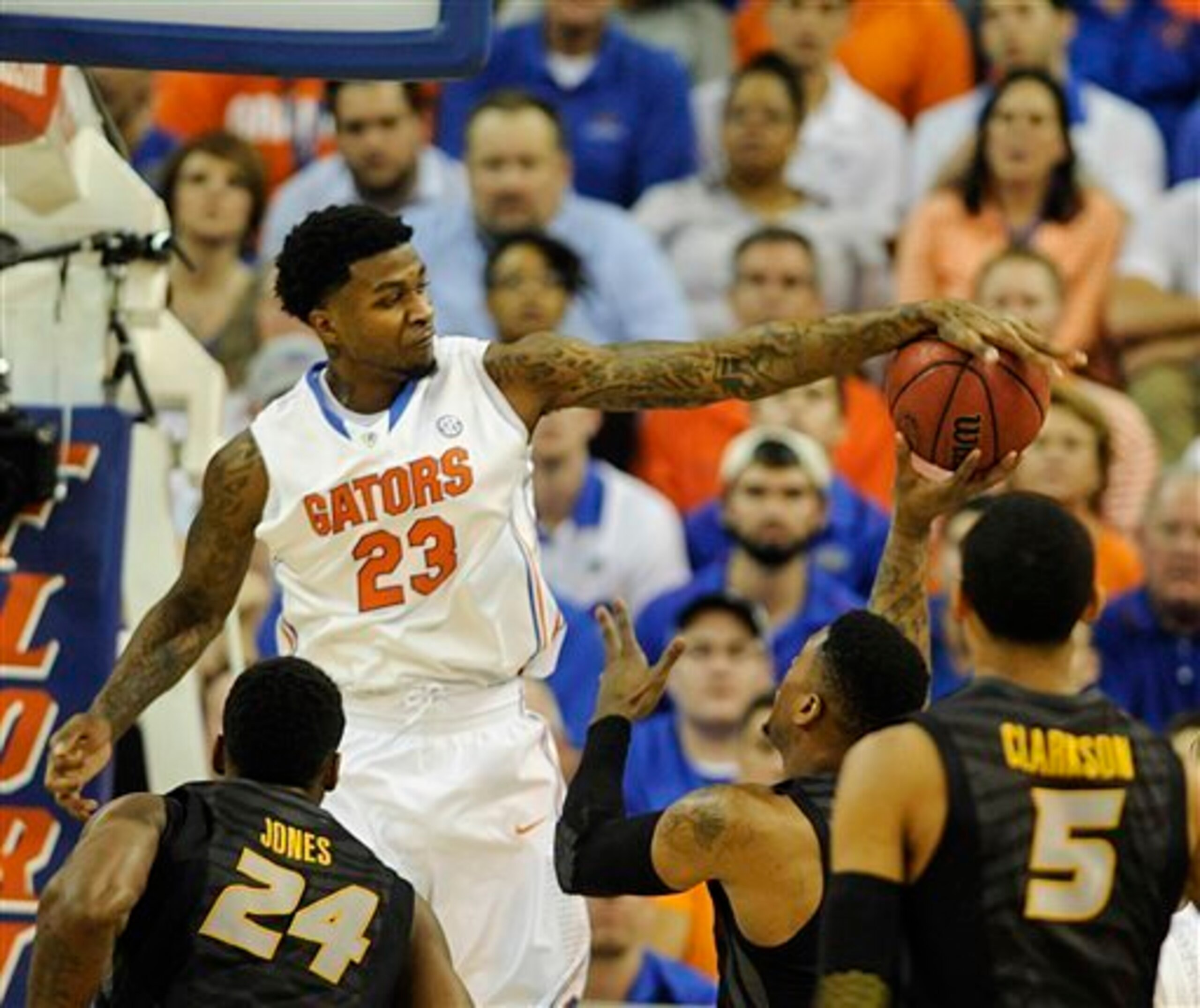
Size for Position/Athleticism
Chris Walker's physical tools (6'9 ¼" size, 7'2 ¾" wingspan) and bouncy athleticism have been well-documented since his days as a McDonald's All-American. But he weighed in at just 208 pounds at the combine, which was lighter than some guards. His lack of strength will be a major concern.
Scoring/Shooting
In two years at Florida, Walker showed very little offensively. He averaged just 12.8 points per 40 minutes as a sophomore while shooting 38.6 percent from the free-throw line. Walker has limited ball skills, from his post game to his handle and jumper. His buckets came mostly on finishes or hooks on the low block.
Rebounding
Walker grabbed 9.5 rebounds per 40 minutes, a fairly average number among power forwards. Given his skinny frame, grabbing boards will only get tougher for him, whether he ends up in the NBA, the D-League or overseas.
Defensive Activity/Potential
The best number on Walker's resume is his 3.2 blocks per 40 minutes. His length and hops can be disruptive around and above the rim.
Upside
Upside has been the only thing keeping Walker in the draft conversation. But considering how little progress he's made physically and fundamentally, he's not a very enticing gamble for general managers. It's tough to imagine him touching an NBA floor anytime soon.
Overall
Walker didn't do anything in two years at Florida to give teams a reason to draft him. Athleticism alone won't seal the deal, especially given his slender frame and nonexistent production.
13. Brandon Ashley, Arizona, 6'9", PF, Junior
9 of 21
Size for Position/Athleticism
Brandon Ashley has standard size at 6'9", though his 7'3 ¾" wingspan is tremendous. Still, he lacks explosiveness. He'd be considered a below-average athlete for the NBA position.
Scoring/Shooting
Ashley can score in a variety of ways, whether he's knocking down mid-range jumpers in the pick-and-pop game, spinning off line drives or attacking from the short corner. He averaged 17.6 points per 40 minutes and shot 43.5 percent on two-point jumpers this past season, per Hoop-Math.com. On the negative side, he isn't particularly strong with his back to the basket or convincing from behind the arc, having knocked down just 26 threes in three years. And despite his ability to face up, his ball-handling skills are shaky.
Rebounding
Arizona didn't get much from Ashley under the boards. His 7.5 rebounds per 40 minutes are the fewest of any of our top 20 power forwards. Credit his underwhelming rate to limited burst, size and strength.
Defensive Activity/Potential
Ashley is capable defensively, both on the perimeter and in the paint. However, it's tough to imagine him guarding NBA wings, while most power forwards will be bigger, stronger and more athletic. He averaged just 0.9 blocks and 0.9 steals per 40 minutes as a junior.
Upside
Ashley doesn't offer much upside, but his offensive feel for the game and mid-range shooting stroke could hold value. He's a forward who can put the ball in the hole from multiple angles.
Overall
Ashley could go anywhere from the early second round to the undrafted-free-agent pool. He might generate more interest from teams overseas, where his offensive skills may be in greater demand.
12. Chris McCullough, Syracuse, 6'9", Freshman
10 of 21
Size for Position/Athleticism
A torn ACL ended Chris McCullough's college career just 16 games into his freshman season. But before going down, he flashed terrific athleticism for a 6'9" forward with a giant 7'3 ¼" wingspan. Still, McCullough weighed just 199 pounds at the combine, and though he's been inactive for five months, he'll need to add a lot of bulk over the next few years.
Scoring/Shooting
McCullough was at his best finishing off cuts, drives, lobs and dump passes around the basket. He also flashed a promising mid-range jumper, even though it cooled off over his final eight games. However, McCullough doesn't have a frame built for the post, where he lacks refined moves to begin with. And he has only a small sample size's worth of sharpshooting for scouts to evaluate.
Rebounding
With long arms, good hands and a quick jump, McCullough was active on the glass. His rebounding numbers fell off in his last handful of games, but his 9.8-per-40 average isn't bad.
Defensive Activity/Potential
McCullough put up some big numbers in Syracuse's zone. He averaged 2.4 steals and 2.9 blocks per 40 minutes. Between his length and quickness, he covers a lot of defensive ground.
Upside
A versatile defender, promising mid-range shooter and productive player around the basket, McCullough's eye-opening potential doesn't come without risk. He's fresh off major surgery after playing mostly against inferior nonconference competition. McCullough looks like one of the bigger boom-or-bust prospects in this year's draft.
Overall
An eight-game slump before going down helped put out the fire he created through his first eight games. A torn ACL on top of that should keep teams in the top 20 from reaching, but a playoff team that can afford to wait and develop McCullough could take a chance on him anywhere after that.
11. Vince Hunter, UTEP, 6'8", Sophomore
11 of 21
Size for Position/Athleticism
At 6'7 ½", 208 pounds, Vince Hunter has a small forward's body, though his strengths and limitations suggest he'll play power forward at the next level. Hunter is a quick, above-average athlete who plays with tons of energy. He's undersized and lacks strength, but that hasn't stopped him from eating up college frontcourts.
Scoring/Shooting
Hunter was extremely productive against Conference USA competition, having averaged 20.9 points per 40 minutes. The majority of his offense came from the charity stripe to the baseline, where he scores off finishes, cuts, drives, putbacks and transition opportunities. Hunter also got to the line 8.8 times per 40 minutes, as he's relentless around the basket. However, his inability to shoot has really clouded his outlook. He was a combined 4-of-12 from three in two years and shot just 21.7 percent on two-point jumpers as a sophomore, per Hoop-Math.com, along with 60.2 percent from the free-throw line.
Rebounding
One of the top rebounders in the country, Hunter's motor, athleticism and nose for the ball translated to 13.0 boards per 40 minutes and a phenomenal 19.1 total rebound percentage, the No. 1 rank among the top 20 power forwards featured here. His activity on the glass alone could be something NBA teams covet.
Defensive Activity/Potential
Hunter has demonstrated the versatility to guard both forward positions. And he can make things happen at the defensive end, where he averaged 1.7 steals and 1.4 blocks per 40 minutes.
Upside
His size and perimeter scoring ability are big question marks. However, Hunter has the potential to become a spark plug who crashes the glass, defends and finishes plays around the basket. He looked great at the NBA combine, and it wouldn't be surprising if a general manager takes a chance on him in the second round.
Overall
Having no true position or proven jumper makes Hunter nothing more than a second-round flier. Teams that covet his energy and rebounding ability could give him a shot in the 45-60 range.
10. Kevon Looney, UCLA, 6'9", Freshman
12 of 21
Size for Position/Athleticism
Kevon Looney has good 6'9 ¼" size for a power forward who's comfortable on the perimeter. He also uses his lengthy 7'3 ½" wingspan at both ends of the floor. On the downside, he weighs just 222 pounds and lacks the strength to play after contact. Conditioning is another area in which he'll need to improve, as his motor had the tendency to fade.
Scoring/Shooting
Looney lacks offensive polish, though his skill set covers a lot of ground. He isn't much of a back-to-the-basket post scorer, but he can face up and stick a jumper or put the ball on the floor. Looney averaged 15.0 points per 40 minutes, which was below average for most power forwards. He was capable but erratic as a shooter, having made 22 of 53 threes and having shot 25.7 percent on two-point jumpers, per Hoop-Math.com, along with 62.6 percent at the free-throw line.
Rebounding
Looney has a terrific nose for the ball, particularly on the offensive glass, where he converted 54 putbacks, per Hoop-Math.com. He averaged 11.9 rebounds per 40 minutes, always finding himself in the right place at the right time. He has great instincts and length to thank.
Defensive Activity/Potential
With those long arms, Looney can contest shots around the rim, though he doesn't have the body to bang. He does have some interesting perimeter-defense potential against slower-footed wings.
Upside
He's a project with upside and risk, given his offensive versatility and lack of a true position. At this point, Looney isn't strong enough to play the 4 or quick enough 25 feet away to be a wing. However, if he adds strength and continues to sharpen his offensive skills, he could eventually evolve into a mismatch.
Overall
Looney will need a year in the D-League, regardless of which team selects him. His lack of polish and true position could keep him from going in the lottery. Expect Looney to go somewhere in the 15-25 range.
9. Trey Lyles, Kentucky, 6'10", Freshman
13 of 21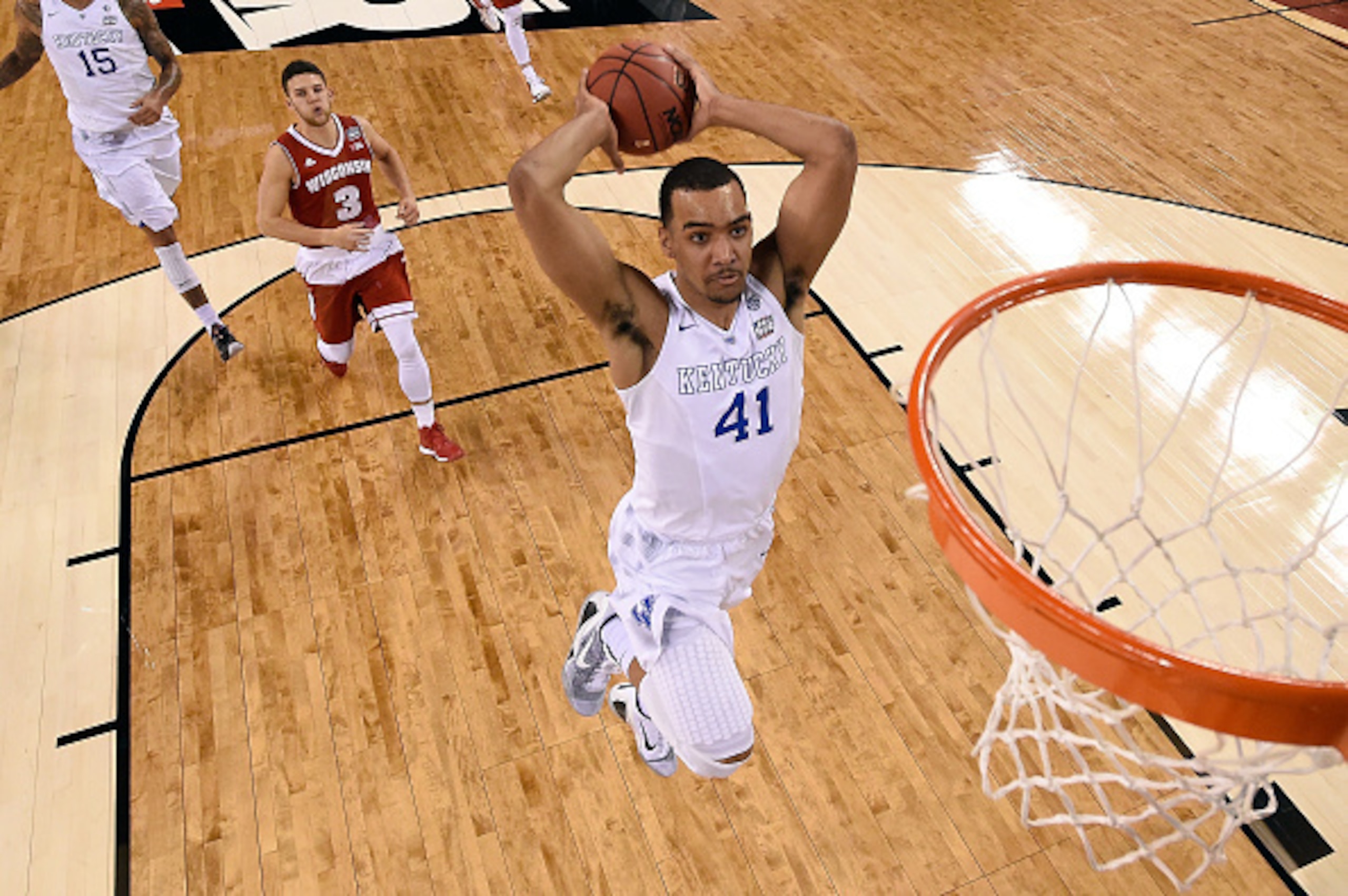
Size for Position/Athleticism
At 6'10 ¼", 241 pounds, Trey Lyles has good size and even better mobility for a power forward. He's not overly explosive, but he's athletic and consistently demonstrates eye-opening body control as a finisher.
Scoring/Shooting
Lyles is very polished offensively, though you wouldn't necessarily refer to him as either a scorer or a shooter. He averaged 15.1 points per 40 minutes (low for a top-20 power forward), showing the ability to finish around the basket and knock down mid-range shots. Lyles hit 39.2 percent of his two-point jumpers, per Hoop-Math.com, but his range didn't extend past the 20-foot mark, and he made just four of 29 three-point attempts. His field-goal percentage of 48.8 percent was also on the low side.
Rebounding
Lyles grabbed 9.1 boards per 40 minutes, which is neither great nor alarming. He can grab the rebounds in his area, but you wouldn't peg him as someone capable of dominating the glass. His 13.3 total rebound percentage was fairly low.
Defensive Activity/Potential
He's a high-IQ defender, and he moves well. However, there are questions as to whether he's strong enough to challenge down low (0.8 blocks per 40 minutes) or quick enough to defend the perimeter.
Upside
Lyles isn't a can't-miss athlete, but his mid-range jumper, low-post skills and mobility are NBA-friendly. He projects as a pick-and-pop power forward who runs the floor and finishes the plays that find him in the offense.
Overall
Credit Lyles' lack of production to a limited role in Kentucky's loaded lineup. His NBA outlook actually seems a lot brighter than his NBA Draft 100 score, given his size, skill level and intelligence. He's expected to generate late-lottery interest without falling outside the top 20.
8. Cliff Alexander, Kansas, 6'9", Freshman
14 of 21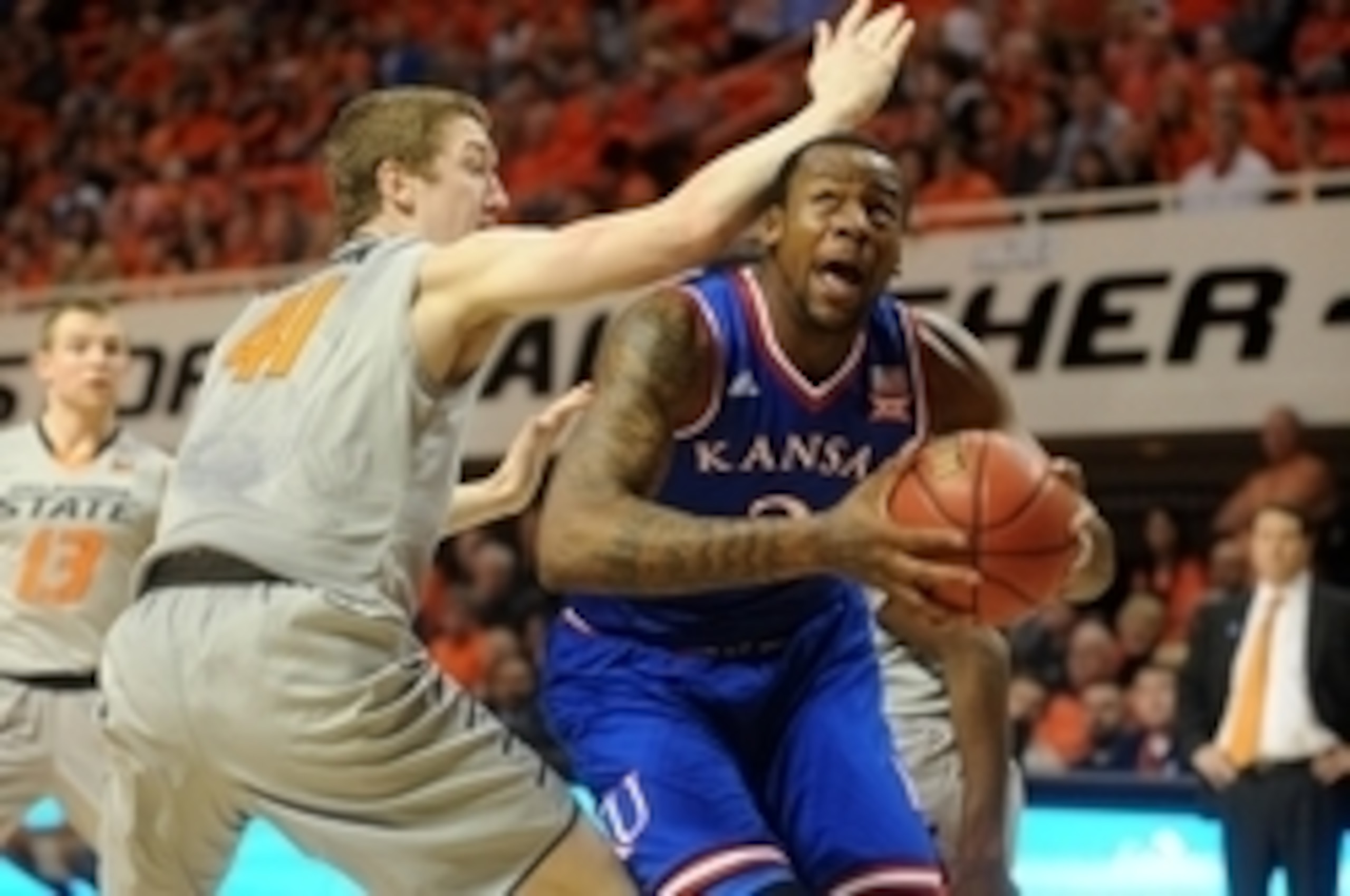
Size for Position/Athleticism
As a forward who is super athletic with a giant 7'3 ½" wingspan and strong 239-pound frame, the only knock on Cliff Alexander physically is the fact that he measured 6'8 ½" at the combine. Otherwise, Alexander is a monster.
Scoring/Shooting
Alexander lacks offensive polish in just about every area across the board. His post game is fairly basic, and he hasn't shown much in terms of a jumper. Alexander does most of his damage off finishes, rebounds and transition opportunities. Though he averaged 16.2 points per 40 minutes, creating his own shot is not a strength of his.
Rebounding
Rebounding looks like Alexander's most appealing strength. His energy, athleticism and length translated to 12.0 boards per 40 minutes and a solid 16.8 total rebound percentage.
Defensive Activity/Potential
Alexander's on-ball defense and technique weren't very impressive, but he did block 3.0 shots per 40 minutes. Alexander can be active and disruptive around the basket.
Upside
Undersized without much of an offensive game, Alexander projects more as an energizer than a scorer. His ceiling just isn't as high as it appeared before the season. Still, his ability to finish, rebound and make plays on loose balls should hold NBA value.
Overall
Alexander missed Kansas' final nine games with eligibility issues. Before that, he had practically fallen out of coach Bill Self's rotation. He could get a late-first-round team that thinks he's a value pick to bite, but the second round seems like a safer projection. Alexander isn't ready to make an immediate impact in the pros.
7. Jordan Mickey, LSU, 6'8", Sophomore
15 of 21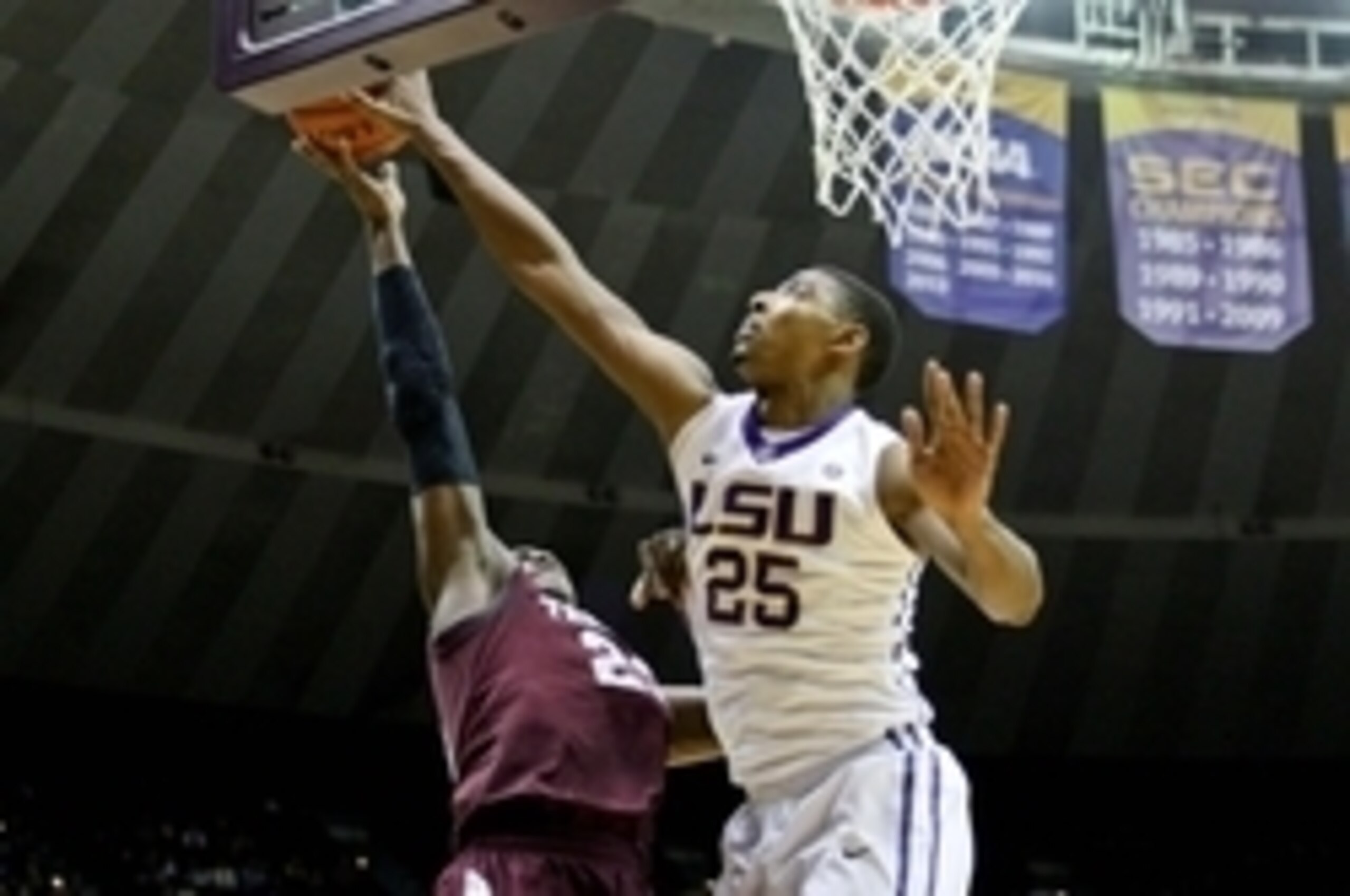
Size for Position/Athleticism
Jordan Mickey is an above-average athlete with a 37 ½-inch max vertical. He's slightly undersized at 6'8", but he helps make up for a lack of height with a 7'3 ¼" wingspan. Mickey also has a rock-solid frame at 238 pounds.
Scoring/Shooting
Mickey's offensive game improved over the past year, when he averaged 17.7 points per 40 minutes and made 39.7 percent of his two-point jumpers, per Hoop-Math.com. Down low, he doesn't quite have go-to moves, but he does a nice job of finding ways to score over the shoulder. Mickey made only one three-pointer in two years, and he'll need to continue improving his mid-range jumper, especially given his below-average size for the interior.
Rebounding
Mickey's excellent instincts around the rim translated to 11.4 rebounds per 40 minutes and 49 putbacks, per Hoop-Math.com.
Defensive Activity/Potential
Mickey's core strength is shot-blocking, as his timing is simply unteachable. He led the country with 3.6 blocks per game (4.1 per 40 minutes). Mickey just has a natural nose for the ball, along with the length and hops to make plays on it.
Upside
Improving his jumper will be huge for Mickey, who lacks the size to consistently generate offense in the post and paint. However, between his defense, rebounding and growing offensive game, his versatility could carry him to a long career as a high-end reserve.
Overall
Mickey's strong showing at the combine may have landed him on late-first-round radars. Though his upside looks limited, you get the impression that his game has a good shot of translating to a bench role. He should be snatched up within the first 10 picks of Round 2.
6. Montrezl Harrell, Louisville, 6'8", Junior
16 of 21
Size for Position/Athleticism
Montrezl Harrell is a powerful, explosive forward who blends strength with above-the-rim athleticism. That combination translated to him finishing at an 80.9 percent clip at the rim this past season, per Hoop-Math.com. However, he's a bit undersized at 6'8", though his 7'4 ¼" wingspan and tremendous motor help make up for a few inches in height.
Scoring/Shooting
Harrell isn't a polished post scorer, and he's now struggled with his jumper for three straight years. He averaged 17.9 points per 40 minutes, doing most of his damage as a finisher off dump passes, lobs, cuts, offensive rebounds and transition opportunities. But he made just nine of 37 threes and shot below 60 percent from the free-throw line for the third straight season.
Rebounding
He's a physical, active presence on the glass, though his numbers dipped during his junior season (14.5 total rebound percentage, 10.4 rebounds per 40 minutes). Still, he can provide activity and second-chance opportunities, having notched 43 putbacks as a junior, per Hoop-Math.com. However, the Kenneth Faried comparisons should end with his college career.
Defensive Activity/Potential
Harrell was a decent defensive playmaker, having blocked 1.4 shots and racked up 1.1 steals per 40 minutes. His defensive contributions came mostly in the form of physical play and toughness.
Upside
Harrell hasn't improved his shooting touch from outside, and without much of a post game for an undersized power forward, he's not likely to do much scoring in the NBA. However, his ability to finish, pound the glass and make things happen in the paint could hold value in an energizer role.
Overall
Harrell will draw looks in the late teens, but odds are that he winds up going somewhere in the 20s. He just doesn't offer enough upside to trigger a reach.
5. Jarell Martin, LSU, 6'9", Sophomore
17 of 21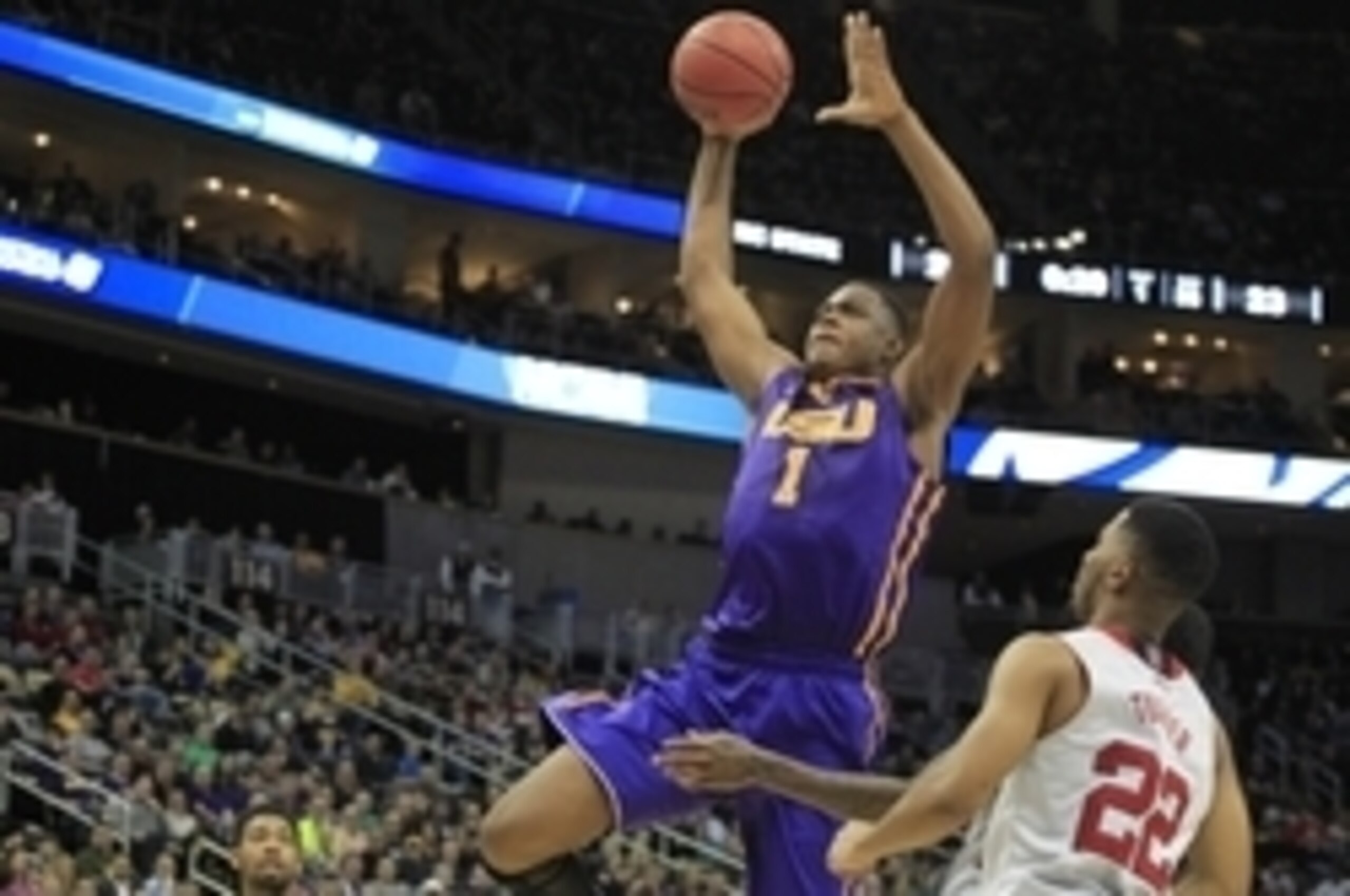
Size for Position/Athleticism
Jarell Martin is a stud athlete with explosive hops and a strong 6'9 ¼", 239-pound frame. The only knock on him physically is his underwhelming 6'9" wingspan.
Scoring/Shooting
Martin is a tough cover, given his ability to face up and attack or use his strength to bully defenders around the basket. He averaged 19.3 points per 40 minutes this past season while shooting 50.9 percent overall. Martin is capable in the mid-range, having made 50 two-point jumpers, per Hoop-Math.com, but he hit only 14 of his 52 three-point attempts and shot 69 percent from the free-throw line. He also lacks a back-to-the-basket post game.
Rebounding
Inconsistent under the boards, Martin had spurts when he controlled the glass and others when he wasn't a factor. His 10.5 rebounds per 40 minutes look better than his 14.1 rebound percentage. Keeping his motor revved will be the key moving forward.
Defensive Activity/Potential
Martin doesn't offer much defensively. He finished with 23 blocks in 33 games as a sophomore, showing questionable instincts both on and off the ball.
Upside
Martin offers intriguing upside fueled by athleticism, quickness, power and inside-out versatility. But without a post game, he'll need to improve his shooting range as well as his overall decision-making and energy.
Overall
Martin's lack of a true position should keep teams from reaching on him in the top 20. It may even make him vulnerable to slipping outside the first round. Look for Martin to go somewhere in the 20-40 range.
4. Richaun Holmes, Bowling Green, 6'10", Senior
18 of 21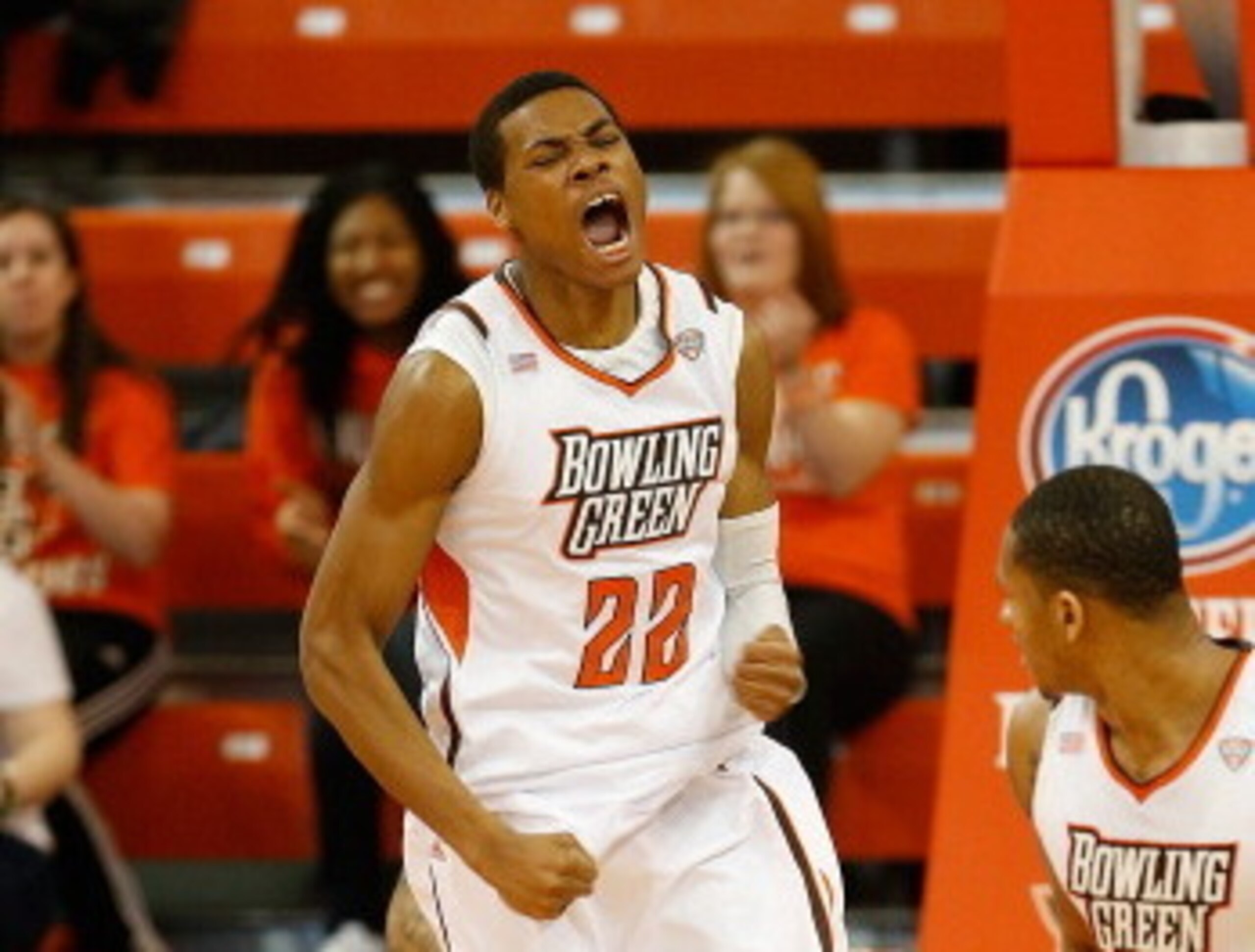
Size for Position/Athleticism
Richaun Holmes has an NBA body and tools consisting of a 6'9 ½", 243-pound frame, 7'1 ½" wingspan and 9'0" reach. He's athletic and quick, which makes him tough for most big men to contain.
Scoring/Shooting
Holmes had a breakout year offensively, having averaged 20.5 points per 40 minutes and shot 39.2 percent on two-point jumpers, per Hoop-Math.com. He even hit 18 of 43 threes. Holmes can score with his back to the basket or facing up in the mid-range, where his first step and body control allow him to attack and finish on the move. He also consistently picks up buckets off dump passes, cuts and offensive boards.
Rebounding
Holmes is a strong rebounder who pulled in 16.3 percent of the available boards while he was on the floor. He has a live motor as well as the length and athleticism that should translate to rebounds at every level.
Defensive Activity/Potential
The MAC Defensive Player of the Year, Holmes' 11.2 block percentage ranks with some of the best in the country.
Upside
Holmes' gradual improvement suggests there could be more to come. He has textbook physical tools, a developing inside-out game and tremendous defensive instincts. The competition he faced wasn't great, but assuming Holmes goes in the second round, he could be one of the top value picks in this draft.
Overall
Holmes is on the rise, and though the first round might be a stretch, he could be one of the draft's biggest second-round sleepers.
3. Christian Wood, UNLV, 6'11", Sophomore
19 of 21
Size for Position/Athleticism
Christian Wood has tremendous 6'10 ½" size and a 7'3 ¼" wingspan for a power forward. He's a bouncy athlete with a quick first step and good body control. However, at 216 pounds, a lack of strength is a serious concern.
Scoring/Shooting
Wood had a number of offensive explosions this year that highlighted his offensive upside. He averaged 19.3 points per 40 minutes, showing the ability to face up from outside and either shoot or attack his man. Wood made 25 threes and shot 44.8 percent on two-point jumpers, per Hoop-Math.com, along with 73.6 percent from the free-throw line. Unfortunately, Wood's skinny frame makes it tough for him to finish after contact or separate with his back to the basket.
Rebounding
Wood was a constant on the glass. Despite limited strength, his above-the-rim presence translated to 12.2 boards per 40 minutes and an excellent 17.0 total rebound percentage.
Defensive Activity/Potential
Wood was active defensively, having blocked 3.3 shots per 40 minutes. Between his foot speed, size, leaping ability and length, he has promising tools for pick-and-roll coverage and rim protection. On the downside, his steal rate was incredibly low (11 steals in 33 games), and he didn't display the sharpest defensive IQ.
Upside
Wood has starter potential powered by mismatch physical tools, offensive versatility and above-average athleticism. But without the bulk to bang down low or the polished skills for the perimeter, he's also a bit of a risk.
Overall
His NBA Draft 100 score isn't quite indicative of his draft stock. Wood is still raw and needs a year to build his body and refine his skills. He could go to a gambler in the mid-first round, or he may slip into the 25-35 range.
2. Bobby Portis, Arkansas, 6'11", Sophomore
20 of 21
Size for Position/Athleticism
At 6'10 ½" and 246 pounds with a 7'2" wingspan, Bobby Portis has an NBA profile for a power forward. However, he isn't overly explosive or light on his feet and can struggle to separate from defenders as a driver and leaper. Portis' 31 ½-inch max vertical was one of the lower numbers at the combine.
Scoring/Shooting
Portis is coming off a monster year offensively, having averaged 23.4 points per 40 minutes while shooting 53.6 percent overall. Highly skilled, he can separate into shots in the post or spread the floor as a pick-and-pop spot-up shooter. With a natural stroke that should only improve, he knocked down 37.6 percent of his two-point jumpers, per Hoop-Math.com, as well as 14 of his 30 three-point attempts.
Rebounding
Portis made a significant leap as a rebounder in 2014-15. He pulled in 1.9 more rebounds per 40 minutes than he did as a freshman and increased his total rebound percentage to a strong 16.8 percent from an uninspiring 13.5 percent.
Defensive Activity/Potential
Despite standout physical tools, Portis blocked just 50 shots in 36 games. He doesn't get off the ground very high and isn't likely to become a factor in rim protection.
Upside
Portis' skill set is tailor-made for the NBA 4, where he can shoot over defenses in the mid-range and operate with his back to the basket from the low or high post. However, a lack of athleticism and defensive potential limits his upside. Still, Portis is one of the safer first-round prospects with the talent to become a solid NBA starter.
Overall
Portis could be an under-the-radar option for teams drafting late in the lottery. The Utah Jazz at No. 12 and Atlanta Hawks at No. 15 could be teams to watch. Don't bet on Portis falling past the Toronto Raptors at No. 20.
1. Kristaps Porzingis, Latvia, 7'0", 1995
21 of 21Size for Position/Athleticism
You just don't see many 7-footers as athletic and mobile as Kristaps Porzingis. He runs, moves well laterally and can get up high above the rim. However, at 220 pounds, Porzingis is awfully skinny. He gets moved around easily on the interior and struggles to finish after contact. A lack of strength is Porzingis' big red flag.
Scoring/Shooting
Porzingis is a unique scorer for a player of his size. His ball skills, particularly on the perimeter, are very impressive. He's shown the ability to rise and fire for a jumper, separate into one or attack the rim in line drives. He averaged 20.5 points per 40 minutes between Eurocup and Spanish ACB play. He also shot 75.2 percent from the free-throw line and 35.9 percent from downtown, having made 42 threes in 50 games. Porzingis ultimately projects as a stretch big who can shoot, score off the dribble or finish lobs, cuts and putback opportunities at the rim.
Rebounding
His skinny frame works against him under the boards, where his 13.66 rebound percentage is below average for the position. However, his physical tools still translate to tips and slams on the offensive glass.
Defensive Activity/Potential
Porzingis doesn't block a ton of shots, but his size, foot speed and leaping ability bode well for his defensive outlook. Though he may struggle when manning the post, he has the potential to become an asset in pick-and-roll coverage and a disruptive weak-side rim protector.
Upside
Few eligible prospects have higher ceilings than Porzingis, whose blend of size, mobility, hops and skills is fantastic. He'll need to add strength to maximize his offensive versatility, but we could one day be talking about a serious offensive mismatch.
Overall
Unless the Philadelphia 76ers reach at No. 3, it's tough to picture Porzingis going in the top four, but the Orlando Magic seem like a real suitor for him at No. 5. He'd ultimately fit in Orlando, Sacramento (No. 6 pick), Denver (No. 7 pick) or Detroit (No. 8 pick). All four teams could use frontcourt athleticism and shooting.
All advanced statistics via Sports-Reference.com, unless otherwise noted. All player measurements via NBA.com, Sports-Reference.com or DraftExpress.


.jpg?w=2560 "NFL Panic Meter for Every Fanbase's Anxiety Levels")