Harry Kane Deserves England Chance but Ings, Walcott Can Still Contribute Too
As England prepare for two matches over the next few days, plenty of conversations and watchful eyes will turn to the attacking portion of the team, eager to see whether boss Roy Hodgson hands a debut to Harry Kane and if the Tottenham Hotspur forward can take his scoring prowess from club level to the full international stage.
A Euro 2016 qualifier at home to Lithuania and a friendly in Italy will not offer total proof one way or another, but the first steps must be taken at some point and Kane, who has scored six in 10 at U-21 level for his nation, is likely to play a significant part in these matches.
TOP NEWS

Soccer Stock Check 📈📉

New NFL contenders starting to emerge after Week 4
.jpg?w=2560 "Cardinals Giants Football")
NFL investigating 2 referees for separate viral exchanges
Kane's 19 Premier League goals this season certainly marks him out as more than deserving of his shot with the national team, though the inclusion of him as a potential regular brings questions over others who are trying to break into the England team, the tactics the team employs and a few more familiar faces who have been around the scene for some time.
Questions of Kane
Those who saw Kane on loan at Norwich City or Leicester City would, in all probability, not have considered Kane one of the next players to reach the England set-up over the coming year or two. Even as recently as last season with Spurs, he was a bit-part player getting his chance more because the other strikers at the club were flailing badly, rather than because he was an obvious star in the making.
This term's rise is all the more dramatic and impressive, then, but it still makes it a terribly difficult thing to judge whether he is now on his true career path, scoring and leading a team, or whether this is an elongated crest of a wave.
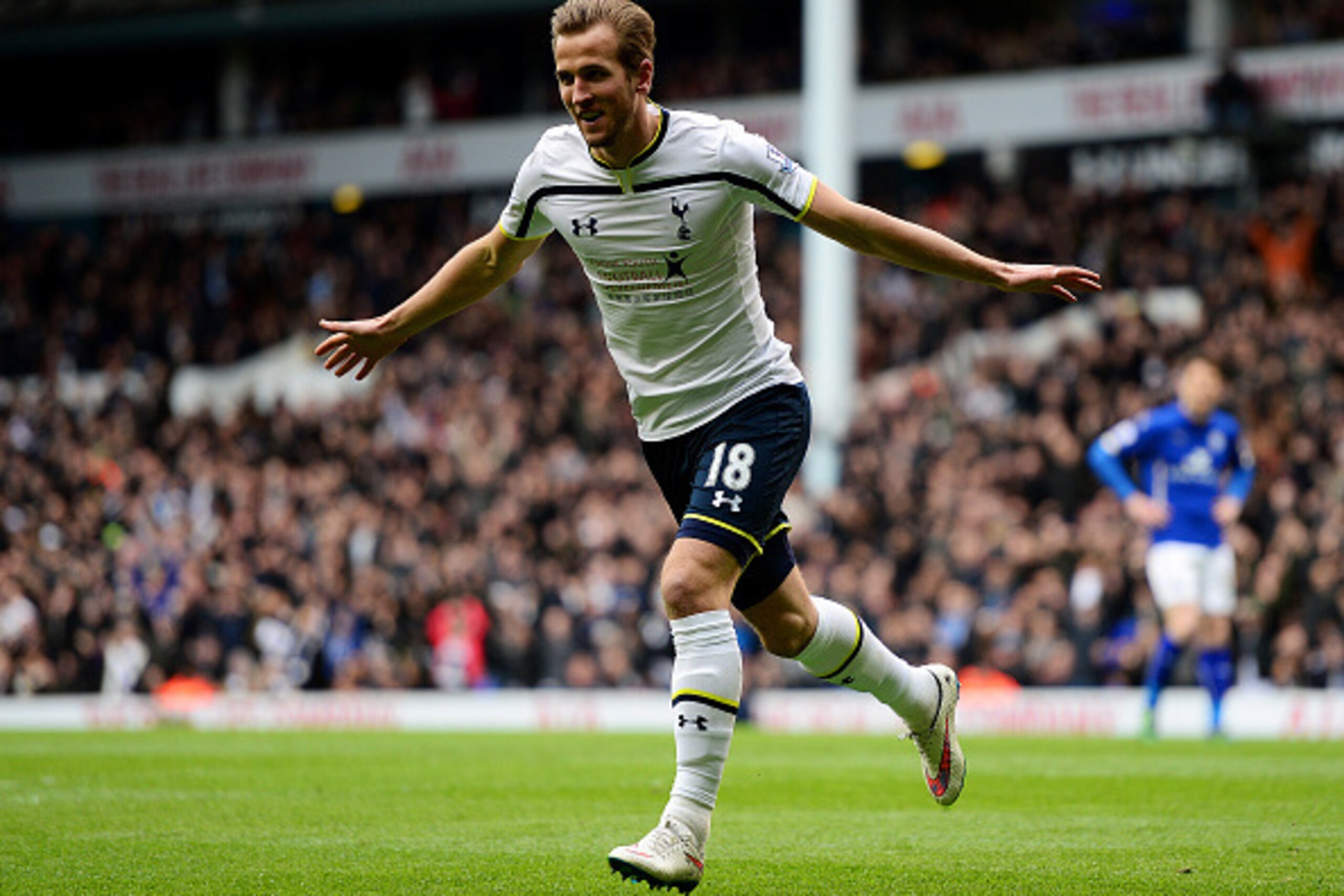
Can he do it at international level? He has earned the right to try. Can he hit back-to-back seasons with 20, 25 goals? He'll certainly get the chance next term.
Kane has shown this year he is possessed of many traits which make a desirable modern forward; strength, mobility and finishing being just a few, but also his quality as both a No. 9 and as a second forward. This changing of positions can be key for England, pairing him with another of a similar nature in Wayne Rooney. Movement is more important than any other single attribute in the creation of chances and linking of play in the final third, and both have shown capacity to do that alongside shouldering the scoring burden for their clubs of late.
Kane can't simply be seen as the new answer to England's striking options, certainly not until he has a tournament behind him and a few goals, but having a confident and in-form striker is a tremendously important asset for the side—if he is used, and if he is fit in appropriately.
Depth
England have typically called up four "strikers" to most squads, even if the quartet features individuals more frequently playing from the wing or in midfield. This time around it looked quite straight-forward for Hodgson on form and proven quality: captain Rooney, fit-again Daniel Sturridge, justified favourite Danny Welbeck and the new boy himself, Kane.
Sturridge's injury reduces the numbers but boosts Kane's chances of being involved, while the likes of Rickie Lambert and Jermain Defoe can probably count their international careers as over now. Andy Carroll remains an unlikely outsider, infrequently fit but with his own innate qualities and at-times unstoppable force of nature.
Beyond those established members of the scene, however, remain yet more inexperienced attacking options for Hodgson to consider.
Charlie Austin (age 25), Saido Berahino (21) and Danny Ings (22) are all forerunners for the job, having impressed in different ways and at different times this term. Berahino has already had one call-up without making an appearance and appears a likely England international sooner or later. Pace, technique and impressive movement off the ball all work in his favour.

The other two are more interesting to consider.
Ings certainly has ability inside the penalty box, and can play off the front man too in the same way Kane can. He does not have the physical stature of Kane, nor the quality of team-mates providing him chances at club level, yet he has managed a goal every 250 minutes or so for a side struggling against relegation.
Austin is almost a target man: direct, powerful, a tremendous shot on him and good work-rate outside the penalty area. Is he of international "quality" in the normal sense? Almost certainly not, and there will not be too many tournaments, if any, where he is looked to as a likely candidate to give the squad an edge.
However, international football during the season is sporadic. There is no reason why, if a particular opponent requires a particular approach to be beaten, Austin should not be selected if in form and looking confident. He might not be the third- or fourth-best striker, but if he fits the criteria to win any given match, he should absolutely be looked at as a resource, an asset.
It makes no difference if there are 20 percent, 35 percent or even 50 percent English players in the Premier League if only the same 25 or so names are being called upon each time.
If an Austin (or a Jack Colback, or a Jon Flanagan) can serve a purpose for the odd game, then utilise them.
Walcott's Role
Speaking of players who serve a purpose, what is that served by Arsenal's Theo Walcott to England? Now closing in on 40 caps and at 26 years of age, Walcott has rarely shown he is a long-term must-have in the team, both by way of fitness and by actual production when on the pitch. As a right-sided midfielder he is an outlet, a pacy attacking penetration tool, but the delivery is rarely memorable.

England have played a 4-4-2 diamond of late—not a system where Walcott fits as one of the four players in the central area. He could, however, be seen as the fourth forward in the current squad, with Sturridge having departed. Acceleration and direct running, and in fairness a fairly composed finisher if not always a tremendously accurate one, Walcott has many attributes—and the desire, of course—to play centrally and offer much more to the side than he has done.
Aside from Raheem Sterling, who has more frequently played centrally for England of late, Walcott is the only player in the squad who naturally plays on the flanks and possesses pace. Will these traits be in demand at home to Lithuania? Probably not. They will likely sit deep, compact and organised and ask England to break them down. Movement in the final third, quick first-time passing and clinical finishing when spaces open up will be the order of the day.
In that regard, Walcott is surely more of an option as a striker rather than trying to deliver from wide.
Euro 2016
It's still a long way off, but England's qualification campaign is pretty much a stroll given their good start and the fact the top two go through automatically.
Barring injury or a catastrophic 2015-16 season, it can safely be assumed Wayne Rooney will go, while Welbeck and Sturridge are also as close to being assured of a spot as you can be, 15 months ahead of a tournament. After that it depends entirely on England's main formations being used, Hodgson's willingness to be more offensive than he was at World Cup 2014 and on the availability of other players in other positions.
Some might be in favour of a fifth forward rather than a fourth centre-back travelling, for example.
Kane will be up against the likes of Berahino and perhaps one other, be it Ings or a more established name, for a seat on the plane—though if by this time next season he has had another 25-goal campaign under his belt, there won't even be a question of him going or not.
His breakthrough has come at a good time for England; now we await to see if he can step up a level and how much longevity he has.

.jpg?w=2560 "Hill Injury Update Football")
.jpg?w=2560 "OBJ Calls Out Giants 😳")
.jpg?w=2560 "Tyreek makes another cryptic post amid Chiefs rumors")