Will Dri Archer Prove to Be a Wasted Draft Pick for the Pittsburgh Steelers?
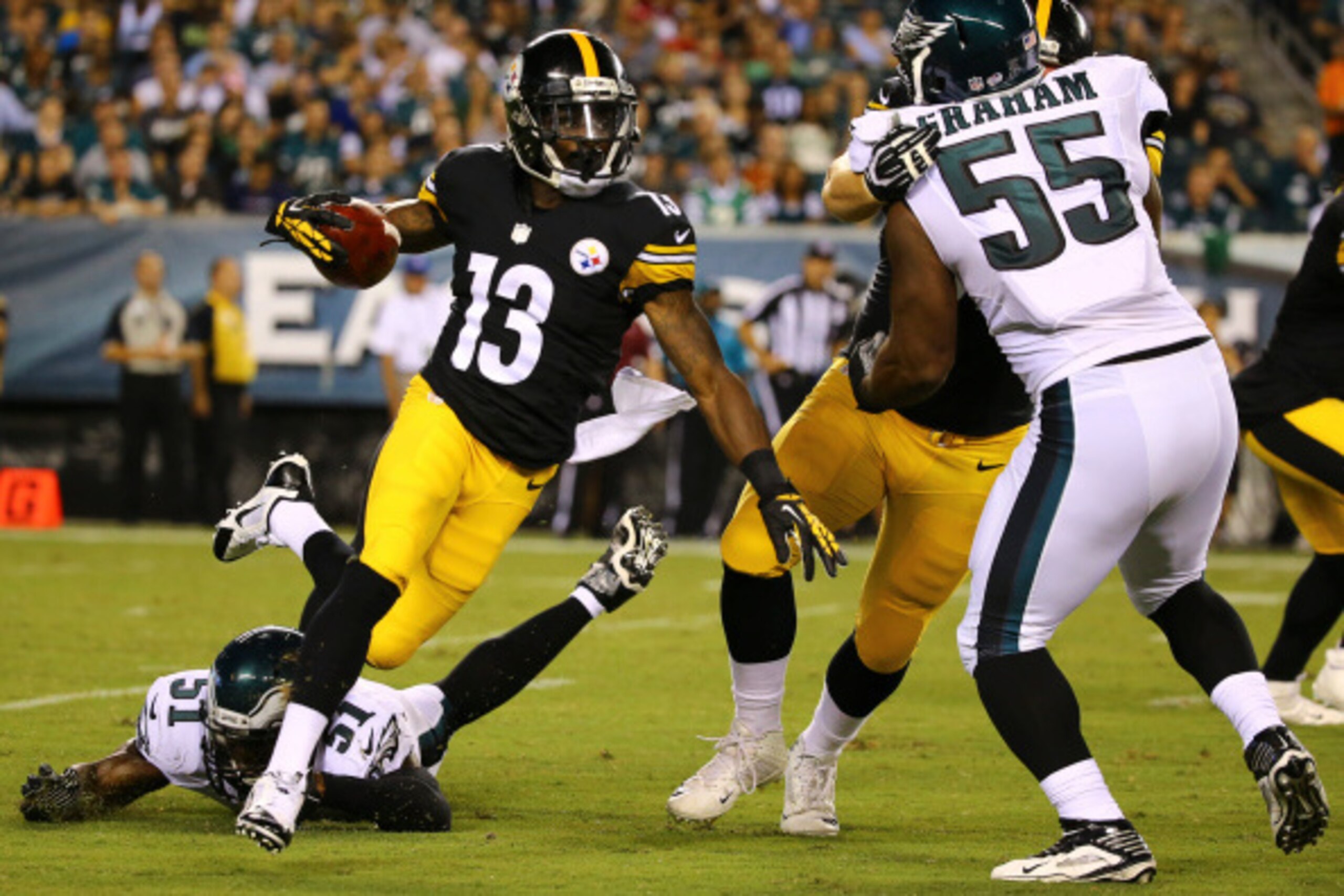
The Pittsburgh Steelers selected versatile speedster Dri Archer in the third round of the 2014 NFL draft. However, in his rookie season, Archer struggled to find a niche he could occupy confidently on a weekly basis.
The Kent State product boasted a 4.2-second 40-yard dash time, something that opened the eyes of Steelers offensive coordinator Todd Haley. However, his size—5'8", 173 pounds—meant his usage would be limited, lest it become predictable when he's on the field. He can't block. So, if he's in the formation, he's likely getting a touch, which makes it easy for defenses to key in on the Steelers' intentions.
.jpg?w=2560 "Bengals Ravens Football")


Thus, Archer rushed just 10 times for 40 yards and caught seven passes on 10 targets for 23 more. He didn't score a touchdown. He did return nine kickoffs for 161 yards, but he was pulled from those duties after Week 7. He also missed two games with an ankle injury and then was inactive for two additional contests in the later weeks of the season. Ultimately, Archer was on the field for just 82 offensive snaps, according to Pro Football Focus.
| 10 | 40 | 4.0 | 0 | 10 | 7 | 23 | 3.3 | 0 | 9 | 161 | 0 |
Though it's too early to say that the Steelers wasted their third-round pick from a year ago, the Steelers do need to find ways to get Archer on the field and playing productive football. Part of that has to do with simply acclimating Archer to the speed of the NFL. By coming from a small school, Archer has a disadvantage—add into that his size, and it becomes a challenge for Haley to find ways to use him.
Haley himself acknowledged this last week, saying, "When you get guys like that [from a small school], sometimes the transition time is a little longer than we all would like, himself included." Haley added:
"The important thing is that we do have a role for him if he is going to have a helmet on Sundays and he gets his five and six touches a game. ... Let's just have a little patience and let him continue to develop, and we will definitely have a plan to get him touches throughout the season.
"
Archer's first step to seeing more playing time is to prove he can be an effective kick and punt returner, which is another uphill battle considering he was benched from those duties in his rookie year. It's the best way that he can showcase his speed, however, as well as ensure he is active on game days. That will take him a step closer to getting regular carries and targets.
The other thing the Steelers must do is find a way to hide him on offensive plays. When Archer is on the field, it appears obvious that he'll be getting the ball considering his relative inability to block (of his 82 snaps in 2014, only five were as a run-blocker or pass protector).
So, he'll need to be split out on passing downs in a way that makes him look like a decoy. Then quarterback Ben Roethlisberger can run a play-action fake and use Archer as a checkdown option, allowing Archer to use his speed to gain yards after the catch.
| 82 | 8.7% | 11 | 66 | 3 | 2 |
Using Archer as a running back will be more difficult. Even if he's on the field at the same time as Le'Veon Bell or DeAngelo Williams, his specialized nature will key defenses in to the potential he gets the handoff.
In that case, Archer will need blocking help—the entire offensive line, either one or both of tight ends Heath Miller and Matt Spaeth, and Will Johnson, Bell or Williams acting as a fullback, in order to allow him to get through would-be tacklers and reach the second level where he can do the most damage.
Ultimately, the key is to find creative ways to use Archer. If five or six touches a game is what Haley is desiring from him, then there needs to be packages that allow this to happen. Archer averaged 3.3 rushing yards per game and 3.3 yards per reception last year; if that's the case again in 2015, he's not going to get a half-dozen touches per game for long.
So the best bet, at least initially, is to get Archer more involved in the return game and allow his evolution as an offensive player to develop from there. Archer is a very specific type of player who could be a dangerous weapon given the right circumstances, but until the Steelers can figure out what those circumstances are, he'll be a bit player on offense.
But in order for the Archer experiment to gain traction, he cannot have just 20 offensive touches and nine returns on a season. Should that be the outcome of his 2015, then both Archer's development and the Steelers' ability to find ways to use him are to blame.
It's a delicate balance; the coaching staff and Archer both will determine how often and effectively he's used in his sophomore season.
.jpg?w=2560 "Chargers Camp Football")
.jpg?w=2560 "Cardinals Panthers Football")