Australia Right to Drop Shane Watson, but Their Margin for Error Is Now Small
Crunch time.
That's how Shane Watson labelled it.
"It's crunch time for me to score runs in general," the Australian said during the build-up to his team's clash with New Zealand in Auckland, per the Sydney Morning Herald.
.png?w=3840)


"It's important for me to score runs anytime. It's up to the selectors in the end, whether they see fit for me to play," he added, when asked about the pressure on his place in the side.
Watson's response with the bat at Eden Park?
An ever so frustrating 23—the sort of score that's defined him.

Of course, it could be argued that the feeling toward the 33-year-old has transcended frustration and now resides at exasperation. Or resignation, for he's no longer that precocious talent whom everyone was expecting to stride to dominance; he's a struggling veteran in the final seasons of an unfulfilled career.
Indeed, though watching him miscue Daniel Vettori into the waiting hands of Tim Southee at Eden Park was dispiriting, it was hardly surprising. In fact, it might have been more surprising if he hadn't.
As such, he left Australia's selectors with no choice: He had to be dropped.
| 11 | 245 | 82 | 22.27 | 80.32 | 0 | 1 |
| 16 | 565 | 82 | 28.25 | 66.70 | 0 | 3 |
But Watson's axing also leaves behind other complications.
Australia's collapse at the hands of the Black Caps exposed some of the doubts that had lingered over the current lineup. While Michael Clarke's XI is stacked with power and versatility, there's continued to be a sense that Australia have a soft underbelly.
Essentially, the feeling has been that if you can crack them open, there might not be much steel behind the bullish exterior.
For those who'd subscribed to that idea, Trent Boult likely vindicated their stance.

Now, with James Faulkner replacing Watson in the team, Australia might have exacerbated their only obvious weakness. The team looks one genuine batsman light.
In Watson's absence, Steve Smith, Australia's form player of the summer, has made the ascension to three. Clarke, naturally, follows at four (even if he didn't against Afghanistan). But from there, Australia are using all-rounders from five, with Glenn Maxwell, Mitchell Marsh, Brad Haddin and Faulkner occupying the next four slots.
If you're 180 for three, that's fine. If you're 18 for three, it's a different story.
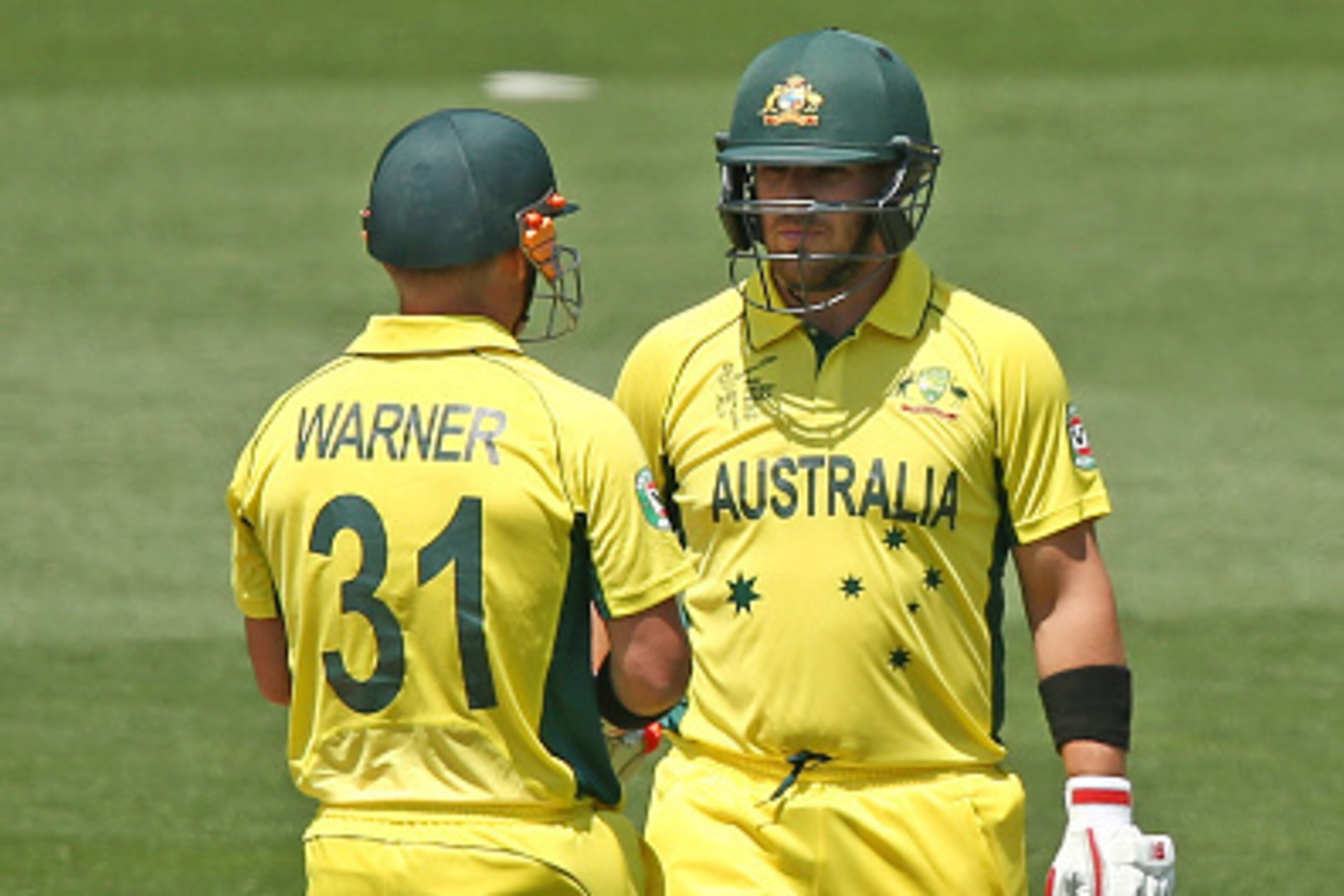
By replacing a top-order batsman with a lower-order all-rounder, Australia have suddenly placed immense responsibility on Smith, Clarke and the opening pair, Aaron Finch and David Warner—the only four specialist batsmen in the team.
As highlighted by New Zealand, and by Morne Morkel in Perth in November, Australia are susceptible to implosion if early inroads are made.
The argument against that idea is that one all-rounder has been replaced by the another—that Faulkner is in better form than Watson.
But Watson has been trending away from being a true all-rounder for some time. In Australia's last five one-day internationals, he's completed more than four overs just once. In two games at the World Cup, he's completed just three in total.
Occupying a top-order position, Watson had essentially become a specialist batsman with Marsh taking his overs.
Dropping him was the right call, yes. No one's doubting that. But the straight swap with Faulkner significantly changes the balance of the side; the presence of Faulkner, Maxwell and Marsh in the same XI behind only four specialist batsmen is bold, but it is also a genuine risk.
With that combination, Australia have power, flair and flexibility.
But at the top, they've also got very little margin for error.
.jpg?w=3840 "Pro Bowl Football")