Injuries and Depth Could Turn a Once-Great Cardinals Rotation into a Liability
The understanding is simple enough.
The St. Louis Cardinals boast enough talent to house one of the National League’s best starting rotations in 2015, as it did last season.
However, health, decline and some unproven commodities make this a fragile group with plenty of concerns floating above all five members.
TOP NEWS
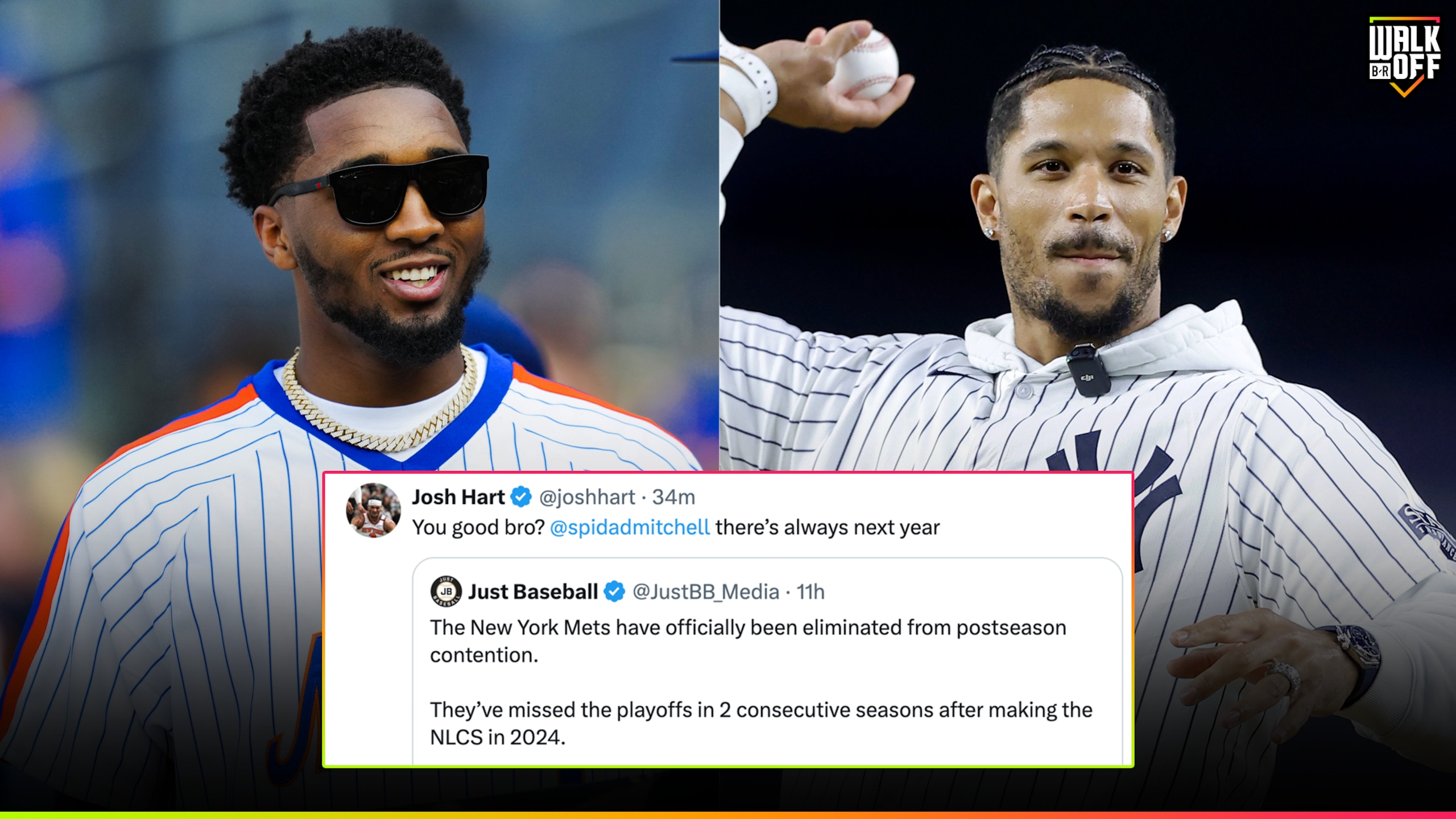
Spida Trolled Over Mets Elimination 😏

Latest Playoff Bracket Predictions 🔮
Jeter's Advice to Lombard 🧠
The rotation is filled with current, former and possibly future aces, but there are legitimate questions for all of them this season. If more than a couple are not answered the right way or with one poorly timed snag, this unit could be the Cardinals’ downfall this summer.
"@MLBNetwork @Cardinals Pitching health, no doubt. If the rotation holds, it's a great team. If it doesn't, might not make the playoffs.
— Chris Greene (@PBCBeat) February 17, 2015"
The Cardinals missing the playoffs might be hyperbole since the rest of the division does not seem up to snuff at this point, but the general idea is accurate—the team is in a heap of trouble if the pitchers cannot stay healthy.
And those concerns start with the No. 1 guy.
Adam Wainwright underwent surgery to trim some cartilage in his right elbow in October after the Cardinals were eliminated from the postseason. This came after speculation that Wainwright was injured, and after the insistence of the team that their ace was indeed fine.
For Wainwright’s part, he also said he was fine to pitch during the playoffs and that the only discomfort he felt was on the backside of his elbow, which had nothing to do with his Tommy John surgery that forced him to miss the 2011 season.
The grind of the season was blamed for Wainwright’s August struggles last season—he posted a 5.17 ERA and 1.435 WHIP—but he rebounded in September for a 5-0 record and 1.38 ERA. That, plus the 32 regular-season starts he made, assured many that Wainwright was healthy, but that tune changed during the playoffs when the right-hander went 1-2 with a 5.63 ERA in three starts (10 earned runs allowed in 16 innings). Wainwright ended the postseason on a fine personal note, though, pitching seven innings and allowing two runs in a loss to the San Francisco Giants.
The Cardinals are concerned enough that they are going to limit Wainwright’s spring training innings in hopes that it will keep him fresh later in the season. But as ESPN baseball insider Buster Olney points out in his annual rotational rankings, pitchers who suffer elbow injuries in one season are at a higher risk to be injured the following year.
Michael Wacha had an outstanding 2013 season, but a scapular stress reaction in his right shoulder limited him to 19 starts. And while he reports feeling good early in spring training, the Cardinals can’t help but be a little nervous about his durability going forward.
Lance Lynn is the cushion for a Wainwright injury. Last year, in his age-27 season, he developed into a front-line starter with a 2.74 ERA, and 3.35 FIP. He ranked in the league’s top-10 in Fangraphs WAR and 11th in FIP.
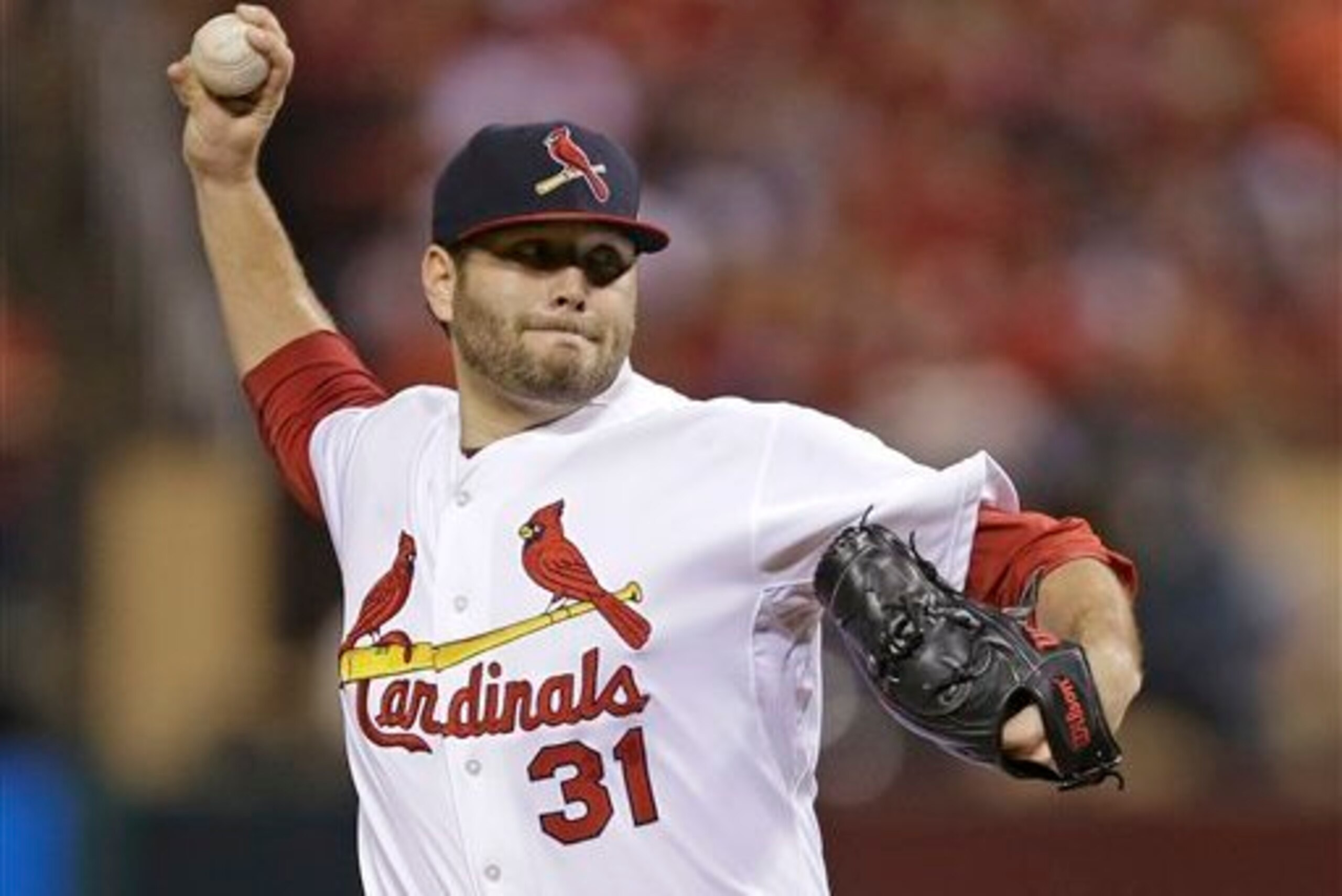
There are no health concerns for Lynn at this point, but his sudden leap into the top tier comes after he showed better control (3.18 walks per nine), a better left-on-base percentage (78.1) and an improved home run-to-fly ball rate (6.1 percent). If one of those things regresses, or if his BABIP fluctuates upward (.290 last season, a career low mark), Lynn may not be the same three-win pitcher he has been the previous two seasons.
If the others can avoid injury, John Lackey is the first one on the hot seat. He is making the league minimum, so he is expendable if he struggles. And that is a realistic possibility seeing as how he had a 4.30 ERA and 86 ERA-plus in 10 starts with St. Louis after it traded for him in July.
Aside from landing them a mostly ineffective Lackey, the trade also cost the Cardinals Allen Craig and Joe Kelly, Kelly being a 26-year-old right-hander who showed lots of upside in 2013 before scuffling last year.
The Cardinals made another trade this offseason to land right fielder Jason Heyward, but that deal also cost them a good, young pitcher in Shelby Miller. At the most, those trades shuttled out potential front-line starters. At worst, it cost the Cardinals significant rotation depth.
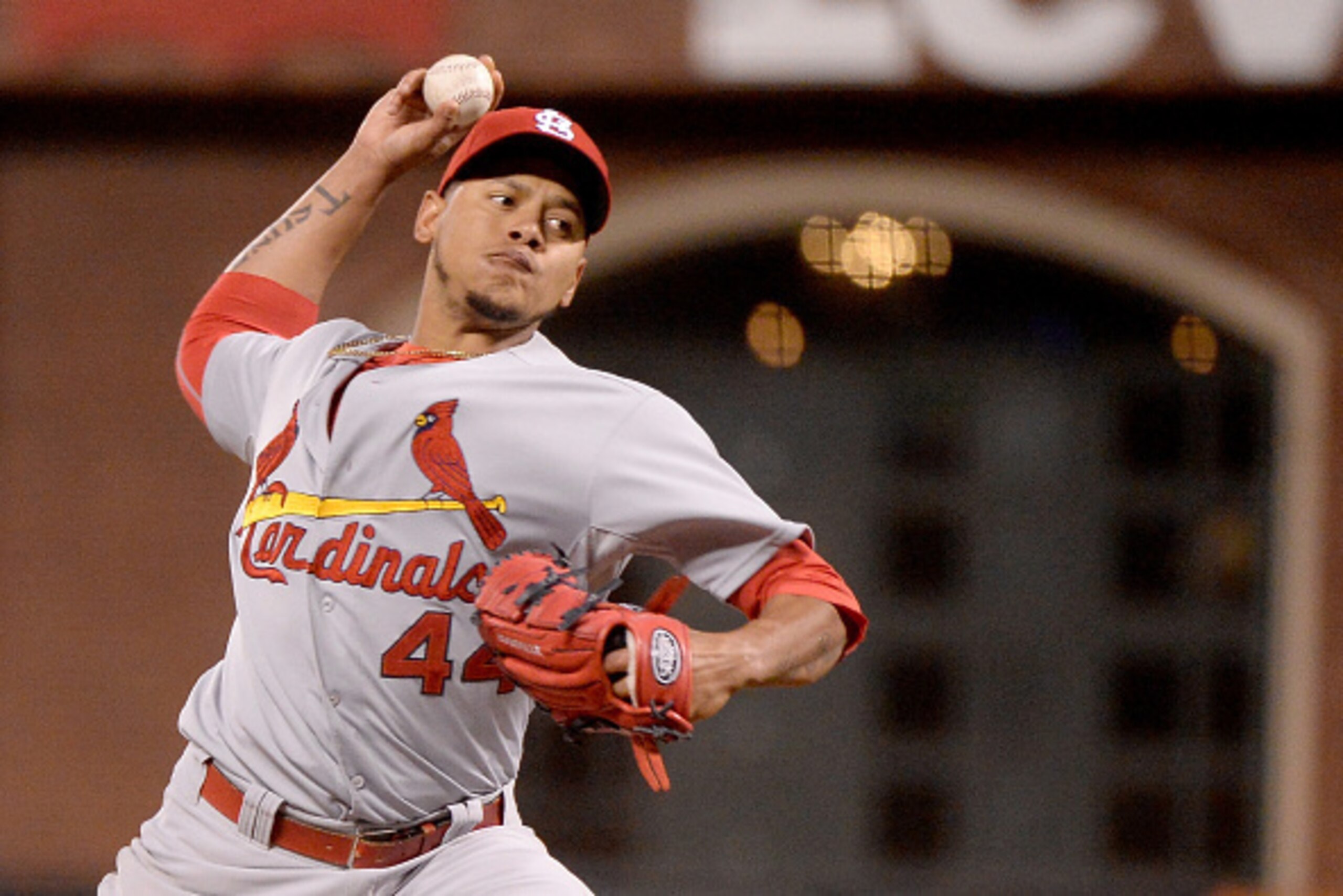
That is why the development of Carlos Martinez is so important now. The Cardinals carved out the fifth rotation spot for him with the trades of Kelly and Miller, and because of the lack of depth, the only other options aside from the 23-year-old Martinez are Jaime Garcia (big health concerns) and Marco Gonzalez (unproven with 34.2 major league innings and a 4.15 ERA).
Even if Martinez wins the job, however, his innings will be severely limited since he threw just 99.2 innings between the minors and majors last year. As a starter last year, he had a 4.45 ERA (16 earned runs over 32.1 innings) and 1.639 WHIP, but with an impressive 9.5 strikeouts per nine. So, based on innings increase—likely nothing over 140 innings—and questionable effectiveness, the Cardinals have to plan for other options besides Martinez.
At different times this offseason, the Cardinals were linked to all four big-money pitchers on the market—Max Scherzer, Jon Lester, Cole Hamels and James Shields. They elected to fill their needs with interior options despite cutting down two of them through trades.
Now the Cardinals are in a spot where everything has to break positive for them in the rotation and injuries have to be minimal for a group that has suffered them in the past. If those things don’t pan out, a depleted NL Central, with the exception of the Chicago Cubs, will be more competitive than we imagine.
All quotes, unless otherwise specified, have been acquired first-hand by Anthony Witrado. Follow Anthony on Twitter @awitrado and talk baseball here.



.jpg?w=2560 "AP: Leagues Ask for Bettor Threat Protections")
.jpg?w=2560 "Report: Darnold Could Miss 3-6 Weeks")