Mario Dominguez and 10 Short-Lived F1 Careers
What's your idea of a perfect Formula One career?
For most of us, an ideal career is one that sees a driver start at the bottom with a small team, gradually building their way up to the top, winning countless grands prix and world championships before retiring with plenty of trophies on the mantelpiece and lots of money in the bank.
With the sport producing only 32 world champions in its entire history, however, only a small fraction of drivers actually take that career path. For most competitors, F1 brings with it more tales of disappointment than stories of success.
From the luckless to the downright inept, there are plenty of drivers throughout the history of F1 who've had their careers ended prematurely.
Some of whom deserved more opportunities to impress, while others probably didn't deserve an opportunity in the first place.
On the 10th anniversary of Mario Dominguez's calamitous test with Jordan, here are 10 short-lived F1 careers.
Mario Dominguez
1 of 10
Dominguez, a race winner in Champ Car, was present at Silverstone when Jordan put their new car through its paces in February 2005.
After witnessing Narain Karthikeyan and Tiago Monteiro, the team's race drivers for that season, get to grips with the EJ15 at the British Grand Prix venue, the Mexican was offered his chance to take the car for a spin in the afternoon.
However, fog and rain hit the circuit just in time for his run, which meant the medical helicopter could not take off and Dominguez was restricted to just a single installation lap before Jordan ended their day prematurely.
Just days after his brief taste of F1, the driver told AutoRacing1.com that he had to reject Jordan's offer of a reserve driver role in '05, but had "signed a letter of intent" to race for the team, rebranded as Midland, in 2006.
The outfit never took Dominguez up on his offer, though, opting to partner Monteiro with Christijan Albers for '06.
Luiz Razia
2 of 10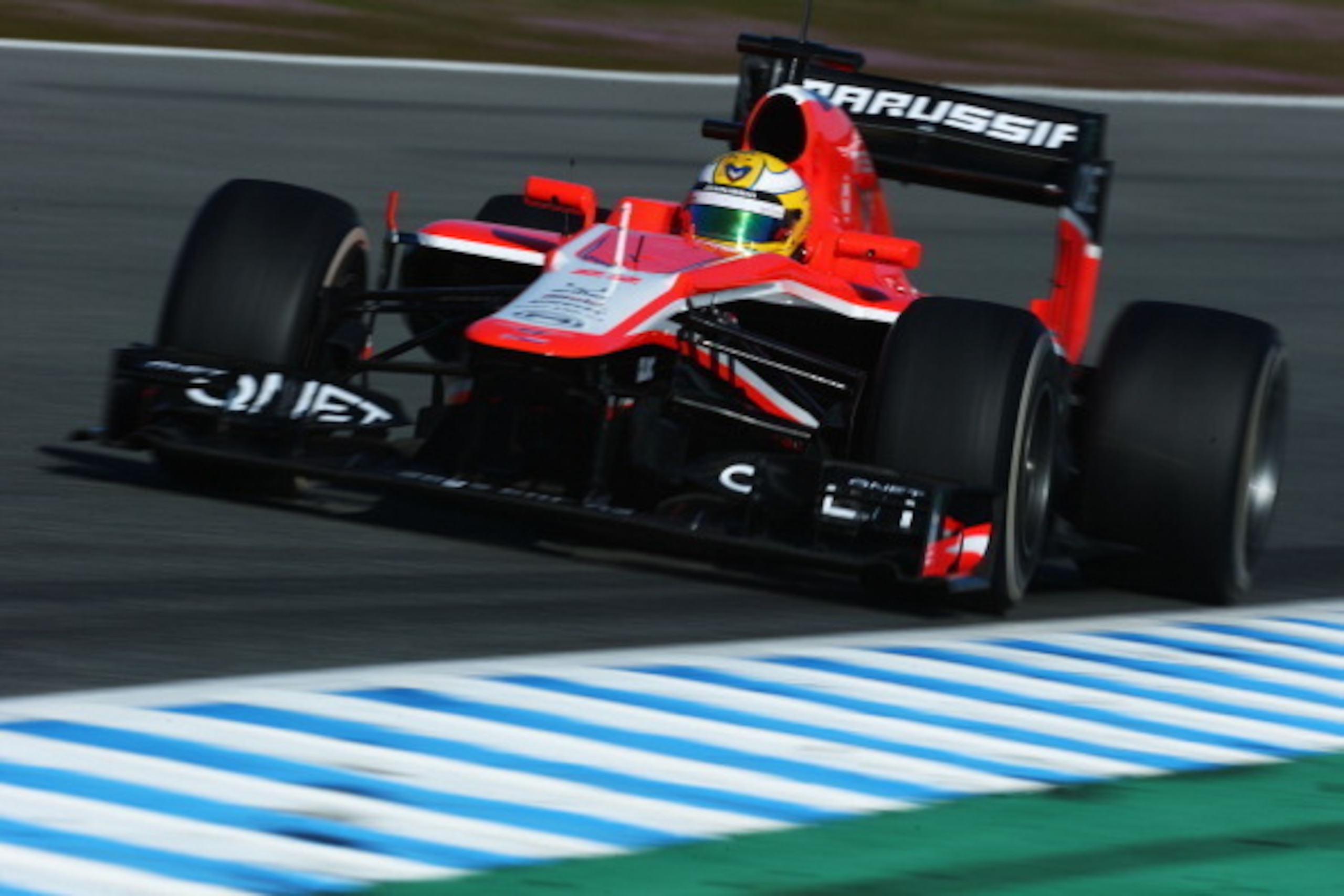
Luiz Razia was the biggest loser in the most bizarre game of musical chairs in recent memory.
The Brazilian landed a 2013 seat with Marussia after the team, threatened by mounting financial concerns, were forced to part company with Timo Glock, their star performer since 2010 campaign, in favour of a funded driver.
Despite representing Marussia in the first pre-season test at Jerez, Razia was a notable absentee at the second and third tests at Circuit de Barcelona-Catalunya, with the reasons behind his disappearance soon becoming clear.
BBC Sport's Andrew Benson reported that "sponsorship problems" had resulted in the termination of Razia's contract, with Ferrari protege Jules Bianchi offered the second seat alongside Max Chilton, a move that no doubt played a role in the team securing a Ferrari engine deal for the following season.
Left in the cold on the eve of the motor racing season, Razia found refuge in the International GT Open championship in 2013 before switching to Indy Lights last year.
Graham McRae
3 of 10The 1973 British Grand Prix is best remembered for the nine-car crash sparked by Jody Scheckter on the opening lap, but it was also the scene of Graham McRae's one and only Formula One appearance.
The penultimate starter on a 29-car grid, the New Zealander—who had replaced Henri Pescarolo in the Iso Marlboro Williams—didn't last long enough to witness the pile-up, with a throttle glitch ending his race on the opening lap.
Although his F1 career was extremely limited—Pescarolo and Gijs van Lennep shared the seat for the following four events—McRae did enjoy considerable success in the Formula 5000 series, winning the title on five occasions.
.jpg?w=2560)
.jpg?w=2560 "Panthers Buccaneers Football")
Chanoch Nissany
4 of 10Despite only starting his racing career in 2002, Chanoch Nissany found himself participating in a Formula One race weekend in mid-2005.
A rapid rise for an outstanding young talent, right? Wrong.
Nissany was actually a successful businessmen and managed to flog his way into F1 when his personal sponsor agreed a deal with Minardi, who allowed the Tel-Aviv born driver to compete in free practice at the Hungarian Grand Prix as a 42nd birthday present.
The Israeli's fastest lap in FP1 was almost 13 seconds shy of the benchmark time set by McLaren's Alexander Wurz, with Nissany ending the session in the gravel trap after losing control at Turn 4.
The reaction of team principal Paul Stoddart on the pit wall said it all, and Nissany, who also tested for Jordan in '05, was never seen in F1 again.
Markus Winkelhock
5 of 10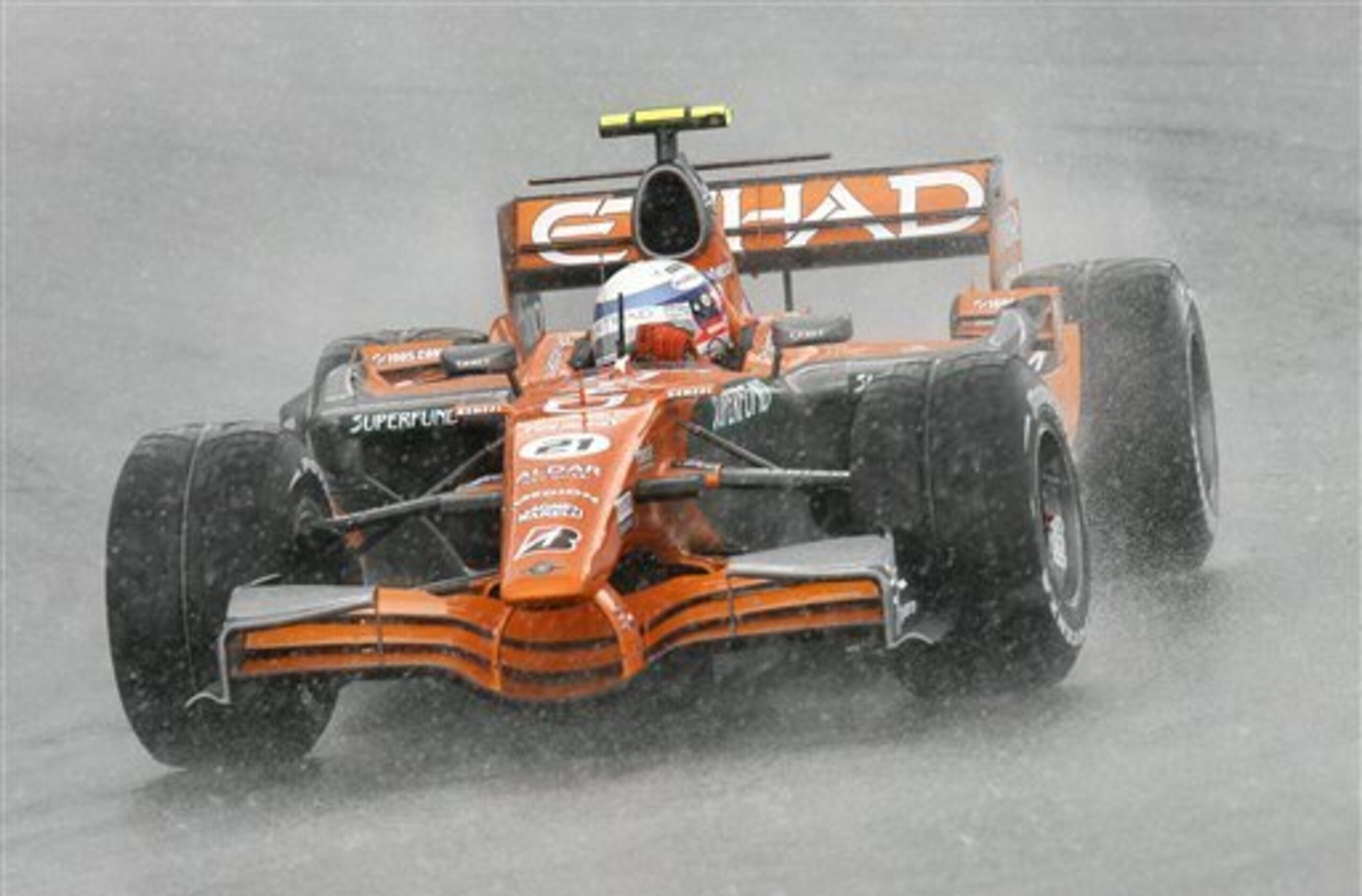
Markus Winkelhock only started a single Formula One race, but his cameo in the 2007 European Grand Prix is one of the most memorable one-off appearances in the sport's history.
An interim driver after Spyker's decision to drop Christijan Albers following the previous round at Silverstone, Winkelhock made an underwhelming start to his weekend by qualifying at the very rear of the field, but was the beneficiary of an inspired strategy call on race day.
With heavy rain threatening to arrive at the Nurburgring, Spyker instructed the German to pit for wet tyres at the end of the formation lap.
As a result, the torrential downpour caused havoc for each of the remaining 21 runners—many of whom ended up in the gravel at Turn 1—as Winkelhock walked on water, leading the race as the red flag came out.
Once the grand prix resumed on a drying track, Winkelhock—behind the wheel of the least competitive car on the grid—was a sitting duck and went backwards before retiring just 13 laps into the event.
Bob Said
6 of 10The 1959 United States Grand Prix was the scene of Bruce McLaren's first Formula One win. It was the scene of Jack Brabham's first world championship triumph.
And it was the scene of Bob Said's solitary F1 race.
The New York-born driver, as per GrandPrix.com, rented a two-year-old Connaught to participate in the final grand prix of the season at Sebring.
After starting in the decent position of 13th, his race ended after just one lap after Said threw caution to the wind in his bid to overtake the established names on the grid, spinning into retirement.
Although his F1 career ended then and there, Said went on to channel his competitive nature elsewhere, participating in bobsleigh events in the Winter Olympics of 1968 and 1978.
Marco Apicella
7 of 10
After Thierry Boutsen's departure from Jordan toward the end of 1993, the team partnered Rubens Barrichello with three different drivers for the final four races of the campaign.
Among the chosen few was Marco Apicella, a competitor in Japanese Formula 3000, who inherited Boutsen's seat for his home race at Monza.
The Italian, who had previously tested for Minardi and the ill-fated Modena outfit, qualified 23rd and, along with Barrichello, was wiped out just 800 metres into the 53-lap race following JJ Lehto's overambitious approach to the start.
Despite being offered another opportunity to impress at the next race in Portugal by team boss Eddie Jordan, as per ESPN F1's Martin Williamson, Apicella remained faithful to his commitments in Japan and ended his career after one race.
He was replaced by his compatriot Emanuele Naspetti, who also had a limited F1 career (six races), with Eddie Irvine finishing the year with Jordan.
Yuji Ide
8 of 10There have been plenty of drivers in the history of Formula One who found their way into the sport without having the required talent but, thankfully, you would have to go back to 2006 to find the last one to be truly useless behind the wheel of an F1 car.
That driver was, of course, Yuji Ide, who participated in four grands prix for the all-Japanese Super Aguri outfit.
With his seat confirmed less than a month until the season opener, Ide had precious little time to adjust to the demands of an F1 car, albeit a four-year old one—Super Aguri opted to use the 2002 Arrows chassis for the first half of the season—and so it proved.
Ide's four GP race weekends resulted in numerous off-track adventures and only one finish, in Australia, where he finished three laps behind race winner Fernando Alonso.
The final straw, though, came at the next round at Imola, where the Japanese sent Christijan Albers' Midland into a roll just five corners into the race.
On the eve of the following race at the Nurburgring, it was announced that Franck Montagny would replace Ide, who had seen his super licence revoked by the FIA, bringing an end to one of the more eventful short-lived F1 careers.
Stephane Sarrazin
9 of 10Stephane Sarrazin is best known for his exploits at the Le Mans 24 Hours, setting three consecutive pole positions for Peugeot between 2007 and '09.
The Frenchman is one of the most diverse competitors in modern-day motorsport, combining a stint in rallying with a circuit racing career which includes a single Formula One start.
That came in the 1999 Brazilian Grand Prix, which saw Sarrazin stand in for Luca Badoer, who had injured his wrist in a testing accident, at Minardi.
He performed admirably in qualifying, outperforming regular driver Marc Gene as well as the Arrows pairing of Pedro de la Rosa and Toranosuke Takagi to start 18th.
Despite a strong opening to the race, Sarrazin crashed out of the grand prix on Lap 31 while running in 11th place.
Somewhat surprisingly, given the nature of his Interlagos performance, he was never handed a second opportunity to race in F1 despite holding test driver roles at Prost and Toyota.
Andre Lotterer
10 of 10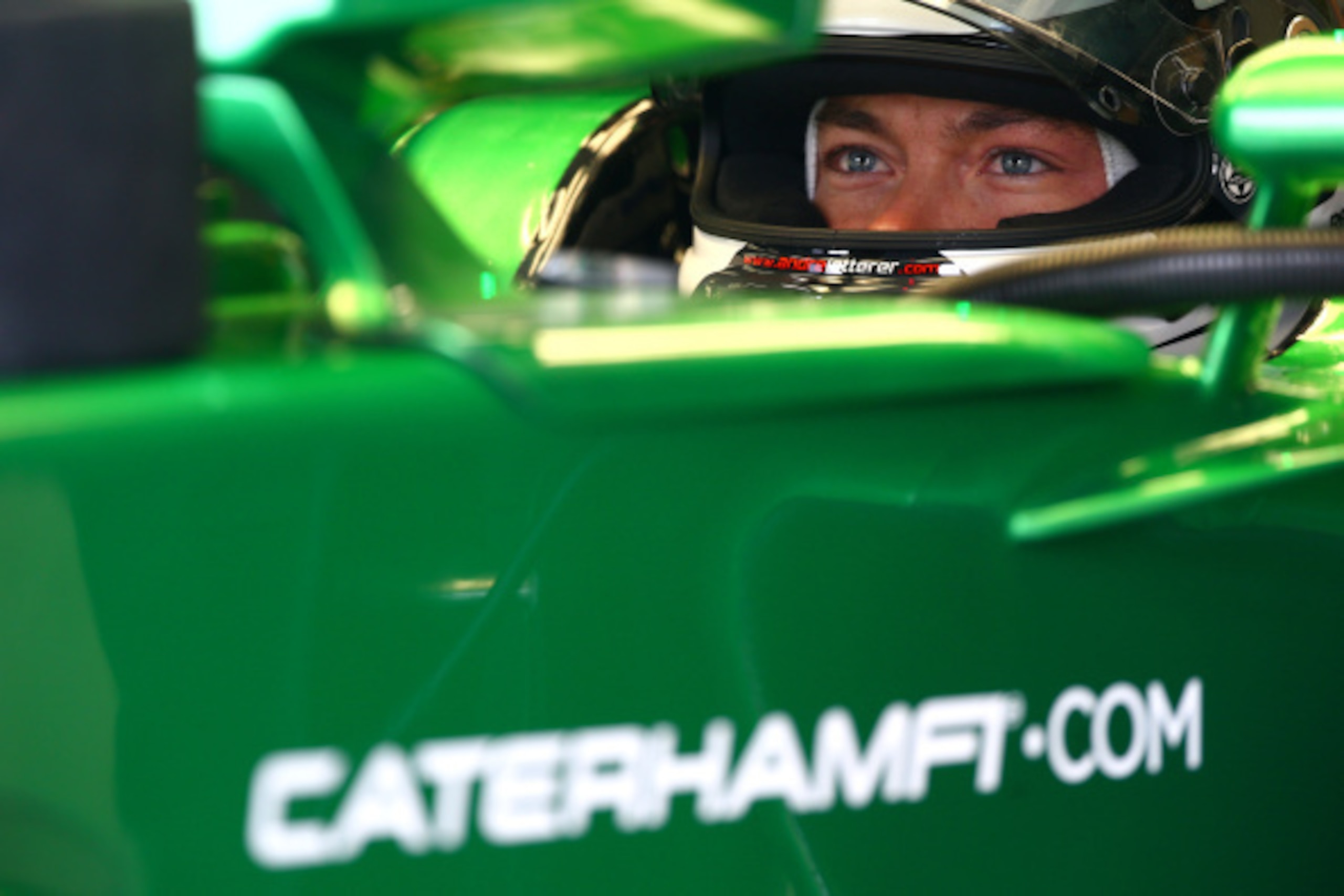
Is it too soon to regard Andre Lotterer's Formula One career as short-lived? Potentially, but his appearance in a Caterham in last season's Belgian Grand Prix is almost certain to remain a one-off.
The three-time Le Mans winner was drafted in as a replacement for Kamui Kobayashi just days ahead of the race at Spa-Francorchamps, one of the more difficult circuits on the calendar from a drivers' perspective, but was almost immediately on the pace.
Lotterer, despite having no previous experience behind the wheel of the Caterham, embarrassed regular driver Marcus Ericsson in a damp qualifying session, beating the Swede by a full second.
Race day didn't go as smoothly, however, with the German bringing his car to a halt at the pit entry—almost blocking the road for soon-to-be world champion Lewis Hamilton—after suffering a loss of power just 17 corners into the grand prix.
Autosport's Gary Watkins reported last November that Lotterer had turned down the chance to rejoin Caterham for the season-ending Abu Dhabi Grand Prix as well as September's Italian Grand Prix, with the Audi endurance driver admitting that he could be tempted back to F1 if offered "a better seat."
But now at the age of 33, it is highly unlikely that Lotterer will be given the chance to establish himself as a full-time F1 racer, meaning his career in the pinnacle of motorsport will remain short and bittersweet.
All statistics in this article, unless stated, have been taken from Wikipedia, ESPN F1 the official Formula One website.
.jpg?w=2560 "Rams Seahawks Football")
.png?w=2560 "Bills Football")

.jpg?w=2560 "B/R Community's NBA GOATs 🐐")