Analyzing Sting's Evolution and Continued Popularity Through Storied Career
The history of professional wrestling is filled with talents who connect with fans on a very real level while delivering some of the sport's most memorable performances, and there are few who have done that better than Steve Borden, better known to the world as Sting.
This is a guy who never intended on becoming a wrestler. He was a bodybuilder by trade and co-owned a Gold's Gym in California when his true destiny came calling.
Over the years, Sting's skills evolved, and he became one of the most popular performers in the business. Even people who preferred WWE over WCW liked watching the Stinger in action.
TOP NEWS
Saturday Night's Main Event Predictions 🔮
WWE Has Already Ruined Reigns vs. Rollins 🤦
.jpg?w=3840 "Rams 49ers Football")
Brady Wants WWE Match 👀
In order to really analyze someone's career and what it is that makes them so popular, we have to start at the beginning.
Regional Promotions
Sting got his start in All-California Championship Wrestling before moving to the Continental Wrestling Association alongside another up-and-coming wrestler named Jim Hellwig, someone you may know as the Ultimate Warrior.
The two formed a tag team and were part of a stable called Power Team USA. They were your typical babyfaces with muscles, but when the crowd failed to respond, they turned heel and made a name for themselves by breaking the leg of Phil Hickerson, a man too few wrestling fans have heard of.
As is the case with most wrestlers, they tried their luck in a few different promotions before finding one that worked for them. When they ended up in Bill Watts' Universal Wrestling Federation, they knew they had found a home.
At least, that's what Sting thought. After a short time teaming with Missy Hyatt and Eddie Gilbert as part of a heel stable, Hellwig left the promotion, leaving Sting to look for a new partner.
He found relative success as a tag team wrestler, winning a few titles with Gilbert and Rick Steiner, but it seemed like he was meant for bigger and better things.
Sting turned face after Gilbert attacked him following a match with Terry Taylor. From that point on, it seemed like Sting was destined to do great things in the wrestling business.
Jim Crockett/NWA/WCW
After Jim Crockett bought up the rights to UWF and brought some of the talent to his televised programs, Sting began to gain more and more fans.
His enviable physique and unique face paint helped him stand out from the endless supply of cookie-cutter wrestlers with mullets and simple trunks.
While travelling through the various territories of the National Wrestling Alliance, Sting faced some of the biggest names of the time.
He was in and out of feuds with the World and Television champions of the time and even had a program that saw him team with Dusty Rhodes to challenge the Road Warriors for the tag titles.
As he continued to rise through the ranks, his popularity only grew to greater heights. Kids, men and women all found something to love about Sting, but his greatest feat was still to come.
Over the course of the next few years, Sting gained a lot of notoriety. He did a stint in Japan, briefly became a member of the Four Horsemen and even won a few titles, but the World title held by Flair kept eluding him.
After WCW broke away from NWA and became a promotion in its own right, Sting was placed at the forefront of advertising and marketing as the face of the company.
His colorful gimmick made him a recognizable face around the world, but it was his growing skill inside the ring that kept the fans in his corner.
All his hard work paid off in 1990, when Sting battled Ric Flair in what is now considered to be one of the best NWA title matches of all time. He finally defeated Flair to win his first World title in that bout, but it would not be his last.
Numerous matches against the likes of Flair and the Great Muta served as further proof that Sting had progressed from being a powerhouse into someone with real wrestling chops.
Everything changed when Sting defeated Lex Luger to win his first WCW Championship in 1992. From that point on, he was looked at as being on the same level as the biggest names in wrestling.
Throughout the next few years, Sting was the face of the company. He was the perfect answer to the marketing machine known as Hulk Hogan over in WWF because he had many of the same qualities possessed by Hogan but less of an ego.
The early to mid '90s saw Sting evolve into a real showman. His skills in the ring continued to improve, his promos were on par with the best, and his popularity kept growing like a weed that just won't die.
Anyone who grew up in that era, wrestling fan or not, knew who Sting was. The iconic face paint helped, but it was his overall presence and charisma that separated him from everyone else.
Of course, good things can only last so long. Once Eric Bischoff began running WCW and changed the direction of the company's programing, Sting knew it was time for a change of his own.
On October 21, 1996, Sting returned to WCW after a short absence with a whole new look and a much different persona.
Instead of the energetic surfer everyone had all come to know and love, we got a man clad in black with paint that made him look like The Crow, a popular character from comic books that had made the transition to film a couple of years earlier.
Sting proceeded to destroy a man who had been impersonating him for the nWo, attracting the attention of the group in the process. They made him an offer to join, which he declined.
The next year saw Sting mostly sit in the rafters, never speaking a word or wrestling a match. It was something we had never seen before. Why WCW would take one of their most popular talents and purposely keep him out of action was a mystery at the time, but the payoff was worth it.
After a controversial decision in a match with Hogan, which saw two referees declare both men the winner of the WCW Championship, the belt was vacated. Sting spoke his first words in over a year, telling J.J. Dillon that he "had no guts" and declared that Hogan was "a dead man."
In the years leading up to WCW closing its doors, Sting was one of the only people to never waiver from his babyface roots. Few wrestlers have been able to maintain popularity over that length of time without turning heel at least once, and Sting was one of them.
He was part of some of the biggest storylines in WCW history, led an offshoot of the nWo and won over a dozen different titles and numerous big tournaments. Saying he had a storied career would be an understatement.
Sting was a huge part of WCW from the moment it split from the NWA to the day it ceased. It seemed poetic that Nitro's final show ended with the same main event as its debut episode, Sting versus Ric Flair.
After Vince McMahon bought the rights to WCW, Sting looked like he might finally wrestle his first match in a WWE ring. Unfortunately for his legions of fans, it was not meant to be.
Instead, Sting opted to take some time off from wrestling to be with his family. When he finally decided to lace up his boots again, he shocked a lot of people by joining an upstart promotion instead of the company everyone expected him to.
TNA
Sting spent time touring Europe in 2002 with World Wrestling All-Stars. He defeated Lex Luger for the WWA Championship and had a few successful title defenses before dropping it to then-NWA champion Jeff Jarrett.
Jarrett unified the two titles and brought them into his new promotion, Total Nonstop Action Wrestling. Sting joined the company in 2003, giving it a huge boost in exposure and bringing new eyes to the product.
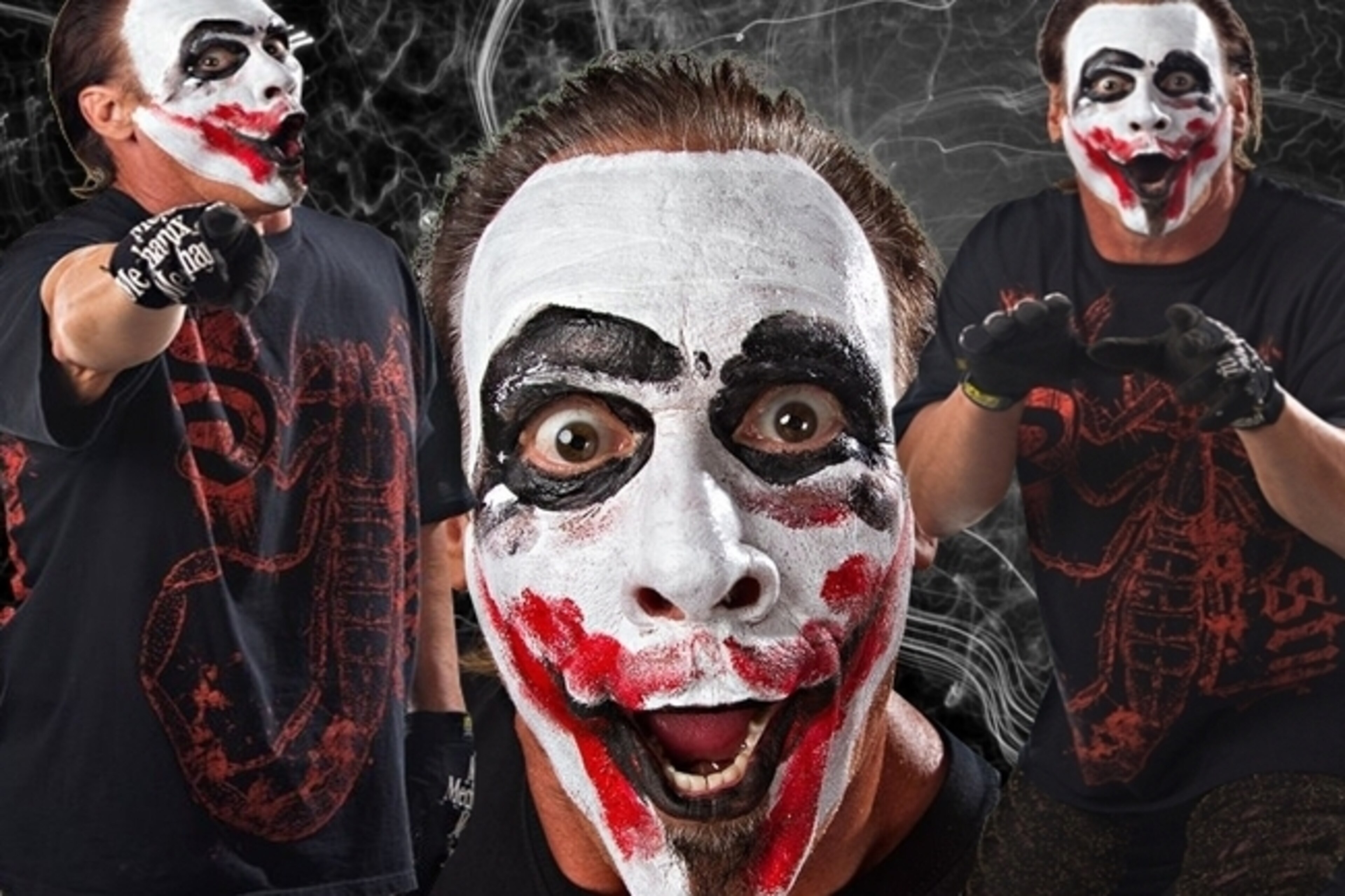
For almost 10 years, Sting helped the young talents of TNA get over while continuing to evolve his character beyond the white-and-black warrior to which we had all become accustomed.
When The Dark Knight was released in 2008, all anyone could talk about was Heath Ledger's performance as The Joker. Sting saw this as an opportunity to advance his persona further by incorporating some of the more maniacal aspects of the character.
His face paint began to look more haphazard, and he became more unhinged. It was the first real change he had made to his gimmick in years and something fans welcomed with open arms.
Despite a few runs as a heel and some disappointing moments, Sting had a decent career in TNA. He might not have had as many people watching him do what he loves, but those people all appreciated the passion he had for the business.
WWE
After roughly three decades in the business, dozens of championships and countless memorable matches, Sting finally appeared in a WWE ring on November 23, 2014.
Seeing Sting plant someone with a Scorpion Death Drop in the middle of a WWE ring was one of those special moments fans never thought they would live to see.
It's like James Bond kissing Moneypenny or the Cubs winning the World Series. You don't think you'll get to see it in your lifetime, but it's one of those things that always seemed possible.
The Icon popped back up again on an episode of Raw to help John Cena defeat the Authority with a well-timed distraction that put him firmly in the crosshairs of Triple H.
Trips and Sting are set to go face-to-face for the first time since Survivor Series at the inaugural Fast Lane pay-per-view. Hopefully, this will lead to Sting's first real WWE match at WrestleMania 31.
What Makes Sting so Popular?
Pinpointing what it is that defines a Superstar's popularity can often be difficult. In the case of a guy such as Daniel Bryan, it's his skill and passion for the business that attracts a large following.
In the case of a guy such as Hulk Hogan, it's his larger-than-life personality that sets him apart from the rest. It's not the same for everyone, but there's always a reason the crowd rallies behind someone.
With Sting, it's several different things that make him a legend in the eyes of the viewer. When you combine his unique look with his over-the-top charisma and his ability to wrestle a great match with just about anyone, you have the formula for a legend who will go down in history as one of the best.
His willingness to change with the times has given him the kind of longevity most in the business strive for but never attain. When it comes down to it, there are few downsides to The Stinger.
It doesn't matter if he's 25 or 55. When Sting steps into the ring with an opponent, you know you're going to see something special, and that is why so many people paint their face and scream his name at the top of their lungs.
If Sting does indeed wrestle a match at WrestleMania 31, it will be a night to remember.
Feel free to take a moment and share your favorite memory of Sting in the comments section below, or just tell us what it is that you think makes him such a unique and special talent.
Thanks for reading, and follow me on Twitter @BR_Doctor.