

Re-Signing Randall Cobb Highlights Top Offseason Priorities for Packers
Young. Productive. Home grown.
Randall Cobb fits all the criteria of a player the Green Bay Packers simply don't let get away. But after betting on himself in 2014 and hitting jackpot, the 24-year-old receiver won't be easy to retain—even as Green Bay's top priority this offseason.
General manager Ted Thompson will face no task more important than re-signing Cobb to a deal that will keep him with the Packers long term.
TOP NEWS

New NFL Power Rankings 📊
The Robinsons POUND the Rock 🪨
Takeaways from Falcons' dominant MNF win
Thompson's second-round pick in 2011 certainly made the process more difficult on the Packers over the last 12 months. Cobb entered the last year of his rookie contract with much to gain and just as much to lose, but the gamble paid off. He caught 91 passes for nearly 1,300 yards and 12 touchdowns during the regular season, and then added 15 more catches for 178 yards and a score over two postseason games.
He finished fifth in the NFL in total catches in 2014, including the playoffs:
| 1. | Antonio Brown | PIT | 138 |
| 2. | Julian Edelman | NE | 118 |
| 3. | Demaryius Thomas | DEN | 116 |
| 4. | Emmanuel Sanders | DEN | 108 |
| 5. | Randall Cobb | GB | 106 |
| 6. | Jordy Nelson | GB | 105 |
A healthy Cobb proved to be one of the game's most efficient receivers, especially from the slot.
According to Pro Football Focus, he led the NFL in passer rating when targeted at 134.3, while also finishing first in yards per route run from the slot (2.13; next highest: 1.87). No other receiver ended up in the top five in both categories.
He also moved the sticks and created explosive plays.
Of his 91 catches, 71 were good for first downs or touchdowns. Only Julio Jones and Demaryius Thomas had more receptions of 20 or more yards than Cobb's 24, and his 556 yards after the catch ranked seventh overall.
Yet his value to the Packers offense can hardly be stated in numbers. Not only is Cobb a menacing terror from the slot, but he is also Aaron Rodgers' go-to receiver when a play breaks down and a versatile chess piece for play-caller Mike McCarthy. His abilities even extend to special teams, where he has three career return touchdowns.
Best yet, Cobb won't turn 25 years old until late August—despite his NFL career already spanning four seasons.
A sizable paycheck is needed to secure Cobb long term, but it would be completely out of character for Thompson and the Packers to let a player of his caliber test the market and leave the franchise. Green Bay has until March to get an extension done and keep its star receiver out of unrestricted free agency.
No offseason undertaking is a bigger priority for the Packers than re-signing Cobb. Below are the four other most important goals for Green Bay this offseason:
1. Re-Sign OT Bryan Bulaga
Cobb isn't the only big name the Packers must work to get back this offseason. Bulaga, one of the game's finest right tackles when healthy, is also scheduled to be an unrestricted free agent.
The 2010 first-round pick bounced back from season-ending injuries in 2012 (hip) and 2013 (knee) to play in 17 of 18 games in 2014. He anchored the right side of the Packers offensive line, which—as a group—eventually jelled into one of the NFL's most effective units. Over the final 10 games of the season, including the postseason, Bulaga allowed just one sack.
According to Pro Football Focus, Bulaga finished fourth among right tackles in final grade.
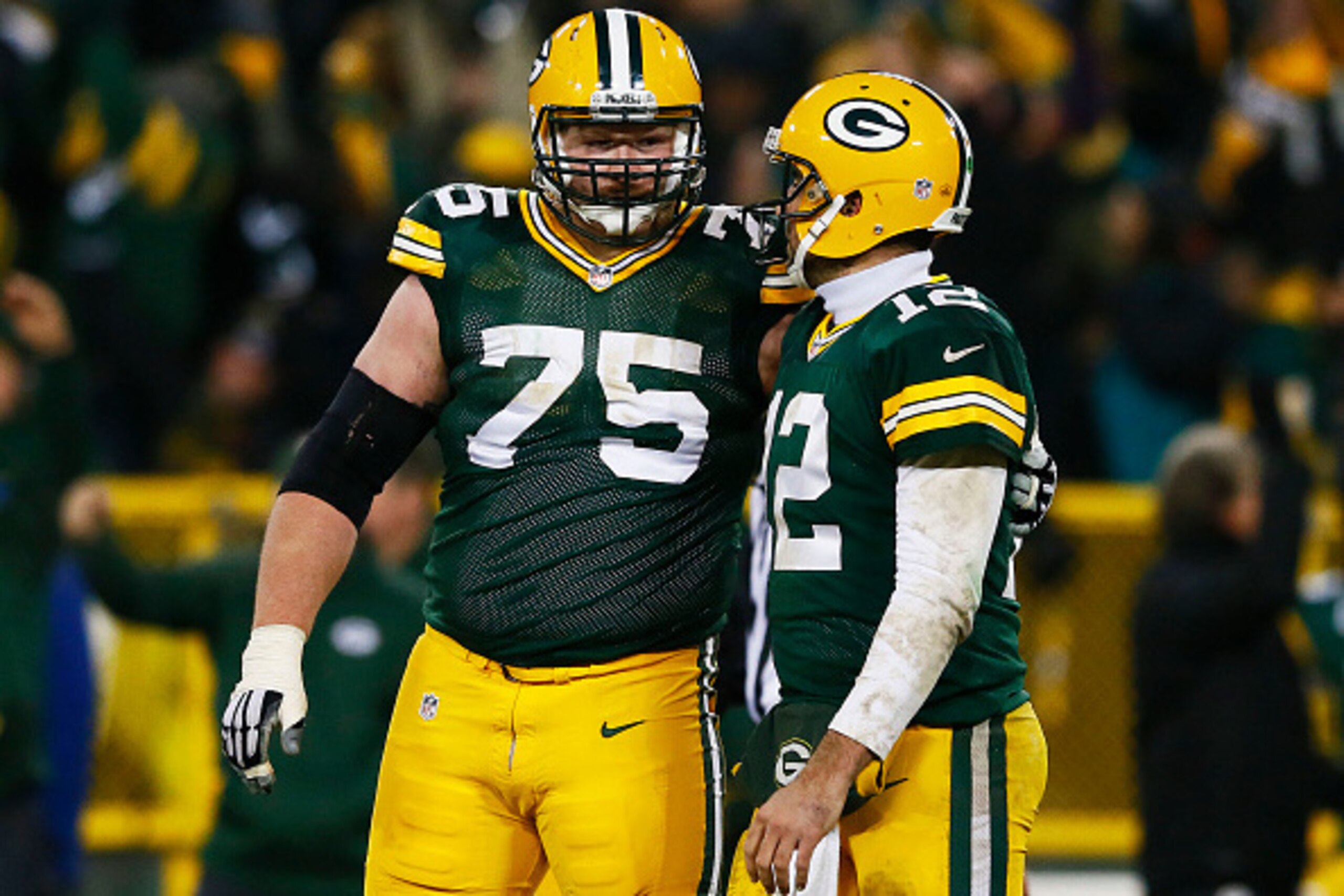
Two questions will determine if Bulaga is back. First, how much money do the Packers want to invest in the offensive line? Both Josh Sitton and T.J. Lang recently signed long-term extensions, and left tackle David Bakhtiari might eventually require a hefty commitment. And second, can Bulaga find left tackle money on the open market? If he senses a team or two would be willing to pay a premium for him to play on the left side, it might not make sense to return to Green Bay on a top-level right tackle salary.
The Packers have JC Tretter as a potential replacement option, and one-time right tackle starter Don Barclay is a restricted free agent. But the drop-off from Bulaga to either option would still be considerable, and there's no questioning the value in keeping continuity up front on the offensive line.
Money will ultimately make the decision, but keeping Bulaga is still high on Green Bay's priority list.
2. Find an Inside Linebacker
Stuck with the NFL's worst run defense through eight games, the Packers made the risky decision at the bye to move Clay Matthews—the team's best edge defender—to inside linebacker. The wrinkle worked out, as Green Bay held up better against the run over the final eight games without sacrificing much in terms of a pass rush.
The Packers must now find a natural solution at inside linebacker so Matthews can slide back to his original position.
Sam Barrington should get a shot at one of the starting spots. He played well down the stretch, adding a physical, downhill presence inside. But it seems likely the other starter will come via the draft or free agency, especially given the $7.25 million the Packers can save by releasing veterans A.J. Hawk and Brad Jones this offseason.
No position on Green Bay's roster is weaker than inside linebacker. Thompson has all but skipped over the position in recent years, providing varied (but mostly poor) results. Like safety last spring, the Packers might need to use a high draft pick on finding their Ha Ha Clinton-Dix of the inside linebacker position.
3. Determine the Future of Julius Peppers
Thompson and the Packers take a yearly barrage of criticism for their approach to free agency, but the results speak for themselves. Green Bay is willing to take calculated risks when the right conditions are present. The terms were right last spring, when Thompson pounced on the opportunity to add Julius Peppers.
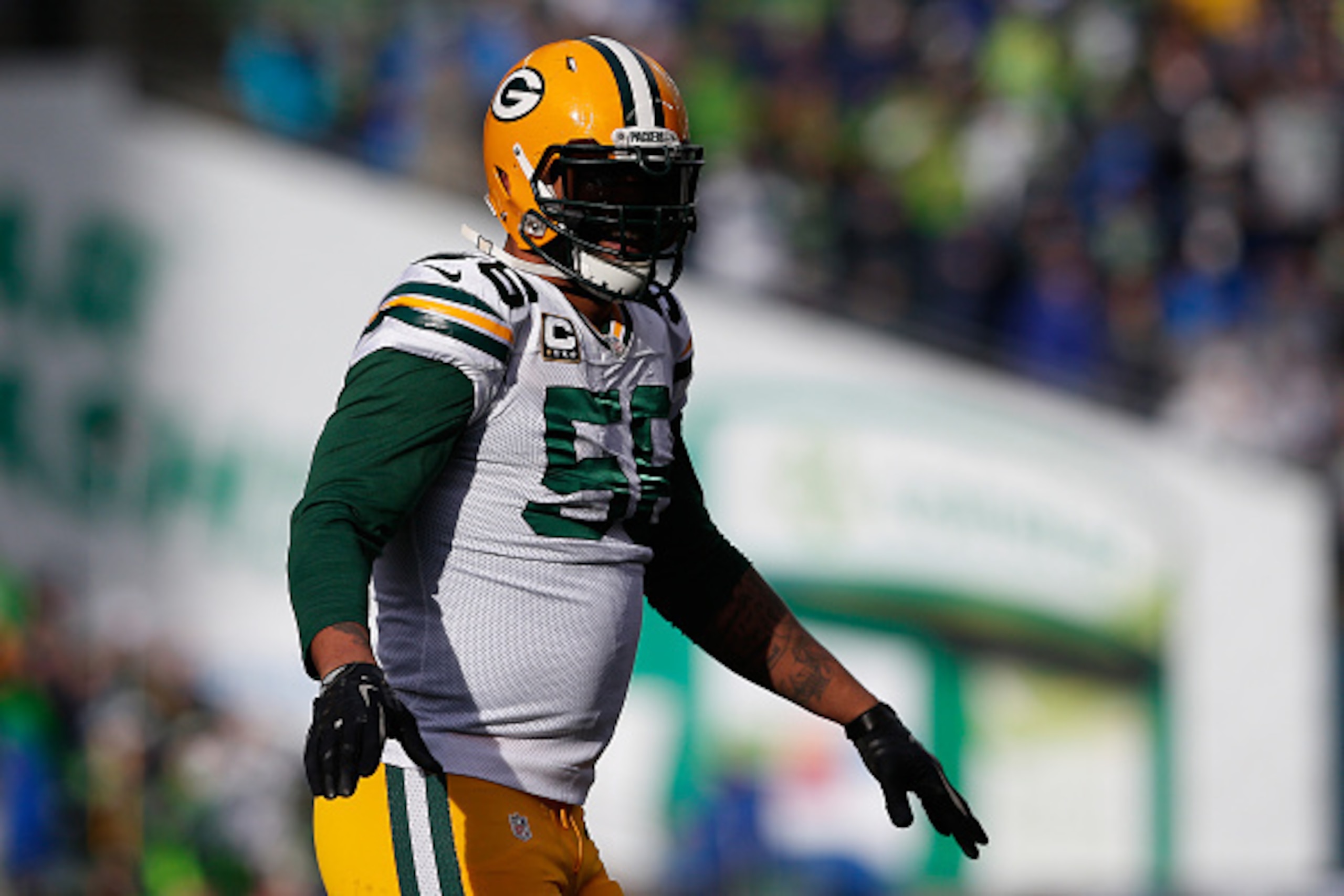
Now, the Packers must decide if Peppers will be back for another round.
| Regular Season | 7.0 | 4 | 3 | 2 | 11 |
| Postseason | 2.5 | 2 | 0 | 0 | 0 |
| TOTALS | 9.5 | 6 | 3 | 2 | 11 |
His first season was nothing short of a huge success. Peppers registered seven sacks, four forced fumbles and two interceptions for touchdowns over 16 healthy regular-season games, and his 2.5 sacks led all players in the postseason. He was a difference-maker for a team long craving one opposite Matthews.
Thompson now has to look into his crystal ball and determine if Peppers can provide another excellent season at age 35. The Packers will take on a significant $12 million cap hit if Peppers stays around for 2015. It would cost $5 million in dead money but create $7 million in savings if Peppers is released.
There's no easy answer. Peppers is a unique athlete, and it appeared he still had plenty left in the tank—especially late in the season, when the Packers put him on a snap count. The hunger for a Super Bowl remains for the future Hall of Famer.
Then again, the Packers have typically been shrewd about cutting ties with veterans a year early over a year late. The best-case scenario might be for the two sides—each needing the other—to come together and restructure the final two years of his deal, keeping Peppers in Green Bay at a more manageable cap number in 2015.
4. Make a Critical Decision at Cornerback
Tramon Williams, a starter at cornerback for the better part of the last seven years, will be a free agent. Davon House, a fourth-round pick oozing with potential but saddled with injury concerns, will be a free agent.
Can the Packers keep both? Probably not.

Williams, 32, made over $8 million a year on his last deal, and he played well enough over the last two seasons for a team on the open market to give him one final multiyear deal. If the Packers don't pay up, someone will.
House, 25, has the kind of length, athleticism and pressing ability teams covet at the position. But he has also played in all 16 games just once over his four-year career, providing significant risk in paying House to be a full-time starter.
A safe option probably doesn't exist. Williams will cost more and might soon hit the wall. House might command a longer deal and comes with availability concerns.
Losing Williams would be a shock to the system—he's played in all but one game for Green Bay since 2010—but the Packers typically lean toward the younger player. And it's simply not reasonable to think both will be back. A two- or three-year deal for House while Williams walks seems like the most likely outcome.
Zach Kruse covers the NFC North for Bleacher Report.

.jpg?w=2560 "Rams Eagles Football")
.jpg?w=2560 "Grading WWE Raw 🔠")


.jpg?w=2560 "Injury-stricken Seahawks signing veteran RB")
