Jimmy Butler's Improvement Is on a Historic Scale for Chicago Bulls
Jimmy Butler is not only making a case for the Most Improved Player Award; his breakout season is in the running for best MIP year ever. For that to happen, of course, he'll need to stop his current free fall.
The Chicago Bulls' sudden star was expected to have a breakout last year, but injuries slowed him down and tempered expectations. This year, he's more than making up for things.
How Does Butler's Improvement Stack Up?
To put his improvement in perspective, Butler is only 20 points away from establishing his new career-high total for a season, and we're still in January. He's showing increases of 7.4 points, 1.1 rebounds, 0.7 assists and 0.2 blocks above last season. His true shooting percentage is up 6 percentage points, from 52.2 to 58.2.
So how does that stack up against the MIP winners throughout history? Using Basketball-Reference.com and keeping player efficiency rating (PER) as a standard, I compared Butler's increase from the previous season to the increases of the winners:
| Player | Season | Prior Season | Award Season | Increase | Increase Minutes |
| Jimmy Butler | 2014-15 | 13.5 | 21.3 | 7.8 | 1.4 |
| Boris Diaw | 2005-06 | 10.0 | 17.3 | 7.3 | 17.3 |
| Darrell Armstrong | 1998-99 | 15.7 | 22.2 | 6.5 | 4.2 |
| Kevin Duckworth | 1987-88 | 9.1 | 14.9 | 5.8 | 15.0 |
| Dale Ellis | 1986-87 | 13.5 | 19.0 | 5.5 | 22.4 |
| Danny Granger | 2008-09 | 16.7 | 21.8 | 5.1 | 0.2 |
| Rony Seikaly | 1989-90 | 10.8 | 15.9 | 5.1 | 7.4 |
| Kevin Johnson | 1988-89 | 15.5 | 20.5 | 5.0 | 15.2 |
| Tracy McGrady | 2000-01 | 20.0 | 24.9 | 4.9 | 8.9 |
| Dana Barros | 1994-95 | 16.0 | 20.9 | 4.9 | 9.4 |
| Scott Skiles | 1990-91 | 13.2 | 17.8 | 4.6 | 13.5 |
| Alvin Robertson | 1985-86 | 15.3 | 19.5 | 4.2 | 13.8 |
| Pervis Ellison | 1991-92 | 15.9 | 19.9 | 4.0 | 12.4 |
| Monta Ellis | 2006-07 | 11.1 | 15.0 | 3.9 | 16.2 |
| Goran Dragic | 2013-14 | 17.5 | 21.4 | 3.9 | 1.6 |
| Don MacLean | 1993-94 | 14.0 | 17.8 | 3.8 | 23.0 |
| Kevin Love | 2010-11 | 20.7 | 24.3 | 3.6 | 6.9 |
| Hedo Turkoglu | 2007-08 | 14.2 | 17.8 | 3.6 | 5.8 |
| Gheorghe Muresan | 1995-96 | 17.4 | 21.0 | 3.6 | 5.9 |
| Bobby Simmons | 2004-05 | 12.6 | 16.1 | 3.5 | 12.7 |
| Alan Henderson | 1997-98 | 15.0 | 18.4 | 3.4 | 12.3 |
| Aaron Brooks | 2009-10 | 12.9 | 16.0 | 3.1 | 10.6 |
| Mahmoud Abdul-Rauf | 1992-93 | 12.6 | 15.6 | 3.0 | 14.5 |
| Jalen Rose | 1999-2000 | 14.4 | 16.7 | 2.3 | 11.9 |
| Ryan Anderson | 2011-12 | 19.0 | 21.2 | 2.2 | 9.9 |
| Gilbert Arenas | 2002-03 | 17.0 | 18.6 | 1.6 | 10.4 |
| Jermaine O'Neal | 2001-02 | 17.5 | 18.1 | 0.6 | 5.0 |
| Paul George | 2012-13 | 16.5 | 16.8 | 0.3 | 7.9 |
| Isaac Austin | 1996-97 | 14.1 | 14.2 | 0.1 | 8.5 |
| Zach Randolph | 2003-04 | 19.9 | 19.6 | -0.3 | 21.0 |
There are a few qualifiers to this method...
First, the MIP Award only goes back to 1985-86. There may be a player with a bigger jump in PER prior to that season, but there is no simple way to determine it. However, the biggest jump in 31 years suggests that if there are any, it's just a few.
Second, there may be a player with a bigger jump in PER who just didn't win the MIP Award. But it's unlikely that some mystery player would have made such a drastic improvement and not won the award. It would be like the most valuable player ever not winning the MVP.
Finally, PER has flaws as a single-number metric (as they all do), but whatever flaws exist are negligible because the player is being compared to himself from one year to the next. Ergo, the problems are consistent and without any specific bias.
PER has an advantage in that it's adjusted for minutes. Butler's improvement is all the more remarkable when you consider he is playing the same role on the same team with the same coach with almost the same number of minutes. Most of the time, major improvement comes from changes in any or all of those aforementioned areas.
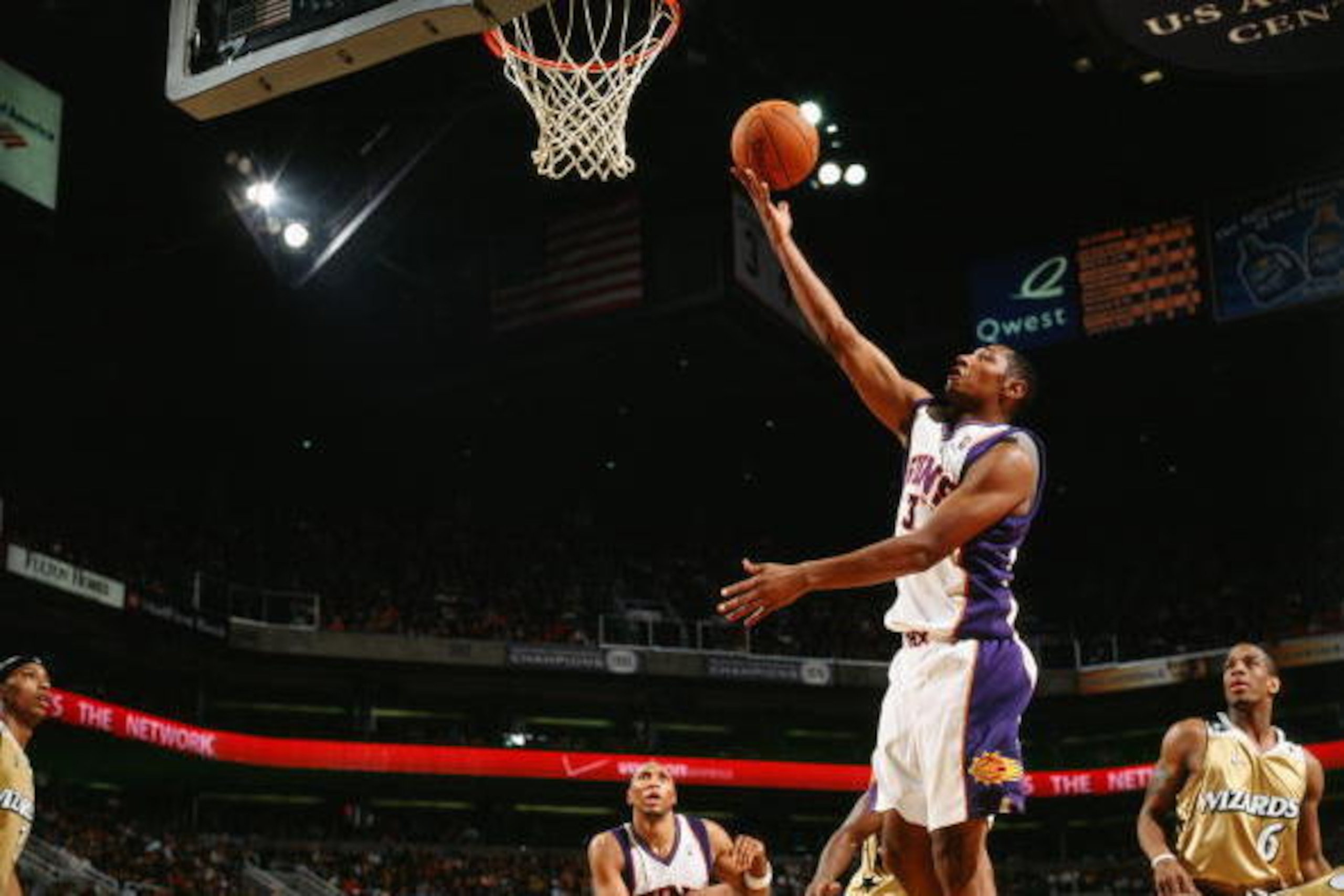
Consider, for example, the second-biggest PER increase in history from Boris Diaw, the 2005-06 winner. Prior to winning, he was playing 18.2 minutes as a shooting guard in Atlanta under Mike Woodson, the champion of iso-ball.
Then the Hawks traded him to the Phoenix Suns, where he thrived as a passing power forward who often ran Mike D'Antoni's "seven seconds or less" offense. How much of that improvement was his improving and how much of it was his talent being better utilized is hard to say, but at least a portion of that PER increase was environmental.
With Butler, he not only has a larger PER spike than any MIP winner, but that jump is purely related to his play.
Can He Maintain It?
The question now is: Can Butler maintain that improvement? There are already signs that he's coming down to earth, as indicated by his monthly splits:
| Month | FG% | 3P% | FT% | USG% | PTS/G | TRB/G | AST/G | STl/G | BLK/G |
| November | 49.8 | 30.8 | 82.6 | 22.7 | 21.9 | 5.7 | 3.1 | 1.5 | 0.4 |
| December | 46.5 | 35.4 | 82.9 | 21.9 | 21.5 | 6.5 | 3.2 | 1.6 | 1.0 |
| January | 41.0 | 37.5 | 85.7 | 20.7 | 17.3 | 5.8 | 3.7 | 2.3 | 0.6 |
However, not all of his numbers are down from his hot November start. His rebounding is about even, and his assists are up. His defensive numbers are also better. The only real decline is in his scoring. And even with that, 17.3 points per game is still quite an improvement over last season's 13.1.
The initial instinct is to think that the drop in his field-goal percentage is standard regression to the mean or fatigue. But neither of those assumptions coincides with the fact his three-point shot is actually improving as the season goes along.
If his jumper were regressing, it wouldn't just be from two-point range. And if fatigue were setting in, the longer shots would be suffering more than the shorter ones because his legs wouldn't be under his shot as much.
So what does account for the decline in efficiency and the drop in scoring numbers?
Sometimes, we try to oversimplify things and resort to singular-cause reasoning, but in this case, multiple factors are at play. Doubtless, some of Butler's January dip is due to regression. Some of it is due to defenses adjusting to him. You don't start scoring 22 points per game on 60 percent true shooting without getting on scouting reports.
Those aren't going to change much. But other temporary factors are impacting Butler's performance.
The Mike Dunleavy Effect
Mike Dunleavy Jr. has a "Kyle Korver-lite" effect on the Bulls. He shoots 41.7 percent from deep, which isn't on the level of the aforementioned King of Gravity, but it's enough to generate a certain amount of "pull."
When Dunleavy is on the court, defenses have to account for his shooting, so they cling to him. That creates more open looks for Butler. It's no coincidence that, according to NBA.com, Butler shoots 50.7 percent with Dunleavy on the court and 41.6 percent with him on the bench.
Nor is it a coincidence that Butler's shooting has dropped to 39.5 percent in the 11 games he's played since Dunleavy went down with a sprained ankle. For example, look at the following play and see how Dunleavy helps to create the open shot for Butler:
Butler sets a pick on Rodney Stuckey, who goes over the screen to stick close to Dunleavy. Joakim Noah passes the ball to Butler and sets the pick on Solomon Hill, providing Butler with an open shot. If Kirk Hinrich—the less reliable three-point shooter—is running that same play instead of Dunleavy, Stuckey probably just goes under the screen, packs the lane and prevents Butler from getting the open shot.
But because Dunleavy is such a threat from deep, even though he doesn't have the ball, Stuckey has to stick to him like glue. Butler is not getting as many open shots without Dunleavy on the court.
Per Ian Levy of Vantage Sports, prior to January, 37.1 percent of Butler's shots were "open+," meaning that no defender was within three feet with his hands raised. Since the calendar flipped, that number has dropped to 33.8 percent. Much of that has to do with the Dunleavy effect.
The Derrick Rose Effect
Another factor that has been impacting Butler is the gradual return of Derrick Rose to MVP form. While Rose tends to help Butler's shooting percentages, his presence also diminishes Butler's role. Butler's usage percentage when he's on the court with Rose is 19.7. When Butler is running the show, his usage climbs to 23.4.
According to NBA.com, Rose was on the court for 178 of Butler's 590 minutes in November (30.2 percent). In December, that number rose to 60.1 percent. To this point in January, it has climbed to 66.0 percent.
But this is where things get interesting. In November, Butler was scoring 5.1 more points per 48 minutes with Rose on the bench, but in January he's scoring 0.8 more points with Rose on the court. That's because despite this being their fourth year as teammates, they've played very little together before this season.
In fact, new Cleveland Cavaliers teammates Kevin Love and Kyrie Irving have already played 1,161 minutes together. Rose and Butler have only played 1,123. The same sort of logic that is applied to LeBron James, Irving and Love needing to "learn to play together" should also be applied to Rose and Butler.
As recent performance indicates, that is starting to happen. As Rose and Butler continue to develop chemistry with each other, expect Butler's efficiency to start climbing back up.
Other factors are more difficult to isolate. The Bulls' overall struggles for the eight-game stretch in which they lost six are hard to extrapolate from one player to the next. Butler's shooting suffered during that stretch, as he shot just 37.9 percent during the period from Jan. 7 to 19.
But on Jan. 20, the Bulls had a team meeting and apparently resolved their issues, according to Jon Greenberg of ESPN.com.
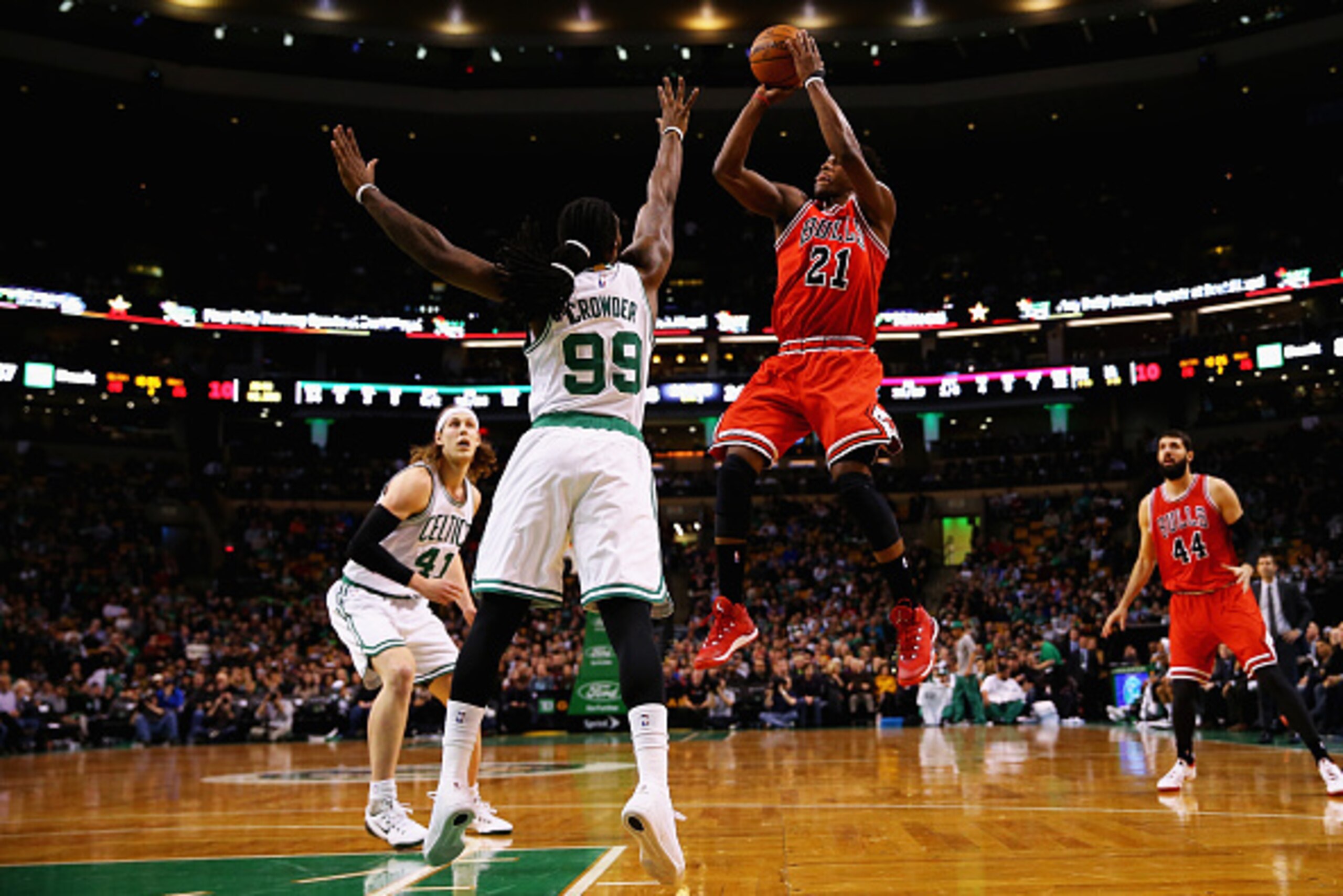
They have played two games since then—against the San Antonio Spurs on Jan. 22 and the Dallas Mavericks the following night—both wins. Butler has shown a resurgence in those contests, averaging 18.5 points on 57.3 true shooting along with 6.0 rebounds, 4.0 assists and 2.0 steals.
He can realistically sustain those numbers, as they are consistent with what he's been doing overall this season.
He may not be as brilliant as he was in November, but January is probably a low point for his season. His December numbers are close to what we can expect for the duration of the campaign, particularly once Dunleavy returns and Butler develops chemistry with Rose. That should be enough for him to stay around his present PER and make a case for the MIP of all the MIPs.
.jpg?w=2560 "Colts Giving Taylor $44M")

.jpg?w=2560 "Bucs GM Rules Out Vea Trade")