

AC Milan: Is a Sale by Silvio Berlusconi the Best Thing for the Club?
AC Milan is in trouble. Champions only four years ago, the Rossoneri have been in a continuous backslide ever since.
The culprit is simple: money. Every Italian team has felt the grip of the financial crisis that began in 2008. Indeed, Juventus is the only club from the peninsula that has really even poked its head above water at this point.
But Milan has been hit harder than most. The summer after they lost their crown to the newly risen Juventus juggernaut, they sold their two best players, Thiago Silva and Zlatan Ibrahimovic, to PSG for a combined €63 million. Further cuts have been made, taking high salaries off the books. The men brought in to replace them have been cut-rate signings and castoffs past their prime.

.jpg?w=2560)
In spite of this austerity, the team is still losing money—something owner and president Silvio Berlusconi has been openly worrying about, according to Italian paper Corriere della Sera (h/t Football Italia). It was Berlusconi's aggressive spending that brought players such as Andriy Shevchenko, Ruud Gullit and Kaka to the San Siro to make Milan one of Europe's best clubs. That spending is now gone, and the result has been a slide toward obscurity.
Rumors have been flying this week that Berlusconi will be looking for a buyer for the club. Il Secolo XIX reported Wednesday (h/t Goal.com) that Berlusconi has privately admitted that the club's value has dropped by almost €100 million. He may have no choice but to cash in before that number falls any further.
Will such a sale benefit the team? The answer is pretty clear: yes. Emphatically yes.
There is no question that the tightening of Berlusconi's purse strings has been the key cause of the club's decline. Back in September, former star defender Gianluca Zambrotta told Goal.com that the lack of transfer activity is becoming a "real problem" at the club.
In an era of telecommunications that make it ever more difficult to truly surprise opponents tactically, the quality of players becomes increasingly important. Adriano Galliani has attempted to do what Giuseppe Marotta did in Turin and turn free transfers and bargain buys into gold. The results, however, have been a far cry from the accomplishments of their rivals to the west.
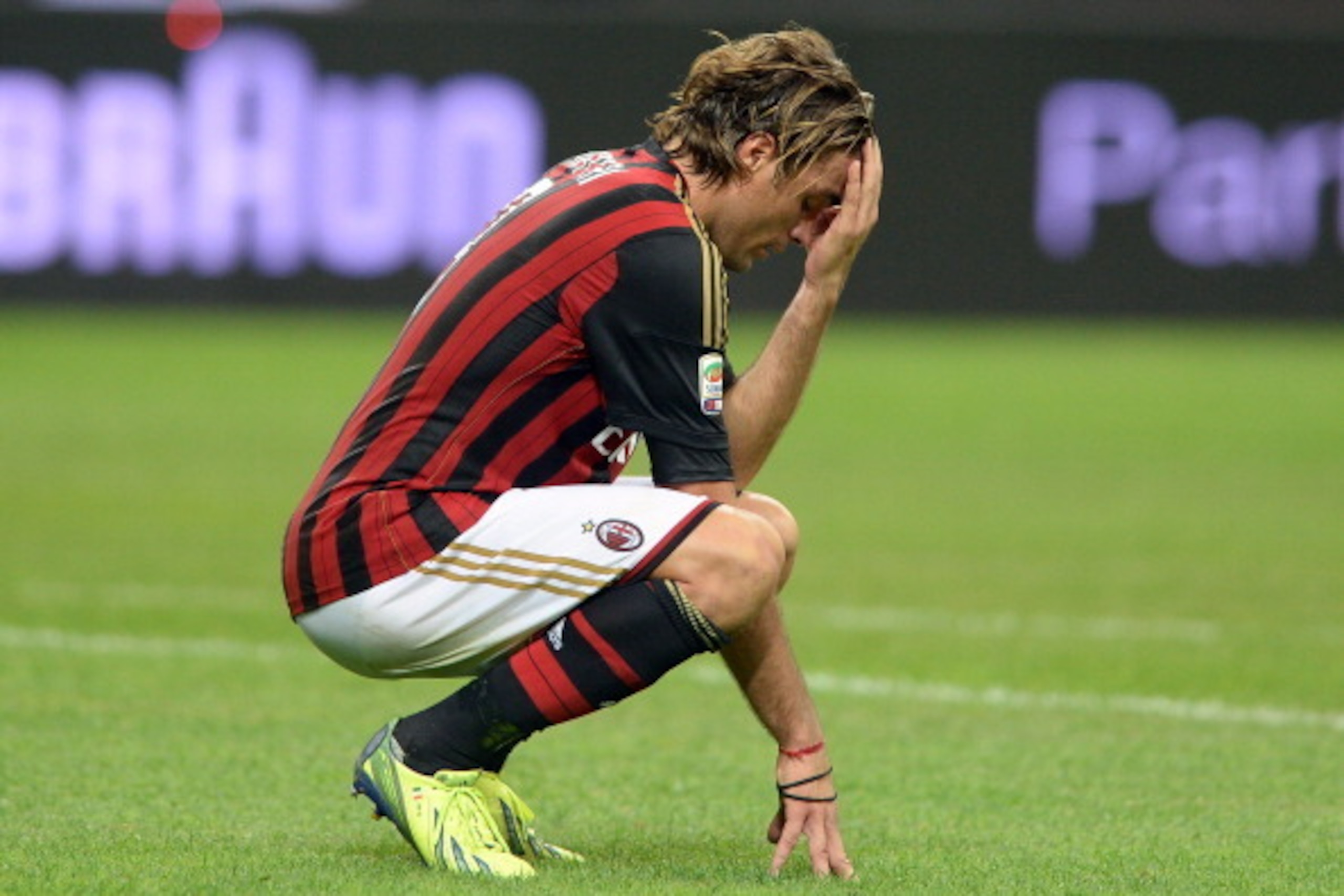
Riccardo Montolivo, a Bosman transfer, has been a Milan player for two-and-a-half seasons and the player he was advertised to be for exactly half a season. Kaka, another free acquisition, was a shell of the player who won the Ballon d'Or and FIFA World Player of the Year in Milan colors in 2007. Kevin Constant and Francesco Acerbi have been utter busts.
The protracted saga that finally saw Keisuke Honda arrive for free has seen the Japan star deliver uneven performances, and no production since October.
And let's not even start on the monumental calamities fans have seen the last two seasons when it comes to strikers. Galliani blew €12 million when he plucked Alessandro Matri from Juventus. Matri scored once in 830 minutes before being loaned out midseason. Juve, meanwhile, made a net profit on the deal when they replaced the striker with Carlos Tevez for €9 million.
This season didn't see the team blow such a hefty sum, but the Fernando Torres experiment was a complete failure. The Spaniard scored once in 10 games before being sent to Atletico Madrid in a swap for Alessio Cerci.
Moves for players such as Kaka, Matri, Torres and Michael Essien are all quick fixes—the exact opposite of what a team in Milan's financial situation needs right now. When running on a shoestring budget, a club needs to focus on youth development. That's something Milan's current powers-that-be are refusing to do.
Highly touted attacking midfielder Riccardo Saponara is a prime example of this unwillingness. According to WhoScored.com, Saponara played just seven games last season, totaling 217 minutes. He has only played one game this year, in a 2-0 loss to Palermo. He was one of the best Milan players on the field, but he didn't play again and has been farmed out to former club Empoli for the rest of the season.
The most stunning proof of the club's total lack of confidence in youth came this summer, when Bryan Cristante—one of the most promising midfield prospects in Italy—was sold outright to Benfica for a mere €6 million.
It's clear the entire power structure, from the top down, is out of touch. Galliani can't recreate the squads of the club's heyday on this kind of budget. Berlusconi recently decried losing to teams such as Atalanta and Sassuolo, whose payrolls are a fraction of his squad's.
Wages are, indeed, a key factor in winning—Stefan Szymanski and Simon Kuper convincingly argued in their book Soccernomics that it is the deciding factor. But that money has to be spent on the right players, and when your highest-paid player is Philippe Mexes, it's clear that's not being done.
A sale would give this team a breath of fresh air in all areas. It would provide a much-needed infusion of cash that could begin building the team back up. The financial effects of new owners have been felt by several Italian clubs this year.
A year after being relegated, Bologna, under new ownership led by New York attorney Joe Tacopina, is in second place in Serie B and on pace to make their stay in the second tier a short one. Closer to home, Inter's Erick Thohir has finally begun to flex his financial muscles, signing Lukas Podolski on loan and pipping Juventus for the signature of Xherdan Shaqiri.
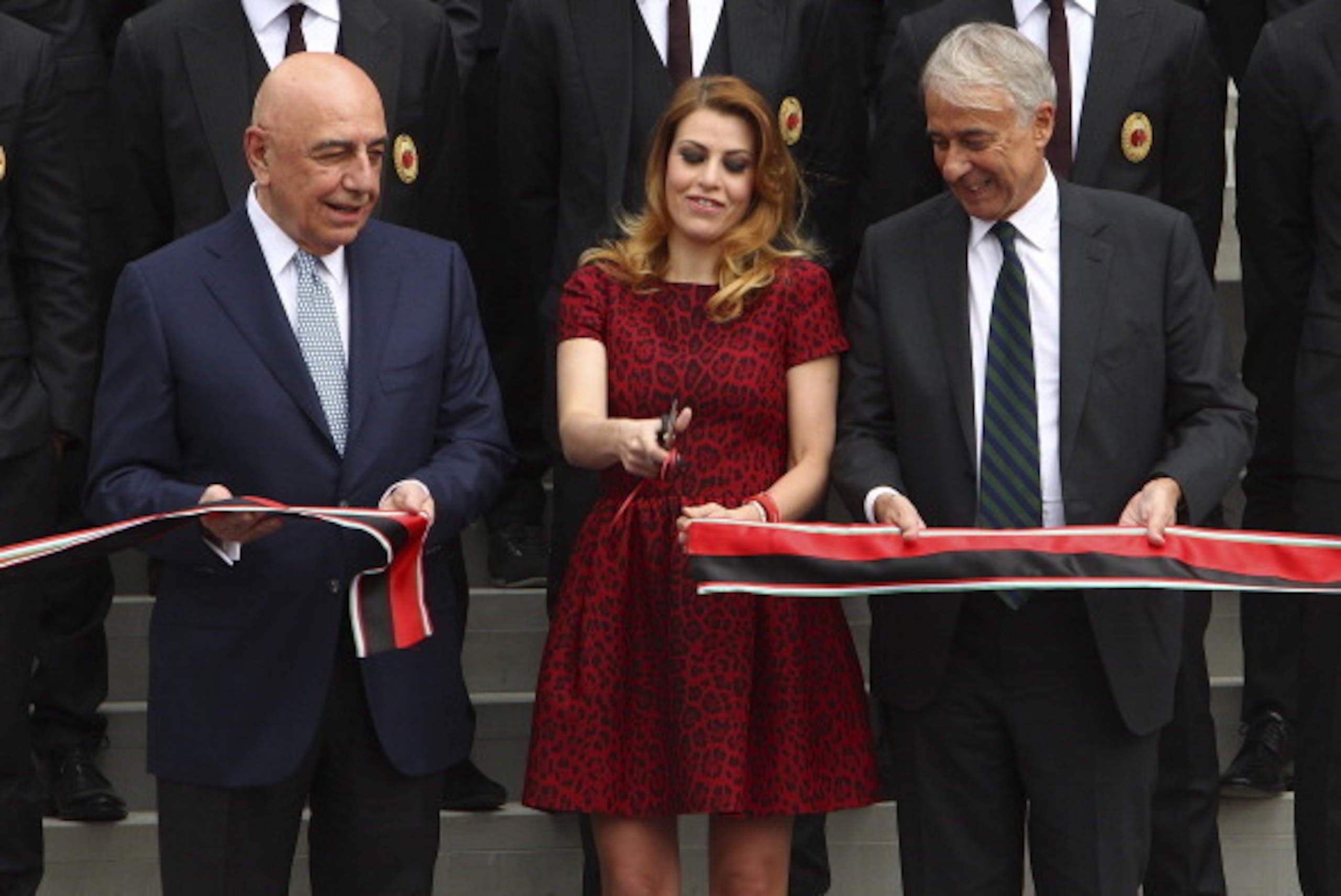
New ownership would also clear out the front office. This would be beneficial in two ways. First, it would ease the stress of the muddy power-sharing agreement between Galliani and Barbara Berlusconi. Second, it would allow a new pair of eyes to build the club by focusing on youth development augmented by more established transfer buys.
Milan is in a situation that is similar to the one Major League Baseball's New York Mets found themselves in the late 2000s. When owners Fred Wilpon and Saul Katz were caught up in a high-profile Ponzi scheme orchestrated by financier Bernie Madoff, the team's finances ended up in shambles.
In a single year from 2011 to 2012, the team lost $70 million and had to slash payroll by an MLB-record $47 million. The team has since been mostly austere in the free-agent market and banked on young players developing to get them back into contention. But the team is still deeply in debt and most believe that the only cure to the team's woes will be a change in ownership.
Berlusconi hasn't been the victim of a pyramid scam, but his financial empire has been hit hard by the recession. He and the club have denied that his myriad legal troubles have factored into the team's money problems, but even if they haven't, they can't have been beneficial.
Berlusconi has been the team's face for almost 30 years, but he is either no longer willing or no longer able to invest the money that will make Milan competitive again. A better organizational philosophy might allow them to do it, but the president is unwilling to fully part with Galliani, who has proved over the past few years that he cannot build a competitive team on the cheap.
The front office is out of touch, and the club is hemorrhaging cash. However painful it might be, it's time for Berlusconi to end the adventure. If Milan is to regain the elite status it has had since the days of Arrigo Sacchi, it needs to be under a new owner.

.jpg?w=2560 "Rams Eagles Football")
.jpg?w=2560 "Bijan's INSANE 1st Half 🤩")

.jpg?w=2560 "Injury-stricken Seahawks signing veteran RB")

.jpg?w=2560 "2 NFL Officials Suspended")
