

Dallas Mavericks Finding Balance as Rajon Rondo Settles in
When the Dallas Mavericks traded for Rajon Rondo, it was evident that their identity would change. The Mavs started the season as the most feared offensive team in the league but opted to look for more balance when making a move for the former All-Star.
The Mavericks have played just 15 games since trading for Rondo, but there are clear indications of change. Dallas is slowly trending downward in offensive categories, while making strides on the defensive end.
There are several telling statistics since Rondo's arrival that reflect the changes:
TOP NEWS

LeBron's Special Helicopter Deal

MJ Makes Record-Setting Donation 🙌
Shams: KAT, Hart Could Be Trade Names
| With Rondo | Without Rondo | |
| Off. Rtg. | 105.6 | 113.6 |
| Def. Rtg. | 100.4 | 104.8 |
| Net Rtg. | 5.2 | 8.7 |
| Pace | 98.99 | 96.53 |
| Points off TO | 18.0 | 20.4 |
| 2nd-Chance Pts. | 11.8 | 14.4 |
| TS% | 54% | 57.3% |
| Opp. 3P% | 31.2% | 38.7% |
At 110.7 points per 100 possessions, the Mavs still own the best offensive efficiency in the NBA. However, the Los Angeles Clippers are right on their heels and will likely surpass Dallas considering the current trajectory.
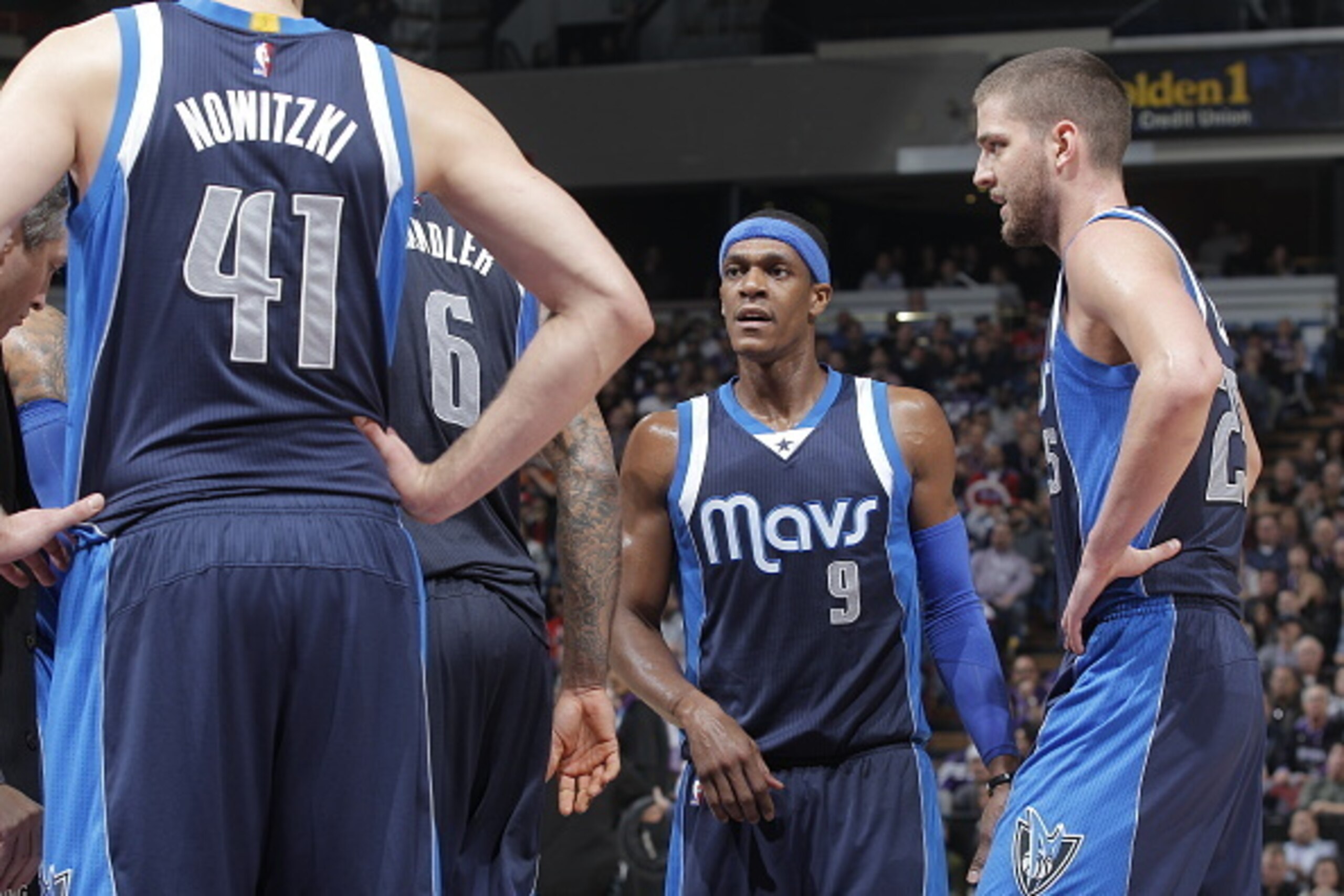
Just looking at the numbers, it would appear that the Mavs offense has fallen off a cliff. The team's offensive efficiency has dropped from historic numbers to what would currently rank as the eighth-best rating in the league. It's also reflected in the team's overall true shooting percentage, which has dropped by 3.3 percentage points.
There is certainly some truth to the statistics. Implementing a unique ball-dominant guard like Rondo was always going to take time, especially considering the flawless balance the Mavs had already established.
By replacing Jameer Nelson with Rondo, the Mavericks sacrificed the spacing that made the team practically impossible to guard. But that isn't the only reason why Dallas' offensive numbers have trended downward.
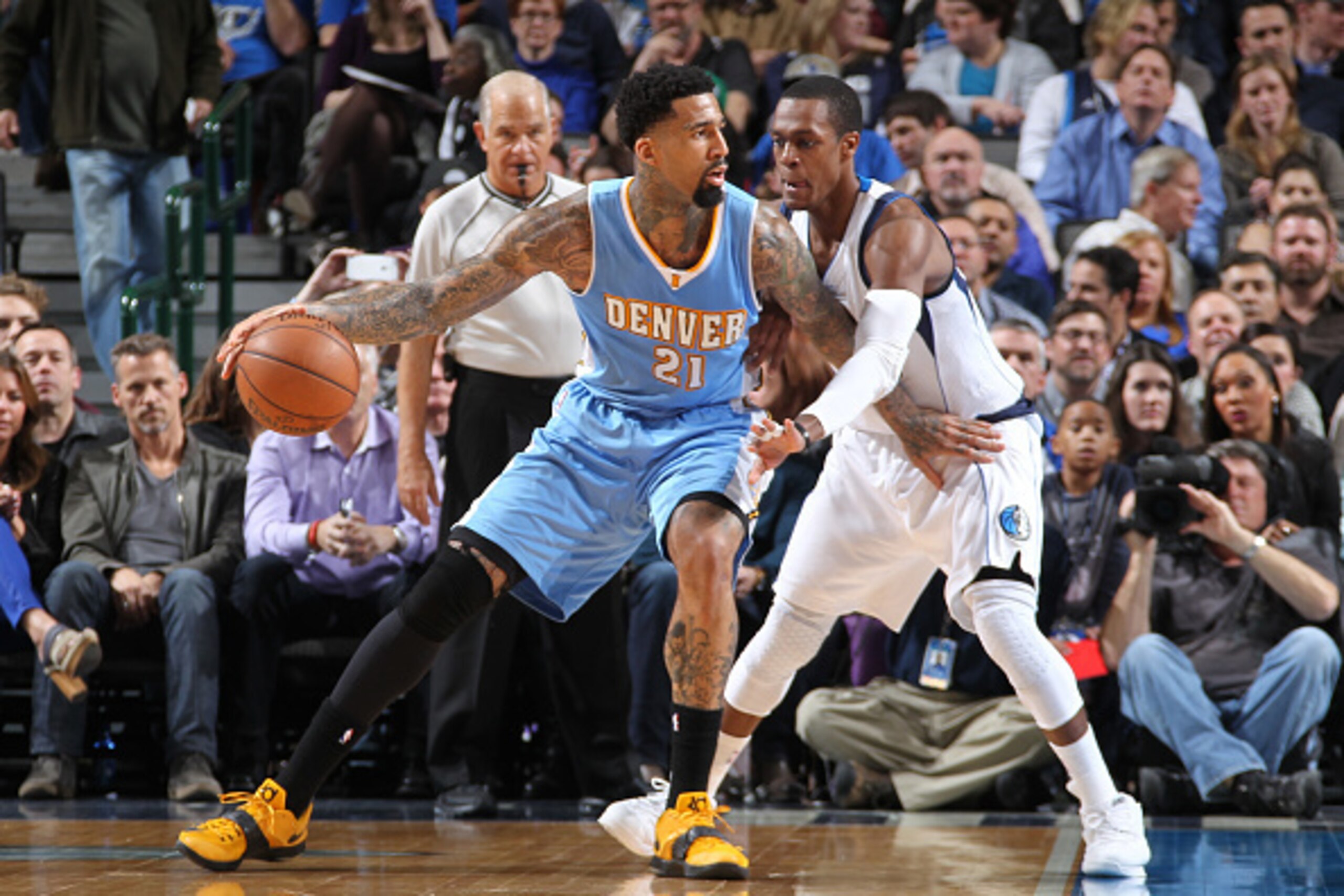
Brandan Wright, who went to the Boston Celtics in the trade for Rondo, was an exceptionally important cog in the Mavs' rotation. He had established great chemistry with his guards, especially Devin Harris, and added another reliable and consistent weapon off the bench. This is also reflected in the drop in second-chance points since the trade, which Wright was a contributor toward.

Without Wright's pulverizing rim rolls, the team's shot selection has changed. The Mavs are taking 27.5 percent of their shots from mid-range in their last 15 games, up from 23.8 percent. The Mavericks still jack up a ton of threes and attack the rim effectively but to a somewhat lesser extent than before.
Defenses constantly give Rondo enough room to put up open mid-range shots by going under screens and packing the paint. With less space to drive, Dallas tends to settle for more inefficient looks.
The offensive numbers should also be taken with a grain of salt for several reasons. The sample size still isn't huge, and Dallas has played against a difficult schedule since Rondo arrived. The Mavericks had one of the softest schedules to start the season, but over the last 15 games, their opponents have had a 51.9 percent win rate. That figure would rank second highest in the overall strength-of-schedule rankings.
Defense
For all the adjustments and growing pains that are taking place within the offense, the Mavs have looked significantly better defensively. It's not all thanks to Rondo, who was a somewhat overrated defender coming to Dallas. He himself admitted as much when he returned to Boston to play the Celtics earlier this season, via MassLive.com's Jay King:
"I haven't played defense in a couple of years. I've been able to hide it a lot with Avery Bradley on the ball. He's helped me out, the young guy. But here they expect me to play defense. And in the West, if you don't play defense you'll get embarrassed every night at the point guard position. I took it as a challenge [for] myself. It's not just me. It's my teammates. Our communication is getting a lot better and our coverages are getting better. So it's the whole team concept, it's not just me.
"
Rondo's individual effort defensively has been up and down, but he has been terrific when focused. When he is engaged, Rondo really strengthens the perimeter defense, which was a major leak before his arrival.
Smart offenses abused Nelson's height and inability to close out, and Dallas allowed opponents to shoot what was a league-high 38.7 percent from beyond the arc. That figure with Rondo is at 31.2 percent, which would currently be tied for the second-lowest opponent three-point field-goal percentage in the league, if maintained.
While Nelson was mostly lost defensively, Rondo is capable of playing smothering man-to-man defense, has quick hands and interrupts passing lanes.
Even though the personnel other than Rondo hasn't changed much, the Mavericks have collectively looked a lot more engaged defensively. Dallas did lose a good pick-and-roll defender and rim protector in Wright, but the improved effort seems to be making up for his absence. Whether or not the excellent numbers will continue to improve over a larger sample size remains to be seen, but the effort has looked encouraging.
Another interesting statistic is Dallas' points off turnovers. The Mavs average 2.4 points per game less with Rondo on those plays, but it's somewhat misleading.
It might appear as though the Mavericks are playing a more half-court-focused game with Rondo and are not looking to run as much as before. That isn't quite true, as the transition game remains one of the primary points of emphasis for the team.
Even though the Mavs are not scoring as much through turnovers, Rondo's ability to push the ball and create shot opportunities in transition has been terrific. In fact, Dallas plays at a higher pace and averages over two more possessions per game with Rondo.
Here is a little montage of Rondo's transition game:
Some of the featured plays come through semi-transition, as Rondo calmly dribbles the ball off a rebound and makes an unexpected pass ahead. His passing creativity constantly catches defenses off guard, and it makes the Mavs dangerous as soon as they secure a defensive rebound.
Historically, serious title contenders have an offensive and defensive balance. When the playoffs roll around, hoping to simply outscore your opponent is a mentality that rarely yields results. If anything, a solid defensive backbone is far more important. The Mavericks are slowly inching closer to that equilibrium.
You can follow me on Twitter: @VytisLasaitis

.jpg?w=2560 "Grading WWE Raw 🔠")

.jpg?w=2560 "Bijan's INSANE 1st Half 🤩")
.jpg?w=2560 "Viral Rams Coach Vid 🖕")
.jpg?w=2560 "Injury-stricken Seahawks signing veteran RB")

.jpg?w=2560 "2 NFL Officials Suspended")