
Patriots' Blueprint for Stifling Seahawks' Run Game in Super Bowl XLIX
Despite what all the hubbub surrounding "Deflategate" may lead you to believe, there is indeed a Super Bowl taking place. While the media and fans continue to debate the organizational legitimacy of the New England Patriots, the players and coaches are dealing with a much more pressing problem in the defending champion Seattle Seahawks.
When the media does turn its attention to the on-field issues at hand, most of the analysis will surround the strength-on-strength matchup of New England's offense against Seattle's defense. However, from a Patriots perspective, the more difficult task may actually fall on the defense, which will face a Seahawks running game that is both prolific and stylistically unique.
.jpg?w=2560 "Panthers Saints Football")
.jpg?w=2560 "Jaguars Saints Football")
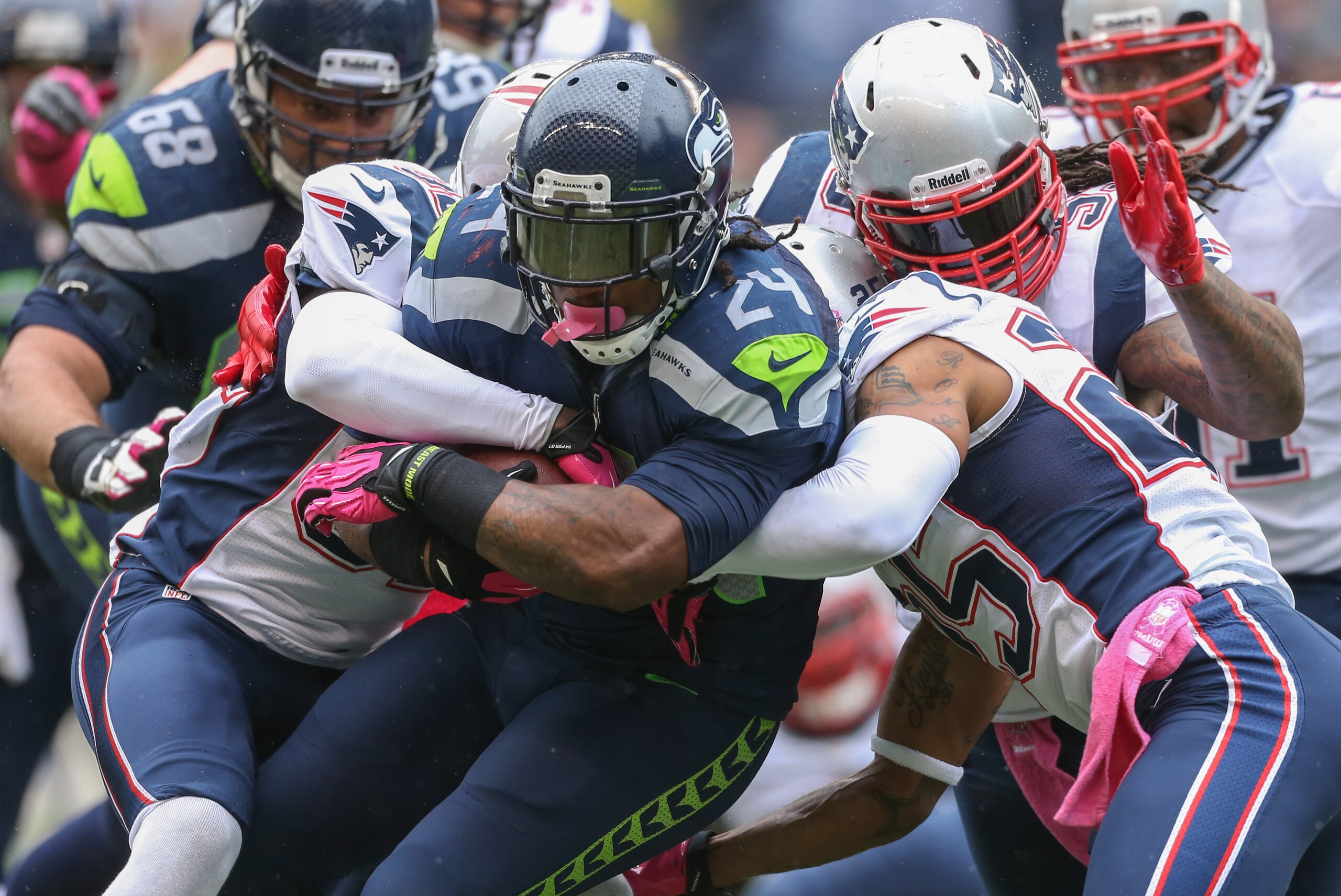
Indeed, the Pats have yet to face a backfield tandem remotely resembling Russell Wilson and Marshawn Lynch, which supplies Seattle with more schematic diversity in the running game than any other team in the league.
Quite frankly, it's not difficult to envision the Seahawks controlling time of possession and dictating the game's rhythm, slowly bleeding out New England and providing the Patriots offense no margin for error.
However, the Patriots also possess the personnel to contain the Seahawks running game and force the offensive burden onto the Wilson's right shoulder rather than his legs. Examining defenses that have had success against Seattle's rushing attack, let's take a look at New England's blueprint for slowing down the engine the drives the Seahawks offense.
Overcoming Zone Blocking

The Seahawks' core running game is multifaceted, much like the Patriots, but at heart, Seattle is primarily a read-option, outside-zone and inside-zone rushing squad. We'll touch on the Seahawks' dangerous option attack later, but New England's primary defensive concern must be containing Marshawn Lynch when the bruising back gets downhill on one-cut runs.
That's obviously easier said than done, and the Pats figure to utilize plenty of 5-2 fronts, with defensive tackles Vince Wilfork, Alan Branch and Sealver Siliga in the interior sandwiched between edge defenders Chandler Jones and Rob Ninkovich. Though Seattle is still primarily an "11" personnel offense (3 WRs, 1 TE, 1 RB), they'll run out of any formation, with Y-tight end Luke Willson often acting as a de facto sixth O-lineman.
As New England found out in the divisional round against the Baltimore Ravens, simply putting more beef on the field doesn't equate to a better run defense. Gary Kubiak's pure outside-zone blocking scheme doesn't quite match up to what Seattle does, but in utilizing the zone runs, Baltimore shredded the Patriots for 4.9 yards per attempt.
The Ravens largely ran at Chandler Jones and the defensive right side—per Pro Football Focus, 14 of Justin Forsett's 24 carries went to the offensive left/defensive right side. The issue was that New England's frontside defenders were largely pushed out of their gaps with relative ease by James Hurst, Kelechi Osemele and Jeremy Zuttah:
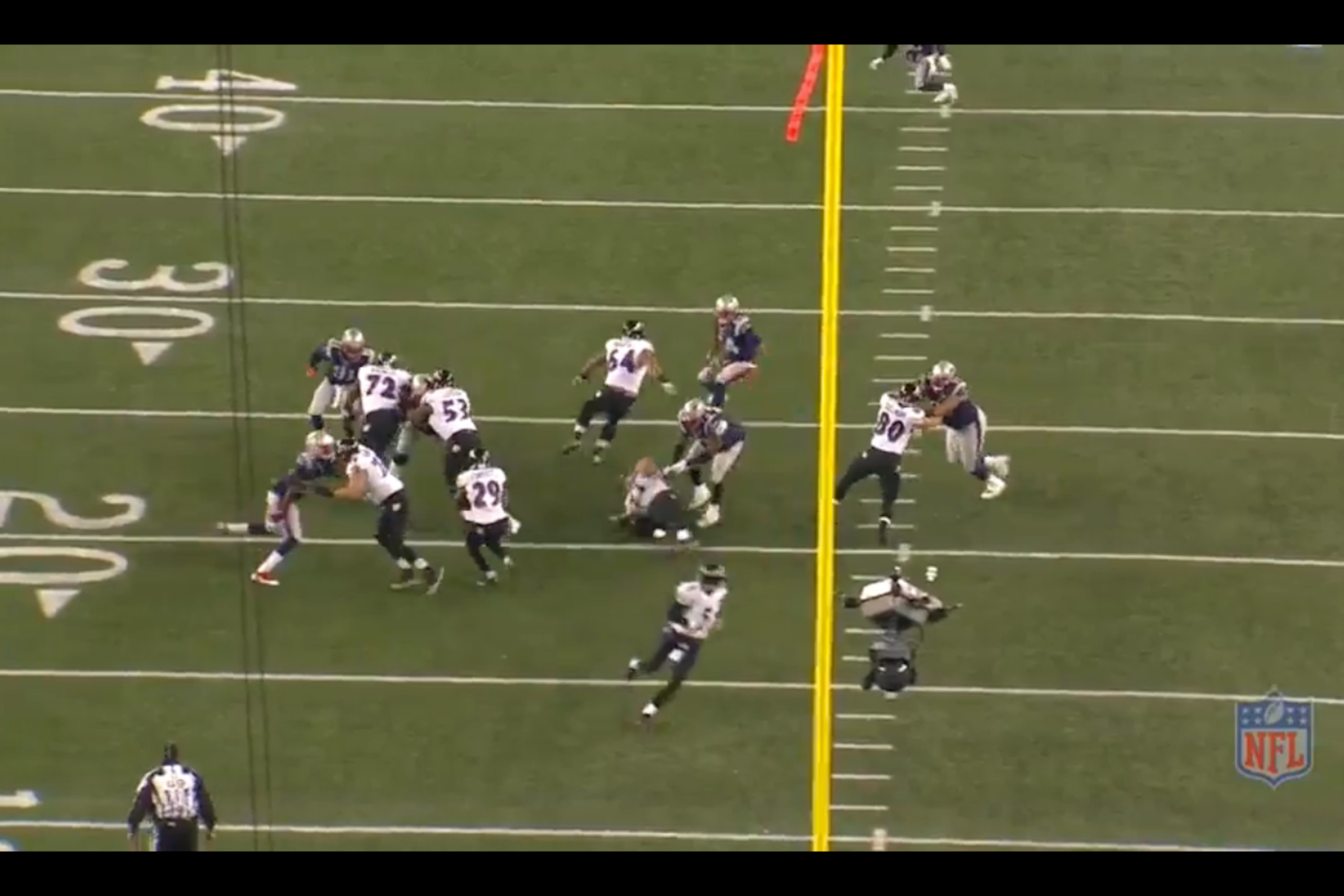
To simplify things, the key to beating zone blocking is to prevent the frontside offensive linemen from being able to "reach" block the defensive linemen out of their gaps. That allows the O-linemen to get down to the second level, where free-flowing linebackers can't penetrate and take down the ball-carrier before getting blocked.
Rather than attempting to win at the point of attack, the Pats often had the frontside defensive lineman slip inside his blocker to redirect the running back. Here's a visualization of Chandler Jones getting inside past Hurst, forcing Forsett to push his run outside, with Patrick Chung waiting:
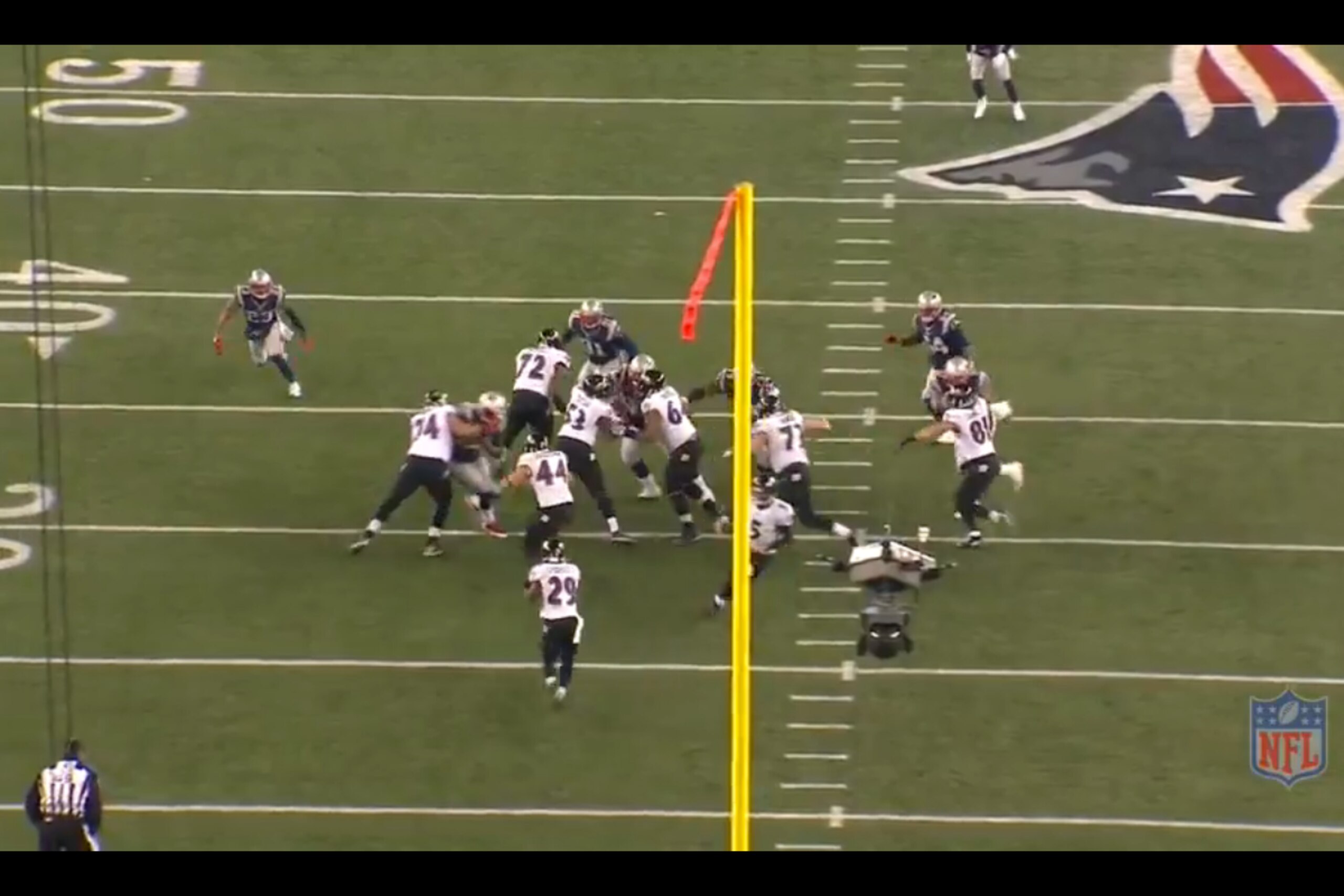
In theory, this strategy sacrifices both Hurst and Jones. The latter is out of his gap, but the former must also abandon his assignment to prevent the defender from getting into the backfield untouched. Too often, however, the force defender failed to make the tackle.
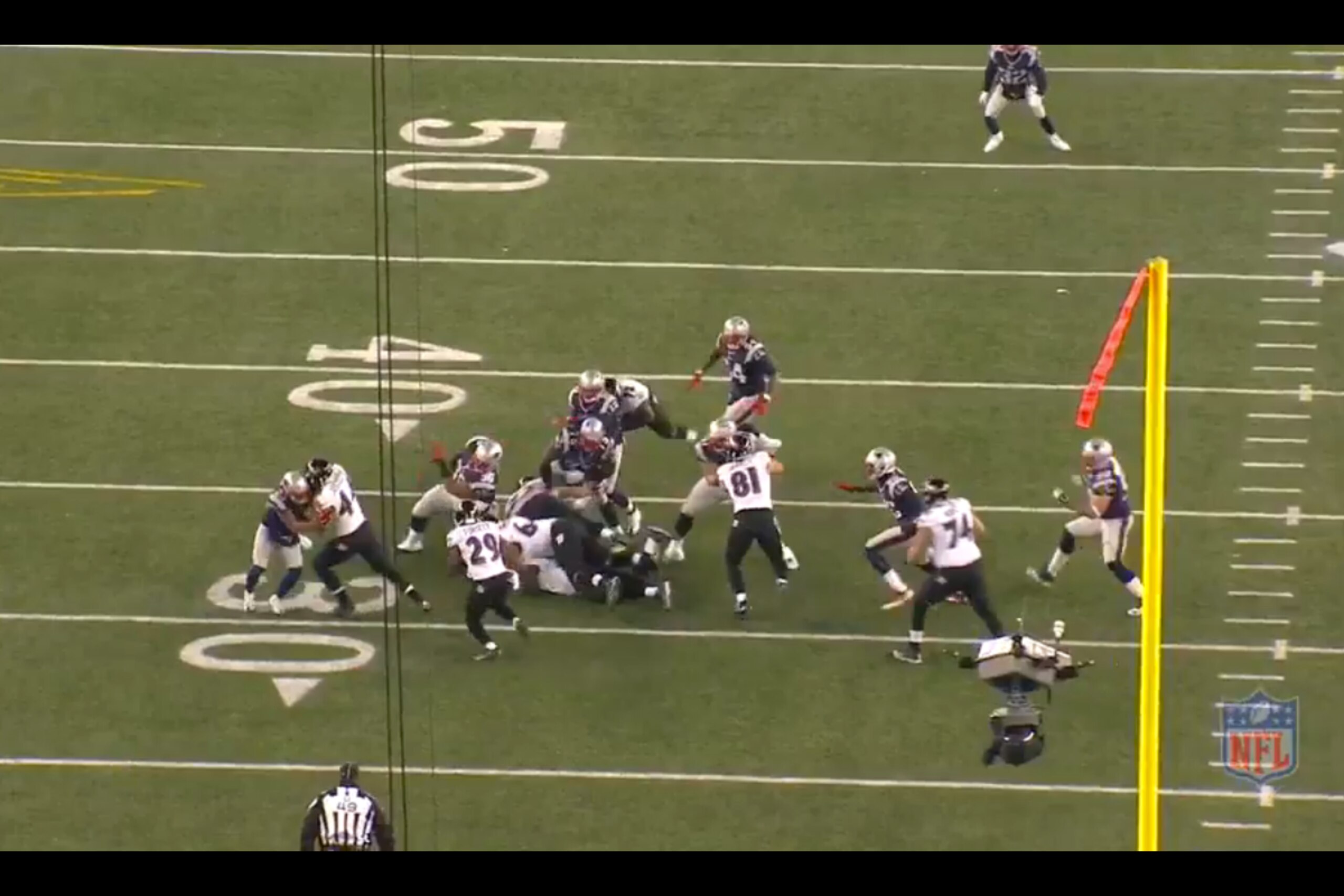
Here, Chung was tentative and did not attack downhill. Consequently, fullback Kyle Juszczyk worked his way out to Chung, blocking him out of the play and paving a wide alley en route to a big gain for Forsett:
Again, Seattle is not nearly as much of an outside-zone team as they used to be, so this isn't to suggest that the Ravens game is a harbinger of doom for New England's running D.
Still, it would seem irresponsible for the Seahawks not to at least consider a greater variety of outside zones, if only because the cut blocks might make the New England front seven more tentative off the ball against Seattle's option game.
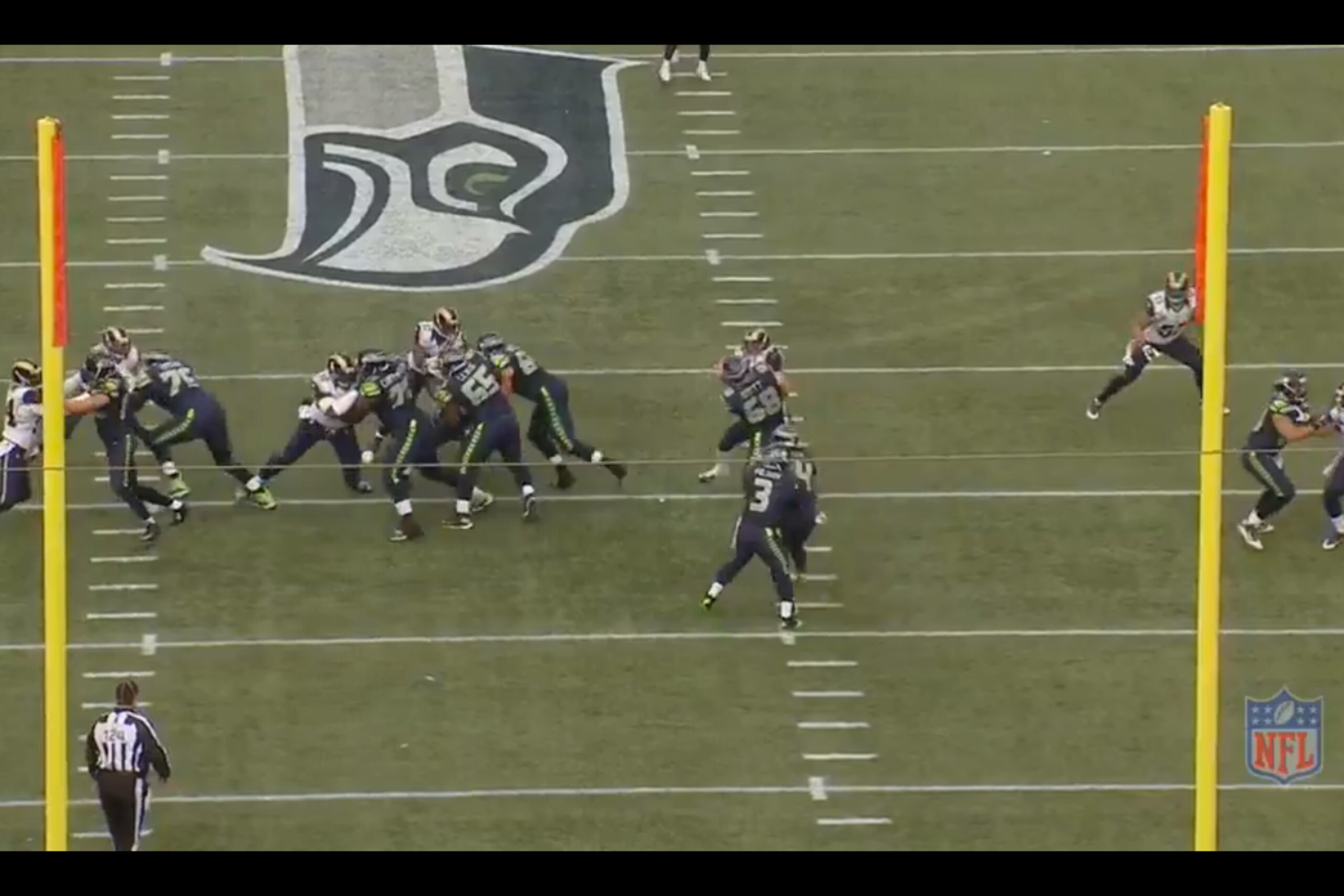
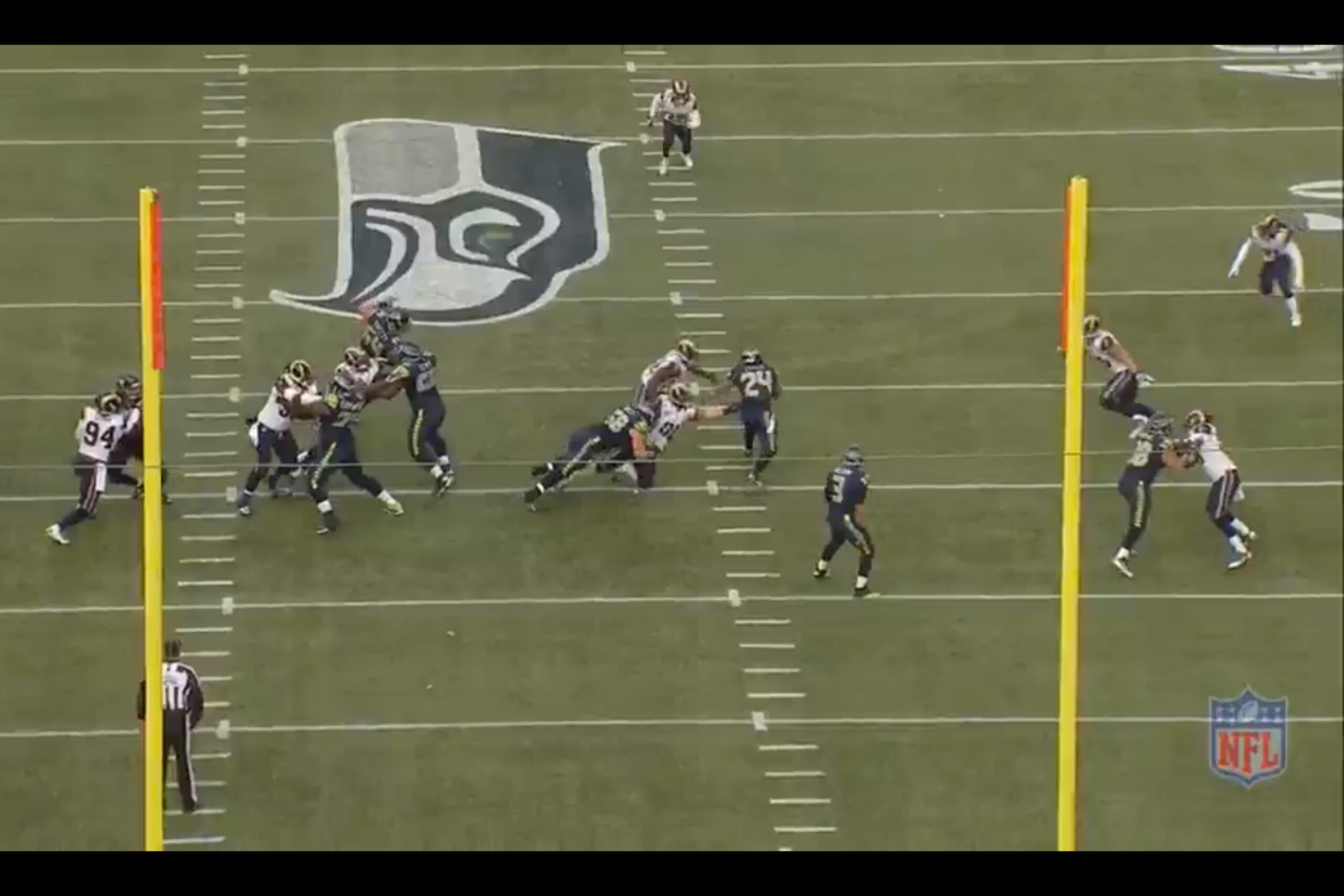
It's not impossible to defend the Seahawks running game, though. Here are a couple examples of solid fundamental defense against the zone. The first two screen shots depict the Denver Broncos against the outside zone, while the latter two show the St. Louis Rams against the Hawks' inside zone:
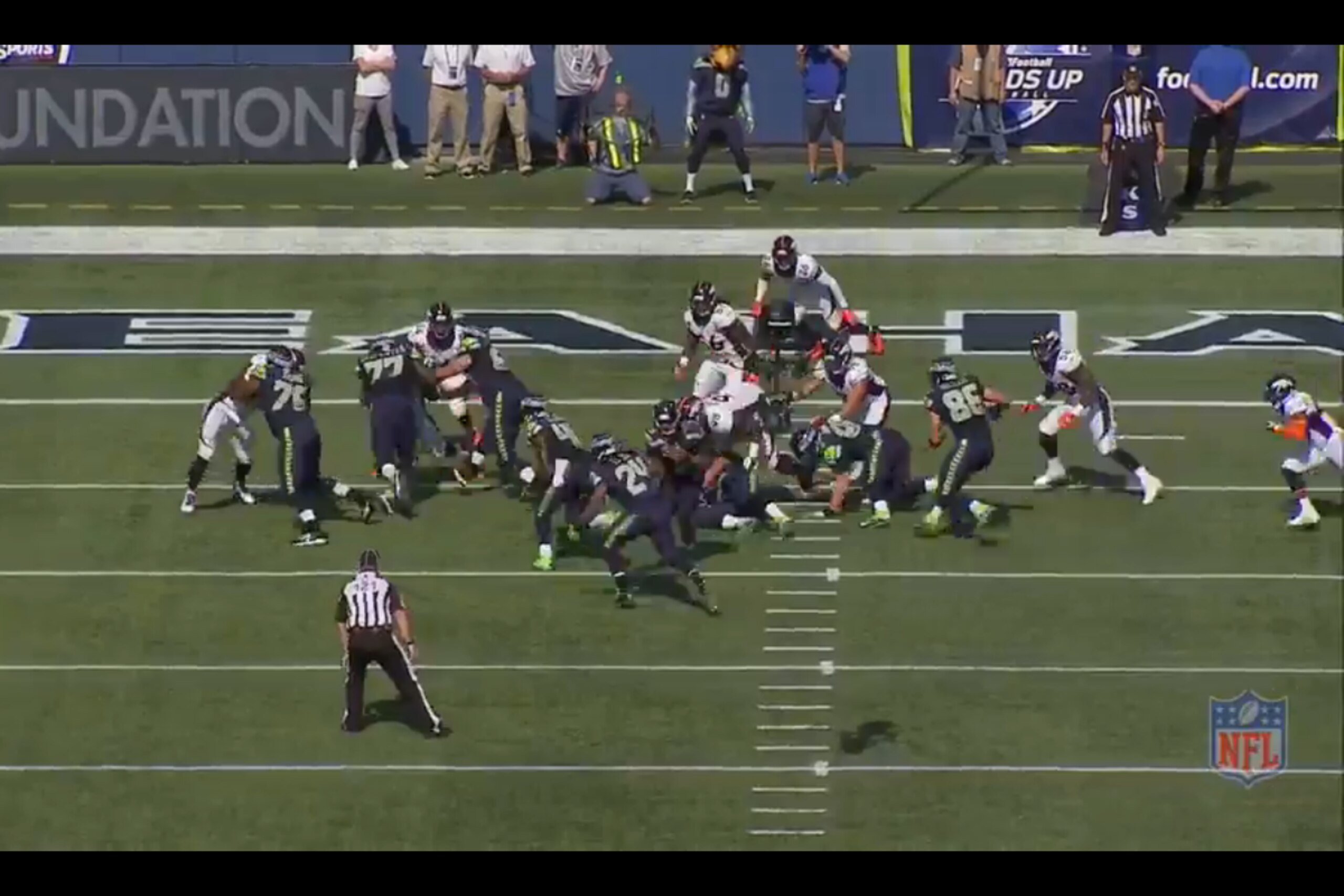
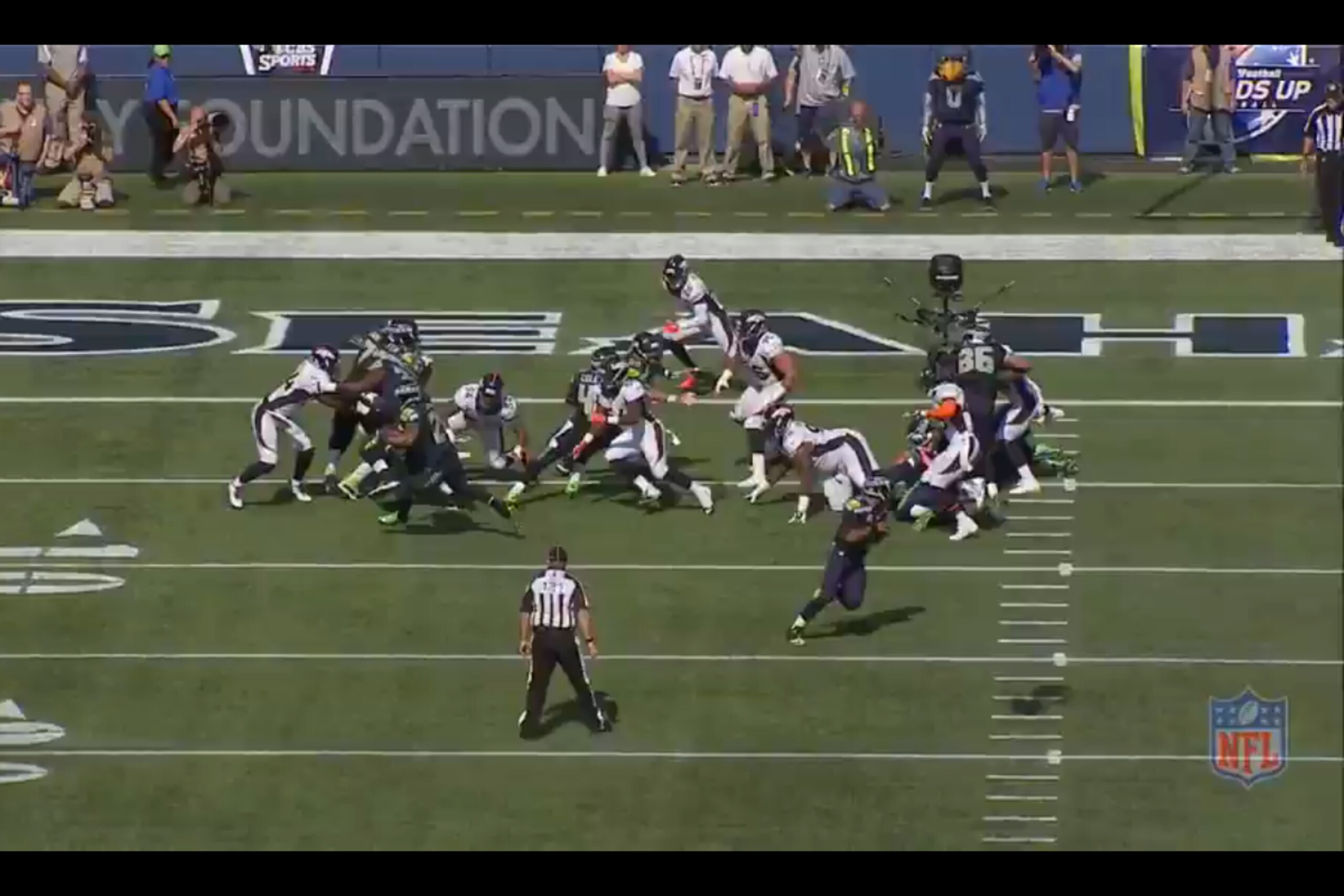
In the Denver screen shots, Brandon Marshall and DeMarcus Ware demonstrate excellent "spill" technique in forcing Lynch to stretch his run horizontally toward the sideline, never allowing him to cut upfield.
For St. Louis, Chris Long never allows right tackle Justin Britt to cross his face (notice how Britt has not moved laterally, unlike the rest of the line). So even though a seemingly gaping hole appears, linebackers Alec Ogletree and James Laurinaitis are free at the second level to stop Lynch for a short gain.
No one is asking any Patriots defender to morph into a J.J. Watt-esque monster and piledrive linemen into the backfield. But New England's 5-2 personnel is not an undersized front, and maintaining gap integrity against Seattle's zone runs should at least afford clean hits on Lynch.
Considering that Lynch led all backs this season with 2.96 yards after contact per attempt, according to Pro Football Focus, it's imperative that the Patriots two-gap effectively to keep Lynch from escaping the first level untouched.
Copying Carolina

The read-option has the stigma of a collegiate gimmick at the NFL level, but that characterization couldn't be further from the truth for the Seahawks. When reminiscing on the NFC Championship Game, most will remember the Seahawks' onside kick and Wilson's two pinpoint deep shots in overtime. In truth, though, increased usage and success with the read-option was the primary catalyst in Seattle's comeback:
Wilson has clearly become the most effective running quarterback in the league; based on Football Outsiders' opponent-adjusted metrics of success rate, Wilson brought almost twice as much cumulative rushing value as the next-best quarterback, Cam Newton. Some of that stems from sheer volume, but Wilson's combination of vision and agility really does give him the polish of a running back.
However, a blueprint does exist for stymieing Wilson's productivity as a rusher. In four career games against the Carolina Panthers, Wilson has accumulated a grand total of 76 yards on 23 attempts, good for a meager 3.3 yards per carry. The Panthers have simplified the assignment for their defense, assigning the unblocked edge defender to crash hard on Wilson every time and force him to hand off:
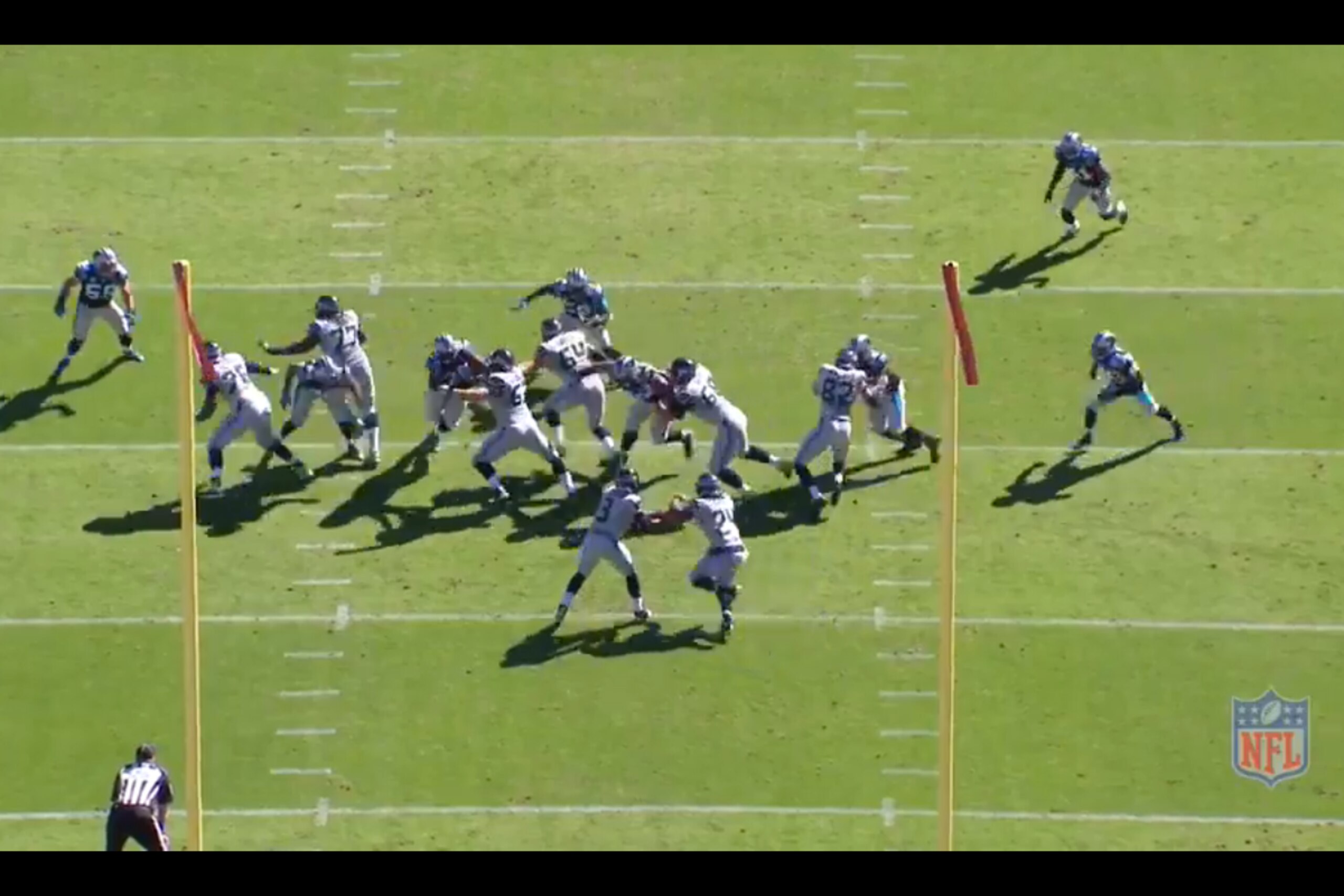
You'll notice that the edge defender was actually a defensive back (No. 20, Antoine Cason) in the screen shot above. The Patriots might want to consider having their box safety (probably Chung) act in a similar fashion when possible. Against the read-option this season, the Pats typically had the unblocked edge defender play contain and eliminate the quarterback keeper:
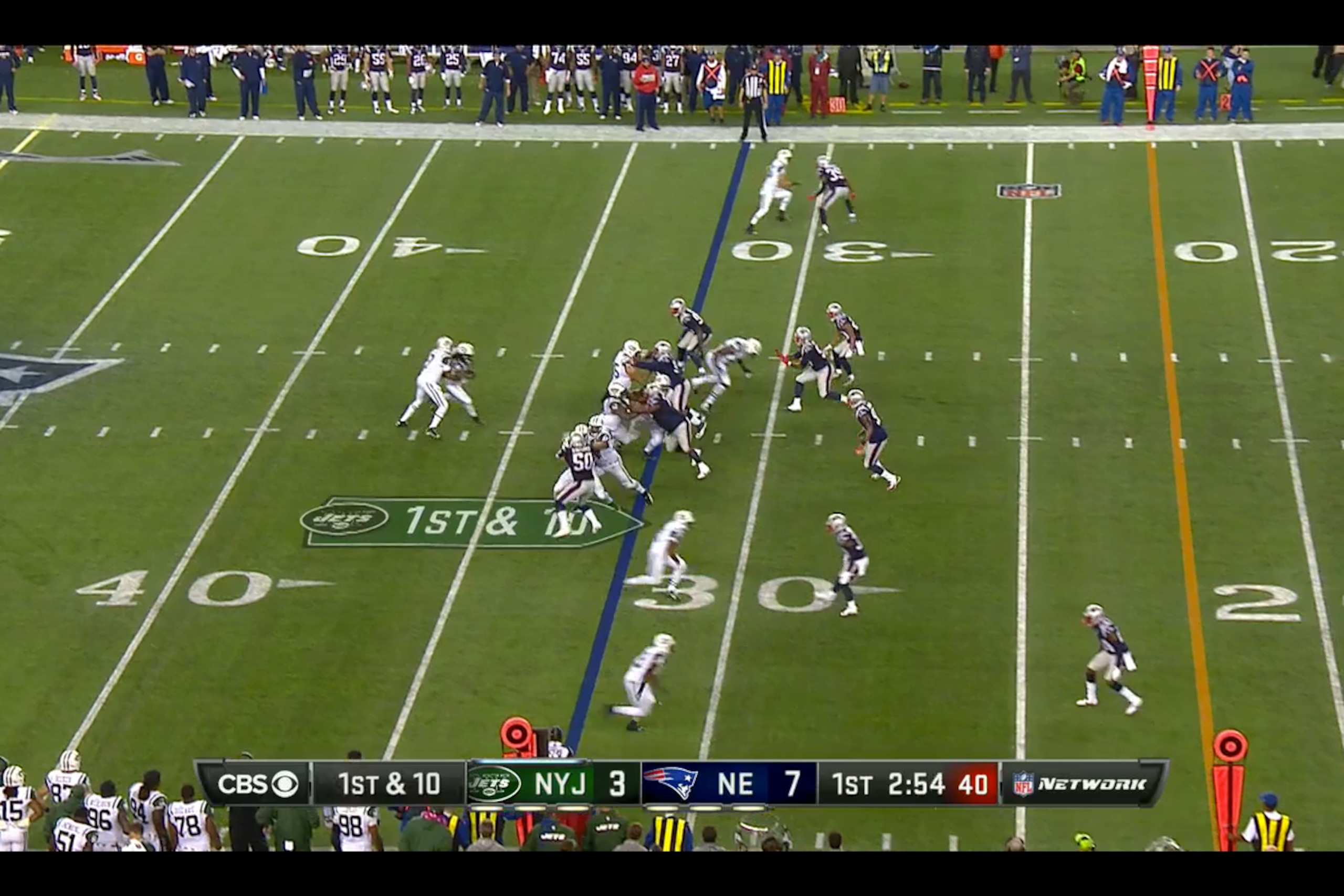
Of course, that edge defender is largely taken out of the play once the quarterback hands off. It makes more sense for the Patriots to sacrifice a defensive back in run support.
We've yet to see a team run as much option against New England as the Hawks likely will, but perhaps we'll see a schematic tweak calling for all defensive linemen to play straight up while the defensive back "scrapes" over the top to provide contain.
In addition, the Pats will need to employ a spy on every passing play, as Wilson's scrambling ability can wreck even the best-laid defensive plans.
This is where Carolina truly matched up well with Seattle, as Luke Kuechly and Thomas Davis provide more speed than any other linebacking corps in the league. In Jamie Collins and Dont'a Hightower, the Pats are one of the few teams that might conceivably replicate the efficacy of the Kuechly-Davis tandem in containing Wilson.
On the other hand, employing a full-time spy hasn't really been a part of the Patriots' defensive game plan in any game this year. Take a look at this Aaron Rodgers 19-yard run that occurred after Collins and Hightower were taken in opposite directions in their zone assignments, leaving a gaping chasm in the middle of the field:
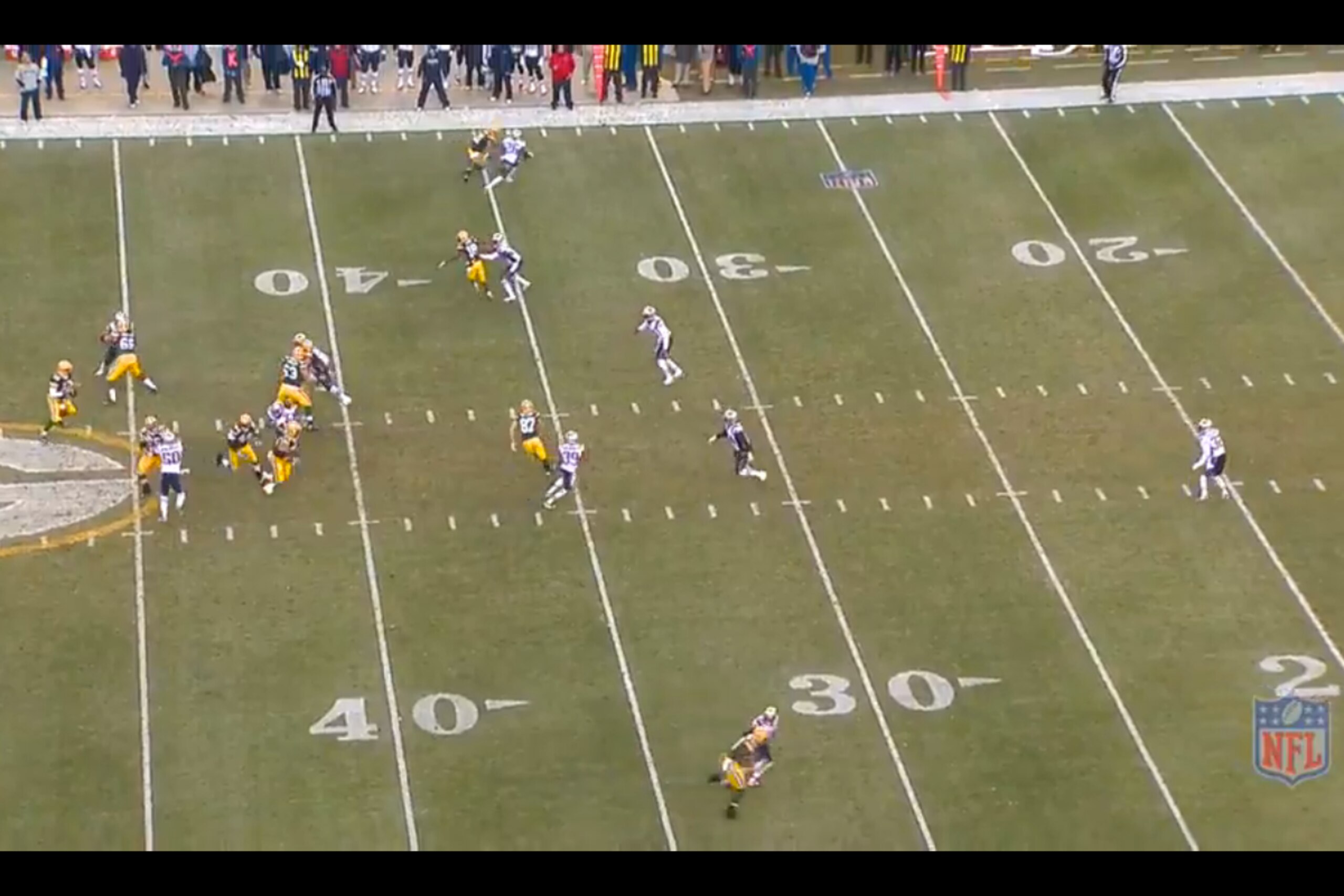
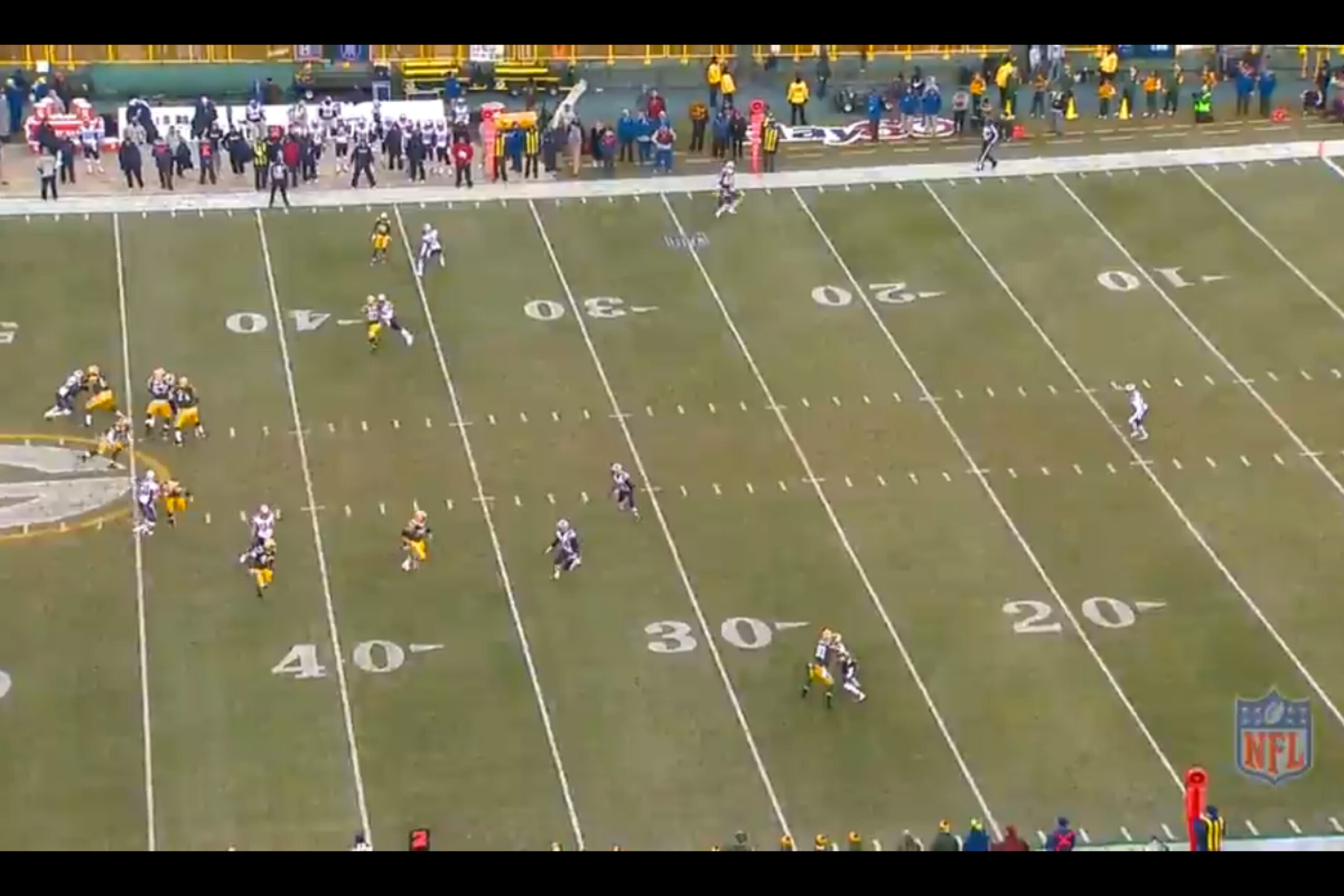
Blitzing against Wilson is usually a poor choice because of the running lanes it can create, but Collins and Hightower were both among the best rushing inside linebackers in the league this season. It's conceivable that New England might choose to send one up the A-gap to flush Wilson out of the pocket, while the other waits for him as a spy at the second level.
This all sounds great in theory, though Wilson's speed and intelligence will likely result in some success on the ground. But if New England can limit Wilson's effectiveness as a runner and force him to attack the teeth of the Patriots defense, the secondary, it's hard to envision the third-year quarterback winning that matchup.
Rob Ninkovich

We've covered some of the most important factors in containing Lynch and Wilson, but it's worth briefly highlighting Ninkovich, who may arguably be New England's most important run defender in the Super Bowl. Based on Football Outsiders' Adjusted Line Yards metric, the Seahawks exhibited some very clear splits in directional rushing:
| Adjusted Line Yards (ALY) | 4.17 | 3.48 | 4.22 | 4.44 | 5.33 |
| NFL Rank | 10 | 22 | 5 | 6 | 1 |
As you can see, Seattle has had plenty of success attacking the defense's left side. New England has actually been rather poor in defending the left, ranking 22nd in ALY for runs behind the right tackle and 23rd for runs outside the right tackle.
Ninkovich has a reputation as a stout run defender, but he did take a step back this season. Among 3-4 outside linebackers, Ninkovich ranked a middling 29th out of 46 qualifiers in run-stop percentage, per PFF, while his minus-0.1 run grade ranked 32nd out of 46 at the position.
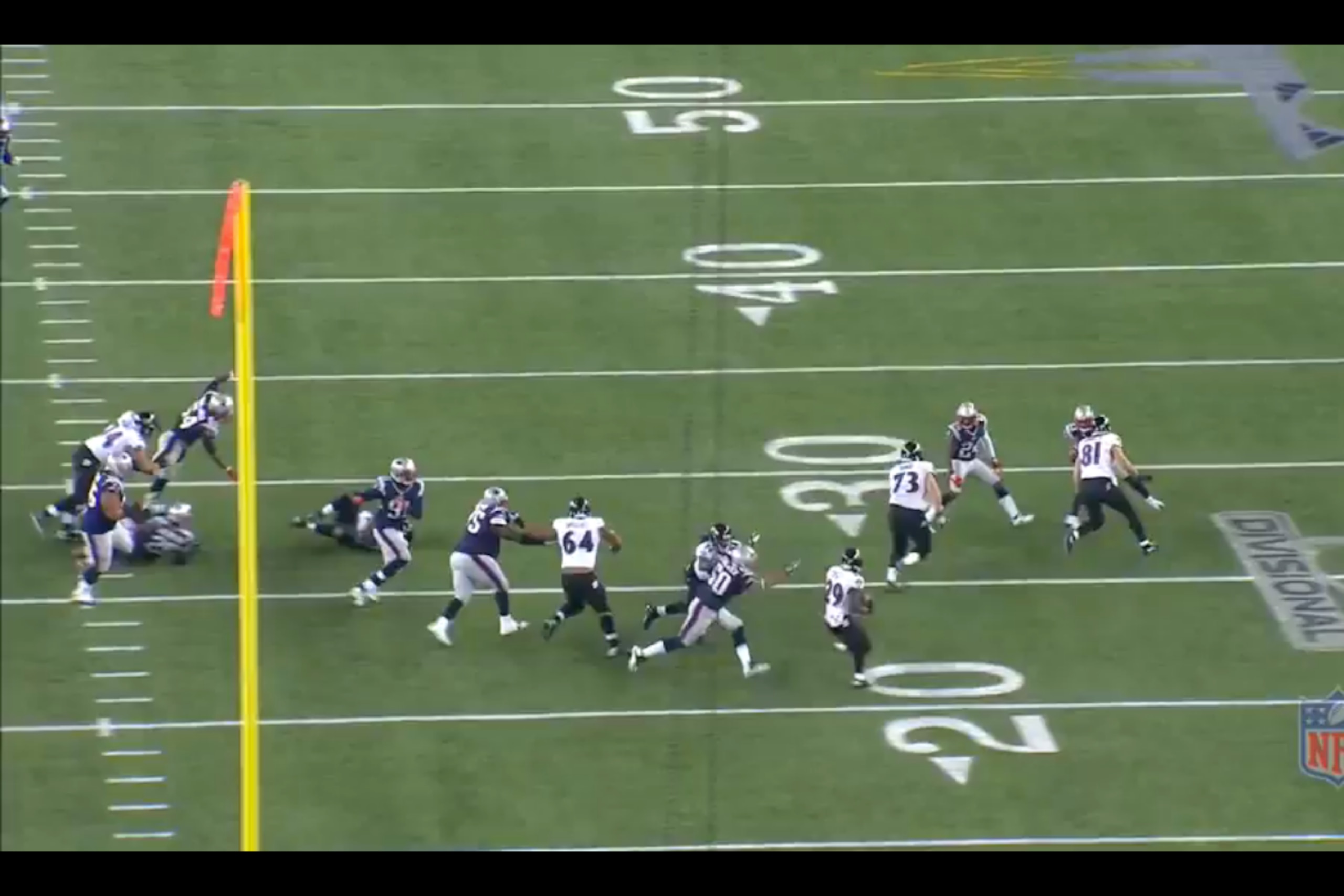
Ninkovich roughly sustained that league-average form against Baltimore, which actually made him one of New England's better run defenders that day. As you might expect, it was a bit of a mixed bag. Though the Ravens typically ran away from his side, there were a few occasions where Ninkovich was blocked out of edge containment. This play, where wide receiver Marlon Brown sealed him off, was particularly egregious:
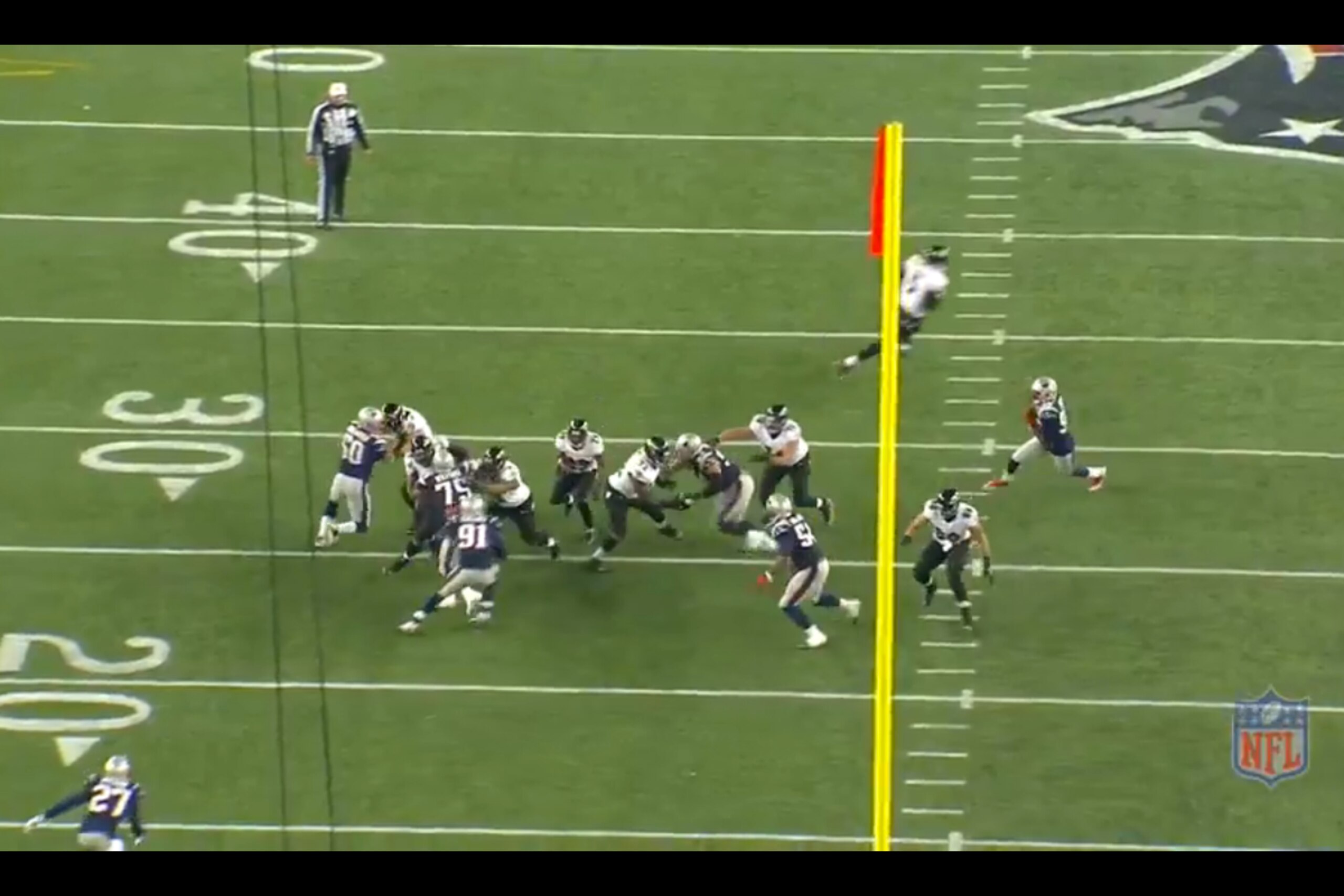
Then again, when the Patriots line up in four-man fronts, the left side with Ninkovich as the 6-technique and Wilfork as the 1-tech is the clear strength of the run defense. Here, the two exhibited textbook gap containment, eliminating the cutback lane for Forsett and funneling him back inside toward the unblocked linebacker:
Ninkovich is one of New England's most important overall defenders, as he also gets the juiciest pass-rushing assignment against rookie right tackle Justin Britt. While Britt needs plenty of technique refinement in pass protection, he's already a fairly effective run-blocker. Ninkovich will play every snap if healthy, and his performance will go a long way in determining the game's outcome.
Bottom Line
Stopping the Seattle running game is as much a physical as a mental task. As Football Outsiders' Cian Fahey detailed, the Green Bay Packers had an excellent game plan to stuff the Hawks running game in the conference championship, one that worked beautifully until the endgame.
In what figures to be a tight contest, the defense must deliver their A game for 60 minutes to prevent Wilson and Lynch from stealing the game down the stretch. According to Pro Football Reference, Seattle averaged a whopping 5.79 yards per carry in the fourth quarter this season, easily the best mark in the league. The Packers certainly weren't the first team to wear down against the Seahawks' relentless ground game.
Unlike most teams, the Patriots do possess the personnel to win this matchup. In a week where deflation has dominated the headlines, the Seahawks are actually going to be the team trying to take the air out of the ball. No defense ever really plays a perfect fundamentally sound game, but if the Patriots can come close, they'll have an excellent opportunity to capture that elusive fourth Lombardi Trophy.
.jpg?w=2560 "Raiders Football")