

Why Phil Jackson and the New York Knicks Should Gamble on Lance Stephenson
At first glance, it sounds like the basketball equivalent of a once-in-an-eon Nor’easter careening into a category-five hurricane: destruction so imminent not even the dogs bother cowering for cover.
The New York Knicks—furiously floundering though they are, failure though their ethos might be—should want nothing to do with Lance Stephenson. And given Stephenson’s own floor-by-floor fall from grace, New York's mineshaft collapse should make the feeling more than mutual.
Guided by the better angels of their natures, though, these two combustible commodities could be a potent combination indeed. However much harder the doing proves than the saying.

Through their first 33 games, the Knicks (5-28) are off to their worst start in franchise history. The team’s $124 million cornerstone, Carmelo Anthony, is under mounting pressure to rest his ailing knee for the season’s stretch. The rest of the roster, meanwhile, remains an ill-fitting mix of misfits, cast-offs and characters, with a couple of innocent casualties—veterans sent on some sinister tour—thrown in for sad measure.
Two standings steps north sit the Charlotte Hornets, last year’s darling-now-turned-disaster struggling to regain their upstart footing. At the crux stands Stephenson, the phenomenally gifted, glaringly difficult fifth-year guard widely regarded as the raison d'etre for the Indiana Pacers’ spectacular collapse a season ago. His stock is so low the Pacers won’t even buy it back at 60 percent of what they initially offered him.
Stephenson and the Knicks are a match made exactly nowhere. Save, perhaps, for the deepest recesses of Jon Bois’ brain. To wish this kind of chaos to real-world hardwood, however, requires quite the flight of imaginative fancy.
Or does it?
The idea already boasts a built-in narrative: A Brooklyn basketball legend—New York’s all-time high school scoring leader, in fact—bypassed not once but twice by his hometown team in the 2010 draft. For Landry Fields and Andy Rautins, no less.
That Stephenson felt jaded by the draw was, and remains, an understatement. Despite the slight, the former Lincoln High standout managed to forge an increasingly effective niche under the watchful eye of Pacers president Larry Bird, who saw in Stephenson the rudiments of greatness, even if the antics often overshadowed the talent.
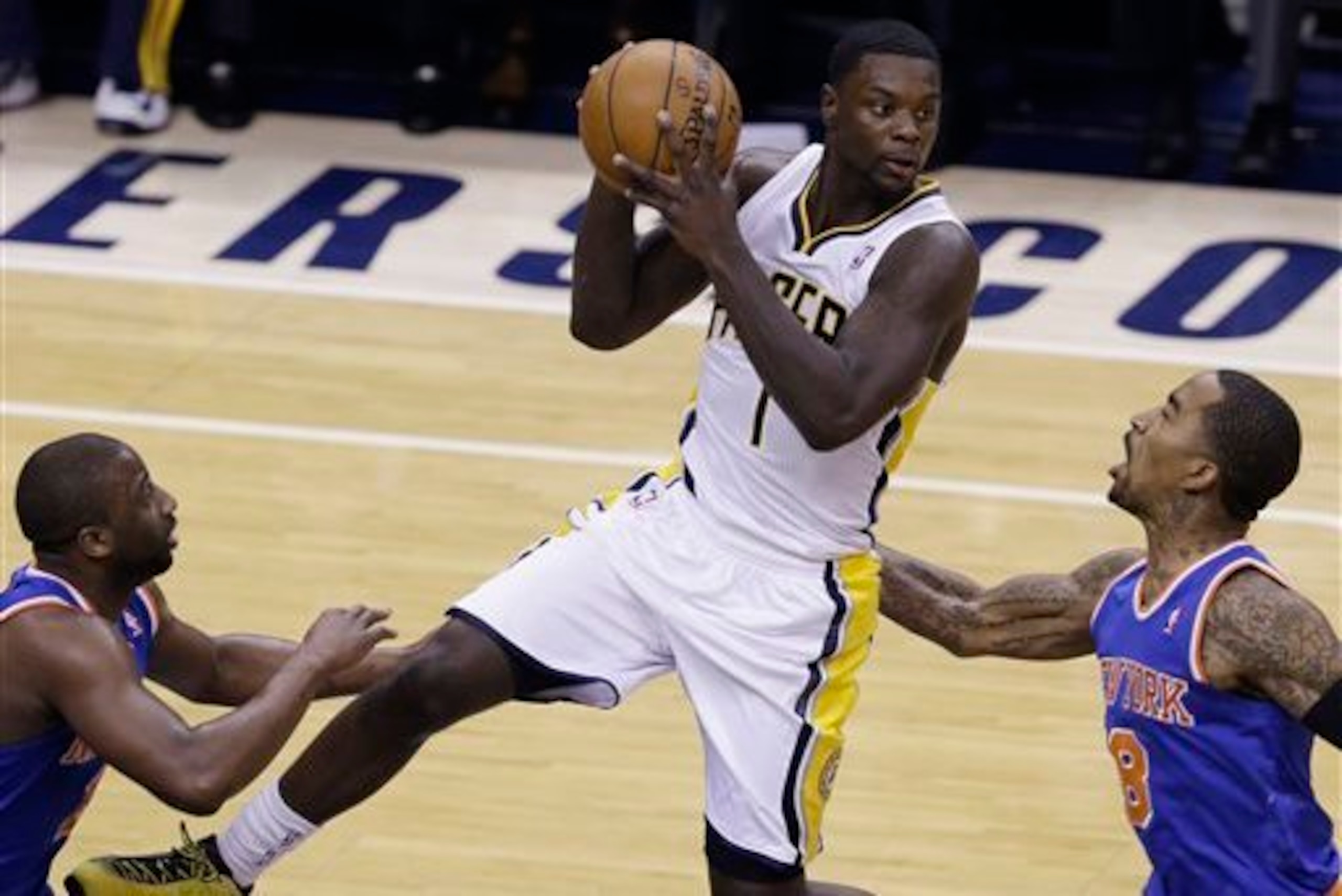
"[Bird] believed in me," Stephenson recalled during a 2013 interview with Yahoo’s Adrian Wojnarowski. "He gave me the confidence that I could play in the league. Larry is a legend, and when he tells you that you can do this, and do that, it just boosts your confidence, makes you feel like no one can stop you."
That quote was coined, appropriately enough, in the midst of Indiana’s six-game victory over New York in the 2013 Eastern Conference semifinals, throughout which Stephenson’s brand of two-way heroics continually befuddled the higher-seeded Knicks.
Eighteen months later, the hardwood hellion they call "Born Ready" is officially on the trade block—or was, before the Hornets, underwhelmed by the offers at hand, temporarily tabled the idea, per ESPN.com’s Chris Broussard and Ramona Shelburne.
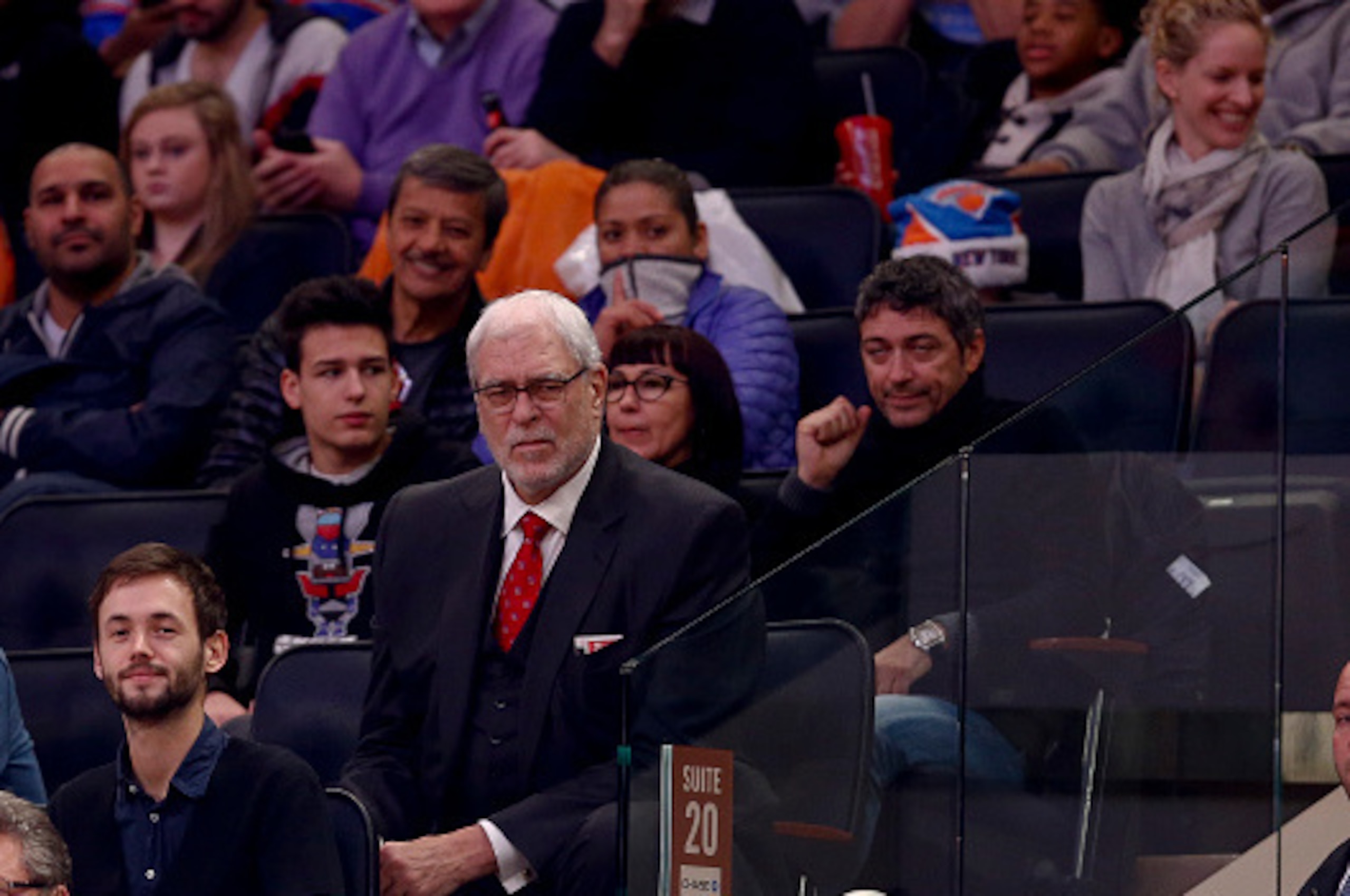
Which brings us back to the Knicks, a franchise currently enduring its own kind of identity crisis. Gone is the honeymoon magic of Phil Jackson’s first few months on the job, replaced by growing concern that the team’s decision to extend Anthony through the 2018-19 season is sure to come back to haunt them—if the haunting hasn’t hastened already.
To say the Knicks are in dire need of a fire lit beneath them would be to sell the desperation short. This team needs a solar flair straight to the mainframe, a prodigal punch to the arm. New York needs Stephenson. Much more, in fact, than vice-versa.
Here’s SportingNews.com’s Dane Carbaugh with the simple, somewhat cynical skinny on what makes Stephenson-to-the-Knicks such a fascinating idea:
"What if Stephenson played the
scapegoatnative son role the way Derrick Rose does in Chicago? He could relieve pressure from Carmelo Anthony both on and off the court, and be the catalyst in the triangle offense. As a passing point forward, he could be the Scottie Pippen of the Big Apple. Phil Jackson could even teach him to be Zen.I mean, none of this is realistic in any way, but it sounds like the kind of thing James Dolan talks himself into while making team decisions and writing up setlists for JD and the Straightshot.
"
Such an explosive mix needs the perfect catalyst, of course—a stabilizing force capable of culling power from the fire. Who better than Jackson, a magician of the mind game if ever there was one. If the Zen Master can turn Dennis Rodman and Ron Artest into totems of teamwork, surely he can find something in Stephenson worth salvaging.
Judging by dearth of Stephenson rumors, the price probably wouldn’t be much (some combination of J.R. Smith, Iman Shumpert, Tim Hardaway Jr., Shane Larkin and a pick, perhaps). In the service of saving his franchise, Jackson would be wise to at least consider such a swap. Could it backfire? It could. Might it bleed the best from both sides: Triangle versatility on the one hand, a fanbase always game for a hometown hero on the other? It might.
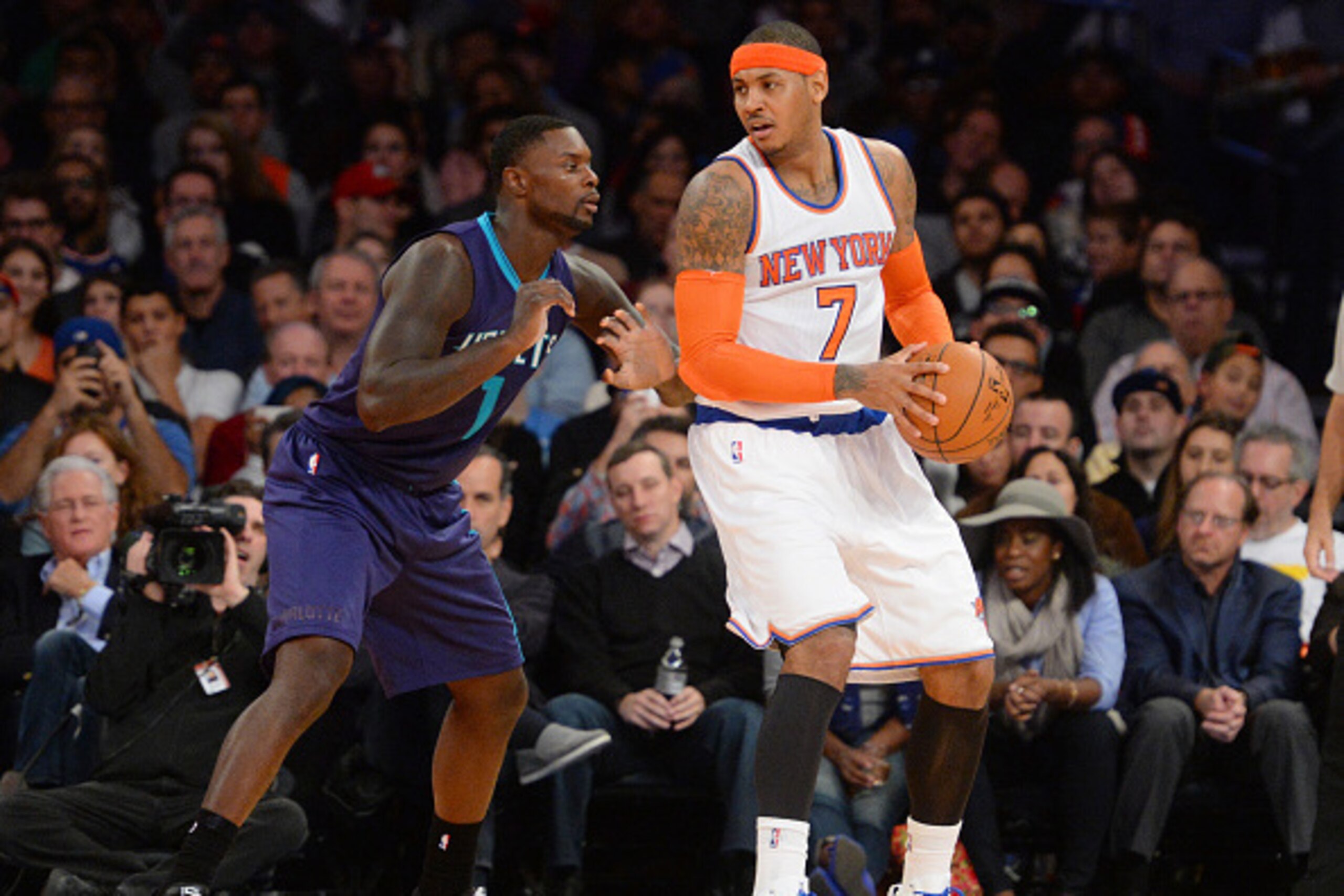
To be sure, New York’s season would still be a wash. As a foundation from which to court potential free agents, though, Anthony and Stephenson would be measures better than anything the Knicks tout now. Even if it means Jackson having to paint Stephenson in a brighter light than he arguably deserves—a spark in search of a friendlier fire, perhaps? So be it.
With the Knicks quickly careening toward a lottery largesse, it’s worth wondering whether a midseason shakeup is even worth it. Particularly with Jahlil Okafor and Emmanuel Mudiay fast ripening for the Ping-Pong plucking.
Still, building a genuine contender around Anthony will doubtless demand the occasional reach, forthcoming cap relief aside. Besides, at its financial and philosophical worst, landing Stephenson—stock as bearish as it's bound to ever be—would scarcely crest the upper fold of Knicks front-office disasters.
Which is why Jackson should seize this, his first true coup as front-office philosopher: Buying low, in hopes the cheap leap of faith one day yields rafter-high returns.
.jpg?w=2560)
.jpg?w=2560 "Cardinals LB's Quote Resurfaces 😏")
.jpg?w=2560 "Skattebo Has 0 Touch Game 😬")
.jpg?w=2560 "Chargers Fall to 0-6 📉")
.jpg?w=2560 "49ers FB Slams CJGJ 😳")
.jpg?w=2560 "Bills Safety Ejected for Spitting")