How Lane Kiffin Became the Most Influential Assistant Coach in College Football
TUSCALOOSA, Ala. — If Nick Saban was trying to hire someone who was the complete opposite of himself, he wildly succeeded.
When Alabama’s search for an offensive coordinator started, Saban went right for the guy who had been left fired at a bus stop, a coach known for his brash interviews and bold statements that stirred up plenty of controversy. But he also went for the guy he had brought in as a consultant during bowl practice and had interacted with several times during his coaching career, a guy whose coaching acumen he greatly respected.
And in doing so, he wildly succeeded in bringing in the perfect guy to make his offense one suitable for the modern reality of college football.
.jpg?w=2560 "NFL Combine Football")
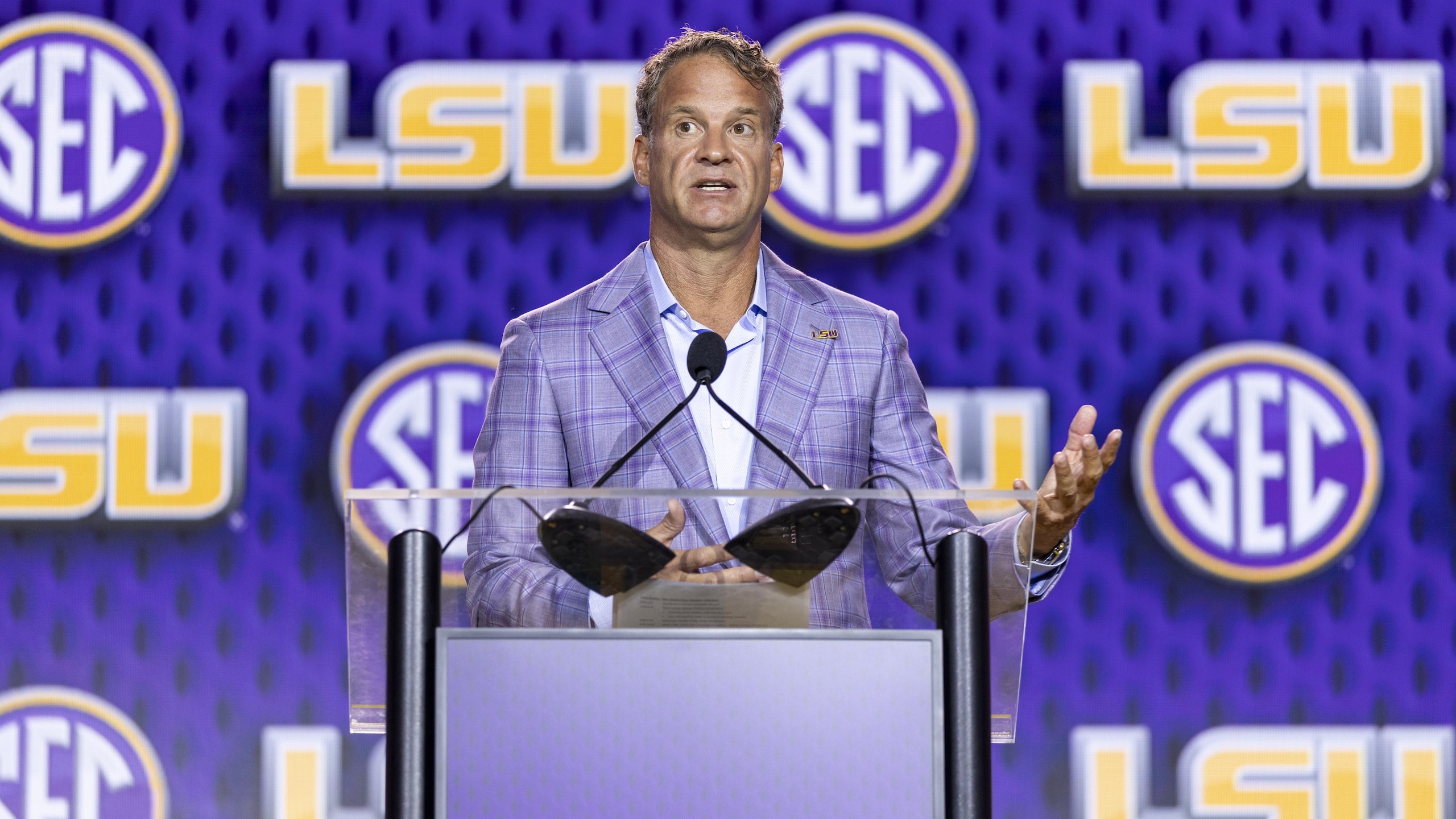
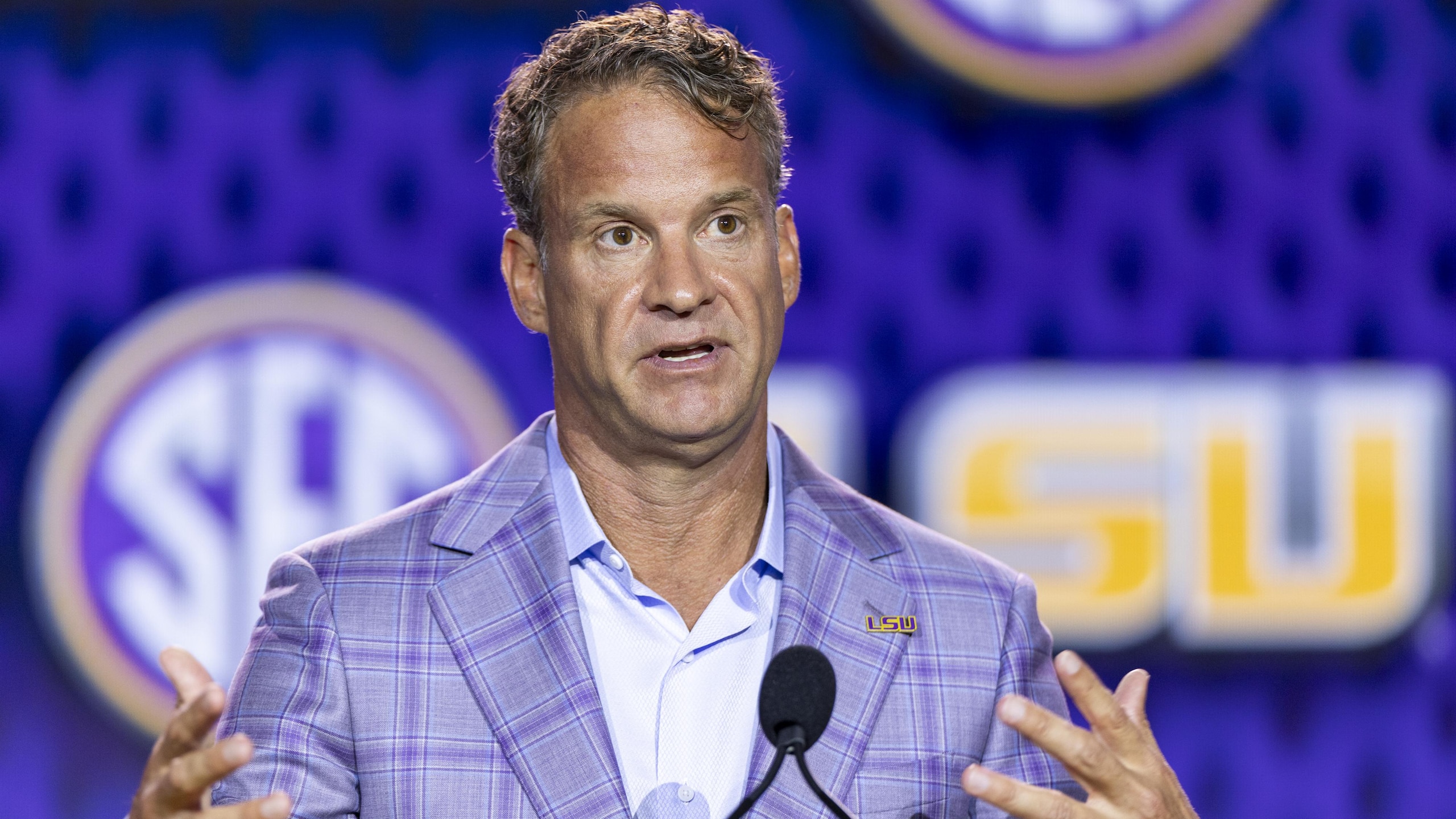
The Lane Kiffin experiment has been a smashing success in Tuscaloosa. Not only has Kiffin engineered a record-setting offense—its 6,376 yards is the highest total in program history with at least one more game left to play—he’s done it while altering the style of play so that it is almost unrecognizable from what Alabama had done in the past.
And in turn, he became the most influential assistant coach in college football, working for a coach who is traditionally hard-and-fast set in his ways.
While Kiffin has changed almost everything about how the Alabama offense looks on the outside, the philosophy in terms of run/pass still remains relatively the same.
Consider these numbers from this season with 2013, Doug Nussmeier’s last year in Tuscaloosa and a season in which Alabama had passed more than any other year in the Saban era with quarterback AJ McCarron a redshirt senior and Eddie Lacy gone to the NFL.
| Plays run | 948 | 826 |
| Percentage pass plays | 43.8 | 44.2 |
| Percentage run plays | 56.2 | 55.8 |
| Third down conversion percentage | 53.76 | 47.62 |
| Red zone conversion percentage | 85 | 79.63 |
| Yards per game | 490.5 | 454.1 |
The run-pass ratio has hardly changed. In fact, Kiffin and Alabama are running it at a slightly higher rate than last year.
So what’s been the difference? What’s made Kiffin’s offense so different and effective?
A good starting point has been the tempo.
The Crimson Tide haven’t gone all out and looked like Auburn or Oregon on offense. But a few times during a game, Alabama will hit the gas pedal, keeping a defense on its heels and helping its offense get in a rhythm.
You can see the difference in plays run increased dramatically over a 13-game season.
“It basically started out this season because of the personnel that we have,” Saban said before the SEC Championship Game. “The quarterback functioned better that way. He's functioned better that way all year. Because of that, our whole personality on offense has gotten to where we function better as a group when we play with some tempo and some pace. That doesn't mean that we're always going to do that, but it certainly has been something that has been beneficial to us.
“Our fastball plays that we do run have been effective. I think it's been a benefit to us and something that we'll continue to do.”
That’s a far cry from this offseason, when he was touting player safety and limiting exposure for players with fewer offensive plays.
Schematically, though, Kiffin has made subtle changes that changed the look of Alabama’s offense, no matter how fast it was running.
For one, he’s been maximizing his personnel. Wide receivers are doing more than traditional “wide receivers” and on down the line to the running backs, tight ends and even occasionally offensive linemen.
The best and most cited example of this came in the fourth game of the season against Florida, when Kiffin split speedster Kenyan Drake out wide and he caught an 87-yard touchdown to open the game.
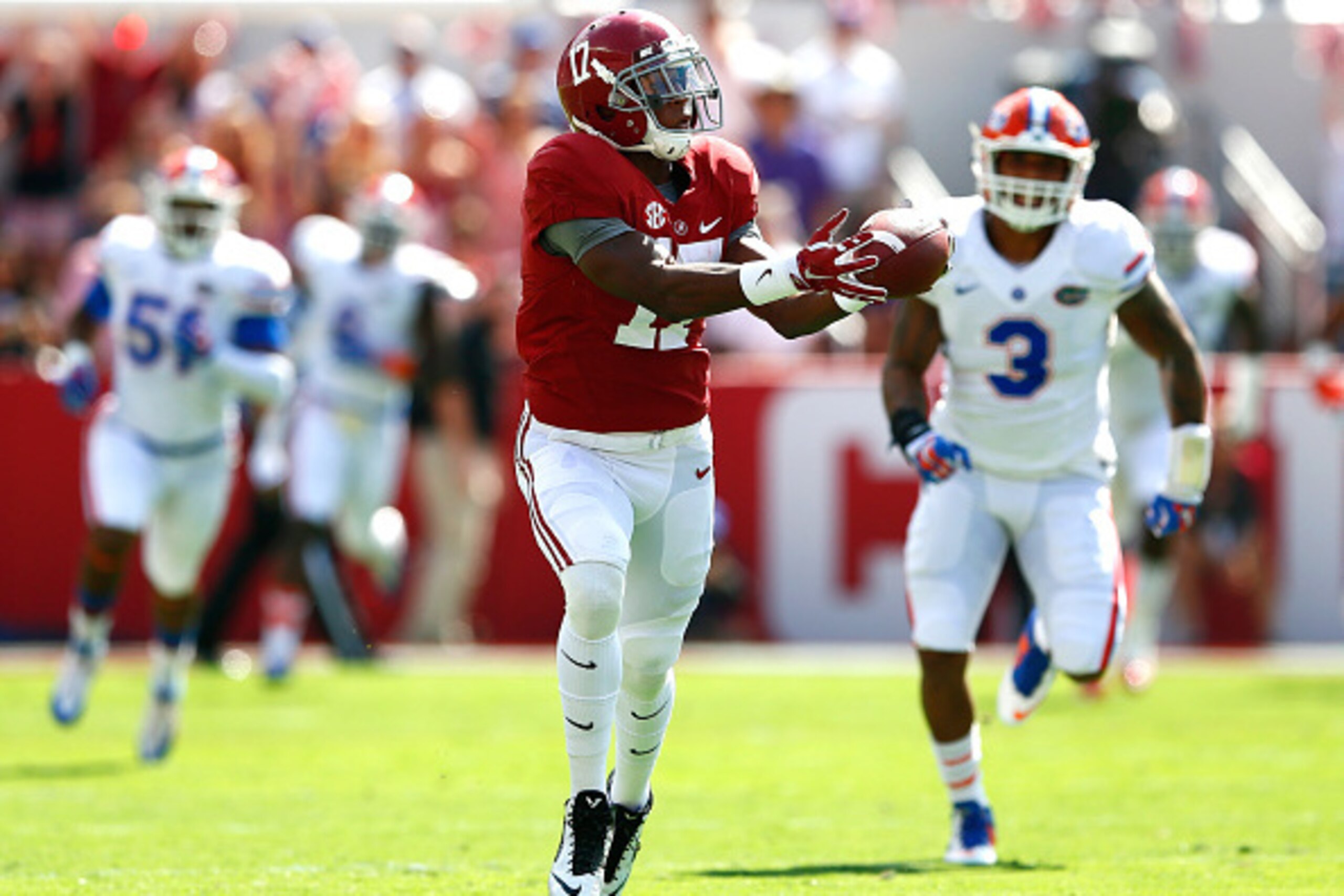
When Drake got hurt against Ole Miss, Kiffin lost one of his favorite toys. Bleacher Report’s Ray Glier wrote that Kiffin had similar plays lined up for Drake the rest of the season.
Here's Kiffin talking about working in Drake during an interview with 103.7 The Buzz in Arkansas before the Broyles Award ceremony:
"The amazing thing is, the most unique of all of them, Kenyan Drake, was injured in that Ole Miss game and was out for the year. He was kind of the Reggie Bush factor - the first play of the Florida game we threw to him as a wide receiver and stuff. The other guys are phenomenal running backs but really don't do the other stuff that Kenyan did, so it will be exciting to get him back next year. And I always, I shouldn't do it, but I think sometimes, imagine if we still had him. Just because he’s such a mismatch issue.
"
There are countless other examples of players getting used in nontraditional roles like that this year.

Fullback Jalston Fowler has been split out wide, too, to provide blocking on screen passes or go on passing routes himself.
Heisman Trophy finalist Amari Cooper has been used in just about every way possible, including coming out of the backfield, on reverses, screens, swings, anything to get Alabama’s best weapon the ball.
In overtime against LSU, he split left tackle Cam Robinson out wide and sent converted tackle/tight end Brandon Greene on a seam route that got Alabama to the 1-yard line. SB Nation’s Rodger Sherman had a great piece breaking down the depth of that play and all of the deception that went into it.
"TE - the "T" is for Trill. https://t.co/zsWl7E7UL0
— Danny (@recordsANDradio) November 9, 2014"
It’s all made for a fascinating conversion, watching a fairly predictable offense loaded with skill talent be transformed into a juggernaut that is one of the most effective in the country.
His influence has been very apparent and the most of any assistant coach in the country.
Marc Torrence is the Alabama lead writer for Bleacher Report. All quotes were obtained firsthand unless otherwise noted.
Follow on Twitter @marctorrence.
.jpg?w=2560 "Source: Freedom, White Not Eligible for WNBA Draft (AP)")
.jpg?w=2560 "Grading WWE Raw 🔠")
.jpg?w=2560 "Shedeur's Reaction to Browns' QB Decision")