

Is Rajon Rondo Making Case to Stay with Celtics or Just Raising Trade Value?
Rajon Rondo and the Boston Celtics are nearing a somewhat familiar fork in the road.
Long the rumor-mill hub, Rondo continues to register splashy stat lines that are valuable both inside and outside the organization. The question is, as it must be: Are his on-court displays worth more to the Celtics as a long-term building block or blockbuster trade buffer?
It's not every season the All-Star point guard is approaching free agency, but using his availability and performance as a means to make sense of the future is routine. His impending free agency has only complicated the process.


The Case For Rondo Staying
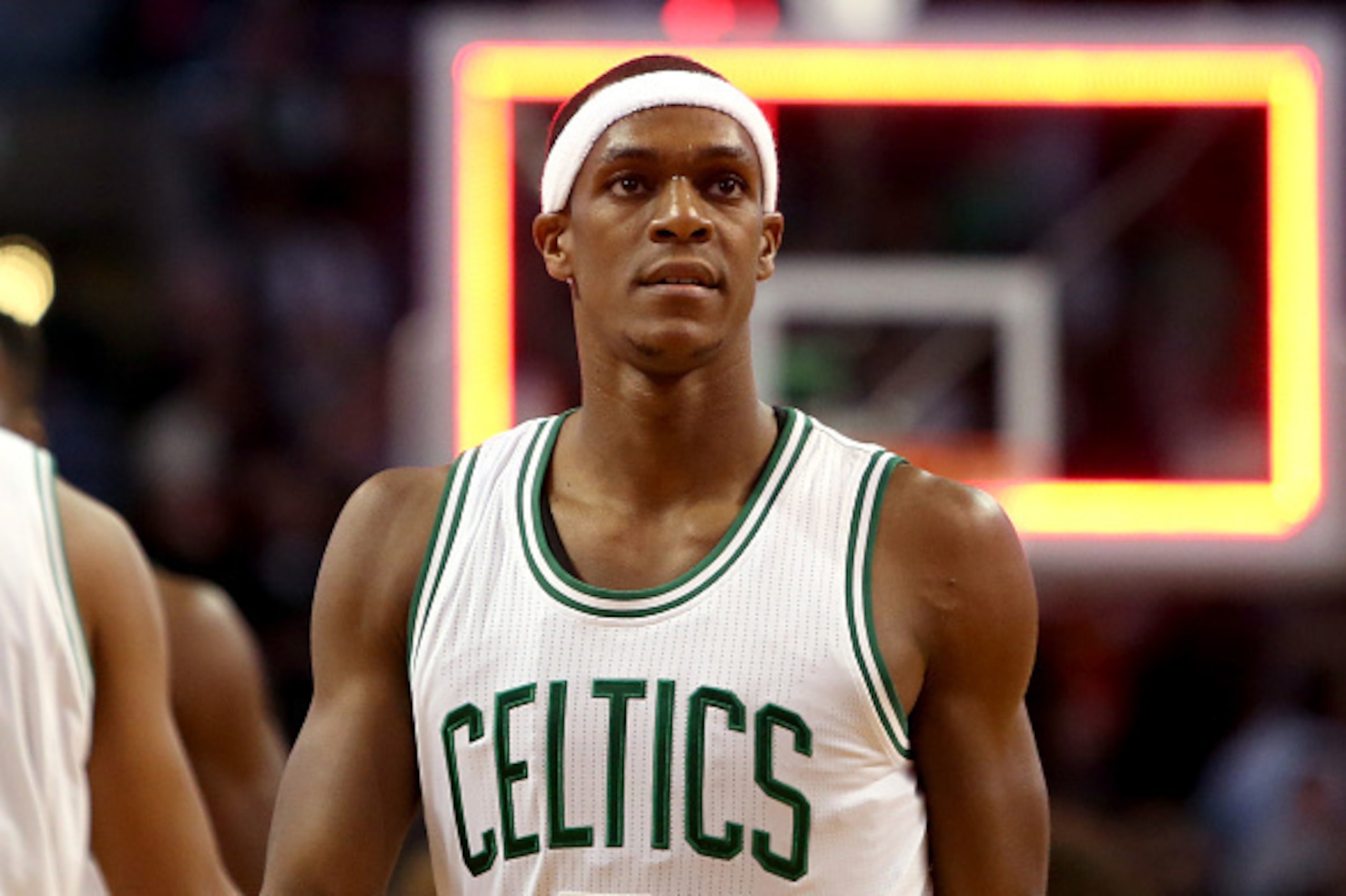
Coming up with reasons as to why the Celtics should invest in Rondo beyond this season isn't difficult. It's easier than ever, in fact.
Over the two previous seasons, the relationship between player and team has been thrust under the public microscope. Rondo missed a combined 95 games in 2012-13 and 2013-14, Celtics president Danny Ainge whaled on the reset button by dealing Paul Pierce and Kevin Garnett, Doc Rivers basically jumped ship and trade tidings were less random rumblings and more credible cannonades.
This season has carried clarity. Though Rondo's production has fluctuated in certain areas—he totaled six points on 3-of-19 shooting during a three-game stretch against the San Antonio Spurs, Atlanta Hawks and Detroit Pistons—there's little question he can still ball.
Not only do Rondo's 11.2 assists per game lead the league, but he's on pace to become the shortest player in NBA history to bring down at least 7.5 rebound a night. The Association hasn't seen a point guard with the rebounding presence of Rondo since Fat Lever, who played a lot of shooting guard, in the late 1980s.
That ability to corral boards with the frequency of a forward leaves him a nightly—and the NBA's most dangerous—triple-double threat. He leads the league with two in 2014-15, and he's on pace to join Oscar Robertson and Magic Johnson as the only players to ever average at least eight points, seven rebounds and 11 assists for an entire season.
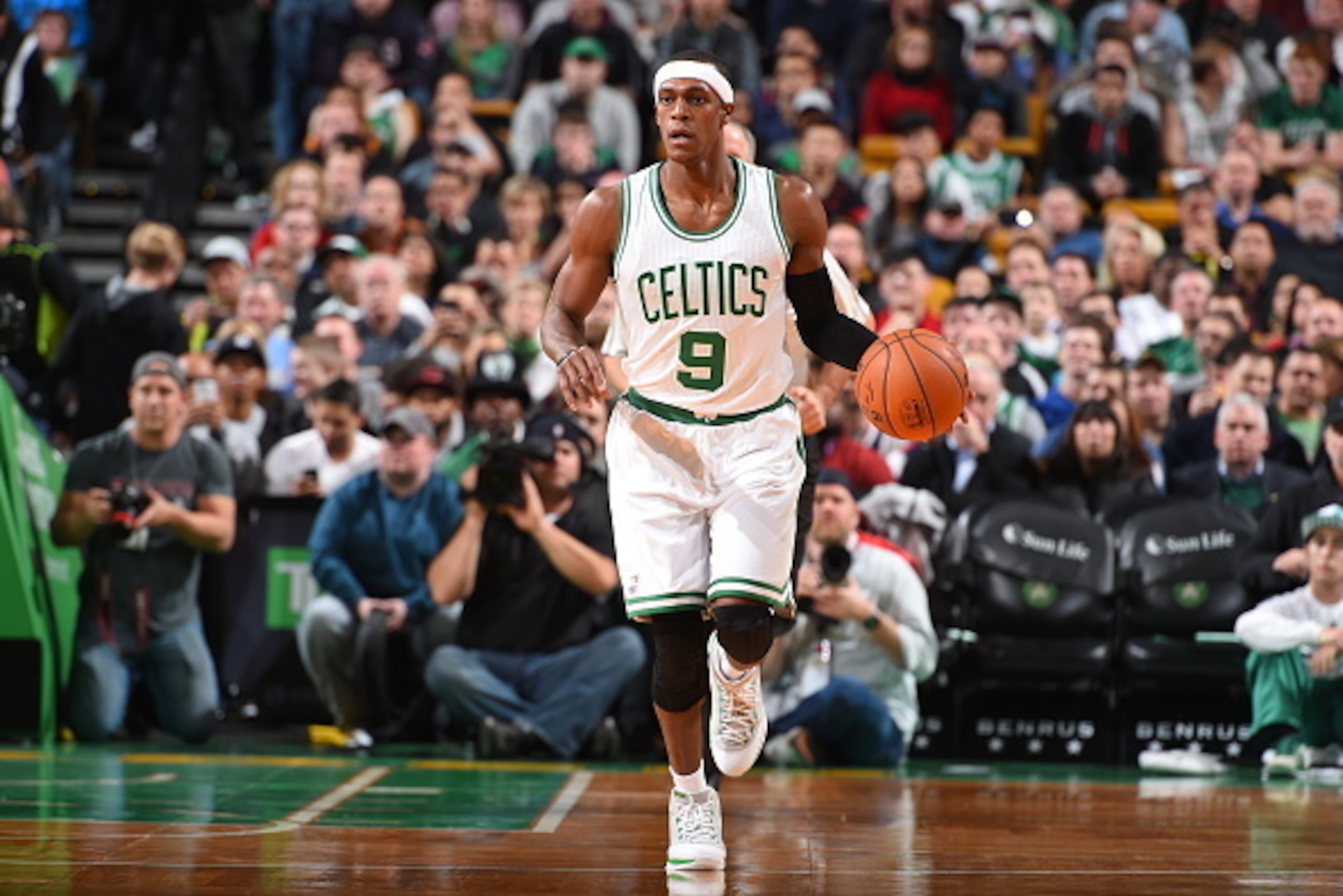
If there's a huge knock on Rondo's game, it's the same story within a different season: his shooting. He's converting just 26.9 percent of his three-pointers, and he's yet to find a steady hand anywhere on the perimeter.
There's this tendency not to judge Rondo's shooting percentages because of what's transpired over the last two seasons. Injuries and a changing roster have no doubt contributed to his shot selection and turbulent success rates.
But this is also a debate that's raged on for almost 10 years. Rondo the scorer is flawed. He hesitates, dominates and disappears. That's not ideal, even for a pass-first playmaker.
Still, the impact Rondo has on the Celtics offense—specifically this season—is a boon for his individual stock.
The Celtics score 103.8 points per 100 possessions with him on the floor, compared to 100.7 when he's on the bench. That's the difference between ranking 17th and 24th in offensive efficiency. Neither is a flattering honor, but the latter is markedly worse.
And Rondo is having this impact without a renowned No. 1 option. He's not threading passes to Garnett or Pierce or even Ray Allen. He's creating shots for Jeff Green, Jared Sullinger, Avery Bradley and Kelly Olynyk, among others.
Despite lacking a proven, first-rate point-piler, the Celtics have managed to stave off bottom-10 offensive status. This roster isn't much different from last year's team, after all. And that squad ranked 27th in points scored per 100 possessions. Rondo has made those exact same players more dangerous.
Just look at at how the effective field-goal percentage—which takes into account the difference in two-pointers and three-pointers—of every Celtics player who logs at least 15 minutes per game is impacted by Rondo, per NBA.com (subscription required):
With the exception of Olynyk and Bradley—the latter of whom's effective field-goal rate is essentially the same either way—everyone else is shooting better with Rondo on the floor. The Celtics cannot simply replace a player, a star, who has that kind of impact. Considering said star wants to stay, why would they even try?
"Regardless of what's going on with the season, my position hasn't changed," Rondo said in November, via CSNNE.com's A. Sherrod Blakely. "I love being a Celtic."
The loyalty is there, the offensive impact is there, the star status is there—giving the Celtics every reason to ensure Rondo doesn't bring them anywhere else.
The Case for Trading Rondo
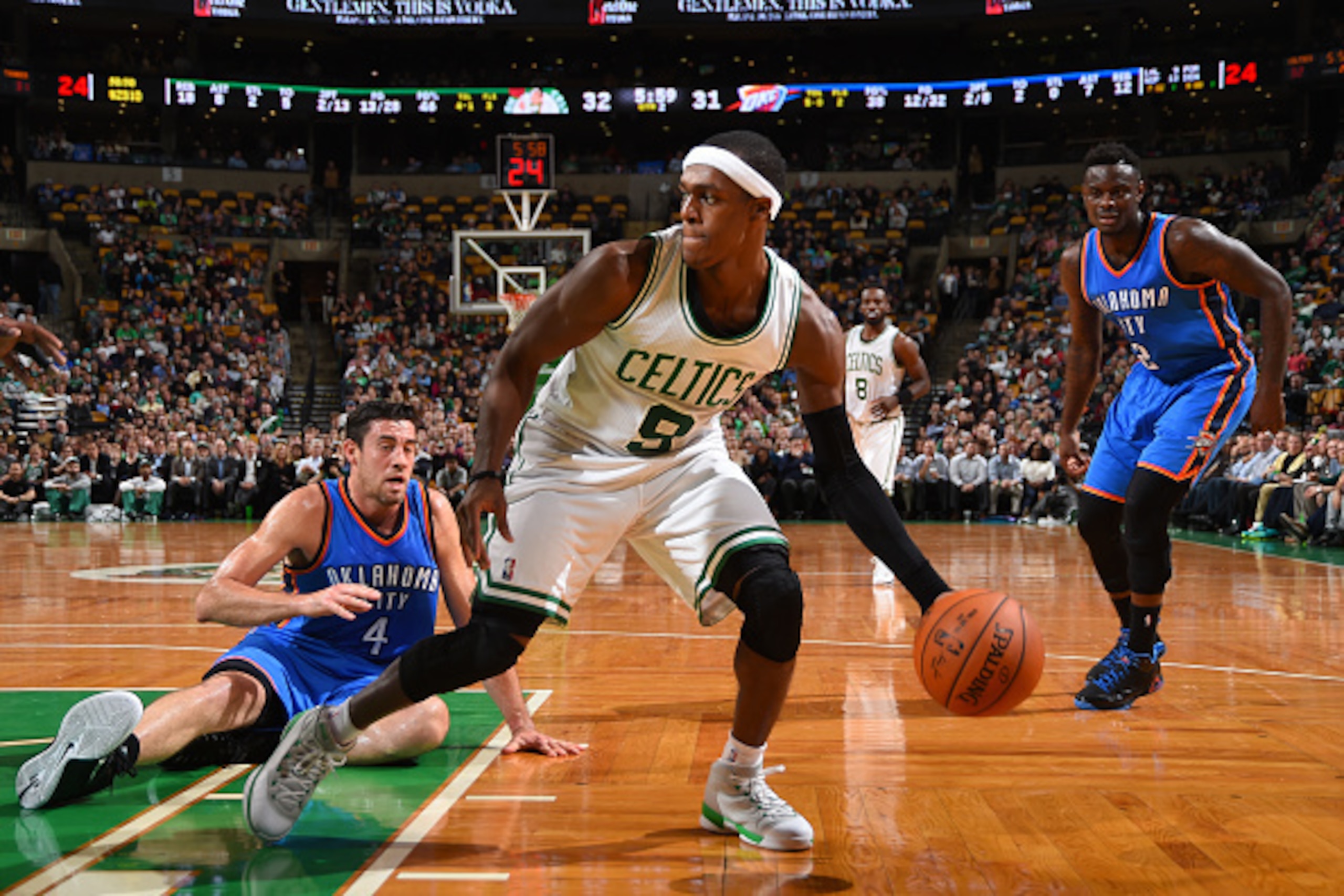
Retaining Rondo isn't a no-brainer, no matter how well he's playing, no matter how much better he makes those around him. Boston remains in the thick of an extensive rebuild and, therefore, needs to evaluate every decision against the future.
Pushing 29, Rondo isn't the ideal foundation for a years-long restoration project. While the Celtics could try to consolidate their stable of assets into one or two established talents, their collection of draft picks—they will own the rights to at least three other teams' first-rounders, in addition to their own, through 2019, according to RealGM—suggests they're more likely to continue retooling from the ground up.
Such a course takes time. It takes patience. It's a process. By the time Boston is ready to contend for a title again, Rondo could be on the wrong side of 30 or 31 or even 32 and no longer at the height of his powers—something the team must take under advisement, given the point guard's contractual aspirations, per ESPN.com's Baxter Holmes:
Re-signing Rondo will (likely) cost the Celtics north of $100 million, the train of thought being if they don't offer him a five-year max deal, another outside team closer to title contention will dangle a lucrative four-year pact in his face.
Having just drafted Marcus Smart with the sixth overall pick this past June, such an investment might not be in the cards for Boston. Players aren't taken that high to be career backups. The Celtics either view him as a building block or star-securing trade piece.
Playing both Rondo and Smart together is also out of the question unless one makes substantial adjustments. Neither is accustomed to playing off the ball, and while the Celtics are outscoring opponents by 11 points per 100 possessions with both on the floor, the sample size is small (five games) and Smart only recently returned from an ankle injury.
Ainge's propensity to work the phones comes into play here, too. Rondo has been the source of trade rumors for years. No matter what both parties may say publicly that hasn't changed.
Not even a little.
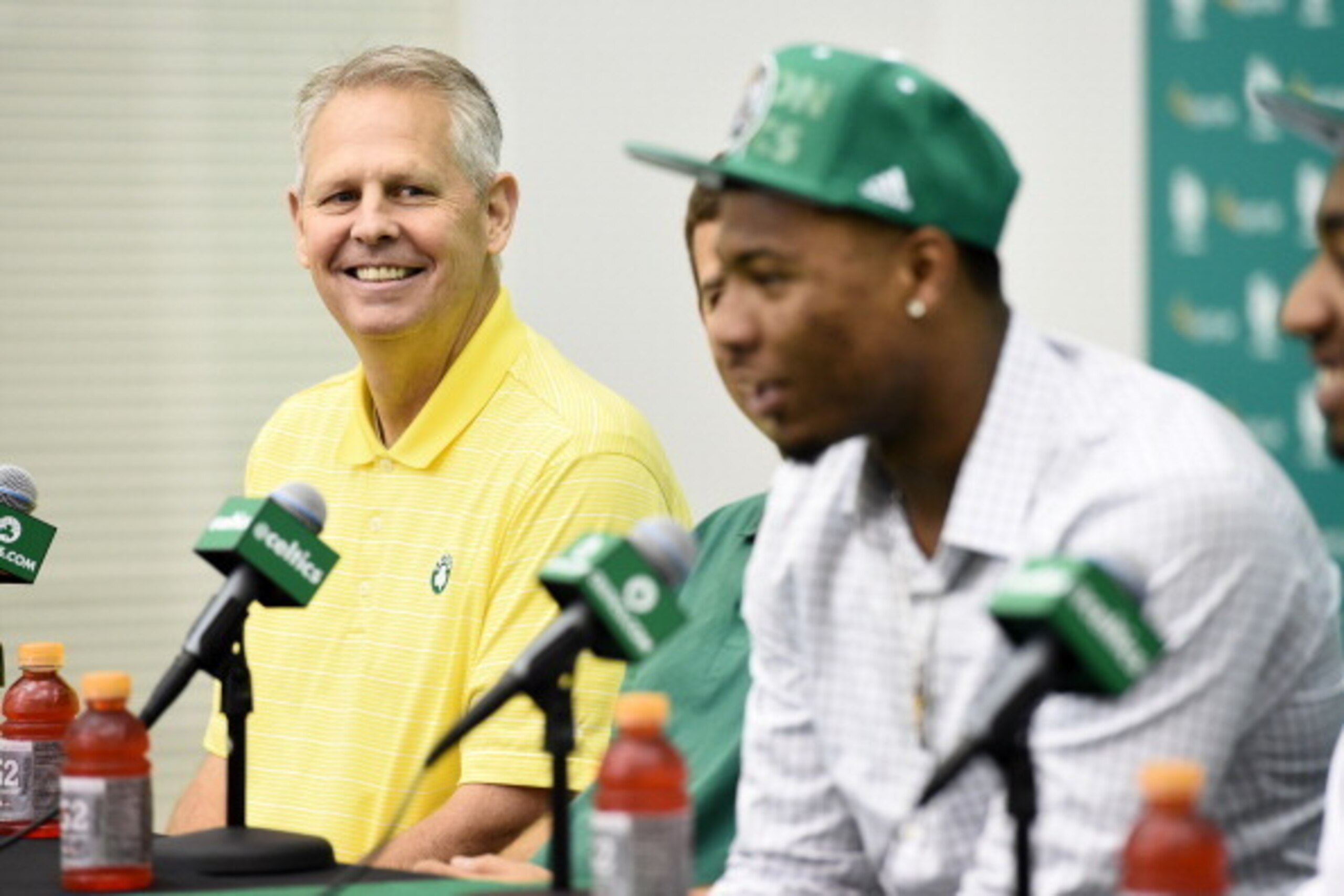
On the heels of Kobe Bryant and Rondo sharing a totally innocent breakfast, ESPN.com's Ramona Shelburne revealed the Los Angeles Lakers and Celtics discussed a potential trade for the floor general. It remains unclear who initiated the talks, but it doesn't matter.
Habitual hearsay is atypical for a star who isn't dying to escape his current situation (see: Kevin Love). That Ainge apparently continues to entertain trade proposals for his best player implies indecision—the kind that won't soon dissipate.
"Celtics president Danny Ainge is notorious for not hanging up on anyone with a trade offer," wrote CBS Sports' Ken Berger, "and it wouldn't be the first time he's discussed dealing Rondo—something he has said repeatedly that he doesn't want to do."
If the Celtics aren't sure—totally, wholly, incontestably sure—if Rondo is their guy moving forward, there's little sense burning valuable cap space on him. The more palatable play could be to trade him ahead of the February deadline, capitalizing on his value while he's still playing 30-plus minutes per night, breaking down defenses, flirting with triple-doubles regularly and ensuring he remains part of the best point guard conversation.
What to Do, What to Do
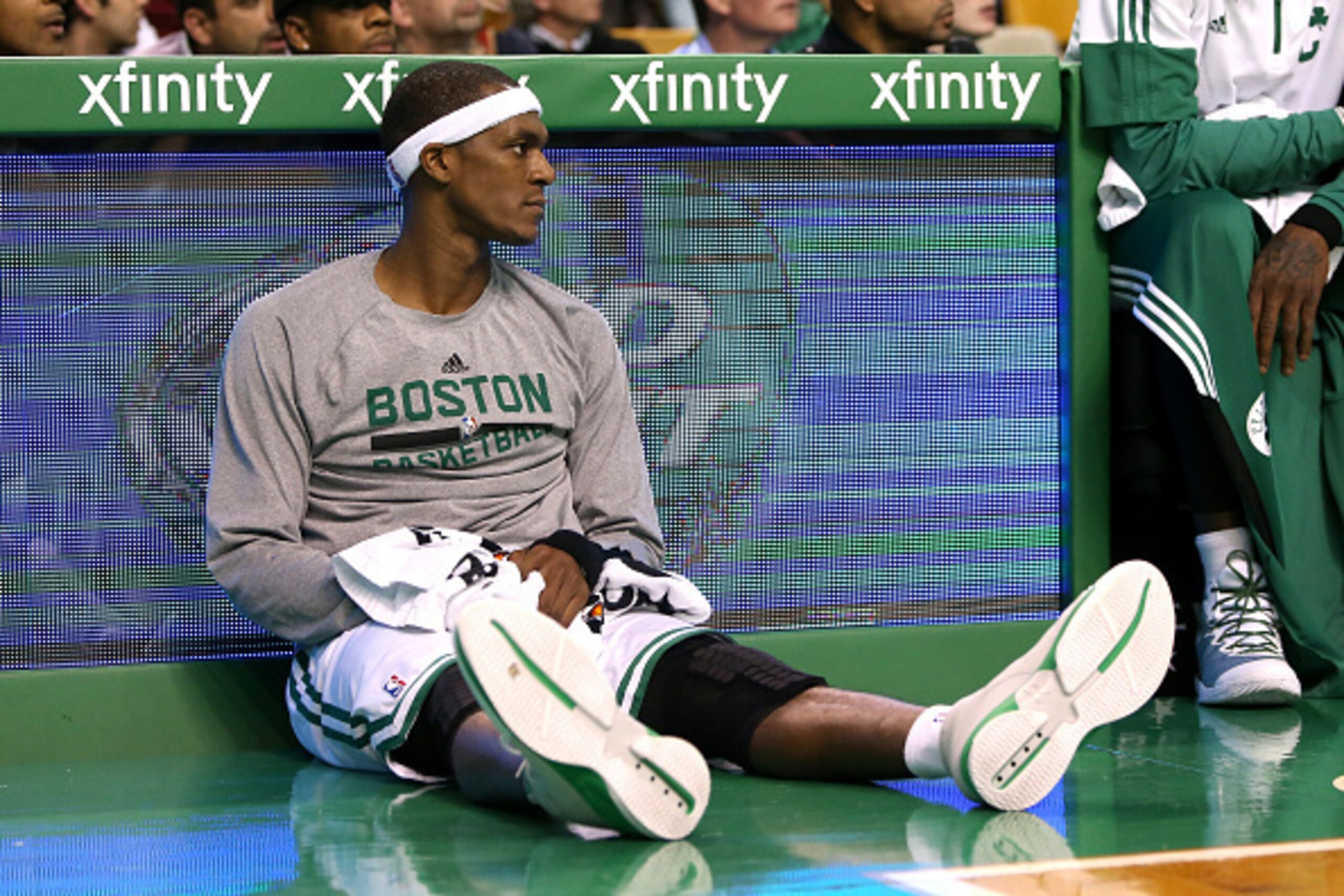
Decision Day is still months away. The Celtics have time to see if Rondo is the right long-term fit or if they can net a king's ransom for his midseason departure.
But the context of Rondo's situation, as of now, is more conducive to a return.
Although there may be more sensible free-agent fits come July, the Celtics are better off trying to lock down their All-Star point man. Trading him would be too complicated. He's on the last year of his deal and a free-agent flight risk. Receiving an adequate value for his return would be next to impossible.
"This is, of course, the central dilemma for any Rondo trade discussions," Celtics Blog's Jeff Clark wrote of the recent rumors. "He's worth a lot to the Celtics and they aren't inclined to sell short on him when they think they have a good shot of re-signing him long term. Opposing teams don't have a guarantee that Rondo will stay long term and they might also be scared off by Rondo's recent injury history."
Talking shop with the Lakers, however long ago, is the quintessential example of this dilemma. They don't have a lot of assets. If they were in play for Rondo at any time, it would mean the Celtics would have to unload him for a combination of expiring contracts and distant draft picks. And if that's the best they can do, the decision has been made for them.
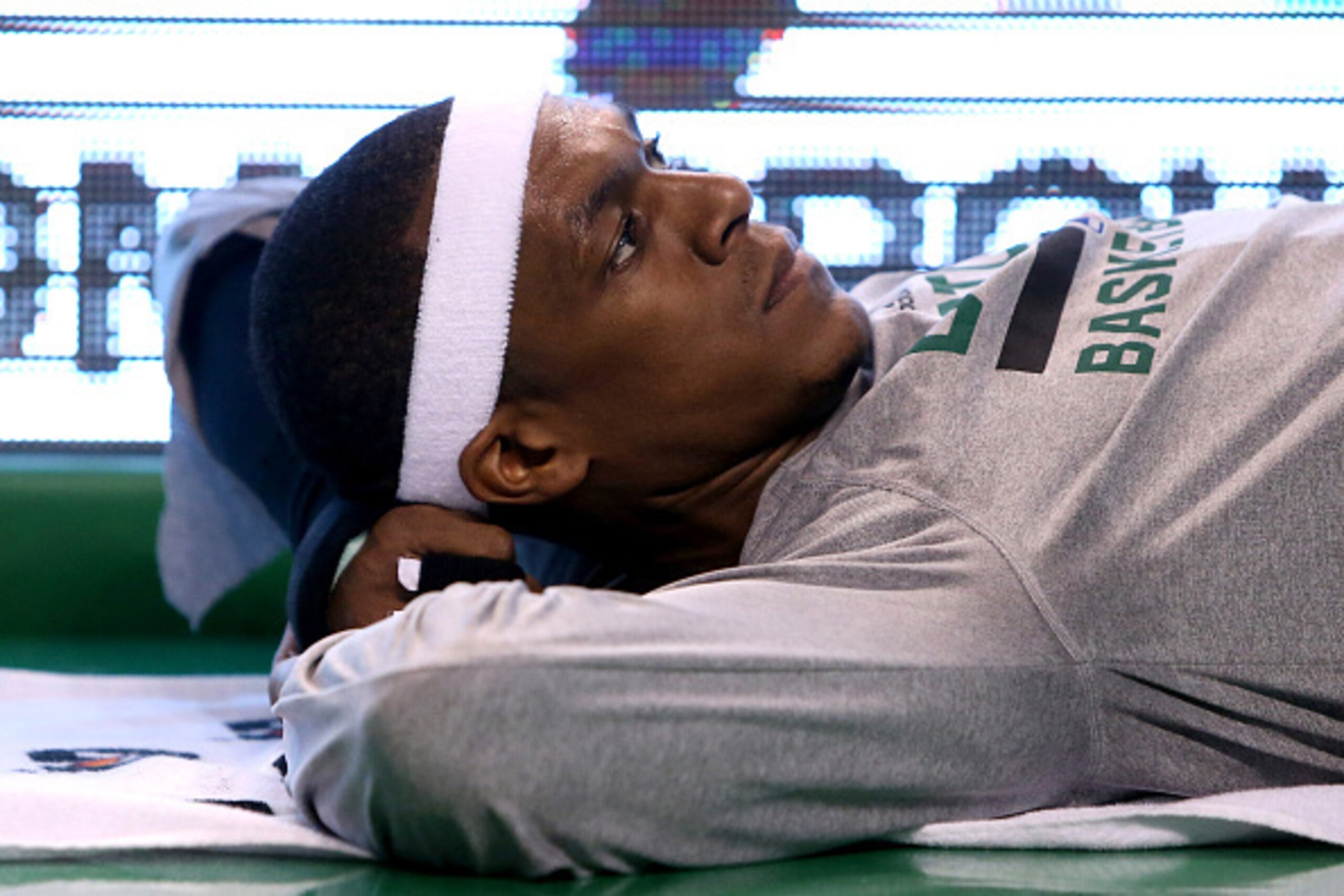
Re-signing Rondo doesn't preclude them from trading him. They'll have to wait until December of next season before pulling the trigger, but with him under contract, teams are less likely to propose curbed trade packages reflective of Rondo's inevitable freedom.
And while there's an inherent risk of prolonging this situation, it's no different from how the Celtics operate in general.
Even if they see him as the future, Ainge isn't one for making players untouchable. Rondo has also played well enough, remained durable enough, to make the Celtics believe he'll soon be the same or close to the same player, so there won't come an imminent point when he's immovable.
Holding on to him merely buys them time—time enough to decide on his future, wherever it may lie, whatever it's worth.
*Stats come courtesy of Basketball-Reference and NBA.com, and are accurate as of games played Dec. 7, 2014.
.jpg?w=2560 "NFL Rookies Who Could Earn Starting Jobs 🌟")
.jpg?w=2560 "🚨 Pearsall Out for Season")
.png?w=2560 "D-Hop Not Retired from NFL 🤔")
.jpg?w=2560 "Teams That Should Eye Baker Mayfield")