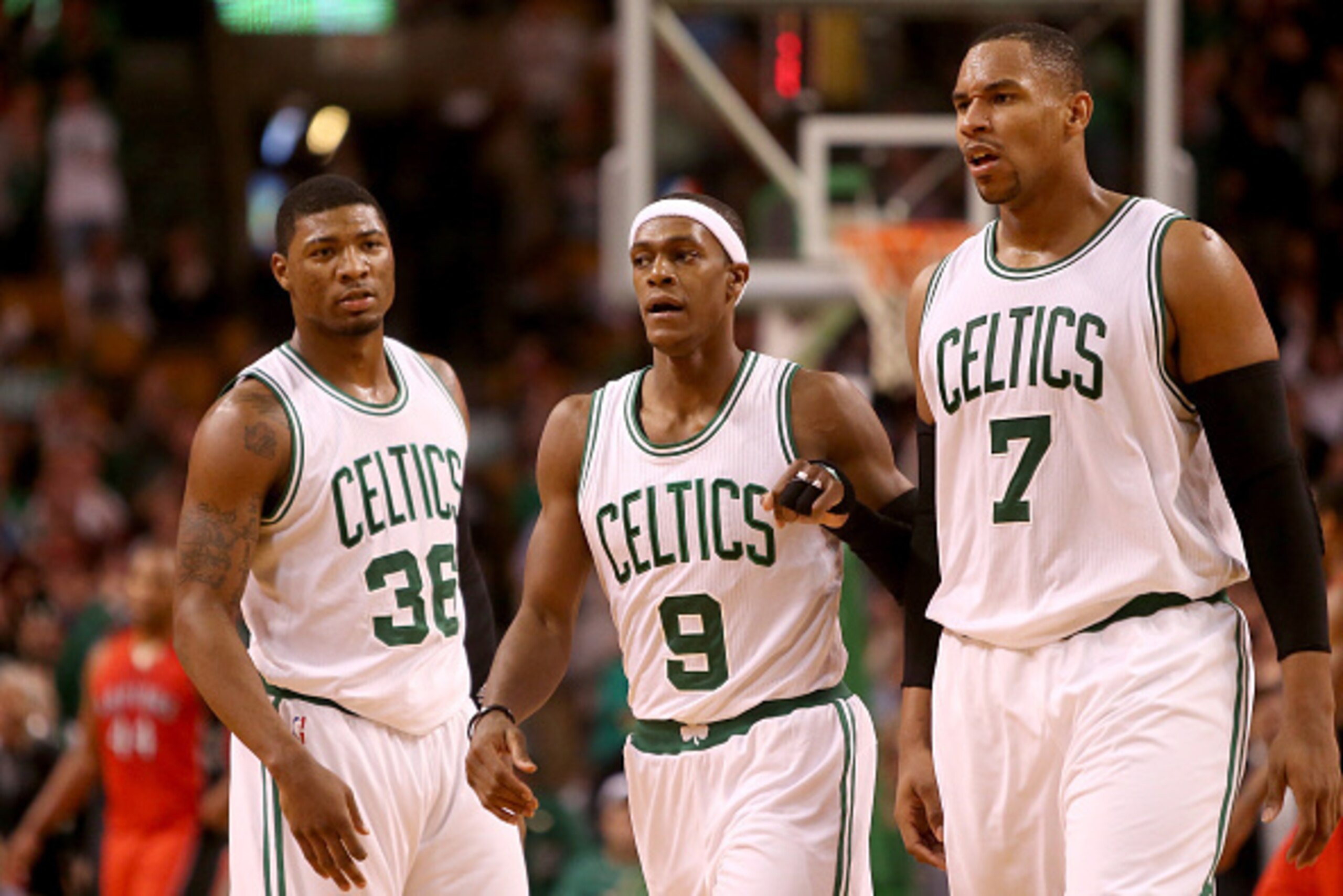

Boston Celtics Player Power Rankings: Stacking Up the Full Roster in December
Despite a 4-10 record and one of the league’s most dismal defenses, the 2014-15 Boston Celtics have been a surprisingly enjoyable squad.
Their revamped, San Antonio-style offense is thrilling if executed properly, and Brad Stevens’ club is always well-prepared going into every game.
These Celts aren’t going to be a playoff contender, but they are a frisky squad with the capacity to beat far more talented teams on any given night.
Sure, they may have the occasional ghastly shooting performance and we could all use a little less Evan Turner at point guard, but this team shows fight and cohesion that the 2013-14 iteration simply lacked.
Boston’s lack of elite talent outside of Rajon Rondo is no secret, but there have been plenty of interesting early-season trends to follow.
Many of the young players have taken nice developmental leaps, while the veterans potentially on the trade block have worked hard to showcase their value.
With a solid sample under our belt, let’s take a look at the early returns for each Celtic and where they rank among their teammates.
Note: Vitor Faverani was not listed, as he has yet to play a minute of basketball this season.
No. 14 to No. 11
1 of 11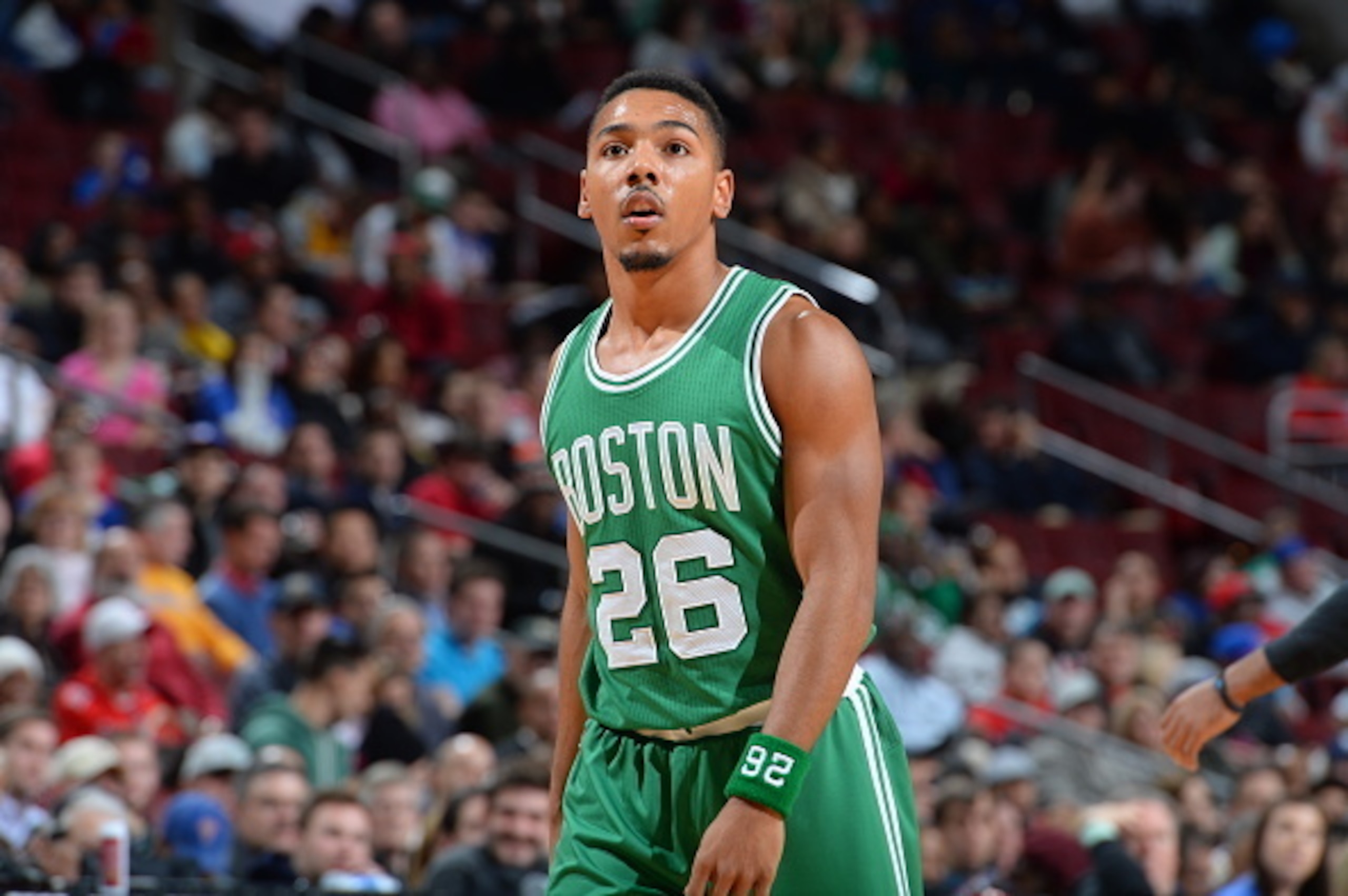
No. 14: Dwight Powell
2014-15 Stats: 2.7 PPG, 0.3 RPG, 0.3 SPG, 80.0 FG%, 2.3 MPG, 3 GP
Dwight Powell, a standout at Stanford, has not had much opportunity with the C’s thus far.
He made the most of his brief appearance against the San Antonio Spurs, but the smooth-shooting offensive big man hasn’t found much of a role.
Powell is talented, but don’t expect to see much of him going forward.
No. 13: James Young
2014-15 Stats: 2.8 PPG, 0.5 RPG, 0.3 APG, 62.5 FG%, 4.0 MPG, 4 GP
The No. 17 selection in the 2014 draft, James Young figures to be a key part of Boston’s future but a minuscule part of their present.
Young, an elite athlete, desperately needs to add bulk and work on the finesse elements of his game before he’s ready for regular minutes.
MassLive’s Jay King praised Young’s offensive play in the D-League, but there’s a reason he’s being shuffled between the Celtics and the Maine Red Claws.
If injuries hit Boston hard or the team throws in the towel, Young could be an interesting piece, but not right now.
No. 12: Gerald Wallace
2014-15 Stats: 0.6 PPG, 0.8 RPG, 0.6 SPG, 00.0 FG%, 8.2 MPG, 5 GP
Gerald Wallace has scored three more points in the NBA this season than you have.
He is also earning $10.1 million in 2014-15. Something here doesn’t add up.
Wallace’s decline in athleticism has made him an afterthought, and Stevens has wisely given his swingman minutes to Turner.
This means Wallace, once an All-Star and terrific two-way player, is reduced to garbage-time duty.
While it’s a sad sight and “Crash” has become virtually untradable, it is the most logical move for Boston’s future.
No. 11: Phil Pressey
2014-15 Stats: 2.1 PPG, 1.1 RPG, 2.0 APG, 25.0 FG%, 12.1 MPG, 9 GP
Marcus Smart’s injury has given Phil Pressey the chance to prove himself, but unfortunately the same limitations that have haunted him throughout his career continue to plague the diminutive point guard.
Pressey is a dreadful outside shooter and an inconsistent all-around scorer. He has the quickness to get into the paint but can’t finish over length and doesn’t have a refined floater to compensate.
He’s a nifty passer and a gifted pick-and-roll initiator who can read the floor well, but his limitations defensively make it tough to rely on him.
When Smart returns, expect Pressey to be pushed out of the rotation.
No. 10: Marcus Thornton
2 of 11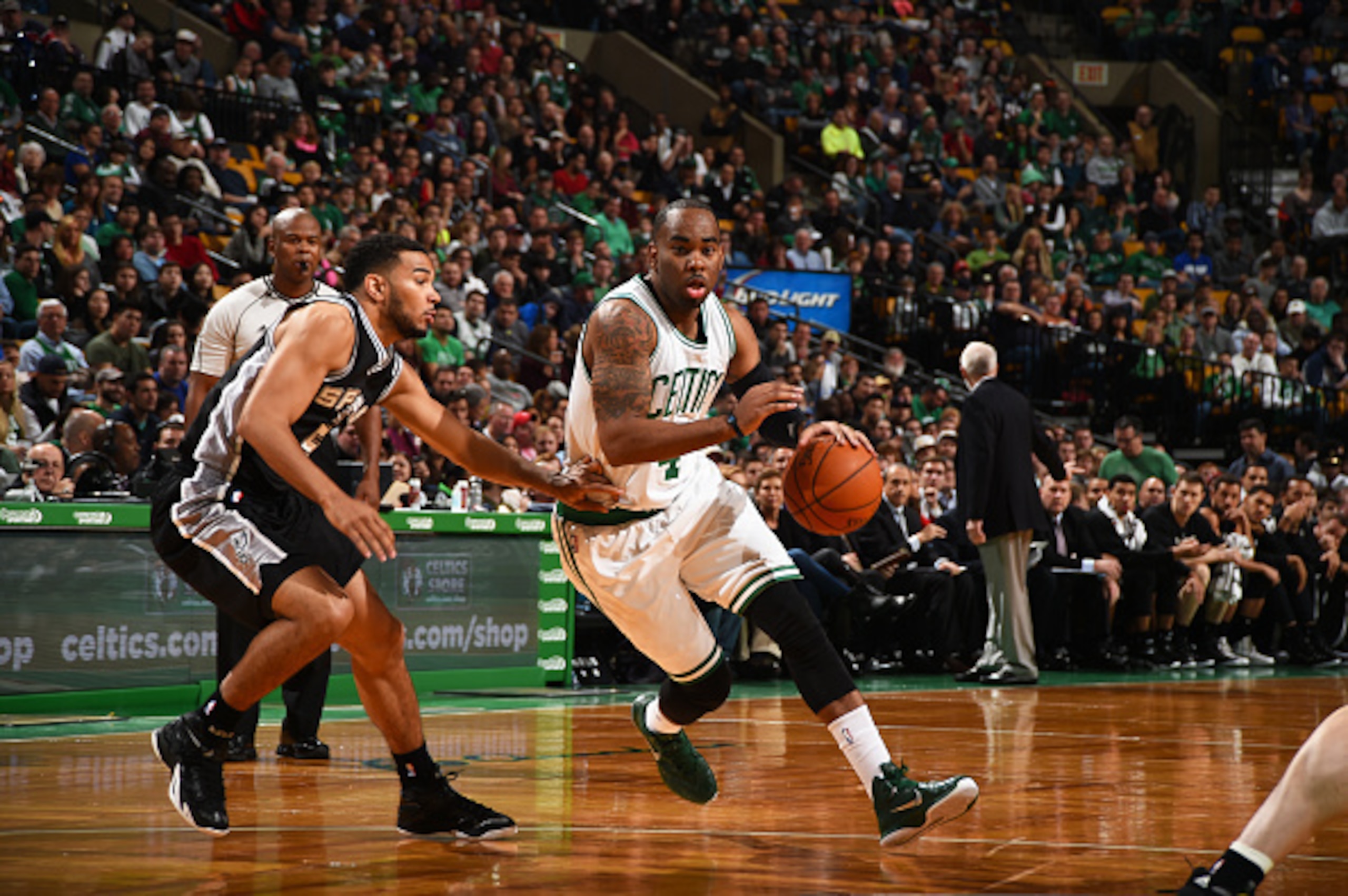
2014-15 Stats: 7.5 PPG, 1.2 RPG, 0.7 APG, 44.2 FG%, 15.5 MPG, 13 GP
Three-point shooting has been a major need for Boston this season, and Marcus Thornton has managed to come off the bench and provide some sniping in spurts.
He’s hitting 36.7 percent of his tries from deep and is particularly adept as a catch-and-shoot weapon.
Thornton has some decent moves off the dribble, and far fewer of his shots are coming from beyond the arc than usual, but he’s still best used as a floor-spacer.
The real problem with Thornton is his often uninspired defense. He’s a little undersized for the 2 at 6’4”, and is often pushed around by bigger guards.
He has the capability to get into passing lanes and can occasionally make a play, as he proved against the Spurs, but overall he’s a liability.
Expect Thornton to continue in this spark plug role for the rest of the season—barring a trade—while continuing to alternate hot and cold games.
No. 9: Marcus Smart
3 of 11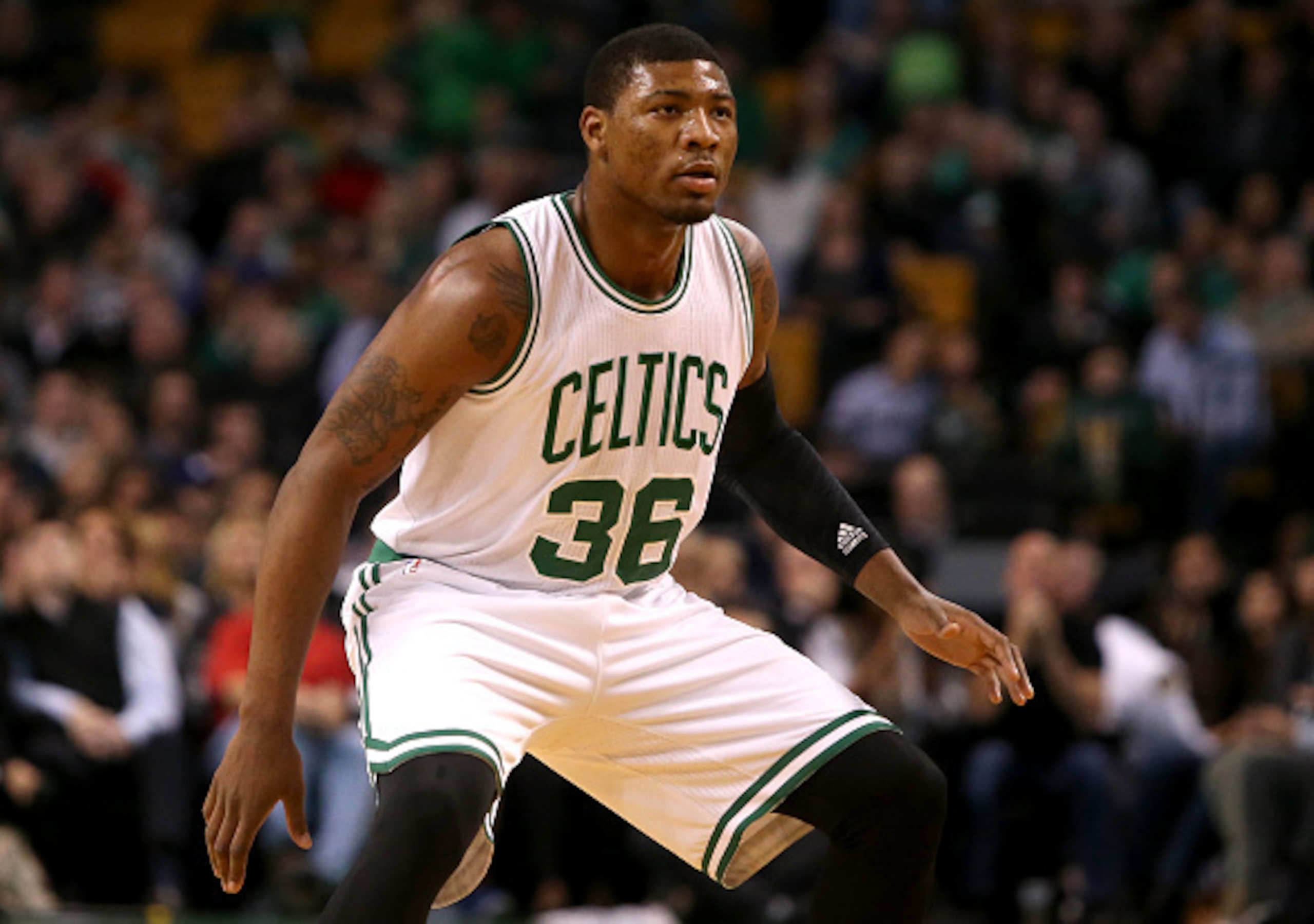
2014-15 Stats: 6.8 PPG, 2.6 RPG, 1.2 APG, 30.6 FG%, 20.4 MPG, 5 GP
Smart’s withdrawal from a recent practice is undoubtedly troubling, but the prized rookie should be back on the court for the C’s sooner rather than later.
Though his numbers aren’t stellar, Smart has been sensational on the defensive end alongside Avery Bradley.
If you need proof of his ability to impact the game in a variety of ways, just watch his transcendent fourth quarter against the Dallas Mavericks again.
Smart’s offense is erratic, and he needs to improve on his 24 percent shooting from three, but his aggressiveness and energy on the defensive end guarantee him major minutes.
Opposing point guards are averaging a player efficiency rating of just 6.6 against the former Oklahoma State Cowboy, according to 82games.com.
If Smart comes back fully healthy, expect to see him skyrocket up this list, particularly if Rondo is dealt.

.jpg?w=2560 "Knicks-Oakley Lawsuit Basketball")
No. 8: Tyler Zeller
4 of 11
2014-15 Stats: 6.4 PPG, 3.7 RPG, 1.1 APG, 66.0 FG%, 14.7 MPG, 14 GP
A nice find for Boston who has morphed into a solid two-way big, Tyler Zeller has had a strong, if unspectacular start to the year.
Zeller runs the floor as well as any big man in the league and has the hands to make tough catches and finishes in traffic. He has a particularly nice chemistry with Rondo on the pick-and-roll, and even started over Kelly Olynyk against the Spurs.
While not a star, Zeller is a high-IQ player who makes good decisions, never forces the issue and tries hard on defense.
He isn’t much of a rim protector and can’t create any offense on his own, but Zeller is a legitimate big man for a team that needs capable frontcourt pieces.
Don’t expect Zeller to start over Olynyk long-term, but the fact that he got the nod at all is a testament to his solid job in 2014-15.
No. 7: Brandon Bass
5 of 11
2014-15 Stats: 9.0 PPG, 3.8 RPG, 1.0 APG, 53.3 FG%, 19.1 MPG, 14 GP
Poor Brandon Bass.
The 10th-year veteran is stuck playing a reserve role while continuing to play inspired basketball on both ends of the court.
Bass has reached his ceiling and doesn’t mesh with Boston’s youth movement, but he still makes the most of his opportunities and is one of the most consistent Celtics.
His mid-range jumper remains automatic (58.1 percent from 16-22 feet, per Basketball-Reference), and he continues to grow as a scorer off the bounce as well.
Defensively, Bass’ size limits him, and though he’s athletic, he doesn’t protect the paint well.
Still, Bass puts in a yeoman’s effort and has become effective both covering the post and stepping out on pick-and-rolls.
Bass may not have much of a future with the Celtics, but his strong contributions off the pine and veteran presence should earn him plenty of trade interest from contenders in need of big-man depth.
No. 6: Kelly Olynyk
6 of 11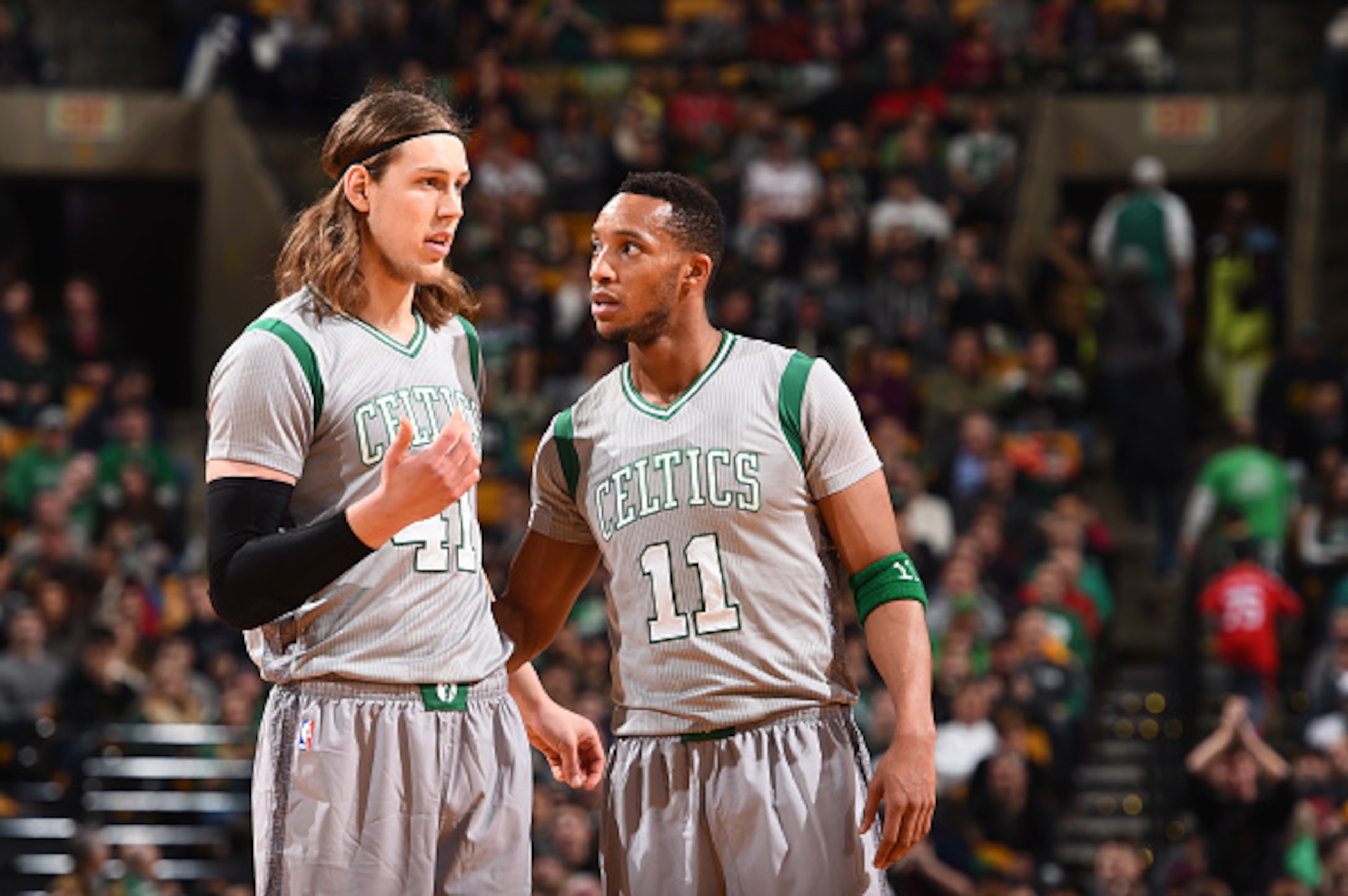
2014-15 Stats: 10.6 PPG, 5.6 RPG, 1.6 APG, 50.0 FG%, 25.8 MPG, 14 GP
A nasty penchant for foul trouble has hurt Olynyk’s sophomore campaign, as the skilled 7-footer is averaging an absurd four fouls per game.
Starting most of the season, Olynyk has been covering more talented players, but he has yet to learn how to protect the rim or defend the block without reaching in. He’s allowing a 20.6 PER to opposing 5s, per 82games.com.
He’s still figuring out how to rotate and move his feet, and as he gets more comfortable in the scheme the foul trouble should become less of an issue.
Offensively though, Olynyk has made some nice strides. He’s hitting 42.9 percent from three and has a deadly pump fake which he uses to catch defenders off balance.
He is also a heady passer capable of facilitating from both the post and the top of the key. Stevens’ offense has given Olynyk a chance to show off his guard skills and he has been solid so far.
The biggest issue offensively for Olynyk is hesitation. Too often he’ll pass up an open look only to dribble into a pass or a more difficult attempt.
Look for Olynyk’s minutes and production to both rise steadily as he becomes more comfortable on both ends of the court.
No. 5: Evan Turner
7 of 11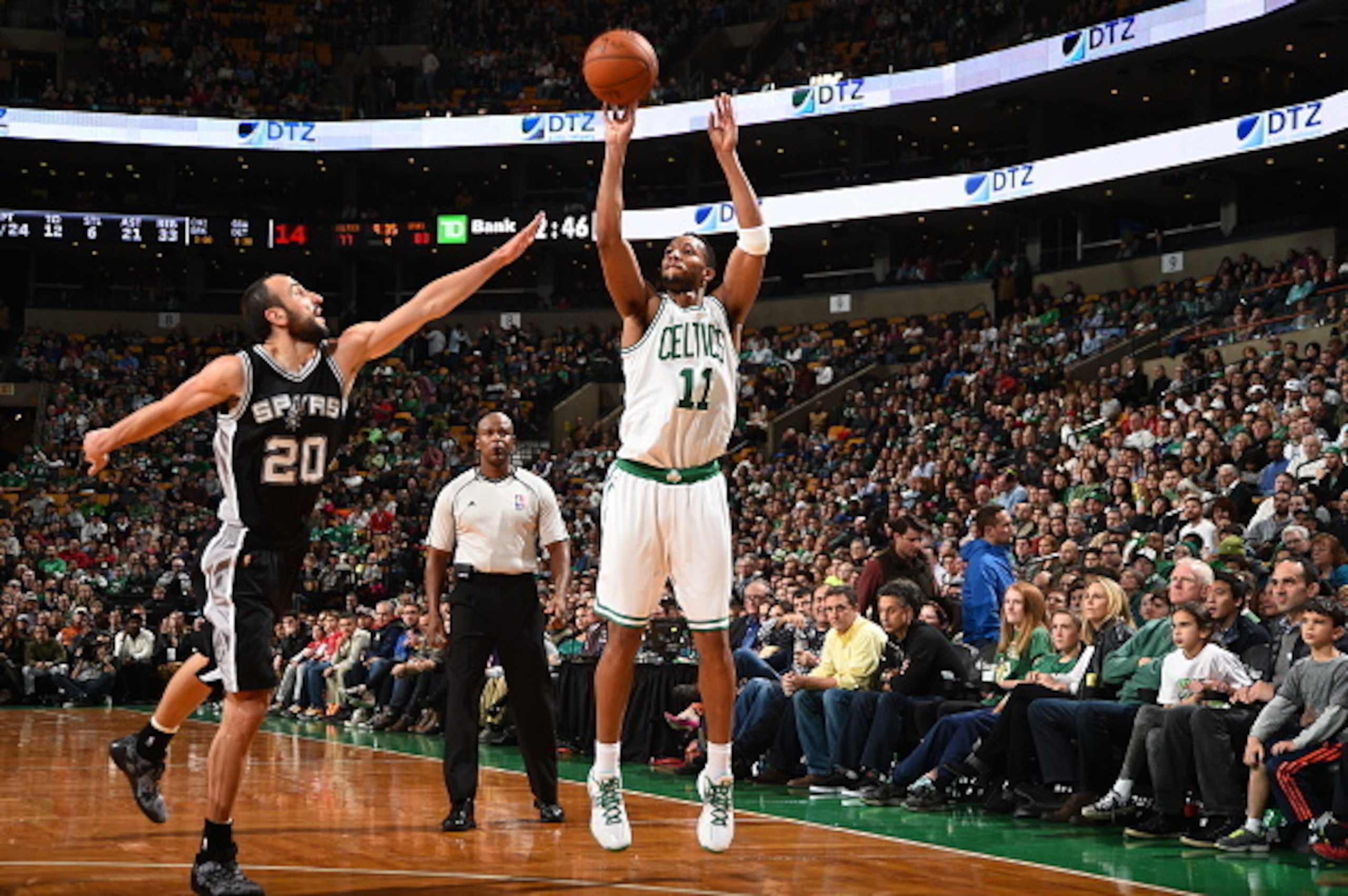
2014-15 Stats: 8.6 PPG, 3.6 RPG, 3.1 APG, 45.0 FG%, 21.2 MPG, 14 GP
Turner has proved to be exactly the kind of low-risk, high-reward signing Boston hoped for when they signed the controversial swingman in free agency.
With Smart out, Stevens has been leaning on Turner to create for the second unit, and he has been impressive so far.
While Turner is at times a questionable decision-maker, there’s no denying his passing acumen or ability to break down a defense off the dribble. Turner has often handled the ball from the 2-guard spot and is averaging a 16.2 PER there, per 82games.com.
He’s still dreadful from deep at just 16.7 percent, but he has a deadly mid-range game and is wonderfully creative off the dribble.
Turner’s herky-jerky play is enough to confound any defense when he gets going, as he proved by dropping 19 points and six assists on the Chicago Bulls.
The former No. 2 overall pick has looked capable as a defender as well. He still occasionally gambles his way out of position, but Turner has been more disciplined with the Celtics than he was as a Philadelphia 76er.
It’s tough to foresee Turner working his way into the starting lineup, but he has excelled as a sixth man and should continue to see a heavy workload even when Smart rejoins the squad.
No. 4: Avery Bradley
8 of 11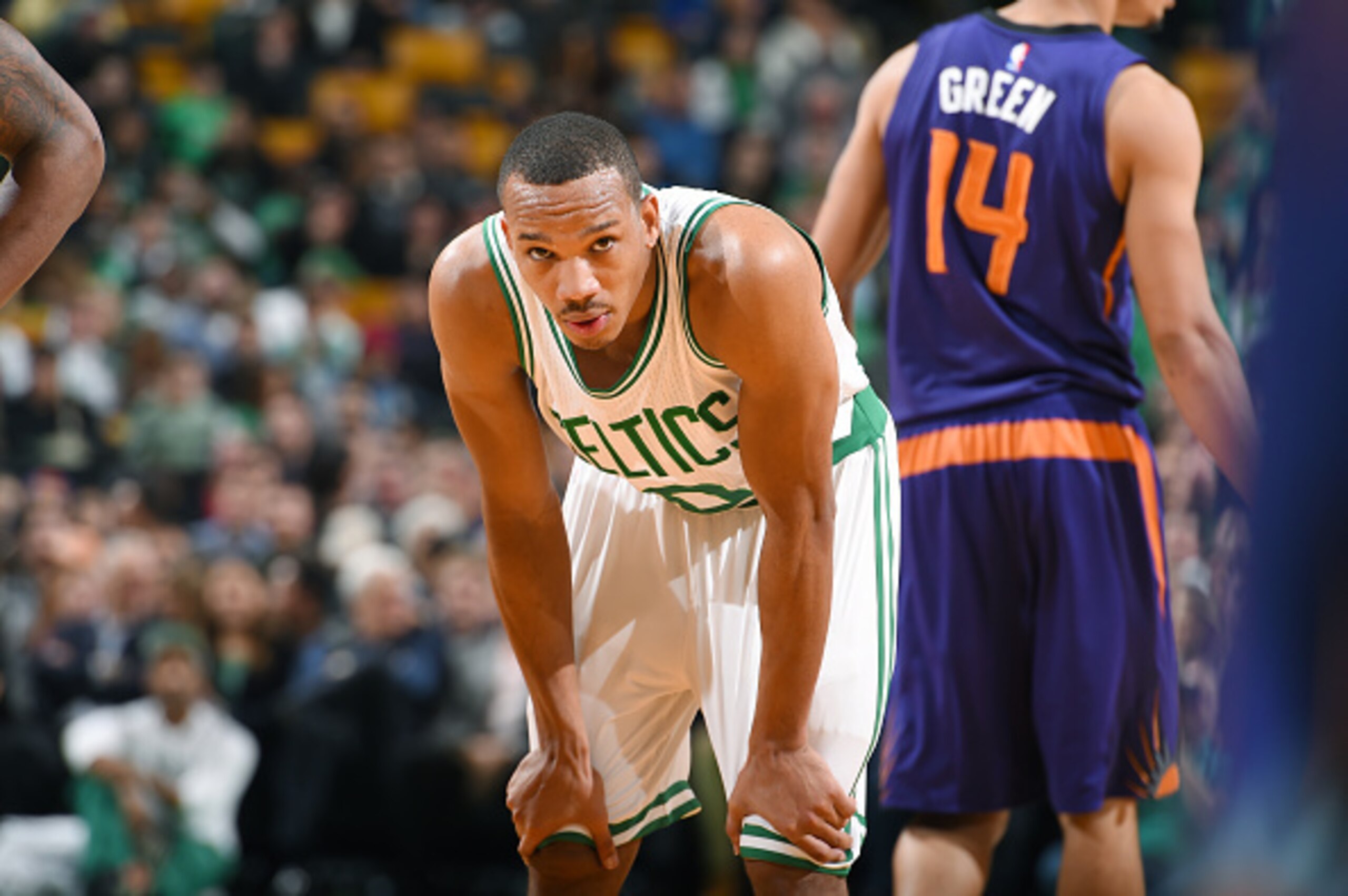
2014-15 Stats: 14.1 PPG, 2.5 RPG, 1.1 APG, 45.6 FG%, 30.6 MPG, 14 GP
Now armed with the security of a long-term deal, Bradley has been proving that his breakout 2013-14 season wasn’t a fluke.
He needs to improve on the 32.2 percent he’s hitting from three-point range, but other than that Bradley has continued to grow as an offensive player.
A smart cutter without the ball, Bradley does a nice job using screens to free himself for corner threes and open mid-range jumpers.
When he does handle the ball, he has gotten better at making quick decisions instead of holding onto it for too long.
Defensively, Bradley has teamed with Smart to form a dynamic ball-pressuring duo. The two are excellent at forcing point guards to work just to get over the time line, and both do a nice job of avoiding screens and sticking tight to their man.
Standing just 6’2”, Bradley’s size will always be a problem as a shooting guard, but he has tremendous chemistry with both Rondo and Smart that helps to offset that.
The four-year, $32 million deal still doesn’t look like a bargain, but it’s nice to see Bradley continue to grow into himself offensively.
No. 3: Jeff Green
9 of 11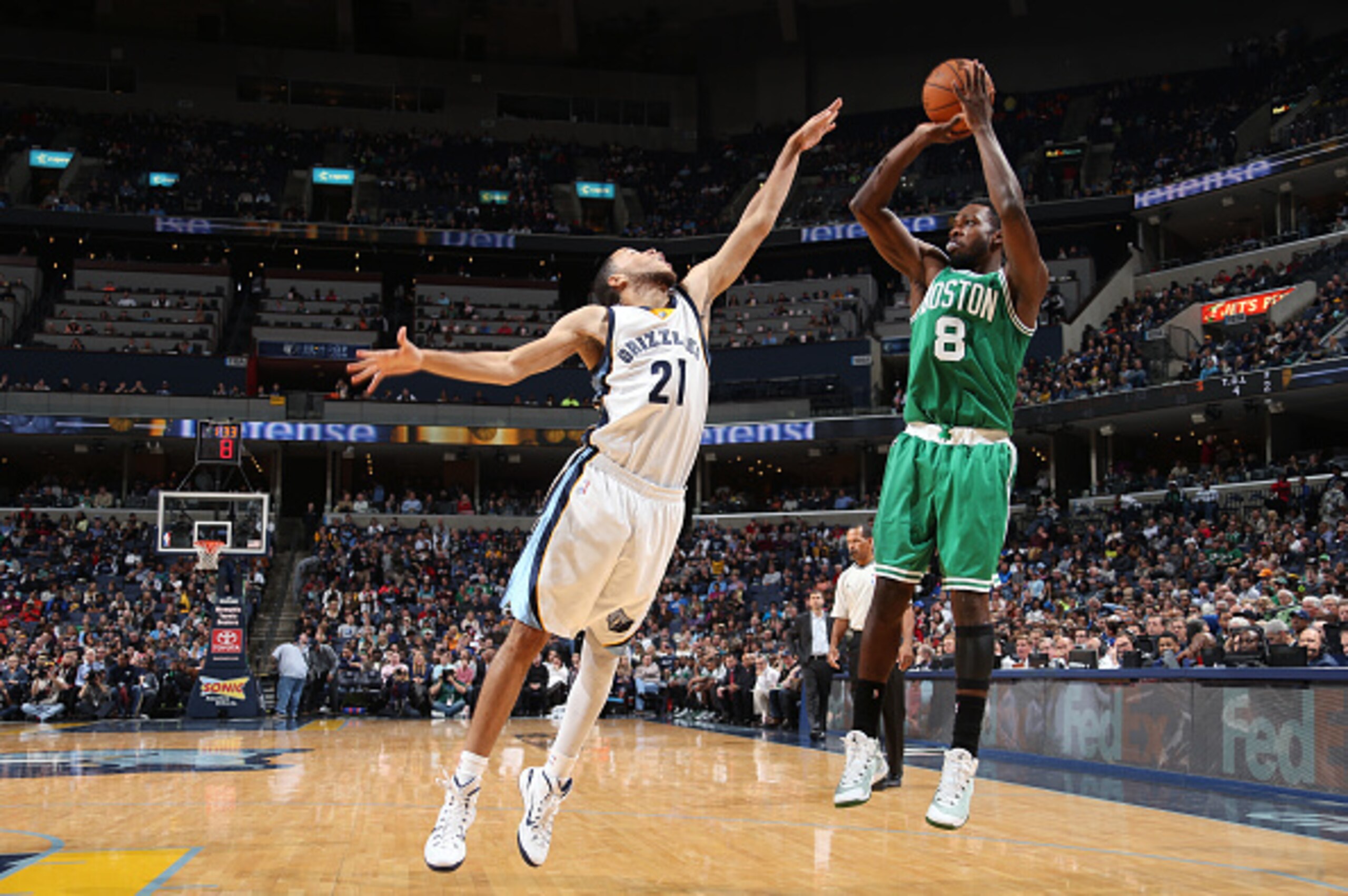
2014-15 Stats: 17.6 PPG, 4.8 RPG 1.9 APG, 43.4 FG%, 34.1 MPG, 14 GP
Besides logging a few more minutes than usual at power forward, 2014-15 has largely looked like any other season in Jeff Green’s career: A frustrating mix of stellar play and inconsistency.
Green’s had a few dominant games where he attacks the basket, gets to the foul line at will and runs the floor, but overall he still settles for too many outside shots. Shooting 26.4 percent from three is not acceptable, especially when over 35 percent of his shots are coming from beyond the arc, per Basketball-Reference.
Having Rondo back has allowed him to work less with the ball in his hands, but Green is still a questionable decision-maker who isn’t an alpha-dog scorer.
Unfortunately, while playing Green as a stretch-4 has worked offensively, it leaves Boston vulnerable on defense. Green is a subpar rebounder for the power forward spot, and his 6’9” frame is too lean and athletic to play defense in the post.
For reference, he’s allowing a 12.0 PER to 3s and a 33.6 PER to 4s, per 82games.com.
That’s the difference between Solomon Hill and Anthony Davis.
Make no mistake, Green is still a tremendous talent capable of carrying Boston on any given night, but it seems like he may have reached his ceiling as a player already.
No. 2: Jared Sullinger
10 of 11
2014-15 Stats: 16.0 PPG, 8.4 RPG, 2.9 APG, 47.2 FG%, 30.1 MPG, 14 GP
Jared Sullinger broke out in 2013-14 and has continued to hone his game in his third campaign.
The big-boned big man is a terrific rebounder on both ends of the court, using his size and knack for positioning to offset his lack of hops. He leads the Celts in rebound rate and has logged four double-doubles this season.
Offensively, he continues to develop comfort as a shooter, and while the 30.8 percent mark from distance isn’t great, it is a sign of improvement. Sully hesitates less from beyond the arc and defenses are starting to pay his outside shot some respect, which is key for opening up driving lanes.
Sullinger has also grown as a passer, making more plays out of the post and off the drive than he ever has before.
The Celtics may not have a dominant post-up scorer, but their big men are all capable passers, which is a definite asset.
He still struggles to score over length, as he can’t elevate over taller frontcourt players, but overall Sullinger has put together a nice offensive season.
Defensively, though he tries hard, his physical limitations are at times tough to overcome. He’s not a rim protector and struggles to contain big men who can back him down and simply shoot over him.
Still, Sully has put together a campaign to remember in 2014-15 and looks like more of a key piece in the Boston rebuild than ever.
No. 1: Rajon Rondo
11 of 11
2014-15 Stats: 9.3 PPG, 7.4 RPG, 10.5 APG, 44.2 FG%, 32.6 MPG, 13 GP
It’s good to have a healthy Rondo back.
While Rondo played in 2013-14 he always looked tentative, which is certainly understandable after tearing an ACL during the previous season.
Now he’s back and completely healthy, torching opposing defenses with his uncanny arsenal of ball fakes and dribble moves as well as his unparalleled court vision.
Rondo leads the league in assists and has managed to turn this subpar cast of weapons into the NBA’s 10th-best scoring offense at 103.4 points per game. He has also showcased an improved three-point stroke, connecting on 35.3 percent of his attempts.
While that’s a small sample size and includes a 4-of-7 performance against the Oklahoma City Thunder, Rondo proving he can knock down triples at a league-average rate would be huge for the C’s going forward.
Defensively, Rondo has been decent if unspectacular, holding opposing point guards to a 16.5 PER, according to 82games.com.
Occasionally a guard will blow by him off the bounce, but he still does a nice job of negotiating picks and using his excellent hands to force turnovers.
While the trade rumors have been dying down, it’s safe to say if Rondo keeps up his strong play there will be no shortage of suitors for the All-Star floor general.
All stats are courtesy of Basketball-Reference.com and are accurate as of Nov. 30 unless otherwise noted.
.jpg?w=2560 "Lawrence to Retire After 2026")
.jpg?w=2560 "Tua Underwhelms in Debut 🤙")
.jpg?w=2560 "James Pearce Jr. Suspended 8 Games (AP)")
.jpg?w=2560 "Vea Sends Bucs Message")