

Michigan's Loss to Ohio State is a Fitting End to The Brady Hoke Era
For three quarters, Michigan stood toe-to-toe with Ohio State and threatened to pull off a major upset in the 111th meeting between the two rivals. But just like Brady Hoke’s tenure at Michigan, things deteriorated after a brilliant beginning.
Ohio State’s eventual 42-28 victory not only eliminated Michigan’s bowl hopes but served as a microcosm of the Brady Hoke era.
TOP NEWS
Caitlin Clark to appear on College GameDay
Northwestern Debuts New Ryan Field 🏟️

Week 5 CFB Picks 🔮
While Hoke goes through the motions of planning for next season, this game almost certainly marks the end of his Michigan career.
“I believe this program is heading in the right direction,” said Hoke after the game while refusing to go into specific reasons that he should be retained. “I’m disappointed for the players.”

Michigan came out in the first half and quieted the crowd of 108,610—most of whom anticipated an easy victory for Ohio State. After falling behind 7-0 early, the Wolverines stormed back with two touchdowns to take a 14-7 lead.
But reminiscent of other Michigan losses, the team surrendered a late second-quarter touchdown drive, as Ohio State scored with seven seconds left before halftime. The Ohio State offense continued rolling after the interval, scoring another touchdown on the first possession of the second half to take a 21-14 lead.
The two drives destroyed Michigan’s momentum.
Any hope that Michigan could match Ohio State’s scoring pace evaporated when Wolverines running back Drake Johnson (15 carries for 74 yards and two touchdowns) left the game with a leg injury.
This game versus Michigan’s archrival mimics Hoke’s disappointing arc over his four years at the helm. Michigan went 11-2 in his first season, but the program has had declining win totals since. This year’s 5-7 finish represents a complete collapse for the winningest football program in NCAA history.
The same problems that Michigan exhibited in this game have dogged the program during Hoke’s tenure. The defense sagged at critical junctures. Devin Gardner threw an interception directly to a defensive player with no receiver in sight. He also fumbled the ball twice (with one fumble being erased by an Ohio State penalty) and missed open receivers.
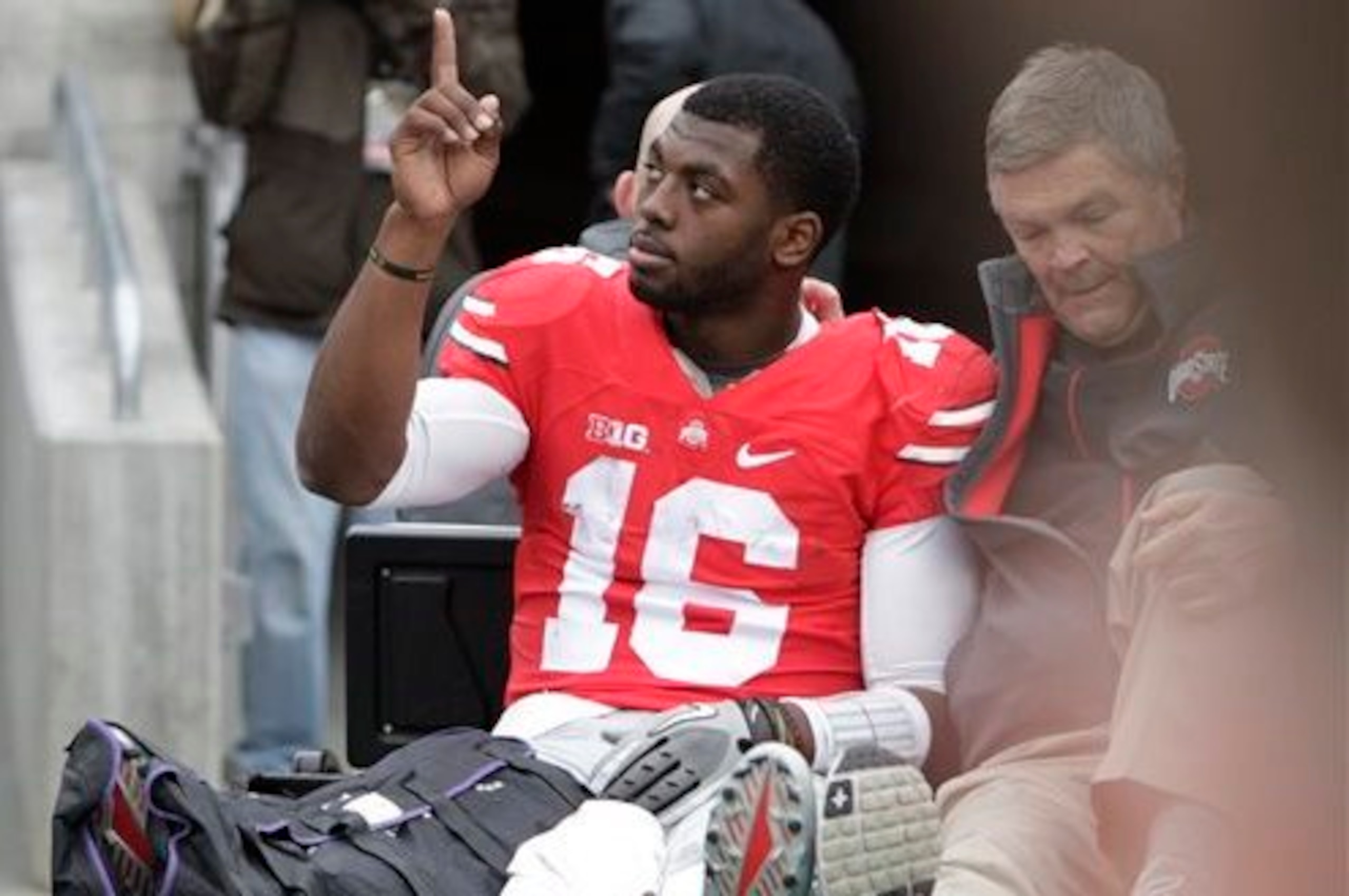
Ohio State stood in stark contrast to Michigan’s lack of quarterback depth. After quarterback J.T. Barrett—who was the backup quarterback coming in to the season before Braxton Miller's injury—was carted off with a severe ankle injury, Urban Meyer shuffled in a replacement, and his offense delivered the knockout punch. No matter how much Gardner struggled after the loss of Johnson, there was no one on the bench to relieve him.
This game is a prime example of why Hoke will soon leave the program. Gardner has talent, but his decision-making in the passing game is fatally flawed. Hoke’s failure to develop Gardner as a quarterback (or a suitable replacement) overshadows everything else he’s done at Michigan.
Hoke can claim that his team is young and has many returning players, but his failure to deal with the quarterback position is coaching malpractice.
This rivalry game showed how good Michigan could be with competent quarterback play and why Hoke's dream of coaching at Michigan has become a nightmare.
Phil Callihan is a featured writer for Bleacher Report. Unless otherwise noted, all quotations obtained firsthand. All season statistics from mgoblue.com, official University of Michigan athletic department web site.
Follow @PSCallihan
.jpg?w=2560 "Grading SmackDown 🔠")


.jpg?w=2560 "🚨 Tony Romo, CBS Sports Part Ways")
.jpg?w=2560 "Porter Jr. Set to Play Sunday")