Patriots Have Perfect Recipe to Shut Down Calvin Johnson in Week 12
In 20, 30 or 40 years, we may look back at Calvin Johnson and Darrelle Revis as two of the all-time great NFL players.
It's rare that you get an opportunity to watch a truly great player in the NFL. Sure, there are plenty of players who are celebrated as great now, but how many of those will stand the test of time? How many of those will be remembered in 40 years like Jim Brown, Jerry Rice and Joe Montana are today?
Chances are, that number is much lower than you think.
.jpg?w=2560 "Chargers Mack")
.jpg?w=2560 "Green Bay Steelers Football")
.jpg?w=2560 "Giants Football")
Because football is designed in such a way that every player on one team doesn't get to face every player on the other team, and furthermore every team doesn't play every other team on a regular basis, it's even rarer to find two potentially all-time great NFL players who face off against each other.
That is what is set to happen this weekend when the Detroit Lions and New England Patriots face off. Of course, that is what we should expect to happen if Revis wasn't playing for Bill Belichick. In the past, Belichick has moved his No. 1 cornerback onto the opposition's No. 2 receiver.
This seems like a crazy move, but really it's very smart.
By putting Revis on the opposition's second-best receiver, it becomes more likely that Revis is going to shut down one side of the field. Meanwhile, against the opposition's best receiver, the defense can take away all of the excess space with double teams or constricted zone coverages. Instead of asking Revis to shut down an impossible receiver with no help, inverting that approach can create a better result.
While it may frustrate fans of this kind of matchup, it does appear to be the smartest move for the Patriots if they want to win the game.
Last season, Revis was with the Tampa Bay Buccaneers. The Buccaneers faced the Lions in Week 12, and Revis was on the field to cover Johnson. His day ended prematurely because of injury but not before Johnson had got the better of him.
Revis covered Johnson in man coverage on at least seven occasions. On the seven plays that were definitely man coverage, Johnson got the better of the illustrious cornerback on four occasions. Unsurprisingly, that was the best success rate for any any receiver that faced Revis in 2013.
As good as Revis is, Johnson's size makes him a matchup nightmare. This is a theme of Johnson's success in the NFL. While he can create separation relatively easily against lesser cornerbacks, he doesn't always create separation against the better cornerbacks in the league. When he can't create separation, he simply dominates at the catch point.
For a long time, Johnson has infuriated Patrick Peterson by constantly winning at the catch point when the Arizona Cardinals defensive back had played his route perfectly.
When the Cardinals faced off against Johnson and the Lions offense last week, Peterson followed Johnson like he has in recent years. However, he didn't give up as much yardage as he has in previous seasons. Did Peterson get stronger at the catch point? No, instead Todd Bowles defense treated Peterson the way Belichick will likely treat his second best cornerback, Brandon Browner.
Peterson wasn't ever asked to cover Johnson on an island. Instead, he was routinely given safety help, linebacker help or safety and linebacker help. Bowles used a significant amount of zone coverage, lots of quarters, to ease the pressure on all of his defensive backs.
He was able to do this because of the quality of his defense's front. That is likely not something the Patriots can do.

Johnson had just 59 yards on five receptions last week. His longest play of the game was a 15-yard catch early in the third quarter. Even on that play, Johnson was the focal point of the Cardinals coverage. He is lined up to the top of the screen, against Peterson in press coverage.
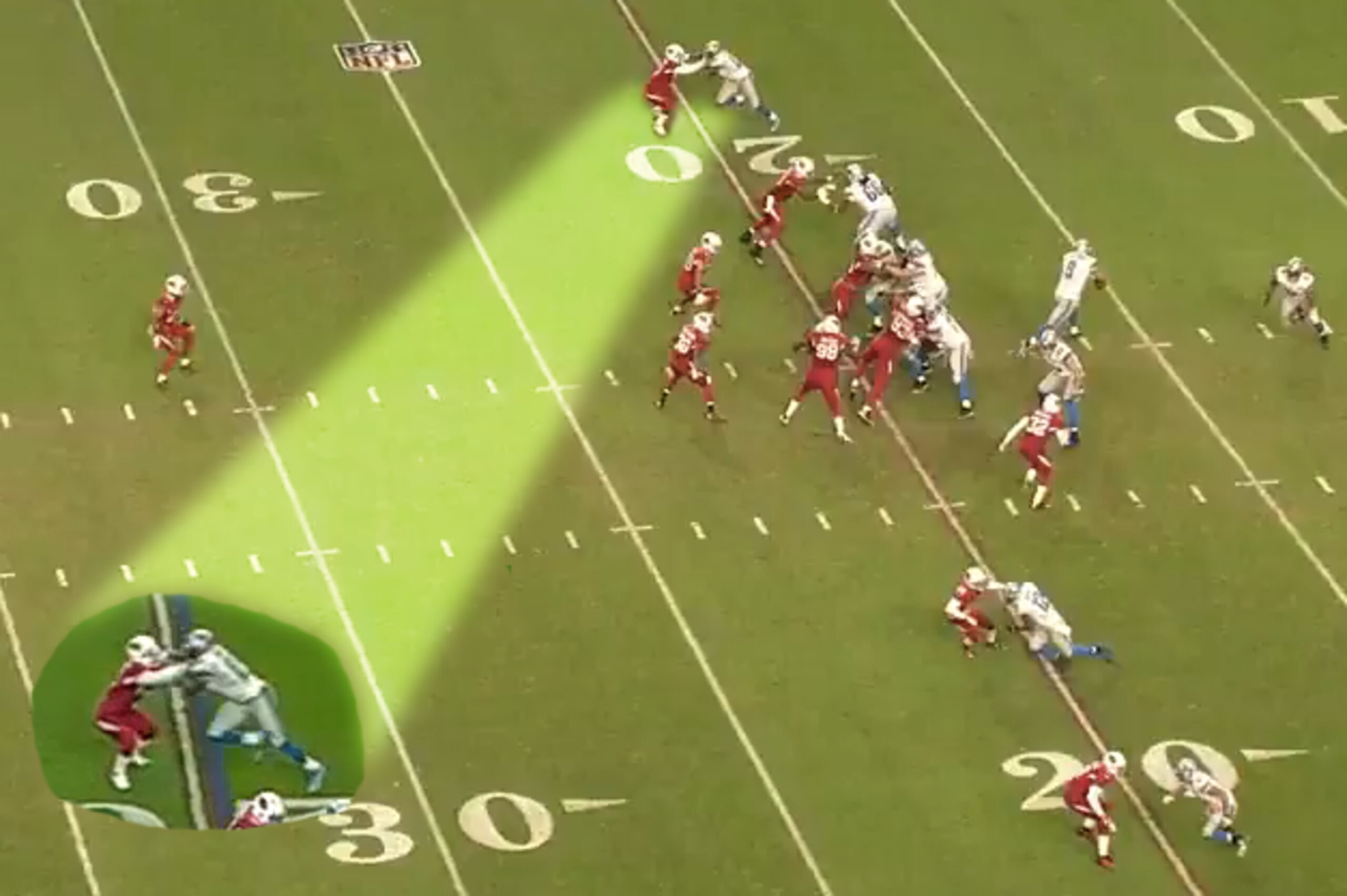
At the snap, Peterson is able to be aggressive against Johnson because he has safety help over the top. Peterson does a good job to get his hands on the bigger receiver, but Johnson simply brushes his attempted jam off and releases to the inside.
It's very rare that a defensive back can knock Johnson off his route at the beginning of a play. You need to have the size and power of someone such as Richard Sherman to do it.
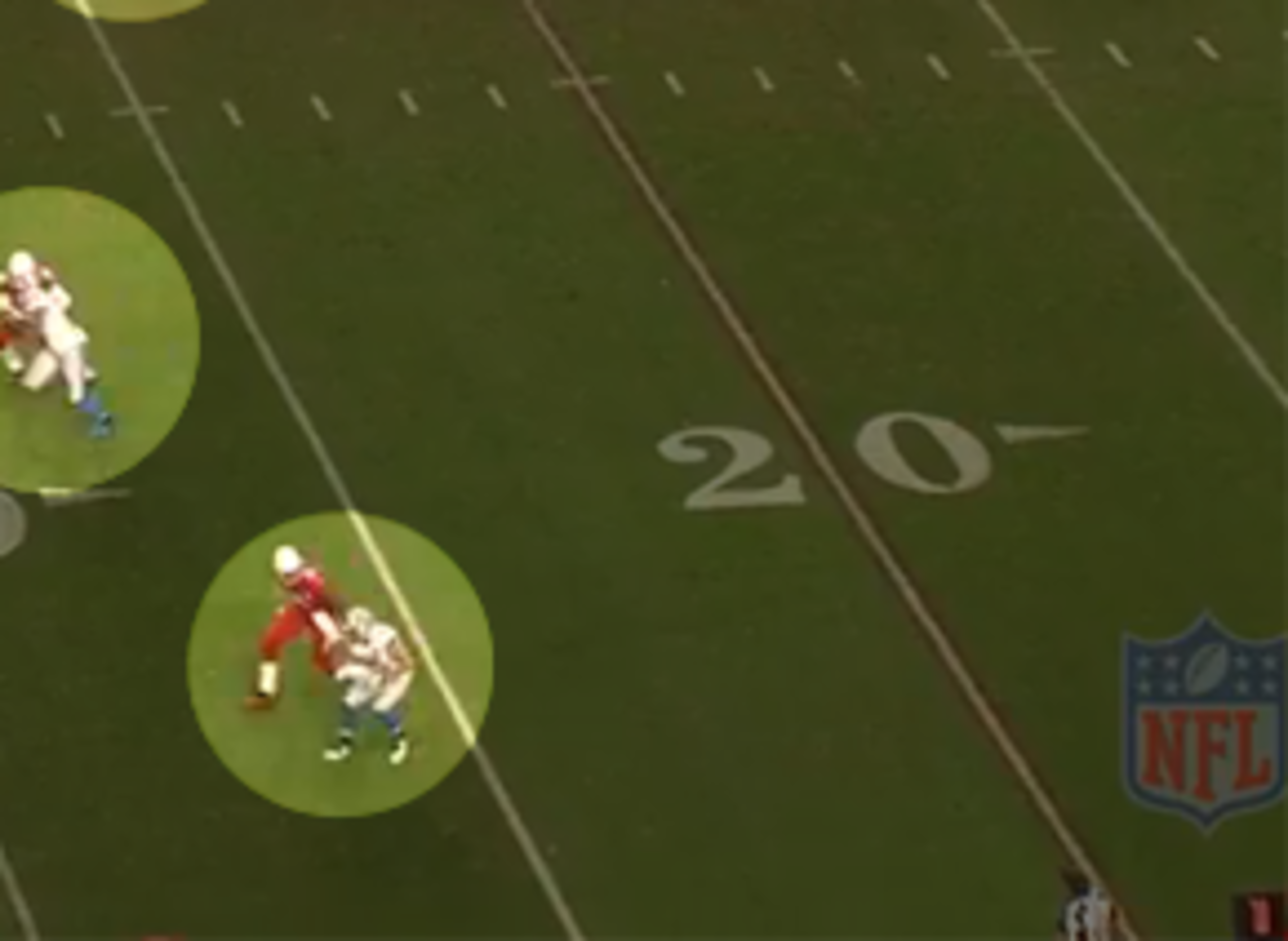
On this play, there are a few key details that must be noted. Most significantly, the Cardinals have held their deep safety to Johnson's side from the very beginning of the play. A linebacker underneath is also in position to close on Johnson if the ball is thrown in his direction, but he may just be watching the quarterback's eyes.
While giving Johnson this extra attention, the Cardinals have blitzed with a defensive back from the other side of the field. That defensive back, Tyrann Mathieu, has beaten his blocker to get quick pressure on the quarterback.
This blitz largely only worked because the Lions offensive line was confused at the snap, meaning one of their offensive linemen, their left tackle, didn't block anyone at all.
With Mathieu blitzing, the Cardinals have left two receivers in single coverage and plenty of space on the other side of the field. Because Mathieu has been successful and because Matthew Stafford's first read was Johnson, the quarterback never had a chance to come back to the other side of the field to take advantage of the space available.

Johnson brushed Peterson off with ease while running his route before adjusting well to a poorly placed pass from his quarterback. In spite of how easily he won on the route, Johnson was immediately met by two defenders, so he had no space to create yards after the catch.
This play worked for a variety of reasons that weren't solely about the coverage Peterson played on Johnson. In fact, the play call had a much greater impact on the result of this play than the cornerback.
Replicating this approach makes sense for the Patriots' personnel grouping, but it does still come with significant risks. Because the Patriots have Browner, who should be able to affect Johnson at the line of scrimmage with his size and strength, they should be able to disrupt Johnson's route in similar situations to this one.
Because the Patriots have Revis on the other side of the field, they should at least be able to force the offense to throw to one option who is left in single coverage on the other side of the field.
Whittling the offense's options down to just one receiver on a specific play should work in the defense's favor more often than not. If that receiver is only running a short route, then he isn't really taking advantage of the opportunity. If that receiver is running a deep route but can't win on that route, then he can't take advantage of the opportunity at all.
Furthermore, it's likely that the leftover receiver would be the team's third- or fourth-best option. Forcing the Lions offense to throw to its third- or fourth-best option is an ideal way of hindering its success.
This is the type of aggressive play that the Patriots defense can run against an offense with Johnson on the field. However, you can't always be that aggressive, or you will ultimately pay. The Cardinals are a typically aggressive defense, but they spent a lot of time in zone coverage without blitzing also.

On this play, Johnson is disrupted at the start of his route by a defensive back coming from the inside. Peterson is lined up outside, and this initial disruption allows him to position himself so he can follow Johnson on his crossing route across the field.
Johnson still comes open, but this initial delay disrupted the timing of the play and allowed the defense to cover him early in the route with another linebacker who ran underneath his route.
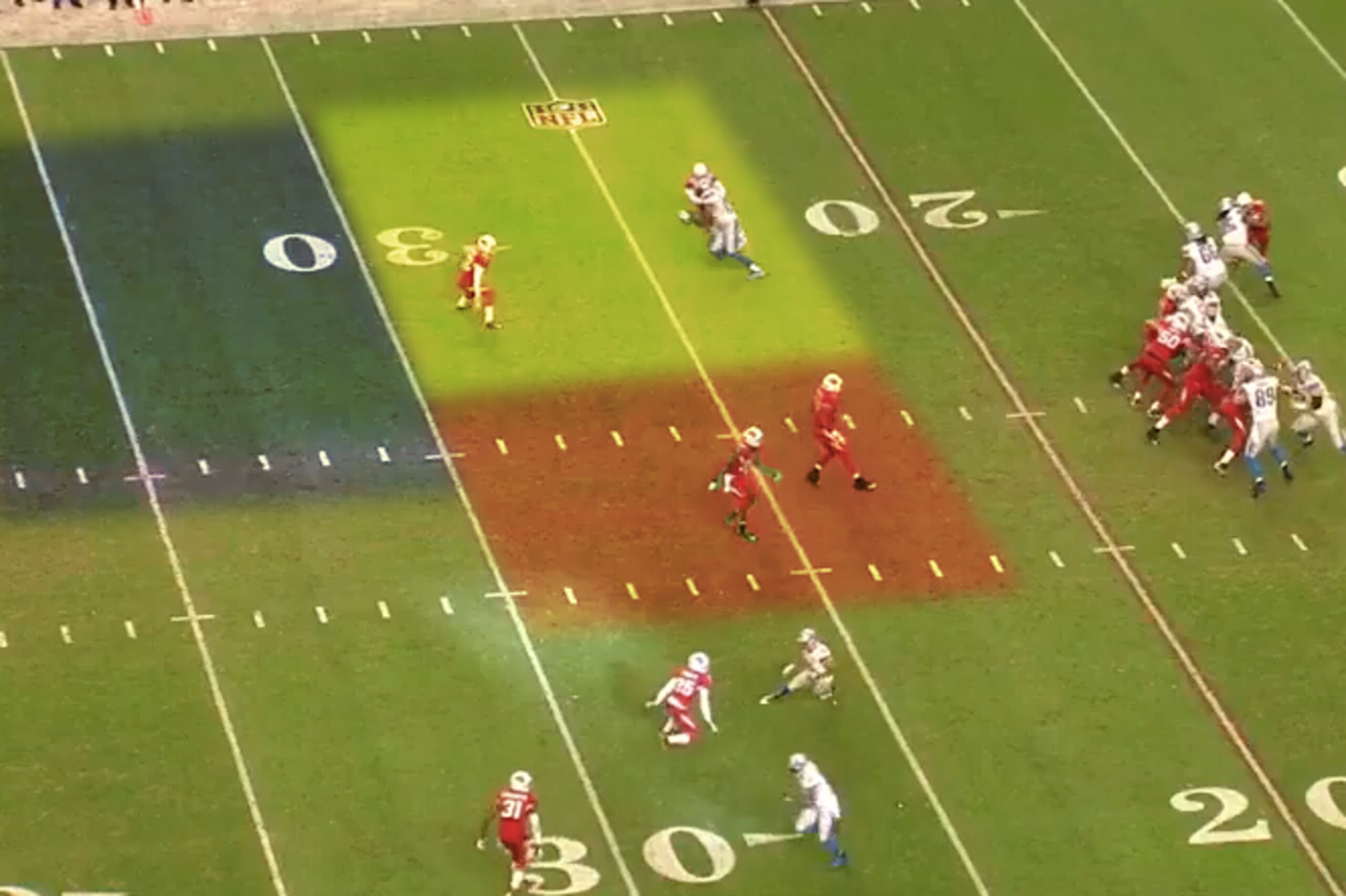
This time, Peterson is again in press coverage against Johnson to the top of the screen. While he does initially run with the receiver in man coverage, it doesn't appear that Peterson is playing man coverage. Instead, he becomes responsible for the blue area as the play develops.
Meanwhile, the safety to his side of the field drops into the yellow area, while one of the linebackers underneath plays the red area.

On this play, the Cardinals rotate their safeties just before the snap from a single-high look into a Cover 2 shell. They do play Cover 2 with man coverage underneath, meaning that Peterson doesn't have to be concerned about the deep routes against Johnson.
Peterson trails underneath Johnson as he works his way down the field and mirrors him until the ball is thrown elsewhere.
These are the kinds of plays that the Patriots should be able to run effectively. They likely won't be as effective as the Cardinals were last week, because the Cardinals boast a better front four pass rush with Calais Campbell in particular standing out.
Yet, the pass rush doesn't need to be that effective, because Stafford is still a limited and inconsistent quarterback.
Stafford started the season like a brand-new player. He looked like Jim Caldwell had molded his skill set into that which could show off his physical ability. That initial surge proved to be just that, an initial surge. Stafford quickly regressed to the inconsistent and unreliable player he has been throughout his career.
Against the Cardinals, Stafford didn't show an ability to instantly diagnose coverages based on what the defense showed before the snap or adjusted to after the snap. Stafford isn't the kind of quarterback who is going to read zones with ease and pick them apart with precision passing. Instead, he is more likely to make mistakes and create opportunities for turnovers.
Stafford completed just 18 of 30 passes for 183 yards last week. He didn't have a touchdown, but he did have one interception and should have had at least one more.
His caught interception came in the third quarter when the Lions offensive line failed to pick up a blitz. Stafford had time to eat the ball instead of throwing it up for grabs, but instead he simply heaved it toward Johnson running down the sideline. The Cardinals were in zone coverage behind the blitz, so their deep safety was led to the ball by Stafford's actions for an easy interception.
Before that play, in the second quarter, Stafford should have been intercepted and could have given up a pick-six.
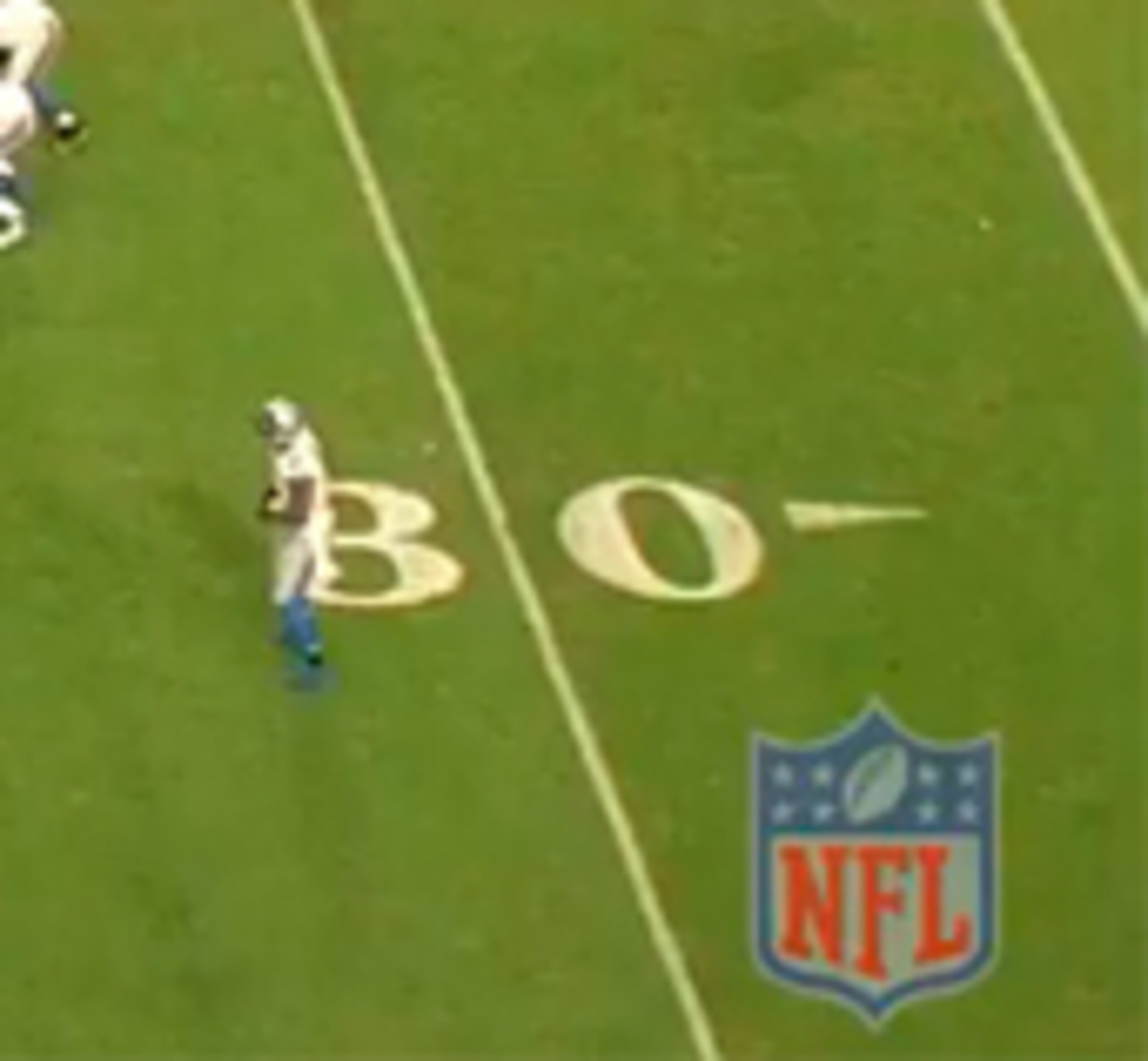
As the offense lines up on the field, the defense doesn't do anything complex with their alignment. Nobody is threatening to blitz, and nobody is shifting out of position in the coverage. While it's easy to know with hindsight, Stafford shouldn't have been surprised by Cover 3 coverage here.
Cover 3 is a zone coverage that is outlined in the above image. It is a standard play design.

From the very start of the play, Stafford stares down Johnson running a slant route outside. Stafford only takes a short drop in the pocket and begins his throwing motion as soon as his back foot hits the ground. Stafford seemingly never read the coverage, because he led the underneath coverage directly to the ball.
Johnson is open on the slant route against Peterson but only because the coverage dictates that he leave him open on that specific route.
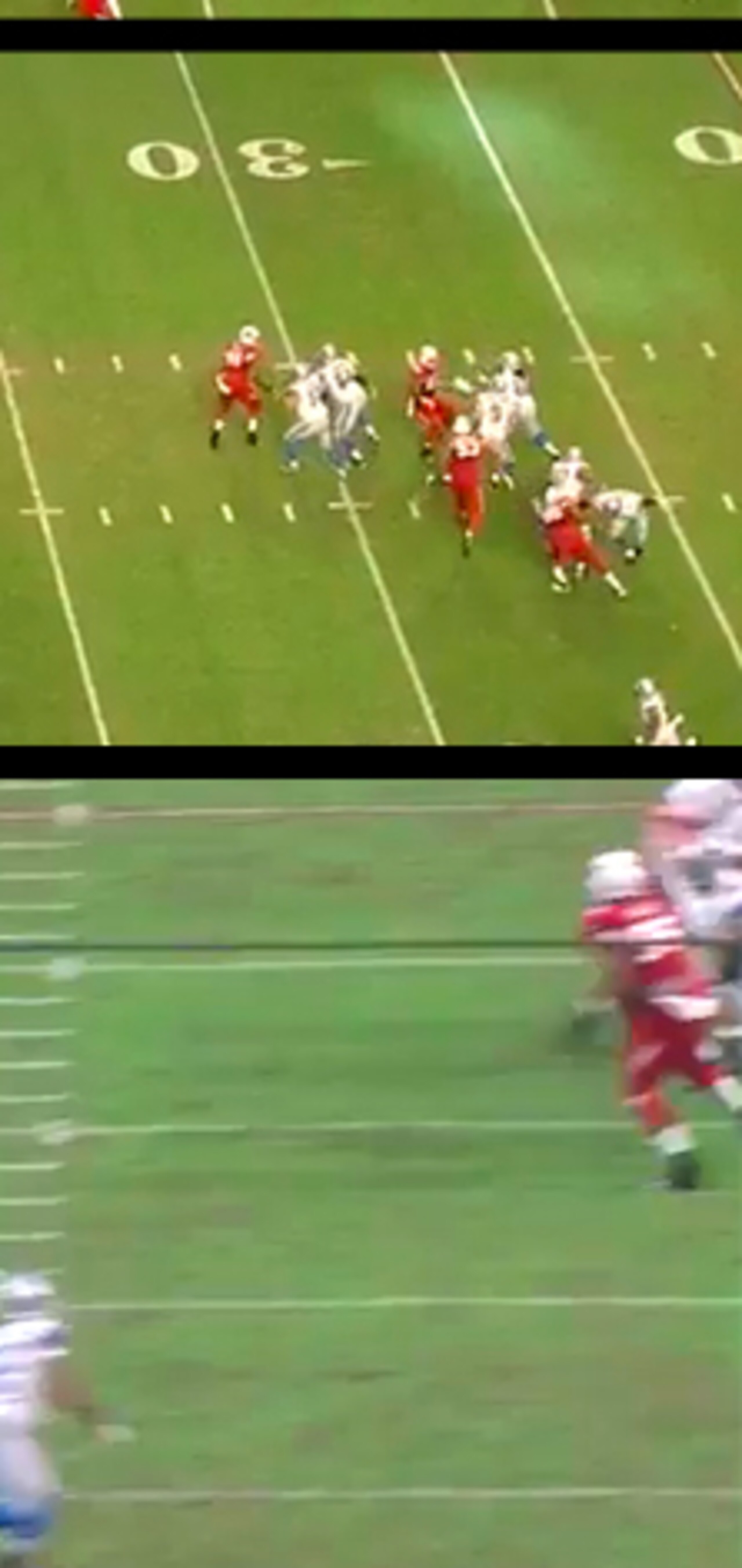
That specific route moves the receiver into Jerraud Powers' zone. Powers followed the initial receiver he was covering too far infield, and as such he was at full extension when he attempted to make the interception. If Powers had played his assignment as well as he could, he would likely have been able to make a comfortable catch before running down the field.
At this stage of his career, this is an inexcusable mistake from Stafford.
It's the type of play that rookie quarterbacks make as they force the ball to their favorite receiver in spite of the coverage call from the defense. If the Patriots can mix and match their coverage calls in such a way that they frustrate Stafford, it likely won't matter what defensive back is covering Johnson.
The best way to stop Johnson isn't by stopping the wide receiver directly but rather cutting off his supply at the source. Bruce Arians' Cardinals did that successfully last week. Now it's Bill Belichick's turn.
.jpg?w=2560 "Seahawks Cardinals Football")
.jpg?w=2560 "Commanders Cowboys Football")