Should Clay Matthews Continue the 2014 Season as an Inside Linebacker?
With starting inside linebacker Jamari Lattimore listed as inactive prior to Sunday night's face-off with the Chicago Bears, the Green Bay Packers made an interesting call regarding who would come in as his replacement. The Packers, officially, stated that Sam Barrington, a product from the University of South Florida, would get the nod, but in reality, the team didn't live to its pregame promise.
Instead, Clay Matthews, the former All-Pro pass-rushing outside linebacker, saw the first snaps as an inside linebacker next to A.J. Hawk. The Packers made the nearly unprecedented move of switching an edge-rusher, in whom the team invested $66 million last season, to the lower-profile position of an inside linebacker in Green Bay's 3-4 base defense. As Bleacher Report's Zach Kruse noted, on certain passing downs, he was moved back to the edge, but a majority of the snaps he fielded were from a true linebacker spot.
.jpg?w=2560 "Commanders Chiefs Football")
.jpg?w=2560 "49ers Camp Football")
"Clay Matthews at ILB on early downs and as an edge rusher on passing situations might just work. Best of both worlds?
— Zach Kruse (@zachkruse2) November 10, 2014"
Another franchise in the league, the Philadelphia Eagles, made a similar move earlier in the season. Their first-round pick, Marcus Smith, a college defensive end out of the University of Louisville, was also moved to an inside linebacking role. According to Mark Eckel of NewJersey.com, the first-round price tag hasn't yet fit the production for the rookie.
""I want to be doing something, playing something,'' Smith, who through eight games has been inactive twice and was DNP twice, said. "It's different. And it's a hard adjustment, but if it's what they want me to do. They're spreading my horizons and that can only make me a better football player.''
In the four games Smith has actually seen the field he has a total of one assisted tackle. He's also been credited with a hurry in the 27-0 win over the Giants.
"
Matthews' performance, though, was nearly the opposite. It seems as though this was one of the rare instances when a midseason position change for a talented contributor of a potential playoff team was warranted.
Generating stops in the running game out of assignment
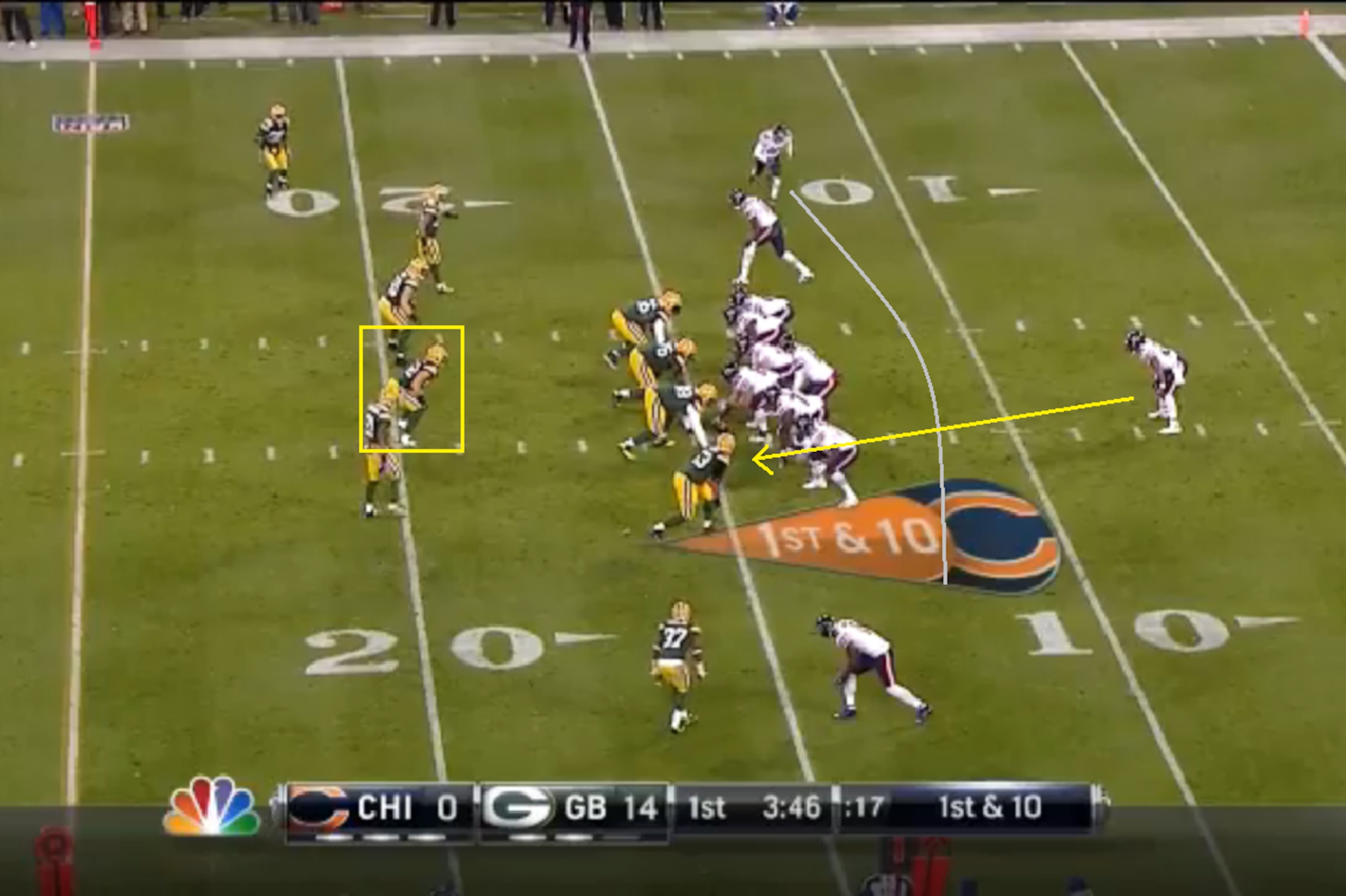
On this play, the Bears would use a motion to create action at the mesh point of the handoff. Trying to draw the defense to the right side of the field, Matt Forte, Chicago's feature back, was going to pound the center of the defense.
Matthews, highlighted, was playing a weak-side inside linebacker role in a 2-4 nickel defense on the play.
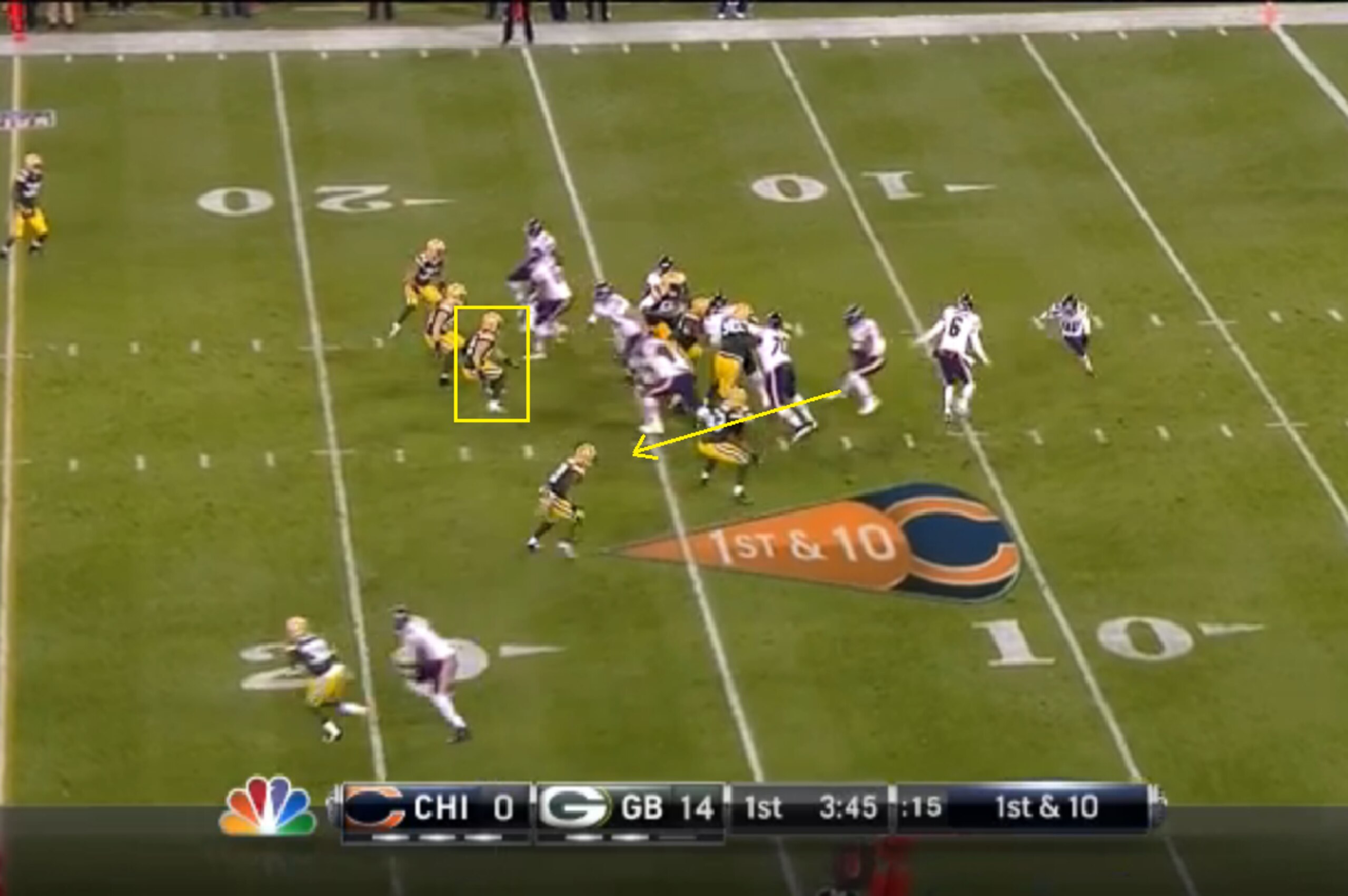
While the action occupied two defenders, Nick Perry, who had outside containment responsibilities as the outside linebacker on the play, and Ha Ha Clinton-Dix, who also was playing his assignment against the run, Matthews was able to read the backfield cleanly, as the Bears offensive linemen had not yet been able to reach him on the second level.
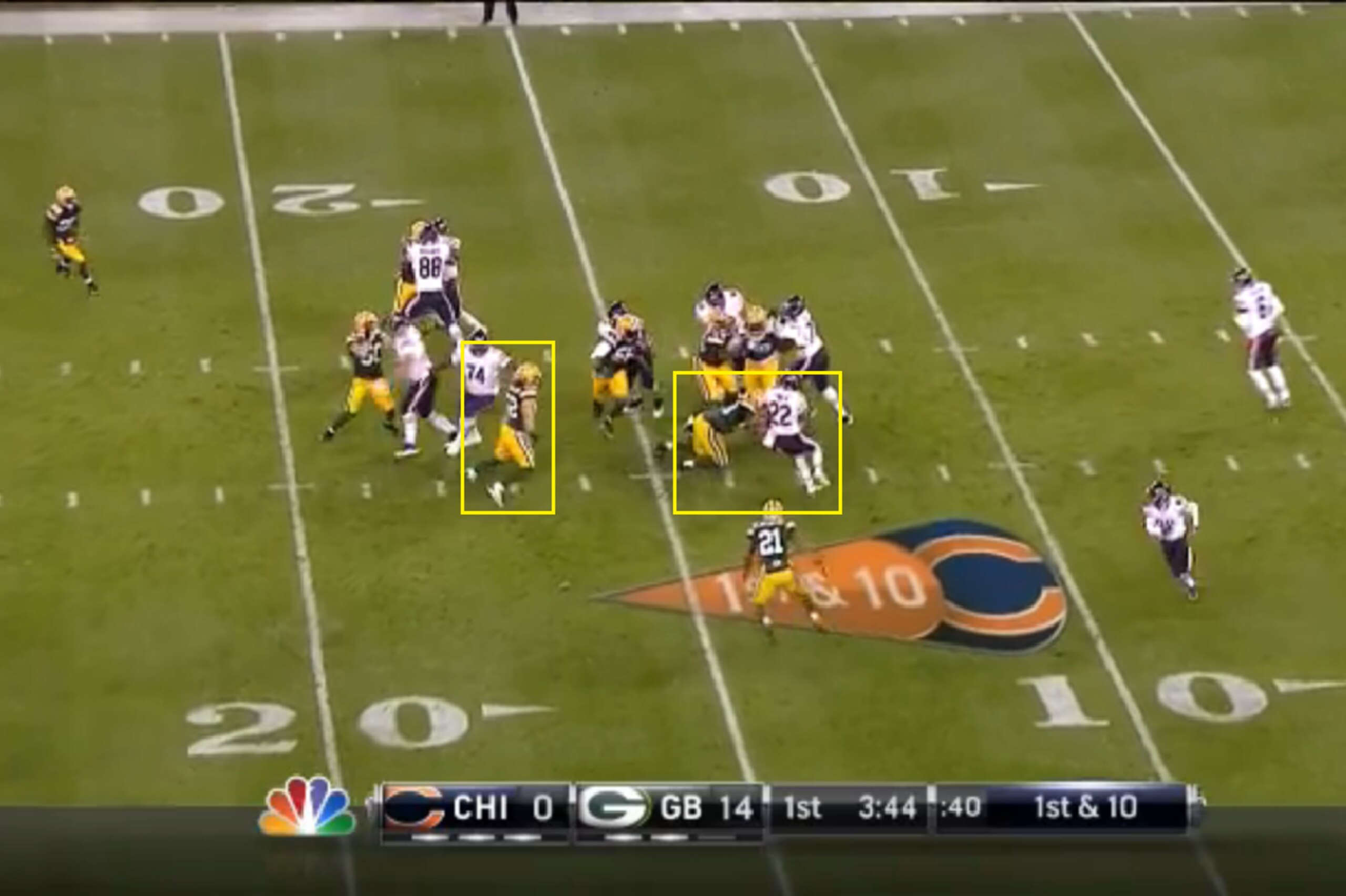
Forte, in an attempt to create yardage, spun off a Packer near the line of scrimmage. This gave Matthews, who was slightly out of position to make a play due to the spacing and direction of the designed run, a chance to stop the running back for no yardage.

Navigating past potential blockers, the former USC Trojan did just that, stopping Forte for no gain.
Playing patient
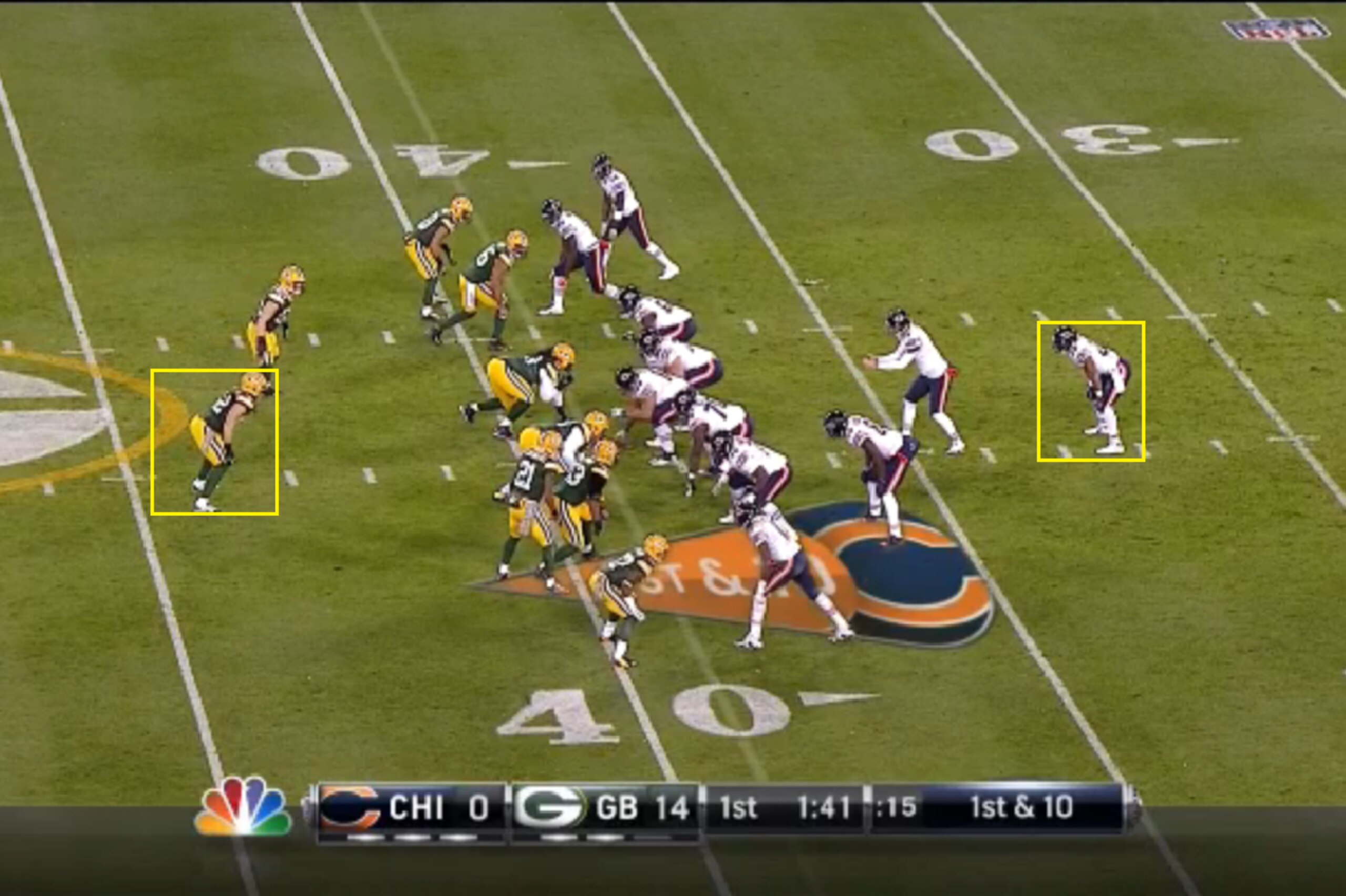
Here, the Packers came out in a similar defensive formation. Matthews again played inside linebacker, but this time is on the strong side. As this play unfolds, Matthews' role is evident: Hawk, playing closer to the line of scrimmage, is going to be more of a defensive fullback, while the converted outside linebacker is supposed to fly to the ball to make a tackle.
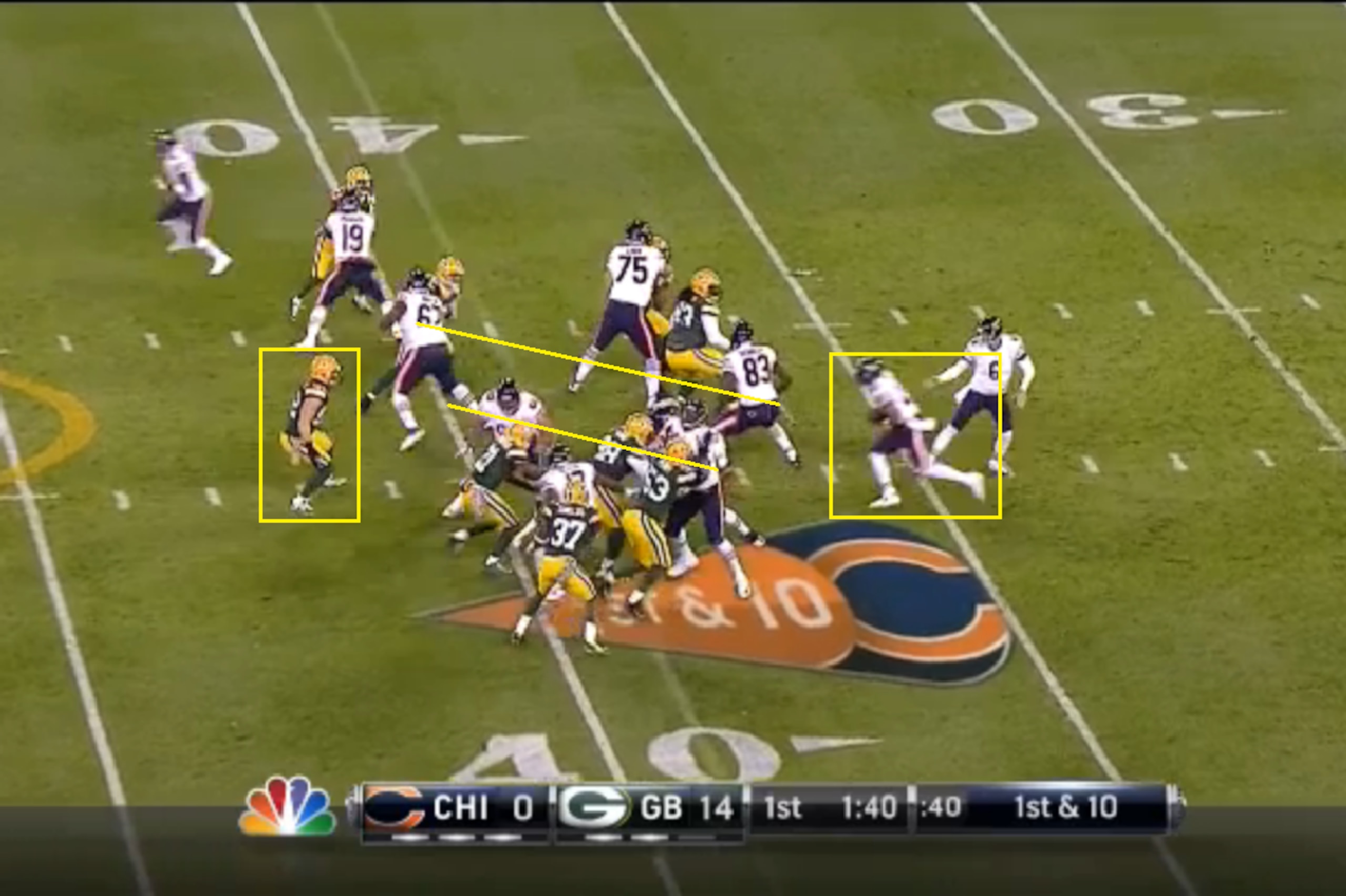
Hawk did just that, putting a body an offensive lineman to keep Matthews free. As the handoff went down, the hole Forte was supposed to hit became clear, and Matthews was right there, waiting to break on the ball.
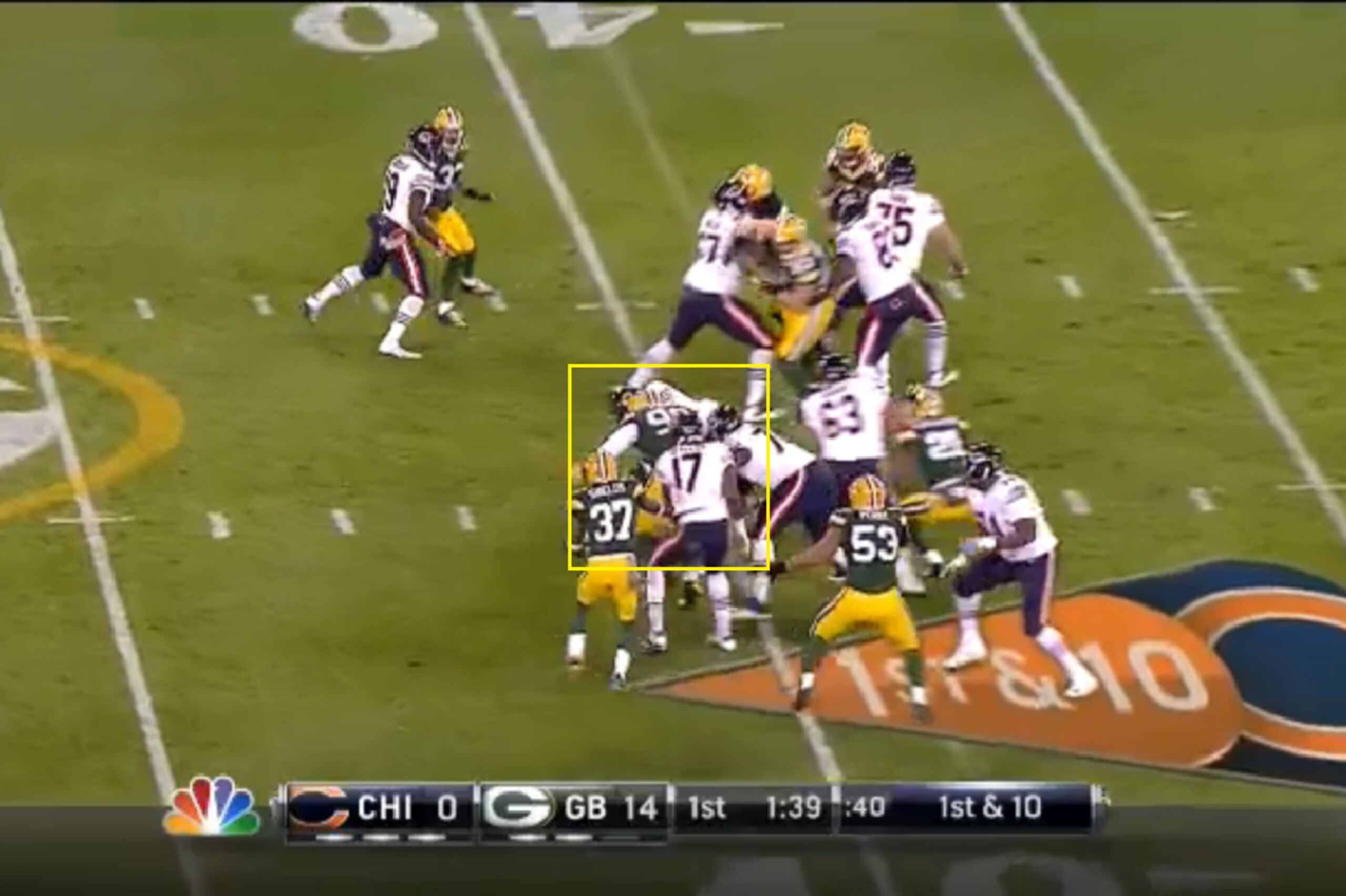
Instead of breaking on the ball immediately, Matthews waits and watches the running back in the backfield, assuring he won't escape him by finding a cutback lane. When the decision to hit the hole is made, Matthews initiates contact near the line of scrimmage.
Making plays as an athlete
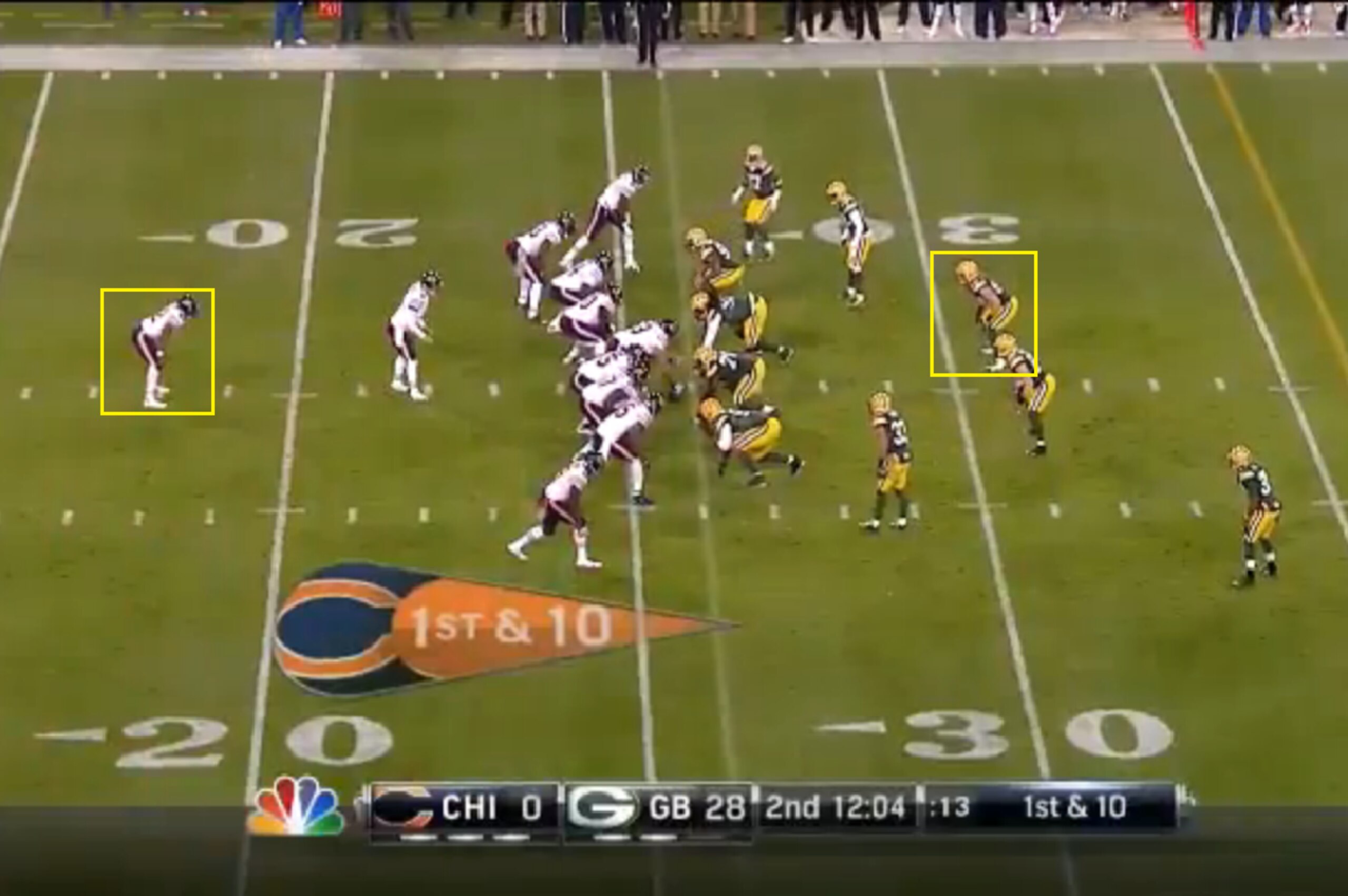
Most players, even at the NFL level, aren't able to make the play highlighted above. Matthews, a strong-side inside linebacker on this play, absolutely wills himself to make the tackle.
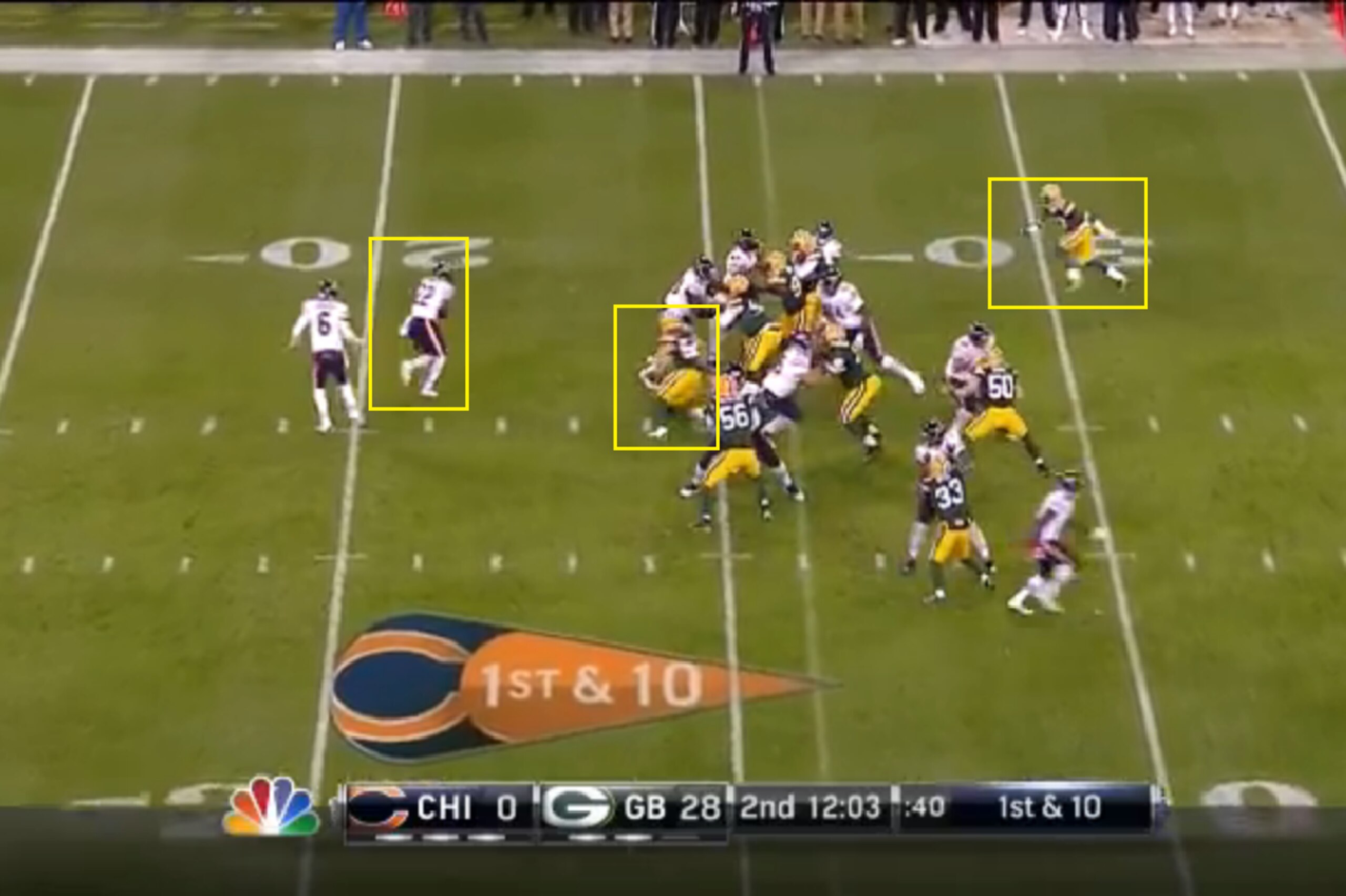
As he quickly penetrates the backfield, he forces Forte to the outside, taking out Forte's cutback lane from the jump. This forces the ball outside, towards cornerback Sam Shields, who is already making a break on the ball.
This, in theory, should be how the play ends.
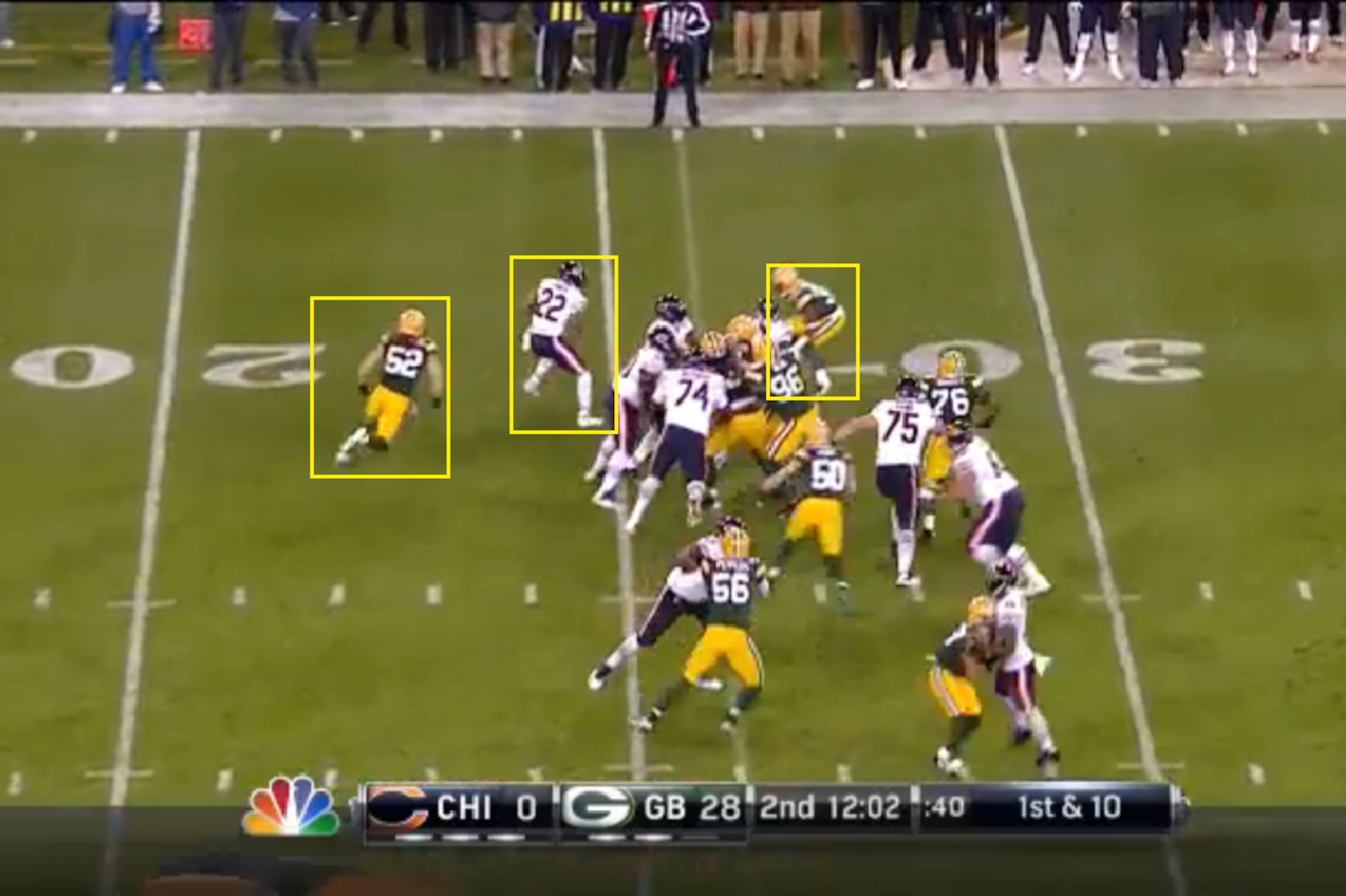
Forte tries to make a move on Shields, which ends up working, but Matthews, not giving up on the play, pursues the Bears running back with terrific intensity.

Running down an NFL running back from behind is no easy task, especially when he hits the opposite sideline when one is in the backfield, but Matthews was able to vault himself at Forte and secure the tackle. Matthews' athleticism in space was able erase a mistake in run responsibility from a cornerback, and this in part proved the linebacker's value on Green Bay's run defense.
Playing assignment football

As noted previously, Chicago is an offense that uses a lot of motion on plays. Here, the Bears motion their X receiver across for a handoff. With the rest of the front six assigned to an offensive lineman, Matthews needs to make a play in space to keep the receiver from running into the secondary.
There is an inside run fake by the back that Matthews must diagnose. If Matthews is overaggressive and bites on that inside fake, he misses the opportunity to make the tackle on the man coming in motion.

At the point of impact, the linebacker is unforgiving. Sticking to his assignment and staying home, Matthews hits the Chicago backfield in full sprint, nailing the ball-carrier for a huge loss on first down.

Matthews played the snap as best as one could draw it up.
Ability in coverage
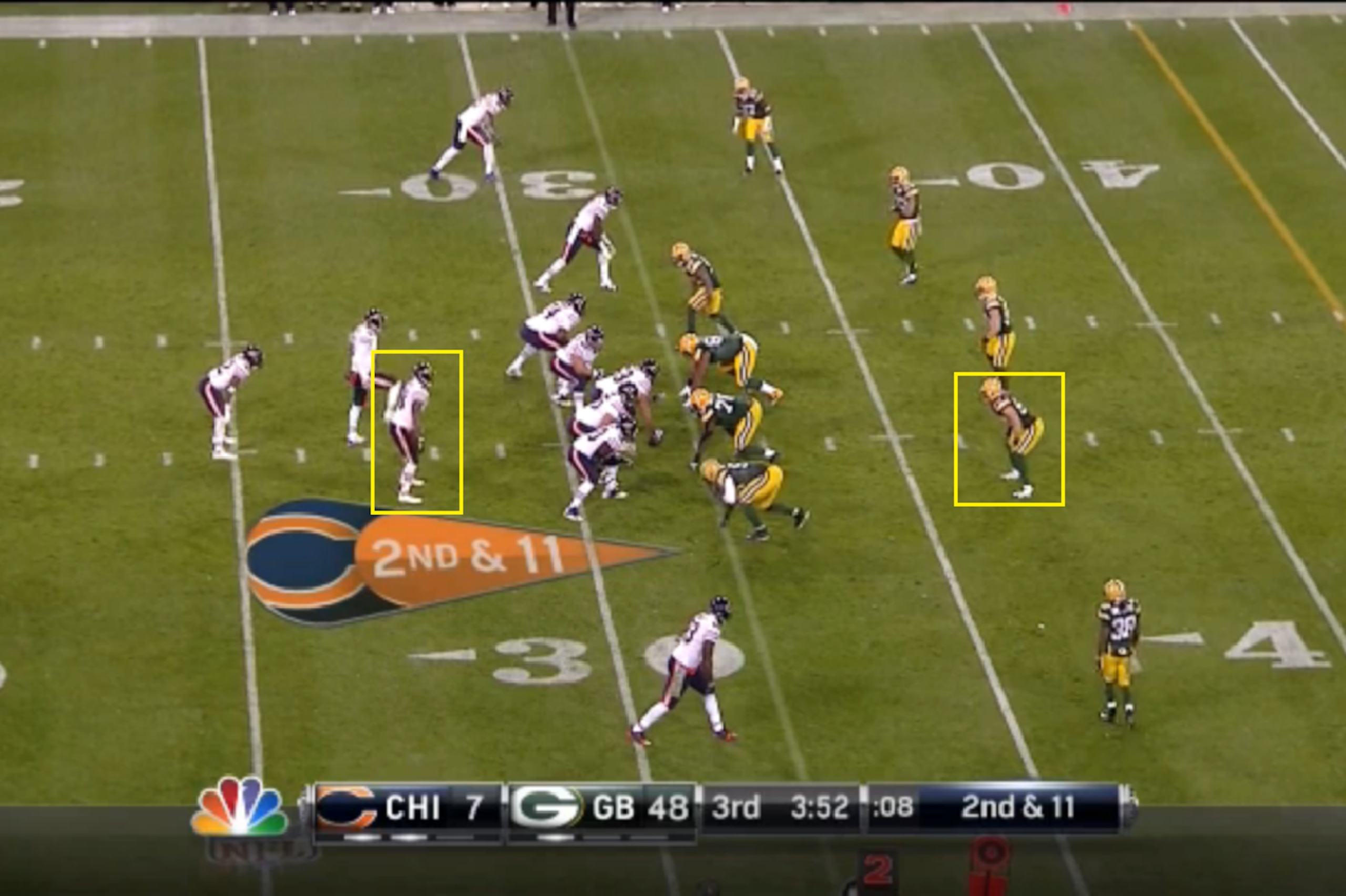
Here, Matthews was going to play zone coverage. The man targeted is the H-back, also highlighted. The Bears trailed big throughout the game, forcing Jay Cutler to take a lot of shots downfield to try and get his team back in the game. Still, this is the only quality throw quarterback the Bears QB made when targeting the linebacker in coverage.
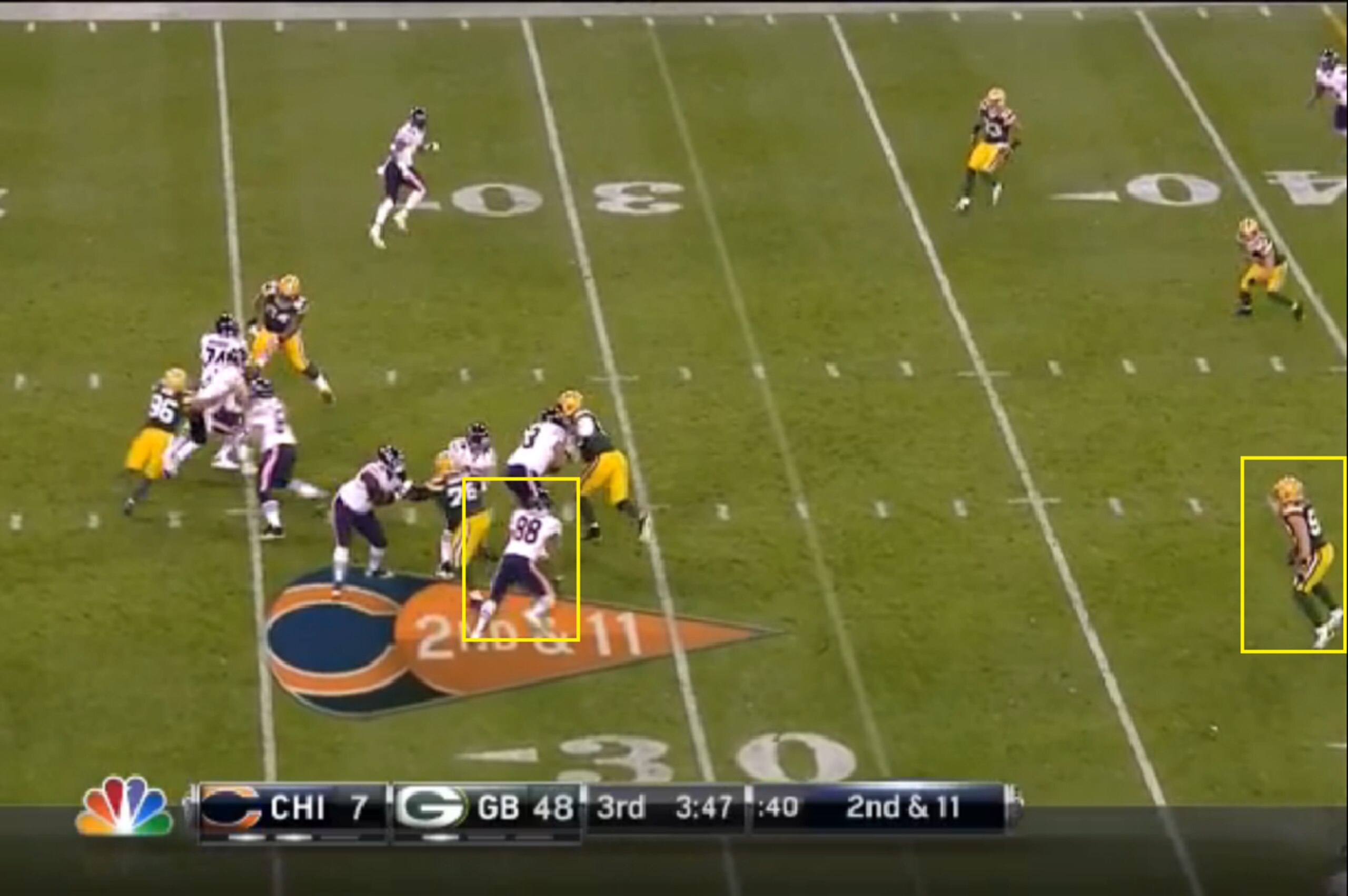
The H-back first chips the defensive front before escaping the backfield. As you can see, Cutler is first touched by Mike Neal, an outside linebacker, before the target even goes past the line of scrimmage. Here, Matthews patiently watches Cutler after getting into his drop.
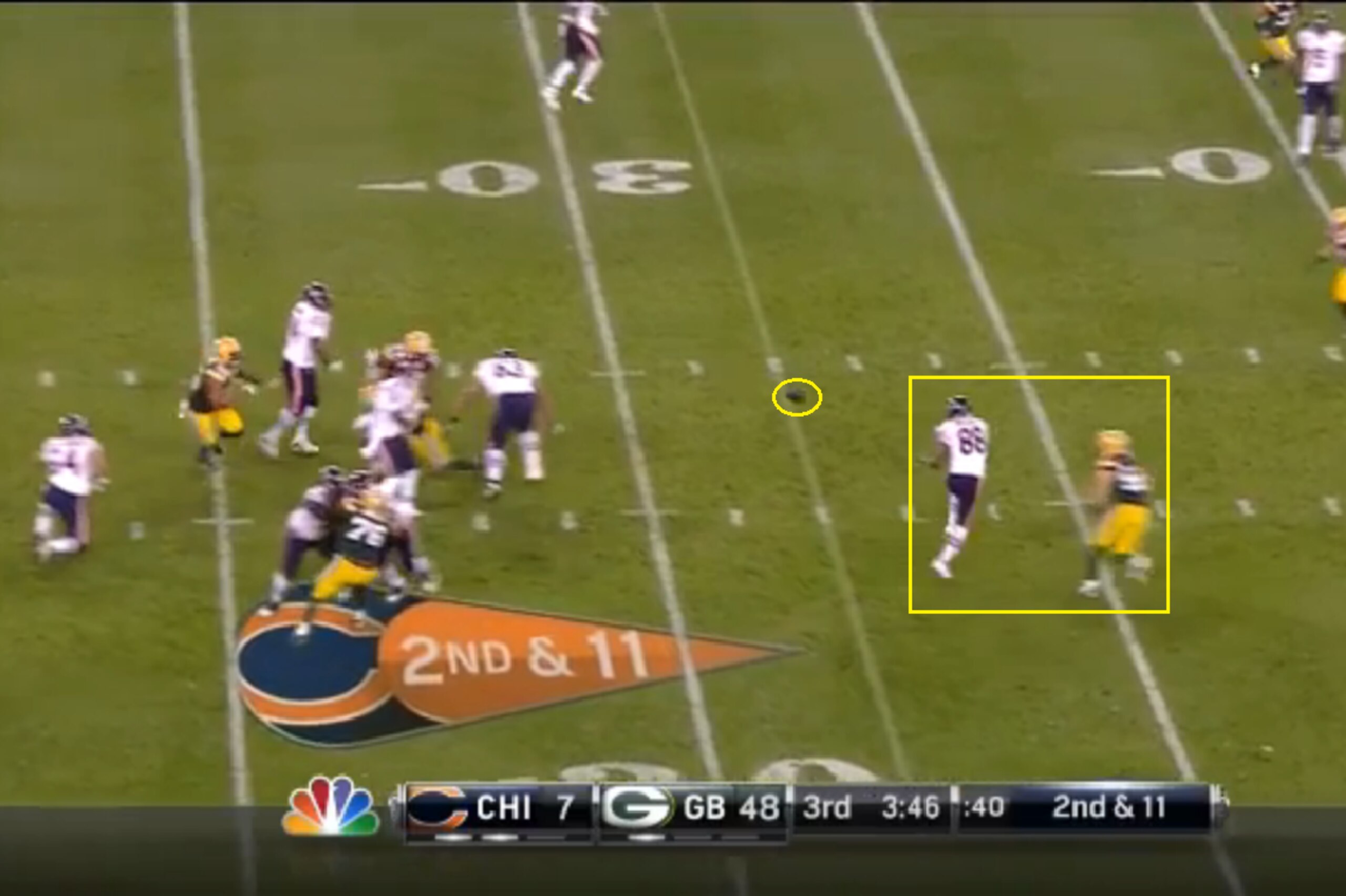
Making a quick break, Matthews is well on his way to the target by the time the ball s in the air.

In the end, the play results in zero yards after the catch, as Matthews meets his man at the point of the attempted reception. Overall, the linebacker made as successful a play dropping into coverage as one could ask.
Final thoughts
Clay Matthews moving to inside linebacker against the Chicago Bears was as shocking as it was productive. The history of well-paid edge-rushers willingly moving to a less glamorous position is nearly a blank page.
For Matthews to accept it, and for the Green Bay Packers to try it, is telling.
Green Bay needed help in its run defense, and the Packers sure got it. Matthews, making plays on the ball all over the field, was one of the key contributors in a 55-14 victory.
While it may seem crazy to suggest, Green Bay's best bet just might be playing the 2010 NFC Defensive Player of the Year "out of position" for the remainder of the season.
.png?w=2560)

.png?w=2560 "MLB Deadline Takeaways 📊")
.jpg?w=2560 "Grading WWE Raw 🔠")