

Pochettino's Illogical Tinkering Doesn't Help Underwhelming Tottenham Hotspur
Tottenham Hotspur manager Mauricio Pochettino was definitely not the only one to blame for his team's woeful display in Sunday's 2-1 loss to Stoke City.
Tottenham's players were uninspired and lethargic against the comparatively eager and ambitious Potters. Thursday's Europa League efforts might have partly caused that; then again, tiredness alone could not account for the poor discipline and shocking lack of concentration that undermined Spurs, particularly in the second half.



For the second week running, however, Pochettino also had a hand in the Lilywhites' underwhelming display. His illogical tinkering with his starting XI unnecessarily messed with its shape and the combinations within.
The need for change to the team predominantly used from September on has been apparent for a few weeks. Spurs had especially been a little predictable in midfield and attack. This writer certainly called for alterations following the 2-1 home loss to Newcastle United, but one of the called-for changes was to stop messing around with the defence.
Sunday's decision to hand the in-form Harry Kane his first Premier League start of the season was warranted given his superior form to fellow strikers Emmanuel Adebayor and Roberto Soldado. There was an argument to be made for Andros Townsend getting his chance, too, given his significant role in the midweek win over Asteras Tripolis.
The problem was Spurs were too unpredictable to the extent they appeared to barely know where to go and how to get there. Here lies the confusion and contradiction in Pochettino's selections right now.
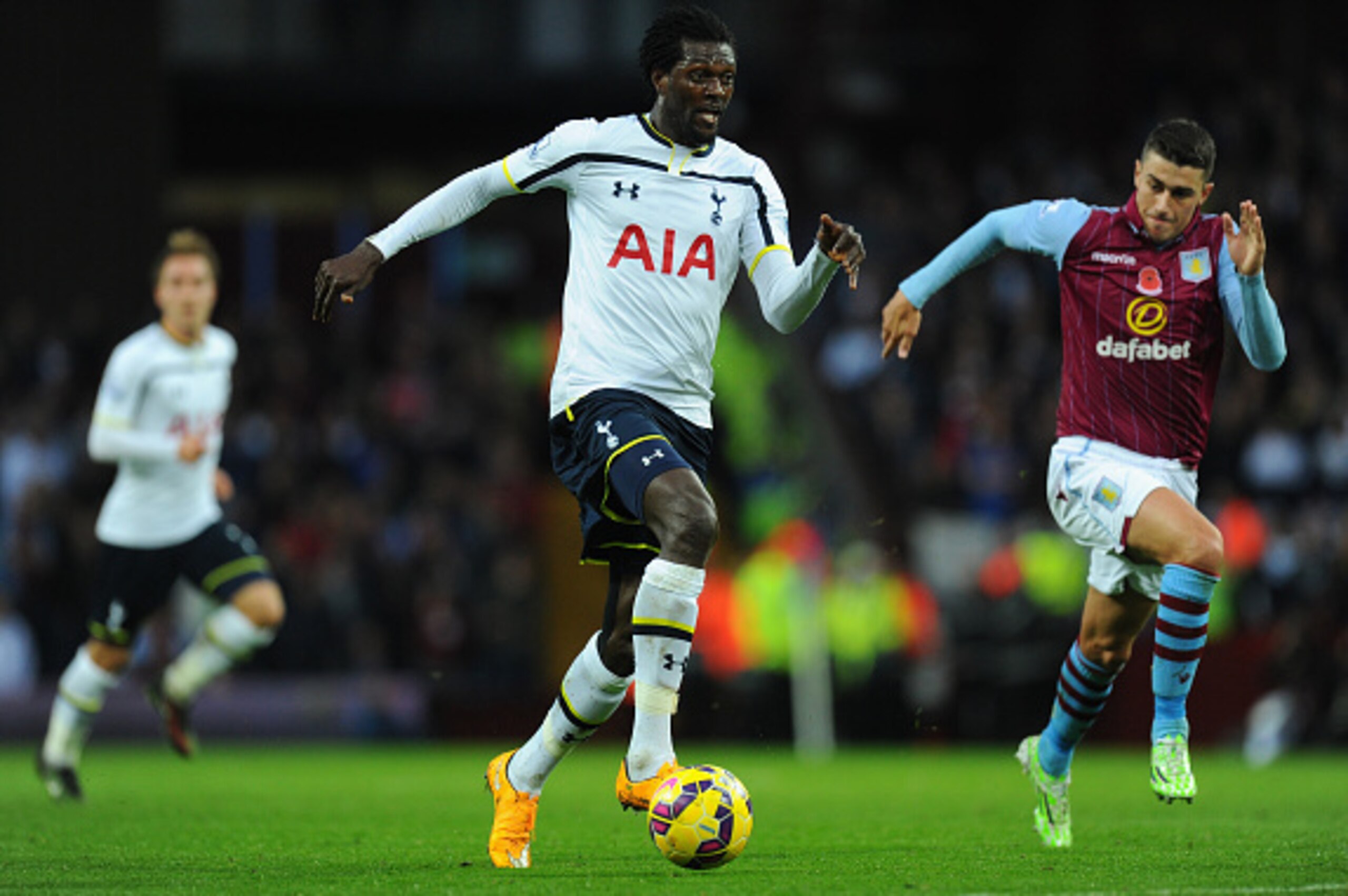
These changes came after the Argentinian fielded two up front for the first time in the league, a move that came against Aston Villa last week. Despite the 2-1 win, that Adebayor-Soldado pairing did not work, so the manager decided to revert to the previously used 4-2-3-1 formation.
Given Spurs have moved between those formations in cup and league games, it was not totally unreasonable. (Ideas to enhance the team's creativity had been required.) But it did run the risk that Spurs would need time to settle against Stoke, a risk made more notable because the replacements for the aforementioned strikers were two players—Kane and Townsend—who played three days previously.
Kane and Townsend did not look more tired than anyone else, but their inclusion did contribute to the lack of direction in Spurs' attacking work. Bar Nacer Chadli's third-minute cross for Kane, the Englishman had to work for just about everything else with little notable service from the attacking midfield three (which included the disappointing Christian Eriksen).
Subsequently, Kane went on forays deep and out wide. That meant there were times the home side lacked a focal point. At least up until the late pressure surrounding Chadli's goal (his sixth of the season), it gave Stoke's central defence far too little to deal with.
More damaging to Tottenham's performance was Pochettino's latest baffling change to his defence.
A defender in his own playing days, the ex-Argentina player should be aware of the benefits of a stable back line. The central defensive partnership of captain Younes Kaboul and Jan Vertonghen is not perfect, but having been at the club together for a couple of years, they know where they stand with each other.
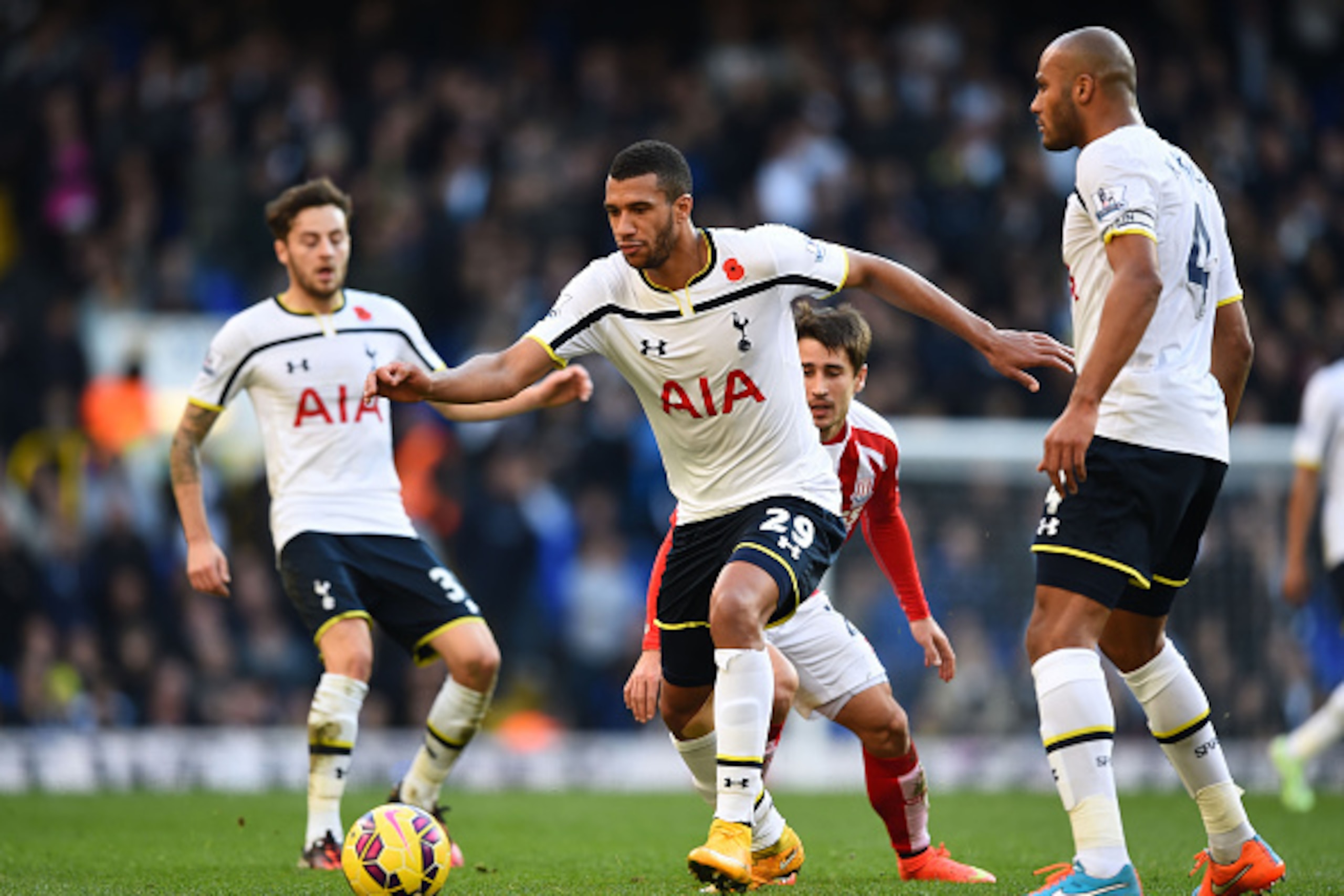
Instead, Federico Fazio was called back in alongside Kaboul. The Spurs skipper is not so organised and focused (words commonly linked with the Frenchman for their absence in his game) as to immediately click with a partner he is less familiar with. Though not stylistically identical, their shared physicality makes them less balanced than with the more graceful and intelligent Vertonghen beside either.
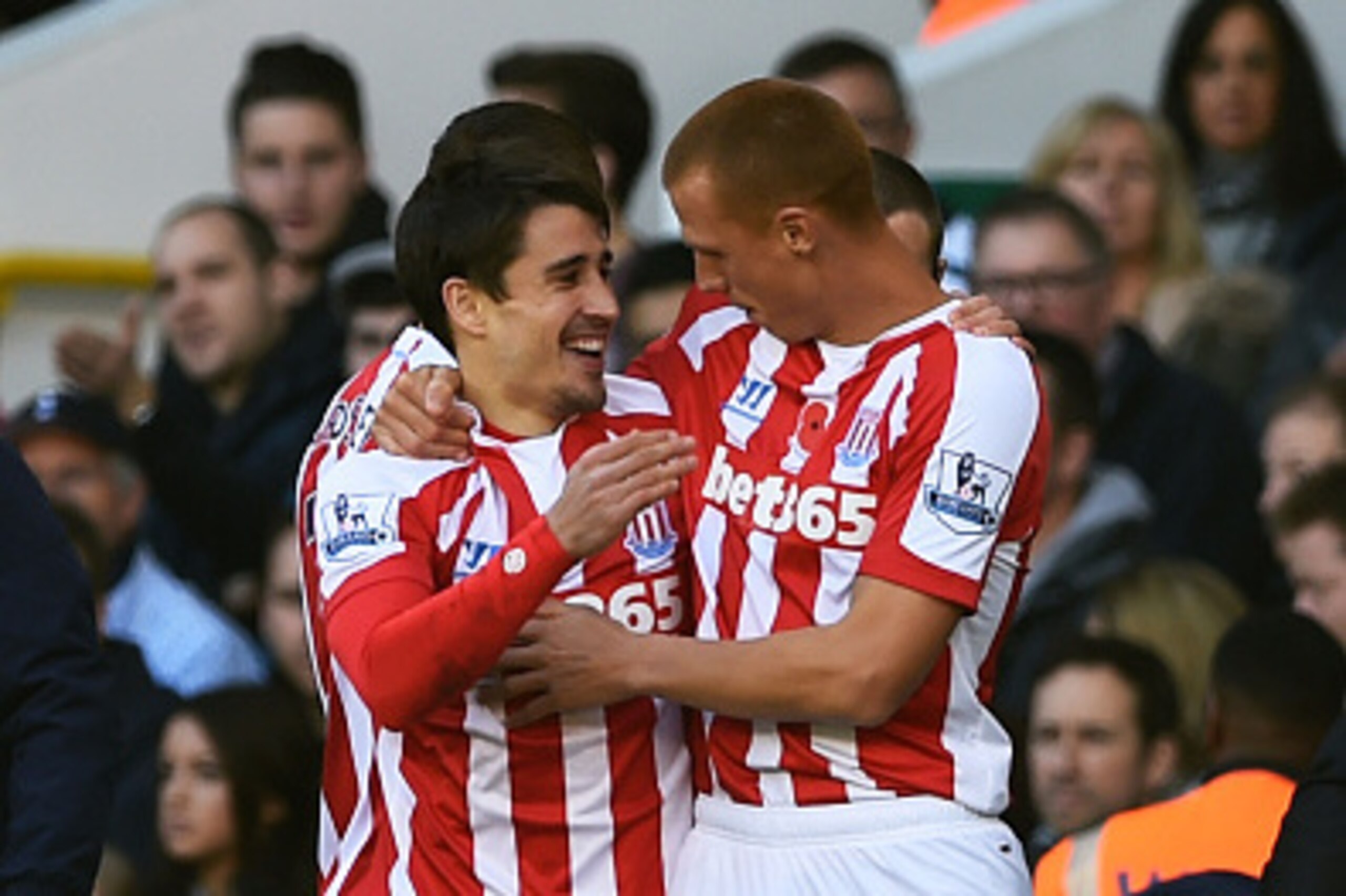
It showed as they backpedalled in the run-up to Bojan Krkic's goal, confused and intimidated by the attacker running at them. In fairness, they had not been protected by a midfield cut through upfield after they pressed without consideration for the space behind them—Etienne Capoue in particular.
As they continued to struggle with the movement of Stoke's Mame Biram Diouf and Jonathan Walters, Fazio and Kaboul's incompatibility was further emphasised when they switched sides later in the game.
That change led to marginal improvement, and both centre-backs won some individual battles. But the unwanted foundation of uncertainty had already been laid. A more consistent back line is necessary for Spurs to salvage their hopes for a top-four finish.
The north Londoners fielding the same defence every week will not be the solution to all their problems, either. Pochettino must balance consistency with quality performances. On Sunday, at least one member of Spurs' back line did not impress.
Danny Rose was caught out by Diouf after Ryan Shawcross' big header forward in the build-up to Walters' goal—forcing Fazio to leave the latter unmarked as he went across to help. Those events might have happened regardless of the centre-back pairing. Indeed, the left-back was too easily beaten in the build-up to Andreas Weimann's goal for Aston Villa last week, too.
In light of the poor performance, Pochettino should consider Rose's place in his starting XI—along with the places of the other defenders who underwhelmed Sunday.
You can afford Pochettinno some sympathy as he tries to establish a coherent setup that satisfactorily applies the ideals of his attacking football philosophy. He has not been at Spurs too long and is trying to find a setup with a young squad currently battling on three fronts.
Strategical considerations—both in terms of personnel and tactics—are influenced by matters we are not always privy to, either.
Still, a manager has to help his team build some sense of momentum and understanding. In trying to force changes, Pochettino has not built either of those in recent weeks.
The "solution" won't come easily to Pochettino and Spurs. Consistency in defence has already been argued for in this article. Certain players getting more playing time than others could be proposed, too (and after the abject nature of the performance versus Stoke, certainly will be).
An international break follows for the Premier League now. Prior to the first one of 2014-15, after the Liverpool loss, Pochettino said during his press conference: "I think that we watched more than 20 times the game, and every single detail we analysed."
Heading into the busy run of fixtures that follow this one, what the head coach and his staff come up with from their repeated viewings of the Stoke game could go a long way to deciding how much Tottenham make of this season.
Unless otherwise noted, quotes obtained firsthand.



.jpg?w=2560 "Report: Saints Trade For 49ers RB")
.jpg?w=2560 "Jeanty Avoids Major Injury")
.png?w=2560 "MLB Playoff Picture Shaping Up")
.png?w=2560 "New-Look Luka Dončić 👀")