Three Reasons James Shields Is a Worse Fit for the Red Sox Than Jon Lester
If the Boston Red Sox are going to compete in 2015, they're badly in need of an overhaul to their pitching staff.
After trading away Jon Lester, John Lackey, Jake Peavy and Felix Doubront at various points in the 2014 season, the Red Sox are left with few proven options in their rotation. Clay Buchholz and Joe Kelly figure to be locks for the starting five in 2015, and it's possible that one of the youngsters in the group with Rubby De La Rosa, Brandon Workman, Matt Barnes, Anthony Ranaudo and Allen Webster will be given a shot, too.
But that still leaves Boston in need of two or perhaps three new starters it must acquire this offseason, including one capable of fronting a rotation.
.png?w=2560)

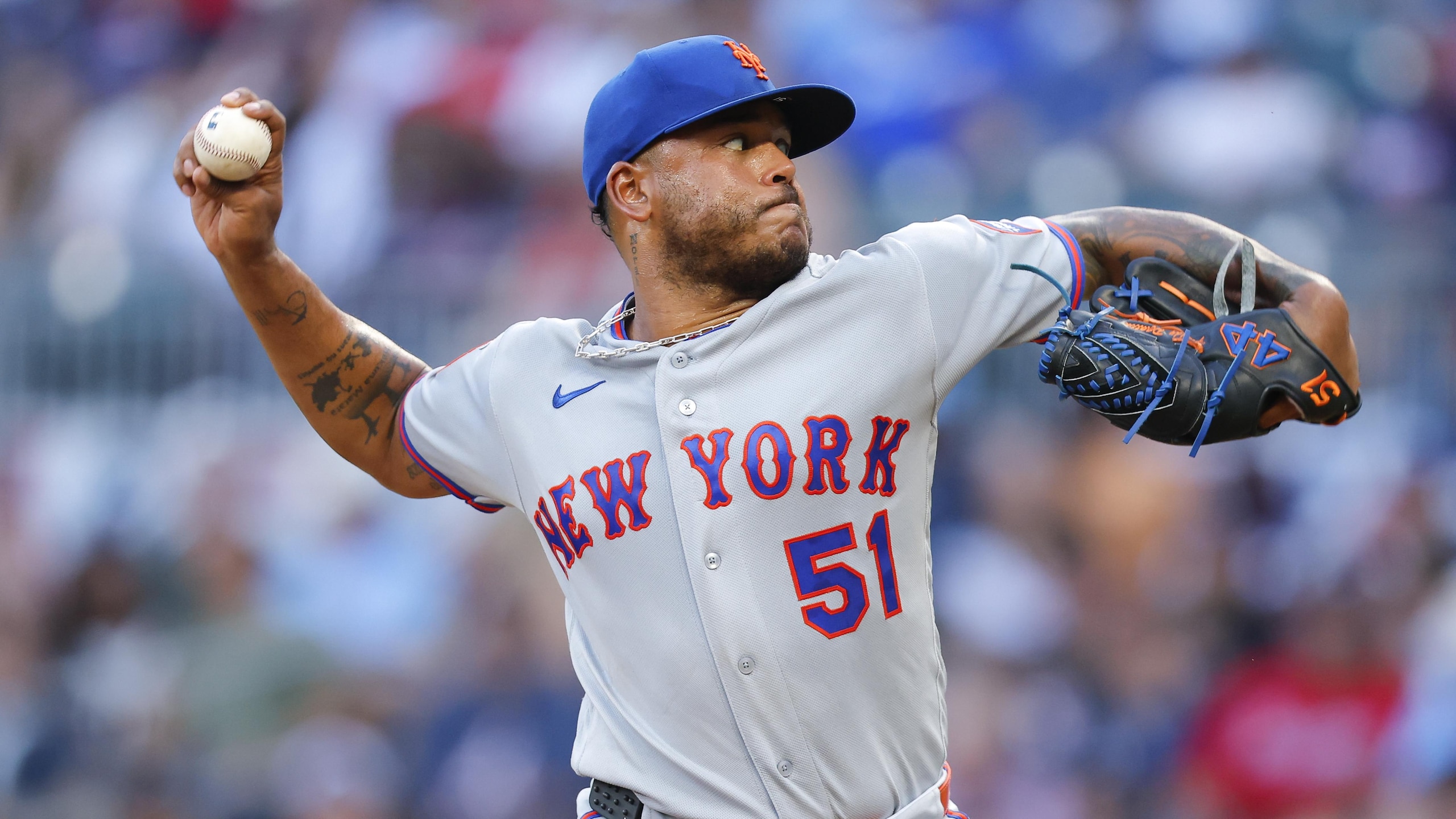
Fortunately for the Sox, three such pitchers—Lester, Max Scherzer and James Shields—exist in this year's market. And according to WEEI.com's Rob Bradford, one—but not two—of these pitchers very well could wind up atop Boston's rotation next season.

Yet early speculation suggests that it's not Lester who's most likely to end up in Boston, but rather Shields, who's still leading the Kansas City Royals in their postseason surge. We've seen speculation that the Red Sox will be in the hunt for Shields for months now, and just last week, The Kansas City Star's Andy McCullough labeled Boston as "the early favorite" to land Shields.
There's no question that signing Shields would be a boon to the Red Sox rotation. The 32-year-old pitched 227 innings with a 3.21 ERA in 2014 and has been one of the most consistent starters in the game over the past six or seven seasons. He doesn't belong in the elite tier of starters in the game, but he's a legitimate option to front a rotation for a playoff-caliber team.
But when you consider each player's history, perspective contract and additional contextual factors, it starts to look more and more like Lester would be a better fit than Shields for the Red Sox in 2015 and beyond:
1. Age vs. Length of Contract
One of the most obvious reasons Lester figures to require a more significant contract than Shields is age. Shields will be 33 for the entire 2015 season, while Lester will be 31. Because of this, we've seen reports that Shields will be in line for a four- or five-year deal, per CBSSports.com's Jon Heyman, while Lester's deal could be six or seven years, also per Heyman.
But as Ben Buchanan at Over The Monster pointed out last week, it's not quite that simple.
For one, McCullough gives a range of $80 million to $110 million for Shields, which is an incredibly wide gap. Back in July, Heyman painted the range for a Lester comment at between $125 million and $189 million—an even more absurd range.
Let's assume for a moment that Shields, bolstered by his postseason run, will get closer to the max five-year, $110 million deal that some think is possible. Then, let’s give Lester seven years but opt for a median salary estimate of $155 million.
Is Lester worth $45 million more than Shields in a vacuum? Probably not. But as Buchanan notes, when you compare such contracts, what you're really giving is $45 million for Lester's age-31 and age-32 seasons. Then, you’d have Lester for $110 million through his age-37 season; just as you'd give Shields through the high end of his market evaluation.
That's painting Lester's contract in generous terms, to be sure. Under such a scenario, the Sox would still be agreeing to pay a pitcher more than $22 per year through 2021, and the odds of Lester being worth that much money from 2018 and beyond are slim.
But if you think Lester can at least turn into a serviceable No. 3 or 4 starter in his later years, rather than decline to the point where he's not even worthy of a roster spot, the extra years represent a gamble worth taking in exchange for his age-31 and age-32 seasons.
2. Draft-Pick Compensation
Another reason the Red Sox should prefer Lester to Shields is that the former doesn't come with draft-pick compensation attached to his name, while the latter does. It's difficult to quantify exactly how much that will impact the two contracts; it's another feather in Lester's cap.
As we saw last offseason, MLB teams take the loss of draft picks quite seriously. That's why Stephen Drew and Kendrys Morales ended up without contracts until June, and it depressed the market for Ervin Santana, too.
Because the Red Sox finished so poorly in 2014, their first-round pick in the 2015 draft—No. 7 overall—is protected. That means they'll only lose their second-round pick should they sign Shields, Scherzer or another marquee free agent.
Still, second-round picks are quite valuable—once upon a time, Lester himself was chosen in the second round—and the Red Sox, with their emphasis on building from within, are likely loathe to give such a pickup.
They won't have to if they re-sign Lester, and while a second-round pick isn't a deal-breaker in this scenario, it's not trivial, either.
3. Familiarity
This is the least meaningful reason to choose Lester over Shields, and it's not the type of motive that should significantly tip the scales one way or the other. But if the Red Sox are going to splurge on a free-agent pitcher, it would make sense for them to invest in a pitcher they already know well.
John Farrell's ability to get the most out of Lester shouldn't be underestimated—you only need to look at Lester's 2011 and 2012 seasons to see why—and aside from the brief, overblown chicken-and-beer fiasco of 2011, he's been a model citizen in Boston.
The Red Sox know Lester can thrive pitching in Boston. They know he has a history of pitching well in big games. And they know that Lester can thrive pitching in hitter-friendly ballparks in a majority of his starts.
None of this is meant to denigrate Shields, who also has experience pitching in the AL East, has a tremendous reputation as a leader on a young Royals team and who could very well succeed in a big market like Boston, too.
But while pitchers are never sure things on a year-to-year basis, Lester's long track record of success with the Red Sox makes him something of a known quantity if health is on his side. And considering Lester's been on the DL once since his bout with cancer in 2006, there's no reason to think he'll break down soon.

To be fair to the Red Sox, it's entirely possible they know something most of us don't, and their lackluster offer to Lester during the regular season is indeed due to their familiarity. Perhaps for some reason they don’t think Lester will age well, or there's some health issue to which the general public isn't privy.
If we assume that's not the case, though, it makes little sense to introduce new variables into the equation with Shields. Instead, the Red Sox can turn to one of their most reliable pitchers in recent history to lead their rotation once again.
There are plenty of scenarios in which signing Shields makes more sense than Lester, from money to length of contract and beyond. If Shields' contract ends up closer to $100 million and Lester truly does end up closer to $175 million, for example, the various advantages of signing Lester don't outweigh the huge additional cost.
But there are more scenarios in which signing Lester instead of Shields is the safer and higher upside play for the Red Sox. While the Sox need to know when to walk away from the negotiating table, they should make a serious play to reacquire Lester.


.jpg?w=2560 "Report: Saints Trade For 49ers RB")
.jpg?w=2560 "Jeanty Avoids Major Injury")

.jpg?w=2560 "NFL's Biggest Rumors Ahead of Roster Cuts Deadline")