

Biggest Studs and Duds of the 2014 MLB Postseason Thus Far
The 2014 MLB postseason is no different from years past. That is to say that it is producing players who are shining brightly and those who are failing to come through on baseball's most scrutinized stage.
So, who are the biggest “studs” and “duds” of the playoffs thus far?
Well, let’s take a look.
Two things must be mentioned before getting into the conversation.
First, this list includes players from teams that are still playing. That means that no one from the Los Angeles Dodgers, Washington Nationals or any other club that’s been eliminated will be mentioned.
Second, there will be one pitcher and one position player from each club in each group. That means there will be one hurler on the Baltimore Orioles in the “stud” section and one in the “dud” section. The same can be said for hitters.
With the procedural information out of the way, here are the best and worst performers of the 2014 postseason—so far, anyway.
Baltimore Orioles Stud: Nelson Cruz, DH
1 of 16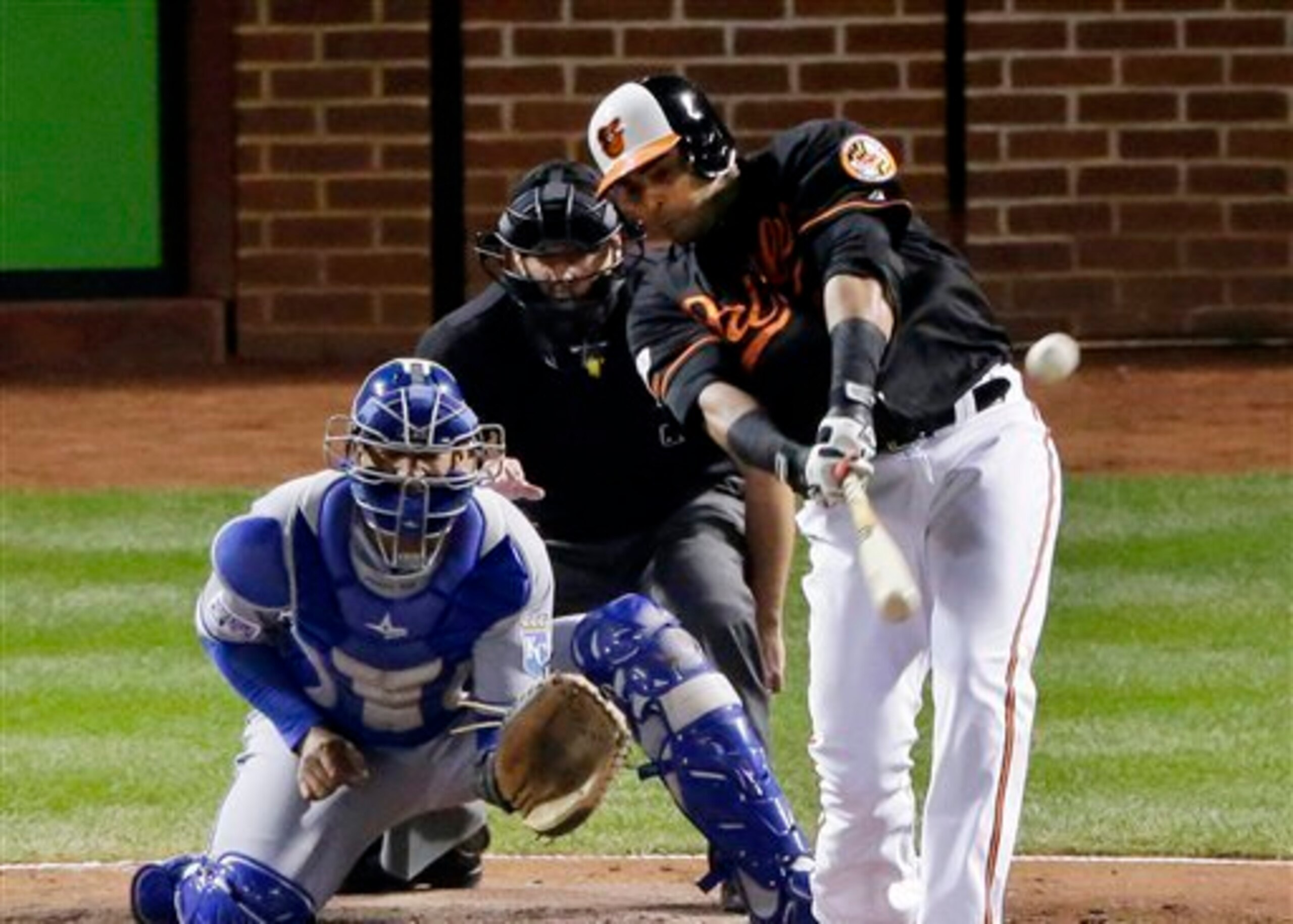
In his very first at-bat of the 2014 American League Division Series against Max Scherzer and the Detroit Tigers, Nelson Cruz hit a two-run bomb, scoring Nick Markakis. It was his first big hit in what has been a postseason filled with them.
For as good as he has been, however, he can't let up if the Baltimore Orioles are going to come back from a two-game deficit in the best-of-seven American League Championship Series. Simply put, Cruz is going to have to set the tone if the O's want to make it to the World Series.
All told, the designated hitter is slashing out at .476/.500/.810 with two home runs, seven RBI and 17 total bases in 21 at-bats.
Baltimore Orioles Dud: Steve Pearce, 1B
2 of 16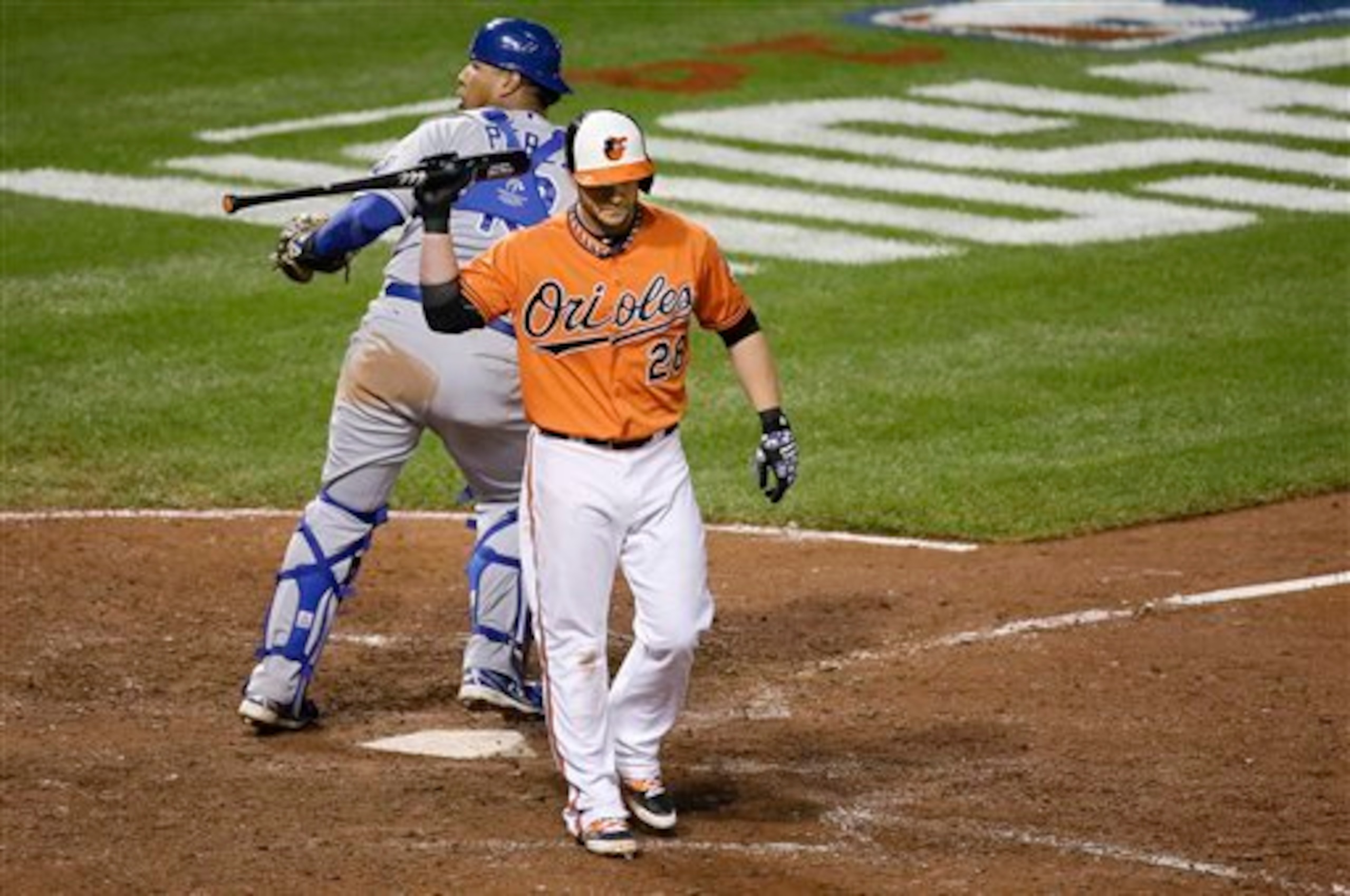
For as good as Cruz has been, Steve Pearce has been the opposite.
In 19 at-bats, he has a .158/.273/.158 slash line with one RBI and three runs scored. Digging deeper, he is 0-for-9 in the American League Championship Series with one walk and two strikeouts.
It appears like he's trying to do too much.
To that end, Eduardo A. Encina from The Baltimore Sun wrote that “with the bases loaded in a tied game in the seventh inning Saturday, Pearce appeared to be pressing as he swung at balls out of the strike zone instead of waiting for his pitch and uncorking on it.”
And make no mistake, his lack of production is a surprise. That is especially true when we consider that he hit .293/.373/.556 with 21 home runs and 49 RBI in only 338 at-bats during the regular season.
Baltimore Orioles Stud: Andrew Miller, RP
3 of 16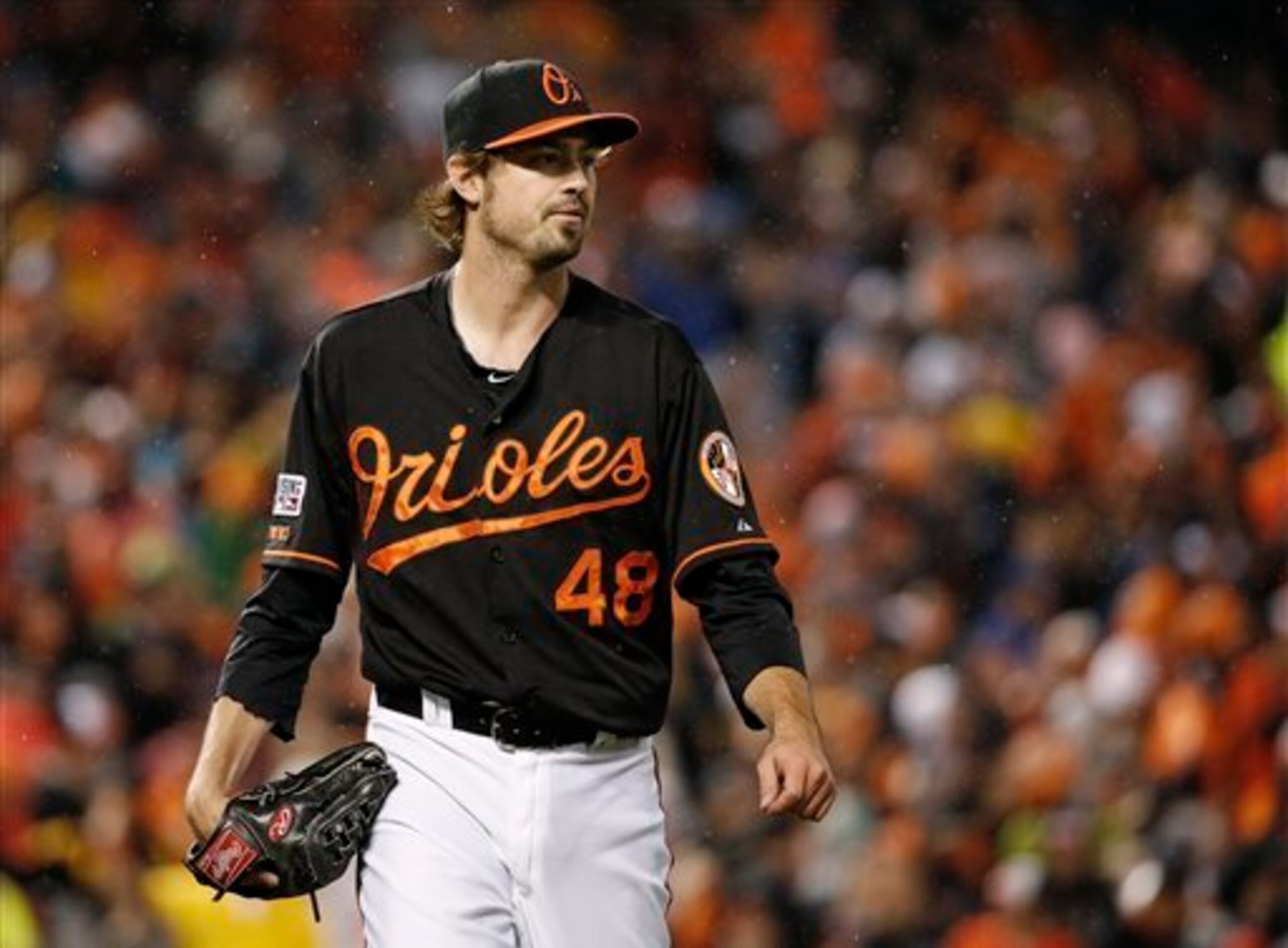
After pitching to a 2.02 ERA with a 0.802 WHIP and 14.9 strikeouts every nine innings this season, Andrew Miller didn’t have a lot to prove to the pundits. He had even less to show the Orioles after posting a 1.35 ERA and a 0.600 WHIP in 23 appearances following his acquisition from the Boston Red Sox at the July 31 non-waiver trade deadline.
No matter. All he’s done this postseason is strike out seven, walk one and give up one hit in four appearances, covering 6.1 innings. He is hands down the most effective reliever in the postseason for any club.

Baltimore Orioles Dud: Chris Tillman, SP
4 of 16
When one looks at raw numbers, right-handed reliever Darren O’Day should get the nod. After all, he has a 15.43 ERA, has allowed at least one run in the three games he has appeared in and gave up a home run to Alex Gordon that put the Kansas City Royals on top during Game 1 of the American League Championship Series.
That would be shortsighted, however, as he’s gotten some big outs throughout the postseason, including inducing Billy Butler into a double-play ball to end a threat in the top of the ninth inning in Game 1.
Instead, starter Chris Tillman earns the recognition. True, he wasn’t bad against the Detroit Tigers, throwing 5.0 innings of two-run ball. Against the Royals in Game 1 of the ALCS, however, he gave up five earned on seven hits in 4.1 innings pitched.
It must be noted that three of those runs scored when Gordon hit a broken-bat double, but Tillman still allowed far too many baserunners and did not command the strike zone effectively.
Kansas City Royals Stud: Lorenzo Cain, CF
5 of 16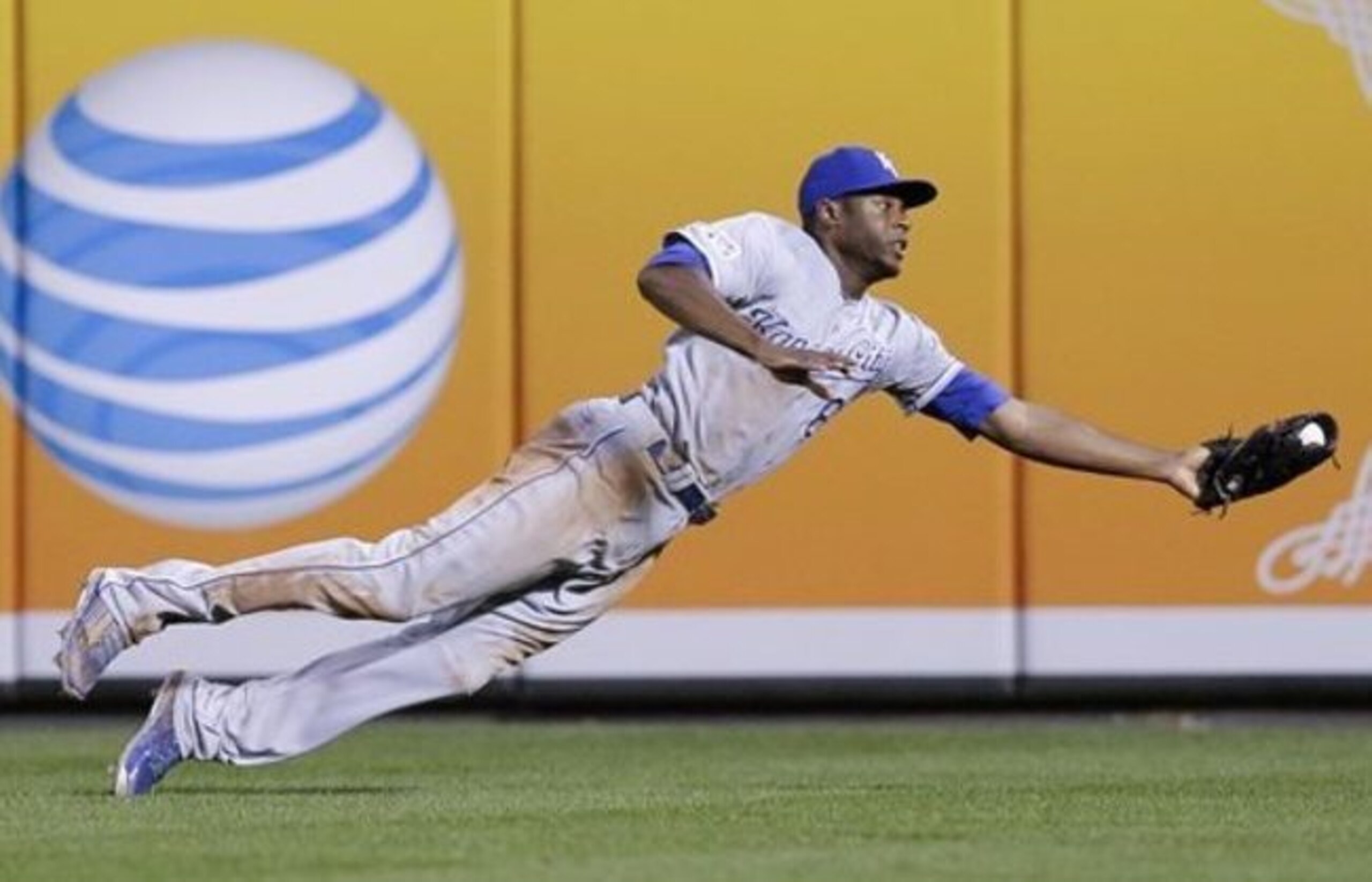
Lorenzo Cain isn’t shy about his style of play, saying, “I want to be able to swing the bat, steal bases and play solid defense,” via MLB.com’s Alden Gonzalez.
Check. Check. And check.
And we’re not just talking about the fact that he went 4-for-5 with two runs scored, made two mind-boggling grabs in the outfield and displayed heady baserunning skills in Game 2 of the American League Championship Series.
He has been doing it all postseason.
All told, Cain has 10 hits in 27 at-bats, compiling a .370/.400/.481 slash line with four RBI and eight runs scored in the process. And if we take his prowess on the bases and defensive excellence into consideration, he just may be the Royals' playoff MVP.
Kansas City Royals Dud: Salvador Perez, C
6 of 16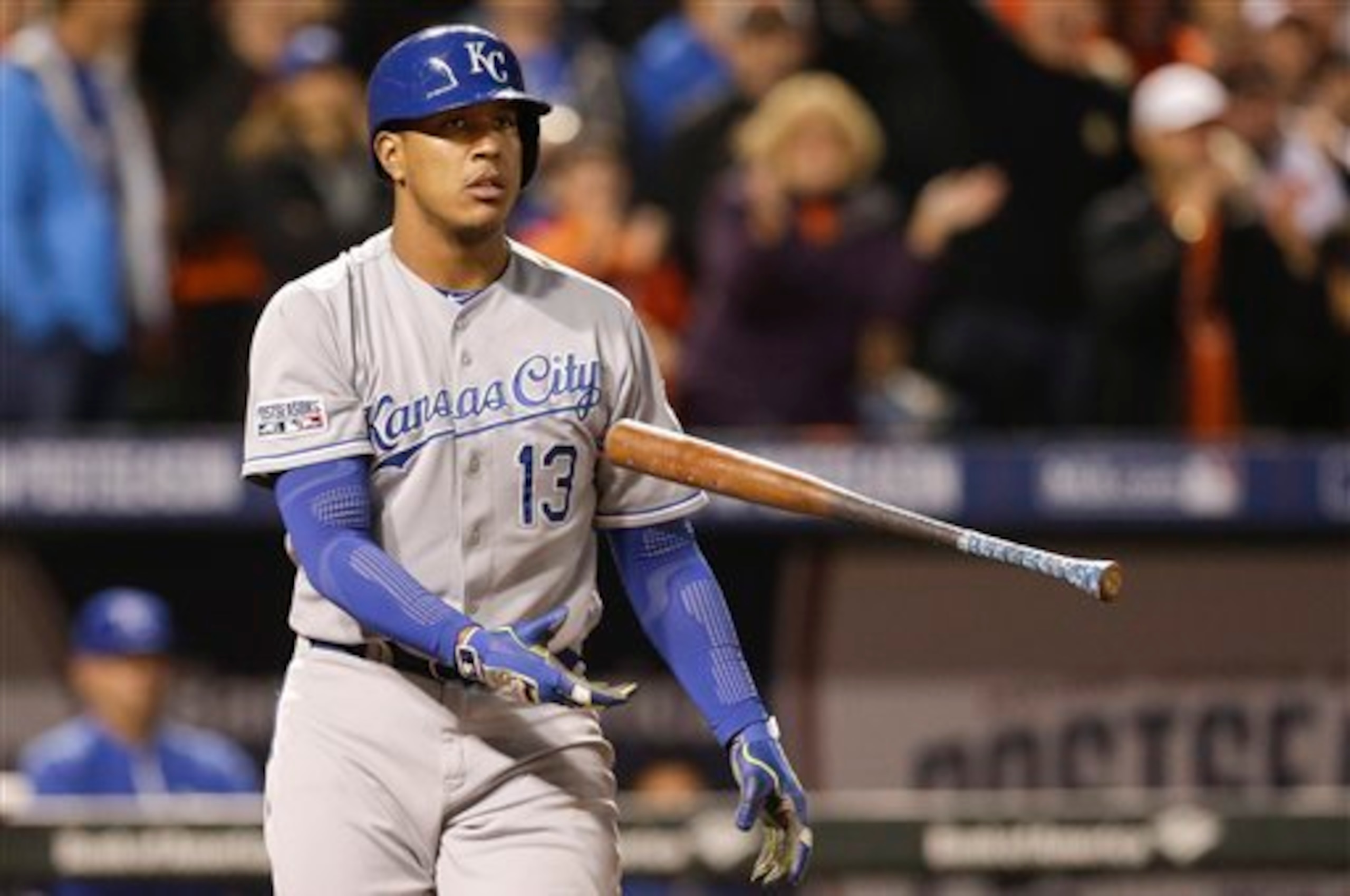
Yes, he had the game-winning single against the Oakland A's in the Wild Card Game. And yes, he has been fantastic behind the plate.
This is about overall production, though, and catcher Salvador Perez is lacking in one key area at the moment—offense.
Frankly, watching him at the plate is hard to do. He is flailing at pitches out of the zone, looks overmatched facing good fastballs and is confused on any pitch that has movement.
In other words, he seems lost in the batter's box.
To this point, he has four hits in 27 at-bats and is putting up a woeful .148/.179/.148 slash line in the process.
Kansas City Royals Stud: Wade Davis, RP
7 of 16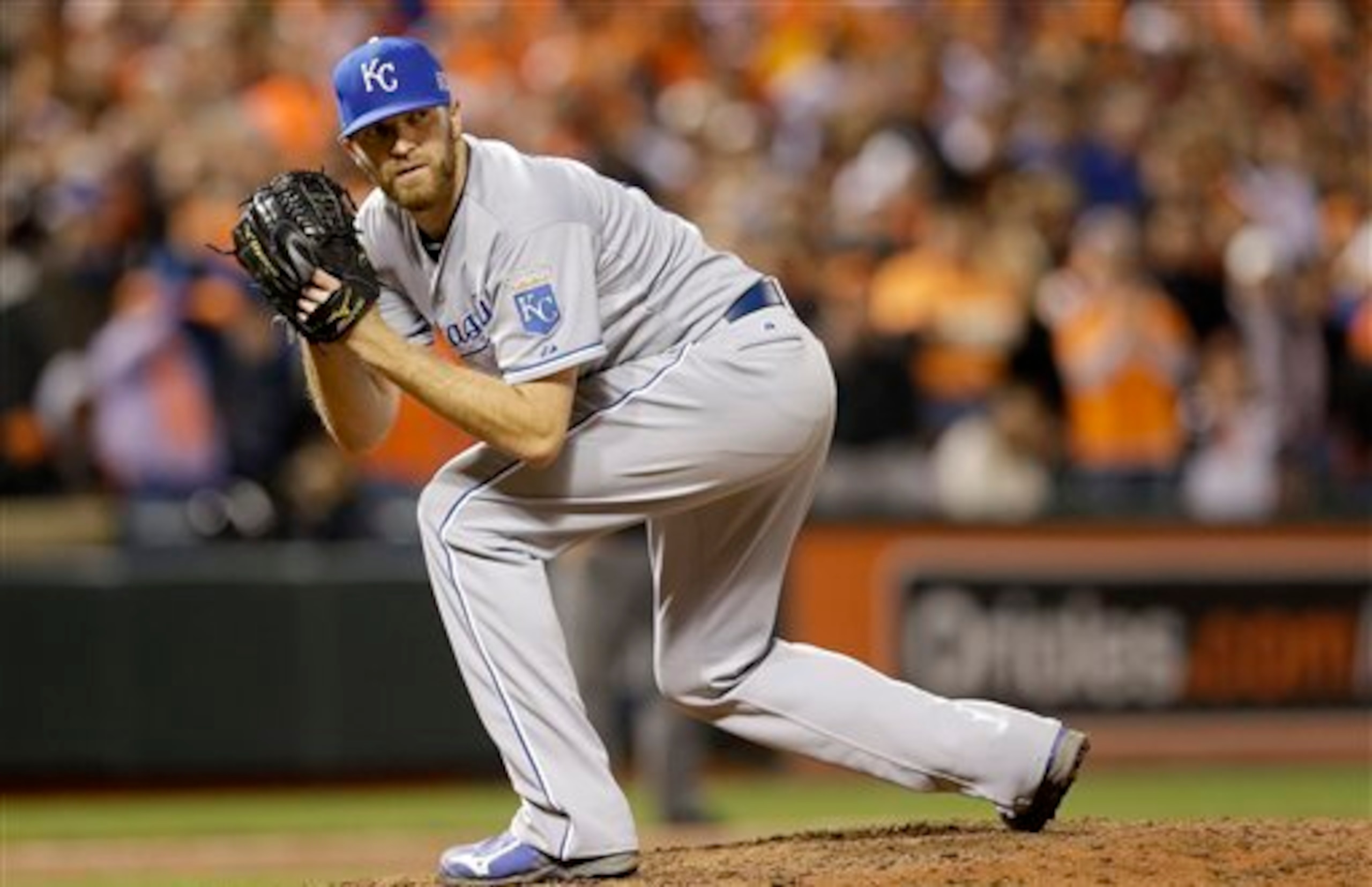
When it comes to entering a game in high-leverage situations, just about every reliever in manager Ned Yost’s bullpen is up to the task. For as good as Kelvin Herrera and Brandon Finnegan have been to this point, however, Wade Davis stands alone as the best of the bunch this postseason.
Over the course of six appearances, covering 7.1 innings, he has given up only four hits and two walks and has struck out nine batters en route to a 1.23 ERA.
Davis has done it all too. He’s appeared in every game so far during the playoffs—in almost every situation imaginable—and is setting the tone for the rest of his unit.
As MLB.com’s Phil Rogers noted, “This guy is an absolute beast.” Yep. Sounds good on this end.
Kansas City Royals Dud: James Shields, SP
8 of 16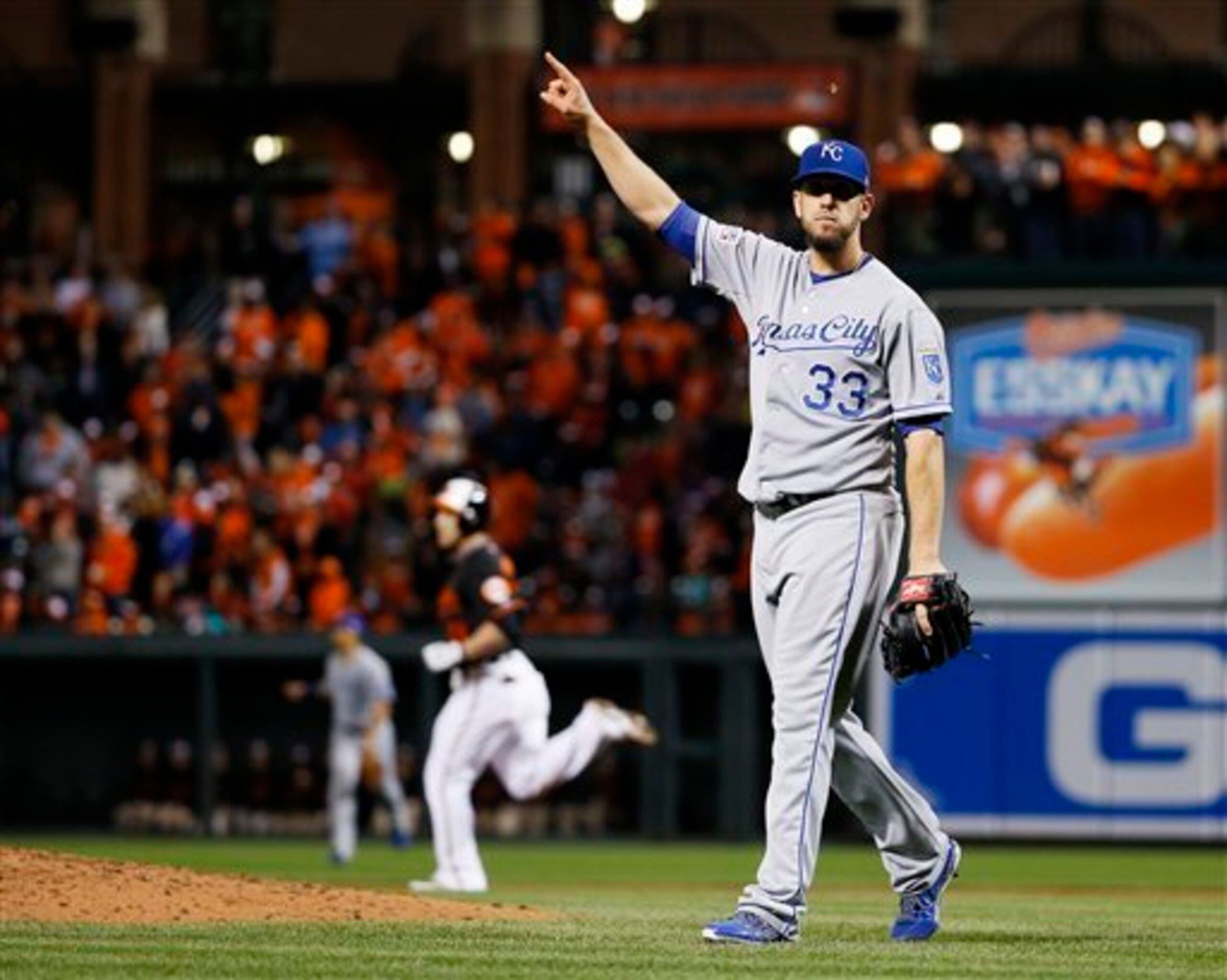
The sentiment may be getting old, but James Shields is not living up to his “Big Game James” moniker.
In three starts, he has logged only 16.0 innings, surrendering 10 earned runs on 21 hits. Worse yet, he is struggling with location (15 walks) and has given up three home runs in the process.
The bottom line is that this is not the same pitcher who led the Royals to the postseason. As Vahe Gregorian of The Kansas City Star wrote, “It’s hard to know what’s happening with Shields right now.”
We shall see what happens during the rest of the American League Championship Series, but if the Royals end up making the World Series, Yost may have to shorten the leash on his best starter even further than he already has.
San Francisco Giants Stud: Brandon Belt, 1B
9 of 16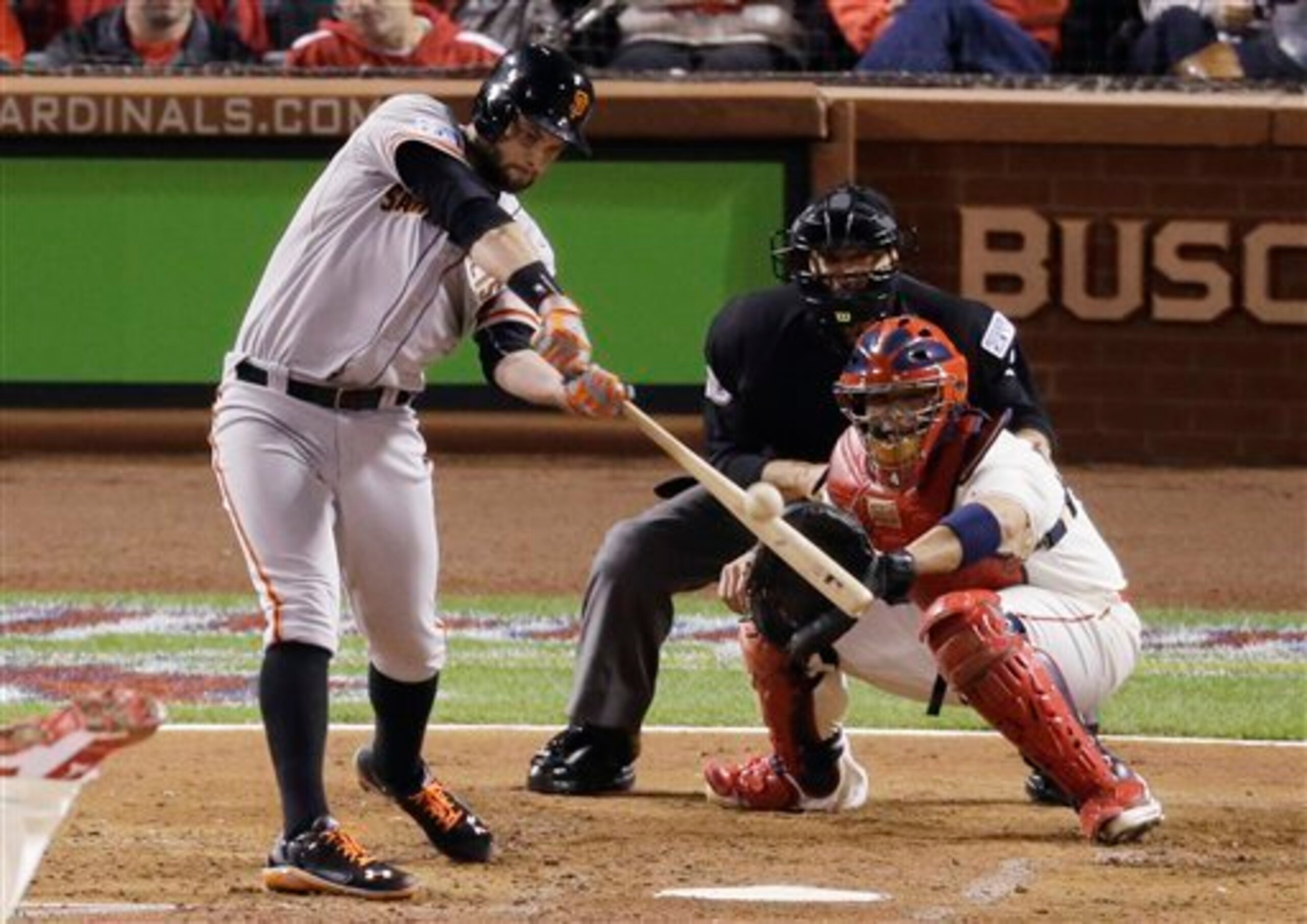
As Bleacher Report’s Zachary D. Rymer noted early on in Game 2 of the National League Championship Series, “The quality of Brandon Belt’s at-bats now compared to the start of the season is night and day.”
Rymer is right too. Belt has been on a run that makes his injury-plagued regular season seem like an afterthought.
Let’s begin with the Wild Card Game, when he went 2-for-3 with two walks, three RBI and a run scored vs. the Pittsburgh Pirates. Then, in the National League Division Series, he went 5-for-18 with a .444 slugging percentage. In addition, he hit what proved to be the game-winning home run when leading off the top of the 18th inning of Game 2 against the Nationals.
And so far in the playoffs, he is 9-for-25 with six RBI and a .949 OPS. It must be noted that Buster Posey is slashing out at .313/.371/.313, and Pablo Sandoval has a .313/.371/.406 slash line, but Belt is the best thing going right now in manager Bruce Bochy’s lineup.
San Francisco Giants Dud: Hunter Pence, RF
10 of 16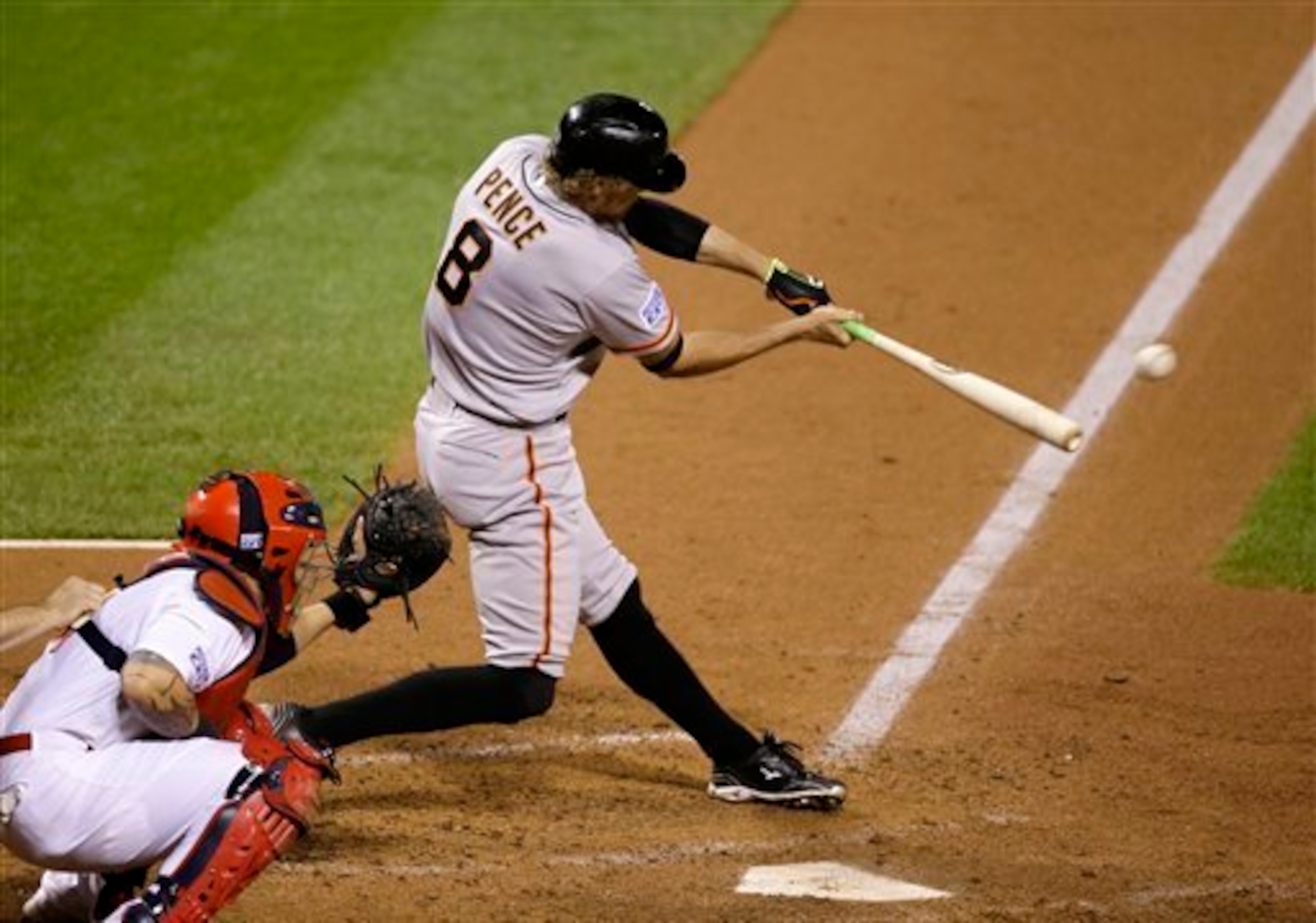
San Francisco Giants right fielder Hunter Pence is having a rough time, and to say that he’s been a disappointment would be an understatement.
Simply put, he is the No. 5 hitter because he has a blend of power and speed that augments the rest of the lineup quite well. Unfortunately, Giants fans haven’t seen him put either on display thus far.
In 29 postseason at-bats, Pence has managed a .241/.313/.310 slash line with a paltry nine total bases and only two extra-base hits. True, the lineup has been able to mask his shortcomings, but it is only a matter of time before that is no longer the case.
Now, Gregor Blanco or Brandon Crawford could have easily been selected here, but Pence gets the call because of his role in the lineup. He is going to have to step up if the Giants hope to advance to the World Series.
San Francisco Giants Stud: Madison Bumgarner, SP
11 of 16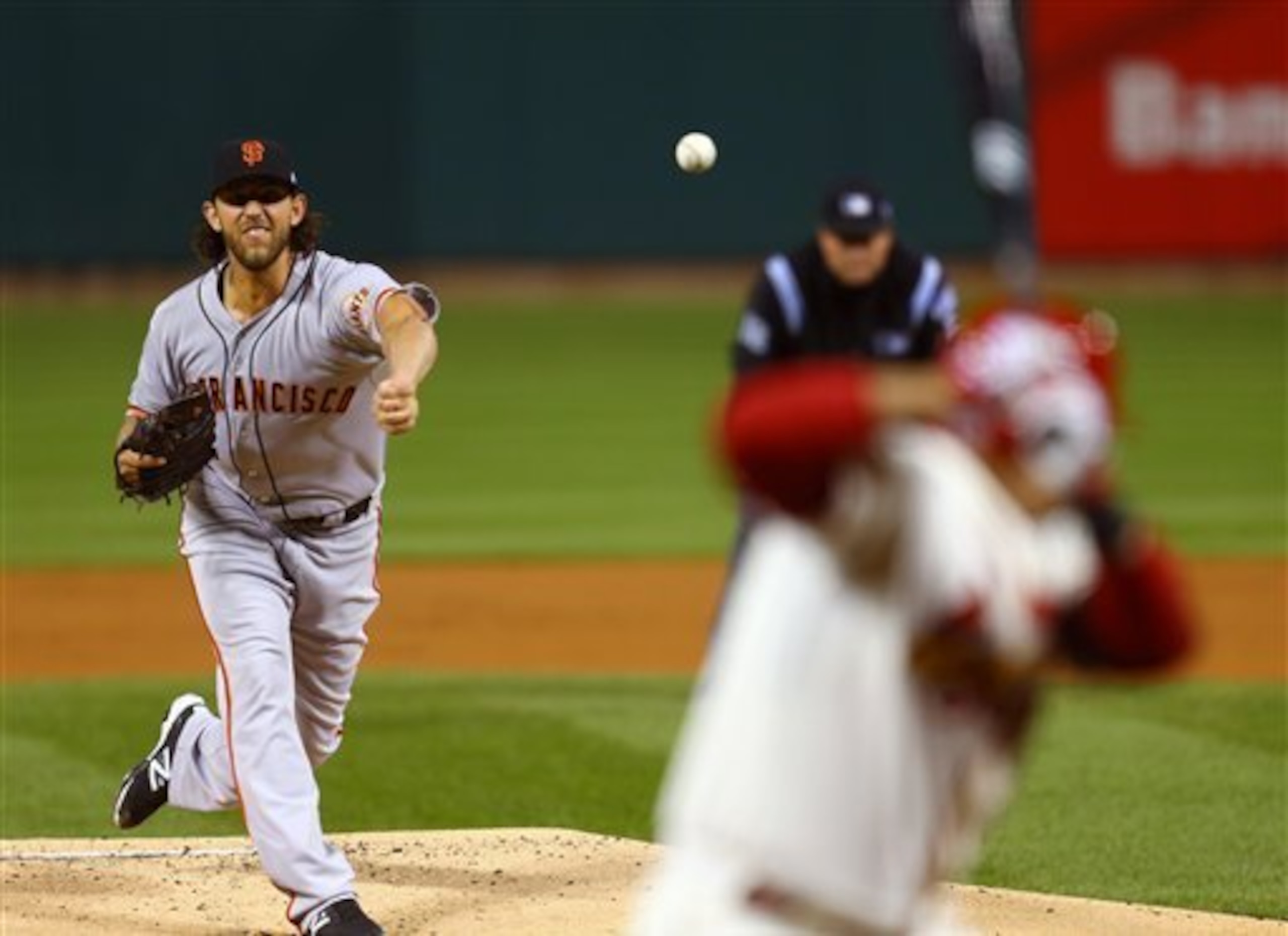
Where did it begin this postseason for San Francisco Giants ace Madison Bumgarner?
How about the Wild Card Game against the Pittsburgh Pirates, when he struck out 10 and allowed four hits in the process of tossing a complete-game shutout. He was then held back by a dormant Giants offense in Game 3 of the National League Division Series against the Nationals, surrendering two earned runs on six hits over seven innings in a 4-1 loss.
Bumgarner followed that performance by tossing 7.2 frames of scoreless ball in Game 1 of the National League Championship Series against the St. Louis Cardinals. Flat out, he has set the tone for the rest of the staff.
And for as good as Santiago Casilla, Yusmeiro Petit and Jeremy Affeldt have been, there is no topping what Bumgarner has done to this point in the playoffs.
San Francisco Giants Dud: Hunter Strickland, RP
12 of 16
Hunter Strickland's first exposure to postseason baseball was a roaring success. He struck out Ian Desmond on a 100 mph fastball to end a bases-loaded threat, bailing starter Jake Peavy out of a precarious predicament in Game 1 of the National League Division Series.
He then allowed two home runs the next inning to Bryce Harper and Asdrubal Cabrera. True, he preserved the win, but he exited the game in decidedly different fashion from the way he entered it.
Strickland earned the victory in Game 4 after giving up another home run—this time a bomb to Harper that tied the game at 2-2—in his one inning of work. And in Game 2 of the National League Championship Series, he gave up a home run to Matt Adams that put the St. Louis Cardinals up 4-3 in the bottom of the eighth inning.
For as dominant as he can be, his playoff outings are uneven, which is to be expected from a rookie with nine regular-season MLB games under his belt.
In four appearances this postseason, Strickland is 1-0 with an 8.31 ERA and has amassed five strikeouts in 4.1 innings pitched in addition to surrendering four home runs.
St. Louis Cardinals Stud: Matt Carpenter, 3B
13 of 16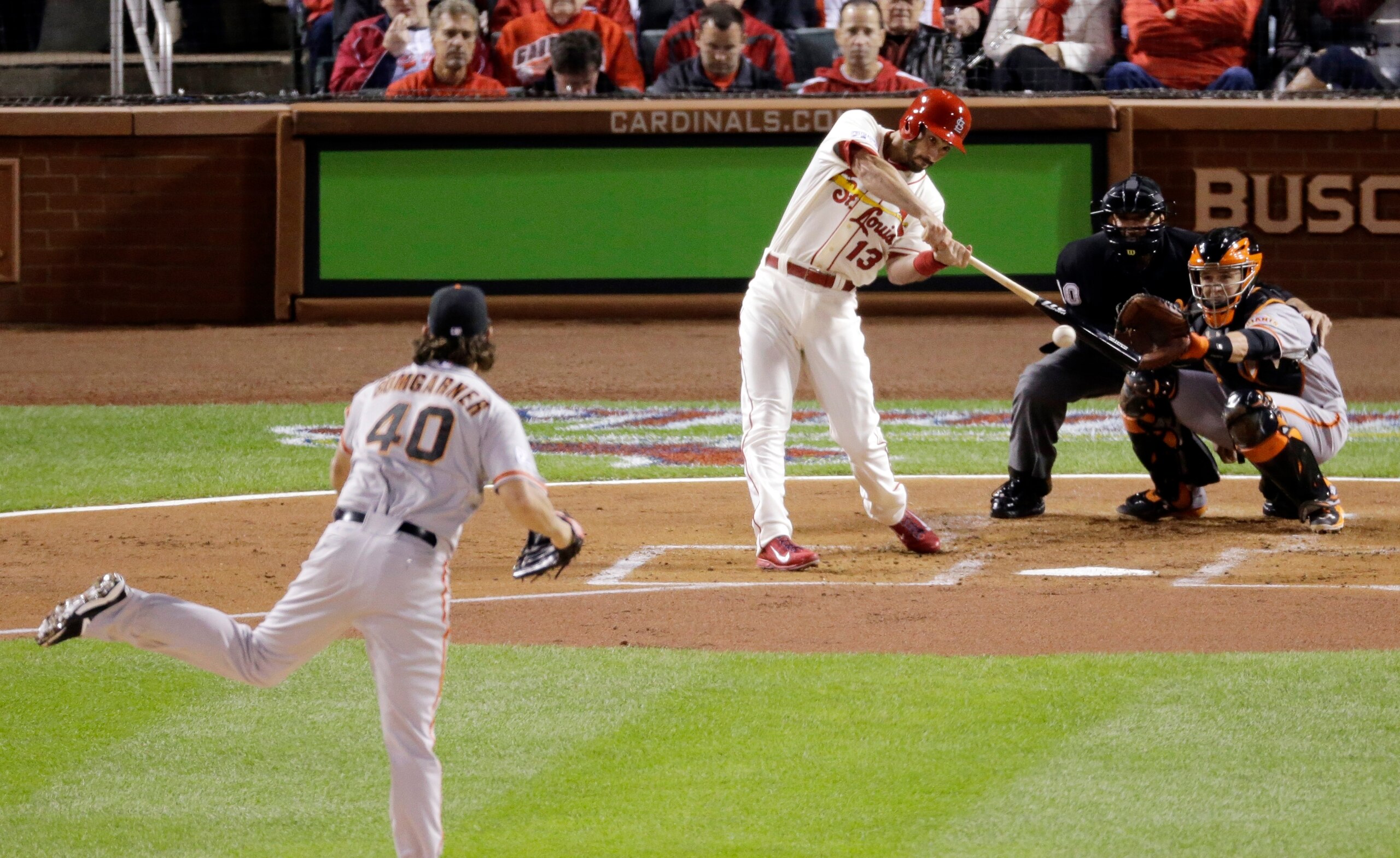
St. Louis Cardinals third baseman Matt Carpenter didn’t have his finest season this year—at least by his standards.
See, there is nothing inherently bad about slashing .272/.375/.375 with 33 doubles, 99 runs scored and 59 RBI. It’s just that when a .318/.392/.481 slash with 55 doubles, 126 runs and 78 RBI is the benchmark, those numbers represent a rather dramatic decline in production.
This postseason, however, Carpenter is carrying the load.
In 24 at-bats, he is hitting .333 with a 1.318 OPS and has clubbed four home runs while driving in eight and scoring five times. He has been dominant. In fact, he and Jon Jay are the only Cardinals regulars with at least 15 at-bats who are hitting above .238 in the playoffs.
St. Louis Cardinals Dud: Yadier Molina, C
14 of 16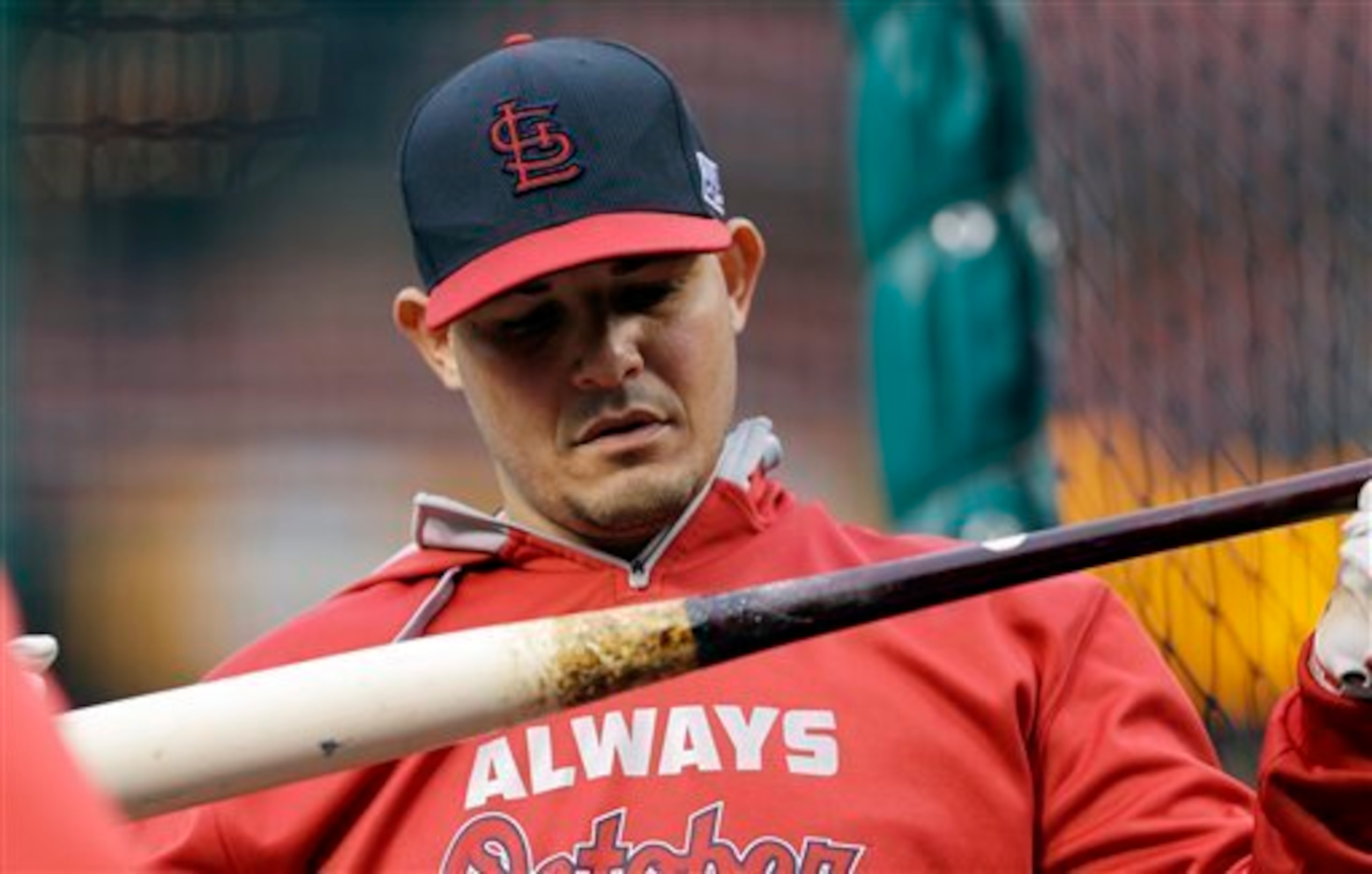
Per USA Today’s Bob Nightengale, St. Louis Cardinals catcher Yadier Molina passed Albert Pujols on the all-time list for most postseason hits in franchise history with a second-inning single during Game 2 of the National League Championship Series. Other than that, this postseason has been a poor one.
In 21 at-bats, he has a .238/.238/.286 slash line with one double and zero RBI.
It must be noted that several players, including Jhonny Peralta, aren’t doing what they are capable of and could have been tagged here. But Molina is the heart and soul of the Cardinals. Without him performing at a high level, the rest of the lineup suffers.
To top it all off, Molina left Game 2 of the NLCS with an oblique injury, according to the Cardinals' Twitter feed. More will be revealed about his status in the coming days, but the injury is terrible news for manager Mike Matheny and the rest of the club.
St. Louis Cardinals Stud: John Lackey, SP
15 of 16
When St. Louis Cardinals general manager John Mozeliak sent Joe Kelly and Allen Craig to the Boston Red Sox for right-hander John Lackey, he expected certain things in return. At the top of the list was a strong effort in the postseason.
Well, that is exactly what Lackey delivered in Game 3 of the National League Division Series against the Los Angeles Dodgers when he tossed seven innings of one-run ball and struck out eight batters. He kept the Dodgers lineup off balance by effectively changing speeds and locating his pitches.
The performance was reminiscent of his dominant outings while with the Red Sox.
The recognition here could also have gone to reliever Pat Neshek, who has appeared in five games and only given up one run in 4.2 innings, highlighted by a fantastic outing in Game 2 of the National League Championship Series on Sunday.
St. Louis Cardinals Dud: Adam Wainwright, SP
16 of 16
In the days leading up to Game 1 of the National League Championship Series vs. the San Francisco Giants, there was an inordinate amount of conversation regarding the status of Adam Wainwright’s elbow.
After all, he surrendered six earned runs on 11 hits over 4.1 innings against the Los Angeles Dodgers in Game 1 of the National League Division Series. He didn’t seem right and acknowledged that his elbow was a bit sore.
Well, he didn’t fare much better against the Giants. From Tim Brown over at Yahoo Sports:
"Wainwright gave the ball back after 4 2/3 innings, a mere one-out improvement from Game 1 of the division series. The pitch count remained high. The number of baserunners remained unwieldy. The pitch selection – fewer sinkers, lots of cut fastballs – seemed curious. The beginning (a Wainwright start in October) and the ending (a Cardinals loss in October) seemed slightly incongruous.
"
For his part, Wainwright said that the elbow wasn’t a problem, citing “mechanical issues related to stride and release point,” as the root of his struggles, per MLB.com’s Adam McCalvy.
Either way, he is not having his best postseason—to this point, at least.
Unless otherwise noted, all traditional, team and historical statistics are courtesy of Baseball-Reference. Transaction, injury and game information are courtesy of MLB.com.
Follow @MatthewSmithBR





.jpg?w=2560 "Grading WWE Raw 🔠")