
Timeline of the 50 Most Important Matches in WWE History
Bruno Sammartino vs. Buddy Rogers, Hulk Hogan vs. Andre the Giant and Edge vs. John Cena didn't just captivate fans, they begot WWE history.
A wrestling match can launch a megastar's career. It can spearhead a shift in the industry. It can establish traditions that became vital components for a company.
WWE's most important matches all accomplished more than deciding a winner and thrilling the crowd. They were changing of the guards and catalysts.
Take them out of WWE's timeline and you are left with a gap in the company's story. Suddenly, WWE's path to the future veers, and the present is unrecognizable.
Traveling from 1963 to 2014, the following is a chronological look at which bouts most influenced the WWE saga.
Bobo Brazil vs. Johnny Barend: April 6, 1963
1 of 50Bobo Brazil became the first man to hold the WWWF United States Heavyweight Championship when he defeated "Handsome" Johnny Barend.
That title victory was about much more than his popularity and in-ring prowess; it was a symbol of progress. In the tumultuous '60s, Brazil broke through a barrier that night in California.
At that time, African-American men simply didn't get many opportunities and surely didn't win titles. Brazil beating Barend bucked that history.
His accomplishments often draw comparisons to Jackie Robinson, with the Professional Wrestling Hall of Fame being among the many to do so. Winning this championship—as its first champ no less—was one of Brazil's key moments of trailblazing.
Bruno Sammartino vs. Buddy Rogers: May 17, 1963
2 of 50A legacy began in Madison Square Garden when a powerhouse snatched a championship that he would go on to hold for nearly eight years.
Bruno Sammartino dominated Buddy Rogers to become the second-ever WWWF world champ. To describe it as a match is misleading. The challenger steamrolled over the champion in just seconds.
It was the first major conquest of the company's first megastar as the WWWF continued to move away from the NWA. Sammartino would go on to be the company centerpiece, a role he took on after delivering a backbreaker to the original Nature Boy.
An eight-year title reign, a record that still stands today, began that night.
Ivan Koloff vs. Bruno Sammartino: Jan. 18, 1971
3 of 50After Bruno Sammartino held the world title for more than 2,800 days, it must have felt like he was immortal. From 1963 to 1971, no one could take that championship from The Italian Superman.
Then The Russian Bear stunned the wrestling world.
Ivan Koloff entered the Madison Square Garden as another in a long line of challengers. A flying knee drop proved to be the key blow in one of the most memorable upsets in WWE history.
Few matches have had the effect on the audience that this one did. Sammartino's legendary status gave his loss a mighty weight. A giant fell that night.
As Bill Apter notes on WWE.com, the New York Daily News "published photos of fans crying as they mourned this incredible loss."
.jpg?w=2560)
.jpg?w=2560)
The Sheik and Dick the Bruiser vs. Luke Graham and Tarzan Tyler: June 3, 1971
4 of 50From 1971 to 2010 the titles originally known as the WWWF World Tag Team Championship served as the stage that showcased the company's top tag talent.
Before The Valiant Brothers, The Hart Foundation or Edge and Christian got their hands on that prize, it was "Crazy" Luke Graham and Tarzan Tyler who brawled their way to gold. They became the first champs in this title's history when they knocked off Dick the Bruiser and The Sheik.
This was the finals of a tournament and a victory in New Orleans that launched a key element for WWE.
The company had other tag team belts before this including the international tag titles and U.S. tag belts, but this was the championship that became prominent—one defended and won at WrestleMania, SummerSlam and elsewhere.
Over 100 teams would go on to win it after Graham and Tyler's victory initiated its legacy.
Pedro Morales vs. Bruno Sammartino: Showdown at Shea, Sept. 30, 1972
5 of 50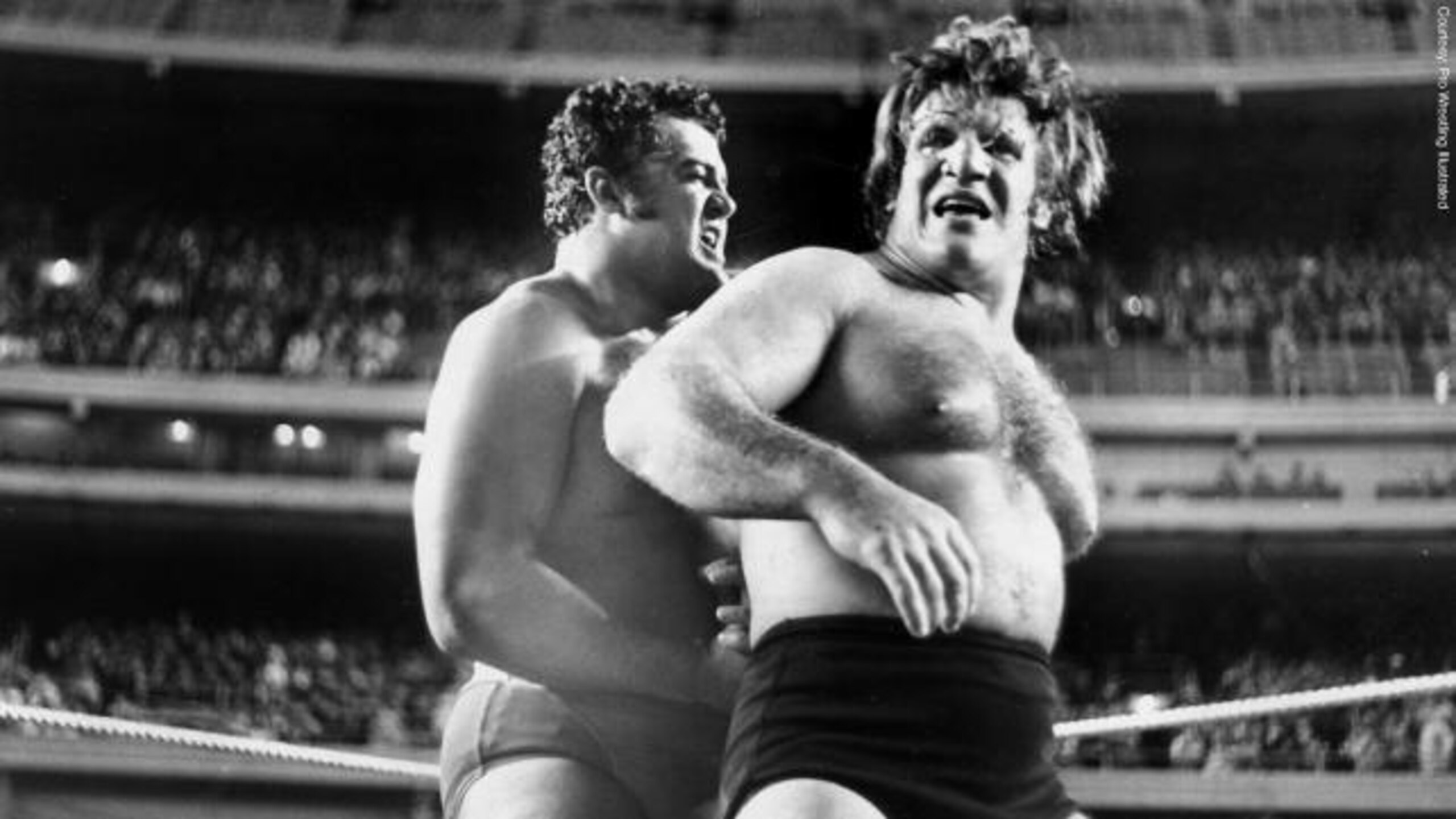
Before WrestleMania, Showdown at Shea was WWE's supercard. The first edition drew a crowd of 22,000 fans, per ProWrestlingHistory.com, filling Shea Stadium in anticipation for a battle between two giants of the industry.
Bruno Sammartino had long been the company's biggest star, but Pedro Morales was catching up to him by 1972.
Rarely did this much star power fill a single ring. Rarely did two babyfaces collide as they did here. They did so at an event that would be the precursor to the modern pay-per-view.
The two titans fought for more than an hour, wrestling to a draw at the 65-minute mark.
Antonio Inoki vs. Muhammad Ali: Showdown at Shea, June 26, 1976
6 of 50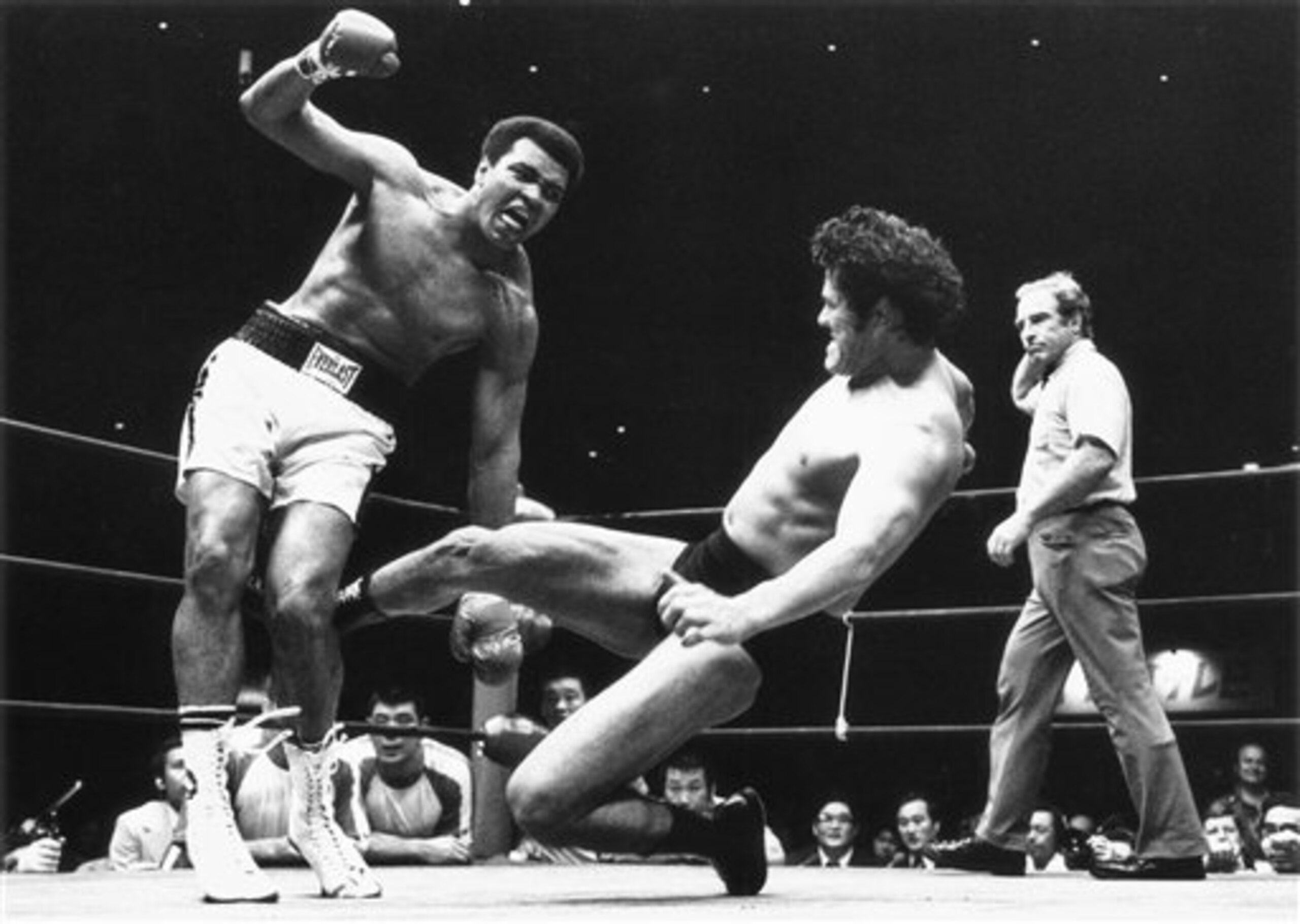
The second Showdown at Shea hosted two main events—one that fans saw unfold in that very stadium and one they witnessed from Tokyo via closed-circuit TV.
Antonio Inoki and Muhammad Ali clashed in the latter.
Inoki was Japan's biggest wrestling star. Ali was the rare transcendent athlete, a boxer whom even non-boxing fans knew all about.
Their match was a hideous one. A debate over the rules of this boxer vs. wrestler match left Inoki with limited offense at his disposal. Essentially, he spent the entire crouched on the mat like an overturned bug, kicking at Ali's legs.
It remains a significant match, though, because of the names involved, and in many eyes, the contest was the birth of MMA. For WWE, it aided the company in drawing 32,000 fans, per ProWrestlingHistory.com, into Shea Stadium, leeching off the buzz of that battle.
Billy Graham vs. Bruno Sammartino: April 30, 1977
7 of 50A victory over Bruno Sammartino was the Holy Grail that only few wrestlers ever experienced.
"Superstar" Billy Graham knocked off the legendary champ in Baltimore, ending the bruiser's nearly four-year run. It wasn't quite as shocking a win as the one Ivan Koloff pulled off six years prior, but seeing Sammartino on his back as the referee counted to three was still a powerful and rare image.
Graham would then make history with that gold in his grasp.
In WWE's early years, heels didn't say champ for long. Previous world title history had seen previous villainous titleholders have reigns of only 21 and nine days, respectively.
Graham would remain champion for nearly a year, opening the door for future heels to be the company's top star for a sustained period.
Pat Patterson vs. Ted DiBiase: June 19, 1979
8 of 50The birth of the Intercontinental Championship came some 16 years after the formation of what is now WWE.
To decide who would first wear that crown, the company pitted Ted DiBiase against Pat Patterson. They were the North America and South America champions, respectively.
Championships have come and gone throughout the company's history, but the IC title has stuck around. That adds weight to Patterson's win, as he was the first man to carry this strap.
This bout would be the first of many for that IC crown. A tradition began with one Hall of Famer pinning another, as a championship's story entered its first chapter.
Hulk Hogan vs. Harry Valdez: Nov. 17, 1979
9 of 50The match is no classic. It lasted less than three minutes and was a one-sided contest with little drama.
Its significance comes from it being Hulk Hogan's WWE debut. The Hulkster would of course go on to face far bigger opponents than Harry Valdez. He would go on to be the man the company built around.
This, though, was the genesis of a megastar.
It's fitting that Bruno Sammartino provided commentary here. One legend watched another legend's journey begin.
Bob Backlund vs. Harley Race: Sept. 22, 1980
10 of 50Harley Race battling Bob Backlund, much like the AFL and NFL champs meeting for the first time, was a momentous contest to determine the ultimate champion.
Race was NWA world champ, an honor he earned five times at this point. Backlund represented what was then the WWF in clash of more than wrestlers, but of promotions.
Madison Square Garden played host to the title unification bout that ended with Race being disqualified after just over 35 minutes, per TheHistoryofWWE.com.
The rarity of this type of match is enough to land it a spot here. It marked a meeting of two powerhouse companies' top stars, something that is hard to fathom today thanks to WWE being so far ahead of its competitors.
Jimmy Snuka vs. Don Muraco: Oct. 17, 1983
11 of 50Fans packed inside Madison Square Garden that fall night in '83 witnessed a flight that would shape WWE's future.
The bout lasted less than seven minutes, per TheHistoryofWWE.com, and saw Don Muraco win in anticlimactic fashion. A flying headbutt from Jimmy Snuka sent the bruiser out of the steel cage; the victim then became the victor as he had escaped the cage, even if he hadn't intended to.
It is the leap that Snuka took afterward that makes this a vital match in WWE's timeline. Snuka splashed onto Muraco from the top of the cage; he was a human bird hurtling off a perch of steel.
That was not an image fans were used to seeing. It was startling, unforgettable and something generations afterward would copy again and again.
Beyond that, Snuka's dive would inspire a young man sitting in the front row. As Mick Foley notes in his autobiography, Have a Nice Day: A Tale of Blood and Sweatsocks, that moment was the catalyst for him deciding to become a wrestler.
The Wild Samoans vs. Rocky Johnson and Tony Atlas: Nov. 15, 1983
12 of 50A Maltese villain, a man who called himself "The Number One Frenchman" and a Quebecois named Tarzan had all held the world tag titles by 1983, but not a single African-American had achieved that feat.
A pair of future Hall of Famers would join forces that year as The Soul Patrol. Rocky Johnson and Tony Atlas became a sensation right away.
After several close battles, they outlasted The Wild Samoans in this bout. An errant chair shot from Capt. Lou Albano aided the fan favorites, making history in the process.
While racial equality is still an issue in WWE, as it is in society as a whole, this victory set a precedent that African-Americans from Ron Simmons to Shelton Benjamin would follow.
Wendi Richter vs. Fabulous Moolah: The Brawl to End It All, July 23, 1984
13 of 50Until this point, The Fabulous Moolah was the queen of the WWE women's division, the female Bruno Sammartino. She held the women's title, as WWE tells it, from 1956 to 1984.
Wendi Richter arrived just as Hulkamania was picking up and as WWE was expanding its national reach.
With Cyndi Lauper in her corner and MTV cameras pointed at her, Richter survived her battle with the matriarch of WWE. Caught in a bridge following a German suplex, she managed to lift her arm just in time to avoid the referee's three-count. Moolah's shoulders, on the other hand, were down.
This was a celebrity-aided spectacle before WrestleMania, the first major event in the "Rock 'N' Wrestling Connection."
It remains one of the few women's matches to serve as the main event, and it created more than its share of buzz. As PWInsider.com reports, The Brawl to End it All pulled in a 9.0 rating.
Hulk Hogan vs. Iron Sheik: Jan. 23, 1984
14 of 50Bruno Sammartino's win over Buddy Rogers in 1963 birthed WWE's first megastar. Hulk Hogan's victory over The Iron Sheik birthed its second.
Hulkamania, soon to be the foundation of WWE's transformation into a national powerhouse and cultural phenomenon, began in earnest at Madison Square Garden on this night. A dropkick to the then world champ's throat was enough to get Hogan the win.
The Hulkster would go on to keep the title he won from The Iron Sheik for four years, becoming a bigger wrestling star than anyone before him.
Hulk Hogan, Mr. T vs. Roddy Piper, Paul Orndorff: WrestleMania I, March 31, 1985
15 of 50WrestleMania was a risky business venture, a supershow unlike any other. Vince McMahon's brainchild could have been an expensive flop, but instead it became the company's cornerstone event.
Credit the first WrestleMania's marquee match for initiating the momentum that the pay-per-view would garner.
Mr. T's inclusion created a ton of intrigue, as a TV star crossed over into the world of spandex and sweat. Add WWE's best rivalry at the time in Hulk Hogan vs. Roddy Piper and it's not surprising how successful this was.
The anticipation for this matchup led to nearly 20,000 people filing into Madison Square Garden and kick-starting the WrestleMania franchise.
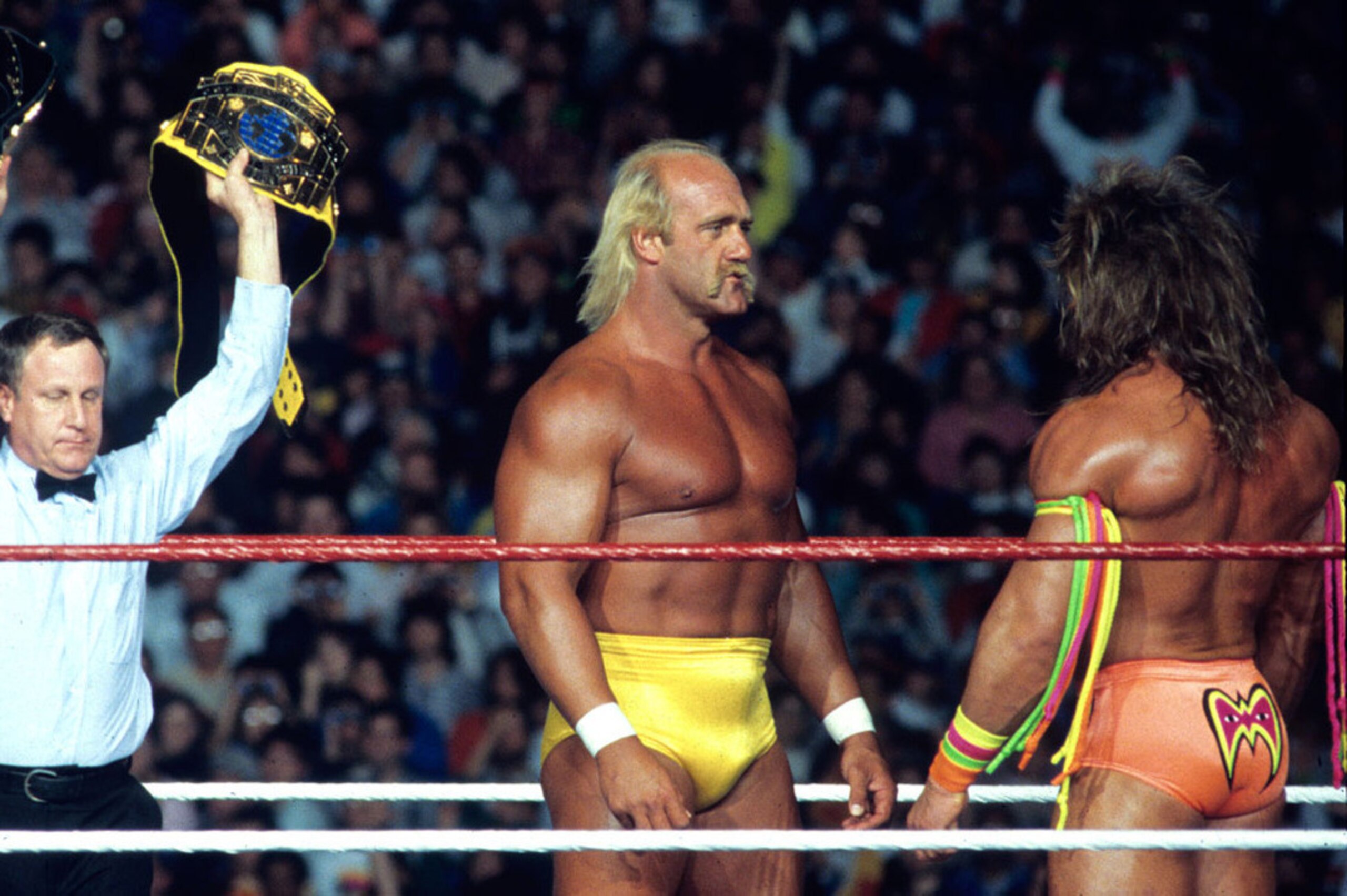
Andre the Giant vs. Hulk Hogan: WrestleMania III, March 29, 1987
16 of 50WrestleMania was not yet the mammoth event it is today back in 1985. Without Hulk Hogan vs. Andre the Giant, there is no certainty that it would have undergone the growth it did.
This main event was not nearly as well-worked as Ricky Steamboat vs. Randy Savage earlier that night, but it was a marquee attraction like no other.
Andre had long been a massive star in the business. Hogan was set to surpass him. WWE presented their battle as the undefeated giant against the unstoppable warrior, and the fans came en masse to see it.
Over 93,000 of them packed into the Pontiac Silverdome, per MTV's Newsroom, setting a record for the largest indoor attendance for a sporting event in North America.
The match, and Hogan's legendary bodyslam in the midst of it, became a key part of WWE lore.
Hogan vs. Andre served as the means to push WrestleMania from spectacle to mega-spectacle.
Team Andre vs. Team Hogan: Survivor Series, Nov. 26, 1987
17 of 50In 1987, WWE's calendar wasn't choking with pay-per-views as it is today. WrestleMania was an only child at this point.
To capitalize more on the feud between Hulk Hogan and Andre the Giant, the company devised not only a new event but a new kind of match. Hogan led a team of babyfaces against Andre's allies in the team-on-team Elimination match that would become the centerpiece of the Survivor Series event.
Andre got a measure of revenge for WrestleMania by leading his team to victory.
This bout was the major selling point for the first edition of that show. It was also the carrot that WWE dangled out to fans, trying to lead them away from the competition. Survivor Series aired opposite NWA's Starrcade that night.
Twenty-seven years later, Survivor Series is still going and so is the tag team match associated with it.
20-Man Battle Royal: Royal Rumble, Jan. 24, 1988
18 of 50WWE's tinkering with its schedule picked up in 1988 with the addition of the Royal Rumble.
The first edition pitted 20 men against one another in the staggered Battle Royal that would later become an annual tradition. WWE would later add 10 extra men and move the bout from the USA Network to pay-per-view.
This is where it all started, though.
The Rumble is now a key element in the buildup to WrestleMania. Its winner is the first man to plant his flag on the WrestleMania card.
In addition, had Pat Patterson not dreamed this match up, WWE's history would look far different. Jim Duggan's win gave way to Rey Mysterio's iron-man performance, John Cena's win after his surprise return and Steve Austin punctuating his dominance by winning the Rumble three times.
Hulk Hogan vs. Andre the Giant: The Main Event, Feb. 5, 1988
19 of 50The Hulk Hogan vs. Andre the Giant rivalry was still scorching hot after WrestleMania III.
WWE used that momentum to grab a prime-time slot on NBC. As Patrick Jones wrote in The Main Event: The Moves and Muscle of Pro Wrestling, about 33 million viewers tuned in for the rematch.
It's hard to even fathom a wrestling program pulling in those kinds of numbers.
This is one of the bouts that spearheaded WWE's drive into the mainstream and the fabric of pop culture.
Andre won thanks to a man undergoing plastic surgery to look like Earl Hebner. The big man then sold the belt to Ted DiBiase.
This loss marked the end of Hogan's four-year reign, opening the door to a number of new champions in the next four. Ric Flair, Randy Savage, The Ultimate Warrior and The Undertaker would all have a run with the title next.
This match would also eventually lead to the first and only WrestleMania centered on a tournament, when Savage and DiBiase met for the vacant WWE title at WrestleMania IV.
Ultimate Warrior vs. Honky Tonk Man: SummerSlam, Aug. 29, 1988
20 of 50WWE accomplished two things with a match that lasted just over 30 seconds.
It ended The Honky Tonk's Man historic run with the Intercontinental Championship and armed Ultimate Warrior with ample momentum to go rocketing toward the top of the company.
Honky Tonk Man had been champ for 454 days. It didn't seem like anyone would knock this weasel off the mountaintop. When Warrior got his crack at him, it took him only a handful of moves to defeat him. The longest-reigning IC champ of all time was finally sans title.
Being the one to end that reign and doing so in such superhuman fashion had the crowd's eyes stuck to Warrior.
Hulk Hogan had been WWE's undisputed king for years at this point. A frenzied gladiator had taken his first major step toward coming after him for that crown.
Ultimate Warrior vs. Hulk Hogan: WrestleMania VI, April 1, 1990
21 of 50Hero battled hero. Champion met champion.
Ultimate Warrior's rapid climb up the WWE ladder led him to a showdown with WWE's biggest star by miles. The company was set to award its top spot to someone else for the first time in years.
More than 67,000 fans crowded inside the SkyDome to watch this coronation of sorts.
It was by no means a mat-wrestling clinic, but Warrior's win over Hogan was the career peak for a man who would later enter the Hall of Fame. Despite his stints with the company not being lengthy, Warrior scratched his name deep into the history books. This match was key to him doing that.
Edge, just a teenager at the time, was in the audience that night. As he explained in Adam Copeland on Edge, that match helped inspire him to become a pro wrestler.
Undertaker vs. Jimmy Snuka: WrestleMania VII, March 24, 1991
22 of 50This is how the streak began.
Undertaker would become an immortal at WrestleMania, morphing into an unbeatable force. He would go 21-0 on that grand stage. His win against Jimmy Snuka was the first victory in that run.
It wasn't a great bout. Undertaker's early WrestleMania work was mostly a show of his dominance and usually nothing notable.
But Undertaker's undefeated streak would become a key component in WWE history, a major selling point and a record that no one will ever touch. Had WWE decided to go with a Snuka win here, none of that would have been possible.
Yokozuna vs. Koko B. Ware: Raw, Jan. 11, 1993
23 of 50WWE has produced more than 1,100 episodes of Monday Night Raw. It's been the home to championship matches, beer baths and weddings.
And it is now WWE's weekly centerpiece and the longest-running weekly episodic TV show in the U.S., as WWE will be sure to remind you.
All that began with Yokozuna vs. Koko B. Ware. There was nothing memorable about the action. Yokozuna ran over Koko in less than four minutes.
The match is memorable, though, as the genesis of what is now WWE's premier show. It is the WWE equivalent of "one small step."
Shawn Micheals vs. Razor Ramon: WrestleMania X, March, 20, 1994
24 of 50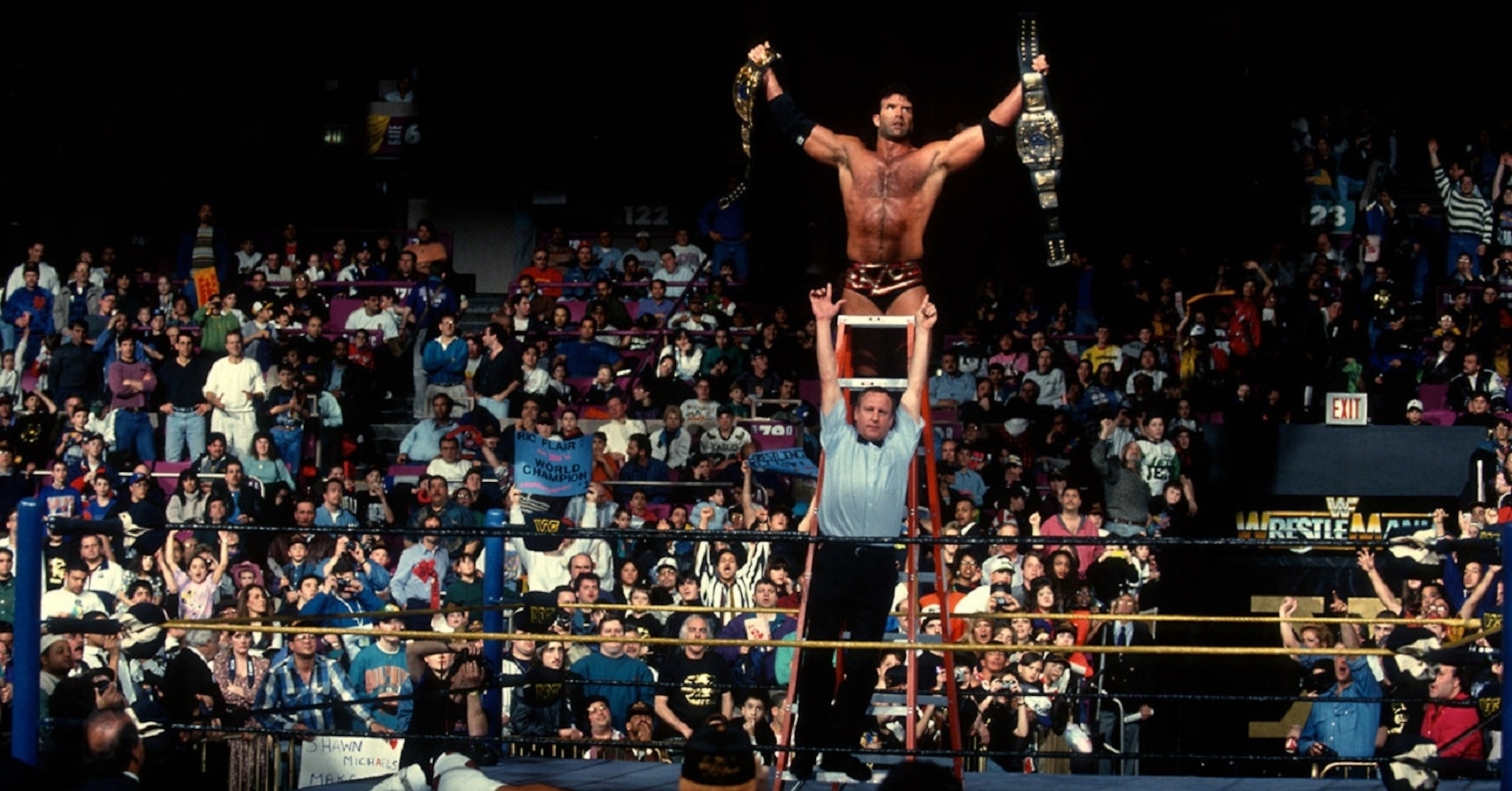
There had already been a ladder match in WWE, namely Shawn Michaels vs. Bret Hart in July of 1992, but this one made the gimmick an instrument the company would add to its orchestra for good.
Michaels and Razor Ramon showed off just how thrilling throwing a ladder between two enemies could be. They swung it as a weapon and used it as a launching pad. Michaels' dive onto Ramon remains one of WWE's most iconic images.
The instant classic was such a marvel that WWE decided to tap into the power of the Ladder match countless times afterward.
Had this been a clunker, perhaps Vince McMahon would have shied away from going to it again. Ramon and Michaels instead flourished inside Madison Square Garden.
The ladder has since been nearly as ubiquitous in the WWE landscape as the steel chair.
Bret Hart vs. Shawn Michaels: WrestleMania XII, March, 31, 1996
25 of 50Shawn Michaels' 1-0 win against Bret Hart in overtime of their Iron Man match was a victory for every smaller wrestler in the company.
After years of behemoths reigning, two technical wizards and world-class storytellers, both just over 6'0'', headlined a WrestleMania. They not only delivered one of the event's greatest matches but redefined what a main event star looked like.
Rey Mysterio, Daniel Bryan and Chris Benoit would all go on to play marquee roles at WrestleMania and for the company as a whole.
That battle in California's Arrowhead Pond showcased a pair of now-Hall of Famers at their peak. Beyond being a celebration of in-ring skill, it introduced and popularized the Iron Man bout.
While some gimmick matches have lost their novelty, this one remains a most momentous spectacle.
Steve Austin vs. Jake Roberts: King of the Ring 1996, June 23, 1996
26 of 50It's hard to pin down exactly when Steve Austin truly arrived. In the course of his Hall of Fame career, he had too many big moments and career-making matches to count.
His win in the 1996 King of the Ring finals was one of the key catalysts in his rise to stardom. In beating down Jake "The Snake" Roberts, he showed off a magnetism that grabbed hold of the audience.
Becoming the 10th-ever King of the Ring catapulted him forward, as did his dominance against Roberts, but it was his post-victory rant that was most significant. He birthed the Austin 3:16 catchphrase that night. And despite being a heel, his popularity was surging.
This bout was the precursor for the unrivaled success that was to come for The Texas Rattlesnake.
Bret Hart vs. Steve Austin: WrestleMania 13, March 23, 1997
27 of 50Toughness and a blood-drenched face turned Steve Austin into a hero. His Submission match with Bret Hart changed the trajectory of two of WWE's biggest stars.
Austin's popularity took off as he went from heel to anti-authority antihero. For The Hitman, he embraced the role of antagonist and started a personal war with the United States.
Hart's aggression had fans turn on him. Austin's refusal to give up had the opposite effect. Locked in Hart's Sharpshooter, a bloody Austin passed out rather than call it quits.
Thus began the legend of a man whom the company would bill as "The Toughest S.O.B. in WWE."
When telling the story of the WWE, one can't leave out Austin. And when telling how he etched his name in history, this bout has to be included.
Shawn Michaels vs. Undertaker: Badd Blood, Oct. 5, 1997
28 of 50The Hell in a Cell could have been dismissed as just a variation of the standard cage. Shawn Michaels and Undertaker, though, composed a masterwork inside that structure and compelled WWE to bring it back again and again.
They made the cell a showcase for action-movie stunts, standard cage violence and storytelling by way of wrestling. Wrestlers have been trying to top this bout ever since.
This match led to the Hell in a Cell becoming a WWE staple. It was the first of 30 collisions inside The Devil's Playground and in 2009, the centerpiece of the annual Hell in a Cell pay-per-view event.
It was also the birthplace of one of WWE's most memorable monsters—Kane.
Undertaker's brother first made his presence felt by entering the cell that night. He would go on to wrestle under that same persona for 17 years and counting, en route to a certain spot in the Hall of Fame.
Shawn Michaels vs. Bret Hart: Survivor Series, Nov. 9, 1997
29 of 50A submission that never happened did more than force the WWE Championship from Bret Hart's hands—it transformed company history.
Fans know the narrative of The Montreal Screwjob by heart. Hart went in wearing the WWE title, with a contract in WCW waiting for him. Vince McMahon ordered referee Earl Hebner to call for the bell while Hart was in Shawn Michaels' Sharpshooter, deviating from the agreed-upon script.
That outcome led to unrest in the locker room, as Wade Keller notes on PWTorch.com. Jim Neidhart, Rick Rude and others followed The Hitman to WCW.
It also birthed the Mr. McMahon character. The incident led McMahon to address it on-air, famously saying that "Bret screwed Bret." From there, he became more of an onscreen presence, morphing into an evil executive and becoming one of WWE's most all-time successful villains.
The controversial way that Hart vs. Michaels played out has since become the inspiration for many a wrestling story.
The Rock defeated Mankind the very next year in a clear homage to what happened in Montreal. Undertaker would experience a scripted version of what Hart went through in 2009, losing to CM Punk despite never tapping out.
In addition to being a trope of sorts, Hart vs. Michaels in 1997 remains one of the most controversial and talked-about matches in WWE history.
Shawn Michaels vs. Steve Austin: WrestleMania XIV, March 29, 1998
30 of 50Steve Austin's stunner on Shawn Michaels did more than give Stone Cold his first WWE title—it launched the Attitude Era.
Michaels' time atop the company came to an end thanks to a lingering back injury. In came Austin charging forward, set to revolutionize WWE and the industry.
Mike Tyson signing on as a special enforcer expanded the audience for this event. He would end up turning on Michaels, slugging him and celebrating Austin's victory with him. It was Mr. T teaming with Hulk Hogan all over again.
Hulkamania made wrestling fun and accessible. Austin being on top made wrestling as mainstream as it would ever be.
It was also a factor in shifting the momentum WWE's way in its ratings war with WCW. Kevin Nash, who was fighting for the other team at the time, said of the match and Tyson's involvement, "When I watched that WrestleMania, I said, 'We're dead in the water.'"
Mankind vs. Undertaker: King of the Ring, June 28, 1998
31 of 50The harrowing journey that Mankind took in Pittsburgh is seared onto WWE fans' memories.
Shawn Michaels and The Undertaker introduced the Hell in a Cell match to the crowd a year prior; Mankind and The Undertaker pushed that gimmick bout into the limelight with unforgettable bursts of violence.
The image of Mankind falling from the top of the cell is as iconic as you get.
It pops up in clips hyping Hell in a Cell and is on any list of the biggest jaw-dropping stunts in company history. Announcer Carlos Cabrera, who witnessed it looking up from the announce desk told WWE.com, "There must have been hundreds of moments at the table, but that was the most incredible and horrific one."
Beyond being one of the most famous wrestling matches in history, it showed WWE its limits.
It would be impossible to top this bout in terms of danger without venturing into insanity. The risks involved in this match served as a wake-up call, warning WWE that it couldn't just keep amping up the violence. Things would have to be scaled back.
The Rock vs. Mankind: Raw, Jan. 4, 1999
32 of 50Mankind scored two victories that night—one that earned him the WWE title and one for the company in the ongoing battle with WCW.
At the height of the Monday Night War with the two wrestling powerhouse companies trading blows, WCW announcer Tony Schiavone told fans the result for Raw's taped main event. His famous sarcastic line, "That'll put a lot of butts in the seats," inspired 600,000 viewers to change the channel, per WWE.com.
Raw beat out Nitro in the ratings that night—a rare victory at the time for WWE.
Mankind's emotional victory against The Rock and a corrupt regime led by Vince McMahon didn't just steal away WCW that night, though. The advantage in ratings began to lean more often toward WWE, with this title bout being a key skirmish in the war WWE would eventually win.
The Rock vs. Triple H: SmackDown, Aug. 26, 1999
33 of 50SmackDown has since had 15 years' worth of main events.
That long-running show kicked off with Triple H and The Rock on the marquee. They clashed for the WWE title, with the company making full use of the two gladiators' great chemistry.
Putting those two stars in a battle normally reserved for pay-per-view at the top of this new show's card led it to early success. As Slam! Sports notes, SmackDown garnered a 4.2 rating that night.
Big Bossman vs. Al Snow or Mr. Ass vs. Jeff Jarrett wasn't what sent SmackDown forward with great momentum. Triple H vs. The Rock did that.
Triangle Ladder Match: WrestleMania, April 2, 2000
34 of 50Edge and Christian vs. The Hardy Boyz vs. The Dudley Boyz may not have officially been called a TLC match, but this is where that concept launched.
Those three teams took a fearless approach to entertaining the audience, leaping from ladders and crashing through tables in what was a carnival of violence. The match changed fans' expectations forever. From this point on, they would expect to see more daredevil-like action.
WWE gave it to them with a total of 16 TLC matches after this. In 2009, the match became the centerpiece of the TLC: Tables, Ladders & Chairs pay-per-view.
WrestleMania offered a bigger stage than The Hardy Boyz's ladder match with Edge and Christian at No Mercy 1999. That bout started the fire, and the one at WrestleMania 2000 worked the flames into an inferno.
Wrestlers have since been trying to top Edge and company.
Ric Flair vs. Sting: WCW Nitro, March 26, 2001
35 of 50The war between WCW and WWE over ratings and fans ended with one side folding. WWE bought out its rival in 2001.
When the final edition of WCW Nitro aired, it was technically a WWE production. WCW wrestlers would soon head over to Vince McMahon's company en masse, but WCW had one last chance to take a bow in front of its fans.
It chose to close the last show with its two cornerstones—Ric Flair and Sting.
Flair wasn't in great shape at the time but poured his guts onto the mat that night. It was a surreal, emotional sight to see the two rivals lock up one last time on a stage that would longer no exist.
This match was a salute to the WCW fanbase, a swan song for a company that had been WWE's strongest competitor and a celebration of two Hall of Fame talents.
Chris Jerico vs. Steve Austin: Vengeance, Dec. 9, 2001
36 of 50Consider this the last stage in WCW merging into its rival.
WWE had welcomed many of the defunct promotion's wrestlers into the fold. It brought in some of its championships as well. It felt for a short while as if WCW was a promotion within a promotion.
Chris Jericho unifying the world titles signaled WCW's true end. Earlier that night, he defeated The Rock to become WCW champ and followed that up with a win over WWE champ Steve Austin.
Jericho then served as the last WCW champion, with that title folding into the WWE one.
Vince McMahon appearing on Nitro, Sting and Ric Flair battling for the last time on that show and Team WWF knocking off Team Alliance at Survivor Series 2001 were all key moments at the tail end of the WCW timeline. Jericho becoming the unified champ was WCW's symbolic last breath.
The Rock vs. Hulk Hogan: WrestleMania X8, March 17, 2002
37 of 50Titans of this stature do not often meet. Usually one megastar is long gone before the other arrives.
Two generations converged here, though.
Hulk Hogan returned to the show he built after a near-decade absence from the event. The Rock was primed to become another man who belonged on WWE's Mt. Rushmore. Describing their meeting as electric is like describing a typhoon as wet.
The bout was pro wrestling spectacle at its best, as two legends crossed paths in a dream match come true.
John Cena vs. Kurt Angle: SmackDown, June 27, 2002
38 of 50Kurt Angle issued an open challenge on SmackDown. He wanted someone who could push him, someone on his level.
He got a man who would later become WWE's top star for a decade.
Not only did John Cena begin his career here, impressing in a battle with a master technician, but he ushered in a new era when he told Angle that he belonged in there thanks to his "ruthless aggression."
It remains one of WWE's most memorable debuts, a bout that welcomed a man who is still in the process of adding reasons for belonging in the Hall of Fame.
Cena belongs in the discussion with the men who made the biggest impact on WWE history. His history-making began here in a pinfall loss to a fellow all-time great.
The Rock vs. Brock Lesnar: SummerSlam, Aug. 25, 2002
39 of 50Brock Lesnar made the journey from rookie to champion faster than anyone before him.
When he pinned The Rock to close SummerSlam 2002, he became the youngest world champion in WWE history. The Beast was just 25 at the time.
This match served as a changing of the guard. The Rock was soon to step aside as WWE's marquee star, with his wrestling role diminishing as his movie roles increased. This would mark the last SummerSlam he would compete at.
Meanwhile, the startlingly athletic Lesnar was set to become the company's franchise player.
His time on top was short but memorable. It began here, with an F5 and a three-count.
Elimination Chamber: Survivor Series, Nov. 17, 2002
40 of 50Merging the Elimination match, the steel cage and something out of a dystopian novel, WWE created the Elimination Chamber.
The first of these bouts celebrated and punctuated Shawn Michaels' comeback. He had been out of the ring for four years, battling a bad back.
He survived a field that included Triple H, Chris Jericho and Kane to become world champ.
It became a match format that WWE would turn to again, 16 more times and counting. The unique structure has since provided some of the most stunning feats of athleticism and toughness in company history.
WWE loved the mayhem that swirled inside the steel so much that it made it an annual tradition for six men to step inside it. Since 2010, the Elimination Chamber pay-per-view has been home to at least one of these matches per year.
Randy Orton vs. Chris Benoit: SummerSlam, Aug. 15, 2004
41 of 50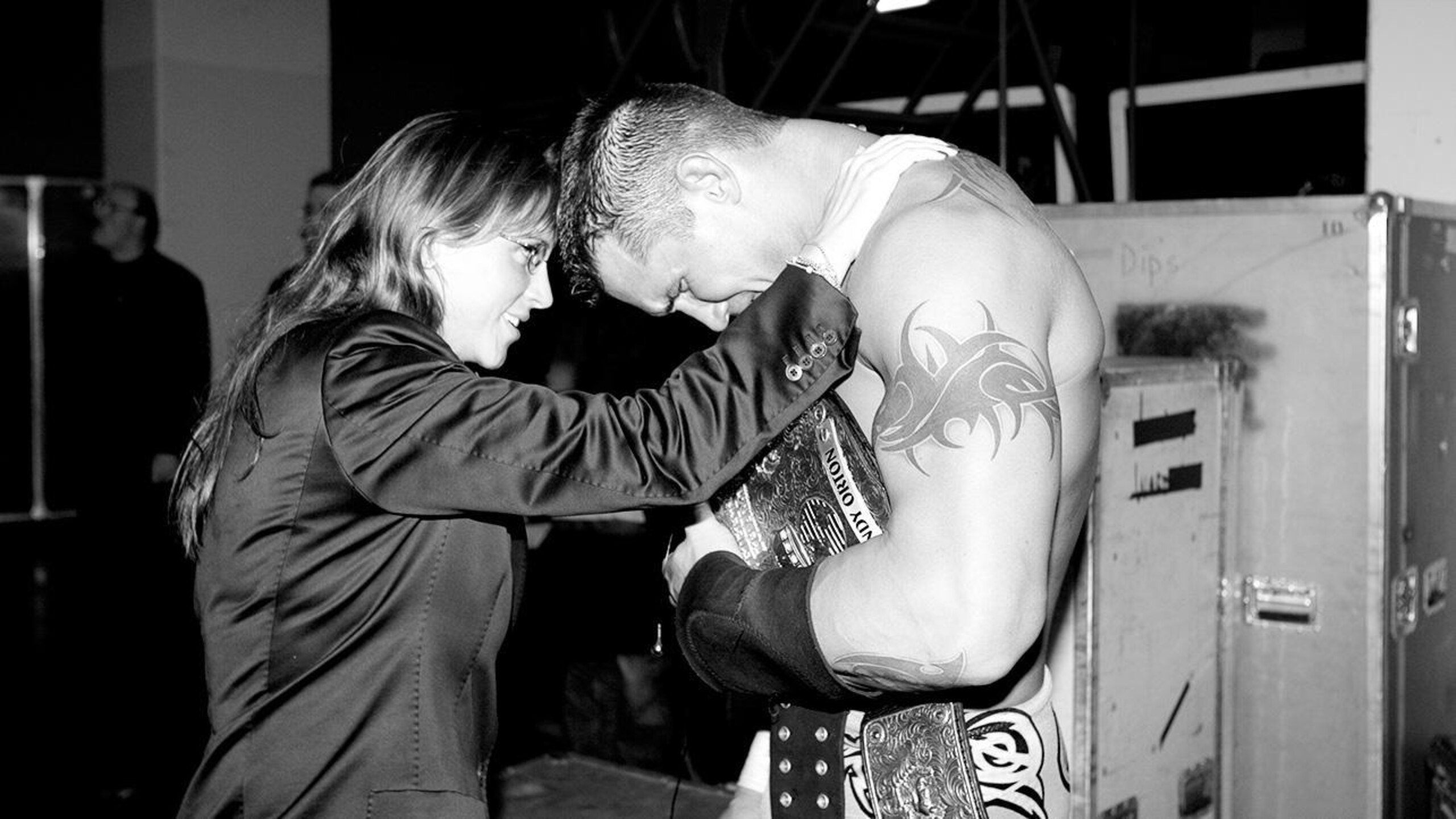
By the time Randy Orton is done wrestling, he will rank right up there with some of WWE's all-time best.
The match that catapulted him into stardom and announced just how rare a talent he was came on a summer night in Toronto. He and Chris Benoit headlined that event, as the young third-generation star battled a technical master.
In one of the great bouts that now fill Orton's resume, The Viper defeated Benoit with an RKO. That moving, stunning victory made him (24) the youngest man to ever hold the World Heavyweight Championship.
Lita vs. Trish Stratus: Raw, Dec. 6, 2004
42 of 50In a landmark moment, Lita defeated Trish Stratus for the Women's Championship to close out Raw.
Women have always struggled for spotlight in the male-dominated industry. Getting on any show was a victory, but this time two women were the star attractions of WWE's premier show.
It took two once-in-a-generation talents to serve as Raw's main event. Lita and Trish, both now in the Hall of Fame, rocked it that night.
Their battle remains one of the best and most high-profile women's matches in WWE history. It was not only a showcase of two trailblazing greats but a match that opened the door for future female wrestlers to take center stage.
Money in the Bank Ladder Match: WrestleMania 21, April 3, 2005
43 of 50Give a hat tip to Chris Jericho for coming up with a way to showcase a bevy of stars at once—to turn a wrestling match into a multiple-car collision.
WrestleMania 21 housed the first-ever Money in the Bank Ladder match. Fans had seen some incredible things with a ladder, but not in this thrilling setting with such high stakes. The winner would receive a contract for a world title match at the time of his choosing.
Assured championship glory waited in a briefcase suspended over a ring.
What Chris Benoit, Jericho, Shelton Benjamin, Kane and Christian fought over that night became a narrative device nearly as key to WWE's stories as the title itself. It spawned great moments, both during these matches themselves and in the cashing-in process.
WWE would go on to put on 14 more of these and in 2010, build a pay-per-view around it.
Edge vs. John Cena: New Year's Revolution, Jan. 8, 2006
44 of 50Like the wild card in baseball, the Money in the Bank concept changed the game forever.
Before this match, there was no such thing as a cash-in. There was no way for a predator to swoop in and steal a championship. Edge was the pioneer.
Cena had just survived an Elimination Chamber match, outlasting the likes of Shawn Michaels, Kurt Angle and others. Then came Edge, fangs bared, Money in the Bank briefcase in hand. He speared Cena until he would not move and then pinned him.
This kind of impromptu challenge has been a tremendous source for thrills and heartbreak ever since. This matchup began that tradition.
Ric Flair vs. Shawn Michaels: WrestleMania XXIV, March 30, 2008
45 of 50Ric Flair said goodbye to WWE against a man who emulated him.
The Nature Boy's career had seen him be world champ and mentor, franchise player and valuable veteran. All that came to a close (sort of) in 2008.
Vince McMahon had announced that the next match Flair lost would be his last. He survived bouts against Umaga and Triple H. Against Shawn Michaels, his luck ran out.
The match acted as a grand sendoff for one of the wrestling's biggest legends. He and Michaels put on a stunning performance, capped with Michaels telling his idol he loved him before striking him in the jaw with a stiff kick.
Flair would go on to work matches at TNA and elsewhere despite being retired, but this match still feels like the last chapter in the epic that was The Dirtiest Player in the Game's career.
Shawn Michaels vs. Undertaker: WrestleMania XXVI, March 28, 2010
46 of 50A legend walked away, hitting one last home run before he did so.
So many wrestlers hold on too long, soiling their legacy with images of them hobbling, their bodies soft and their skills long eroded. Shawn Michaels took his exit by way of one of many classic matches on his resume.
Undertaker defended an undefeated streak at WrestleMania that stretched to 17-0 by this point. To earn the right to challenge him, Michaels put his career on the line.
As they had done the year prior, The Deadman and Michaels composed a masterwork. It was as compelling and emotional as a wrestling match gets.
There's an argument to be made that both man involved in this bout is the greatest performer in company history. For two stars of that caliber to collide on such a grand stage is rare. For it to be the swan song of a Hall of Famer is beyond rare.
The Rock vs. John Cena: WrestleMania 28, April 1, 2012
47 of 50Take the company's present-day golden boy and pit him against a top-tier star who had stepped away from the ring for years and the result is money by the barrelful.
WrestleMania 28, headlined by Rock vs. John Cena, broke records.
As ProWrestling.net notes, the event brought in the most money at the gate in WrestleMania history with $8.9 million. The 78,363 fans who attended the show were the most Sun Life Stadium had ever hosted. It also earned 1.2 million pay-per-view buys, just short of surpassing WrestleMania 23 with that mark.
Beyond the numbers, this was a meeting of two icons of two different eras.
Rarely do we see stars of this level go head-to-head, as they usually exist in different generations.
Randy Orton vs. John Cena: TLC: Tables, Ladders & Chairs, Dec. 15, 2013
48 of 50The World Heavyweight Championship ceased to exist after Randy Orton outsmarted John Cena.
After a dozen years of having two major champions, WWE downsized. The world title and WWE title hung above the ring inside the Toyota Center in Houston. The winner would take both home, and those titles would then merge.
The company sent out two men who had worn both crowns several times over.
Moving forward, there would only be one king in WWE. Orton used a pair of handcuffs to earn his spot on that throne.
Cesaro vs. Sami Zayn: NXT Arrival, Feb. 27, 2014
49 of 50WWE continued the evolution in how it presented itself when it launched the WWE Network in February of 2014.
WrestleMania 30 would be the first pay-per-view that the new service streamed. The company needed a tryout event before that, though.
That's where NXT Arrival came.
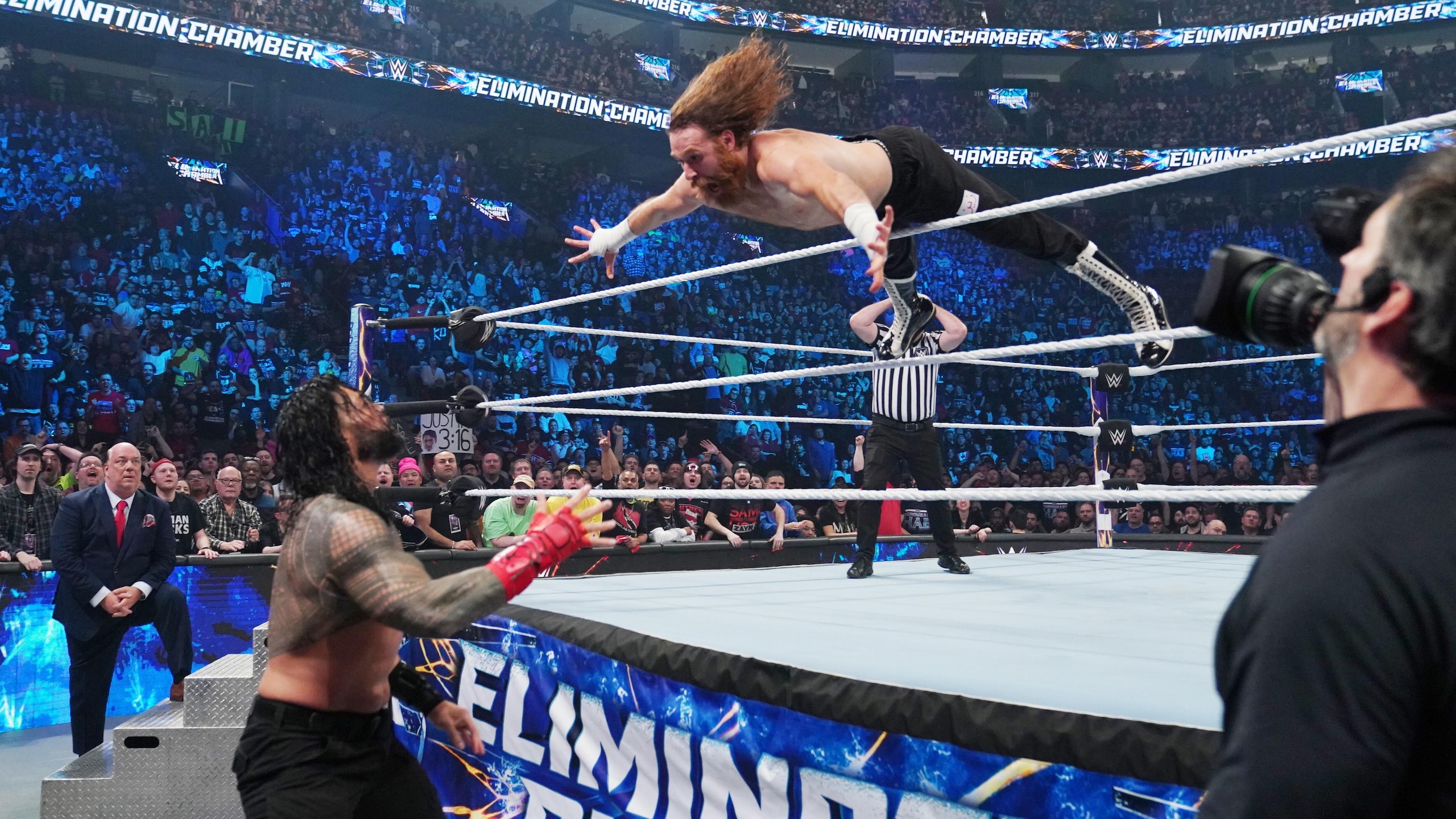
The first live special from WWE developmental was the first live program that aired on the network. Cesaro and Sami Zayn had the honors of performing in the first match that night.
Zayn and Cesaro put on a fabulous showing. Their combination of guts, showmanship and uncanny athletic ability makes stars out of wrestlers.
When we look back at WWE history, 10 or 20 years from now, there's little doubt that the move to the WWE Network will be a hugely significant notch in that timeline. This first live bout served as a memorable launching pad.
Brock Lesnar vs. Undertaker: WrestleMania 30, April 6, 2014
50 of 50
The Undertaker's undefeated streak had become as important to WrestleMania as the world title match. It didn't matter where it was placed on the card; it was the true main event.
In The Deadman's 22nd WrestleMania match, he finally fell.
Brock Lesnar delivered one of the most shocking results in company history. The immortal was now mortal; the streak was over.
Lesnar bullied the big man, finally putting him away with a succession of F5s. So ended the story that had spanned 23 years. A beast had pierced the armor that was thought to be impregnable.
Only one could earn this victory. Lesnar was that one.

.png?w=2560 "Allen's BRUTAL 1H Stats 🫤")