Boston Celtics Head Coach Brad Stevens Talks Takeaways from His Rookie Season
WALTHAM, Mass. — Brad Stevens is no longer a rookie, but his work as head coach of the Boston Celtics has just begun.
After starting his pro coaching career with a disappointing 25-win season, Stevens is determined to implement a new kind of culture in Boston as the franchise continues to rebuild.
The 37-year-old sat down for an exclusive interview with Bleacher Report to reflect on the ups and downs of his first year and discuss the season ahead.
Q: Transitioning to the NBA from a mere 35-plus games a year at Butler University must have been a major adjustment for you last year on a variety of fronts. More months, more games, more time on the road. What was the most challenging part of that shift for you?
A: The toughest part of the transition was the calendar. You can see [the games] in advance, you can see when you have to taper back on practice and do all of that type of stuff. The limited practice time you get with your full healthy team is really, really different [from college]. That's something that kind of hit me. I think it really hit me in the preseason.
[At Butler], we had two exhibition games each season. They were always at home. You had a month to get ready for the season. Now, we have a month, but it's eight exhibition games. So I'm going to treat this month a lot more like practice than I did last year when I balanced [the exhibition games] in almost like we were playing [regular-season] games.
I think that's the right way to do it, and then I think I will be better in maximizing our practice times. We aren't going to practice any more; we just have to be better in the times we get to practice when we are all fully healthy. That was a problem last year, obviously, because we never really got fully healthy at least at one time.
Q: Is eight preseason games too many, in your opinion, given how jam-packed the NBA calendar already is?
A: I don't need eight preseason games to see what we need to do. I think that's the bottom line. I understand why we have eight, and so we'll use them as effectively as we can. I'll probably use one or two as purely a trial-type thing and a little bit more so than last year, which I'm kind of looking forward to.
We may try a secondary defense for the majority of one night. We may do one or two lineups that we think are way out of left field, but we might as well see. That's the time to try it. That's what the preseason is for. There are times you can be creative.
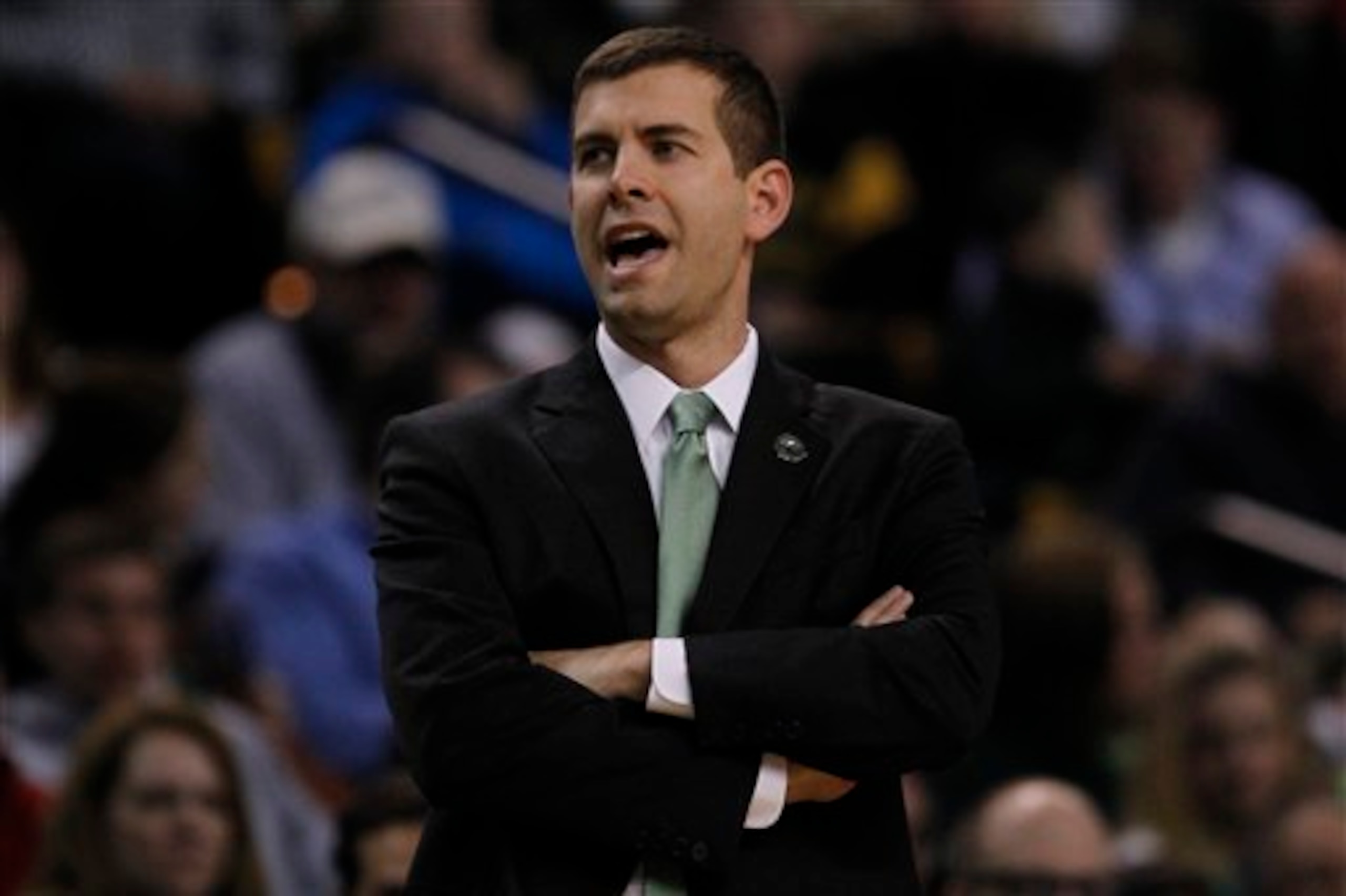
Q: Let's take a step back and look at your situation last summer before the Celtics coaching position became available. You had a tremendous thing going at Butler. Was coaching in the NBA an aspiration for you down the road, or had you not considered that possibility at all?
A: It became an aspiration the longer I was in [coaching]. I still wasn't going to go just to go. I think that was pretty clear. I had a great situation—I think I had the best situation you could possibly have in college because I think everybody at Butler gets "it." It was a lot of fun to coach and be there, especially being in my hometown, but this was an unbelievable opportunity.
Q: A six-year contract is about as good as it gets for NBA coaches. How critical was the length of the deal to you when deciding to make the jump to the Celtics?
A: The six years were important. I had a lot of longevity [at Butler], I had a lot of opportunity to stay there. When you're entering a situation [at the pro level] when you're going to have to build young guys, you need to go through the great times and the tough times.
You want to go through the highs and lows together and create a continuity of the way things are being done over time. Understanding what your responsibility in this organization is, it just makes everything that much easier.

I think the team everyone talks about that does this, rightfully so after last year, is the Spurs. I love the term they refer to [within the organization], which is corporate knowledge. [Author note: Marc Stein of ESPN.com called "corporate knowledge" in San Antonio, "(Gregg Popovich's) synonym for experience with the Spurs' system, processes, expectations, taboos and standards." You can read more about the Spurs' use of corporate knowledge at Cowbell Kingdom.] You have to establish a baseline and build from there, so corporate knowledge becomes part of your daily job.
Q: From a personal standpoint, how has your transition to Boston gone for you and your family?
A: You come in, and you take a new job. You want to do that job as well as you possibly can. At the same time, you are a dad and a husband, and you are moving your family 15 hours from home, and it's going to be a whole new experience. And you never know how those things will go, and I hadn't moved much in my life, but it's been great.
Our kids love it, my wife loves it, I love it. It's been a lot of fun. Unfortunately, our season ended in early April, so we had a long offseason. We've been able to see a lot of New England and spent some time on little day trips here or there. It's fun because we've kind of immersed ourselves in the area.
Q: Outside of former assistant coach Ron Adams, you have a lot of continuity in place with your coaching staff this season. How much of an advantage is that in comparison to last summer when everyone was feeling out their roles and each other?
A: The things I look for the most when hiring a staff are pretty simple: intelligent, hardworking, humble people. I feel like this is a home run group.
Assistant coach Walter [McCarty] is a great example. Everyone around Boston is more familiar with Walter than any of the other guys. He's a humble guy, he's very smart, and he works really hard. You can go down the line with all of our staff like that.
And that's why when Ron [Adams] decided to go to Golden State, we respected that decision and wish him nothing but the best. He did a very good job, but it made a lot of sense to continue to have these guys to elevate in their responsibilities.
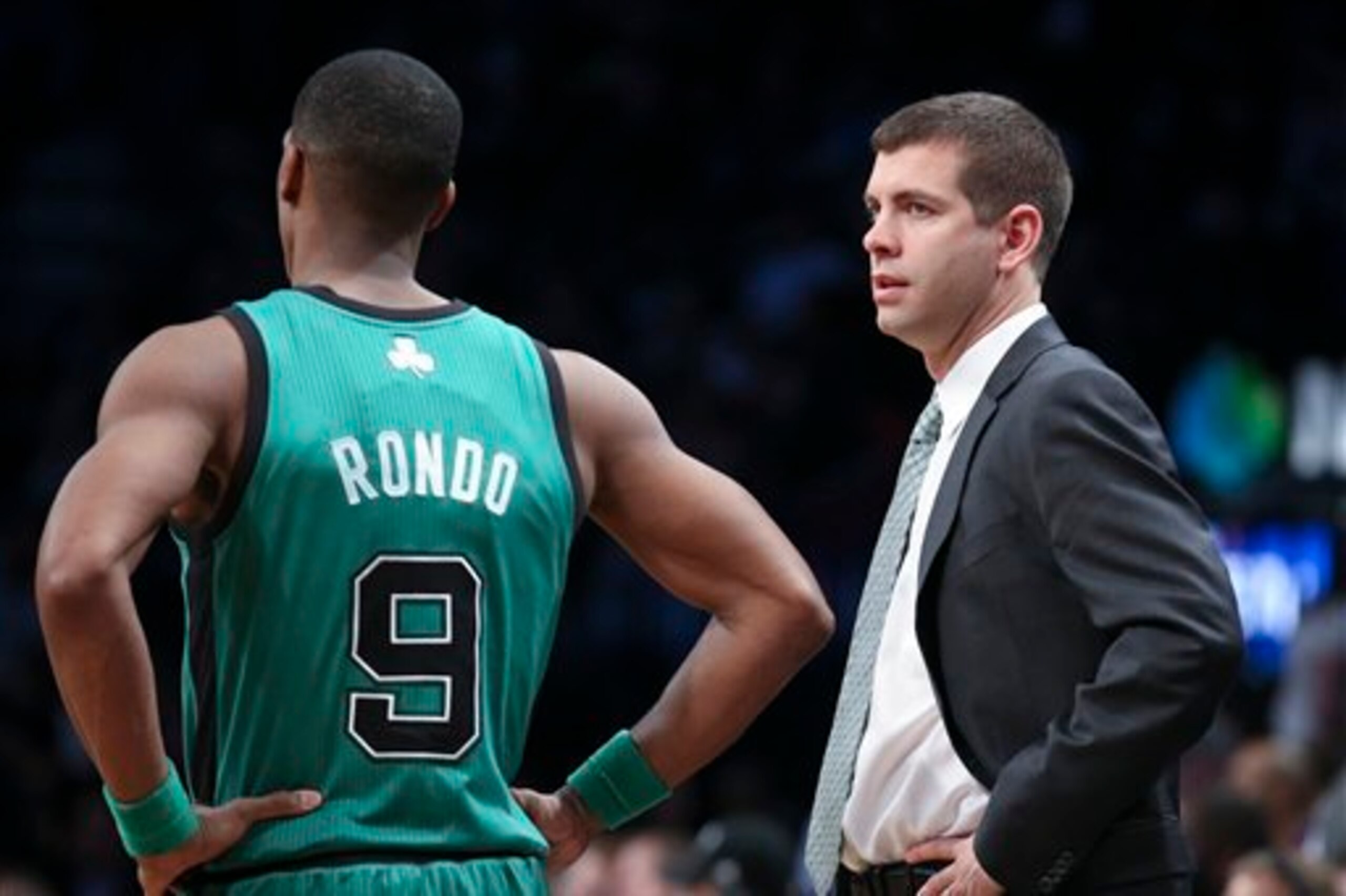
Q: With Marcus Smart in the fold, along with a returning Rajon Rondo next month, how much have you thought about the possibilities for the backcourt? Do you have things in mind you want to do, or will you wait to see how it plays out after seeing how guys mesh on the floor?
A: It's kind of funny because I'm sure you and a lot of other people will put their rotations and lineups together, but you know as well as I do that when you really have to decide it, there are about 150 different variations you can probably do on this team.
It's like nothing I've ever seen in all of the different ways we can play guys. Here's the bottom line: We have to use our depth to our advantage. That's what we have to do. We have to play as a team, first and foremost, and then we have to use our depth.
Certainly, Marcus will compete for time with a lot of different guys. It has been a fun training camp in that regard.
Q: You enter this season dealing with a similar situation to last year with the amount of depth you guys have at certain positions. Is managing that tough? Do you try to keep a dialogue with players about it during the season around playing time?
A: You have to. The really good ones, they are pros about it. They get it. I think you try to keep an open dialogue as much as possible. There have been times over the past seven years where as a head coach, I feel I could have done a better job in communicating that.
There have been other times where I handled it right and very direct. At the end of the day, everyone has to be in this for the team to elevate itself, for the team to be the very best it can be.
And inevitably, with the depth we are talking about now, there are going to be some people that aren't playing as many minutes as they like. That's just the way it goes, but that's part of being a great teammate and part of being a pro.
If I learned anything in my one season in the NBA, it's that over the course of 82 games, you are going to get your chance. There are going to be injuries, there are going to be multiple guys out at different times, and there's going to be foul trouble. So you are going to get your chance. The key is, what do you do with your chance?

Q: What players last season stood out to you as guys that dealt with that kind of adversity well? Was Kris Humphries an example of that kind of player last year?
A: I think that's where I thought Humphries did a great job. Humphries did not play well in training camp. He'd be the first to tell you that, but I think he just kept getting better and kept working hard. When his opportunity came when we had injuries, he never really looked back from there.
I want guys to feel like when they are here, "those coaches and that staff really invested in me, and hopefully I got a little bit better." That's what you want all these guys to feel like. At the end of the day, I want to win, we want to hang banners and do all that, but we want them to earn the maximum they can earn and have the greatest careers they can possibly have.
.jpg?w=2560)
.JPEG?w=2560 "Marshawn Reveals Scary Stat 🚗")
.jpg?w=2560 "Harbaugh Would Get CFB Buzz")

.jpg?w=2560 "Vrabel Denies Rift With Maye")