

Manchester City and the Struggle to Feel at Home in the Champions League
Sergio Aguero briefly threatened to start a long-delayed romance on Tuesday night before Manchester City and the UEFA Champions League remained uneasy bedfellows.
The 1-1 Group E draw with Roma was the seventh time since forging a path into Europe’s elite competition in 2011 that City have played host to a former winner or finalist.
A succession of UEFA coefficient-hindered draws could certainly have been kinder. But one win, four draws and two defeats against Bayern Munich (twice), Borussia Dortmund, Ajax, Real Madrid, Barcelona and their latest opponents is a sorry return.


To put City’s Champions League struggles in context, across 38 domestic home games on their way to the 2011/12 and 2013/14 Premier League titles, they failed to win on just three occasions.
And yet, after Aguero’s fourth-minute penalty, a familiar pattern emerged.
A visiting European team displayed greater tactical and technical aptitude as City chased shadows in midfield to leave their defence exposed and vulnerable.
The introduction of James Milner and Frank Lampard after half-time put the hosts on an even footing in the middle of the park—obvious remedies to an obvious problem caused by Manuel Pellegrini’s cavilier initial selection.

Like his predecessor Roberto Mancini, Pellegrini favours playing two strikers at home in Europe. This approach often works like a charm in the Premier League, so why change?
The attitude from the dugout almost appears to be that the Champions League is nothing special, not worthy of extra attention.
While it would take a brave person to seriously level this accusation at a proud competitor such as Pellegrini, Manchester City’s loyal fan base have had the same thing levelled at them over recent days by the bucketload.
“Do the crowd realise how lucky they are to be in this competition? I don't think they do,” said Paul Scholes on ITV’s television coverage, sounding for all the world like a parent whose children forgot to say “thank you” on Christmas morning and just started playing with their toys.
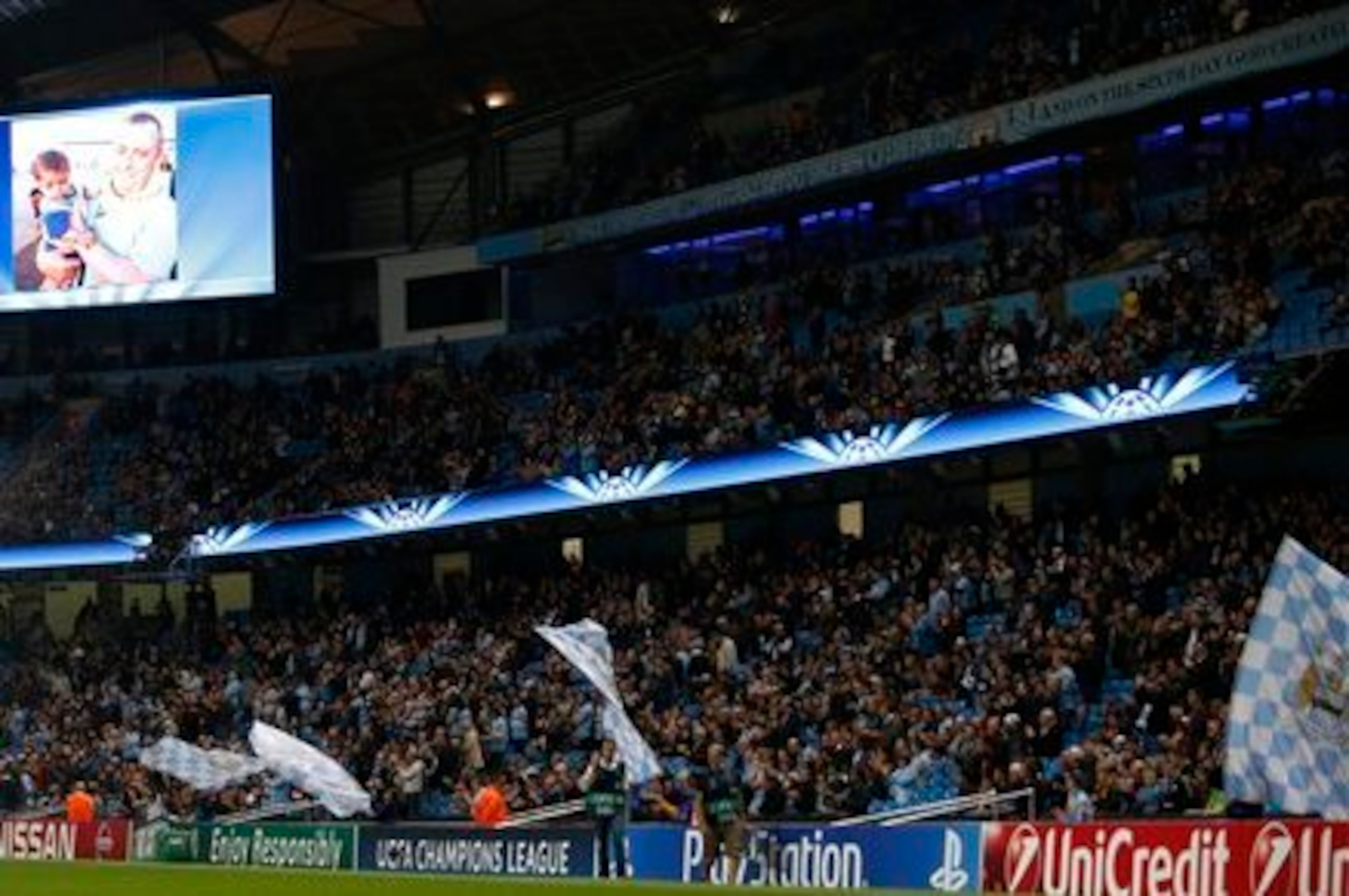
Another former Manchester United hero, Rio Ferdinand, saw fit to admonish City fans for staying at home to watch Gordon Ramsey’s latest kitchen misadventure instead of contributing to a disappointing attendance of 37,509.
A multi-millionaire footballer belittling people for not spending £35 on a match ticket in testing economic times displays a staggering level of ignorance, worthy of a dressing down by the machete-mouthed television chef at the very least.
City are rarely listed among the main offenders in English football when it comes to extortionate ticket prices, but the most expensive season ticket at Eastlands now sets you back £860, via Sporting Intelligence. That is an increase of 10 per cent on last season and follows significant rises for the previous two campaigns, via The Guardian and The Daily Mail.
It is doubtful that Scholes and Ferdinand’s aim was to display a dubious grasp of socio-economic issues.
The two United stalwarts were engaged in a familiar bout of cross-town points scoring—namely, why don’t they care like we do?
It is almost as if United view the Champions League as an exotic, beautiful wife with whom they shared dizzyingly wonderful times over the past two decades. Now, as they sit in European exile, new-monied City are taking her out but not giving her the attention she deserves. Damn it, they have no class!
Despite their Moyes-inspired absence, United still somehow feel more like the Champions League furniture than City do as active participants.
No, it is not because City have “no history” as opposition fans like to chortle in this lavish Sheikh Mansour age. In 1970, Joe Mercer and Malcolm Allison’s great team hoisted the European Cup Winners’ Cup in Vienna. Later in the decade they enjoyed memorable tussles with the likes of Juventus and AC Milan.
But European football was a different beast last time City were a fixture.
When the glitz, glamour, vigorously shaken centre-circle sheet and faux-operatic theme took hold and the European Cup became the Champions League behemoth, City were about to embark on three relegations and two promotions in the space of six years.
As they yo-yoed through the English football pyramid, the new frontiers were not Poland or Russia but Macclesfield and Gillingham. City overcame the latter on penalties in the 1999 Division Two play-off final four days after United basked in their night of nights.

Sir Alex Ferguson’s men dramatically beat Bayern Munich at the Camp Nou to win their historic treble. Bayern Munich. The Camp Nou. It was a different, unfathomable world that City fans had long accepted they would never be a part of.
Of course, Sheikh Mansour arrived less than a decade later, horizons shifted beyond wildest fantasy and we all know the rest. But still, the Champions League is the reality City fans are reluctant to grasp.
Two domestic titles, an FA Cup and a League Cup in the past four seasons is no problem—these came against the teams City always played, they just beat them a lot now with much better players. Dreams of Wembley cup finals were always there in the barren times as the European elite disappeared from view.
Modern City are invited to the glamorous party but stand alone in the corner, wondering if they are wearing the wrong shoes.
Meanwhile, people are swapping charming stories with Barcelona, buying drinks for Real Madrid and asking Ajax about educational policy.
As the money and medals have poured into east Manchester, City fans who rode the rollercoaster from Edgeley Park to the Allianz Arena have pondered numerous emotions and accusations.
They have lost touch with their roots, while being witheringly told they retain a small-club mentality. The Champions League has been a rich source of such conflicting accusations.
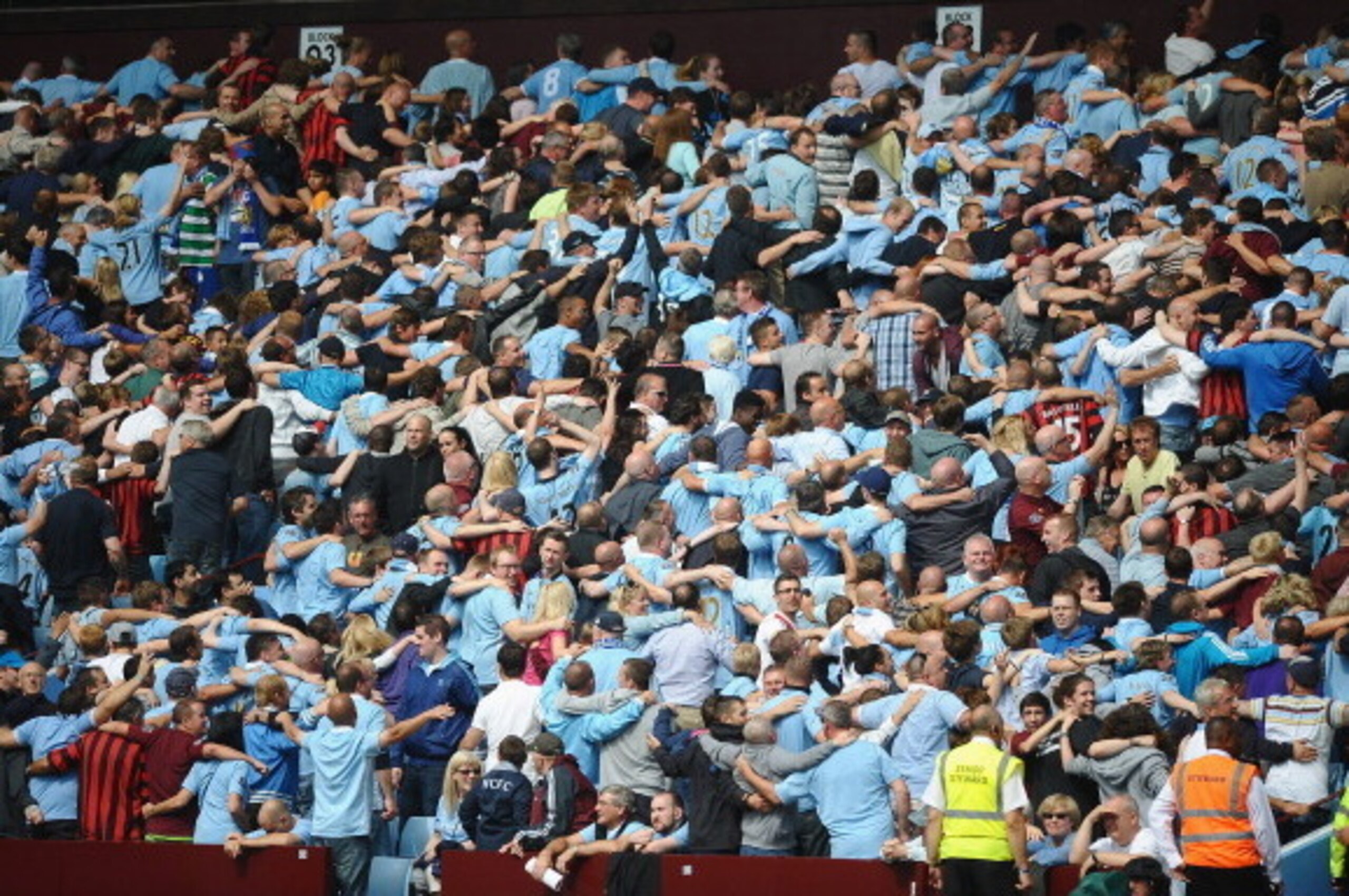
A high-profile nuisance in this context, at best it feels like another cup competition—little more than an extra expense outside of the season ticket.
This is sure to change over time, but if last Saturday’s stirring 4-2 win at Hull City is followed by another triumph at Aston Villa this weekend, it would be foolish to expect City fans to be consumed with continental concerns.
There is a Premier League title to defend, and even Scholes and Ferdinand would struggle to question how deeply they care about that.
.jpg?w=2560 "Picks for Irish, Every Week 1 Game 🔮")

.jpg?w=2560 "Projecting NFL Win Totals")



.jpg?w=2560 "Maye Reacts Viral A.J. Pic 😂")


