Washington Redskins Still Searching for Identity on Defense
The Washington Redskins need an identity defensively. The unit may be struggling with injuries and lack of talent in key areas, but a coherent system would certainly help solve a lot of the woes.
Set yourself a challenge and try to answer this question: What defense do the Washington Redskins play? This isn't merely saying base 3-4 with some zone blitz. That's not a scheme, just a part of one.
But what are the basic tenants of this defense? What is the set plan for stopping a running game? What is the basic coverage the secondary can lean on?
.jpg?w=2560 "Chargers Mack")
.jpg?w=2560 "Green Bay Steelers Football")
.jpg?w=2560 "Giants Football")
Specifically, what's the overall philosophy? Are the Redskins a pressure defense, or are they read-and-react? Does Washington run a predominantly zone defense, or one rooted in man coverage?
If you're struggling to answer any of these questions, don't feel bad. Just imagine how the players feel. Because coordinator Jim Haslett doesn't seem to have settled on any answers.

Of course, no defense can survive, particularly in today's NFL, doing the same thing all of the time. But every unit has to have a core set of principles it relies on as its bread and butter, if you will.
Washington's unit, which is ranked 26th in points, certainly doesn't have those. Through four games this season, Haslett has veered between unleashing a steady stream of multiple-blitz pressures, something familiar since he took over in 2010.
He's also attempted to rely on four-man pressure in front of seven-deep coverage schemes. The latter philosophy was picked apart by the New York Giants during Week 4's 45-14 defeat.
It's not unreasonable for Haslett to think he can trust a four-man rush to create the majority of pressure this season. After all, he possesses two quality bookend pass-rushers in Ryan Kerrigan and Brian Orakpo.
The former is tied for the NFL lead in sacks:
The team also added interior-pressure specialist Jason Hatcher via free agency and drafted rush end Trent Murphy. So why isn't the simple combination of rush and coverage working more effectively?
A big reason is injuries. Haslett is hamstrung by reduced options up front. Nose tackle Barry Cofield and ends Kedric Golston and Stephen Bowen are sidelined.
In addition, Hatcher and fellow D-tackle Jarvis Jenkins have played hurt, along with Orakpo. In terms of the pass rush, though, it's safe to discount Golston and Jenkins. Two players who have combined for 3.5 sacks since 2011 don't really offer much in the pressure department.
Perhaps the reason why this approach can yield 10 sacks against the Jacksonville Jaguars in Week 2 and just one through the next two games is inconsistencies behind the rush.
Those inconsistencies begin at the technique level. For instance, the Redskins adopted a bump-and-run coverage scheme against the Giants but failed to adequately execute it.
That's something head coach Jay Gruden relayed to ESPN.com Redskins reporter John Keim:
"We asked them to do it. If you’re in bump and run, it’s called ‘bump’ and run for a reason and we just weren’t getting a good piece of them.
We’ve got to do a better job as defensive backs and linebackers when we’re out there playing bump and run -- get hands on them and reroute the guys. That wasn’t happening, and when you reroute them, it gives your defensive linemen that extra count to get home.
"
In the same report, Keim detailed statistics that reveal the damage that failures in coverage technique are doing to the pass rush:
"The Giants routinely got clean releases and that allowed quarterback Eli Manning to get rid of the ball fast. In fact, he threw a season-best 27 passes (out of 39) while spending less than 2.3 seconds in the pocket, according to ESPN Stats & Information. He completed 22 of those for 227 yards and three touchdowns. It’s tough to get legitimate pressure on a quarterback throwing so fast.
It’s been a season-long problem. The Redskins have faced 85 passes that were thrown in 2.3 seconds or less, fourth most in the NFL. Conversely, they’ve faced 43 passes in which the quarterback was in the pocket for 2.4 seconds or more -- only three teams have faced fewer, and two of those (Kansas City, St. Louis) have played just three games.
"
Keim's expertly compiled numbers speak directly to the issue of defensive identity, or the distinct lack of one, in Washington.
If the Redskins want to be a bump-and-run team, they have to treat that as their staple coverage. That means long, long hours working to master its basic techniques.
It also demands taking a few lumps on the field if it means the players are learning as they go. But as ESPN 980 reporter Chris Russell noted, Washington has instead been trying multiple coverages to see what works:
Casting such a wide net hoping to catch a winning formula is proof of the incoherence in the defensive schemes. Washington won't become an expert bump-and-run defense without dedicating the time, on and off the field, to making it work.
Take the Seattle Seahawks as a fine example. Press, bump and run coverage on the outside is at the core of their defensive identity. It's just what they do.
To that end, head coach Pete Carroll and coordinator Dan Quinn choose players who fit that mold. Cornerbacks Richard Sherman and Byron Maxwell certainly fit the framework.
So does beefy safety Kam Chancellor, who can roam underneath to stuff the run or lock up slot receivers. He allows Seattle to lean heavily on a three-deep, four-under zone structure behind an aggressive front-four pass rush.
That's the core formula Seattle relies on for its defensive excellence. Within that formula, Carroll and Quinn are free to add tweaks such as the occasional blitz pressure, or shifting personnel around up front, like aligning ends Michael Bennett and Cliff Avril together.
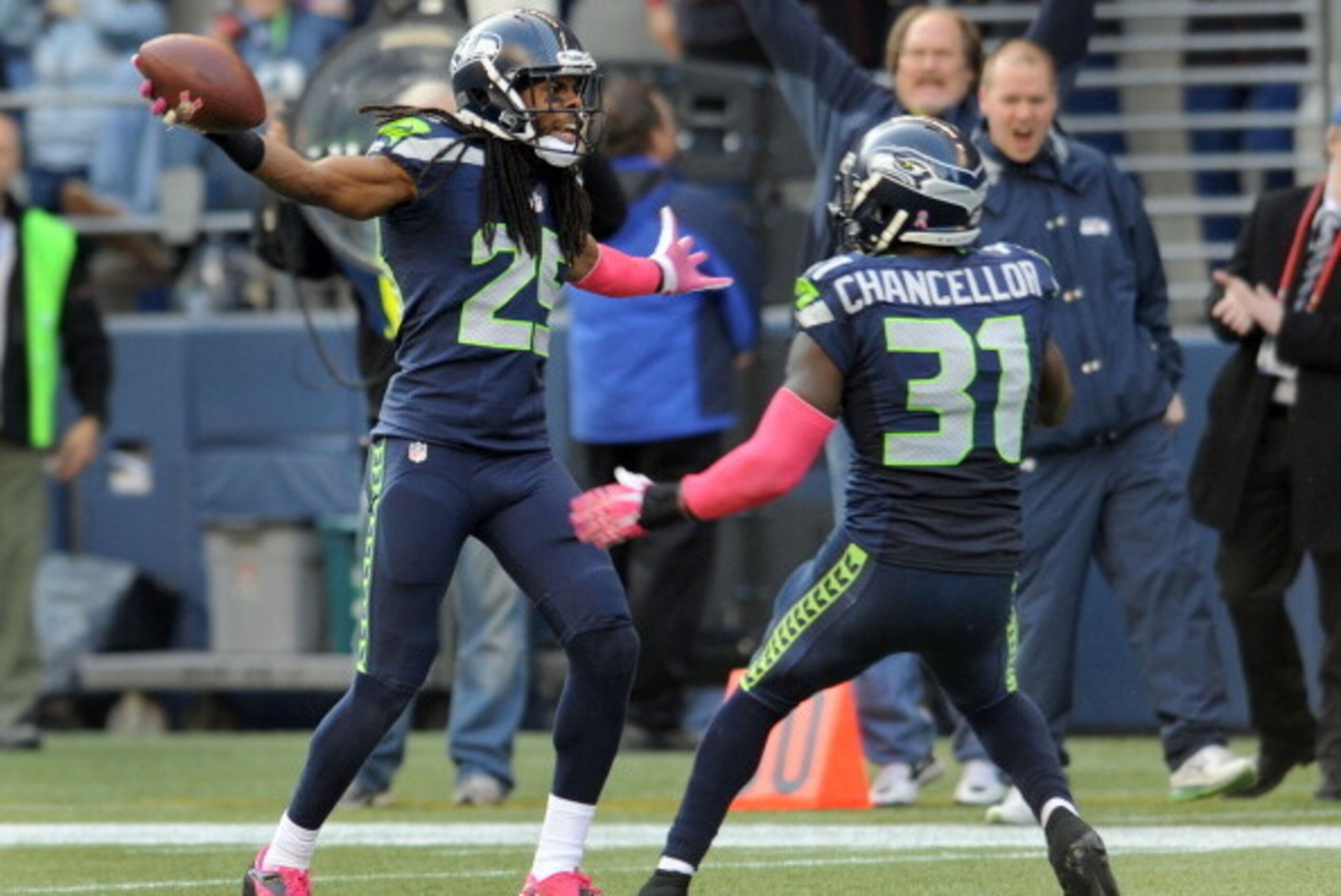
But the Seahawks succeed because there's a basic structure the talent knows and plays within. There is no such structure apparent in Washington.
Consider Seattle's NFC West rival the Arizona Cardinals for a contrasting identity. The Cardinals are a pure pressure defense, as NFL Films analyst Greg Cosell described to Sports Illustrated's Doug Farrar last season:
"So, if you just look at the parts needed to have a good defense, they've got those kinds of players. Now, you could argue that they don't have a pure pass-rusher, but this is where [Todd] Bowles comes in. This team blitzes more than any team in the NFL, and they blitz more on first down than any team in the NFL, and they're creative with their pressures. They're also very good with disguise.
"
That theme has continued in 2014. Despite the loss of linebackers Daryl Washington, Karlos Dansby and John Abraham, as well as D-end Darnell Dockett, the unbeaten Cards are ranked fifth defensively.
There's proof that injuries can't slow you down if you have a template in place that every member of the defense follows. Of course, the Cardinals receive expert tutelage from coordinator Todd Bowles, who should be patrolling the sidelines as Washington's head coach this season.
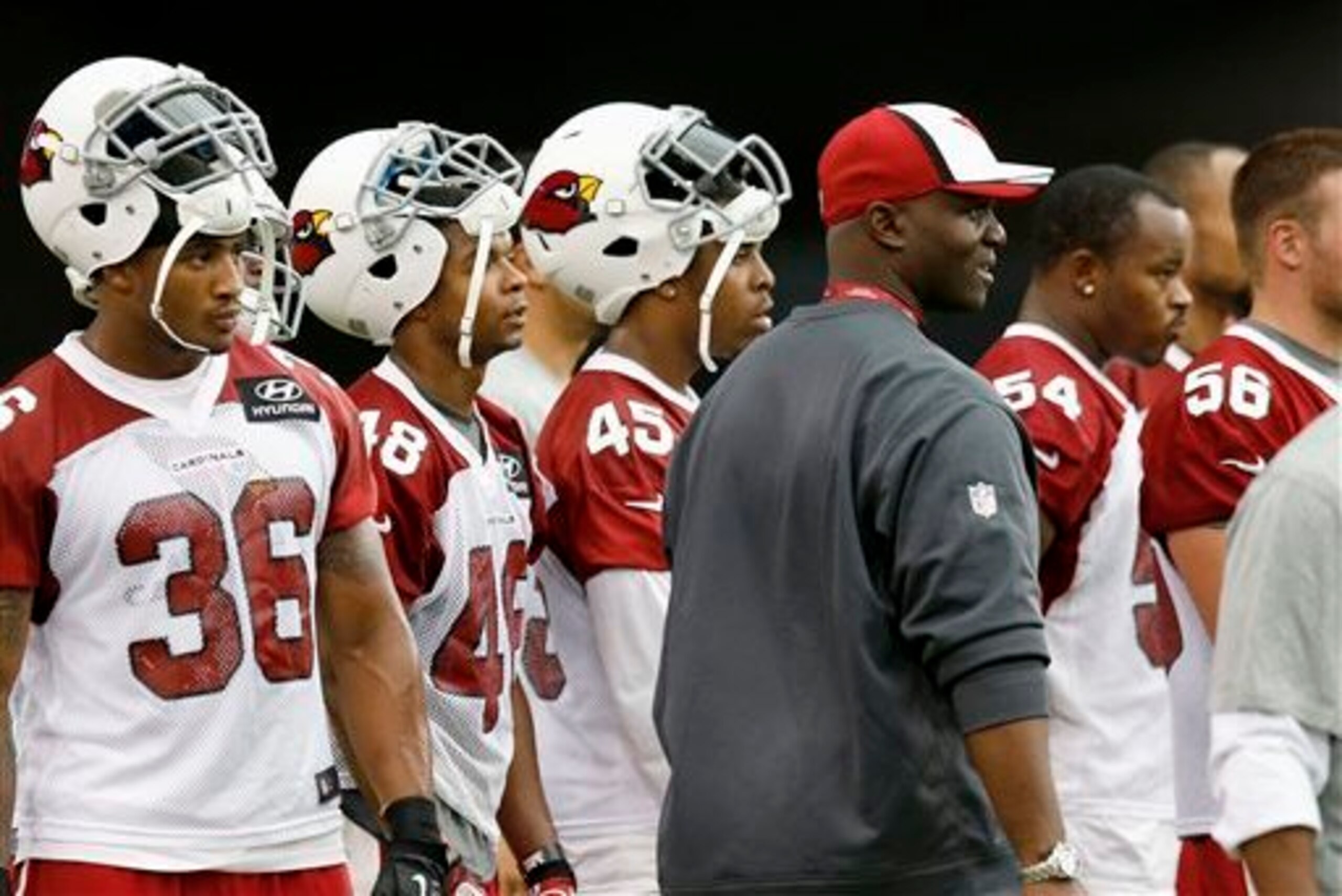
The Redskins plays both the Seahawks and Cardinals in the next two weeks. Hopefully, Gruden and Haslett will see the value of establishing a set identity for the defense.
For examples closer to home, consider Washington's defensive identities in the pre-Haslett era. Gregg Williams' scheme was all about pressure. By contrast, his successor Greg Blache adopted a basic 4-3 with man coverage. It was designed more to contain offenses than attack them.
Haslett must decide if he wants a pressure defense or a swarming, reactionary one. Until he does, Washington's unit will continue to be a liability.
All statistics via NFL.com.
.jpg?w=2560 "Seahawks Cardinals Football")
.jpg?w=2560 "Commanders Cowboys Football")