Arsenal Can Thrive Without a Defensive Midfielder This Season
Arsenal manager Arsene Wenger should stop trying to wedge existing players into a defensive midfield role. Without a natural defensive midfielder, Wenger should simply play a formation that doesn't need one. His team can still thrive without the position this season.
Wenger's attempts to find the right player to occupy the space in front of Arsenal's back four has led to several uncomfortable experiments. They've all involved using players unfamiliar with, and unequipped for, the responsibilities of the role.
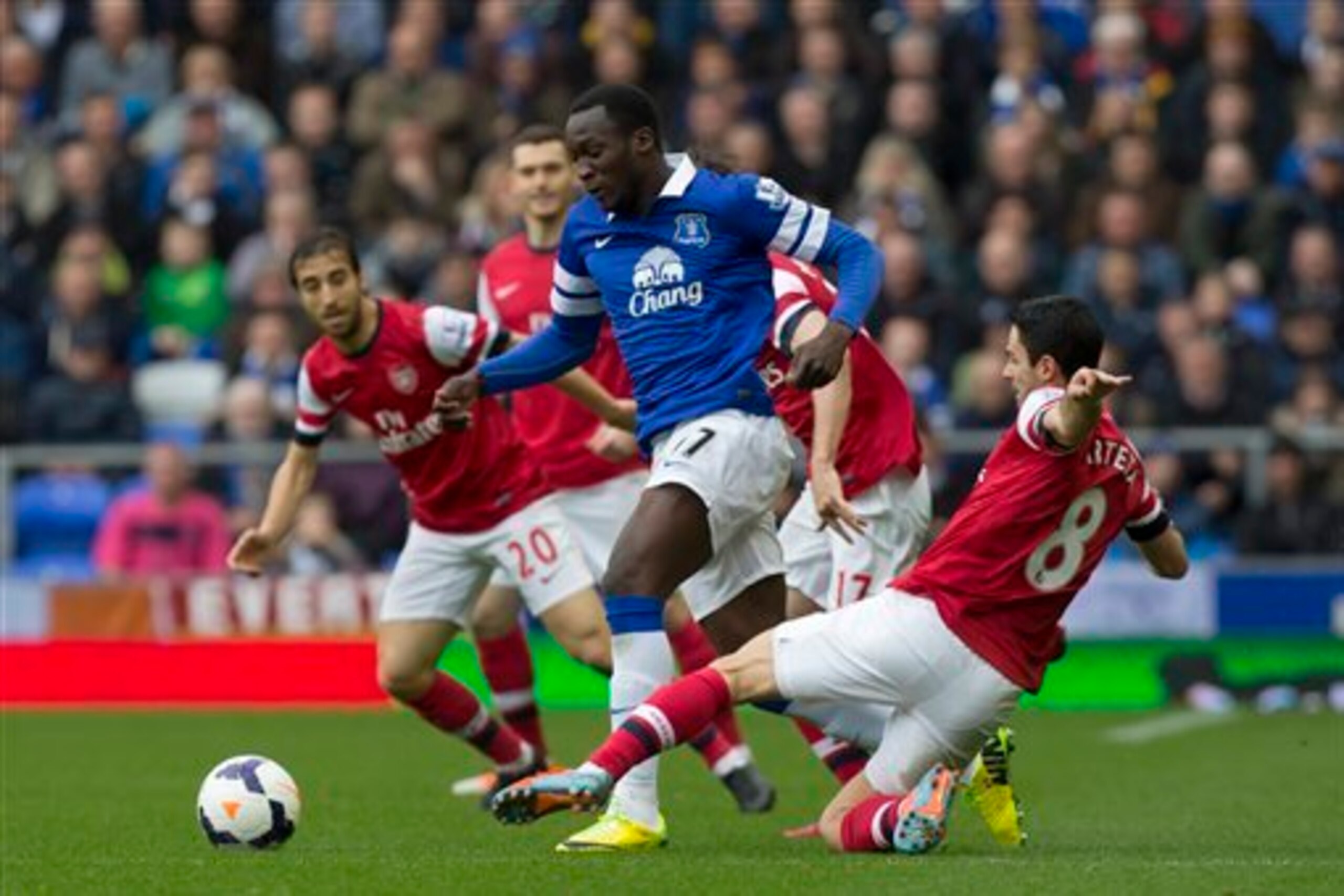
Veteran Spaniard Mikel Arteta most often plays the position for the current squad. But while the savvy schemer gamely labours on, he's not athletically dynamic enough to effectively shield a defence.



Mathieu Flamini is a little (a very little) quicker than Arteta and certainly more aggressive physically. But he's not positionally sound and doesn't have the tactical instincts the role really requires.
Instead of trying to make players fit the mold of what he doesn't have, Wenger can deliver success this season by emphasising what he does have.
He's already trying to do that with the one thing he's not short of: No. 10 playmakers. Wenger believes he can craft a winning team loaded with No. 10s.
He's counting on some football history to strengthen that belief, per Chris Harris of Arsenal.com:
"The main man is the one with the ball. The others have to give him solutions to play. Every teams finds a way to go through its strong point. Subconsciously, a team will go through were its strong points are.
It is a debate as old as the world. Since we played football. When you look at the Brazil team in 1970 they had Tostao, Rivelino, Pele, Jairzinho, Gerson, Clodoaldo. They played all No 10 in their club. They didn’t know what to do. They put them all together and they won the World Cup in a convincing way.
What is Wilshere but basically a No 10? He played his whole life at No 10. Somebody had to go out there. Is it Wilshere, Ozil or Ramsey… nobody is really natural out wide. So you keep good players out or you try to get them together.
"
One of the consequences has been forcing naturally centralised players to roam wide. Record signing Mesut Ozil has been under the most scrutiny whenever he's failed to deliver after starting a game out left this season, as Amy Lawrence of The Guardian noted:
"That wider role is a sticking point at the moment, as Özil is straining to influence Premier League games from a wider position. Wenger takes inspiration from some legendary sides of old as he tries to create a game plan to get the best out of the collection of No10s he has assembled.
It smacks of a certain indecision but Wenger is hopeful that a fluid system that accommodates the best of the creative talent at his disposal will eventually come good.
"
Lawrence is right to reference the fact that Wenger preaches fluidity. It's the key to answering the debate about positions, one which is overplayed.
For instance, Ozil's performance in Arsenal's recent 3-0 away win over Aston Villa didn't really say anything definitive about where he should play.
The mercurial Germany international helped himself to a goal and an assist after Wenger let him start through the middle. It was a reversion back to the familiar confines of last season's 4-2-3-1 formation, which also involved dropping Aaron Ramsey deeper.
It was a change certainly welcomed by Ozil. In fact it's one he enquired about, per Henry Winter of The Telegraph:
But a move back to the middle was merely a convenient label to explain how Ozil dominated at Villa Park. The truth is he still did plenty of damage out wide, as this smart article from VitalFootball.co.uk writer Amos highlighted:
"You will read and hear some claims that this greater control was brought about as a result of playing Ozil in his proper position. In fact he was just playing the free role he is usually asked to play. Look at a heat map of his performance against Villa and the position of his passing and most were from wide areas and in particular the left flank.
"
I thought about adding a heat map at this point in the article, but personal pride got the better of me. I'd rather trust that anyone who saw the game in person or watched highlights of Ozil's actions, knows that positional freedom was his true route back to top form.
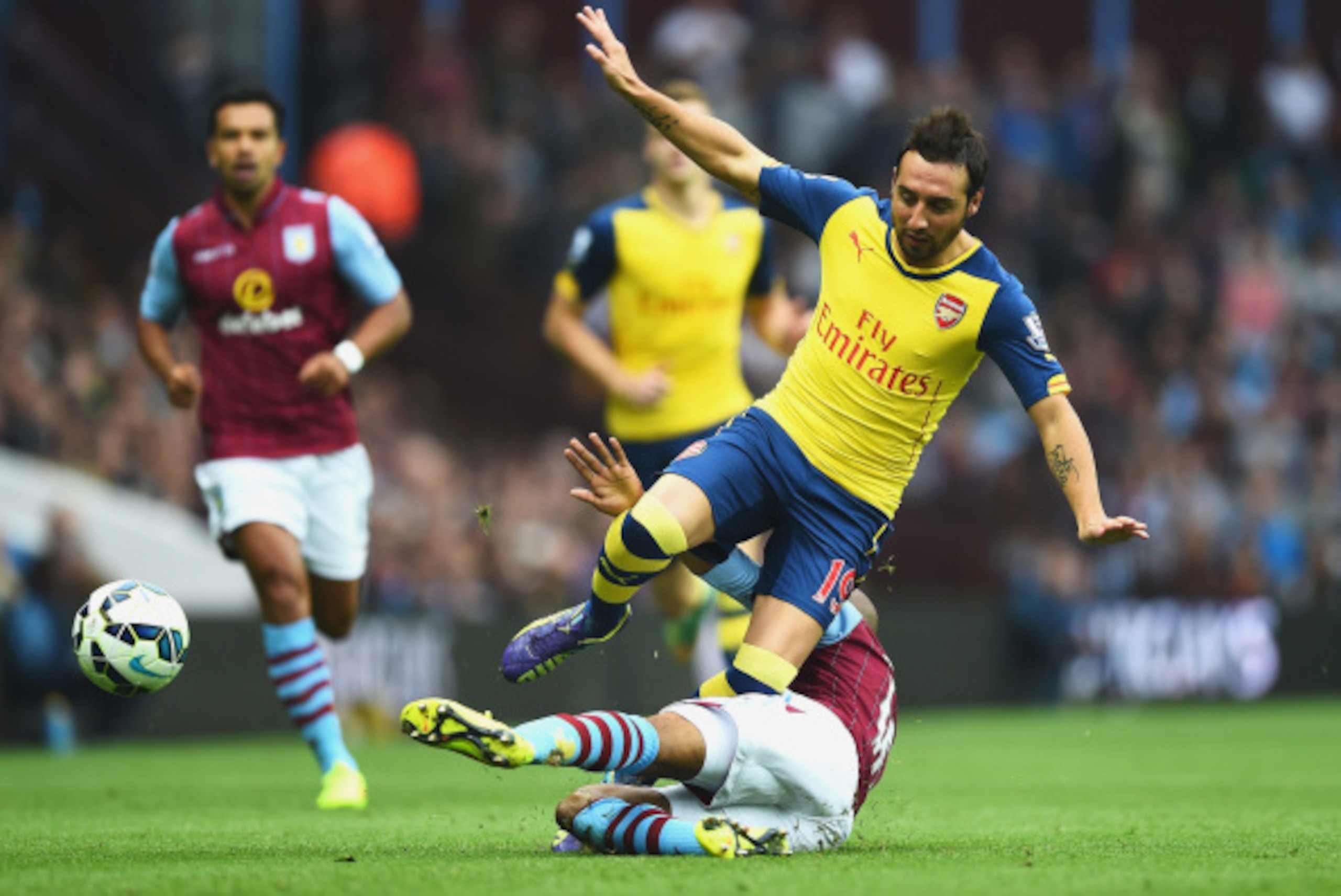
It's also worth noting that Ozil, regardless of his position, benefited from the presence of more players on his particular wavelength. It's no coincidence that Ozil and Arsenal played their best football of the season with Santi Cazorla back in the team.

The pocket-edition pass master is another one of those No. 10s who loves to operate between the lines and move the ball quickly. The same article from Amos rightly made special mention of Cazorla's influence against Villa:
"What was different about this game is the players around him. Cazorla's movement and control of the ball is far more in tune with Ozil than Sanchez's has been so far. Chamberlain offering a little more width and Ramsey breaking from slightly deeper positions leaves more room for Ozil and Cazorla and the mobile and technically sound Welbeck to use the central areas as opportunities are created.
"
Cazorla's inclusion alongside Ozil was significant because it offered proof that Wenger's No. 10-heavy team structure can work. That much should be obvious by the way that pair have combined in previous games.
Think of the goal Aaron Ramsey scored in Arsenal's 3-0 away win against Hull City late last season. Then it was Ozil finding Cazorla on the edge of the box to allow the little Spaniard to thread through a pass for the on-rushing Ramsey to score.
Wenger saw his top three playmakers combine brilliantly to produce a superb goal. Seeing Cazorla dovetail with Ozil and Ramsey at Villa, offered further proof a defensive midfielder is far from a necessity.
This is a midfield that won't ever stifle with physicality. Instead it will negate teams via possession and lots of it.
The Gunners offered ample evidence of that by passing Villa off their own pitch, per Squawka football:
That frankly staggering number of passes is only possible when the midfield is littered with playmakers embodying technical quality. It's why Arsenal can win with this midfield, more specifically, why they can win without adding a defensive-minded destroyer to it.
Opposition teams can't stifle and physically dominate Arsenal if they can't get near the man in possession before he releases a quick pass to a like-minded teammate who just as suddenly does the same.
Villa play with two deep-lying midfielders, Tom Cleverley and Fabian Delph. But it did them no good as that pair was bypassed by the lightning-fast one-touch passing that created Arsenal's opening two goals.
Efficiency in possession also takes away the opportunity for counter-attacks, something Amos noted was obvious at Villa Park. More importantly, the Gunners can defend the middle without a physical linchpin in deep areas.
There's more than one way to skin a cat and so on. Arsenal found other ways against Villa, according to Arseblog writer Andrew Mangan:
"We bossed the game in terms of possession and territory, and what made it so much fun to watch was the way we did that. We implemented a high press which Villa just couldn’t cope with. Every time they had the ball we harried and chased and forced them into an error which returned the ball to us. At which point we simply passed it around and ground them into submission.
It was great to watch Welbeck drop deep from his forward position to pressure a home player on the ball, just as it was to see Mikel Arteta push up from midfield into their half to do just the same. There was some suggestion afterwards that Villa were suffering because their players had been ill, but regardless of that we obviously had made a plan and executed it perfectly.
"
Mangan was referencing the way the Gunners shut out Villa during the second half to protect their lead. None of it involved relying on a deep-lying player to crunch into tackles and break-up play.
Instead, Arsenal defended with initiative, on the front foot. In other words, the way a team loaded with attacking players is most comfortable defending.
But a more fluid shape in the middle can also help Arsenal defend in numbers in certain games. That's the best way to make up for not having any powerhouses in the ranks.
It's certainly better than leaving Arteta, Flamini or both, at the base of midfield and hoping they'll perform like Patrick Vieira and Gilberto Silva. That ploy didn't work in the massive away defeats to Liverpool and Chelsea last season.
It certainly did Arsenal no favours playing with a nominal defensive midfielder in those games. The real template for how this squad should operate in the middle came from last season's second league game.
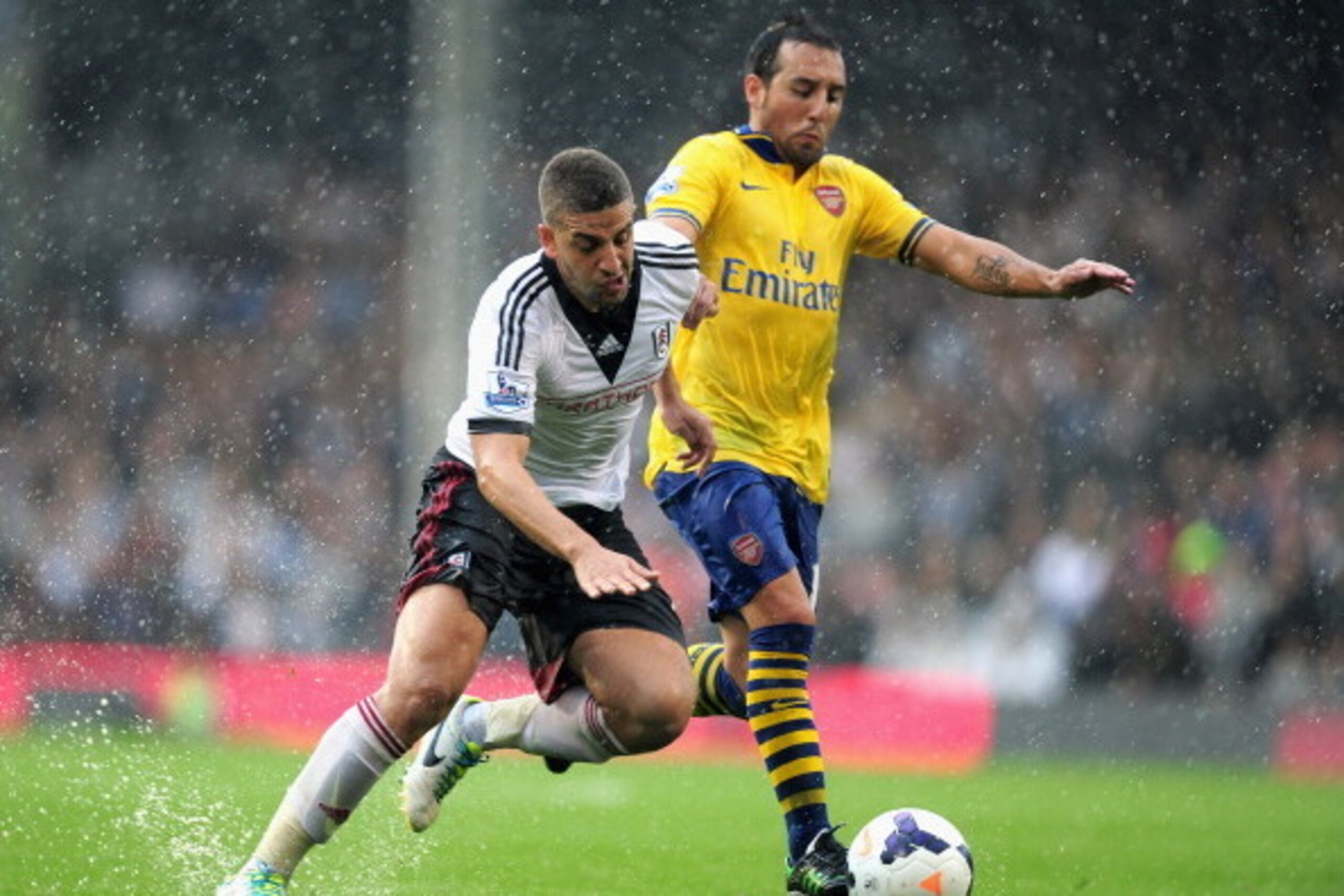
The 3-1 away win over Fulham featured a midfield comprised of Ramsey, Cazorla and Tomas Rosicky. None of this attack-minded trio restricted themselves to one position.
They constantly rotated, chasing and harrying to win the ball, while each being devastating in possession. Granted, eventually relegated Fulham hardly provided the strongest opposition.
Yet this was Arsenal's most balanced and efficient performance of the season. With central midfielders fluidly switching positions, the Gunners at once bossed possession, while retaining a threat on the counter for whenever they needed it.
That dynamic can easily be applied this season. Consider a midfield comprised of Cazorla, Ramsey and Ozil, or one featuring, Wilshere, Ramsey and Ozil.
Either combination gets Wenger's No. 10s on the field guaranteeing a shifting shape that puts more emphasis on what Arsenal can do rather than what they can't.
There would be no natural holding player in these trios. That responsibility would be exchanged as and when it needed to be, depending on the situation and the flow of passing.
The revolving structure would make Arsenal's midfielders harder to attack than when someone like Arteta is left deep where he can be swarmed on and played around at pace. The 2-0 UEFA Champions League defeat to Borussia Dortmund revealed the folly of believing a solo midfield anchor is the key to a successful defence.
In truth, even those who have the type of players many believe Arsenal need are not exactly reaping the benefits. Chelsea routinely put one and even two bodies in front of the back four.
Yet despite the extra barrier, the Premier League leaders have conceded eight goals in six matches this season. Defensive midfielders couldn't protect the Blues' 1-0 advantage against 10-man Manchester City with less than 20 minutes to go.
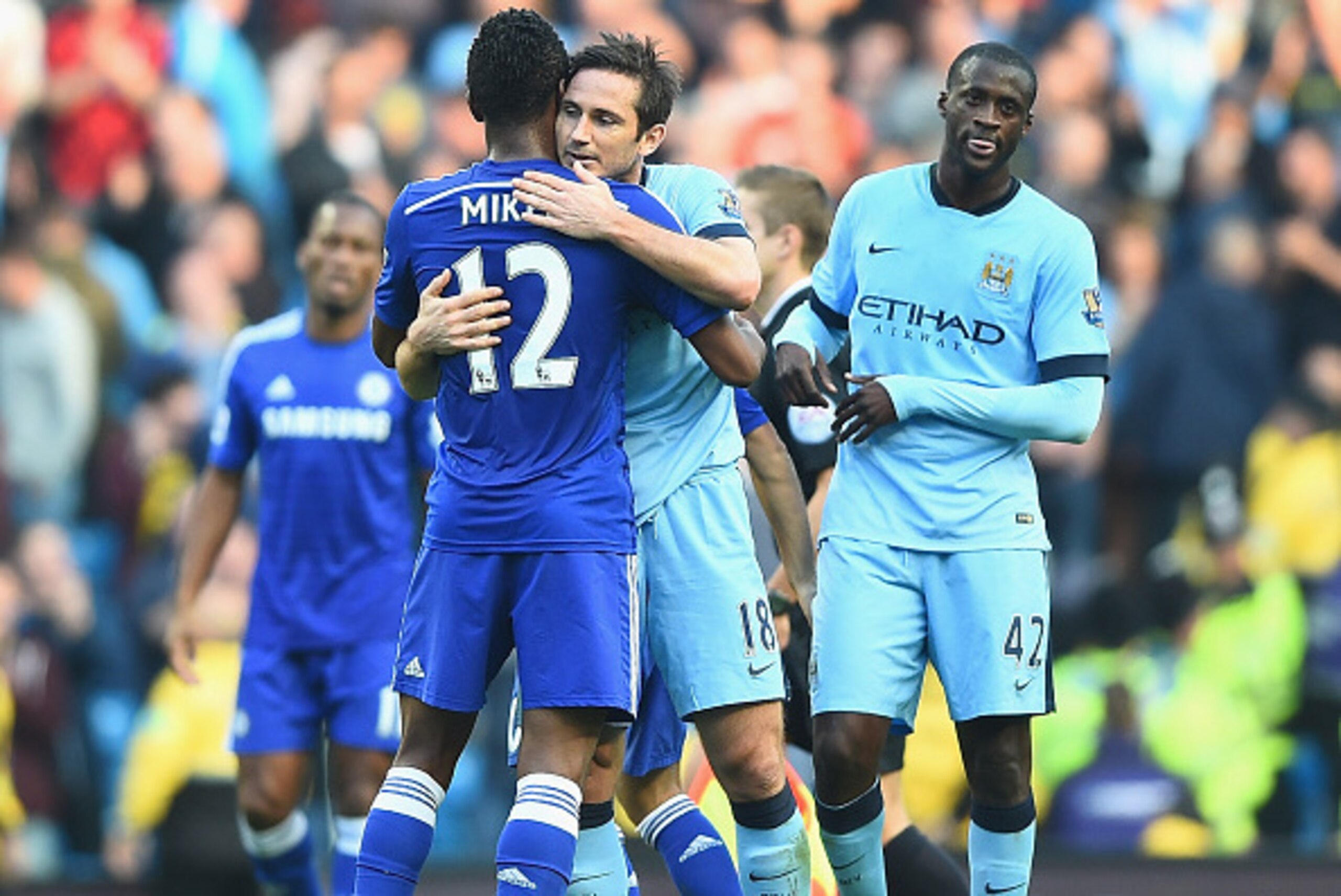
Speaking of City, no team in the league boasts as much power in the middle as the reigning champions. That quality is provided by Yaya Toure, Fernando and Fernandinho. Yet like Chelsea, the Citizens have conceded in all but one of their games so far this season.
Wenger will probably eventually need some muscle alongside all the flair to give Arsenal the balance to win top prizes consistently again. That's why he's pursued players such as Sporting's William Carvalho this summer, per Daily Express reporter Ben Jefferson.
However, that muscle is currently lacking in this squad. So until Wenger signs his powerhouse, he'll be better served letting this team play without one.
Wenger should end the managerial equivalent of throwing darts at a board and hoping to hit a hidden anchor man from within his current squad. He should just abandon the fixed defensive midfield position altogether, at least for now.
He should instead trust the football intelligence of his playmakers to construct a midfield that will leave opponents chasing shadows and afford the Gunners greater tactical flexibility.
That's the best way for Wenger to emphasise more of what this Arsenal squad has got, rather than trying (unsuccessfully) to cover its most obvious deficiency.
.jpg?w=2560)




.jpg?w=2560 "Nabers' Recent IG Post 👀")