

These Milwaukee Bucks Are City's Last, Best Chance for Keeping NBA Team
Flush with fresh-faced phenoms like Jabari Parker and Giannis Antetokounmpo and marshaled by league legend Jason Kidd, the Milwaukee Bucks are nothing if not a team on the rise.
Sadly, time is not on Milwaukee's side, making this generation of players—young, hungry and tantalizingly talented—perhaps the city’s last, best hope of remaining in the NBA fold.
Six years have passed since Clay Bennett first uprooted the Seattle Supersonics, marching the team 2,000 miles east and resurrecting it under the rebranded banner of the Oklahoma City Thunder.


And while OKC has enjoyed perennial success as one of the NBA’s most exciting squads, Seattle’s lingering animosity has steadily morphed into what’s become a near iron-clad consensus: If and when the league decides it's high time for a new team, it belongs in the Emerald City.
As a franchise with a middling history and uncertain financial future, the Milwaukee Bucks have been placed squarely in the crosshairs as a potential vessel for Seattle’s NBA resurrection—even while the wishes of their onetime owner ring out in silent protest.
The Politics of Place
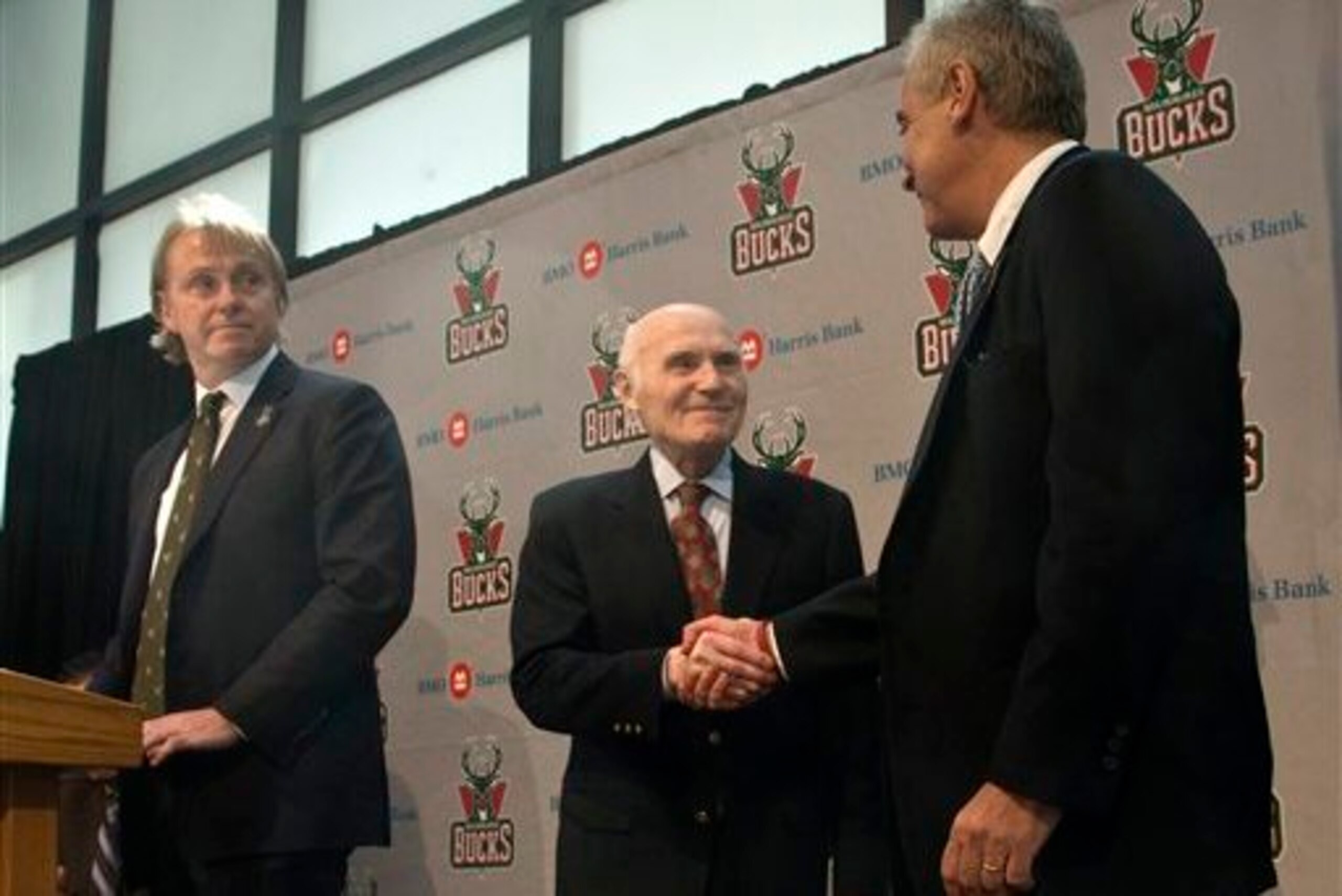
In an impressively comprehensive dispatch penned this past June, Sonics Rising’s Kevin Nesgoda lays bare the tricky political quagmire in which Milwaukee’s new owners—Wesley Edens and Marc Lasry—now find themselves.
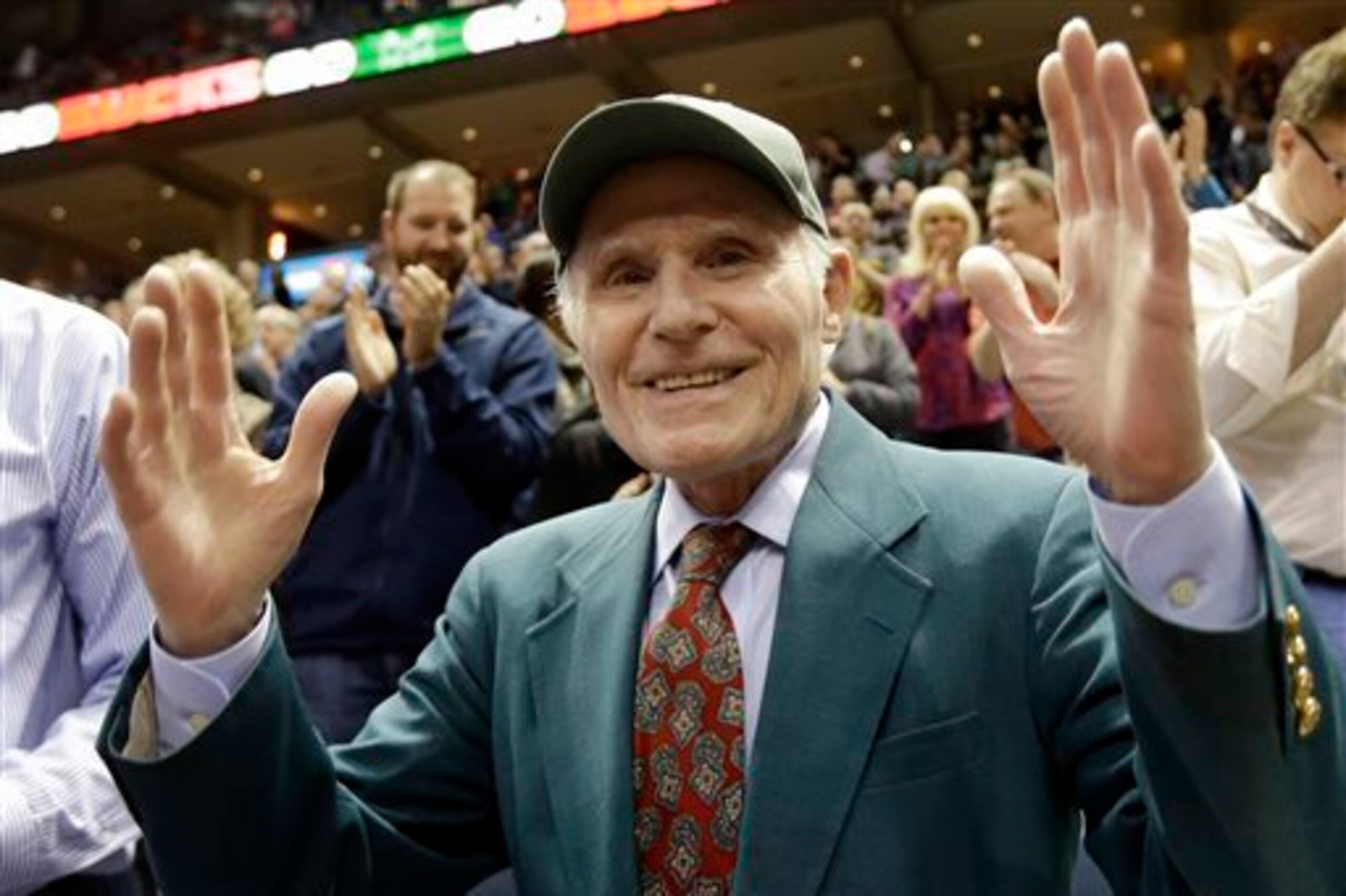
A full year before letting go of the reins, Herb Kohl, the former U.S. senator and longtime Bucks owner, stipulated that any prospective buyers would have to agree to keep the Bucks in Milwaukee.
"When that time comes and the right person or group appears, then my mind will start moving in another direction," Kohl told WPR.org's Chuck Quirmback in June 2013. "But, they must stay here. That's the bottom line."
In a joint statement released shortly after the team's April sale, Edens and Lasry capitulated to Kohl's wishes, albeit with slight linguistic flexibility:
"We are lifelong basketball fans who are committed to the success of the Bucks and the identity of the team as a part of the city of Milwaukee. It is our vision for this franchise to be admired both locally and nationally for its success on the court, the quality of its organization and the loyalty of its fan base.
"
But while the two's commitment might sound steadfast, the group's hoped-for arena upgrade—self-imposed though it may be—could be enough to change the calculus entirely.
In short: Owing in large part to the ascendance of staunchly anti-tax governor Scott Walker, the Bucks have little hope of orchestrating the kind of publicly ensured arena deal that kept the Sacramento Kings from heading to the Pacific Northwest. As Nesgoda shows, that puts Edens and Lasry in quite the financial pickle:
"Judging by the current political climate, the polled voters would most likely shoot the proposition down for any public money going toward a new arena that would save the Bucks and keep them in Milwaukee.
The only ray of hope for the Bucks would have to be a substantial private contribution. Before the sale both Kohl and Edens/Lasry said they would contribute $100 million each to the new arena, cutting the public contribution by nearly half. Edens and Lasry have also discussed the potential of adding 5 to 10 additional investors to their group.
After the sale, however, multiple sources have told me that the amount is still $100 million, but not from each party as stated before the sale-just total. This would put the needed public contribution in the neighborhood of $350 million.
"
Nesgoda’s piece, though undoubtedly speculative, expertly breaks down the specifics of what this means for the Bucks, but suffice it to say the outlook isn’t good. Although it should be specified that, according to Rich Kirchen of the Milwaukee Business Journal, Kohl and the Edens-Lasry group would would each contribute $100 million toward the cited $350 million.
However, even the league’s new collective bargaining agreement, rife though it is with provisions designed to broaden the NBA’s revenue-sharing measures, wouldn’t by itself be enough to close the $150 million shortfall Nesgoda suggests.
At the same time, it's hard to argue the Bucks—who long ago outgrew the dated confines of the Bradley Center—couldn't use a serious arena upgrade.
The only possibility left, then, is that the blossoming Bucks themselves somehow foster the kind of excitement (and revenue generation) capable of compelling all the powers that be to keep the team—and its 40-plus-year history—bolted to Lake Michigan’s banks.
Of Wins and Wills
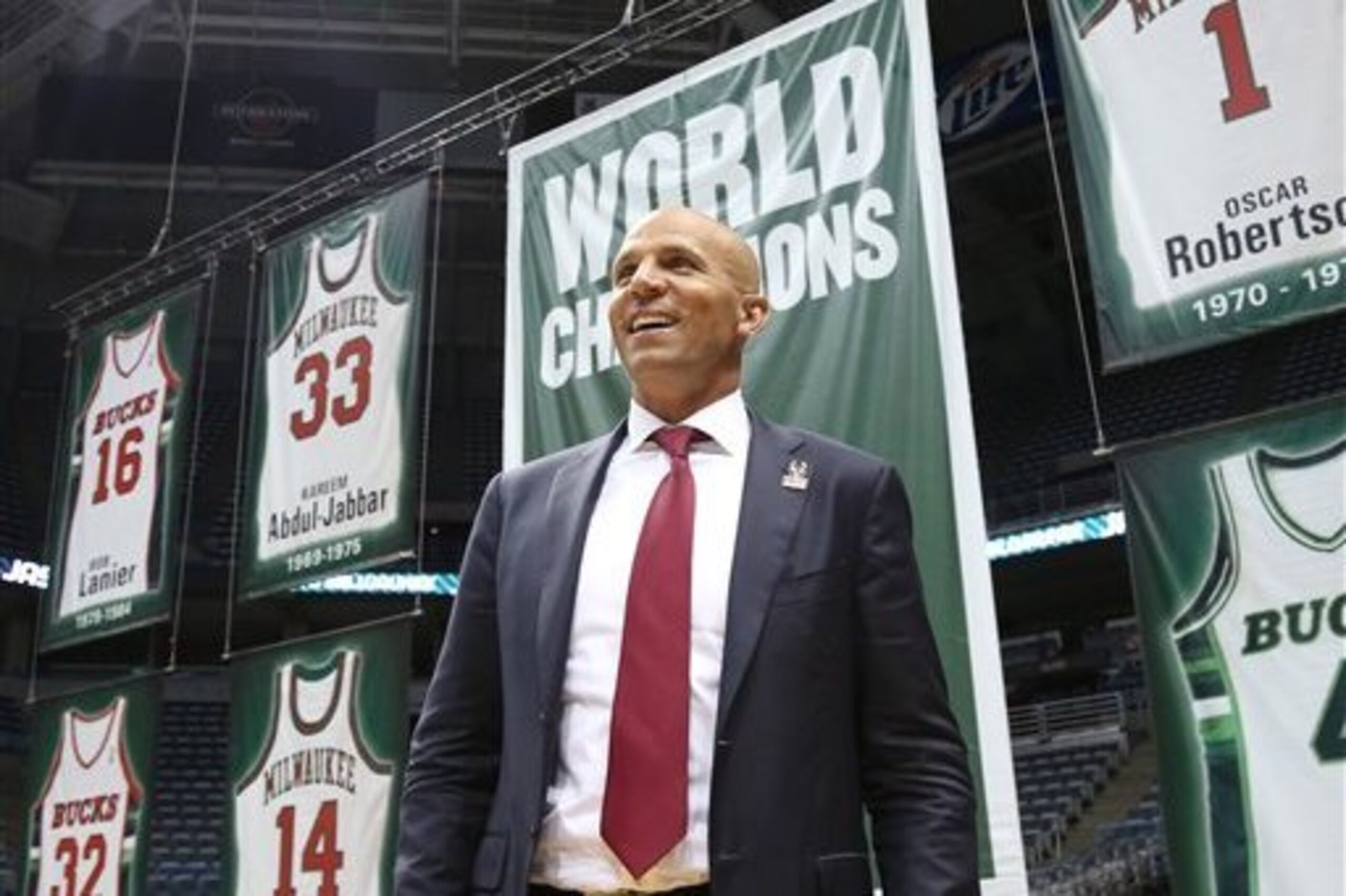
Nesgoda cites spring 2016 as the potential drop-dead date for the Bucks staying put. In other words, short of some unforeseen funding measure, Jason Kidd has two years to turn his precocious cagers into a viable long-term play in Milwaukee.
For a team that won just 15 games last season, that would seem quite the wishful thinking indeed.
Based on Milwaukee’s current roster construction, three players appear most likely to serve as the team’s foundation: Parker (19), Antetokounmpo (19) and center Larry Sanders (25).
Of course, there are plenty of pieces that could emerge as cornerstones in their own right, including point guard Brandon Knight (22), rangy forward John Henson (23), the sweet-shooting Ersan Ilyasova (27) and Damien Inglis, the intriguing 19-year-old Frenchman and 31st overall pick in June’s draft whom the Bucks will likely opt to stash in Europe for a year or two—unless, of course, his performance warrants a stateside sojourn.

It’s a breed and generation apart from the one Kidd was tasked with shaping during his lone season with the Brooklyn Nets.
That’s not necessarily a bad thing: Unlike Paul Pierce, Kevin Garnett and the rest of Brooklyn’s veteran-heavy squad, these Bucks are bound to see Kidd less as a peer and more as an authority figure—albeit one just two years removed from the same basketball stage.
What’s more, Kidd seems more than willing to experiment with his charges, to shape what remains a mostly formless slab into something resembling a coherent, cohesive structure.
Of the many strategic plays at Kidd’s disposal, perhaps none is more intriguing than the one at which the surefire Hall of Famer hinted during a July interview with NBA.com’s Scott Howard-Cooper: Playing “the Greek Freak” at point guard.
"We’ve seen it in practice, and so when you see a player’s comfort level with the ball no matter what size, we want to see it in game action and we slowly have started letting him have the ball and running the offense… With the group we have right now, with B-Knight and Giannis, we have additional playmakers and when we have that on the floor, it makes the game easy. We’ll see how the roster shakes out, but we’re not afraid to play him at the point, as you see.
"
Parker, too, figures to give Kidd another dynamic shape-shifter—a player capable, if all breaks right, of playing up to three positions at the NBA level.
Even in a historically weak Eastern Conference, Milwaukee’s playoff prospects are, at this point, as slim as Antetokounmpo’s limbs. Still, as far as youth and upside go, the Bucks have all the makings of a League Pass staple.
Squint just a little bit and you might make out the faint form of a familiar template—one whose most recent instantiation exists as both promising bellwether and potentially ironic harbinger of the Bucks’ near-future fate: the Oklahoma City Thunder.
Youth in Revolt
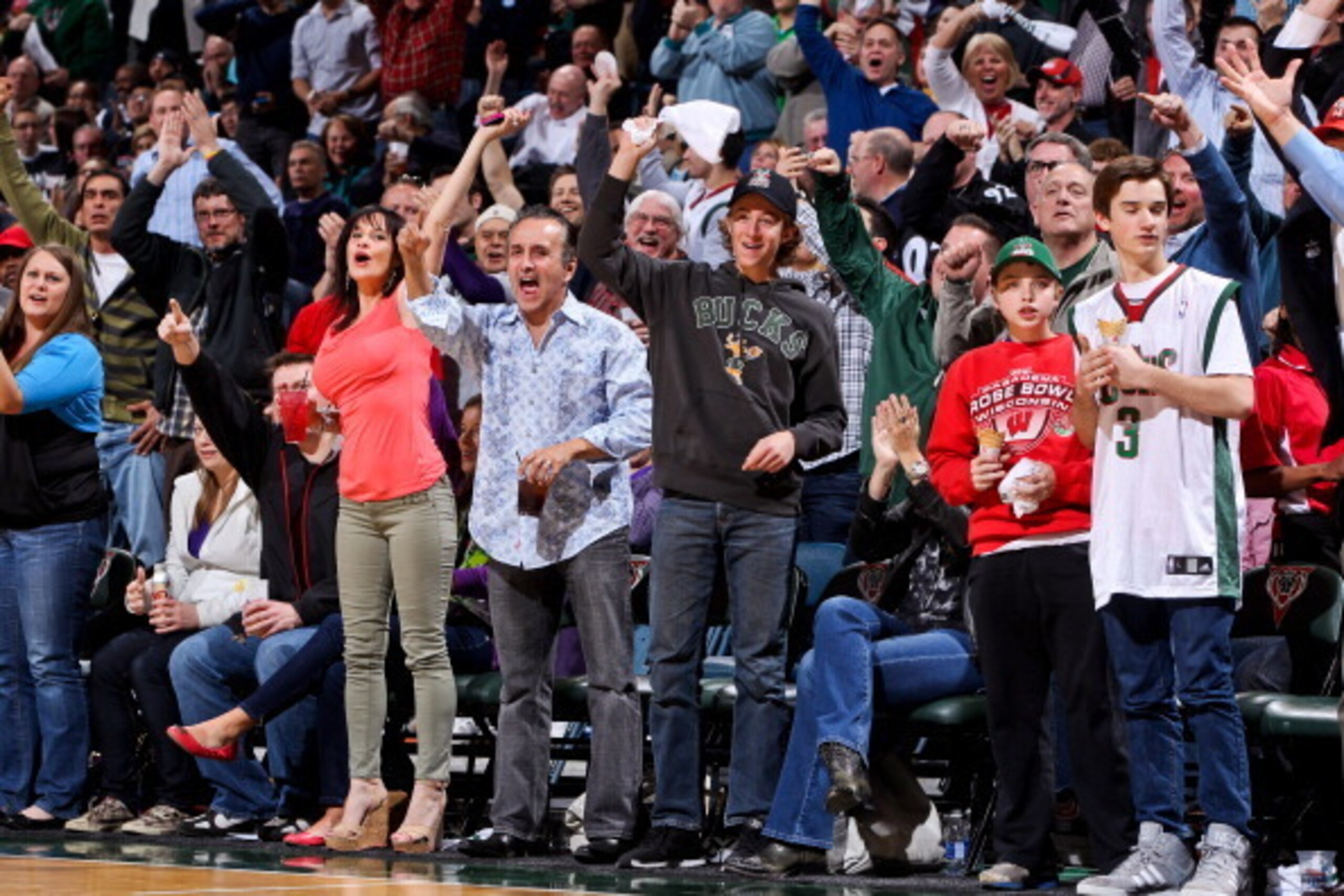
For Seattleans, losing their beloved Sonics was painful enough. Having to watch the newfangled Thunder develop into a perennial juggernaut replete with superstar studs? The injury itself might’ve been less insulting.
Bucks fans understandably want to forestall that scenario entirely. And rightly so: Compared with the prospect of hemorrhaging the team in the days of Brandon Jennings and Michael Redd, losing this crop of up-and-comers—congenial, convivial, virile in their untapped potential—would be a sickening closing salvo to what's already been the sourest of sports sagas.
The Philadelphia 76ers, the Orlando Magic, the Boston Celtics: These equally plucky upstarts have the luxury of time fully on their sides. The Bucks, meanwhile, enter a stretch in their history in which they face not only the best efforts of hardwood foes, but those of the ticking clock as well.
All is far from lost, of course. From changing league dynamics to shifting political pressures, much can change in the matter of a few years.
Just don’t blame fans for hoping it’s positive changes on the court, rather than the negative off it, that conspire to keeps Bucks basketball alive.

.jpg?w=2560 "Injury-stricken Seahawks signing veteran RB")
.jpg?w=2560 "2 NFL Officials Suspended")

.jpg?w=2560 "Mahomes' Wife Trolls Kubiak 💀")
.jpg?w=2560 "Viral Rams Coach Vid 🖕")