

Tale of the Tape: Tight Ends Key to Baltimore Ravens' Offensive Success
After watching the Baltimore Ravens' 26-6 win over the Pittsburgh Steelers on Thursday night, let’s discuss the role of the tight end position in Gary Kubiak’s offense.
Here are my notes—plus some X’s and O’s—on Dennis Pitta and Owen Daniels, with a focus on their impact in both Ace/12 (2WR-2TE-1RB) and Jumbo/23 (3TE-2RB) personnel.
Goal-Line Play Action
.jpg?w=2560 "Lions Bills Football")

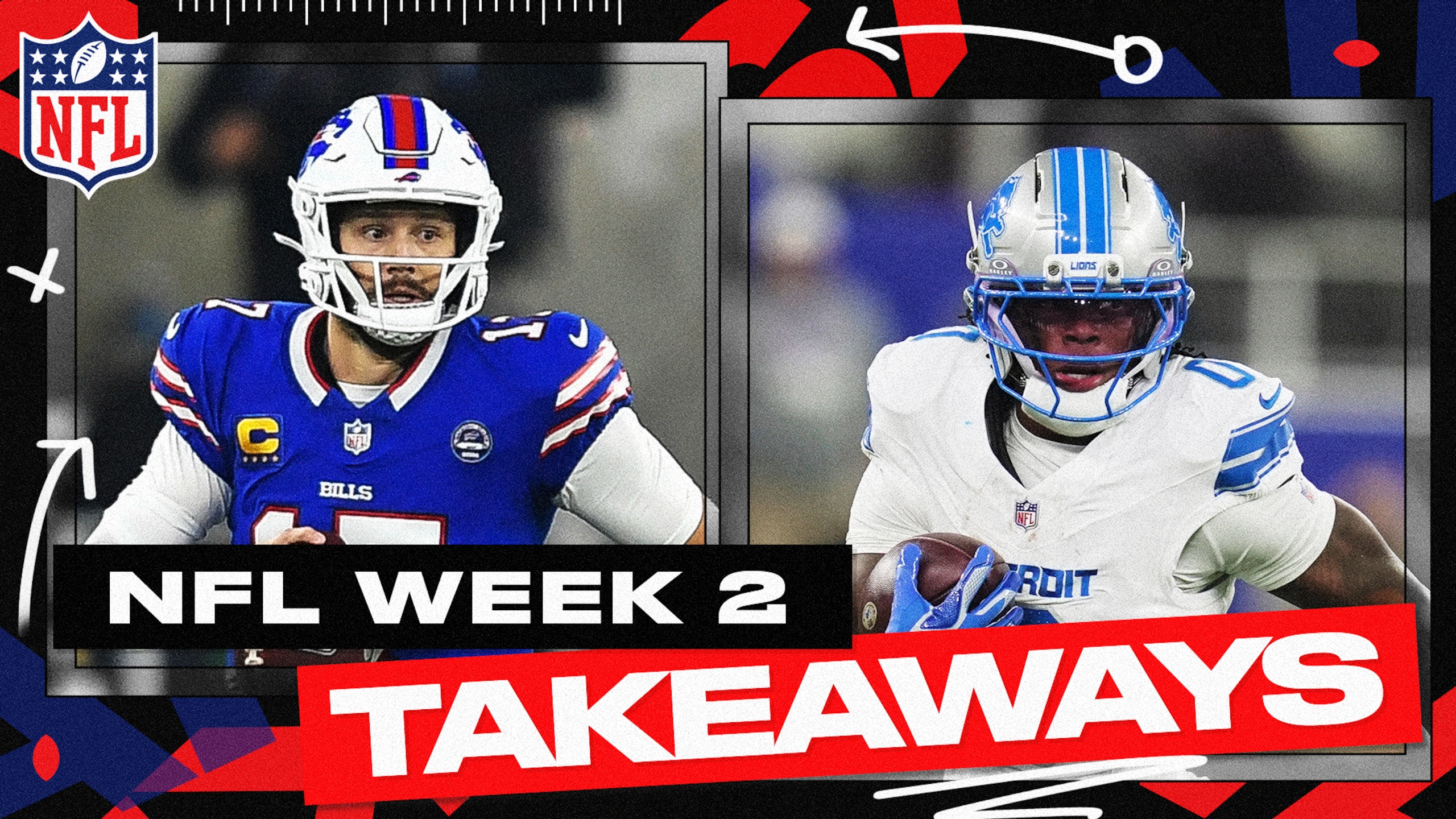
Every offense in the NFL runs the flat-7 (corner) combination on the goal line out of Jumbo/23 and Tank/22 (1WR-2TE-2RB), but the window dressing is key to forcing second-level defenders to play with poor eye discipline versus the run action.
On Thursday night, Flacco found Daniels twice in the end zone on the 7-cut because of the backfield action that allowed the tight end to take a quick, vertical release up the field before stemming his route to the corner.
Here is Daniels’ first touchdown reception on the “swap” boot, with Pitta coming underneath the line of scrimmage off the closed-side (strong-side) run action.

Again, this plays out as the same flat-7 combination we see across the league, but look at how Kubiak sets it up.
With Daniels (U) aligned as the open-side (weak-side) tight end and Pitta (H) working back to the flat from the closed-side wing set, Flacco can show the ball on the run action and then target the two-level read on the throwback.
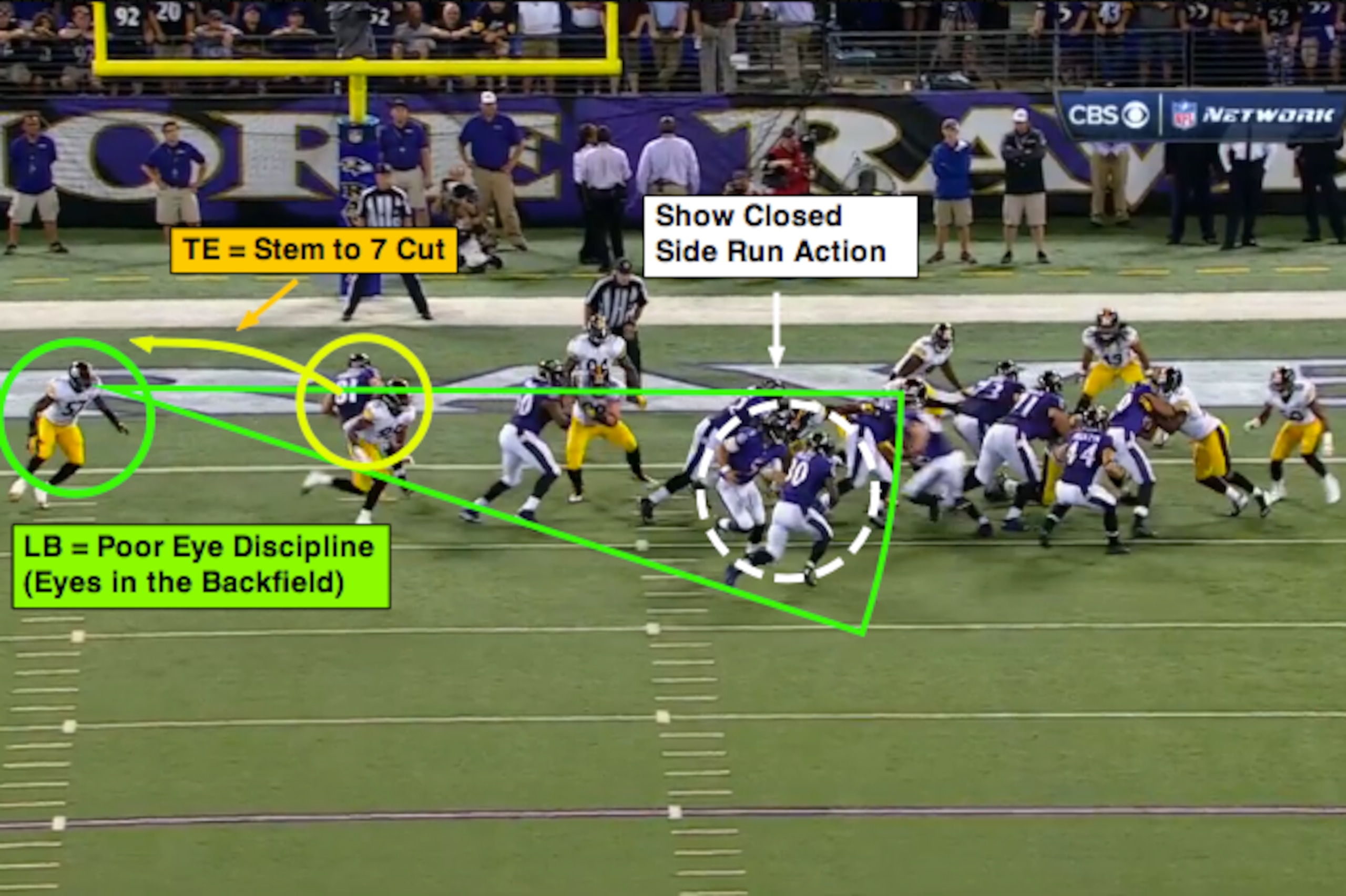
In a goal-line situation, poor eye discipline—eyes in the backfield—causes immediate separation and limits the recovery time for second-level linebackers and safeties because of the reduced field.
That’s what we see from Steelers linebacker Terence Garvin as he reads through the backfield action instead of trusting his initial run/pass key (Daniels).
This allows the tight end to quickly stem outside to the 7-cut while providing Flacco with an immediate read once the quarterback gets his shoulders square to the open side of the field.
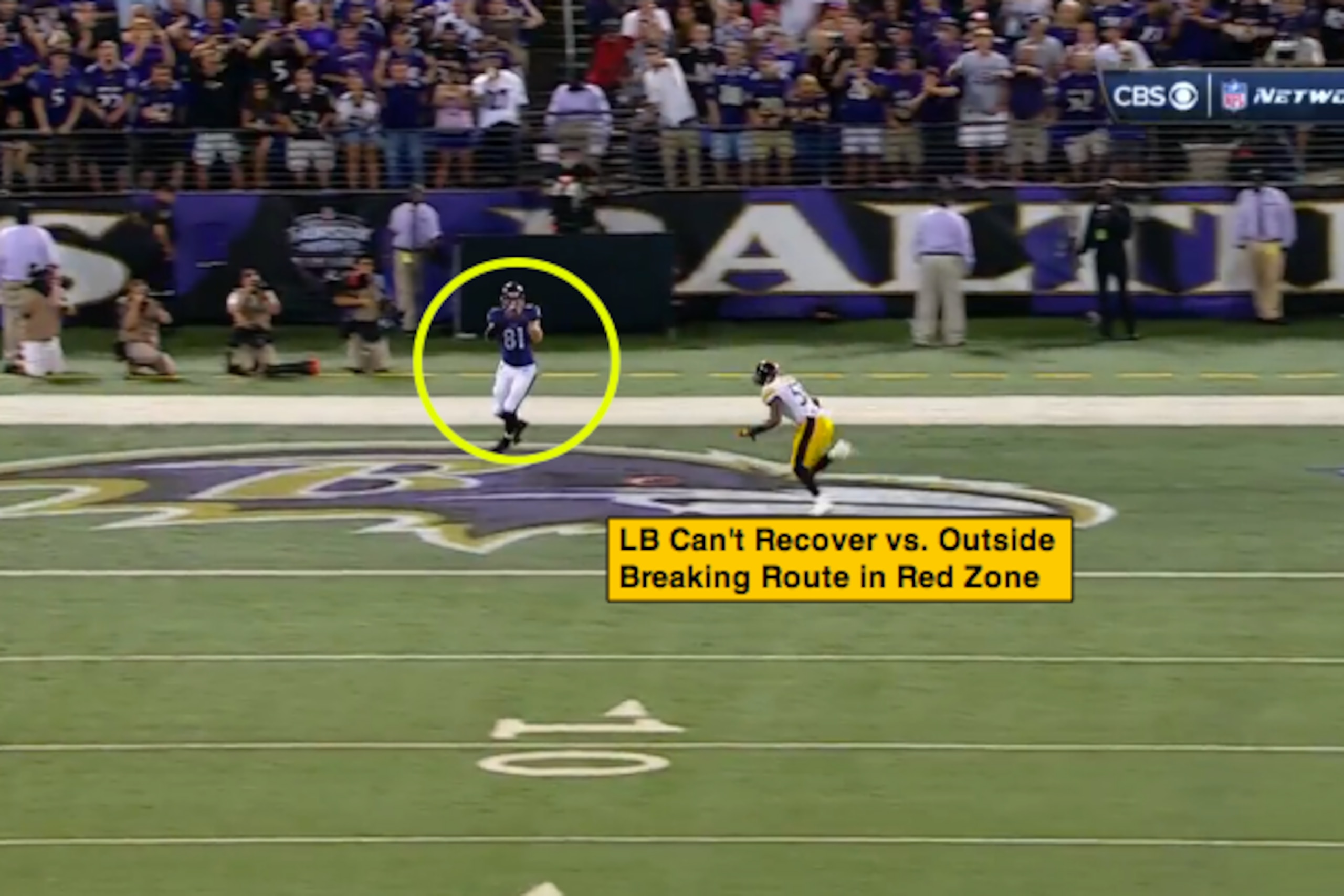
With Garvin now stuck in an adverse trail position, the linebacker doesn’t have the time to drive to the inside hip of Daniels.
The result is six points for the Ravens because of the alignment, scheme and personnel on the field.
Daniels caught two touchdowns on Thursday night, but given the ability of Pitta—and the play-calling of Kubiak—this Baltimore offense can game-plan inside the deep red zone to target specific matchups this season when it has its Jumbo/23 personnel on the field.
Short-to-Intermediate Route Tree/Hot Reads
When the Ravens brought their Ace/12 personnel into the game (2x2 and 3x1 alignments), Flacco had the ability to work the ball inside the numbers to the tight ends, target the seam and also throw the quick stick-out (option/9 combination) versus both zone and man looks.

These aren’t explosive plays we are talking about. However, this is about game situations and matchups when focusing on the tight end position in this offensive system.
Think of third downs, the “hot” reads (or sight adjust) versus pressure and the ability of the Ravens tight ends to win versus linebackers in coverage.
This is one example from Thursday night as the Steelers are showing interior A-gap pressure (linebacker cross stunt) versus the “2122” concept (2=Slant, 1=Flat).

With the Steelers' inside linebackers stemming to a blitz alignment before the snap, Flacco can identify his “hot” read (Daniels on the inside slant) and get the ball out before taking a hit.
Plus, Daniels uses a quick, outside stem within the route to create some leverage back to the football versus linebacker Jason Worilds.
That allows Daniels to expose the linebacker’s technique on the release—open hips at the snap, trail from outside leverage position—and stem back inside to the hash.
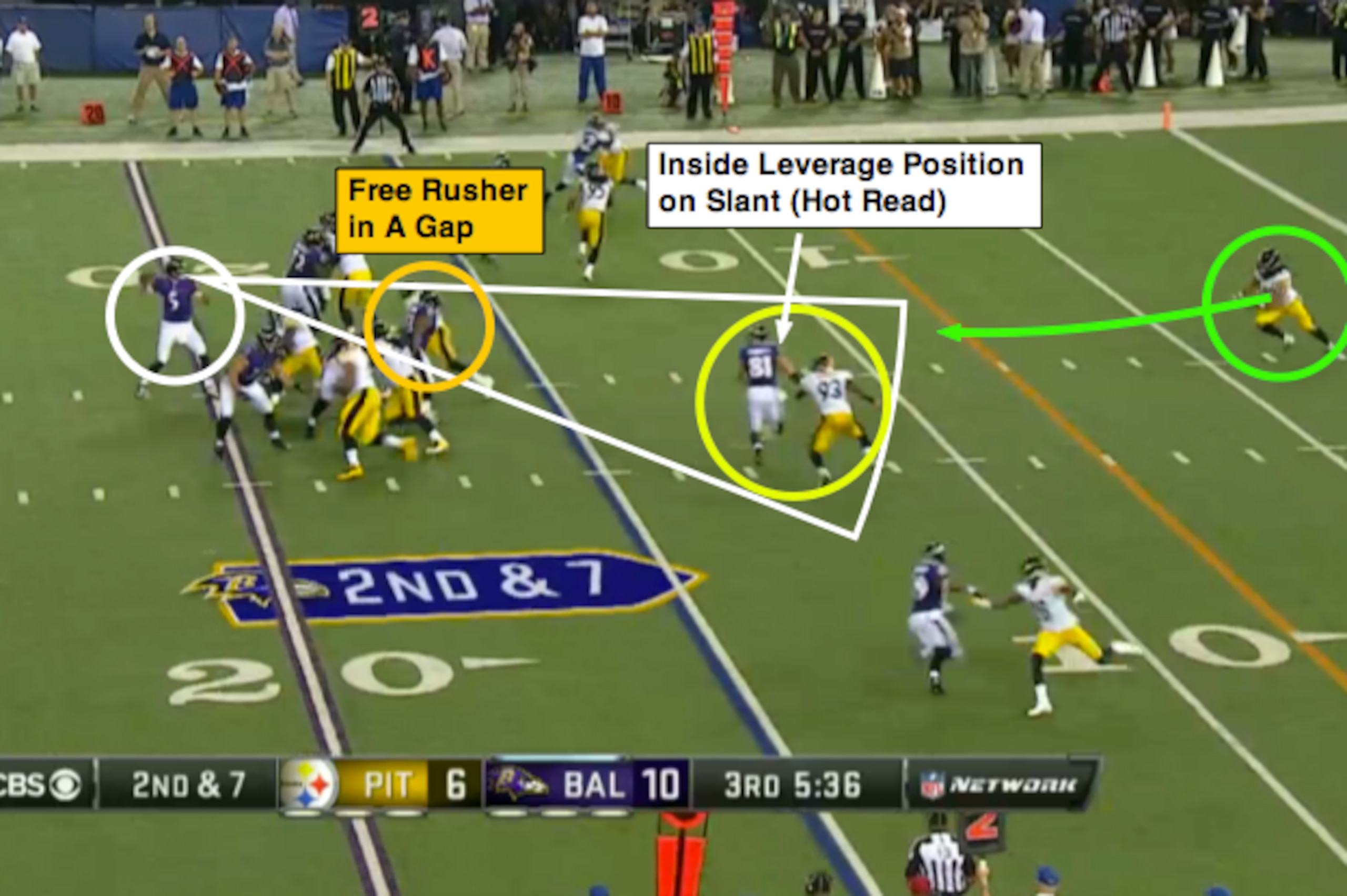
The Steelers have a free rusher in this situation through the open-side A-gap after the cross stunt. However, with Daniels winning to the inside, Flacco can target the tight end on the slant.
And Daniels holds on to this ball after taking a good shot—which I thought was clean—from safety Troy Polamalu.
This is just one example, but with Steve Smith (six receptions, 71 yards) emerging as the No. 1 target for Flacco outside the numbers, the Ravens tight ends can continue to see the ball in positive matchups between the numbers.
Setting the Edge in the Zone Running Game
The Steelers' defensive front seven has been exposed throughout the first two weeks of the season because of its inability to limit the zone running game.
On Thursday night, running backs Bernard Pierce (22 carries, 96 yards) and Justin Forsett (eight carries, 56 yards) produced in the zone scheme because of their ability to press the edge of the defense and find inside running lanes to accelerate to the second level.
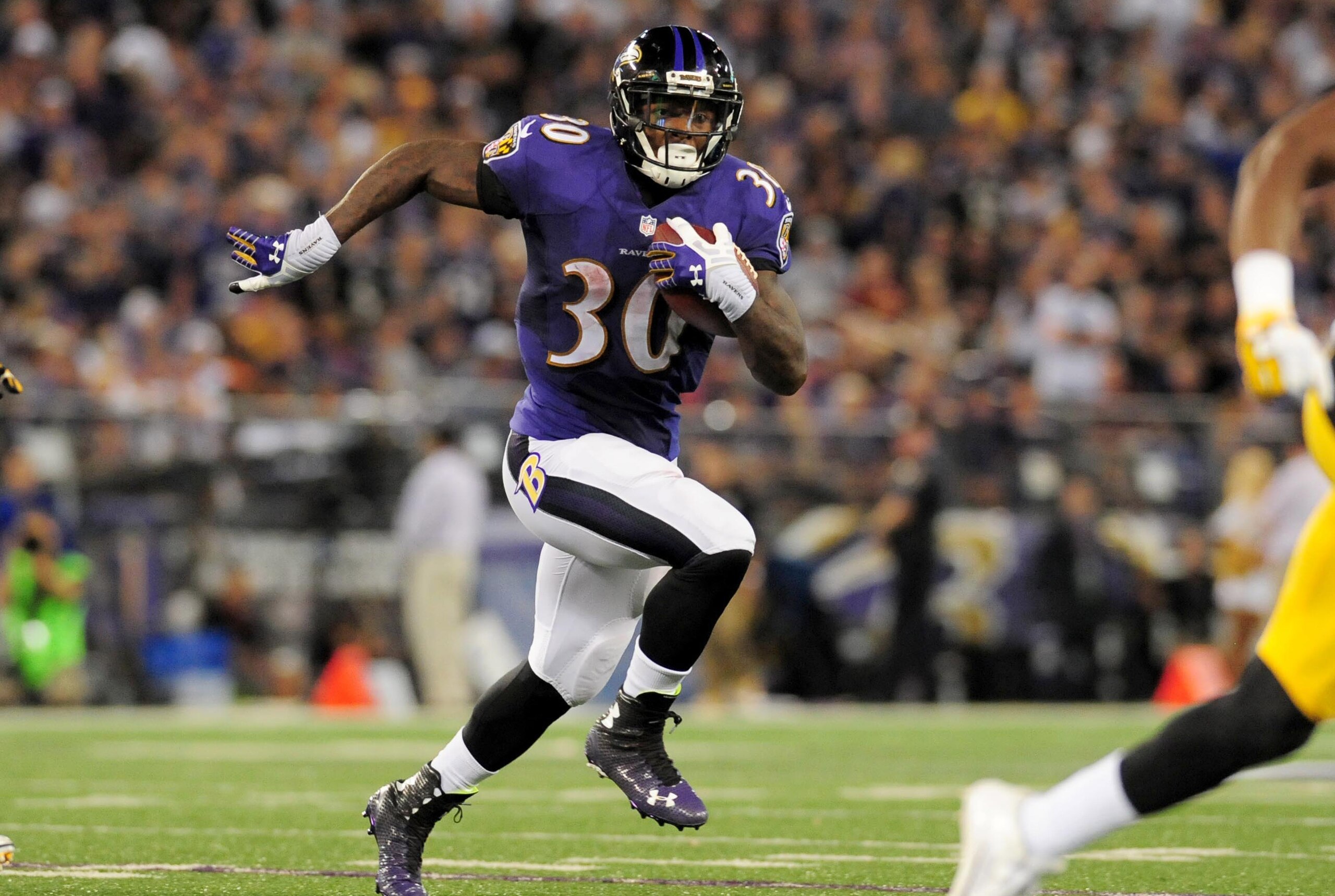
In Pitta and Daniels, the Ravens have two tight ends that can “reach” block on the zone scheme to create angles versus the 3-4 (outside linebacker) and 4-3 (defensive end) fronts while setting the edge.
This allows the Ravens to lean on the zone package in the run game while providing cutback lanes and play-action opportunities (boot action) once they establish the front.
Where Are the Explosive Plays from Torrey Smith?
Smith was limited again on Thursday night with only one reception for 10 yards (on three total targets) while also picking up a pass interference call on the 9-route (fade) in the red zone.

However, if Flacco can push the ball down the field to highlight Smith’s vertical, straight-line speed, the tight end position can become even more valuable when the Ravens put some stress on the top of the secondary.
Underneath throwing lanes and matchup problems are opened up when opposing defenses have to account for the top of the route tree outside the numbers.
That would create even more opportunities for Pitta and Daniels to produce in Kubiak’s system.
Seven-year NFL veteran Matt Bowen is an NFL National Lead Writer for Bleacher Report.
.jpg?w=2560 "49ers Camp Football")

_0.jpg?w=2560 "2017 NBA Re-Draft Gives Teams the Ultimate Do-Overs 🏀")
