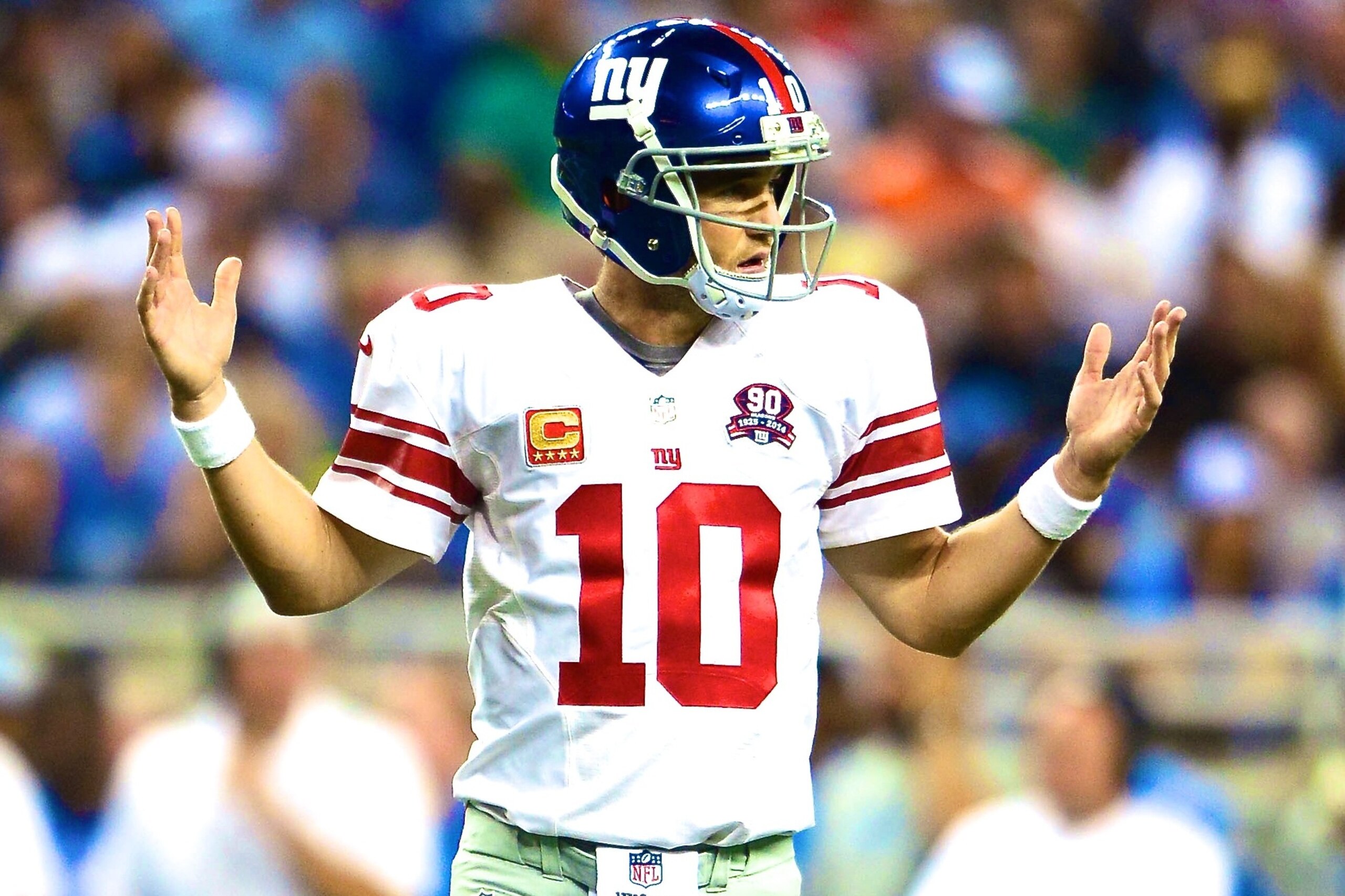

Eli Manning, New York Giants in Holding Pattern of Futility
This was supposed to be the first game of the rest of the New York Giants' lives.
New offensive coordinator Ben McAdoo and key additions on both sides of the ball were supposed to help quarterback Eli Manning and head coach Tom Coughlin recapture the magic that brought two Super Bowl championships to the Big Apple.
The season-opening Monday Night Football game was a huge national stage for the Giants' 2014 debut. Their hosts, the Detroit Lions, let the Giants leave Ford Field with an overtime win in 2013; the much-improved Giants looked to house the Lions again en route to contending for another NFC East title.
.jpg?w=2560 "Green Bay Steelers Football")
.jpg?w=2560 "Chargers Mack")
.jpg?w=2560 "Giants Football")
Four plays into the contest, the new-look Giants looked just like the old ones—losing games in painful, embarrassing ways.
New cover cornerback Dominique Rodgers-Cromartie and safety Stevie Brown couldn't decide which one should be doing their defense's most important job: covering Calvin Johnson. Scrambling Lions quarterback Matthew Stafford found Johnson with absolutely no one around him, and Johnson walked into the end zone:
Four quarters later, the Giants had been beaten just about every way a team can be beaten. The disastrous opening to their 2014 season echoed 2013's brutal Cowboys Stadium debut. None of the questions hanging around Big Blue from the year before were answered, and some new ones were raised.
Manning is at a crossroads in his career. The fact that he led the NFL in interceptions for the third time in his 10 seasons casts a pall over his two-time Super Bowl-winning resume; the Giants will have to seriously look for their next franchise quarterback if 2014 is another mediocre, turnover-filled campaign.
As legendary Giants quarterback Phil Simms told Bob Glauber of New York Newsday, McAdoo's shift to more three- and five-step drops and high-percentage passes was supposed to make the Giants offense much more "quarterback friendly" and reinvigorate Manning.
Giants quarterbacks coach Danny Langsdorf told Conor Orr of The Star-Ledger he'd love to have Manning's completion percentage "up there at 70 percent." Manning's not off to a good start.
The new Manning looks just like the old one, after he completed just 54.5 percent of his passes for an average of 4.94 yards per attempt—and threw two picks versus just one touchdown—against a thin Detroit Lions secondary. In fact, that's worse than his career 58.5 percent completion rate, per Pro-Football-Reference.com.
Of course, he didn't have much help.
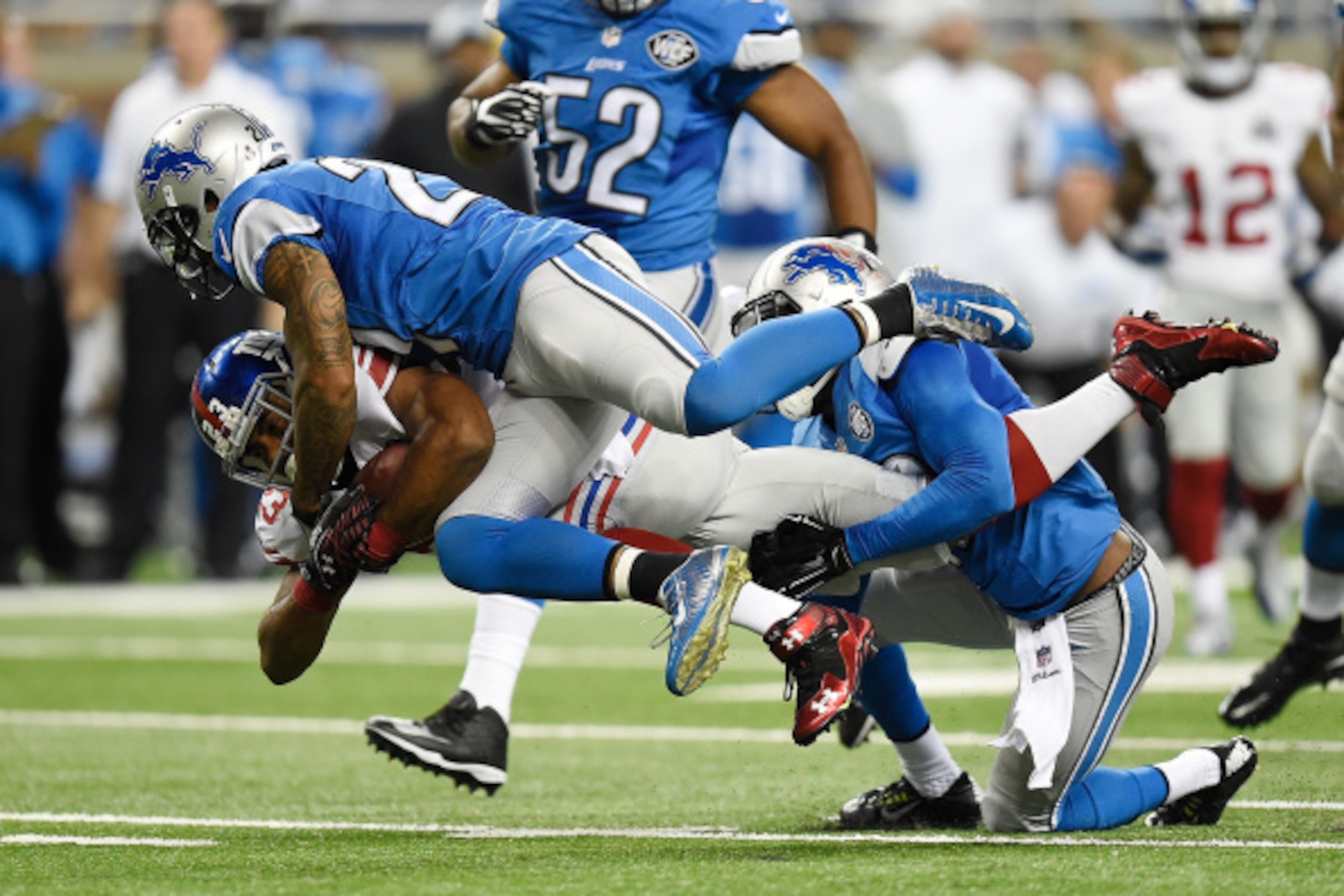
Star receiver Victor Cruz was almost completely neutralized, as he caught just two passes for 24 yards, per NFL.com. Promising young wideout Rueben Randle, who is expected to break out in his third season, did even worse: He caught two balls for just a single yard.
New free-agent acquisition Rashad Jennings was supposed to help revitalize the Giants ground game; he averaged a gain of just 2.88 yards over his 16 carries.
Left tackle Will Beatty was Pro Football Focus' lowest-ranked left tackle (subscription required) to start all 16 games in 2013; he was abused by Lions sophomore defensive end Ziggy Ansah. Beatty and right tackle Justin Pugh were beaten for 1.5 sacks by George Johnson, a rotational end cut by two different teams in his first three NFL seasons.
The Giants gained just 197 total net yards, were 3-of-13 on third down and even had a punt blocked. Even a touchdown scored when the Giants were already down by 20 in the fourth quarter only made for 14 points scored—even worse than their 28th-ranked 2013 average of 18.4 points per game, per Pro-Football-Reference.com.
Worst of all, Manning and the rest of the offense looked like 11 strangers. Manning's audibles and hand signals looked lost on his receivers, and he often appeared to call different plays than the rest of his offense ran. New offensive system or no, these are basic things that have to be ironed out over the summer.

Defensively, the Giants looked helpless in the first quarter.
Two quick touchdown strikes to Calvin Johnson put them in a 14-0 hole. The Lions' eight first-half penalties for 85 yards did a lot more to staunch the bleeding than anything defensive coordinator Perry Fewell put together.
Stafford had a field day against Rodgers-Cromartie and fellow corner Prince Amukamara; he completed 68.8 percent of his passes for a whopping 10.8 average yards per attempt, those two touchdown passes and no interceptions.
Uncharacteristically for Stafford, he often flushed out of the pocket and made things happen as the play (and the Giants' back seven) broke down, including on both touchdown passes and the five-yard touchdown scramble at the 0:47 mark here:
Nobody can contain Johnson for long, but seven catches for 164 yards and two scores is a big day even by his outsized standards. New No. 2 receiver Golden Tate grabbed six more for 93 yards. Even the Lions' much-maligned screen-passing game was working.
On the positive side, the Giants, led in tackling by Brown, held Bush and running mate Joique Bell to 66 yards and a score on 24 carries. Despite everything else, they frequently stuffed the Lions' second- and third-quarter attempts to salt the game away, creating more opportunities for Manning and the offense.
They just didn't take them.
In the end, that's what's so damningly familiar about this Giants team: Its defense is talented but inconsistent, making enough plays to be competitive but not enough to compensate for the offense's repeated implosions.
Manning and the Giants led the NFL in turnovers last season with 40, and nothing about their debut performance looked like that was going to change. Before the Giants can get back to surviving the NFC East and surprising in the postseason, the offense has to stop shooting itself in the foot.
If Coughlin is going to keep his job another season, McAdoo and Manning are going to have to start doing theirs.
.jpg?w=2560 "Commanders Cowboys Football")
.jpg?w=2560 "Texans Patriots Football")