Why the 2014 FIFA World Cup in Brazil Can Still Be the Best Ever
As we enter the final few months of the buildup to the 2014 World Cup, we’ve heard much about the current state of host nation Brazil and how behind it still is in terms of building the necessary infrastructure to successfully host and support a worldwide tournament and festival.
Just last week, FIFA secretary Jerome Valcke told BBC Sport that Brazil may not be “totally ready” for the start of the tournament due to building delays, with two stadiums in Porto Alegre and Sao Paulo still not finished.
And with the current political climate in Europe, amid criticism of Russia’s recent actions following the Winter Olympics in Sochi and Qatar’s human rights record ahead of its own World Cup in 2022, Valcke has even gone as far as to emphasize FIFA’s political neutrality, per Al Jazeera:
TOP NEWS

Messi Sends Farewell Message ▶️

Messi: 'Saddest Day of My Career'
USMNT's Perfect International Window 💯
"FIFA is not the United Nations…We are not there to discuss with political authorities what they should do…We can discuss with them, and again be the platform for them to meet, to exchange and to make sure they are using football as a tool for change…But we cannot tell a country what should be [sic] their foreign policy. That’s not our role.
"
All of which has thrown a considerable spanner into the Brazilian works, as the country makes frantic last-minute preparations for the global event amid an unsteady domestic political climate.
For Brazil to put on a successful World Cup, 64 years after it was last hosted on home soil, no doubt there are still major hurdles to overcome—not to mention many people to convince.
Yet lost amid all the negative news is the undeniable prospect of a fervent and vibrant tournament, of a famed Brazilian party, of a mouthwatering tournament featuring footballing talent in abundance on the pitch—and the underlying possibility that the 2014 World Cup can still be the best ever.

A National Legacy
Let’s begin by looking at the positive impact that FIFA can bring with its local programs in conjunction with the tournament itself.
Its recent announcement of a $1 million television production internship program for Brazilian students, allowing them the chance to gain “invaluable work experience at the world’s biggest single-sport event,” is a glimpse at the “legacy” impacts that FIFA has now made a big part of its tournament-hosting packages.
By involving local students and providing technical and professional training in a sure-to-be exciting opportunity for local youth, FIFA has laid the groundwork for a potential boom in interest in the international sports business and the financial workings of a global tournament—quite in contrast to the uneasy local sentiment on show during the Confederations Cup last summer.
Looking at the legacy factor from a macro, country-level perspective, the Brazilian government forecasts, via Fox News Latino, that the World Cup itself will generate around 62.1 billion reais ($27.7 billion) in revenue, three times its income from the Confederations Cup.
The significant economic impact from the boom in tourism has been projected to include a total number of 3.6 million visitors to the country and an increase of 47,900 jobs in the tourist and recreation sectors, which would be a considerable injection of activity and revenue into Brazil’s GDP.
Alongside the inevitable focus on consumption on Brazilian soil, the Brazilian government has also launched advertising drives to highlight its other attractions, including “the Iguassu Falls, eco-holidays in the Amazon, the historic city of Salvador and Brasilia,” according to the BBC, as well as to draw attention to its capacity and capability to host global events and conferences.
Said Marcelo Pedros, the director of international markets for Embratur, the Brazilian Tourist Board:
"Everyone knows that Brazil can play football and throw a party, but we want to show just how well we can organize international events. When Germany held the World Cup in 2006 it was the other way round. Everyone knew they would be well organized, but could they hold a party? They did, and it was very successful. We are going to prove the same success with Brazil’s organization skills.
"
And, of course, there is the small matter of the tournament kicking off on Brazil’s own Lovers’ Day, which, according to the Metro, is already capturing the imagination of many an innovative and entrepreneur.

An Unpredictable Contest
We’ve managed to come this far without even mentioning the football due to be on show in Brazil, which is a strong testament to the off-pitch factors that could see Brazil become the biggest and most successful global party yet.
But while the World Cup has arguably evolved from a pure celebration of football into a money-making exercise, at its heart football is still the beautiful game, and we could well be looking at one of the most exciting iterations of the tournament of all time, given the unpredictability of the contest this summer.
As football fans look ahead to the 2014 World Cup, many questions will no doubt pop into their minds. Who will rise to the top this year? Will Neymar confirm his status as the next big thing in football by bringing his country the World Cup at home? Or will Lionel Messi finally deliver a World Cup to secure his place in the pantheon of all-time greats?
Will Spain continue their recent dominance with a fourth successive win in a World Cup or a European Championship tournament? Or will Germany’s youth revolution end its own wait for a world title?
What about the dark horses—will Belgium’s new golden generation fulfill their potential as they look to take the World Cup by storm? Or will Uruguay better their last-four performance in 2010? Is it time for an African team to go all the way? Or will England finally get over their quarterfinal hoodoo and fire their way into the final?
The presence of so many international stars on Brazilian soil—the mythical Zlatan Ibrahimovic excepted, due to Sweden’s playoff loss to Cristiano Ronaldo’s Portgual—will bring unprecedented levels of global coverage (and, of course, incessant marketing and advertising efforts), which will in turn drive up interest in the tournament around the world.
Even the statistic, tactic and formation buffs will be treated to an event of gigantic proportions, as the proliferation of data analysis in football will no doubt boost intelligent debate and substantiated discussion around the contest unfolding on the pitch. The different ideologies and philosophies adopted by different national teams may finally see distinct national “identities” form around the ball.
And we haven’t even gotten to the prospect of a nerve-wracking penalty shootout or a new Zinedine Zidane-esque flashpoint.
A Glimpse into the Future
All the talk so far has been of the present, but while the World Cup doesn’t involve the next host nation putting on a “teaser trailer” show to close out the current tournament—unlike the Olympics—one eye, as ever, should be kept on the future.
And this World Cup finds itself in a fascinating intersection between the old and the new.
On the pitch, what could be better for Brazil than to have traditional rivals Uruguay resurface as a strong contender? Or a new-look Argentina side to prove its dominance and legacy with Messi at the helm?
The prospect of a new Brazil team headed by Neymar winning on home soil is one that can’t be ignored—and no doubt one that would kick off an unprecedented party—while the recent dominance of Spain may start to make way for teams of the future.
We will get to witness the platform that Belgium may well set for itself in international football, while England is set to usher in a new generation of young talent following what will be a transitional tournament. And as ever, there are plenty of new names we might not have even heard of yet who will catapult themselves into the spotlight over just a few weeks in Brazil.
In the stadiums and on the streets, the local mood may well be poignant, as Brazil recalls hosting its last World Cup 64 years ago and considers the development and turmoil it’s gone through in that time.
From a traditional footballing heyday in 1950 to a global commercial extravaganza, those who have followed the tournament in years gone by may yet witness another chapter in the ongoing evolution of the World Cup as an event.
The fascination of welcoming visitors from around the world and partaking in a joint experience of an international tournament at home may inspire a new generation of Brazilian youngsters to not only embrace the power and potential of the simple game of football but also to serve the greater good of their nation through business and global collaboration.
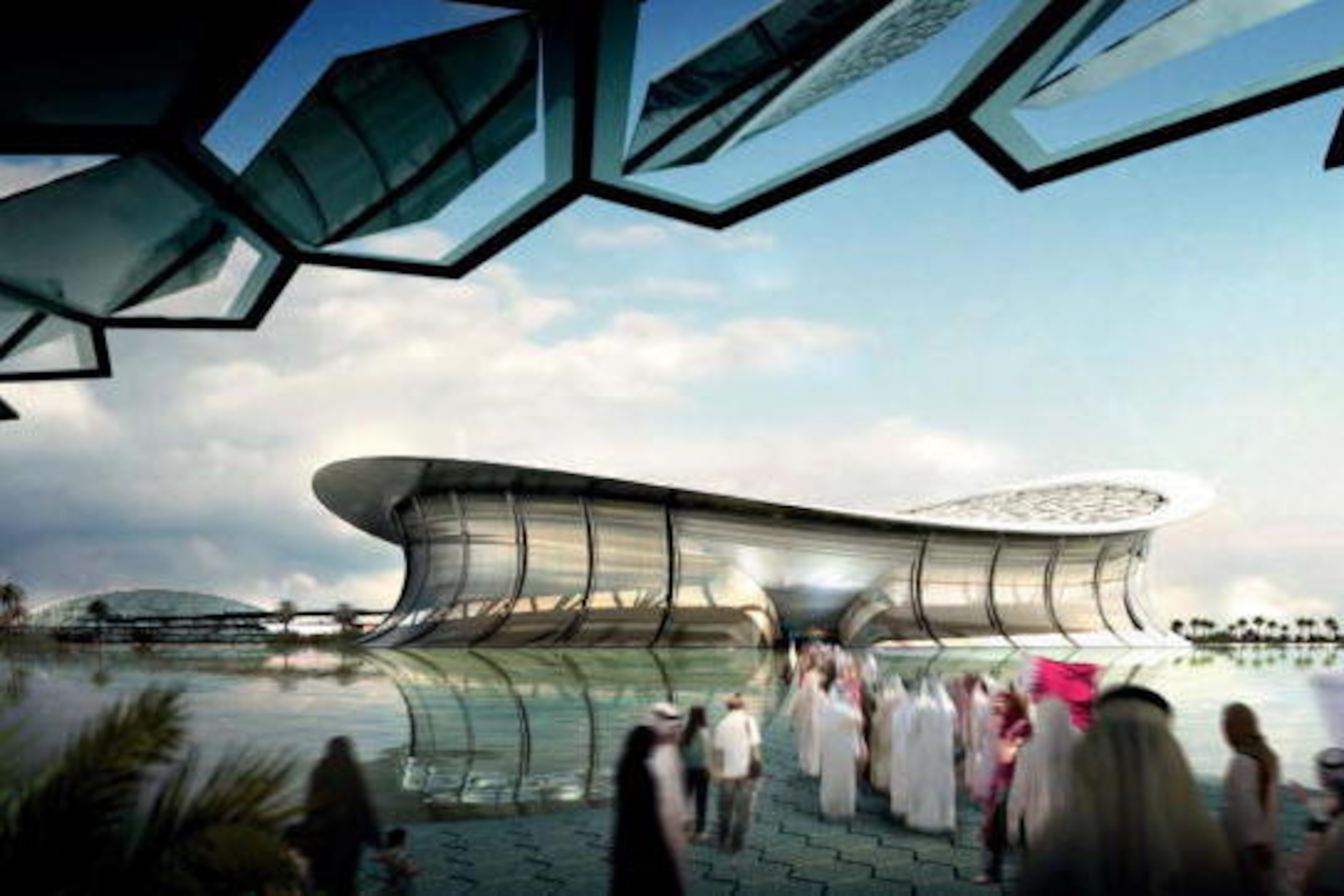
And finally, Germany 2006 was a return to familiar European territory between two groundbreaking tournaments in Asia (Korea/Japan 2002) and Africa (South Africa 2010), while Brazil 2014 will be the last tournament to be hosted in a region with World Cup experience: The next two World Cups, if all goes according to plan, will be held in new frontiers—Russia (2018) and the Middle East (Qatar 2022).
For FIFA as much as for Brazil—depending on how this year’s event goes—the World Cup will be a key milestone and provide a glimpse into an exciting or murky future.
For if Brazil successfully overcomes its last-minute hurdles and political differences and ends up hosting an excellent tournament, we can all look forward to successfully charting new territory in the years to come.
South Africa did it. Why not Brazil?



.jpg?w=2560 "Terrell Owens Being Sued for Defamation")