
Was Felipe Massa Fair to Call for Kamui Kobayashi Ban After Australian GP Crash?
Felipe Massa was quite excited about the Australian Grand Prix.
Finally free from an eight-year tenure at Ferrari, the dream job that eventually became something of a living hell, he was set to begin the first race of the rest of his career.
Like Williams, his new employers, Massa had undergone a resurgence over the winter months. The Brazilian had been perceived as damaged goods after four years of living in the shadow of Fernando Alonso, with his best days thought to be long gone.

.png?w=2560 "Los Angeles Lakers v Miami Heat")
.jpg?w=2560 "Commanders Chargers Football")
But in pre-season, there seemed to be a renewed sense of fulfilment, confidence and enthusiasm—something chief technical officer Pat Symonds was at pains to point out while discussing Massa’s impact on Williams with AUTOSPORT.
With a multi-year contract in his pocket, a Mercedes engine, a handsome chassis and a sponsorship deal with Martini, there was an excitement, a belief, a vibrancy and—most significantly—an expectation that had not been associated with Massa since the beginning of 2009.
Having set the fastest time of anyone in the final test in Bahrain, Massa, despite a career littered with underwhelming performances in Melbourne, was considered a contender for victory in Australia. Sure, qualifying had not gone as planned—with the wet session perhaps hurting Williams more than any other team—but the dry conditions of race day presented an opportunity to come through the field and challenge the pace-setting Mercedes’.
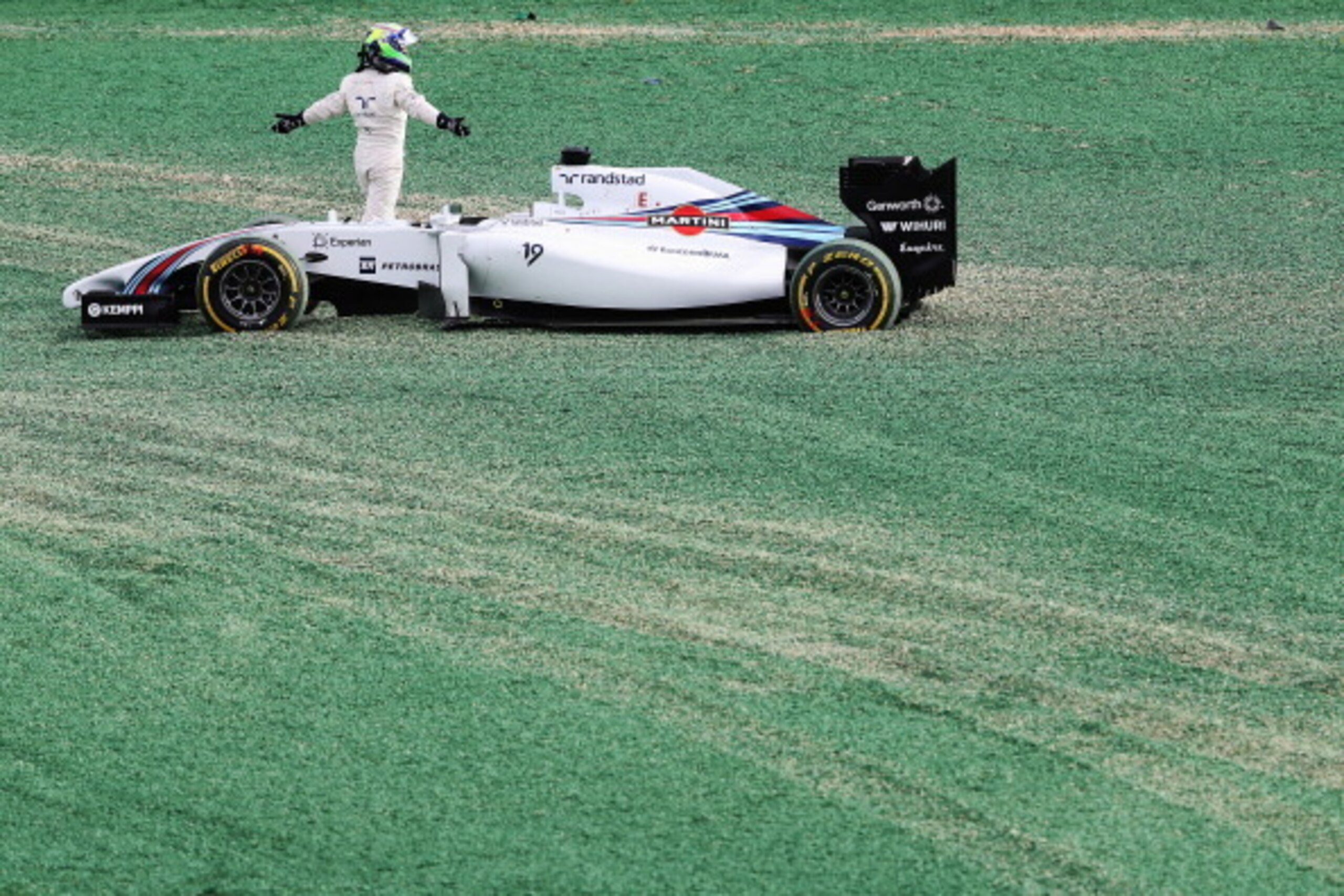
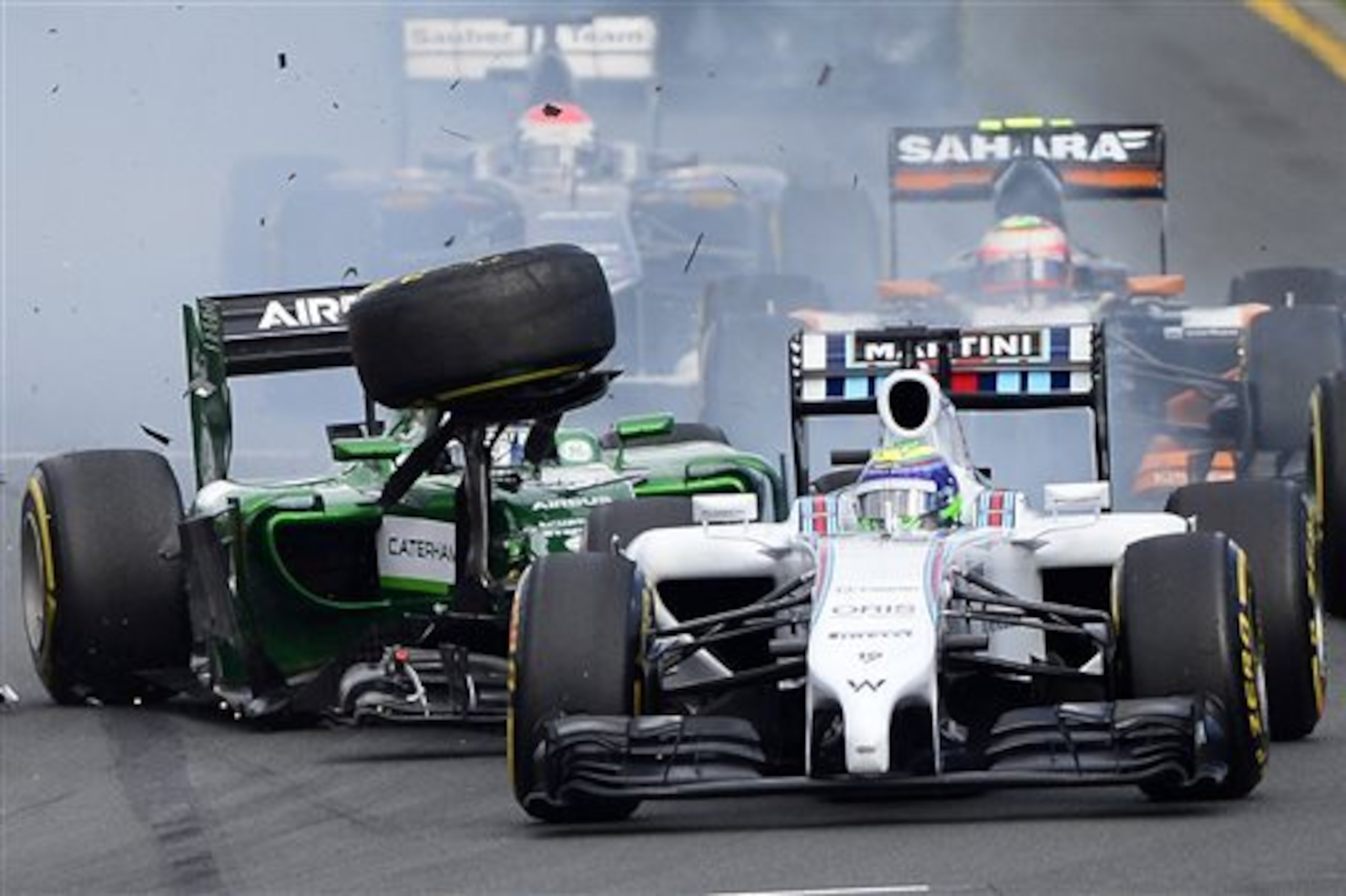
Yet Massa’s fresh start was ruined before it had begun after Kamui Kobayashi’s Caterham ploughed into the rear of the Williams at the first corner, leaving both drivers stranded in the gravel trap.
The Brazilian’s frustration at his first-lap retirement was clear when Massa fumed to ESPN F1, stating:
"Somebody hit me massively, and it was really a shame as everything was under control for the start. I was really careful going to the line very safely, but every time Kamui is trying to do a start like that he will do the same.
You cannot brake at 50 metres on a start like that. I don't see a difference between what happened to his start and what happened to (Romain) Grosjean when he did a crazy start at Spa (in 2012). I hope they give a hard penalty because you cannot do that.
"
Kobayashi—a driver not exactly immune from bouts of clumsiness and recklessness—immediately claimed the blame, issuing an apology to Massa and his team via Twitter within 30 minutes of the crash.
But the revelation that Kobayashi suffered what AUTOSPORT quoted an FIA steward’s report as referring to a “serious technical failure completely outside the control of the driver” soon saw that apology amended.
That serious technical failure was clarified by Sky Sports F1 television pundit Anthony Davidson, who claimed a KERS failure left the Japanese with no rear brakes as he approached Turn 1, providing a reminder of the complexity of the 2014 regulation changes.
Amid all the pre-race talk of the extra torque on acceleration and sideways action provided by the new 1.6 litre turbocharged V6 engines, the challenge of actually slowing the car down—something that several drivers, including Massa, had struggled with in pre-season—almost went under the radar.
The new brake-by-wire system, which effectively brakes the car on the driver’s behalf, is dependent on the engine and energy recovery systems working in perfect harmony. If a KERS failure occurred prior to 2014, a driver—as we so often saw, particularly with the tightly-packaged Red Bull’s of Sebastian Vettel and Mark Webber—would not be severely hindered over the course of a grand prix.
But now? With the system two times as powerful and so integral to the workings of the car—rather than just a fun push-to-help-you-pass button on the steering wheel—any KERS (or MGU-K to give it its funky new name) failure will result in fundamental problems in terms of handling, as we saw with Kobayashi, and fuel efficiency.
The impact of the incident between Massa and Kobayashi also provided fresh concerns regarding the safety of the new “anteater noses” which have caused much hilarity. That hilarity has been temporarily suspended, however, after the Caterham’s nose appeared to scoop the rear of the Williams off the ground upon impact.
The low noses were introduced to limit the chances of a car leaping into the air on impact to prevent a repeat of Mark Webber’s somersault over Heikki Kovalainen in the 2010 European Grand Prix as well as to protect drivers from injury in the event of T-bone accidents.
However, solving two problems has seemingly created another potentially more hazardous risk.
The warning signs were there since Red Bull’s chief technical officer Adrian Newey, who as the man who designed the car which claimed the life of three-time world champion Ayrton Senna in 1994 is passionate about driver safety, spoke of his dislike of the low noses on the first day of pre-season testing at Jerez.
Newey told The Telegraph at the time:
"The regulation has been introduced following some research by the FIA which suggests that nose height reduces the chance of cars being launched. I must admit, I am concerned that the opposite may now happen; that cars now submarine effectively.
If you hit the back of a car square on then you go underneath and you end up with a rear crash structure in your face, which is a much worse scenario.
There have been some accidents where you think would a low nose possibly have made things much worse.
I guess it’s like all these things, it might help in some scenarios, it hurts in others. It’s one which I must admit; personally I’m not in favour of. For me it’s introduced possibly more dangers than it has cured.
"
Newey, who referenced Michael Schumacher’s horrific accident at the 2010 Abu Dhabi Grand Prix—a crash that initiated the most recent wave of ideas to improve driver cockpit safety—whilst speaking to the media that day, will doubtlessly present the incident between Massa and Kobayashi as evidence when he next argues the 2014 nose designs could cause more harm than good.
Although Massa has, at the time of writing, failed to respond to Kobayashi’s apologetic tweets with a series of smiley-faced emoticons, he will almost certainly regret his call for the Caterham driver to be banned. The Australian Grand Prix, after all, was always set to be marred by teething troubles for the 2014-spec cars and it is increasingly clear that the crash was merely an unfortunate consequence of those.
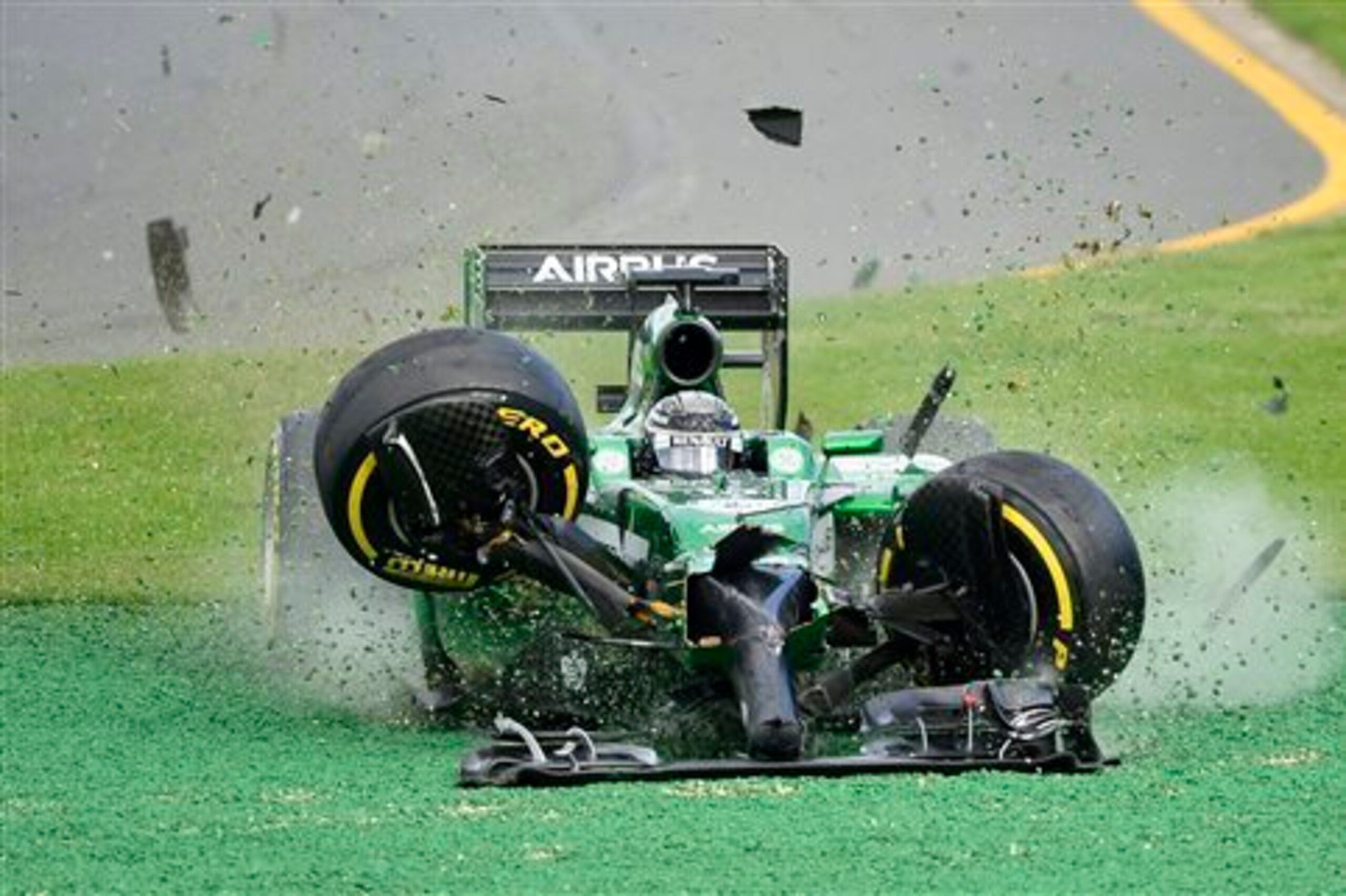
How wonderful it was, however, that at the beginning of Formula One’s season of change—when Massa is no longer synonymous with the scarlet red of Ferrari but instead the crisp white of Williams Martini—Kobayashi, in causing chaos all around him, has shown that some things remain the same.
.jpg?w=2560 "Browns Football")
.jpg?w=2560 "49ers Shanahan Accident Football")
.jpg?w=2560 "Tank Dell Not on PUP 🙌")
.jpg?w=2560 "WWE NXT Live Grades 🔢")
.png?w=2560 "Ranking the Best Shooters of All Time 🎯")