Magic-Cavaliers Game One: Orlando Adjusts, Stretches Cleveland Thin
In the playoffs, individual games and entire series are won and lost based on a team’s ability to make adjustments on the fly.
In Game One of Orlando’s thrilling, 107-106 come-from-behind victory over Cleveland, the Magic made all the necessary tweaks and course-corrections to find the formula to unseat the Cavs in their home building.
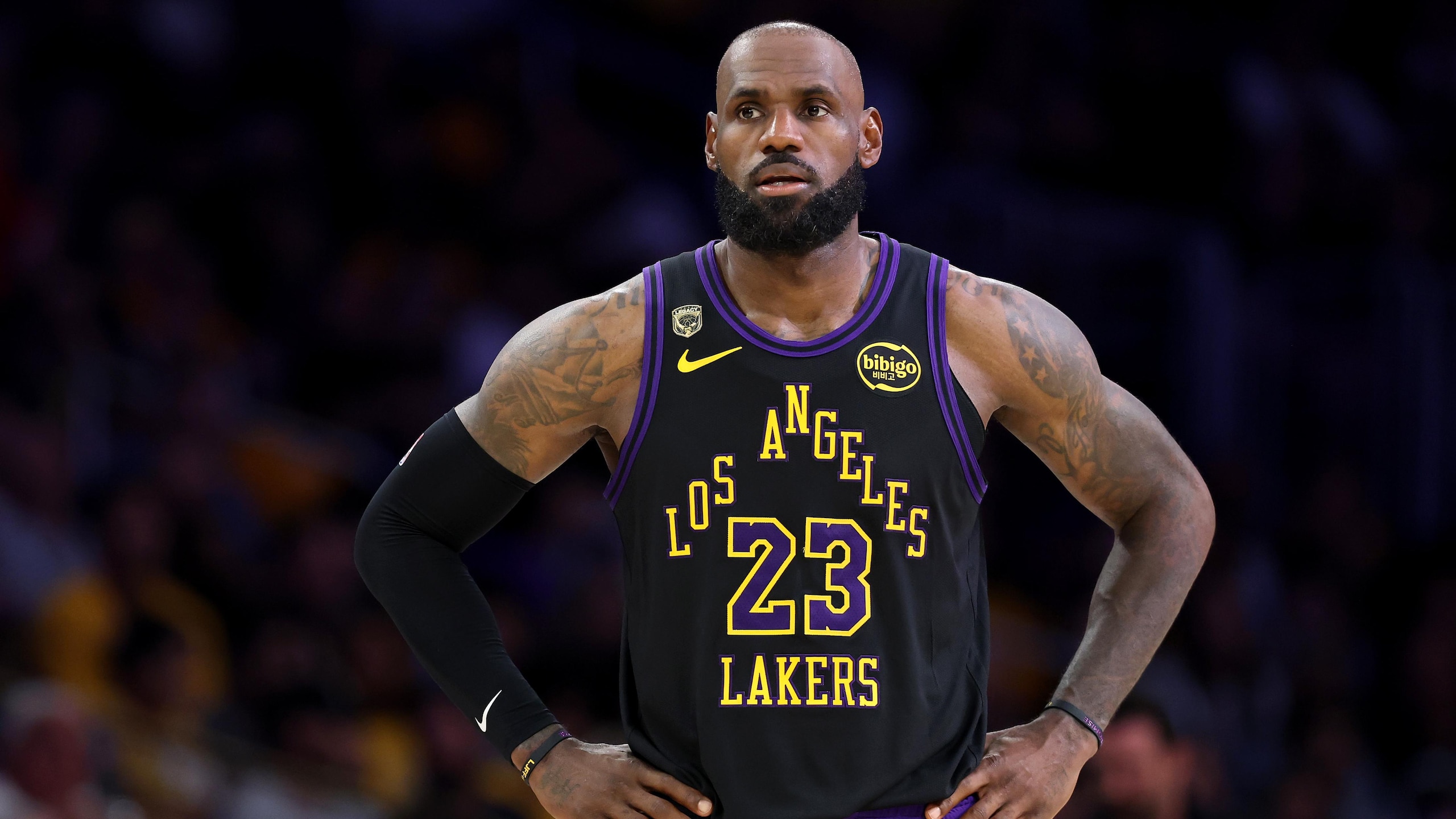
To start the game, the Magic employed a match-up zone, flooding the strong side to combat LeBron James’ isolations and wing/screen rolls.
But Anderson Varejao would simply cut along the baseline, behind the zone finding himself right at the hoop.
The first two possessions of the game resulted in a layup and a foul (both free throws were made), and a few possessions later, Varejao missed a layup with Zydrunas Ilgauskus in perfect position to follow the miss with a put-back.
Afterwards, the Magic were more alert in sinking their zone in to prevent the baseline cuts, but the wings and corners were left open for Delonte West to fire away from downtown.
On the offensive end, Orlando looked sluggish and road-weary after playing so many intense games against the Celtics with so little downtime. The ball stuck and was rarely reversed. Rashard Lewis, Rafer Alston, and Hedo Turkoglu looked completely disinterested, and the Magic forced too many quick shots and committed too many turnovers allowing Mo Williams, West, and LeBron to feast in early offense.
What else did the Cavs do right early in the game?
- They forced Turkoglu to his right and trapped him hard on high screens resulting in, at best, a rash of turnovers, and at worst, a percentage of the shot clock to whittle down and the Magic to play offense with no continuity and rhythm.
- Mo Williams and Delonte West had their mojo working from the perimeter.
- Joe Smith made a handful of exceptional baseline rotations (including one that resulted in a stuff of Lewis at the basket) and plugged a pair of jumpers.
- LeBron was as marvelous as ever, going 20-30 for the game—including 12-19 on his jumpers—for 49 points, eight assists, and six rebounds with only three turnovers. Oh, and that was after he missed his initial three shots.
- The Cavs' offense featured ball movement, player movement, and the desire to get to the rim. Plus, they aggressively posted LeBron at the wing where he carved up Mickael Pietrus. Their defense was aggressive, sniping loose dribbles, rotating aggressively, and putting the pressure on Orlando to react to them instead of the other way around.
- And finally, Mo Williams hit the Cavs’ customary buzzer-beating three they get every game.
And the Magic?
- Their zone alignment was turned to swiss cheese by Cleveland’s zone cutters and spot up shooters.
- Their offense was passive, with players taking the first semi-open jumper they could get.
- They were slower to every loose ball.
- Their defense was reactive, not aggressive. No aggressive doubles, no pressure on ball-handlers, and they allowed Cleveland to dictate the game.
- Marcin Gortat’s defense was abominable. Likewise was Rafer Alston’s.
- The Magic played as if they were content with knocking off the Celtics and just being in the same building as the Cavs.
- If not for Dwight Howard being too quick for Zydrunas Ilgasukas’ hulking mass to contain, the Magic would have been both down, and out.
But unlike the Hawks and Pistons, who withered after Cleveland’s initial surge, the Magic showed the kind of mental poise they have displayed the entire season.
Instead of having Turkoglu receive his screens in the middle of the floor with Howard, the Magic had Rashard Lewis set the screens on the wing. The player defending the screener had trouble showing and recovering—and because the Cavs’ bigs lacked the speed to rotate all the way out to the wing, Lewis was free for open 18-foot wing jumpers the entire second half.
Also, Dwight Howard would fake coming out to set a screen. With the Cavs overplaying him to get in position to hedge, all Howard had to do was make a hand signal (a thumb pointing behind him) and make eye contact with Turkoglu, so that he would spin off his defender to the rim and dunk in an alley-oop. That play connected at least three times.
The Magic also began using pressure releases for Turkoglu. Instead of having Howard set the screen and spot up other players, another forward would come to the elbow, allowing a release for Turkoglu to pass to. From there, snappy passes would lead to open jumpers or layups.
Finally, Turkoglu was more aggressive in understanding what Cleveland was trying to do and made quicker passes out of the traps.
With Orlando finally on the same page offensively, they began to click. Howard’s rolls to the basket occupied the corner defender (usually LeBron), leaving the weak-side corner wide open.
Lewis alternated his screen and fades with pull up jumpers and drives to the basket. Turkoglu became the master magician, pulling ten assists out of his second-half hat.
Anthony Johnson, Pietrus, and Alston plugged their open jumpers.
Orlando’s spacing made it impossible for the slower Cavs to defend all the openings on the court. Plus, Orlando took better care of the ball and were more assertive in driving to the hoop.
Meanwhile, unaccustomed to a team fighting back, the Cavs reverted to their bad habit of standing around LeBron, with no player movement or ball movement.
Orlando began double teaming James on the wing, taking the ball out of his hands and trusting other players to beat them.
Williams and West began to over handle and dribble in place, accomplishing nothing.
Reduced to being spot up shooters, the Cavs back court duo began to let the pressure build up. When players are reduced to just standing around and waiting for one player to pass the ball to them so they can shoot, pressure begins to mount in their heads.
This is why ball, man, and player movement is so crucial in basketball. It relieves players of the monotony of standing and waiting, knowing that their only function is to make standstill jumpers when open. It’s also why Williams and West went ice cold in the second half.
Aside from Smith, the Cavs got nothing out of their bench. Wally Szczerbiak was useless, and Ben Wallace was overpowered by Howard’s raw muscle.
Also, because the Cavs had so many days off, and their competitive juices were so dulled by the ease of their victories, they became mentally and physically tired late in the game. This is why the offense stagnated down, why LeBron missed several critical fourth quarter free throws, and why James made the critical mistake of going under a fourth quarter screen allowing Turkoglu to rise and nail an open three.
Late in the game, with every shot a crucial one, Turkoglu was able to get to the rim and convert his free throws, while Lewis drove dagger after dagger into Cleveland’s backs, including the game winner with 15 seconds to go. Meanwhile, while Williams and West each converted big shots toward the end, West also missed a crucial three that would have given the Cavs a late lead.
In other words, the Magic made shots while the Cavs didn’t.
But now the Cavs know the Magic are vastly superior to the dismal Pistons, and the underwhelming Hawks. Now they know they’ll be tested. Fortunately for the Magic, they flunked part one of their seven part exam.
This article also appeared at OTRBasketball.com
.png?w=2560)
.jpg?w=2560 "Shedeur's Reaction to Browns' QB Decision")
.jpg?w=2560 "Look: Ravens Reveal 'White Noise' Unis")
.jpg?w=2560 "49ers Owner Pleads No Contest to Misdemeanors")
.jpg?w=2560 "Browns Name Deshaun Watson QB1")
.jpg?w=2560 "Watson Apologizes for Remarks")