The Greatest Moments in College Football History

By (Senior Writer) on March 17, 2009

2,648 reads

17

Previous
1 of 37
Next
Default_display_image

College football is turning 140 this year, and there have been millions of plays, thousands of players and coaches, and hundreds of moments that made the game what it is today.

This list hopes to shine a light on those very few moments in college football's history that left an undeniable mark on the game, changing the way it is played, coached, and remembered.

No. 35—We Are Marshall

Display_image

Huntington, WV -- Sept. 25, 1971

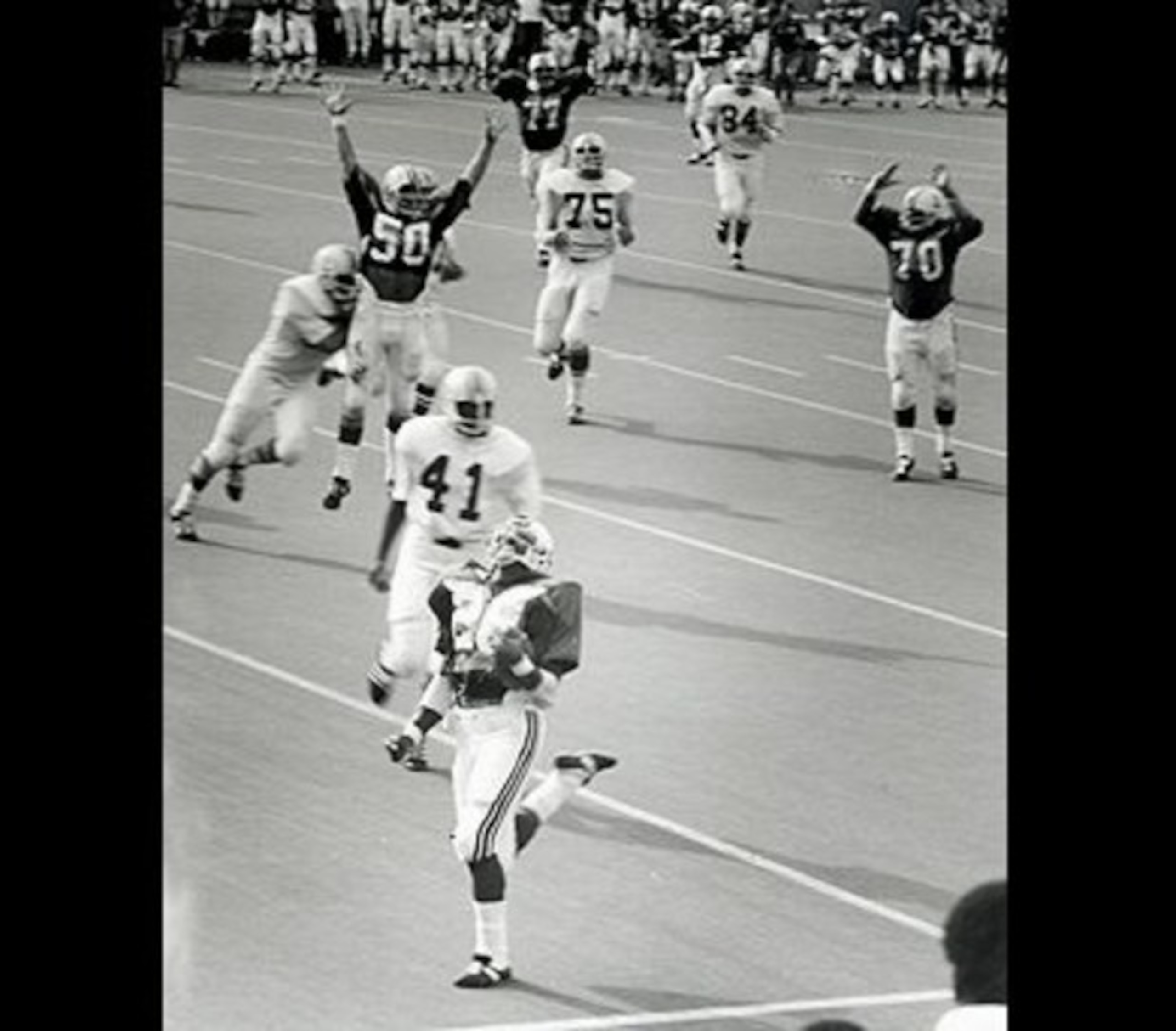
In the first home game after a 1970 plane crash that killed 36 players, the coaches and other members of the Marshall football family, Thundering Herd quarterback Reggie Oliver throws a 13-yard screen to Terry Gardner for a touchdown on the game's final play.

Marshall stunned Xavier, 15-13.

If it sounds like a Hollywood ending, then you must have seen the 2006 movie.

No. 34—Street Smart

Display_image

Fayetteville, AR -- Dec. 6, 1969

With President Richard M. Nixon in the stands amid roaring Hogs fans, Arkansas led Texas 14-8 late in the game and had Texas pinned at its own 43, fourth-and-3.

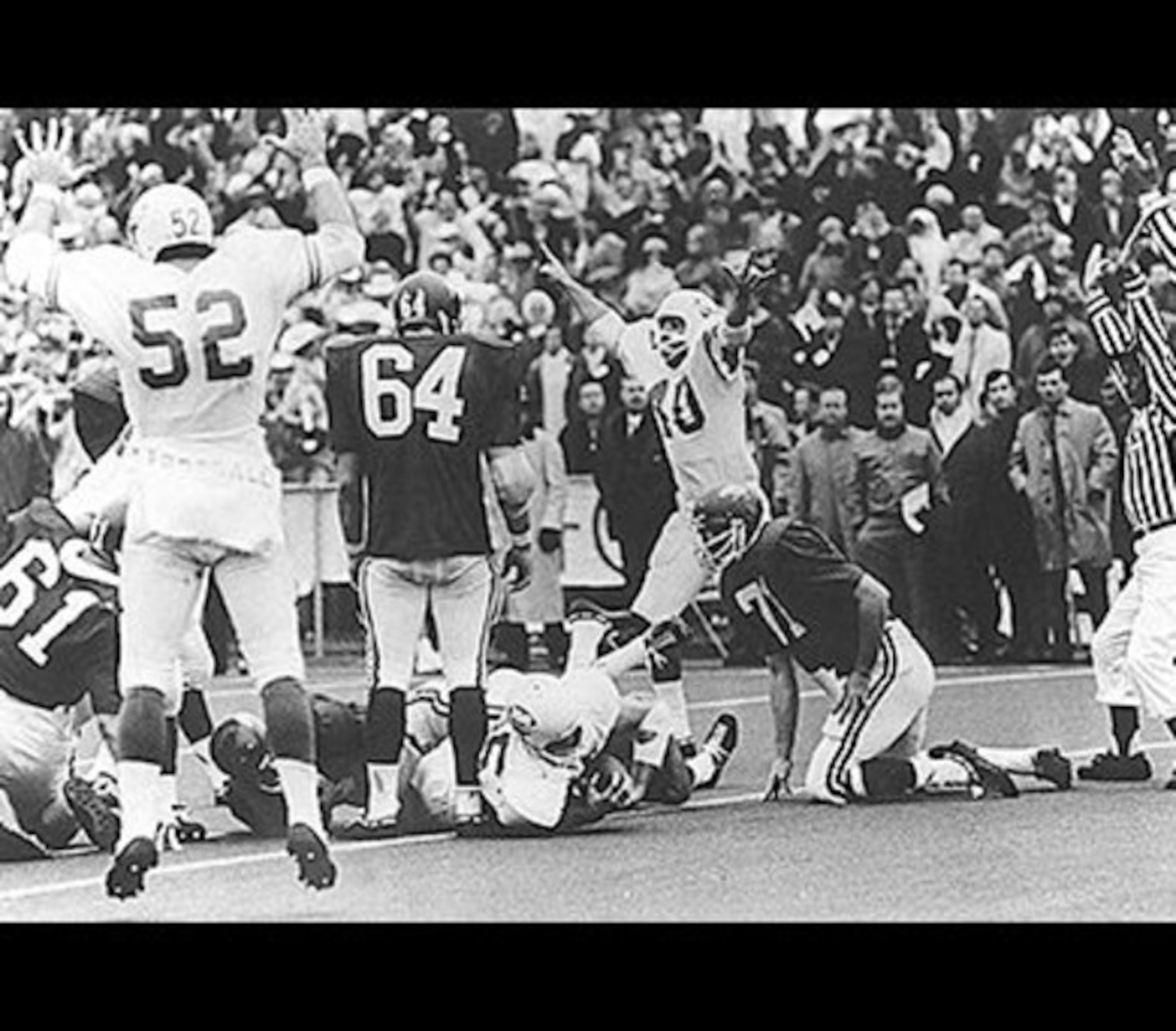
Coach Darrell Royal rolled the dice and sent tight end Randy Peschel deep. Wishbone quarterback James Street wasn't known for his arm, but he'll forever be known for that 44-yard pass.

Two plays later, Texas scored to win, 15-14.

No. 33—The Juice is Loose

Display_image

Los Angeles -- Nov. 18, 1967

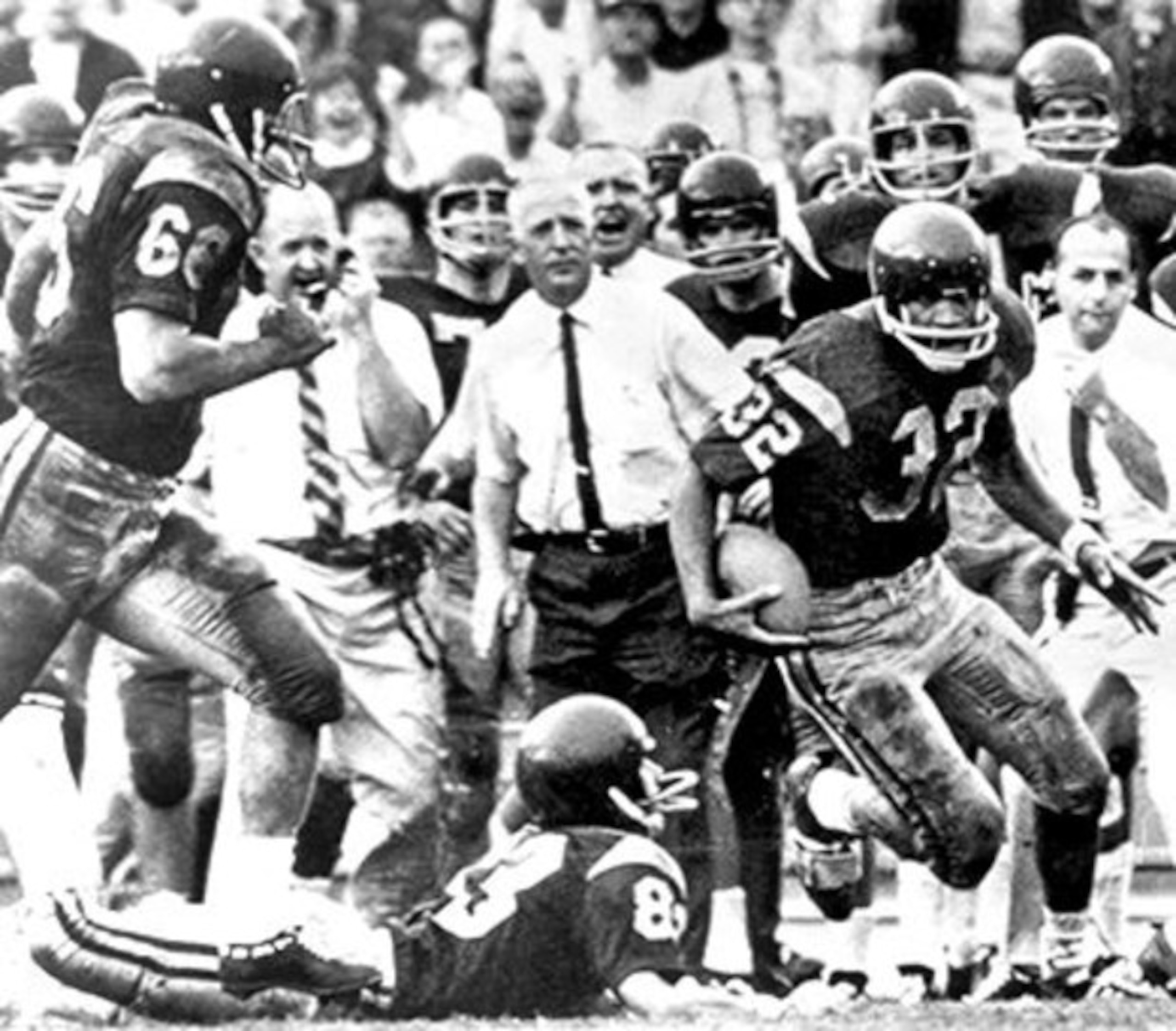
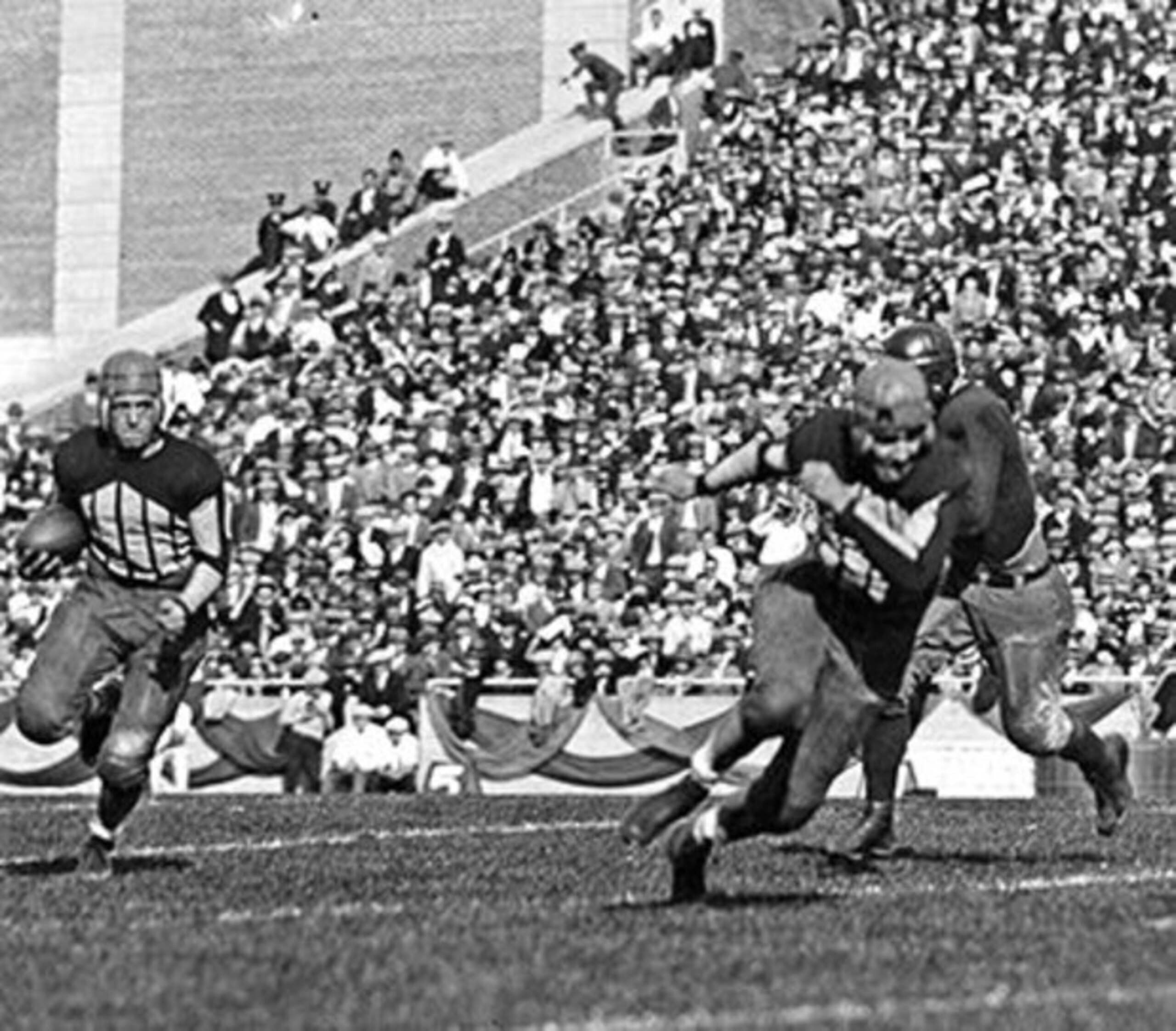
UCLA led USC 20-14 in the fourth quarter in 1967 when junior O.J. Simpson made the most famous run in Trojan history.

USC quarterback Toby Page audibled to 23-Blast. Simpson, behind guard Steve Lehmer and tackle Mike Taylor, started left, moved to the middle, stumbled, righted himself and sped away 64 yards for the winning score.

The Trojans won the national title and Simpson won his Heisman a year later.

No. 32—Joe Cool

Display_image

Dallas -- Jan. 1, 1979

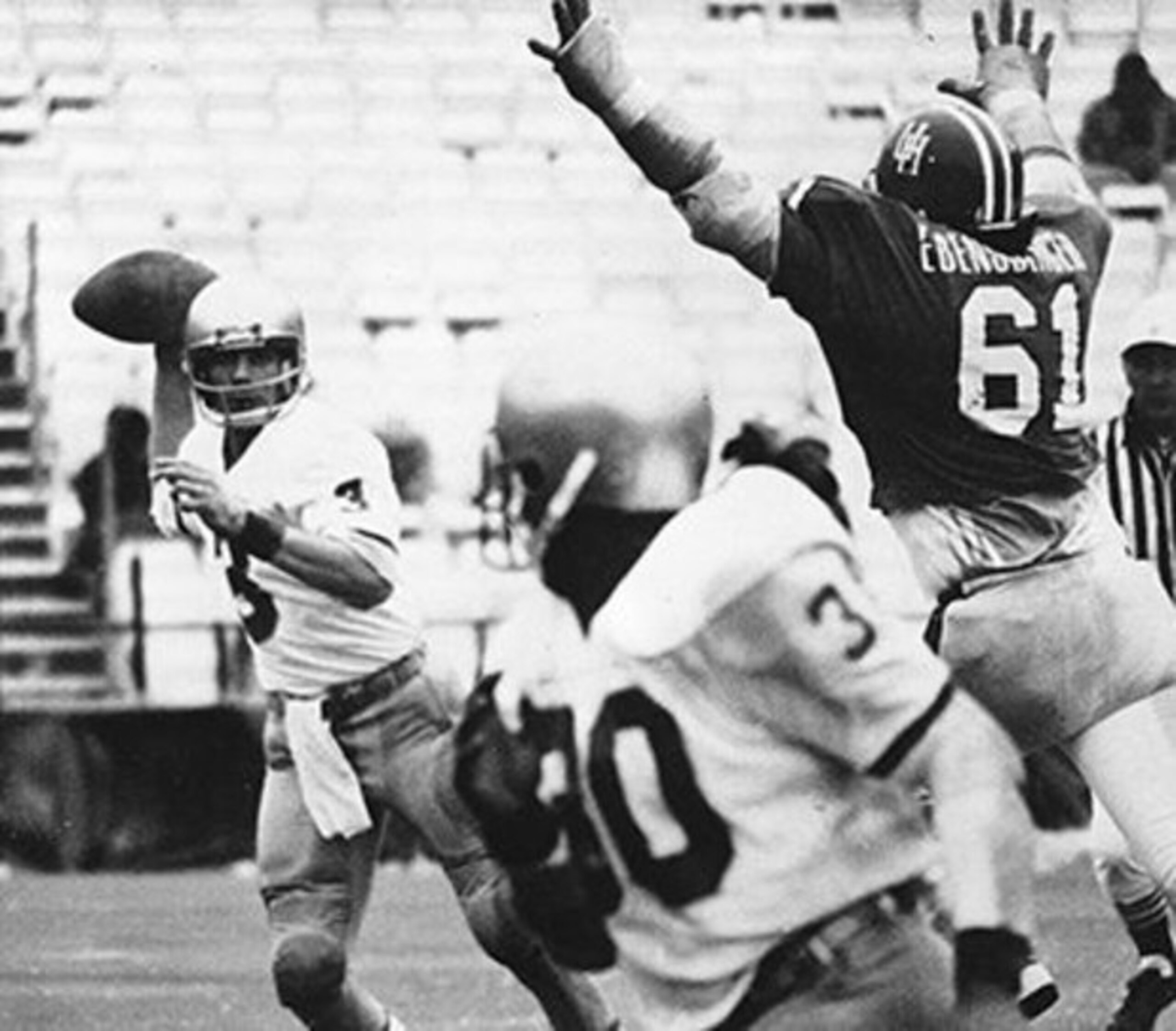
Fighting the flu and weather more suited for South Bend than Dallas, Notre Dame quarterback Joe Montana committed five turnovers in the 1979 Cotton Bowl.

After spotting Houston a 34-12 lead, Montana led a 23-point fourth-quarter comeback, finishing it with an 8-yard touchdown to Kris Haines in the final seconds.

The Montana legend that grew in San Francisco had its birthplace in Fair Park.

No. 31—Gift Wrapped

Display_image

Tempe, AZ -- Jan. 2, 1987

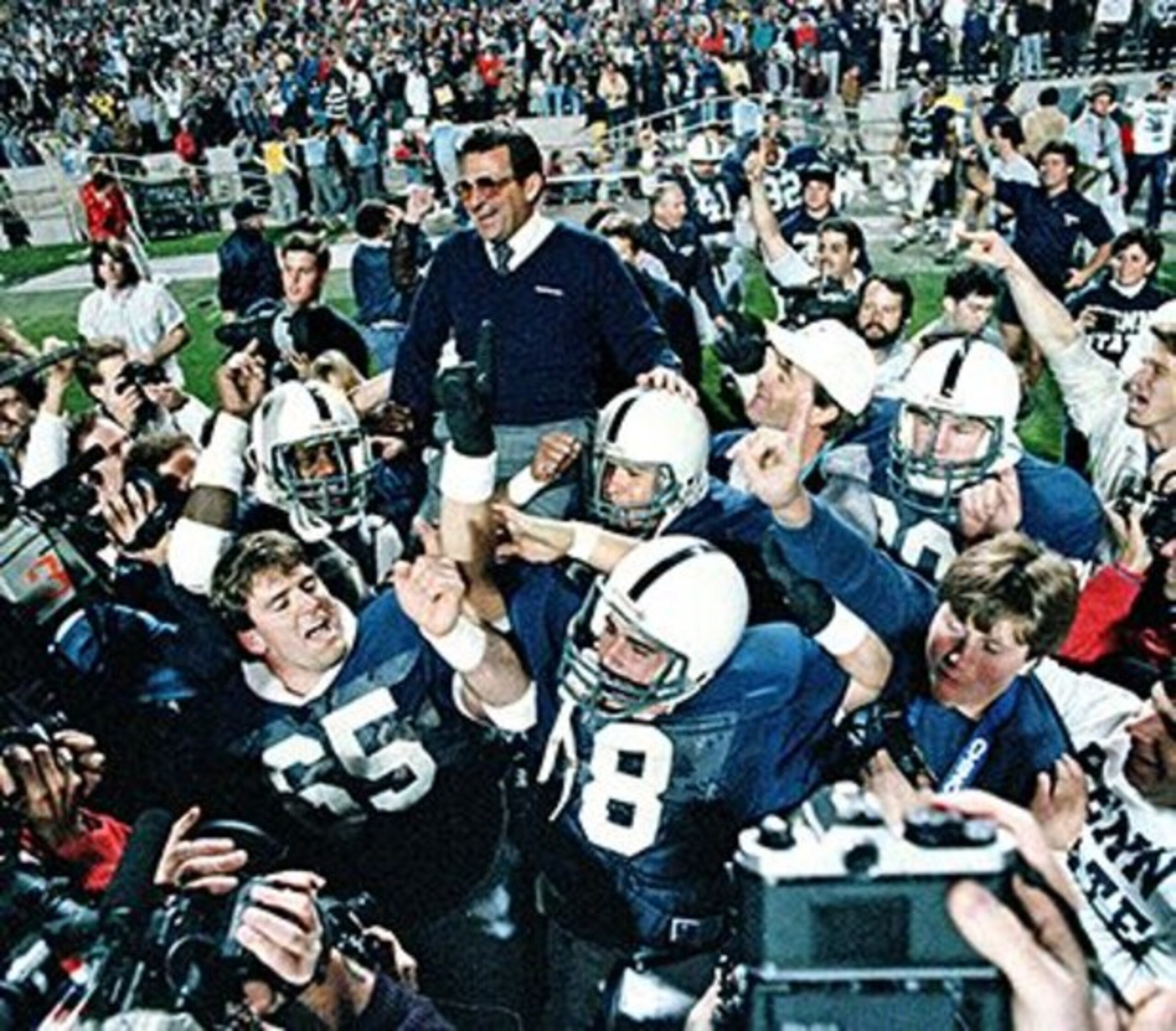
The 1986 Miami team enjoyed its roguish reputation. But the Hurricanes didn't match their mouth with their play against Penn State in the Fiesta Bowl.

The Canes led the Nittany Lions 445-162 in total offense, but Heisman Trophy winner Vinny Testaverde threw five picks, the last to linebacker Pete Giftopoulos near the Penn State goal line with :18 to play.

Joe Paterno's Nittany Lions won the game, 14-10, and the national championship.

No. 30—Raising Cane

Display_image

Tallahassee, FL -- Oct. 3, 1987

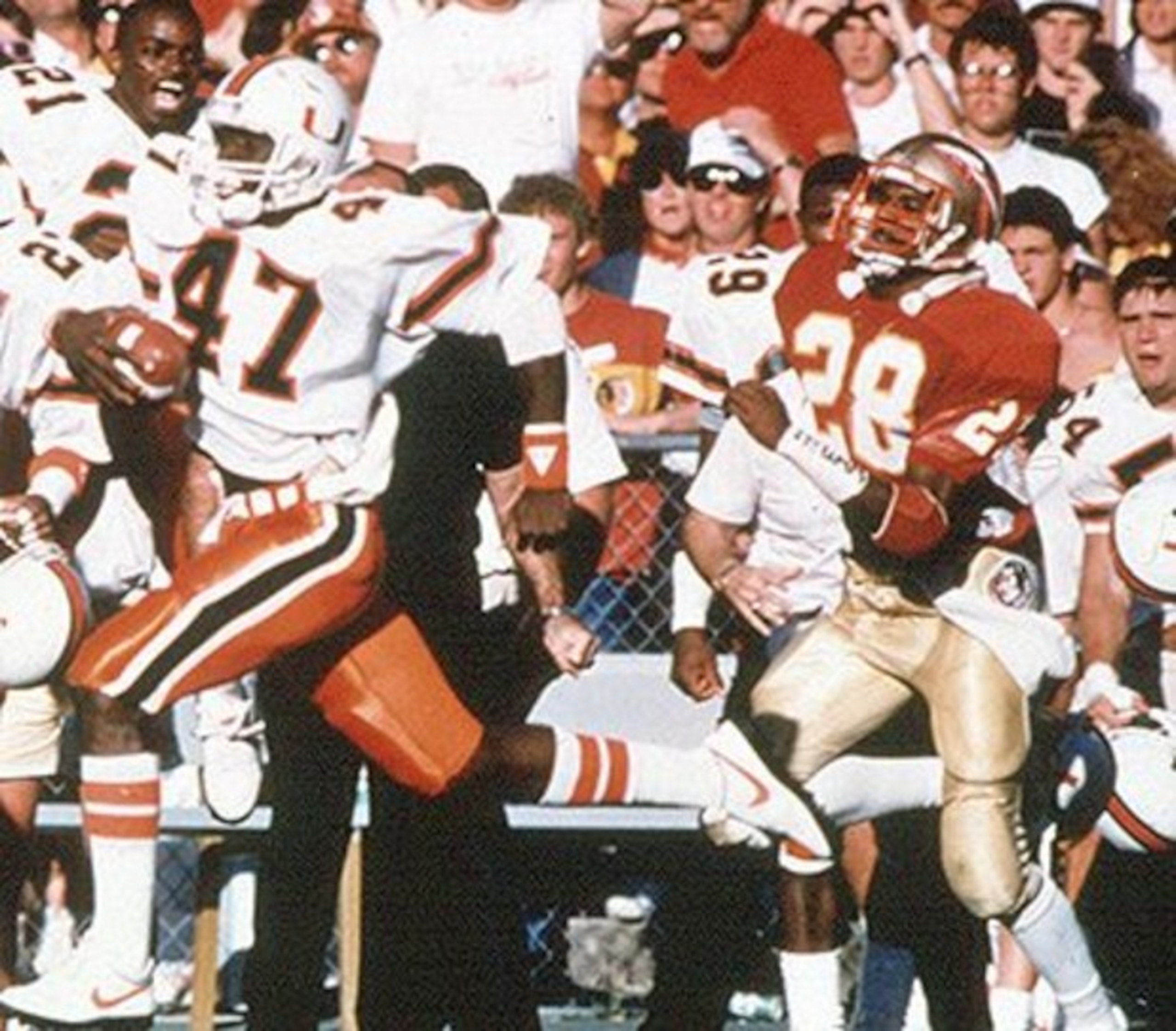
No. 2 Florida State led No. 1 Miami 19-3 after two quarters, but this rivalry is rarely decided at halftime.

Canes quarterback Steve Walsh completed the comeback when he audibilized a 73-yard touchdown to Michael Irvin and gave Miami a 26-19 lead.

But the Canes didn't put the game away until after the Seminoles scored in the final minute. Miami defensive back Bubba McDowell knocked down Danny McManus' two-point attempt for a 26-25 victory.

No. 29—Collision Course

Display_image

New Orleans -- Jan. 1, 1979

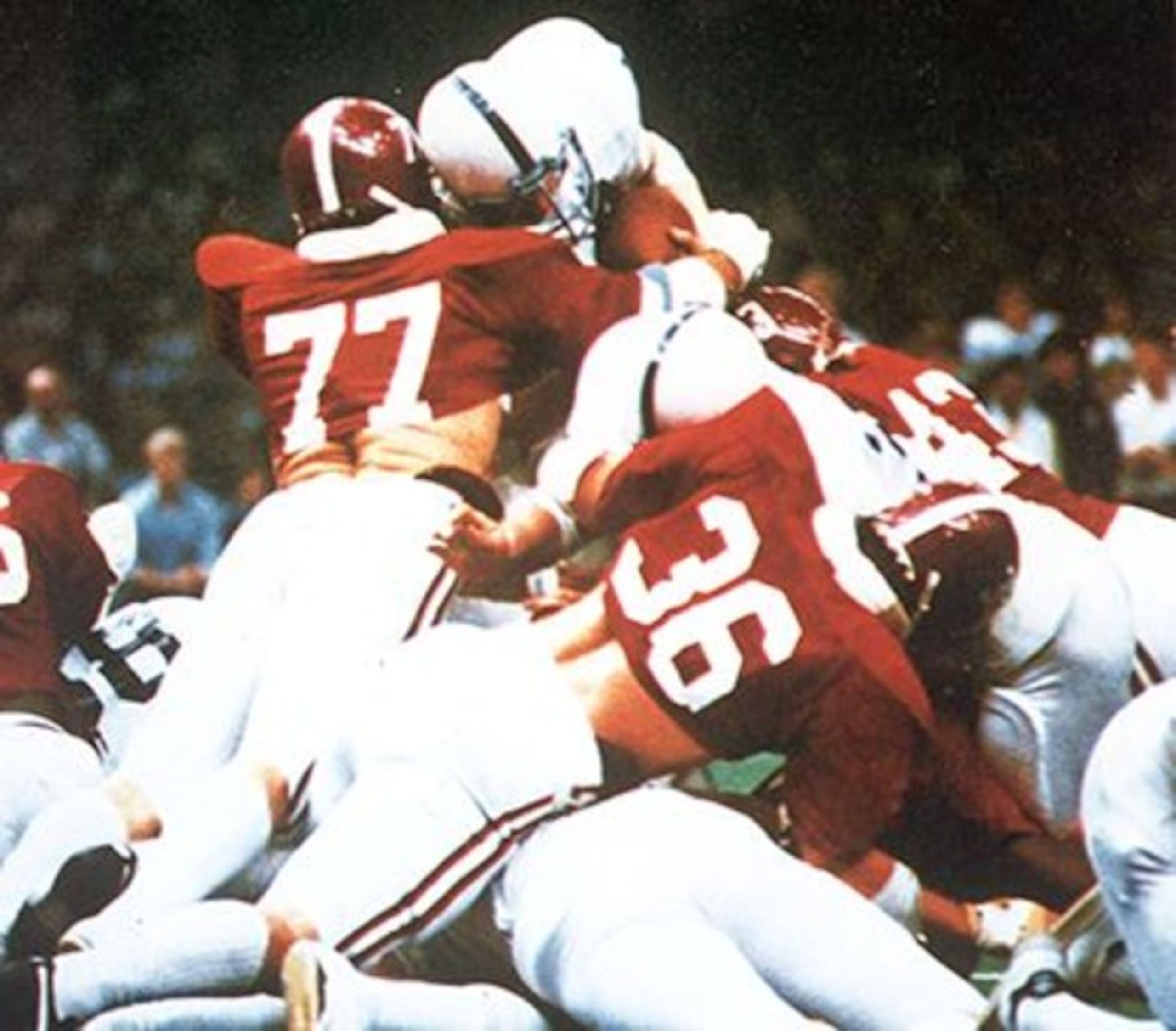
Late in the 1979 Sugar Bowl, trailing 14-7, Penn State had second-and-goal inside the Alabama 1.

After the third-down thrust came up six inches short, Tide defensive lineman Marty Lyons said to Nittany Lions quarterback Chuck Fusina, "You better pass."

On fourth down, the mid-air collision between back Mike Guman and linebacker Barry Krauss knocked the rivets on Krauss' helmet loose. Fusina really should have passed.

Alabama 14, Penn State 7.

No. 28—Jolly Rodgers

Display_image

Norman, OK -- Nov. 25, 1971

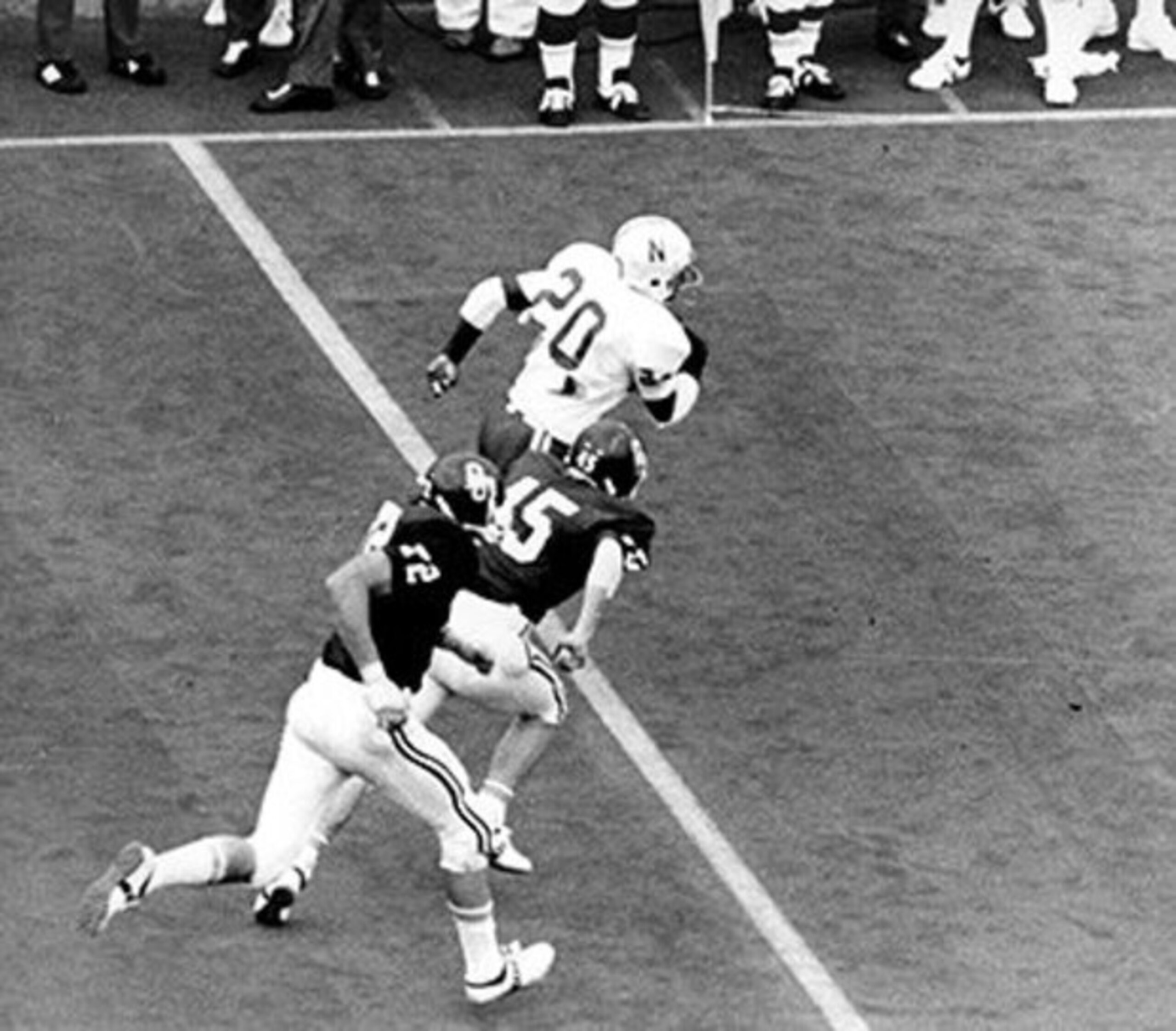
The first modern Game of the Century lived up to its billing: No. 1 Nebraska edged No. 2 Oklahoma, 35-31, in a game that came down to the final seconds.

But all anyone remembers is the first score of the game: the Huskers' Johnny Rodgers' skittering 72-yard punt return.

To this day, whether Rodgers scored because of an uncalled clip depends on your favorite shade of red: Sooner crimson or Husker scarlet.

No. 27—Strike A Pose

Display_image

Ann Arbor, MI -- Nov. 23, 1991

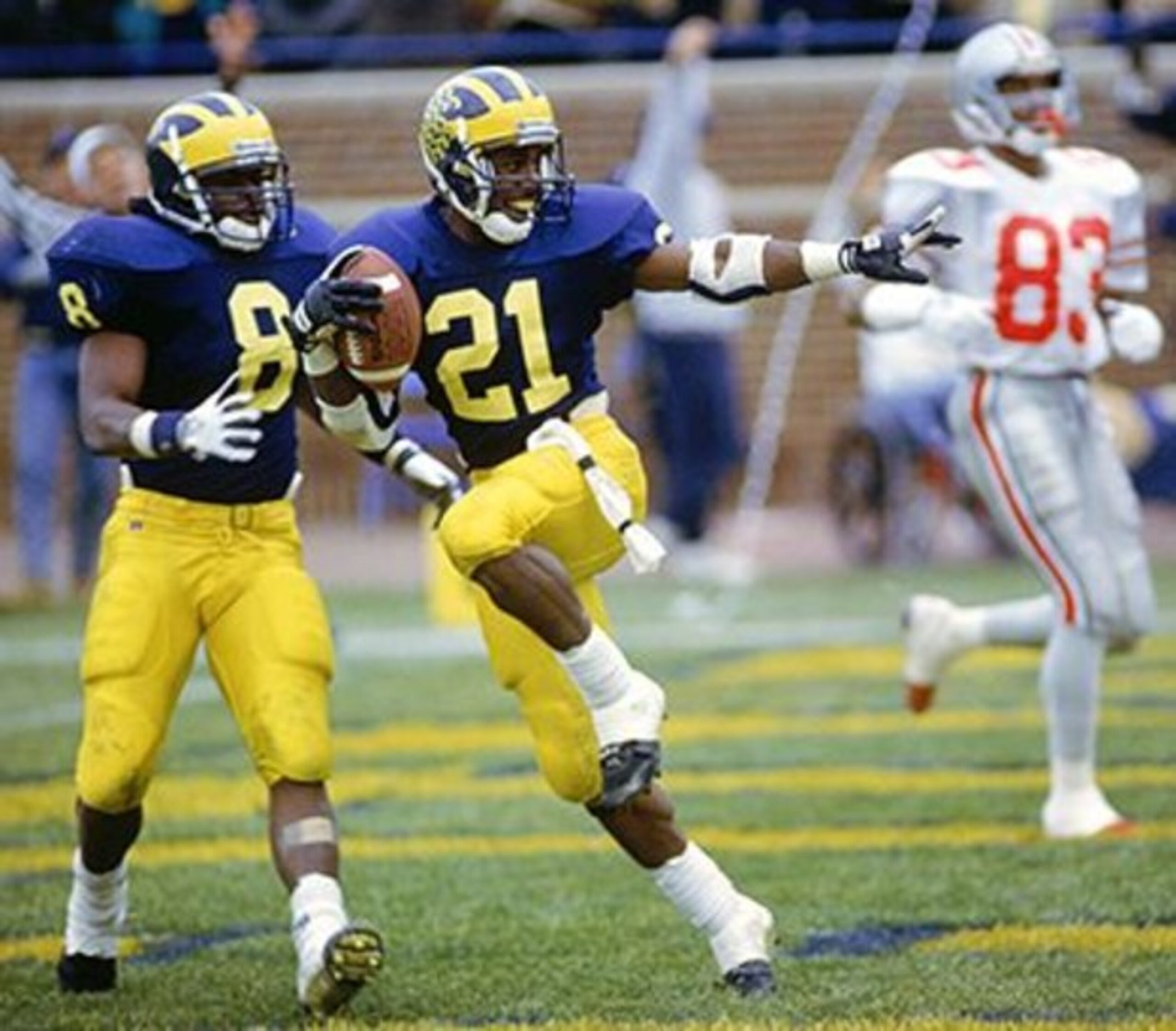
Only four other ends had won the Heisman Trophy, but that's not what made Michigan receiver Desmond Howard's 93-yard punt return for a touchdown against Ohio State in 1991 so special.

When Howard reached the end zone, he struck a Heisman pose. Innocent prank? Yes, but it also signaled a new era in the marketing of the sport's top individual award.

Like politics, the Heisman became all about TV exposure.

No. 26—Fainting Irish

Display_image

South Bend, IN -- Nov. 21, 1953

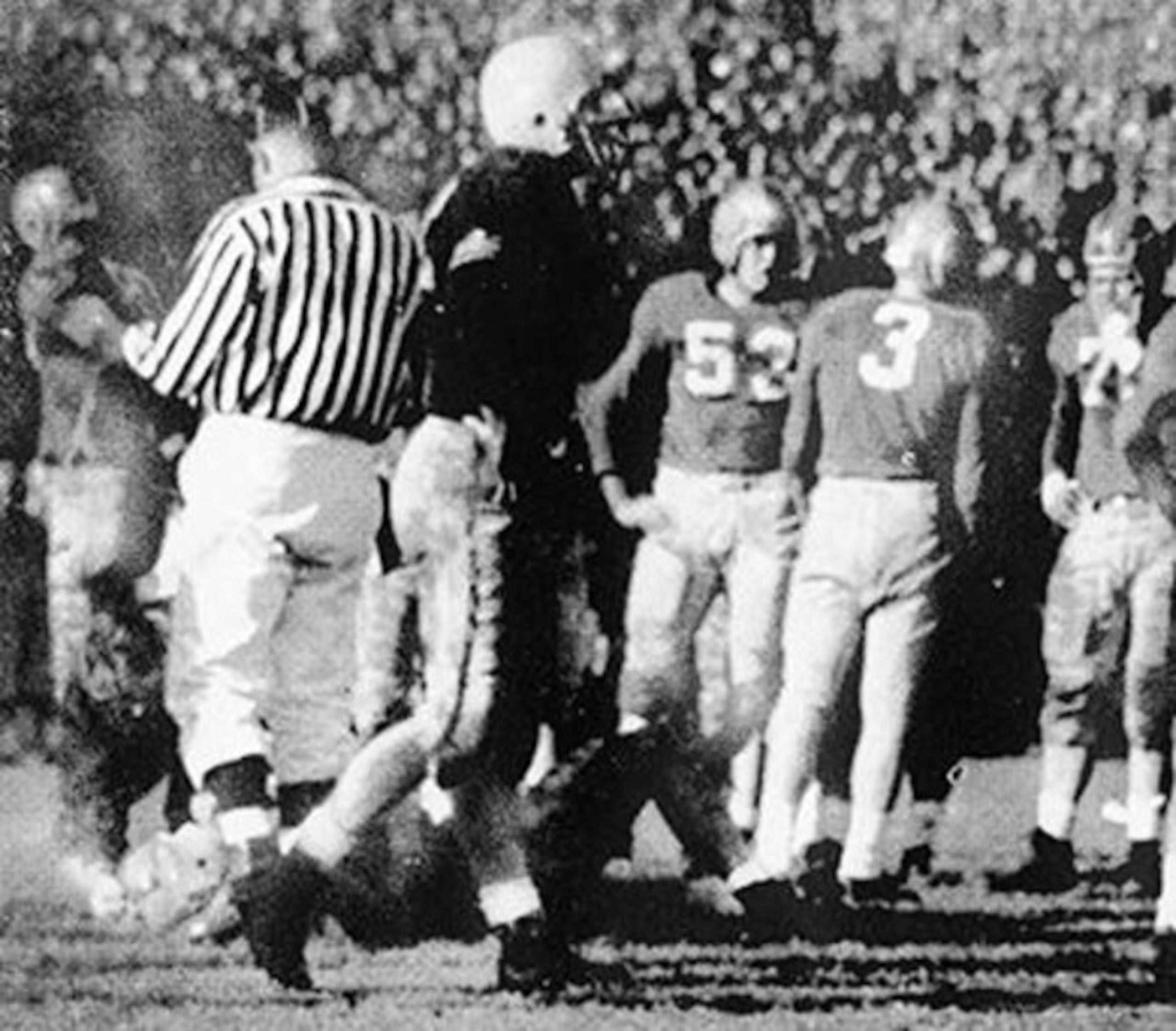
With :06 to play, No. 1 Notre Dame's drive stalled inside the Iowa 10, trailing 14-7.

But wait...Irish tackle Frank Varrichione happened to suffer an injury. The clock stopped, and Notre Dame salvaged the tie on the extra play.

The NCAA reprimanded coach Frank Leahy and outlawed fake injuries. Worse, the voters dropped the No. 1 "Fainting Irish" to No. 2 and kept them there.

No. 25—Wrong Way Riegels

Display_image

Pasadena, CA -- Jan. 1, 1929

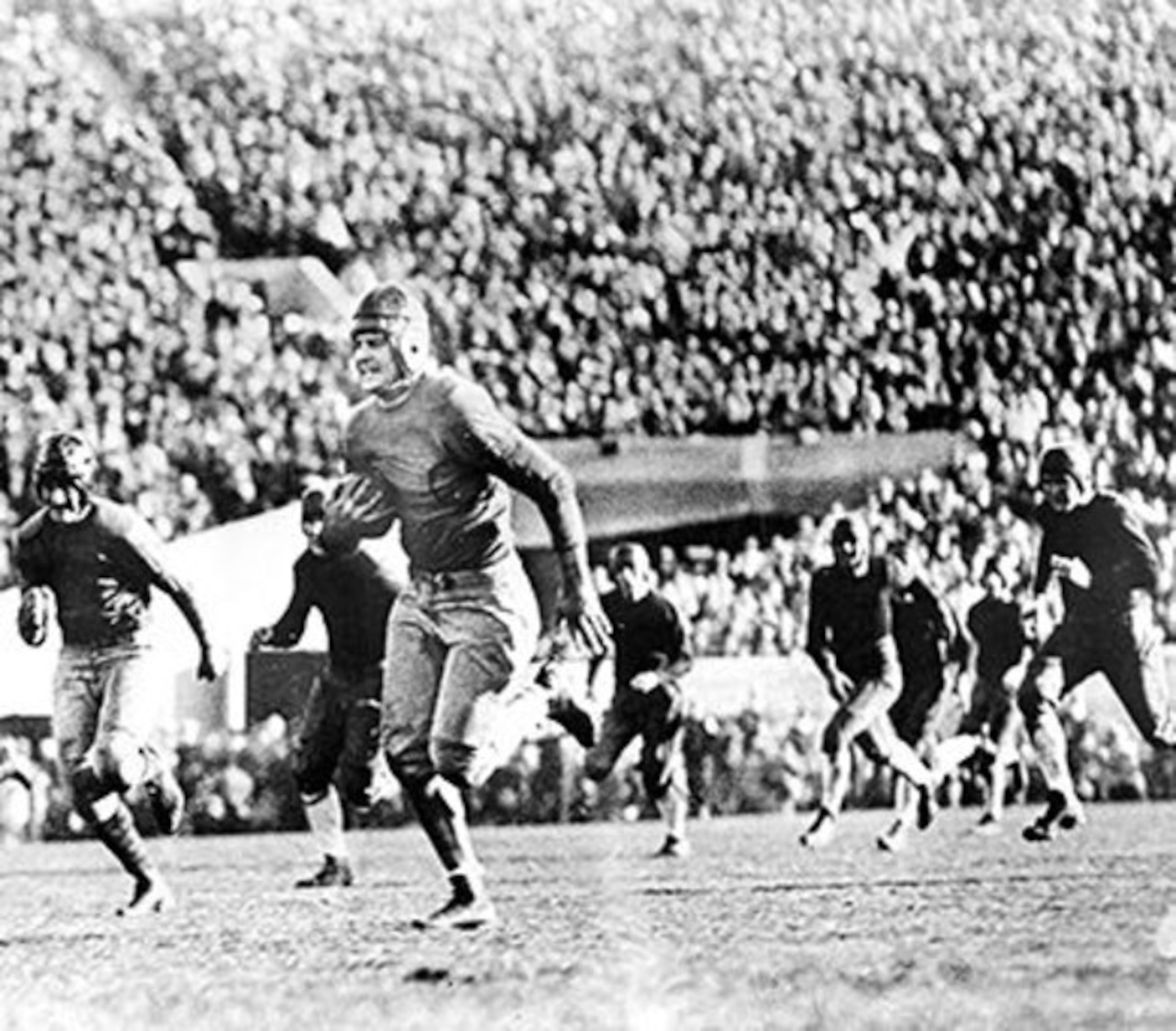
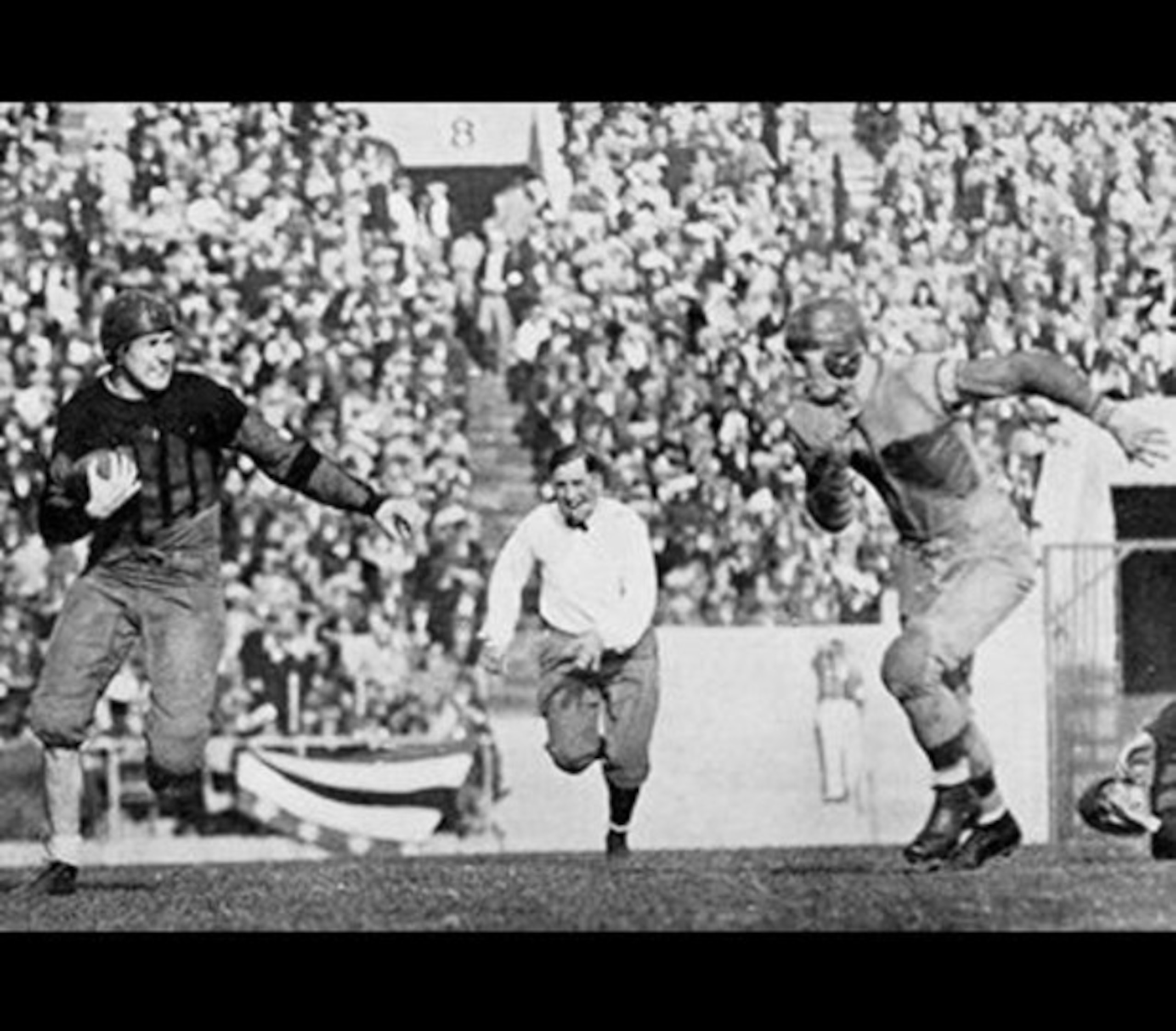
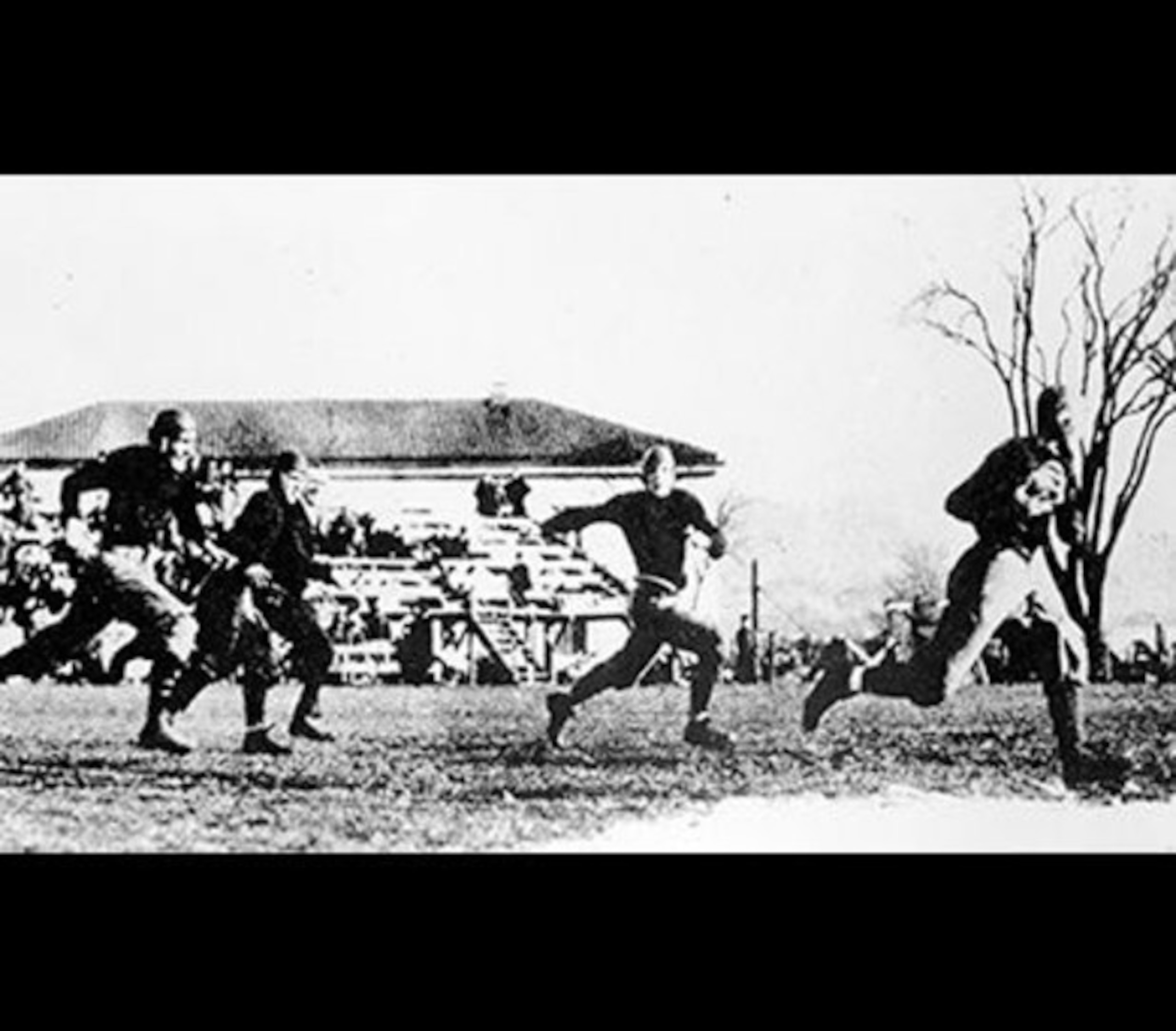
His first name is Roy, but he is known forever as Wrong Way Riegels.

The California star grabbed a Georgia Tech fumble in the 1929 Rose Bowl, cut one way, turned again and sprinted—toward his own end zone. Teammate Benny Lom caught Riegels and spun him around at the Cal three.

Tech converted the miscue into a safety and hung on, winning 8-7. Riegels remains more famous than the result.

No. 24—Carry On

Display_image

Akron, OH -- Nov. 2, 2002

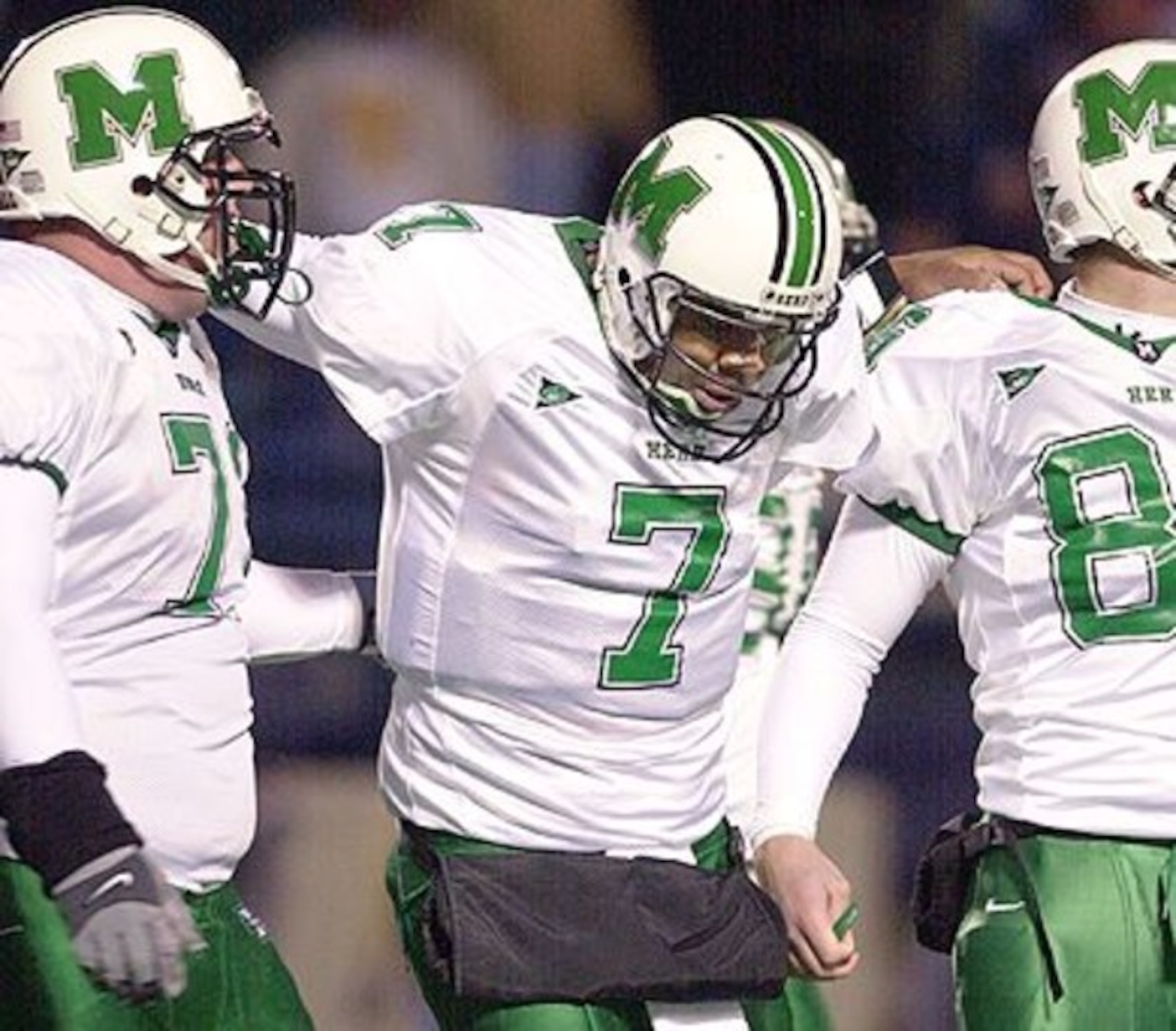
Byron Leftwich tried to carry Marshall to a comeback victory over Akron despite having broken his shin earlier in the game.

Instead, offensive linemen Steve Sciullo and Steve Perretta carried him, play after play. The video of them hoisting Leftwich downfield after a completion in the 34-20 loss to the Zips provided an iconic image of teamwork and, yes, love.

No. 23—12th Man

Display_image

Dallas -- Jan. 1, 1954

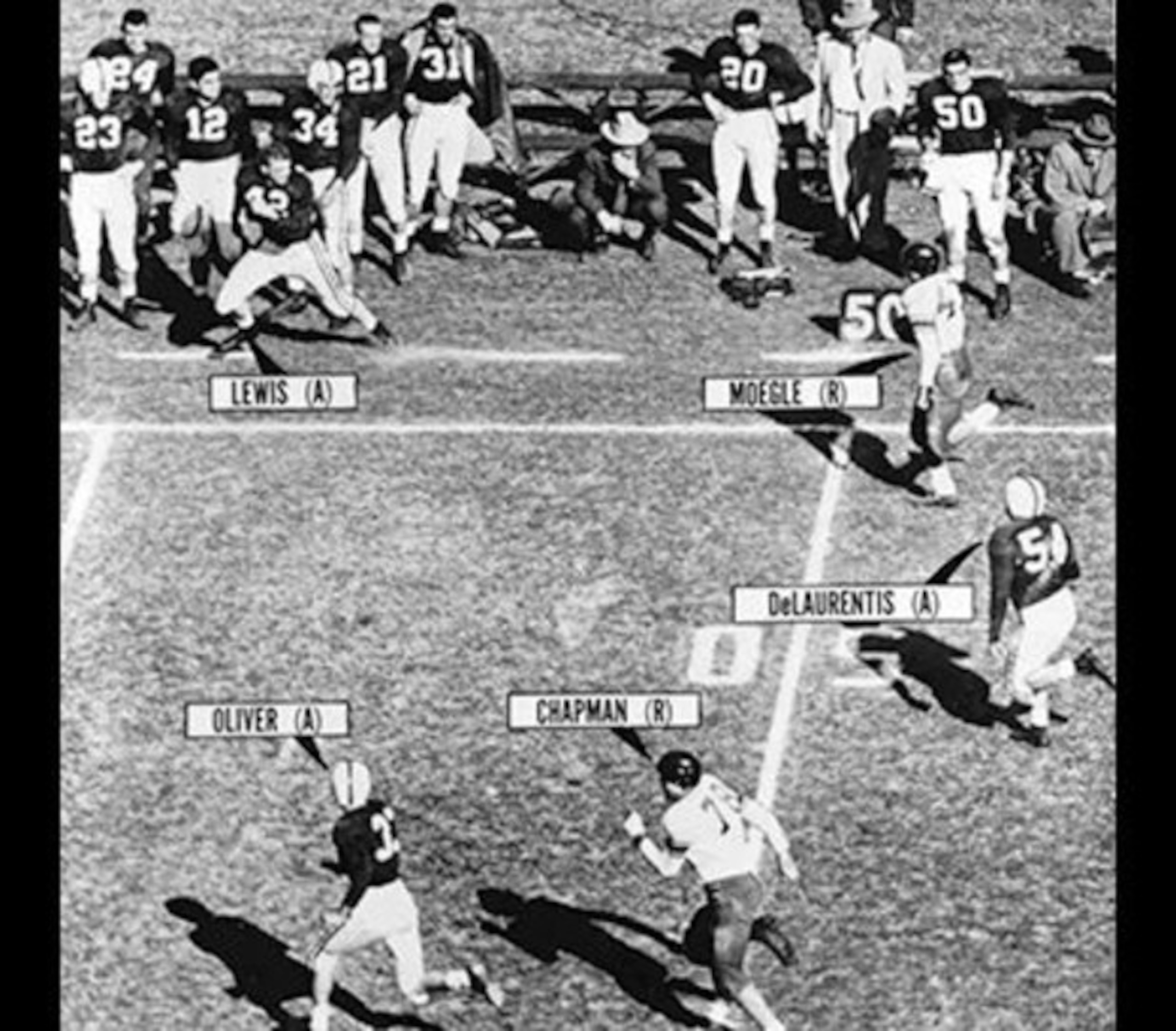
Rice's Dicky Moegle raced down the sideline in the 1954 Cotton Bowl when Alabama's Tommy Lewis came out of nowhere to level him.

Nowhere? Lewis came off the sideline, without his helmet. The referee awarded Moegle a 95-yard touchdown.

Lewis apologized to the Owls at halftime, and again after their 28-6 victory. His explanation became famous: "I'm just too full of 'Bama."

No. 22—Bo Knows

Display_image

Ann Arbor, MI -- Nov. 22, 1969

The 1969 Ohio State Buckeyes were Woody Hayes' greatest team. Says who? Hayes.

That's why the 24-12 upset loss to Michigan hurt— that and the fact that the Wolverines' first-year coach, Bo Schembechler, was a Hayes protégé.

Michigan took control of the game when Barry Pierson returned a punt 60 yards to set up the third Wolverine touchdown.

No. 21—Four Horsemen

Display_image

New York -- Oct. 18, 1924

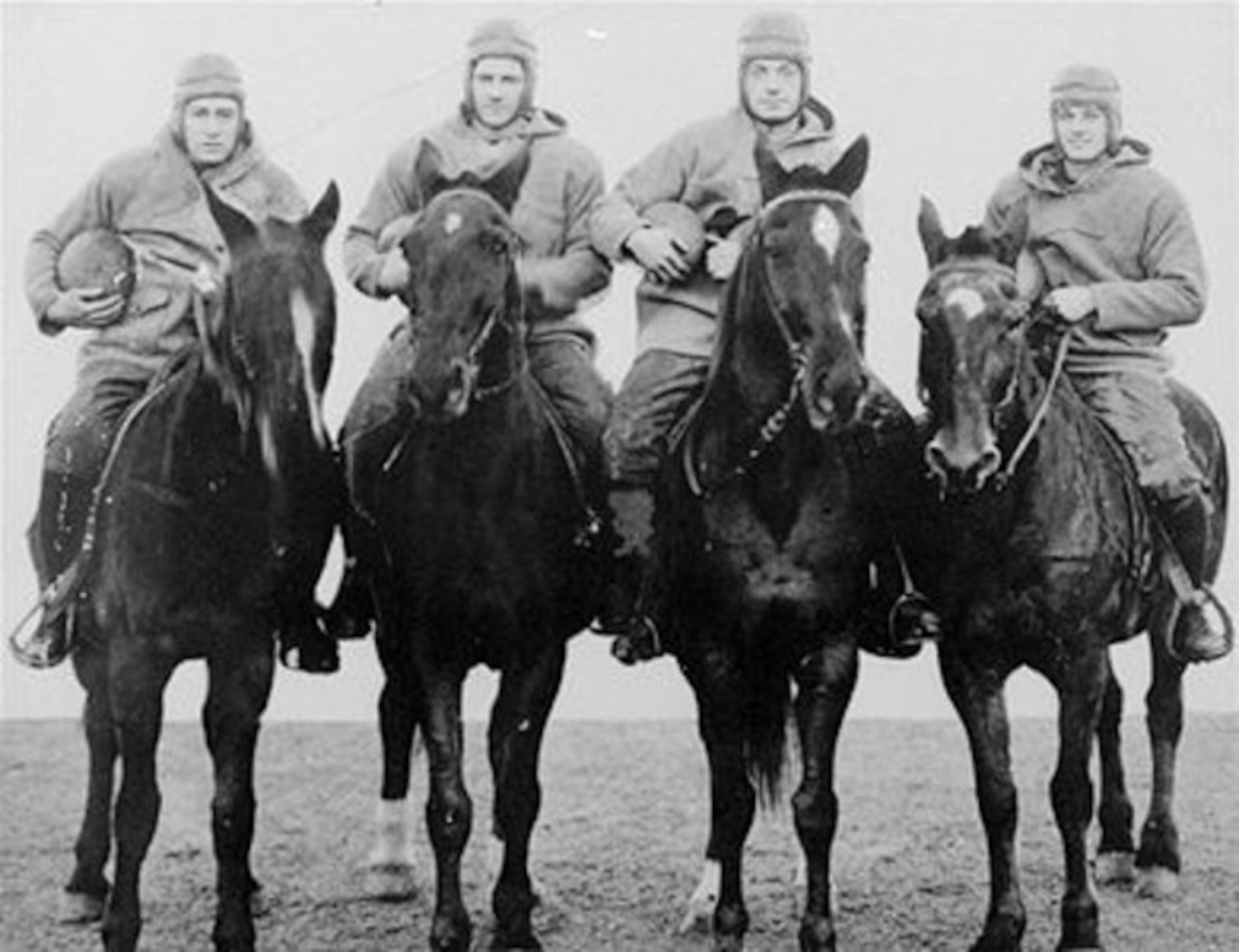
In the 30 minutes after Notre Dame ground out a 13-7 victory over powerful Army, Grantland Rice of the New York Herald-Tribune described the Irish backfield of Elmer Layden, Don Miller, Jim Crowley and Harry Stuhldreher in his column about the game.

"Outlined against a blue-gray October sky, the Four Horsemen rode again …"

Two days later, Notre Dame photographed the players on horses, and a newsman's phrase became public relations gold.

No. 20—Bush Push

Display_image

South Bend, IN -- Oct. 15, 2005

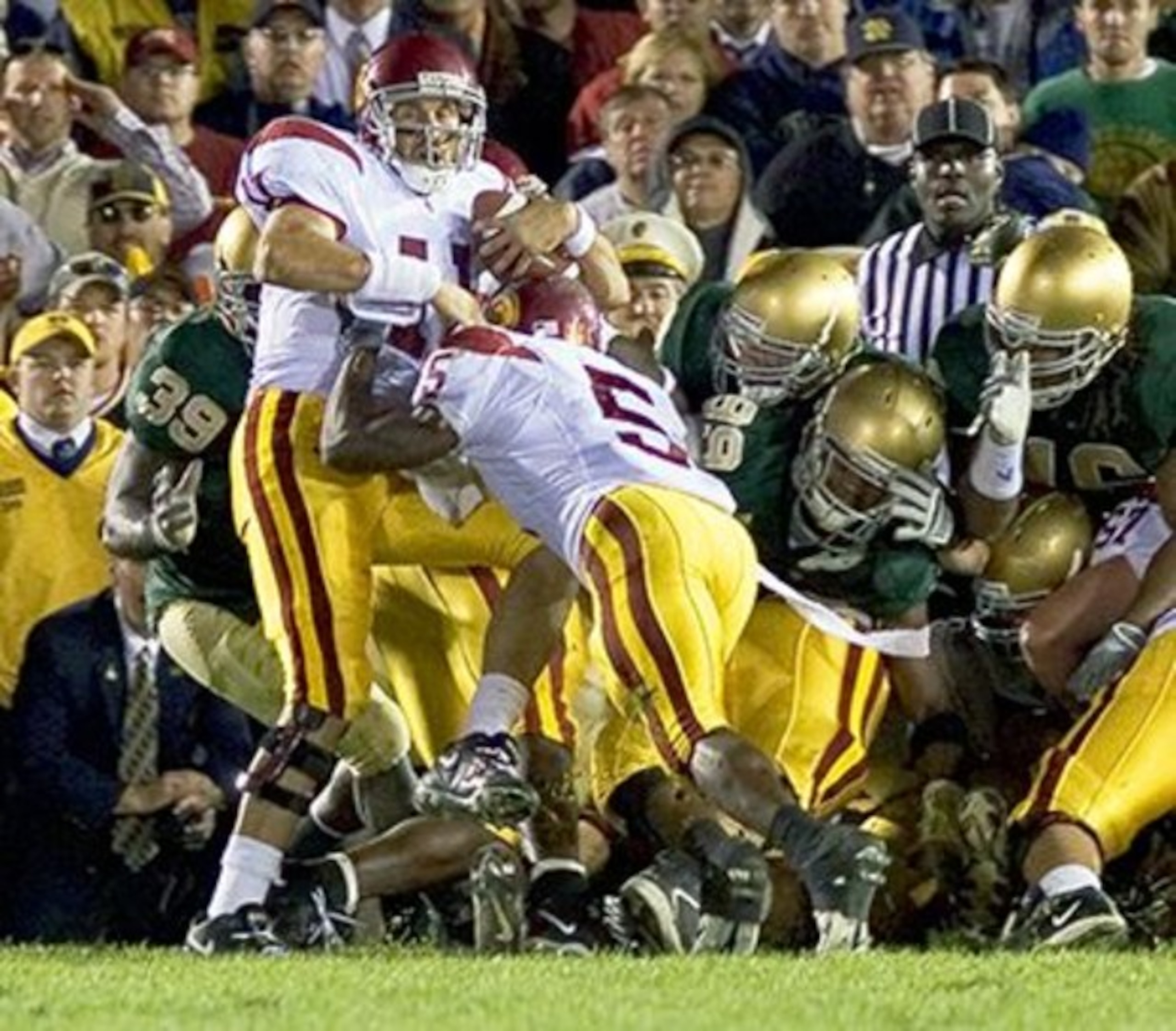
Notre Dame fans had spilled onto the field to celebrate a 31-28 victory over No. 1 USC when the officials restored :07 to the clock.

The Trojans had the ball inside the Irish one. Matt Leinart took the snap and spun to his left and tailback Reggie Bush had his back—literally.

The Bush Push propelled Leinart over the goal line (illegally?) for the Trojans' 28th straight victory, 34-31.

No. 19—Blue Collar

Display_image

Ann Arbor, MI -- Nov. 24, 1973

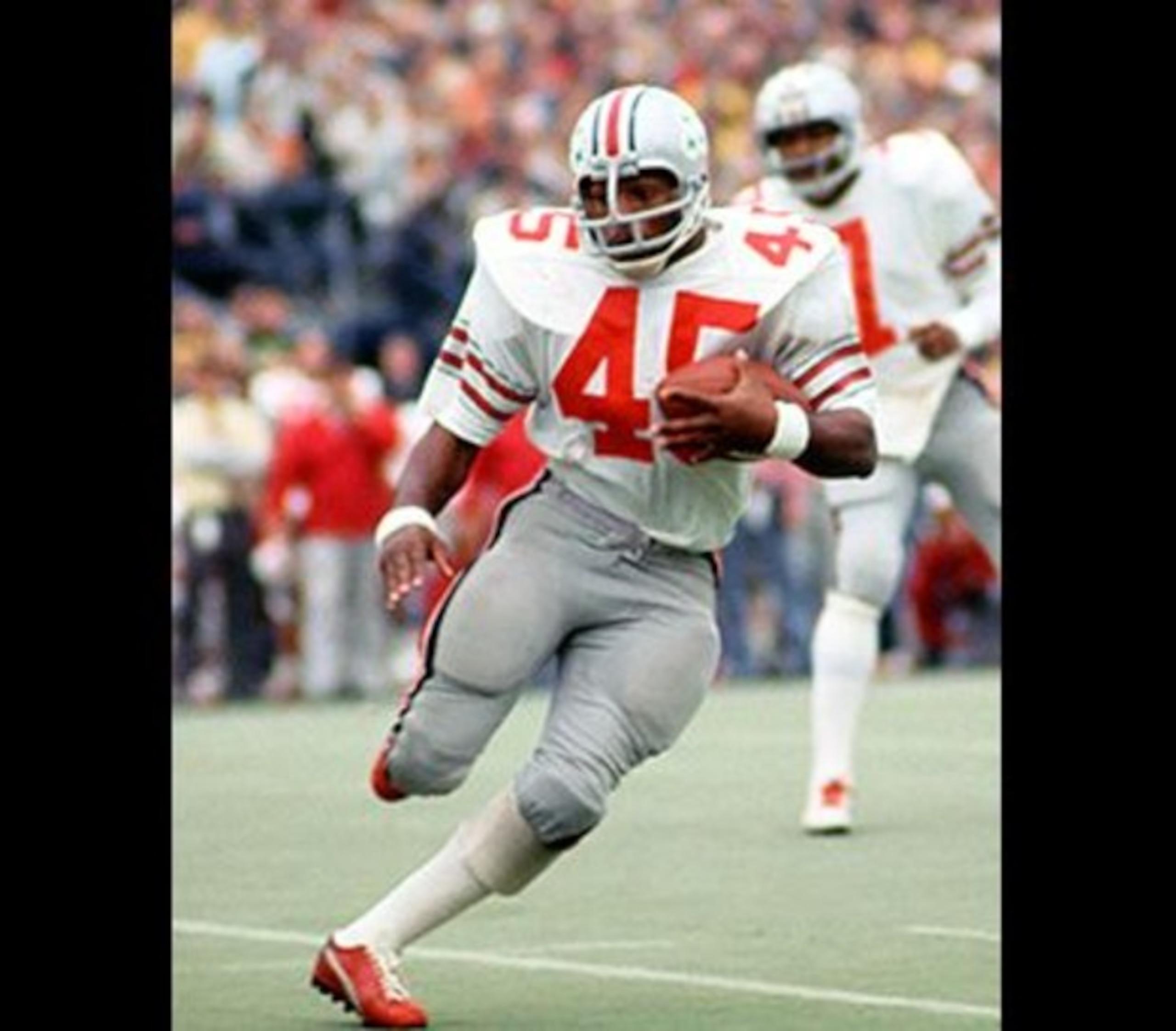
Michigan and Ohio State tied 10-10 in 1973, but a late-game play on which Wolverines quarterback Dennis Franklin broke his collarbone changed the postseason forever.

Big Ten athletic directors, sick about losing four straight Rose Bowls, voted to send Archie Griffin and the healthier Buckeyes to Pasadena.

Michigan coach Bo Schembechler raised such a ruckus that the league soon decided to let runners-up go to bowl games.

In 1973 there were only 11 bowl games. In 2009, more than 30.

No. 18—Twice as Nice

Display_image

Miami -- January 1, 1994

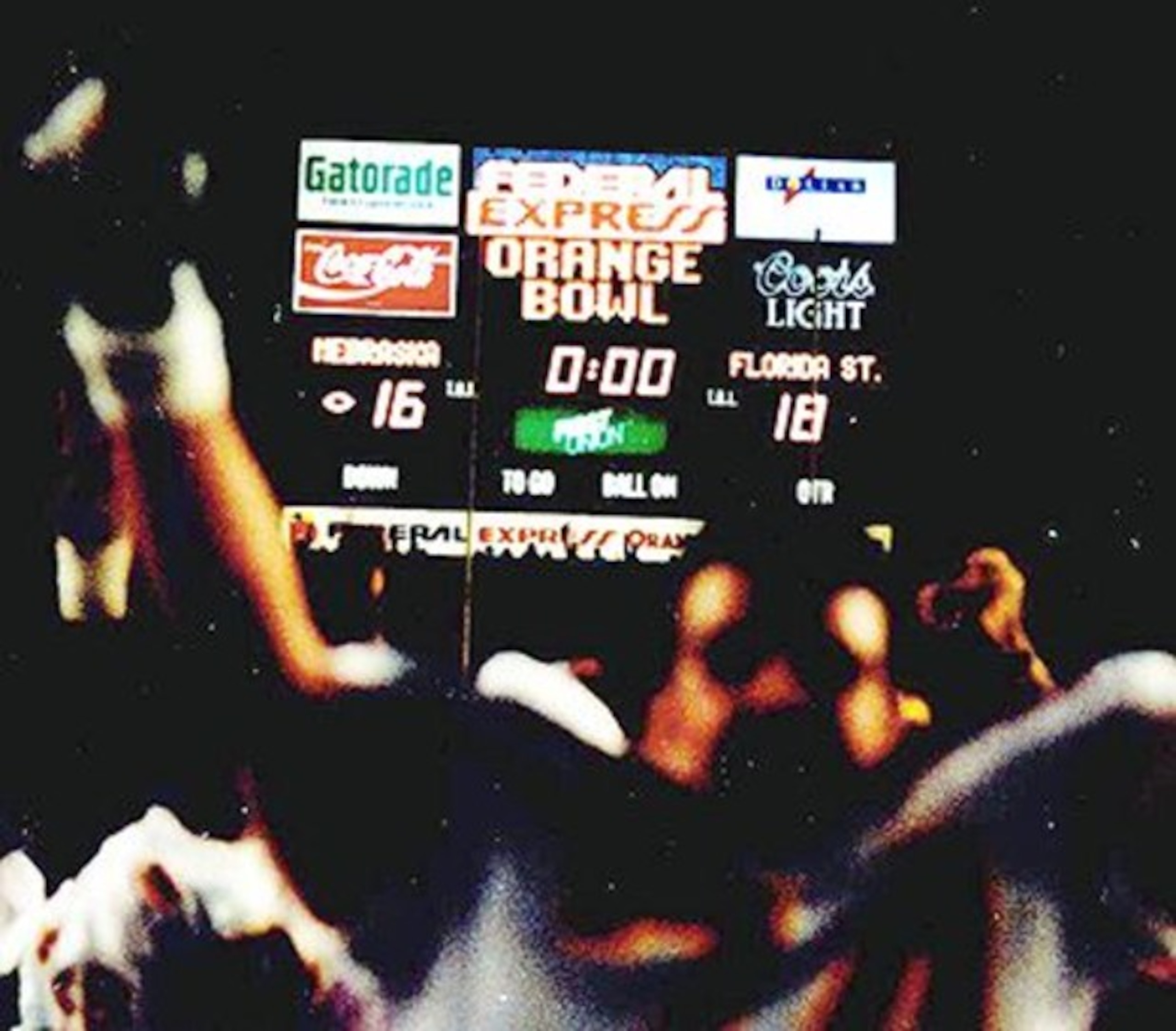
In 1993, Bobby Bowden finally won his first national championship—twice.

Florida State went ahead of Nebraska 18-16 in the Orange Bowl on Scott Bentley's 22-yard field goal with :21 left. The Huskers drove to the Seminole 28 but time ran out.

Cheers! Gatorade bath! Hold on! The officials put one second back on the clock.

The decision caught Husker kicker Byron Bennett by surprise, too. He missed wide left.

No. 17—Galloping Ghost

Display_image

Champaign, IL -- Oct. 18, 1924

In the first game at Illinois' Memorial Stadium, Illini junior Red Grange returned the opening kickoff from Michigan 95 yards for a touchdown.

In the next 12 minutes, Grange ran for scores of 67, 56, and 44 yards. He ran and threw for touchdowns in the second half of the 39-14 rout.

In 1951, the Associated Press named an All-Time All-American team and Grange received more votes than any other player.

No. 16—Punch Out

Display_image

Jacksonville, FL -- Dec. 29, 1978

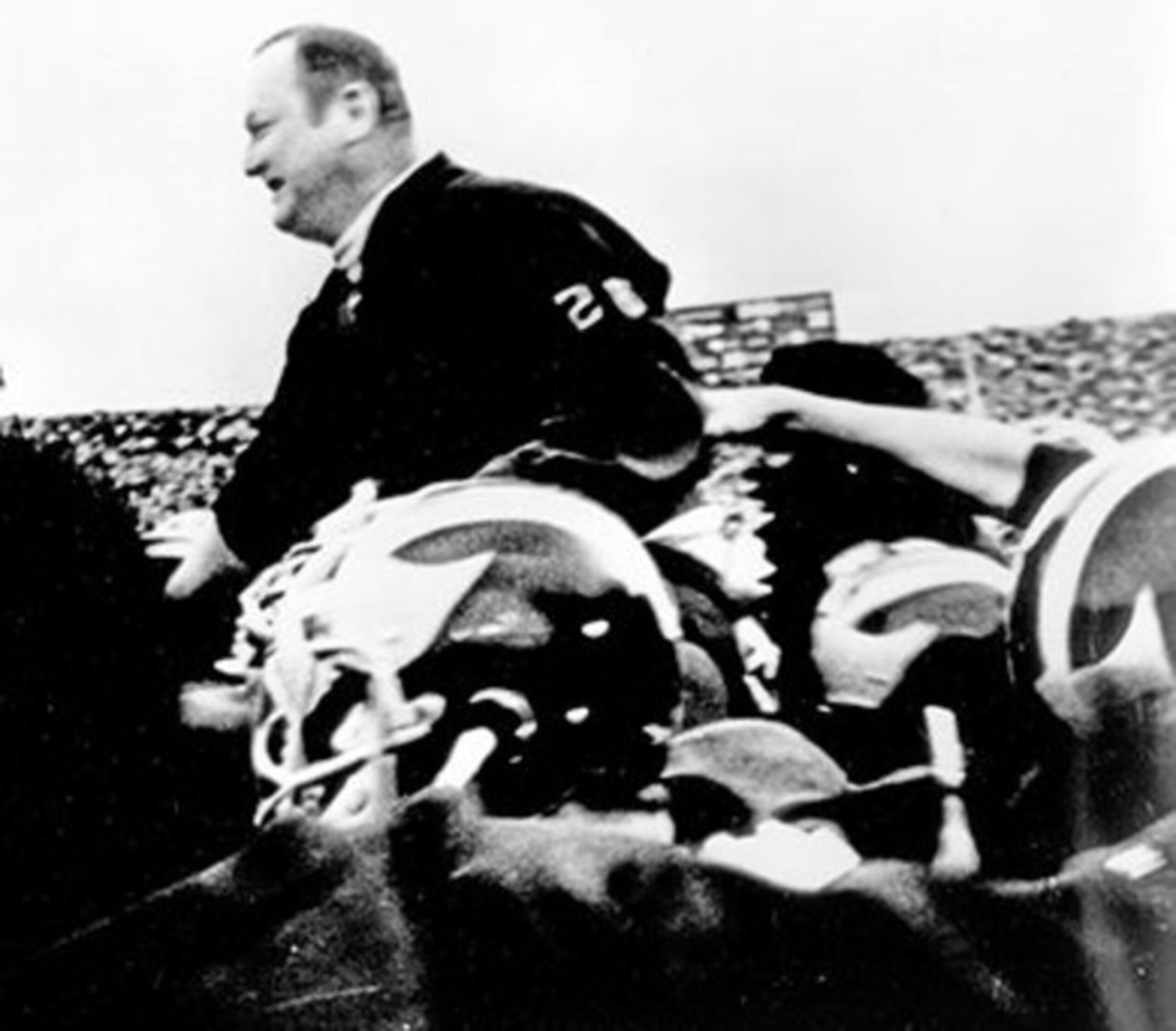
It wasn't Ohio State coach Woody Hayes' first tirade, but it became his last.

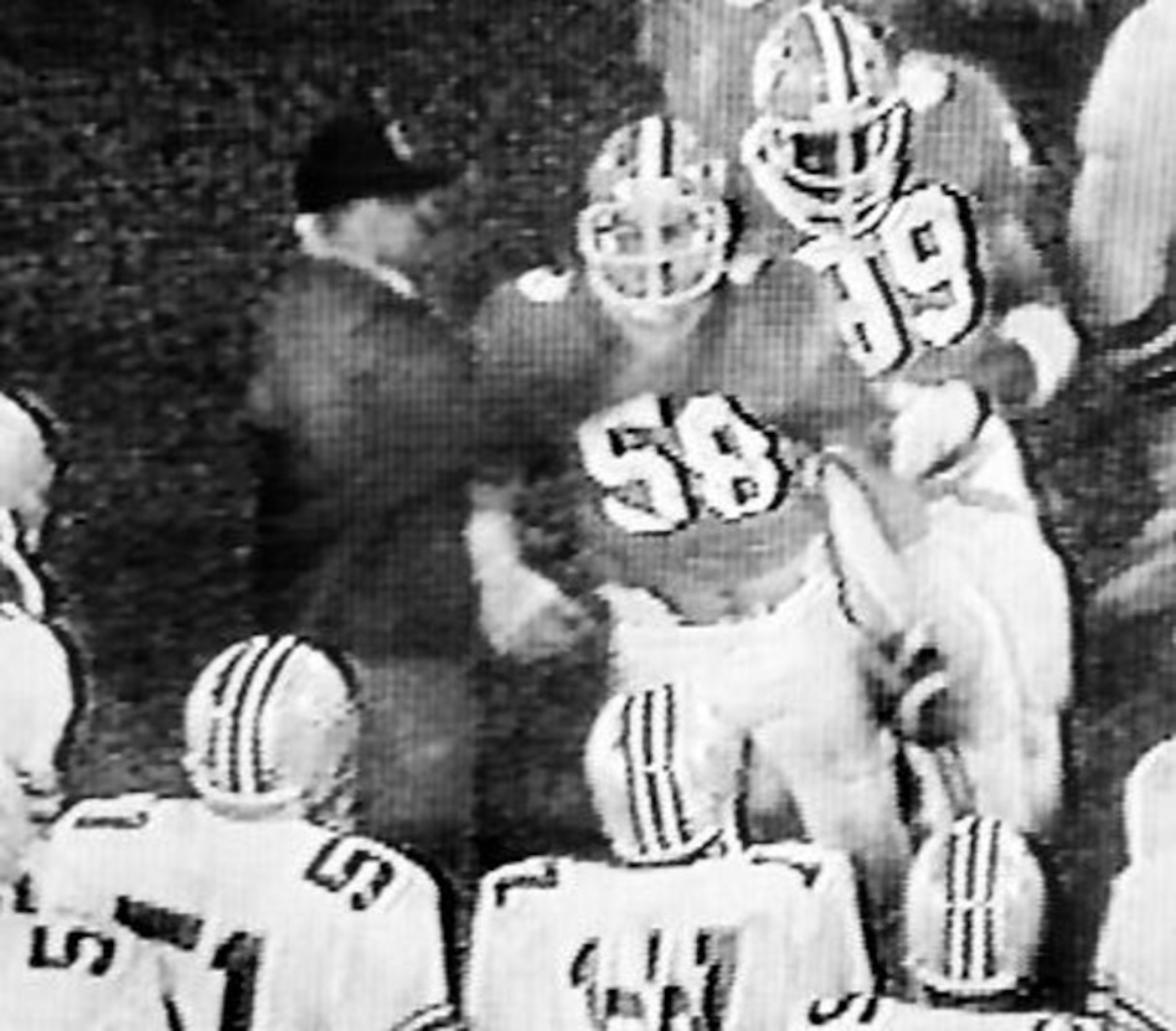
After Clemson's Charlie Bauman intercepted a pass late in the Tigers' 17-15 victory in the 1978 Gator Bowl, his momentum carried him into the Ohio State sideline.

When a frustrated Hayes punched Bauman, he didn't hurt him, but you could have knocked college football over with a feather. The next morning, Ohio State fired Hayes.

No. 15—Silent Treatment

Display_image

Ann Arbor, MI -- Sept. 24, 1994

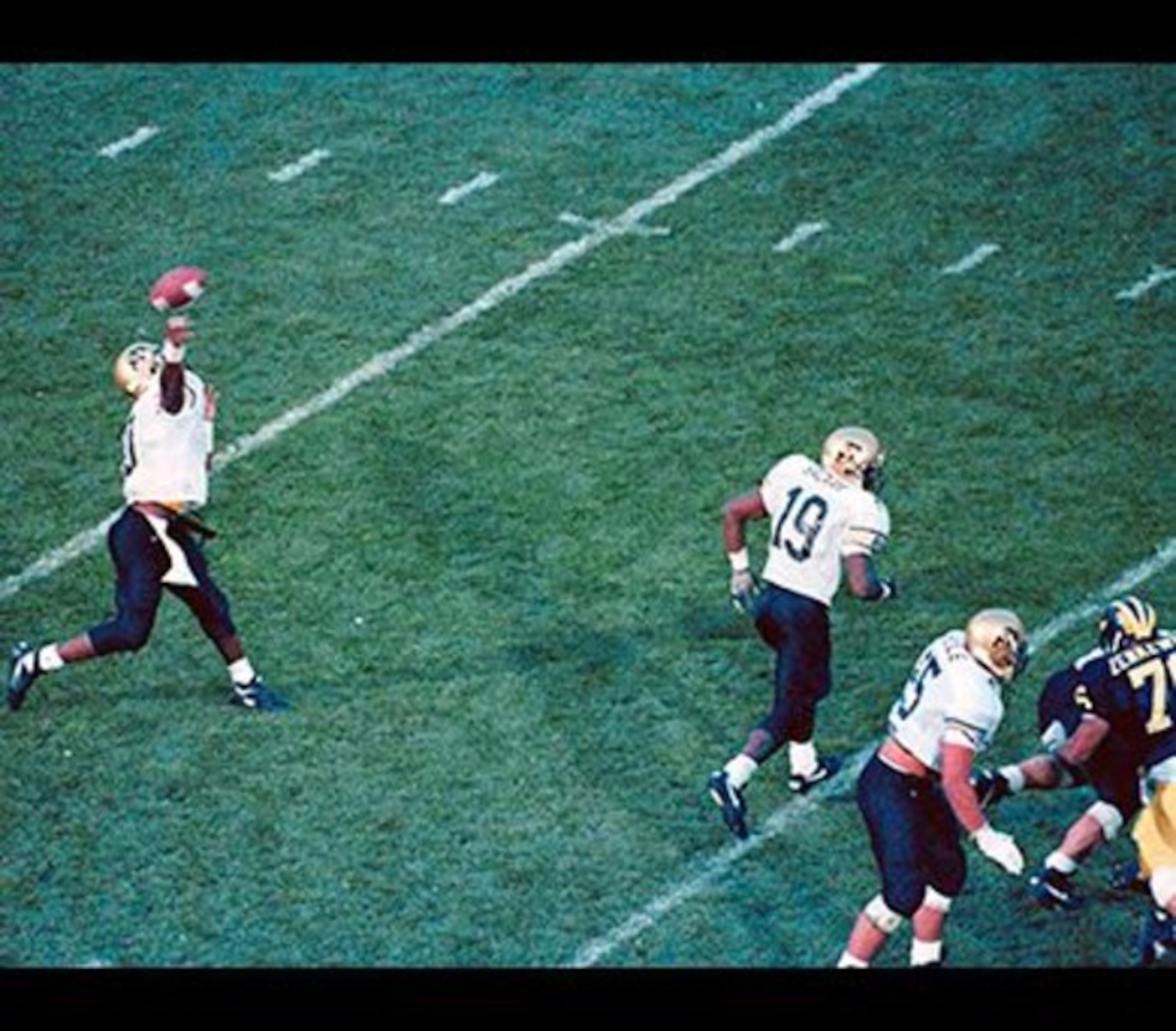
Colorado quarterback Kordell Stewart proved it's possible to silence more than 100,000 people in a split second.

Stewart's 64-yard Hail Mary touchdown to Michael Westbrook with no time on the clock had all the makings of a sports fairy tale.

The long pass beat Michigan, 27-26, and Westbrook caught it by outjumping, among others, boyhood friend Chuck Winters.

No. 14—Punt Bama, Punt

Display_image

Birmingham, AL -- Dec. 2, 1972

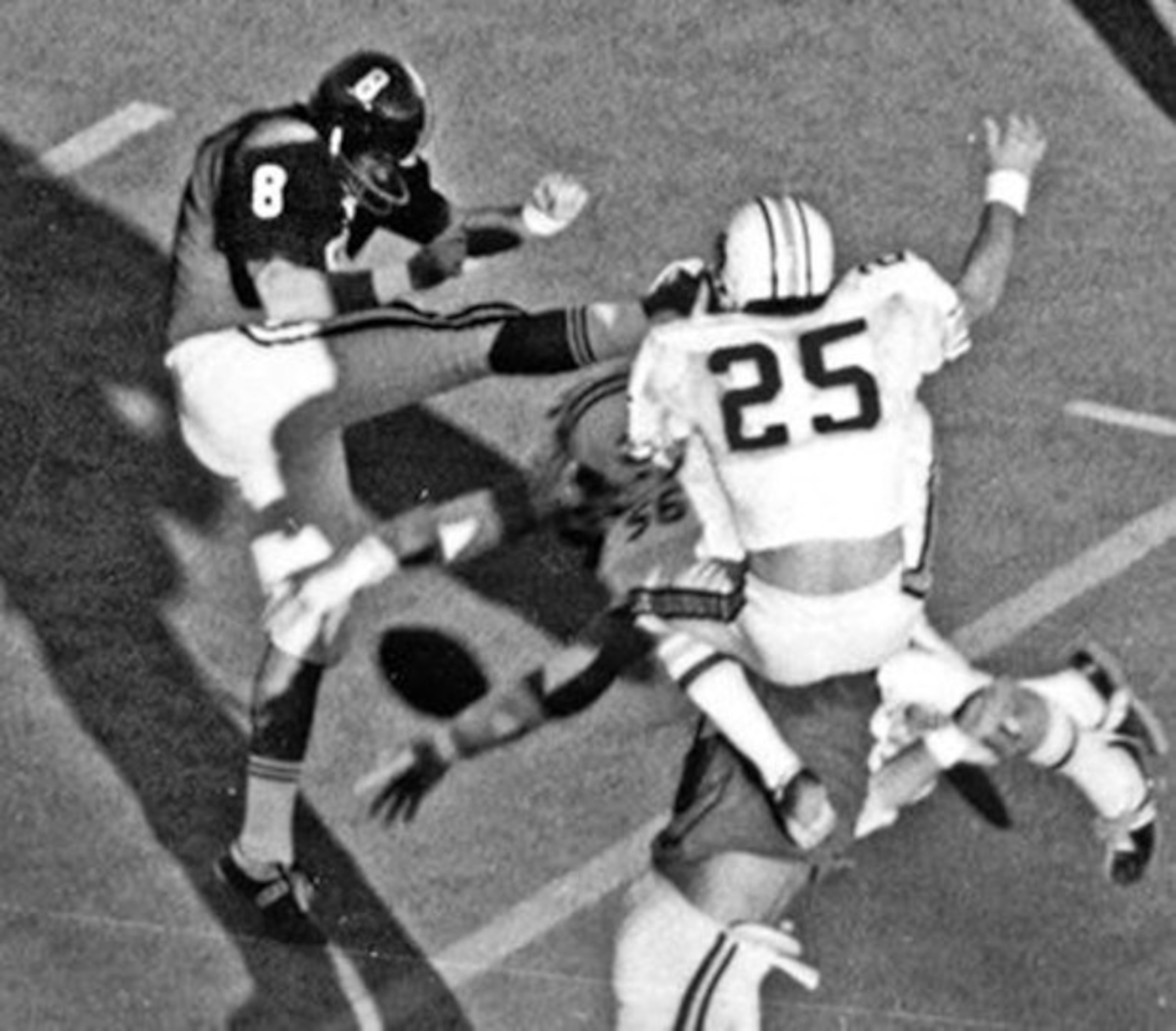
No. 2 Alabama led arch rival Auburn 16-3 late when lightning struck—twice.

The Tigers' Bill Newton blocked Greg Gantt's punt and the ball bounced directly to David Langner, who returned it 25 yards for a touchdown.

On the next possession, Auburn forced another punt. Newton and Langer did it again, this time from 20 yards, and the Tigers won, 17-16.

The bumper stickers are in the junkyard, but the phrase "Punt Bama Punt" lives on.

No. 13—The Play's the Thing

Display_image

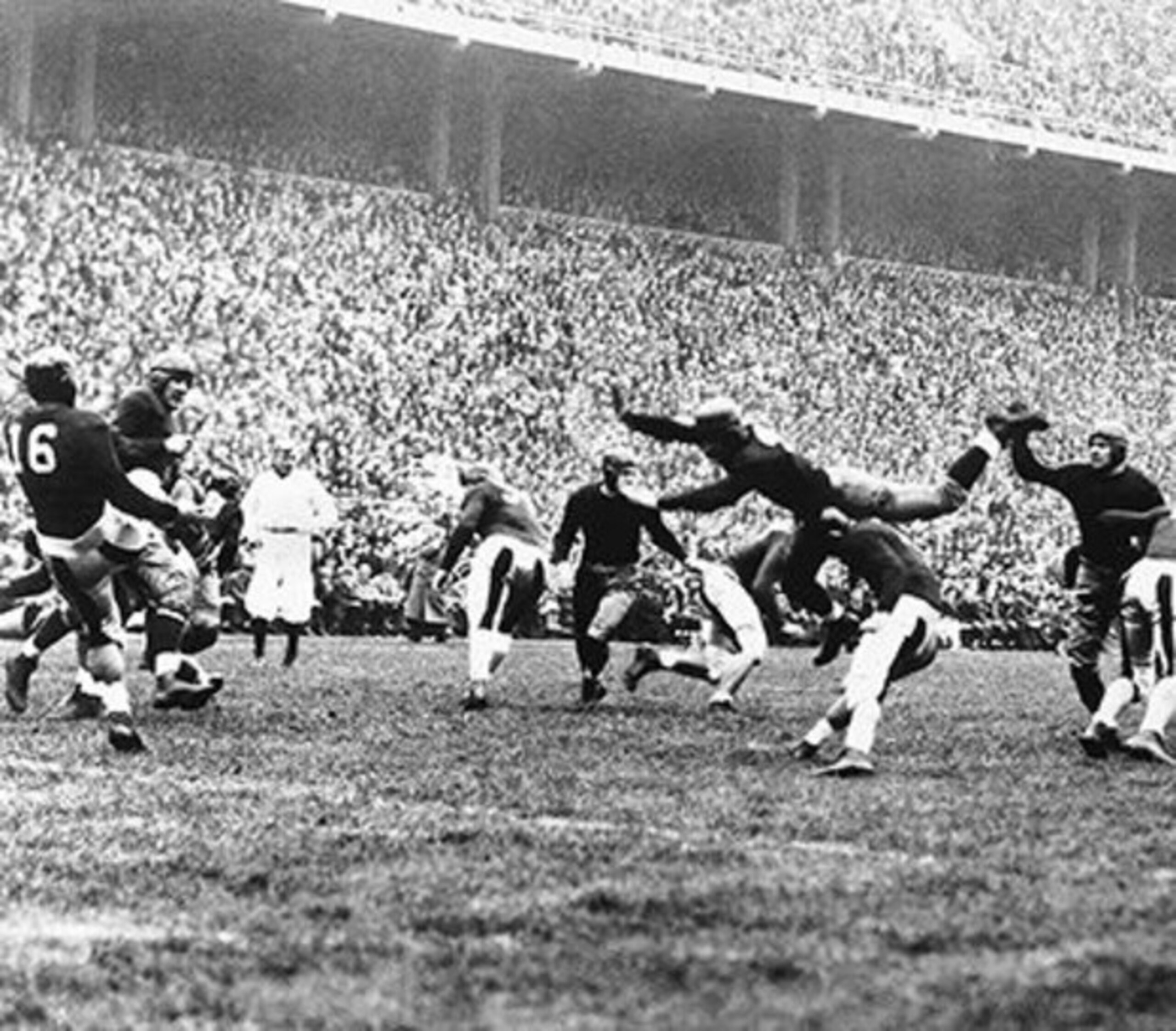
Columbus, OH -- Nov. 2, 1935

Notre Dame trailed Ohio State, 13-12, with 2:00 to play when Irish star back Andy Pilney injured his knee and had to be carried off the field.

In his place came Bill Shakespeare—really—to drive Notre Dame to the Buckeyes' 19. In the waning seconds, Shakespeare took a handoff on a reverse and threw a touchdown pass to Wayne Millner.

Historians consider the 18-13 Irish victory the greatest game of its era.

No. 12—Single Wing

Display_image

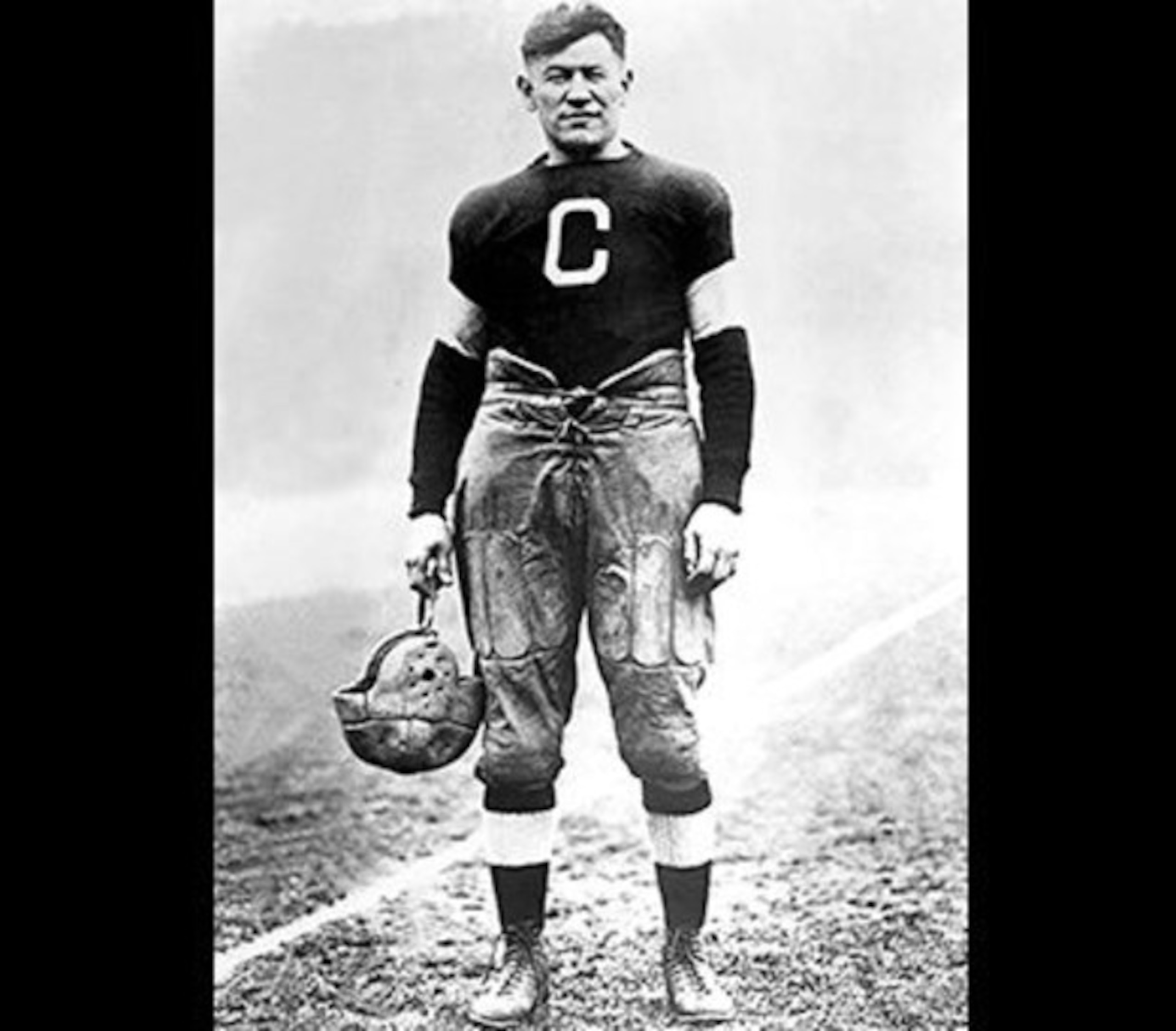
West Point, NY -- Nov. 9, 1912

Carlisle visited Army in 1912 with Olympic hero Jim Thorpe and coach Pop Warner's new formation: lining up a back who flanked the defensive end.

The 27-6 rout proved the Cadets never solved the "single wing."

The New York Times reported that "Thorpe tore off runs of ten yards or more so often that they became common."

Thorpe took one teeth-rattling hit, thanks to an aggressive Cadet linebacker named Dwight Eisenhower.

No. 11—Rules of Engagement

Display_image

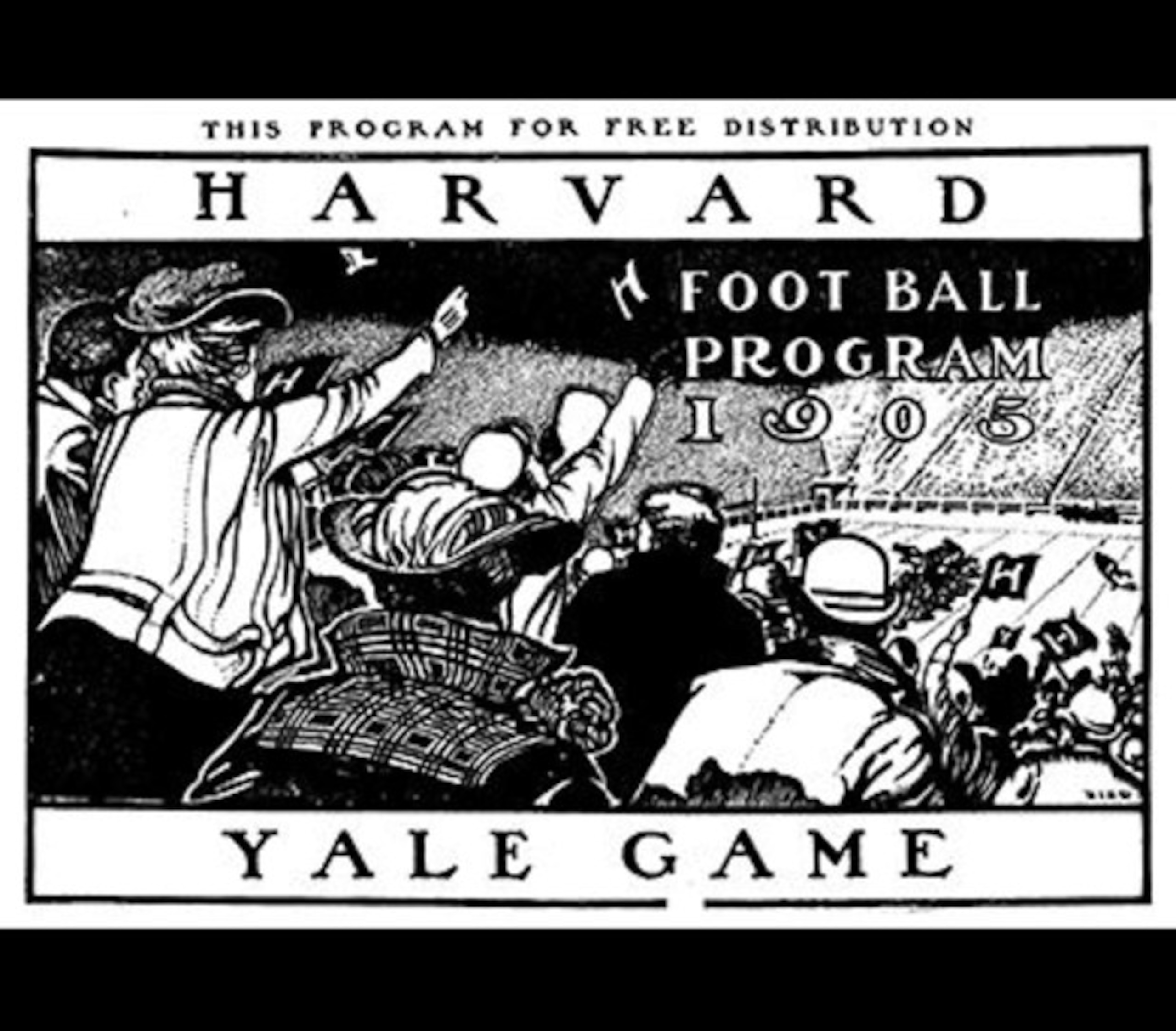
Cambridge, MA -- Nov. 25, 1905

Yale's J.J. Quill, with an open-hand smash, broke the nose of Harvard's Hooks Burr in the Elis' 6-0 win in 1905. The play inflamed passions to ban the sport.

President Theodore Roosevelt summoned the presidents of Harvard, Yale and Princeton to the White House and told them to clean up the sport's injury and death toll.

Message heard: Major universities formed the NCAA and rewrote the rule book.

No. 10—To Tie or Not To Tie

Display_image

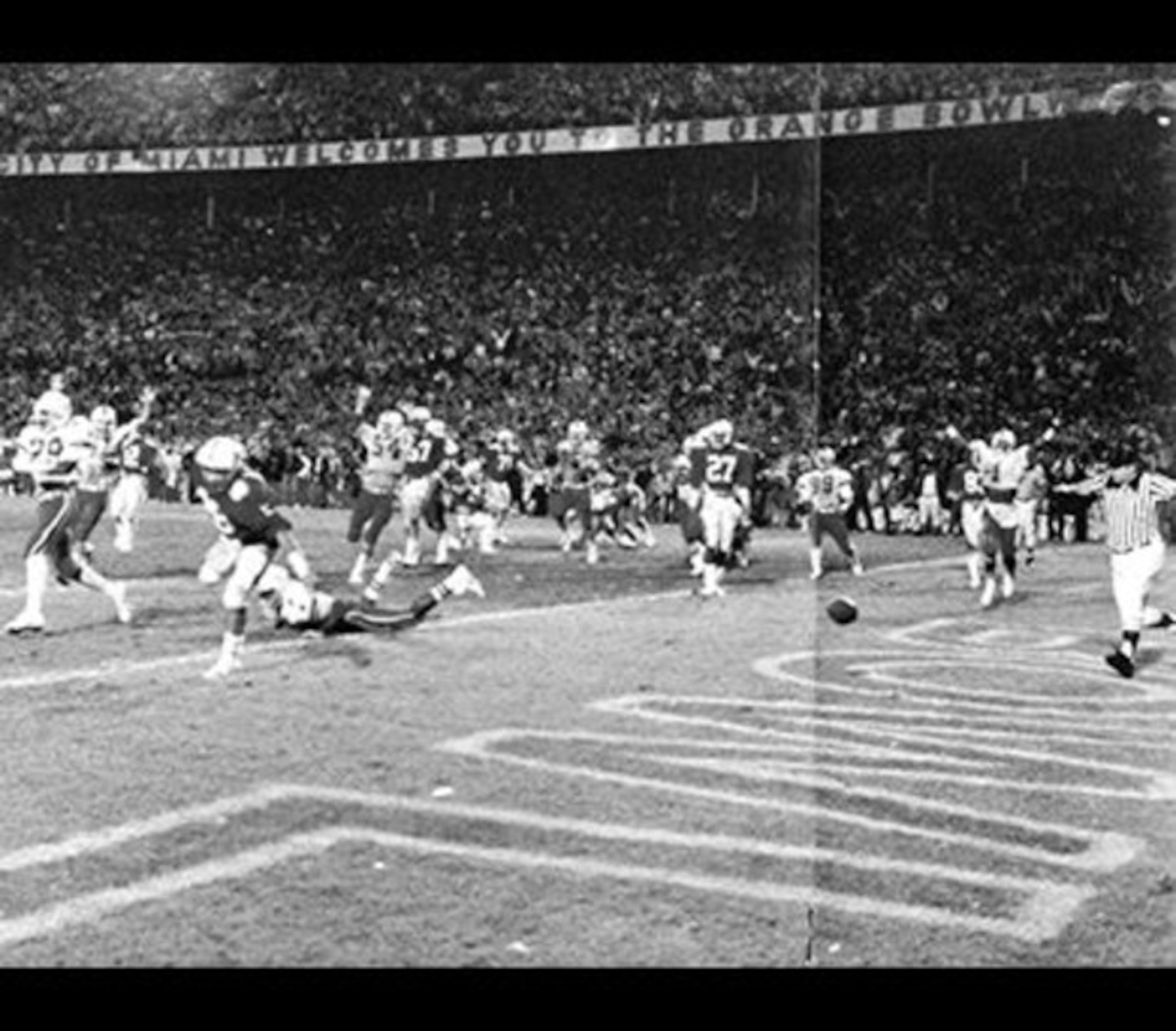
Miami -- Jan. 2, 1984

Nebraska had pulled within 31-30 of Miami with :48 to play in the 1984 Orange Bowl.

Huskers coach Tom Osborne knew an extra point would mean his first national title, but he didn't want to win it with a tie.

When Miami safety Ken Calhoun tipped away Turner Gill's two-point pass to Jeff Smith, Osborne received national praise for his guts.

Osborne would have to wait 11 more years to finish No. 1.

No. 9—U-Turn

Display_image

Tempe, AZ -- Jan. 3, 2003

The fireworks erupted and the Miami reserves spilled onto the field. The 'Canes had stopped Ohio State in the red zone on fourth down in overtime to win their second consecutive national title, 24-17.

And then field judge Terry Porter flagged Miami's Glenn Sharpe for interfering with wideout Chris Gamble.

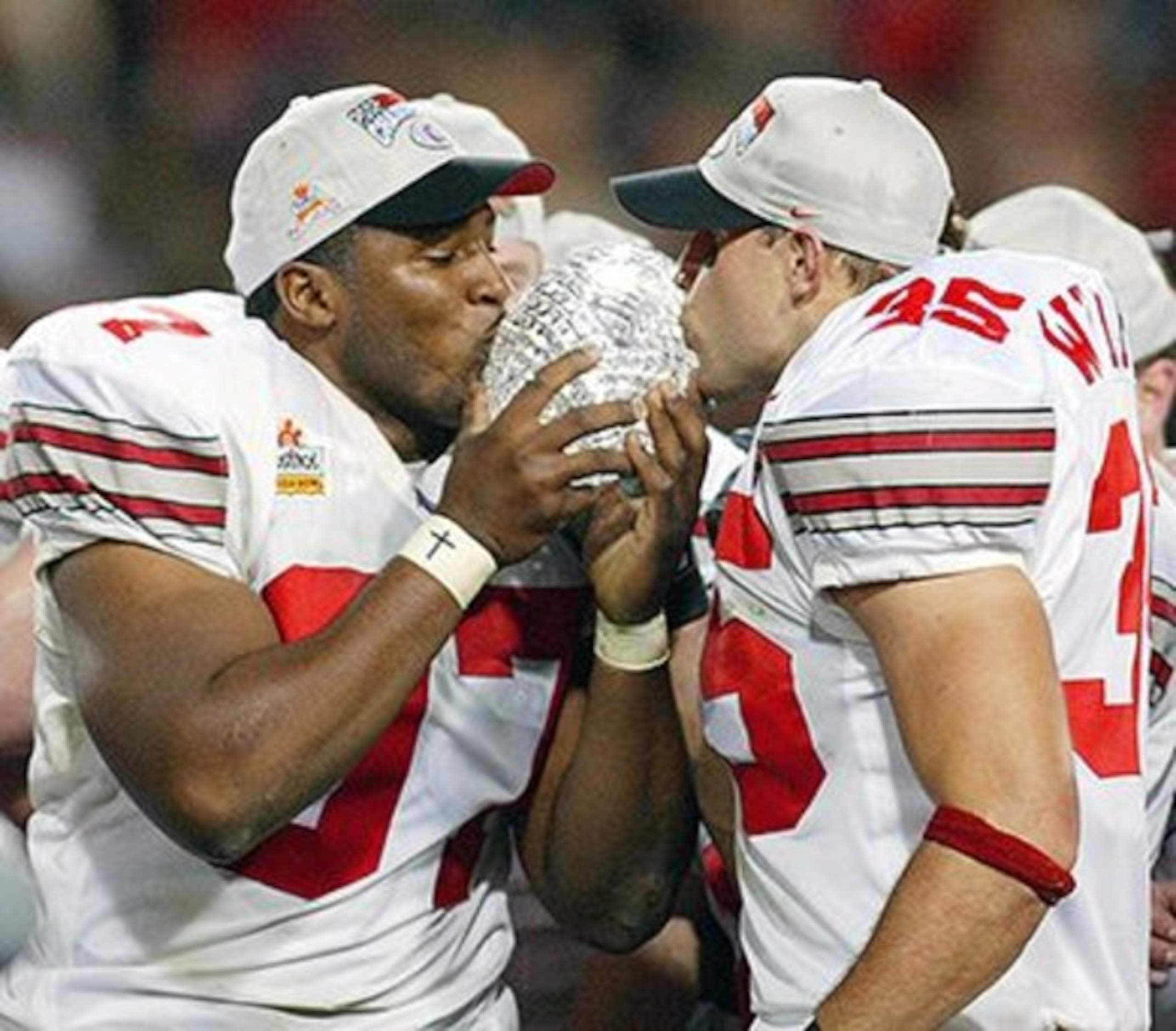
Reprieved, quarterback Craig Krenzel scored, freshman star Maurice Clarett scored in the second OT, and the Buckeyes would go on to win the National Title.

Terry Porter remains reviled at the U.

No. 8—Run Lindsey, Run

Display_image

Jacksonville, FL -- Nov. 8, 1980

The most important play of Georgia's lone AP national championship season, 1980, came with the Dawgs trailing Florida 21-20, the ball on their seven-yard line, 3rd-and-11, 1:03 to play. In other words: hopeless.

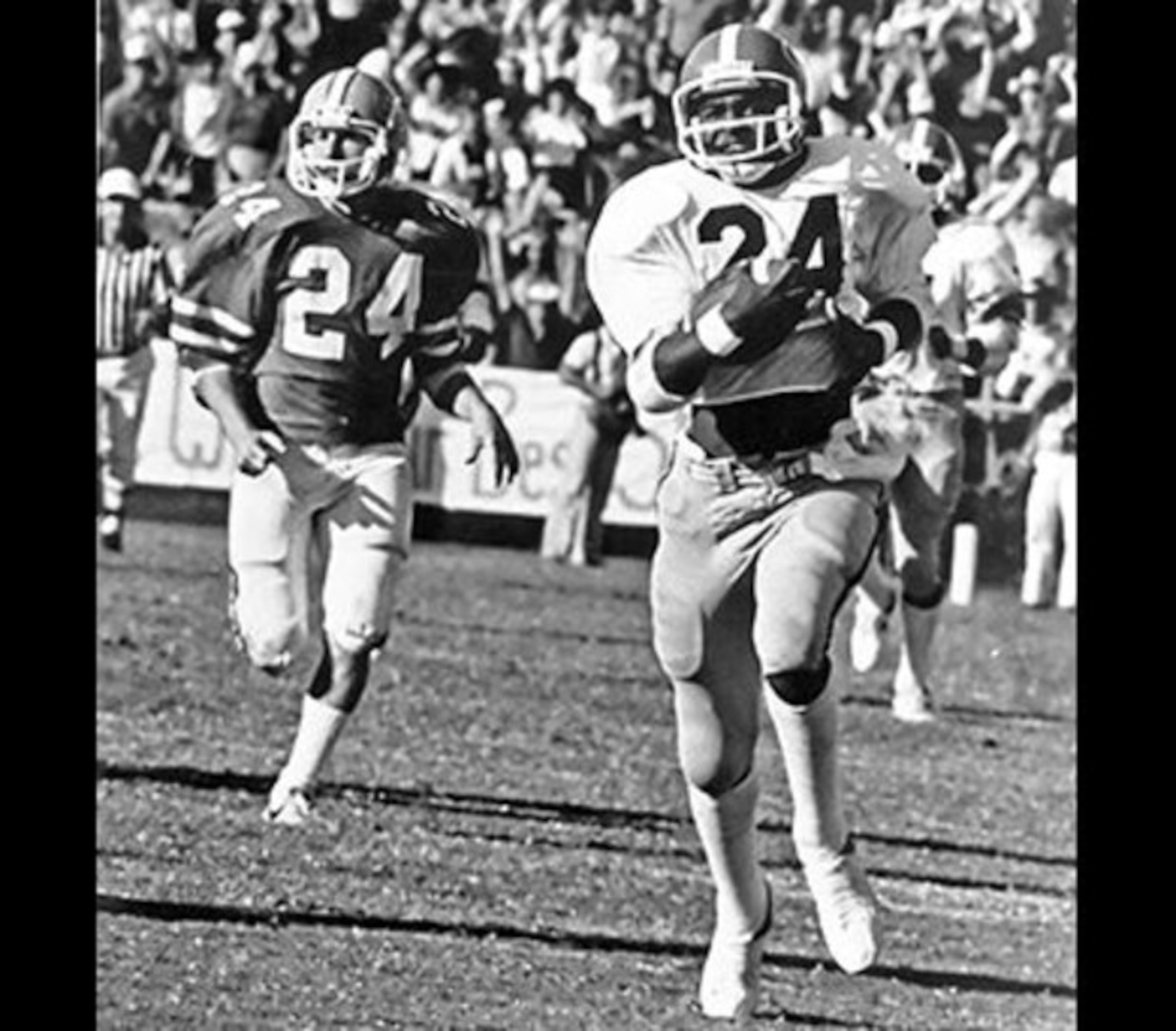
The call, Left 76, was supposed to pick up a first down. But Buck Belue threw over the middle to Lindsay Scott, who caught the ball and sprinted 93 yards, right into the hearts of Georgia fans forever.

No. 7—Those Tricky Broncos

Display_image

Glendale, AZ -- Jan. 1, 2007

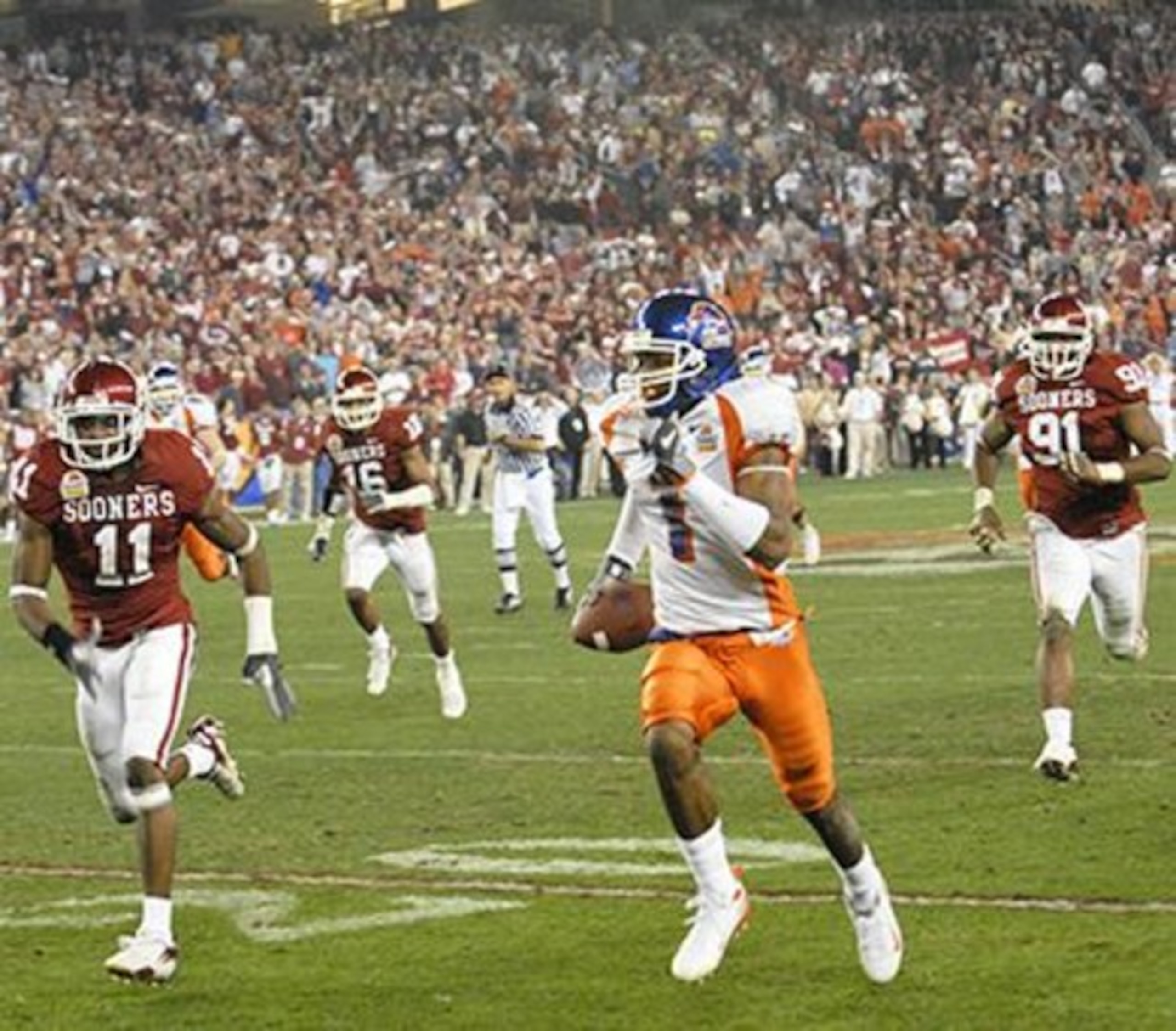
Years later, the discussion continues: Which was your favorite trick play in Boise State's stunning, David-beats-Goliath, 43-42 overtime victory over Oklahoma in the Fiesta Bowl?

Some like the Statue of Liberty handoff that Ian Johnson took in for the winning two-point conversion.

Others would take the 50-yard hook-and-ladder from Jared Zabransky to Drisan James to Jerard Rabb that set up the OT with :07 in regulation.

No. 6—Bad to the Bone

Display_image

Austin, TX -- Sept. 21, 1968

Texas assistant Emory Bellard tinkered with his new offense the entire summer of 1968 and Coach Darrell Royal scheduled three-a-days to install it.

Then, on the first snap in the opener against Houston, quarterback Bill Bradley handed off to Steve Worster…for one yard.

The Horns tied the Cougars 20-20, lost the next game, and then James Street took over at QB and Texas won its next 30 games.

Bellard's wishbone became the offense of champions for two decades.

No. 5—Rise and Shine

Display_image

Pasadena, CA -- Jan. 1, 1926

After three schools declined, the Rose Bowl reluctantly chose Alabama to play Washington in the 1926 Rose Bowl. Pasadena feared a southern team would be "mixing a lemon with a rose."

The Tide spotted the Huskies a 12-0 halftime lead, then scored three third-quarter touchdowns and won 20-19.

Consider the go-ahead touchdown, Pooley Hubert's 61-yard pass to Johnny Mack Brown, the first play of the rise of southern football.

No. 4—Passing the Rock

Display_image

West Point, NY -- Nov. 1, 1913

Army knew nothing about the Catholic school from Indiana when it came to West Point, but Notre Dame quarterback Gus Dorais and end Knute Rockne introduced themselves quickly with a little-trusted weapon: the forward pass.

They connected early against the Cadets for a 25-yard touchdown. Dorais went 13-of-17 for 243 yards in a 35-13 rout.

The aerial game—and the Irish—would never be little-known again.

No. 3—Race for Glory

Display_image

Pasadena, CA -- Jan. 4, 2006

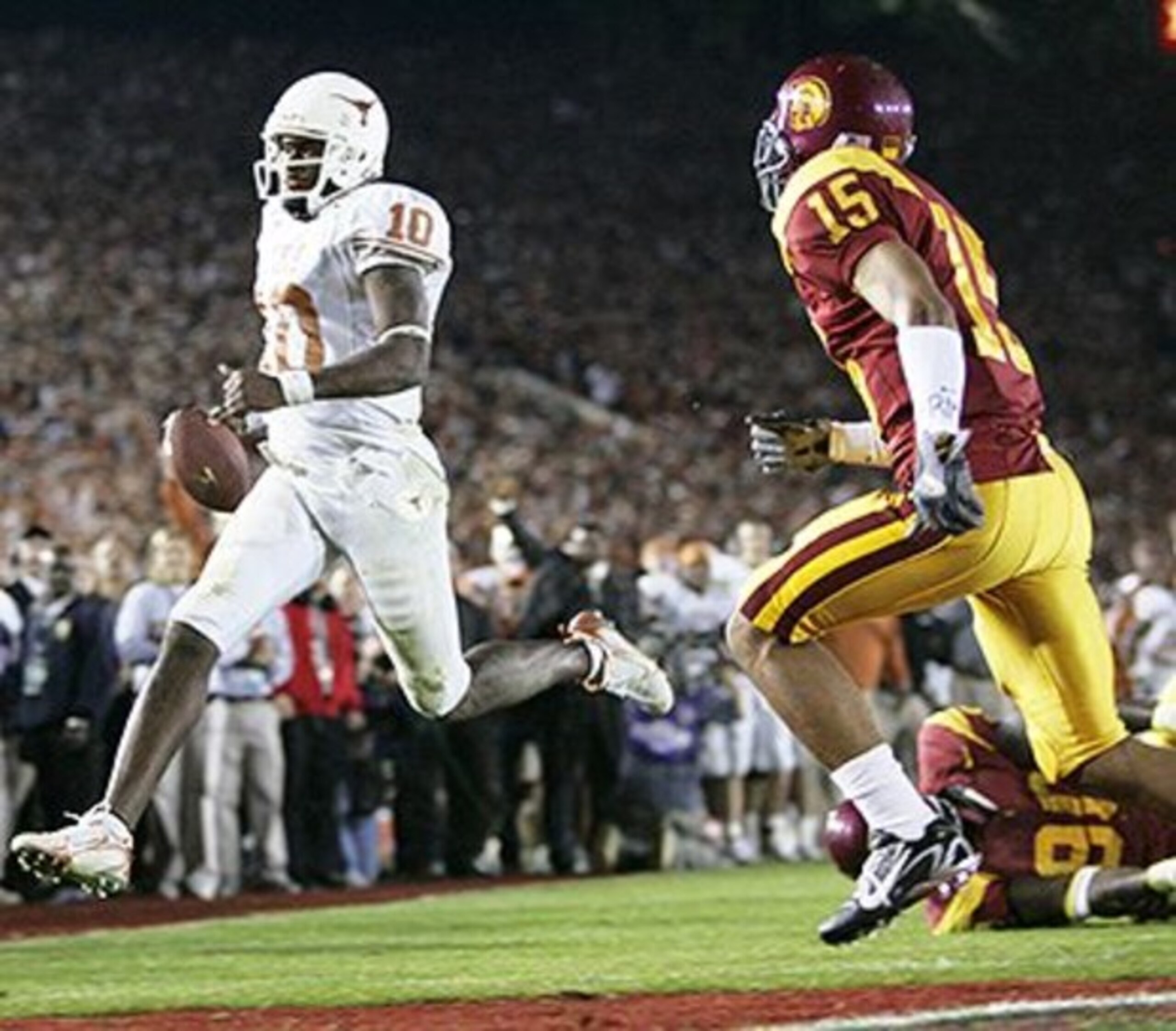
With Texas trailing USC 38-33, Vince Young already had used 928 Sneak to score in the fourth quarter of the 2006 BCS Championship Game.

On fourth down at the Trojans' eight, Young called it again. He saw no one open. When USC end Frostee Rucker moved inside, Young moved outside, eluded Rucker and raced to the pylon.

Young ran for 200 yards, threw for 267 and won the national title on his last collegiate snap.

No. 2—Hail Flutie

Display_image

Miami -- Nov. 23, 1984

Boston College quarterback Doug Flutie had sewn up the 1984 Heisman, but his 48-yard Hail Mary to Gerard Phelan is treasured to this day because of what it represented: the rise of the little guy.

Not only did the 5'9" Flutie lead the Eagles to a 47-45 victory over Miami, throwing for 472 yards and three scores, but the pass is the moment that Boston College returned to the big time after four sinking decades.

No. 1—The Play

Display_image

Berkeley, CA -- Nov. 20, 1982

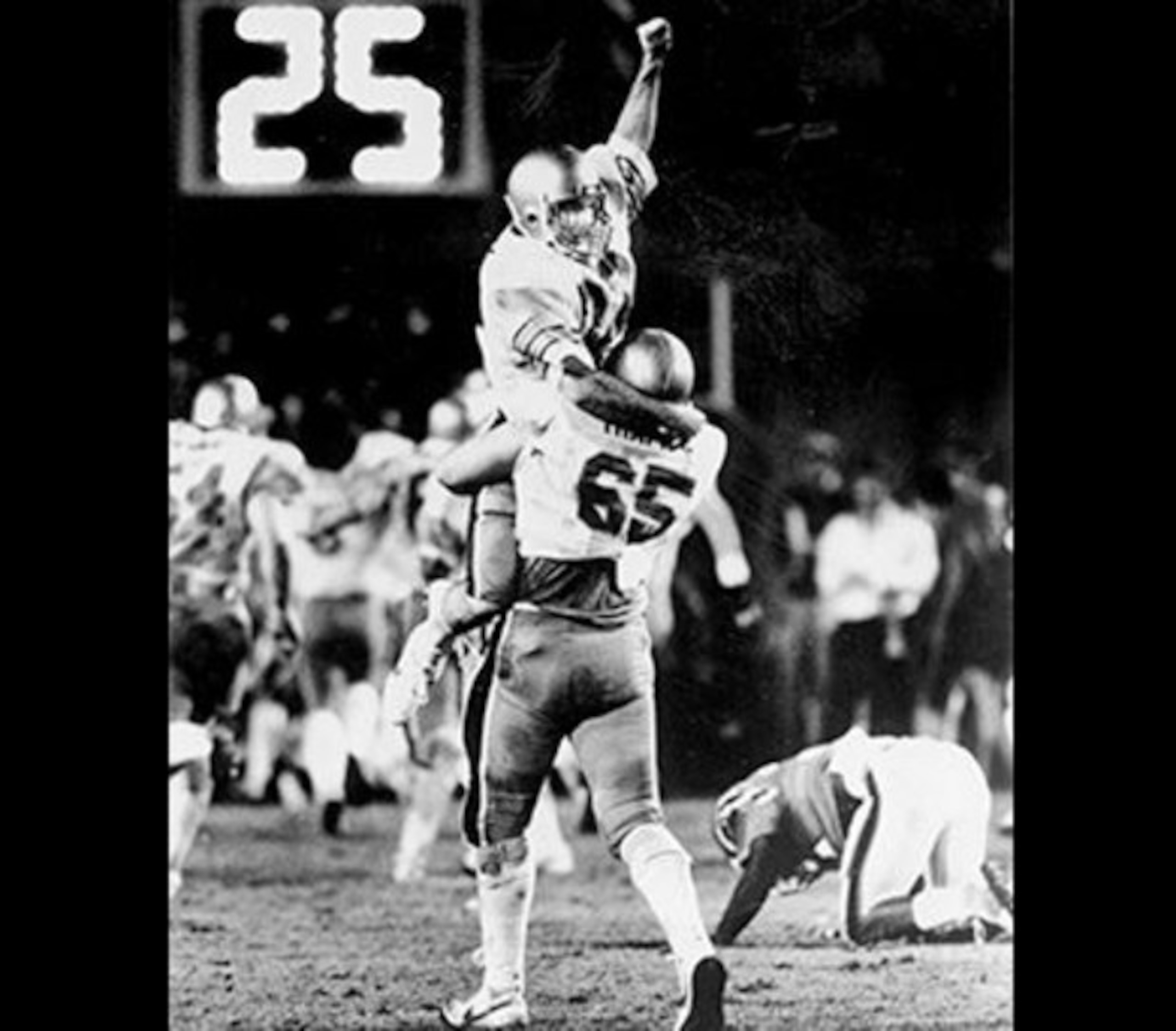
Like a starlet who needs no makeup to show her beauty, it is known simply as The Play.

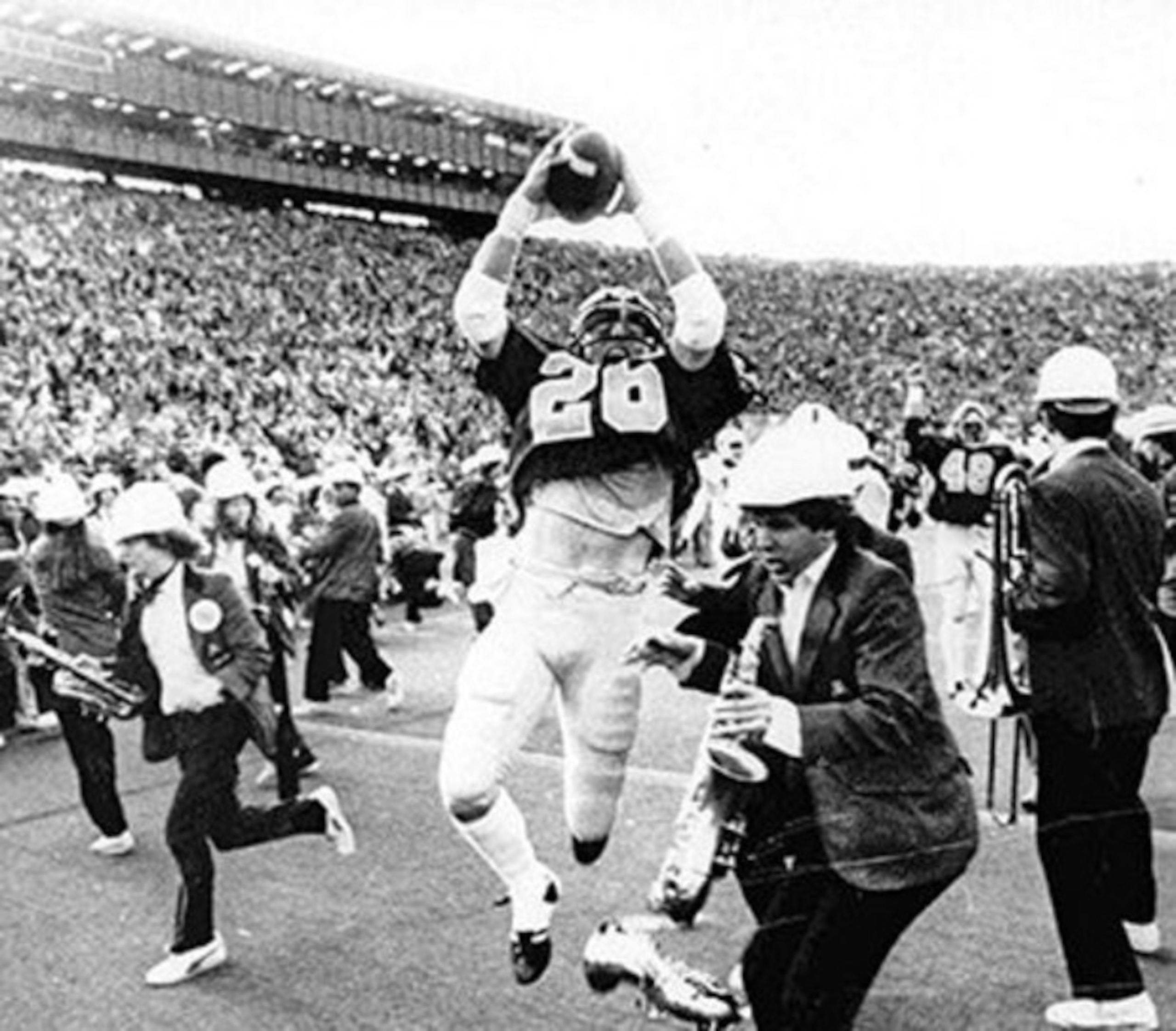
Cal pulled a little rugby on arch rival Stanford in 1982, using five laterals to go 57 yards with no time on the clock to beat the Cardinal, 25-20.

Kevin Moen started the chain and came around to finish it, traveling the last few yards through the Stanford band.

After 25 years, Cardinal fans still have the same reaction: Dwight Garner's knee was down

Begin Slideshow
Keep Reading
Flag
Props (5)
This article is

What is the duplicate article?

Why is this article offensive?

Where is this article plagiarized from?

Why is this article poorly edited?

Flag This Article
Crop_45x45
or to post a comment

17 Comments

There are no comments yet. Get the conversation started by leaving the first comment

Loading comments...
just now posted just now
  • Loading...
  • Nobody has liked this comment yet
Cancel

This comment and all replies have been deleted This comment has been deleted Undo delete

Follow B/R on Facebook

Fans of bleacherreport

Follow @BleacherReport on Twitter
College Football

Subscribe Now

We will never share your email address

Thanks for signing up.

Got something to say?

Projecting Final Records for Every BCS Team Hint: you can use arrow keys to navigate through this channel.